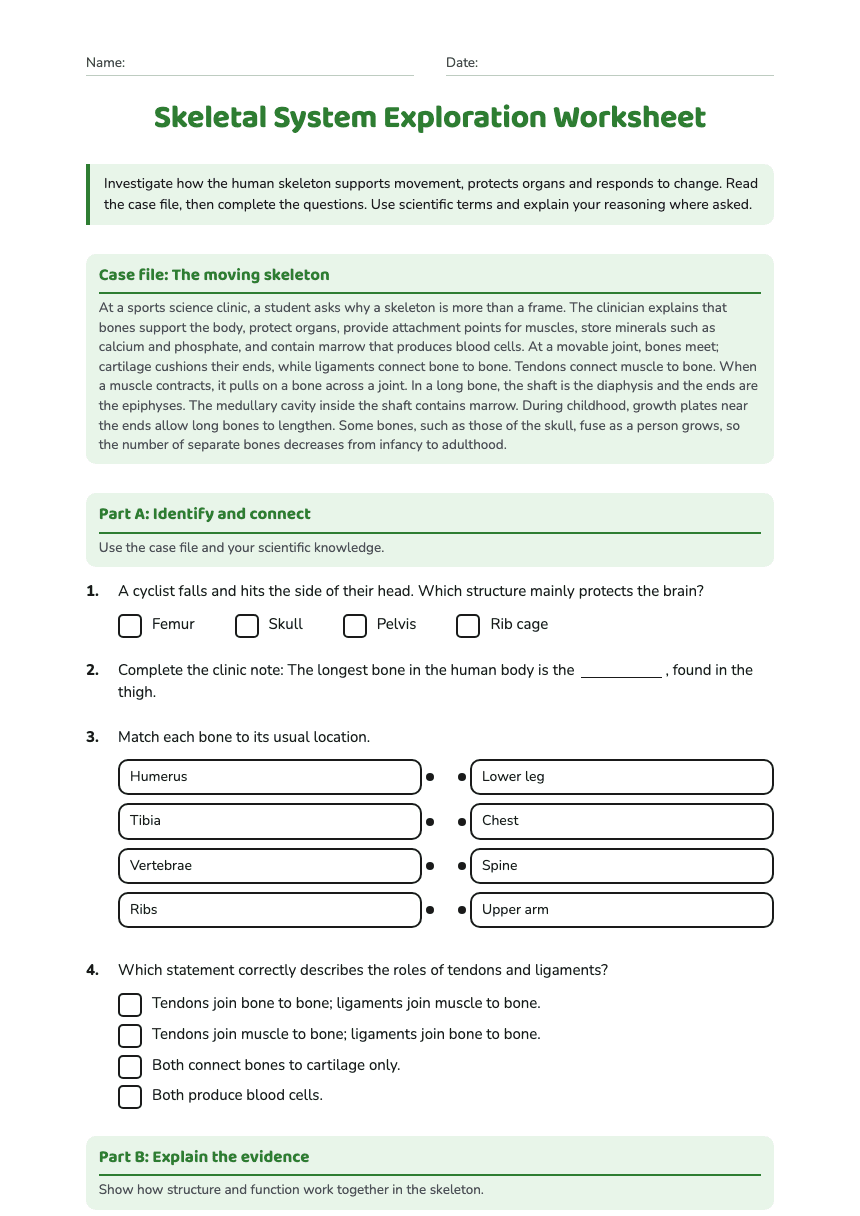
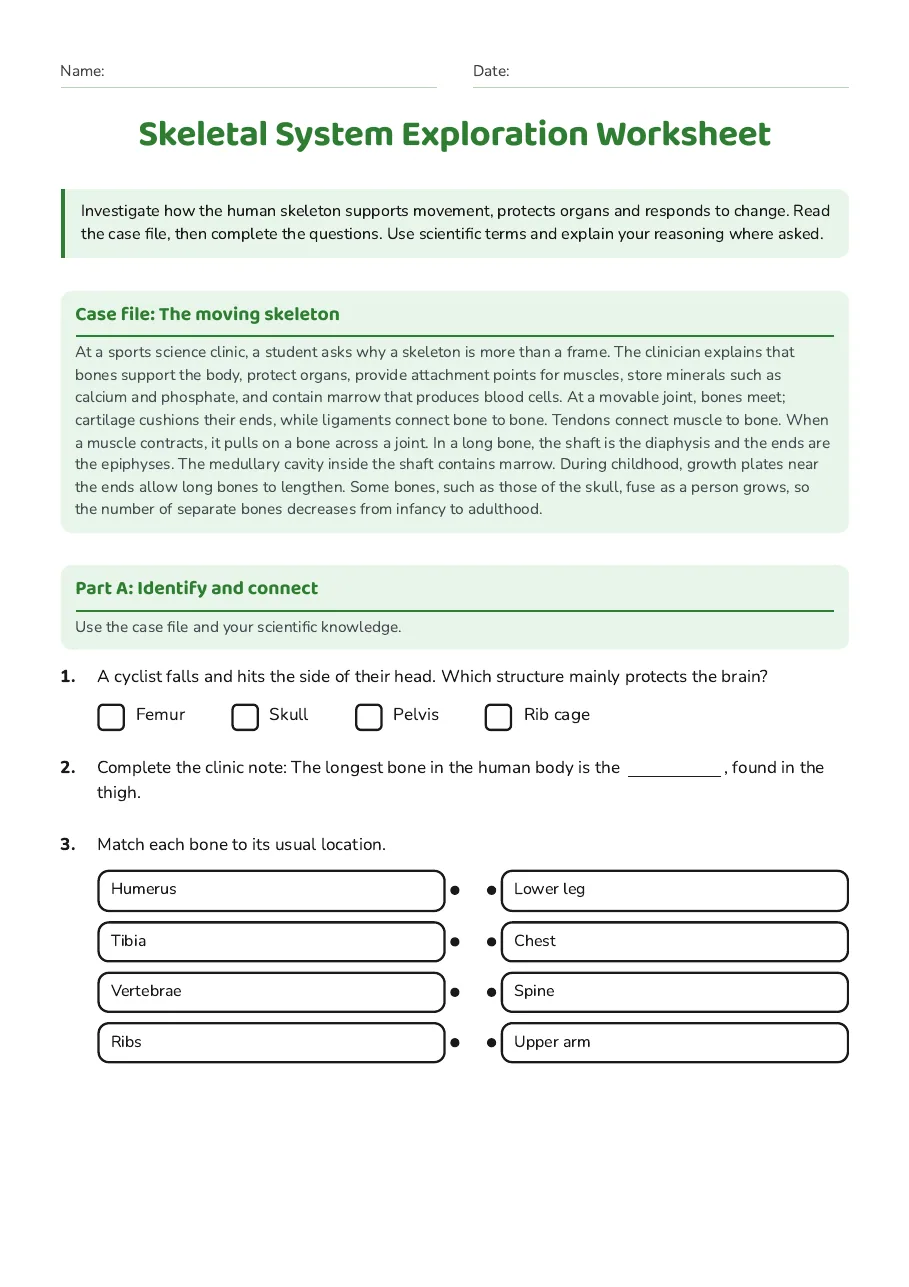
Skeletal System Exploration Worksheet
A free science worksheet ready for your classroom. Open in Kuraplan to grab the print-ready PDF, customize it for your students, or generate a fresh version in seconds.
Skeletal System Exploration Worksheet
Case file: The moving skeleton
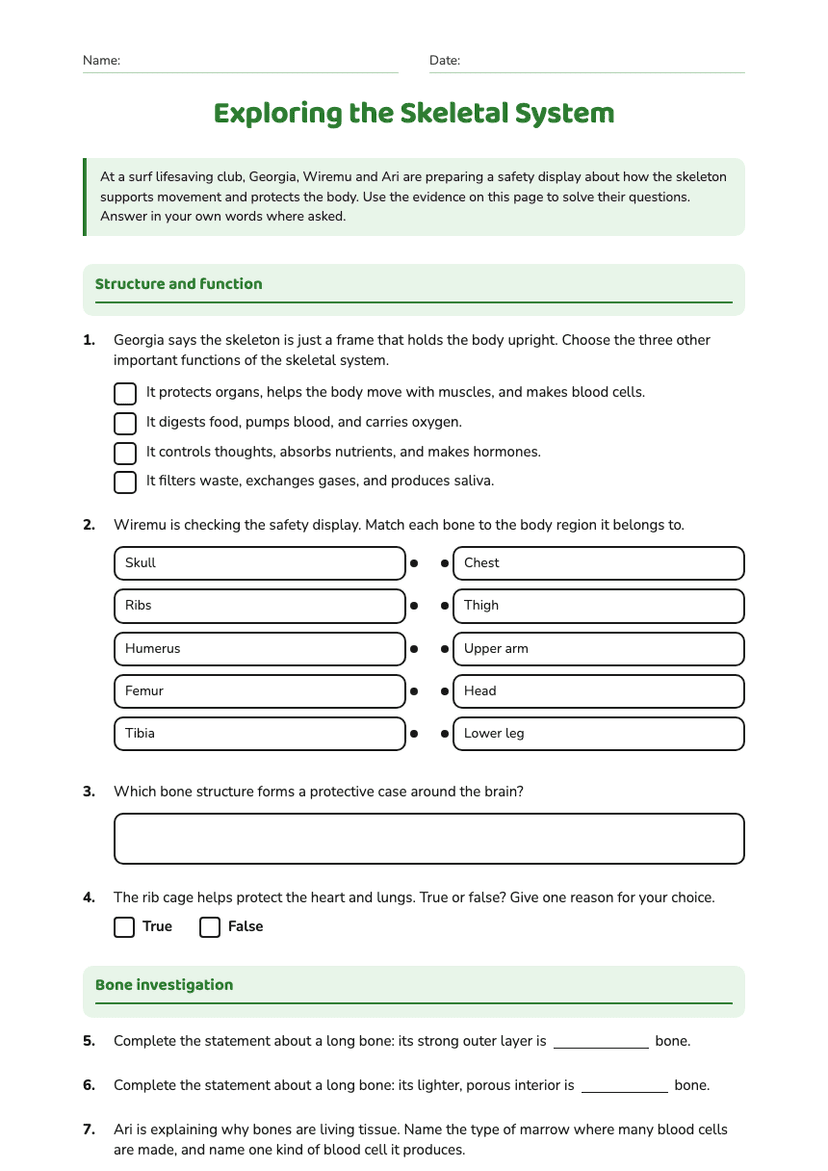
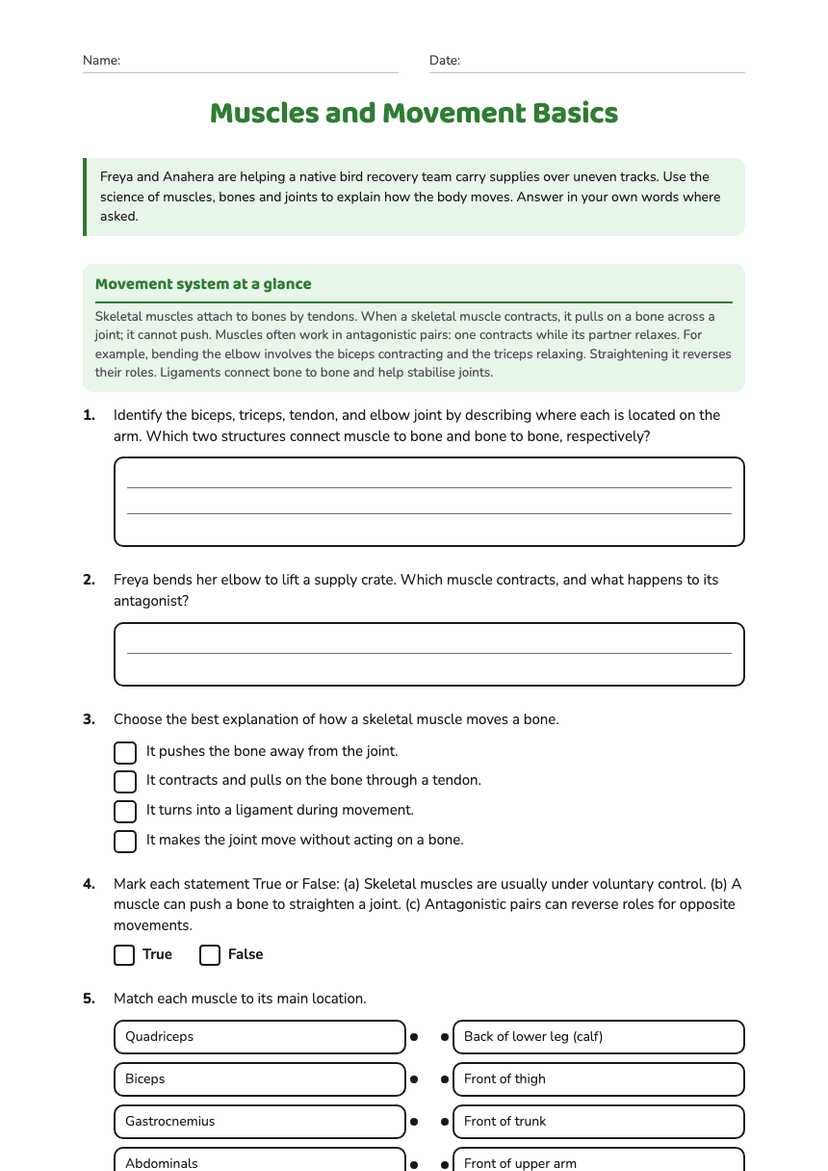
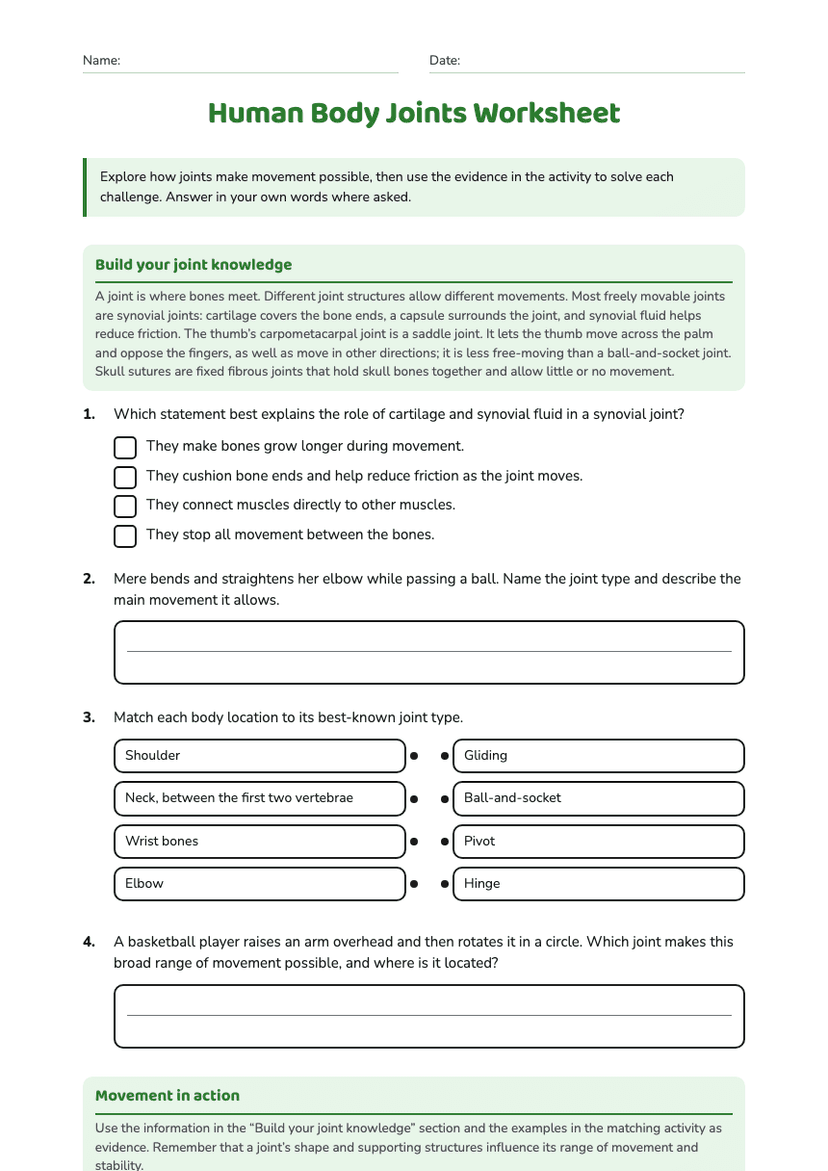
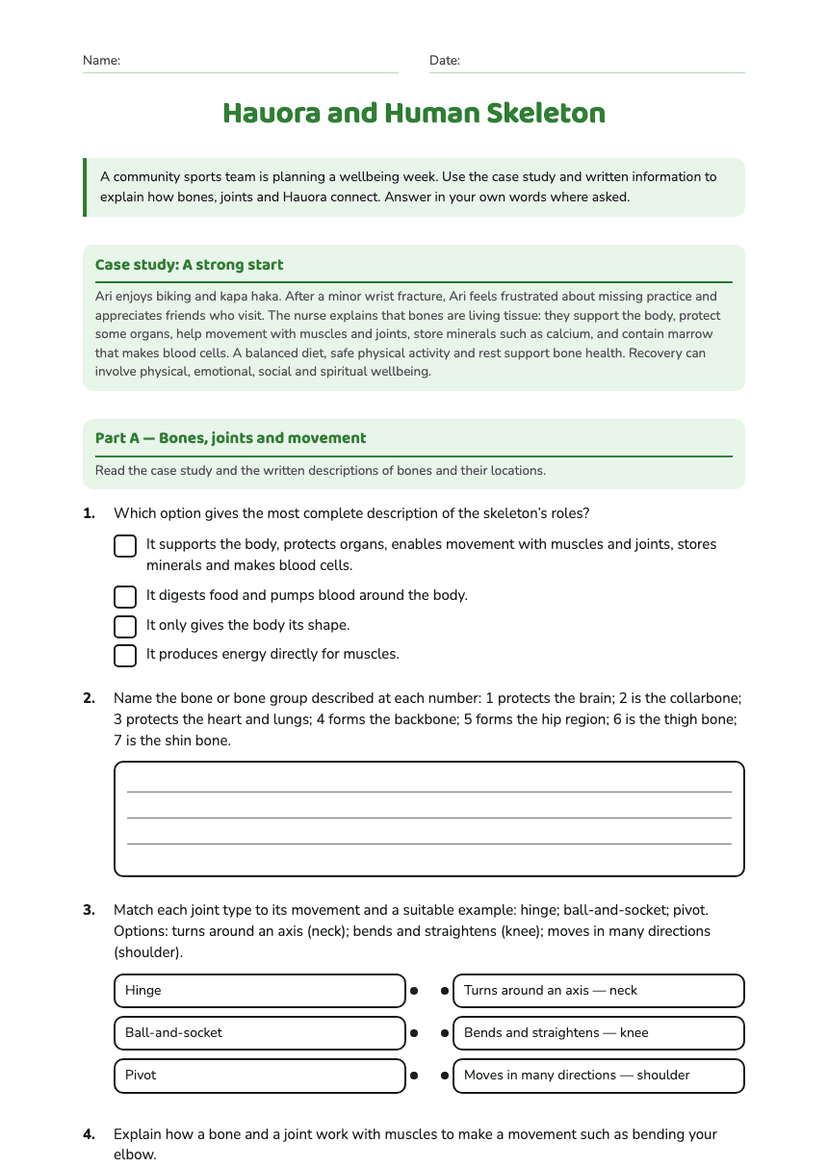
At a sports science clinic, a student asks why a skeleton is more than a frame. The clinician explains that bones support the body, protect organs, provide attachment points for muscles, store minerals such as calcium and phosphate, and contain marrow that produces blood cells. At a movable joint, bones meet; cartilage cushions their ends, while ligaments connect bone to bone. Tendons connect muscle to bone. When a muscle contracts, it pulls on a bone across a joint. In a long bone, the shaft is the diaphysis and the ends are the epiphyses. The medullary cavity inside the shaft contains marrow. During childhood, growth plates near the ends allow long bones to lengthen. Some bones, such as those of the skull, fuse as a person grows, so the number of separate bones decreases from infancy to adulthood.
Part A: Identify and connect
Use the case file and your scientific knowledge.
- Femur
- Skull
- Pelvis
- Rib cage
- Humerus
- Tibia
- Vertebrae
- Ribs
- Lower leg
- Chest
- Spine
- Upper arm
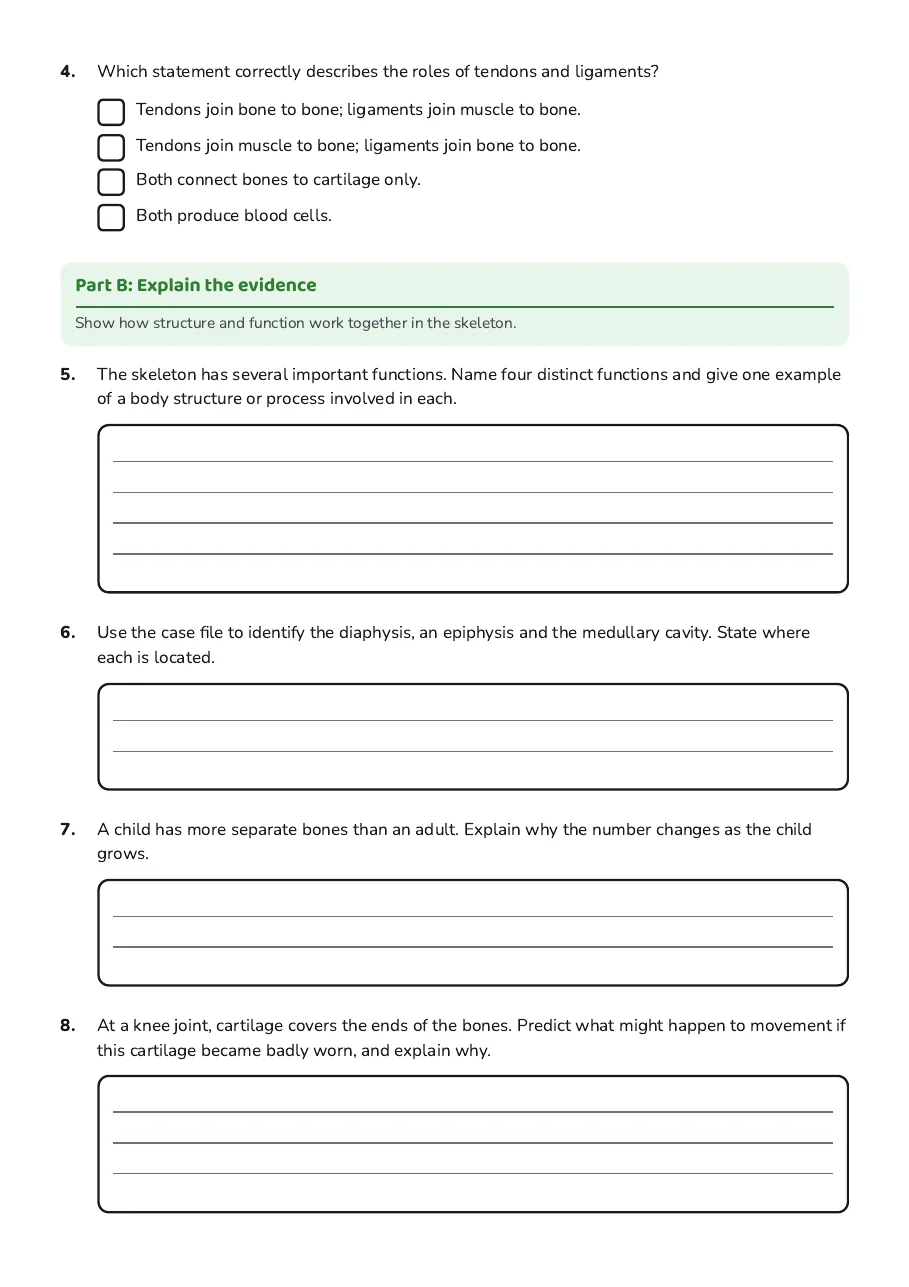
- Tendons join bone to bone; ligaments join muscle to bone.
- Tendons join muscle to bone; ligaments join bone to bone.
- Both connect bones to cartilage only.
- Both produce blood cells.
Part B: Explain the evidence
Show how structure and function work together in the skeleton.
3 printable pages
Page 1
Page 2
Page 3
About This Worksheet
Free in Kuraplan
Sign up free, grab the PDF, and customize it for your class.
Print-Ready
Formatted for standard paper. Clean layout, easy to read.
AI-Generated
Created with Kuraplan's AI, designed for real classroom use.
For Teachers & Parents
Use in classrooms, for homework, tutoring, or homeschool.
Need a custom version of this worksheet?
Kuraplan's AI generates custom worksheets in seconds — differentiated for every learner, aligned to your curriculum.
Generate Custom Worksheets — Free