ScienceFreePrintable

Water Wave Properties

A free science worksheet ready for your classroom. Open in Kuraplan to grab the print-ready PDF, customize it for your students, or generate a fresh version in seconds.

Water Wave Properties worksheet preview
Water Wave Properties

Water Wave Properties

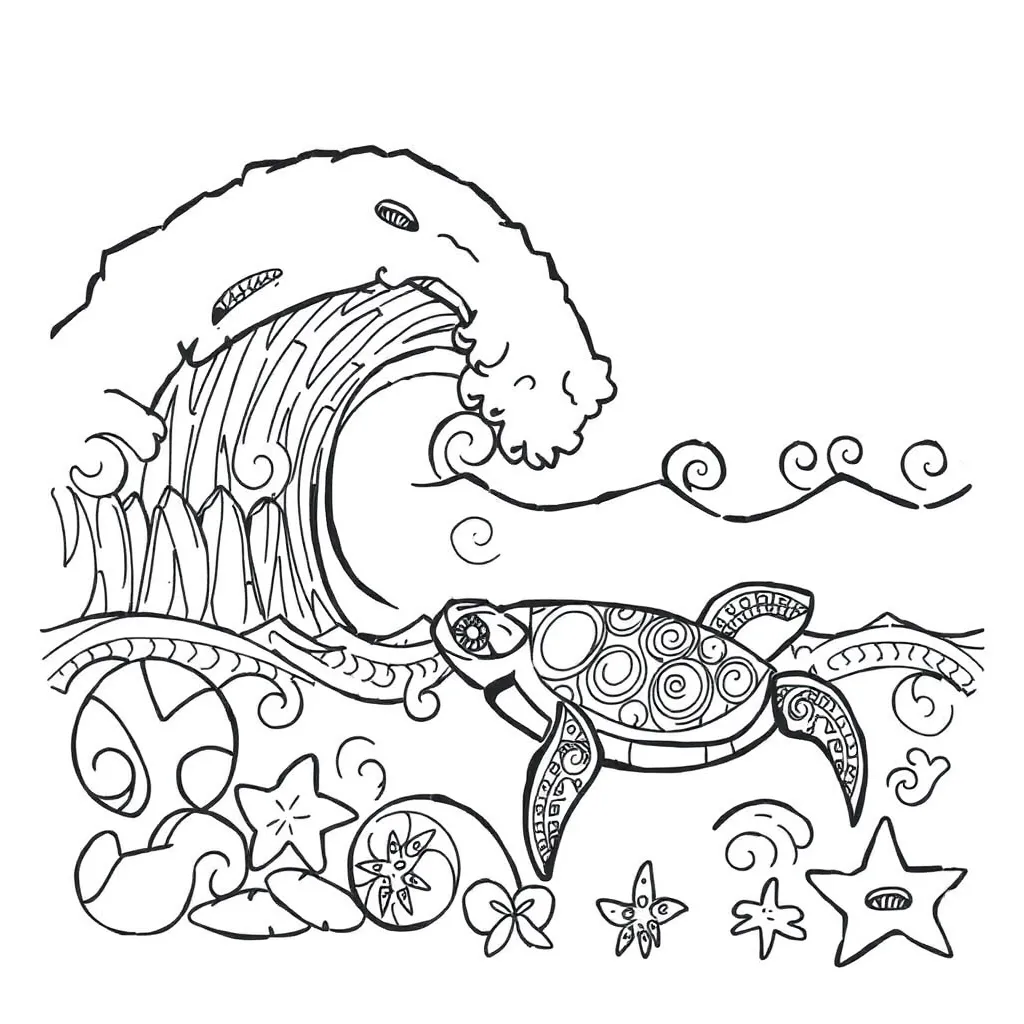
Water waves illustration

🌊 Part 1: Wave Properties Vocabulary

1. Match each wave property with its correct definition:
1. Amplitude
2. Wavelength
3. Frequency
4. Wave Speed
A. Distance between two consecutive crests
B. Maximum displacement from rest position
C. How fast the wave travels through the medium
D. Number of waves passing a point per second
2. Fill in the blanks using the correct wave terminology:

The _____________ of a wave is measured in metres (m), while the _____________ is measured in hertz (Hz). The _____________ tells us how far the water particles move from their resting position, and the _____________ tells us how quickly the wave pattern moves across the water surface.

📐 Part 2: Wave Equation and Calculations

3. The wave equation is v = fλ. What does each symbol represent?

v = _________________

f = _________________

λ = _________________

4. Calculate the wave speed for the following scenarios. Show your working:

Scenario A: A water wave has a frequency of 2.5 Hz and a wavelength of 1.2 metres.

Scenario B: Ocean waves have a wavelength of 15 metres and a frequency of 0.8 Hz.

5. If a wave's frequency doubles but its speed remains constant, what happens to its wavelength?

It doubles

It halves

It stays the same

It quadruples

🔬 Part 3: Experimental Observations

6. During the ripple tank experiment, which factors could affect the accuracy of your measurements? (Select all that apply)

Water depth variations

Timing errors with the stopwatch

Difficulty seeing wave crests clearly

Temperature of the water

Measurement errors with the ruler

7. Draw a diagram of a water wave showing one complete wavelength. Label the following parts: crest, trough, amplitude, and wavelength.
8. Describe what you observed when you changed the frequency of wave generation in your experiment:

🌍 Part 4: Real-World Applications

9. Explain how understanding wave properties helps scientists predict tsunami behaviour:
10. A surfer notices that waves are arriving at the beach every 8 seconds, and the distance between wave crests is 24 metres. Calculate:

a) The frequency of the waves (in Hz):

b) The speed of the waves (in m/s):

11. Which of these real-world phenomena involve wave properties similar to water waves?

Sound waves travelling through air

Light waves from the sun

Seismic waves during earthquakes

Radio waves for communication

A ball rolling down a hill

🤔 Part 5: Critical Thinking and Reflection

12. Design a hypothesis: How would increasing the water depth in your ripple tank affect wave speed? Explain your reasoning:
13. What was the most challenging aspect of measuring wave properties in today's experiment?
14. How might climate change affect ocean wave patterns around New Zealand's coastline?

About This Worksheet

Free in Kuraplan

Sign up free, grab the PDF, and customize it for your class.

Print-Ready

Formatted for standard paper. Clean layout, easy to read.

AI-Generated

Created with Kuraplan's AI, designed for real classroom use.

For Teachers & Parents

Use in classrooms, for homework, tutoring, or homeschool.

Need a custom version of this worksheet?

Kuraplan's AI generates custom worksheets in seconds — differentiated for every learner, aligned to your curriculum.

Generate Custom Worksheets — Free
No credit card Curriculum-aligned Under 60 seconds