American vs French Revolutions
A free social studies worksheet ready for your classroom. Open in Kuraplan to grab the print-ready PDF, customize it for your students, or generate a fresh version in seconds.
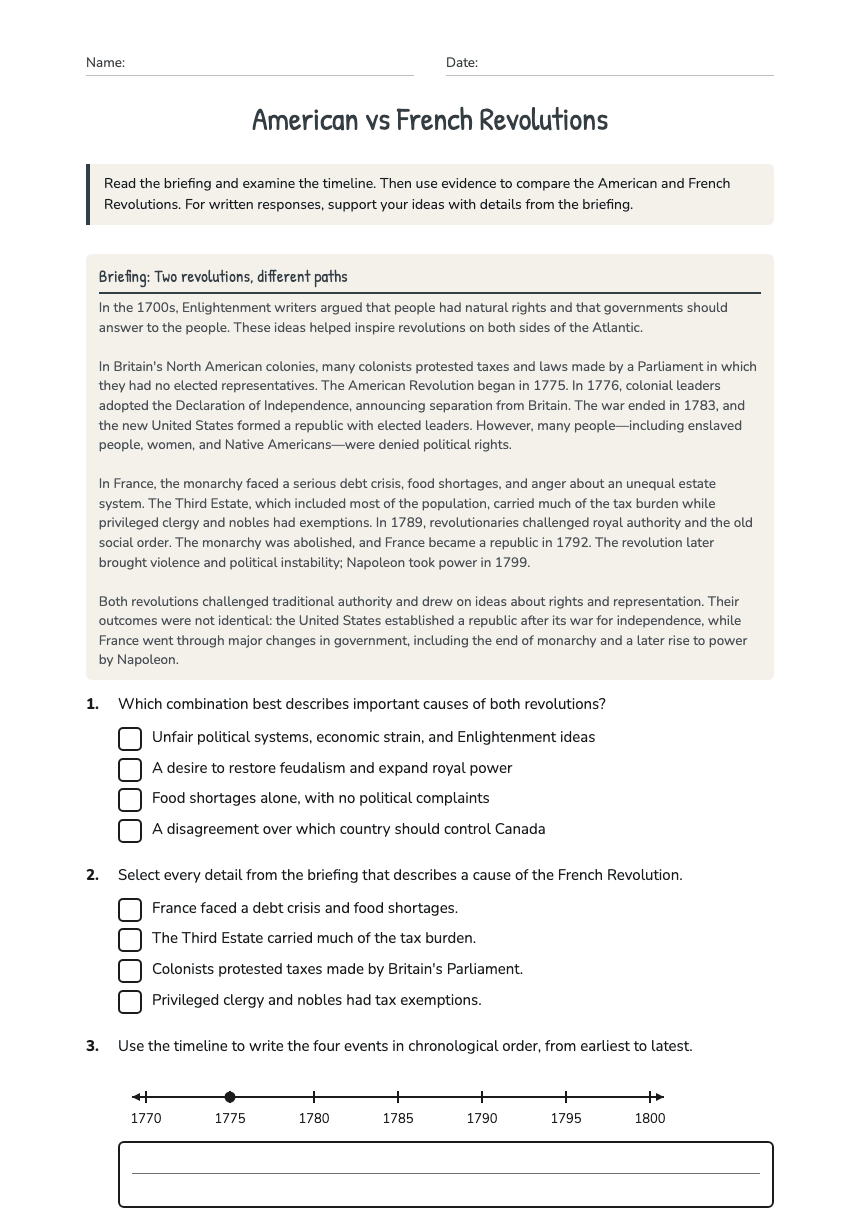
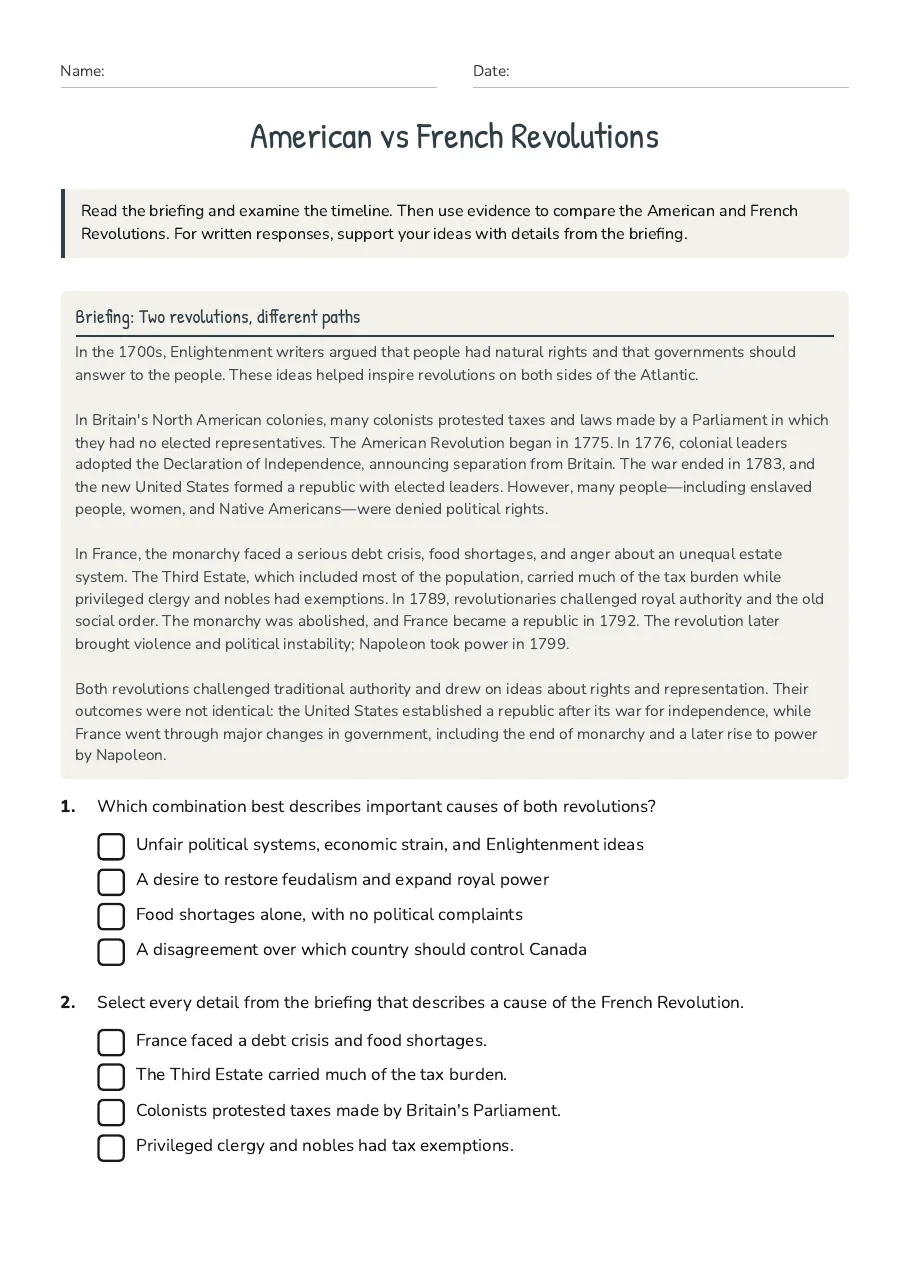
American vs French Revolutions
Briefing: Two revolutions, different paths
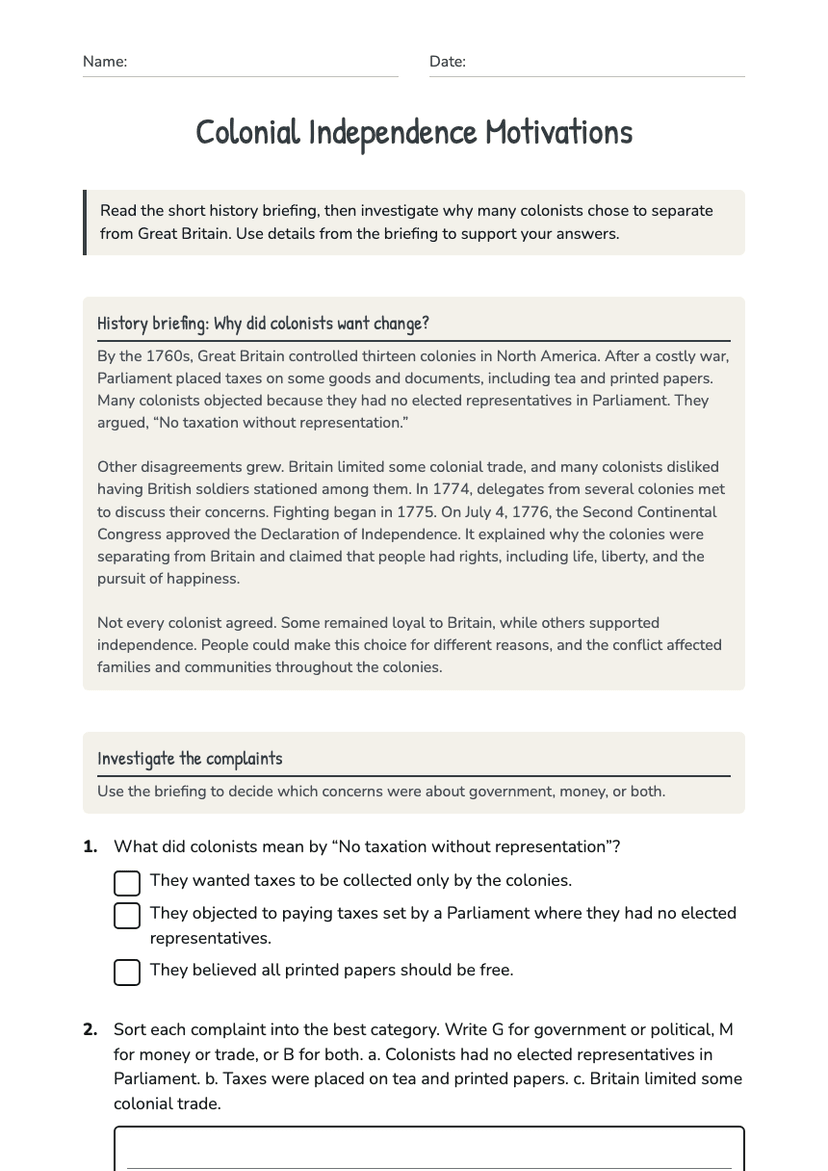
In the 1700s, Enlightenment writers argued that people had natural rights and that governments should answer to the people. These ideas helped inspire revolutions on both sides of the Atlantic. In Britain's North American colonies, many colonists protested taxes and laws made by a Parliament in which they had no elected representatives. The American Revolution began in 1775. In 1776, colonial leaders adopted the Declaration of Independence, announcing separation from Britain. The war ended in 1783, and the new United States formed a republic with elected leaders. However, many people—including enslaved people, women, and Native Americans—were denied political rights. In France, the monarchy faced a serious debt crisis, food shortages, and anger about an unequal estate system. The Third Estate, which included most of the population, carried much of the tax burden while privileged clergy and nobles had exemptions. In 1789, revolutionaries challenged royal authority and the old social order. The monarchy was abolished, and France became a republic in 1792. The revolution later brought violence and political instability; Napoleon took power in 1799. Both revolutions challenged traditional authority and drew on ideas about rights and representation. Their outcomes were not identical: the United States established a republic after its war for independence, while France went through major changes in government, including the end of monarchy and a later rise to power by Napoleon.
- Unfair political systems, economic strain, and Enlightenment ideas
- A desire to restore feudalism and expand royal power
- Food shortages alone, with no political complaints
- A disagreement over which country should control Canada
- France faced a debt crisis and food shortages.
- The Third Estate carried much of the tax burden.
- Colonists protested taxes made by Britain's Parliament.
- Privileged clergy and nobles had tax exemptions.
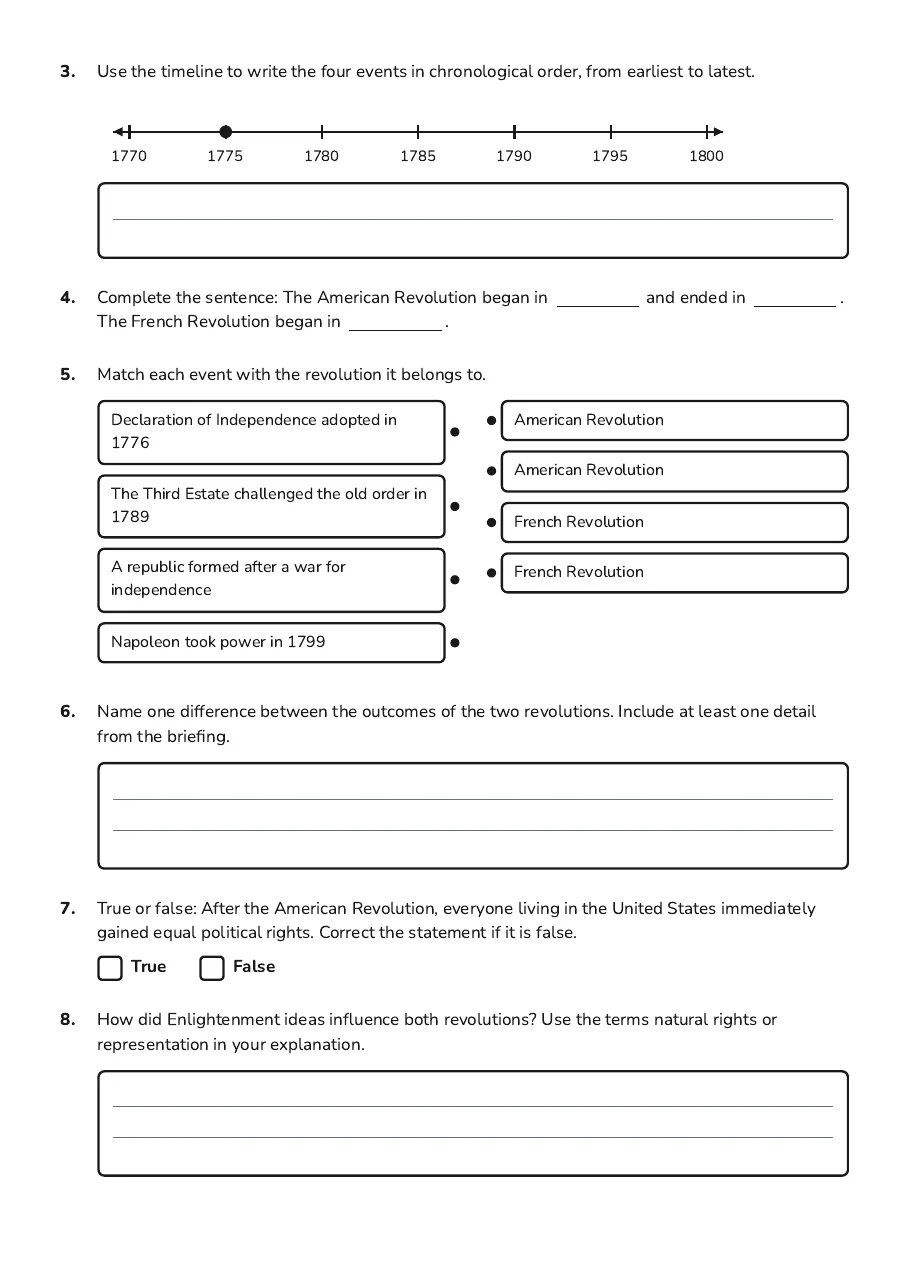
- Declaration of Independence adopted in 1776
- The Third Estate challenged the old order in 1789
- A republic formed after a war for independence
- Napoleon took power in 1799
- American Revolution
- American Revolution
- French Revolution
- French Revolution
3 printable pages
Page 1
Page 2

Page 3
About This Worksheet
Free in Kuraplan
Sign up free, grab the PDF, and customize it for your class.
Print-Ready
Formatted for standard paper. Clean layout, easy to read.
AI-Generated
Created with Kuraplan's AI, designed for real classroom use.
For Teachers & Parents
Use in classrooms, for homework, tutoring, or homeschool.
Need a custom version of this worksheet?
Kuraplan's AI generates custom worksheets in seconds — differentiated for every learner, aligned to your curriculum.
Generate Custom Worksheets — Free