Argument Detective Worksheet
A free english (ela) worksheet ready for your classroom. Open in Kuraplan to grab the print-ready PDF, customize it for your students, or generate a fresh version in seconds.
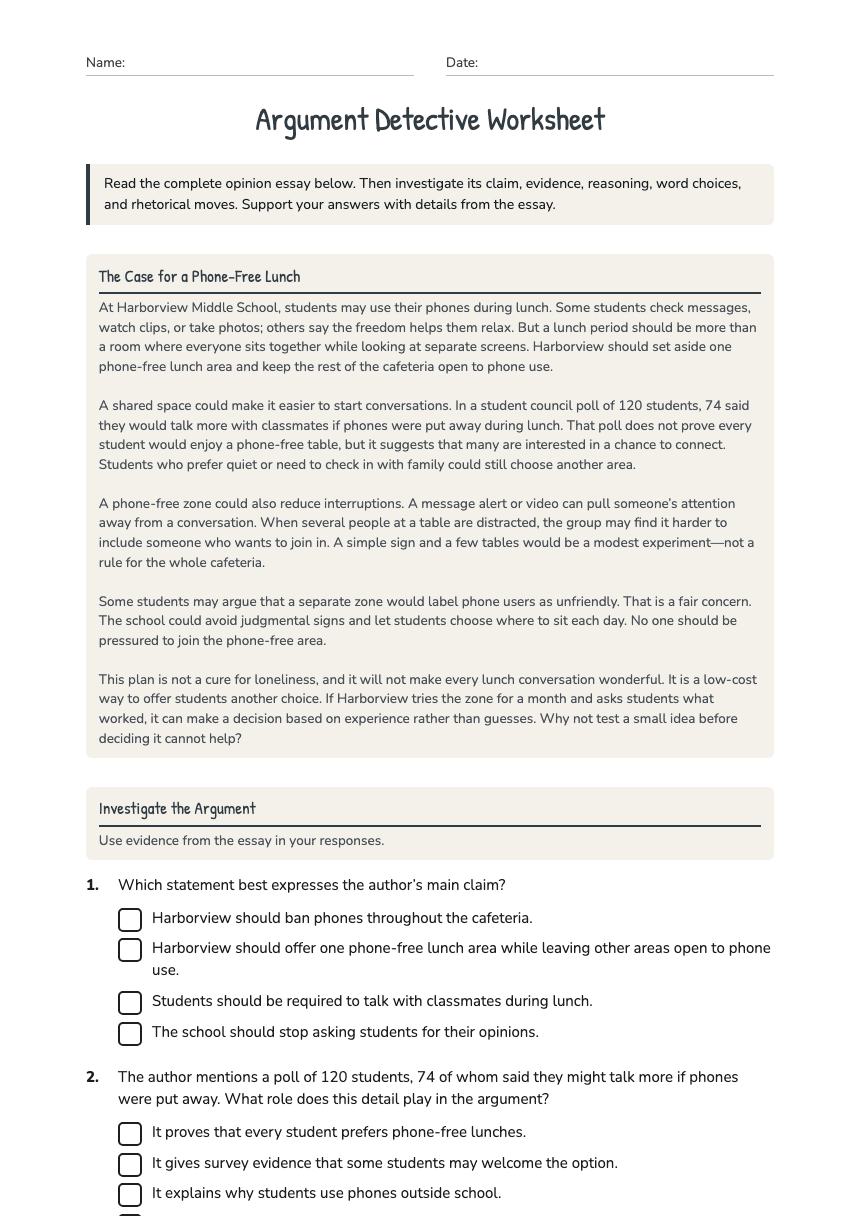
Argument Detective Worksheet
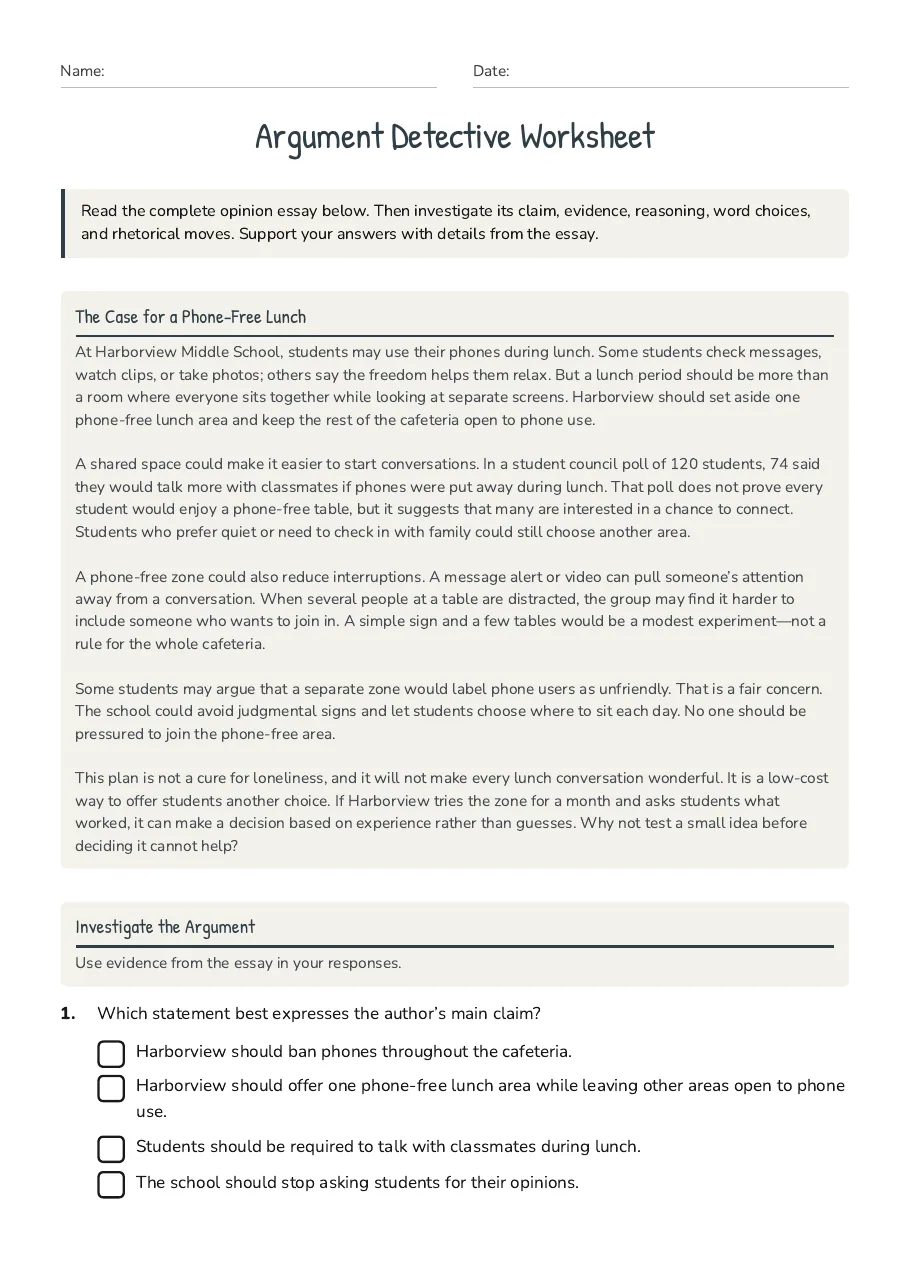
The Case for a Phone-Free Lunch
At Harborview Middle School, students may use their phones during lunch. Some students check messages, watch clips, or take photos; others say the freedom helps them relax. But a lunch period should be more than a room where everyone sits together while looking at separate screens. Harborview should set aside one phone-free lunch area and keep the rest of the cafeteria open to phone use. A shared space could make it easier to start conversations. In a student council poll of 120 students, 74 said they would talk more with classmates if phones were put away during lunch. That poll does not prove every student would enjoy a phone-free table, but it suggests that many are interested in a chance to connect. Students who prefer quiet or need to check in with family could still choose another area. A phone-free zone could also reduce interruptions. A message alert or video can pull someone’s attention away from a conversation. When several people at a table are distracted, the group may find it harder to include someone who wants to join in. A simple sign and a few tables would be a modest experiment—not a rule for the whole cafeteria. Some students may argue that a separate zone would label phone users as unfriendly. That is a fair concern. The school could avoid judgmental signs and let students choose where to sit each day. No one should be pressured to join the phone-free area. This plan is not a cure for loneliness, and it will not make every lunch conversation wonderful. It is a low-cost way to offer students another choice. If Harborview tries the zone for a month and asks students what worked, it can make a decision based on experience rather than guesses. Why not test a small idea before deciding it cannot help?
Investigate the Argument
Use evidence from the essay in your responses.
- Harborview should ban phones throughout the cafeteria.
- Harborview should offer one phone-free lunch area while leaving other areas open to phone use.
- Students should be required to talk with classmates during lunch.
- The school should stop asking students for their opinions.
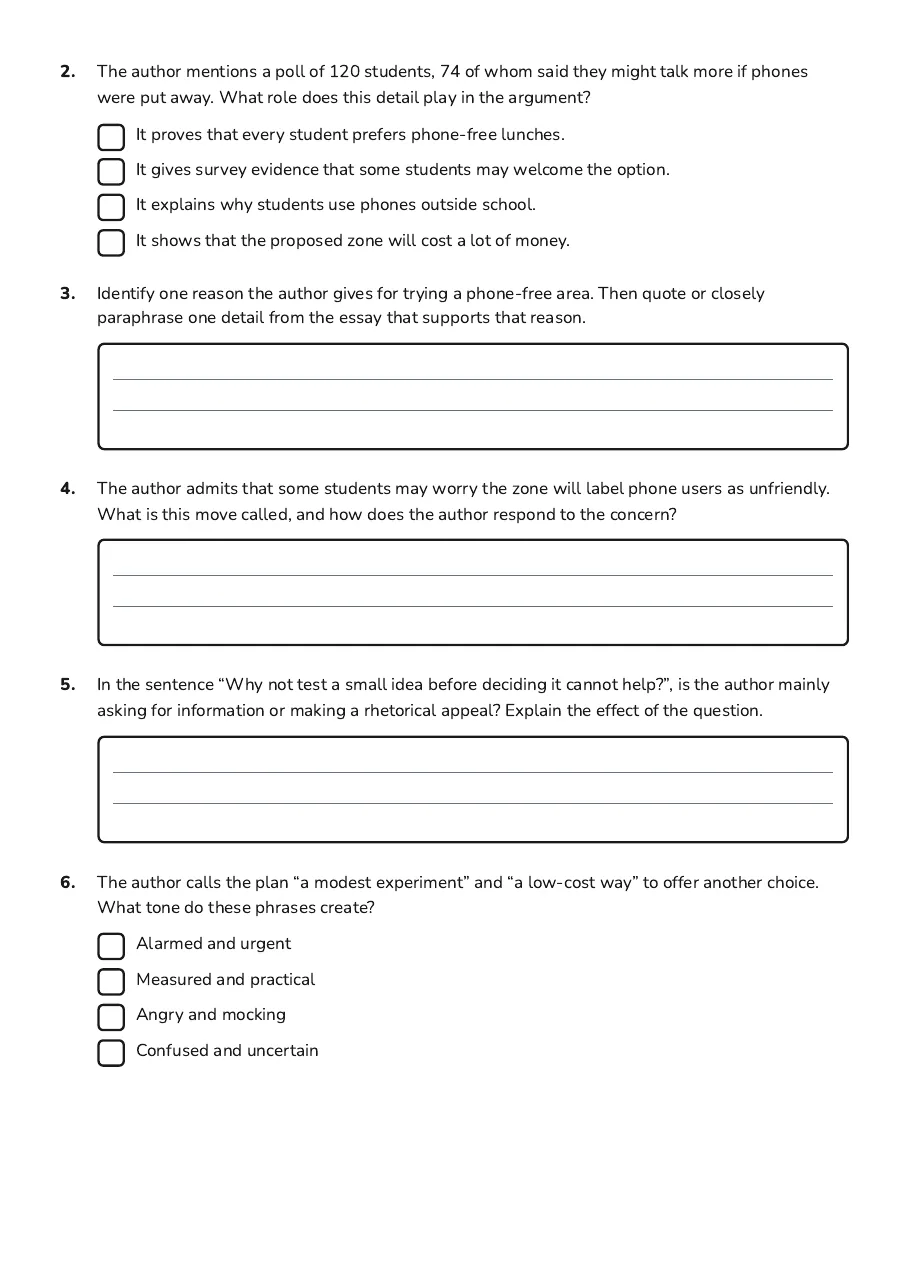
- It proves that every student prefers phone-free lunches.
- It gives survey evidence that some students may welcome the option.
- It explains why students use phones outside school.
- It shows that the proposed zone will cost a lot of money.
- Alarmed and urgent
- Measured and practical
- Angry and mocking
- Confused and uncertain
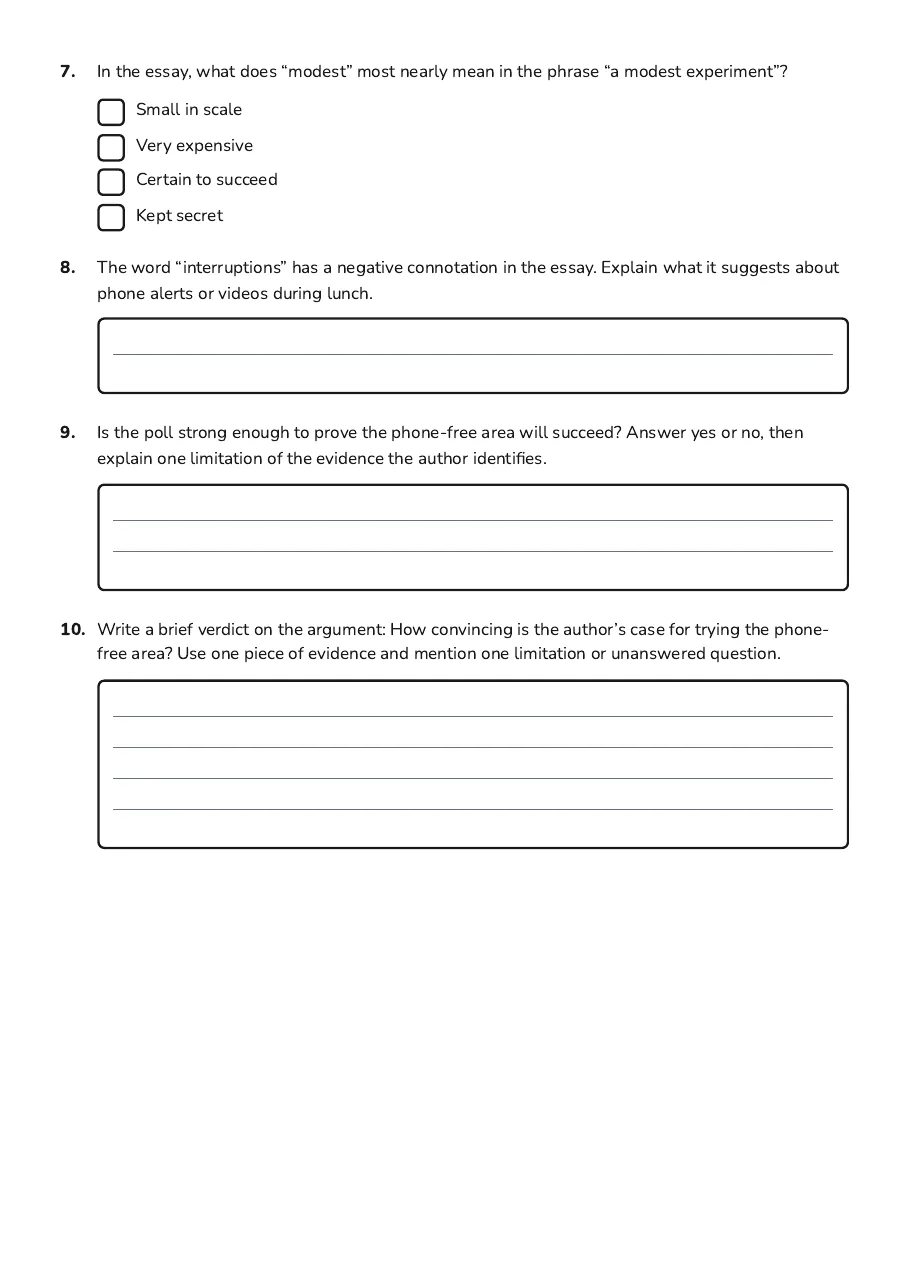
- Small in scale
- Very expensive
- Certain to succeed
- Kept secret
3 printable pages
Page 1
Page 2
Page 3
About This Worksheet
Free in Kuraplan
Sign up free, grab the PDF, and customize it for your class.
Print-Ready
Formatted for standard paper. Clean layout, easy to read.
AI-Generated
Created with Kuraplan's AI, designed for real classroom use.
For Teachers & Parents
Use in classrooms, for homework, tutoring, or homeschool.
Need a custom version of this worksheet?
Kuraplan's AI generates custom worksheets in seconds — differentiated for every learner, aligned to your curriculum.
Generate Custom Worksheets — Free