Cell Cycle and Cancer Coloring
A free science worksheet ready for your classroom. Open in Kuraplan to grab the print-ready PDF, customize it for your students, or generate a fresh version in seconds.
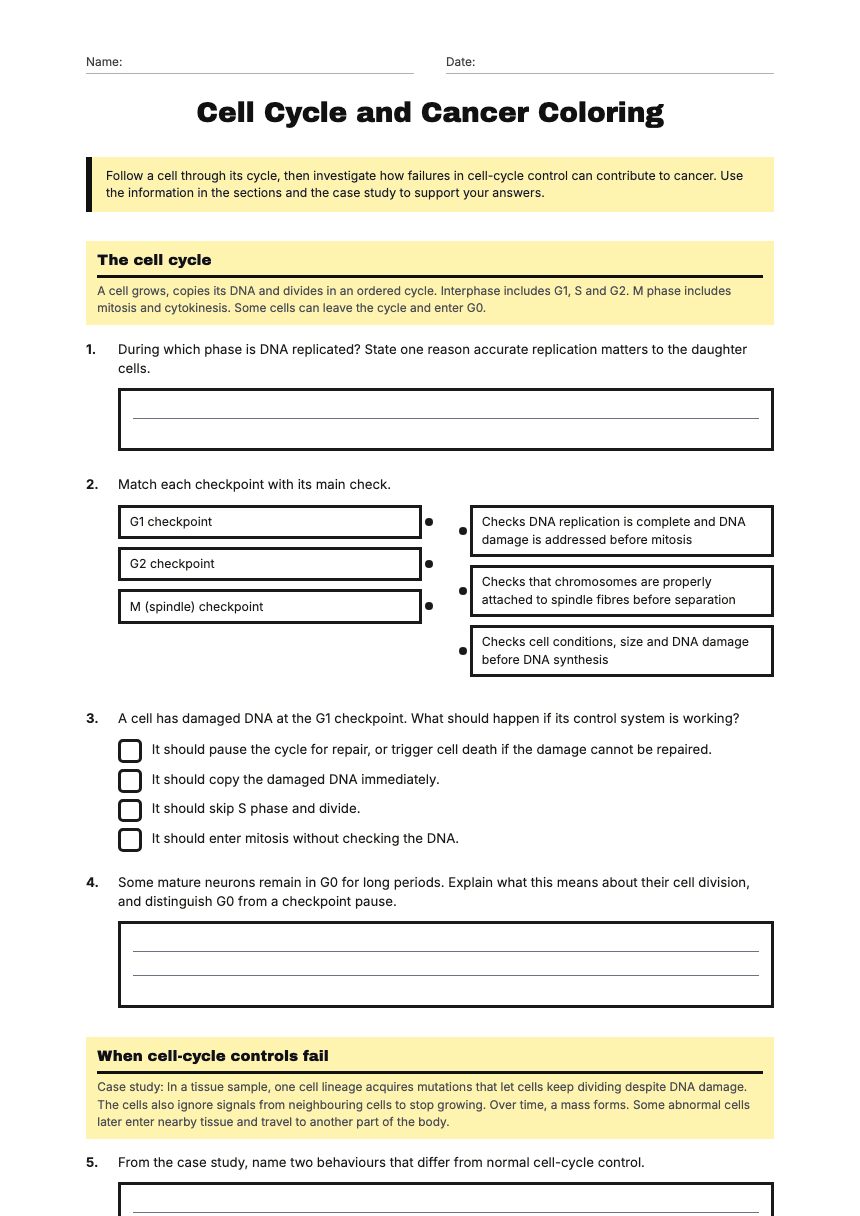
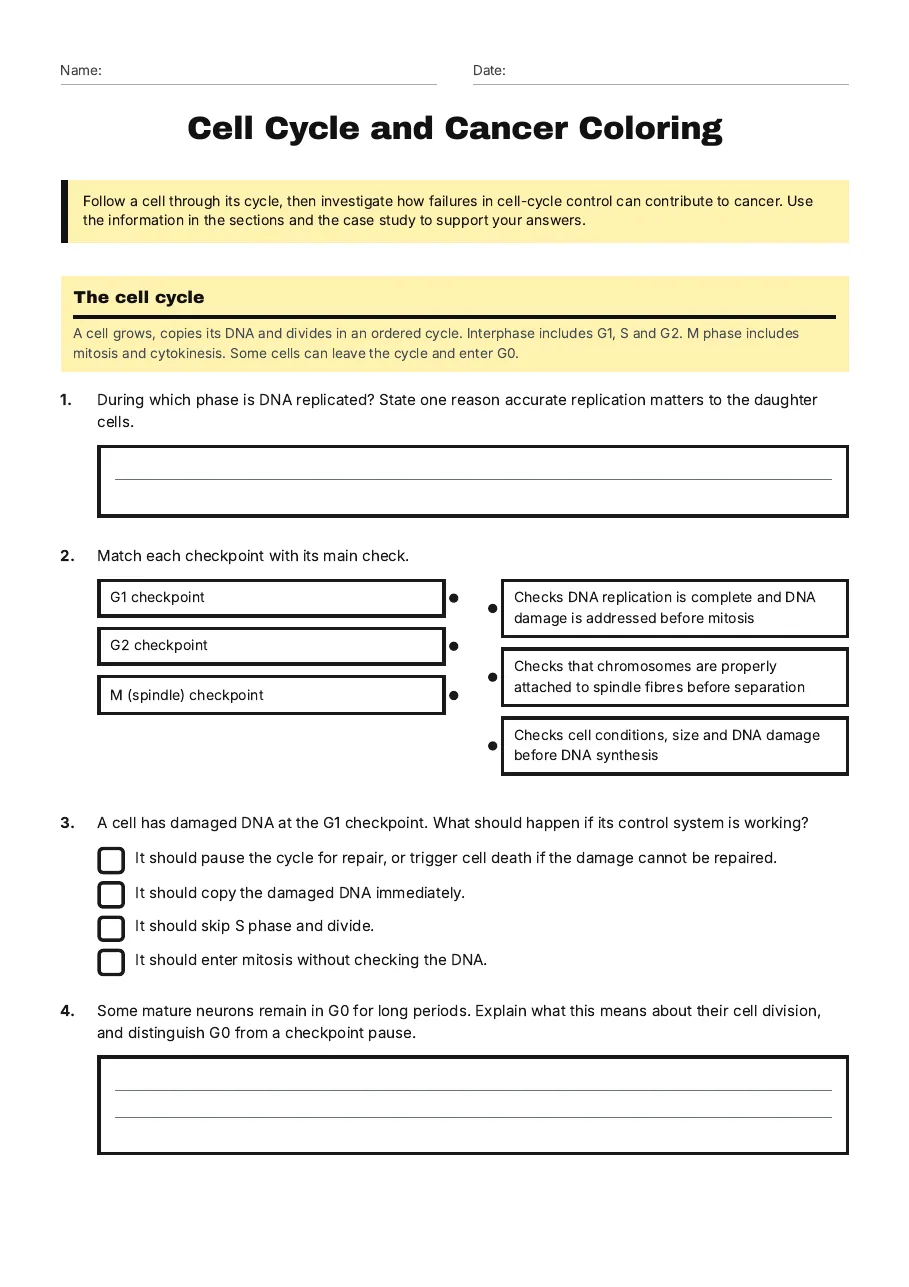
Cell Cycle and Cancer Coloring
The cell cycle
A cell grows, copies its DNA and divides in an ordered cycle. Interphase includes G1, S and G2. M phase includes mitosis and cytokinesis. Some cells can leave the cycle and enter G0.
- G1 checkpoint
- G2 checkpoint
- M (spindle) checkpoint
- Checks DNA replication is complete and DNA damage is addressed before mitosis
- Checks that chromosomes are properly attached to spindle fibres before separation
- Checks cell conditions, size and DNA damage before DNA synthesis
- It should pause the cycle for repair, or trigger cell death if the damage cannot be repaired.
- It should copy the damaged DNA immediately.
- It should skip S phase and divide.
- It should enter mitosis without checking the DNA.
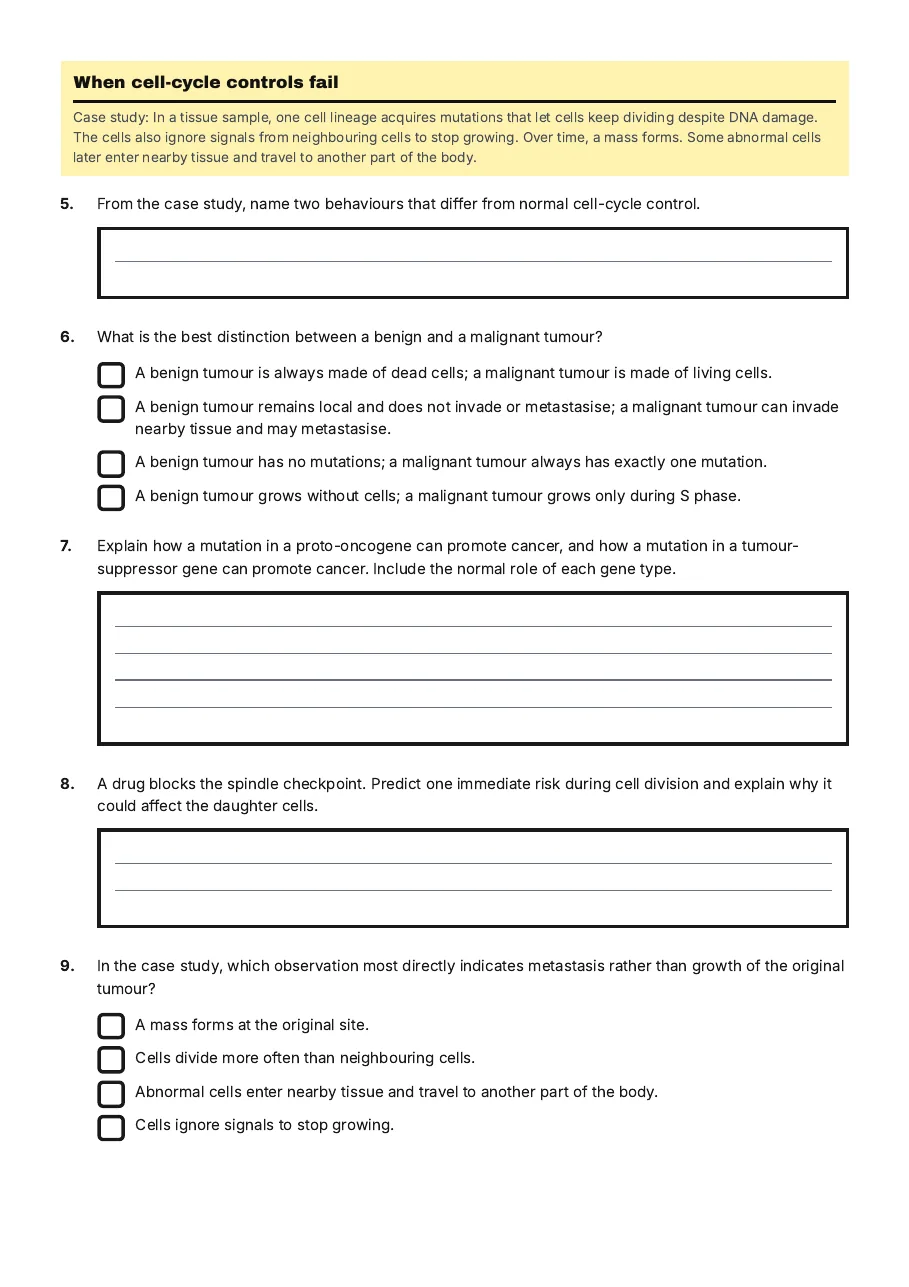
When cell-cycle controls fail
Case study: In a tissue sample, one cell lineage acquires mutations that let cells keep dividing despite DNA damage. The cells also ignore signals from neighbouring cells to stop growing. Over time, a mass forms. Some abnormal cells later enter nearby tissue and travel to another part of the body.
- A benign tumour is always made of dead cells; a malignant tumour is made of living cells.
- A benign tumour remains local and does not invade or metastasise; a malignant tumour can invade nearby tissue and may metastasise.
- A benign tumour has no mutations; a malignant tumour always has exactly one mutation.
- A benign tumour grows without cells; a malignant tumour grows only during S phase.
- A mass forms at the original site.
- Cells divide more often than neighbouring cells.
- Abnormal cells enter nearby tissue and travel to another part of the body.
- Cells ignore signals to stop growing.
3 printable pages
Page 1
Page 2
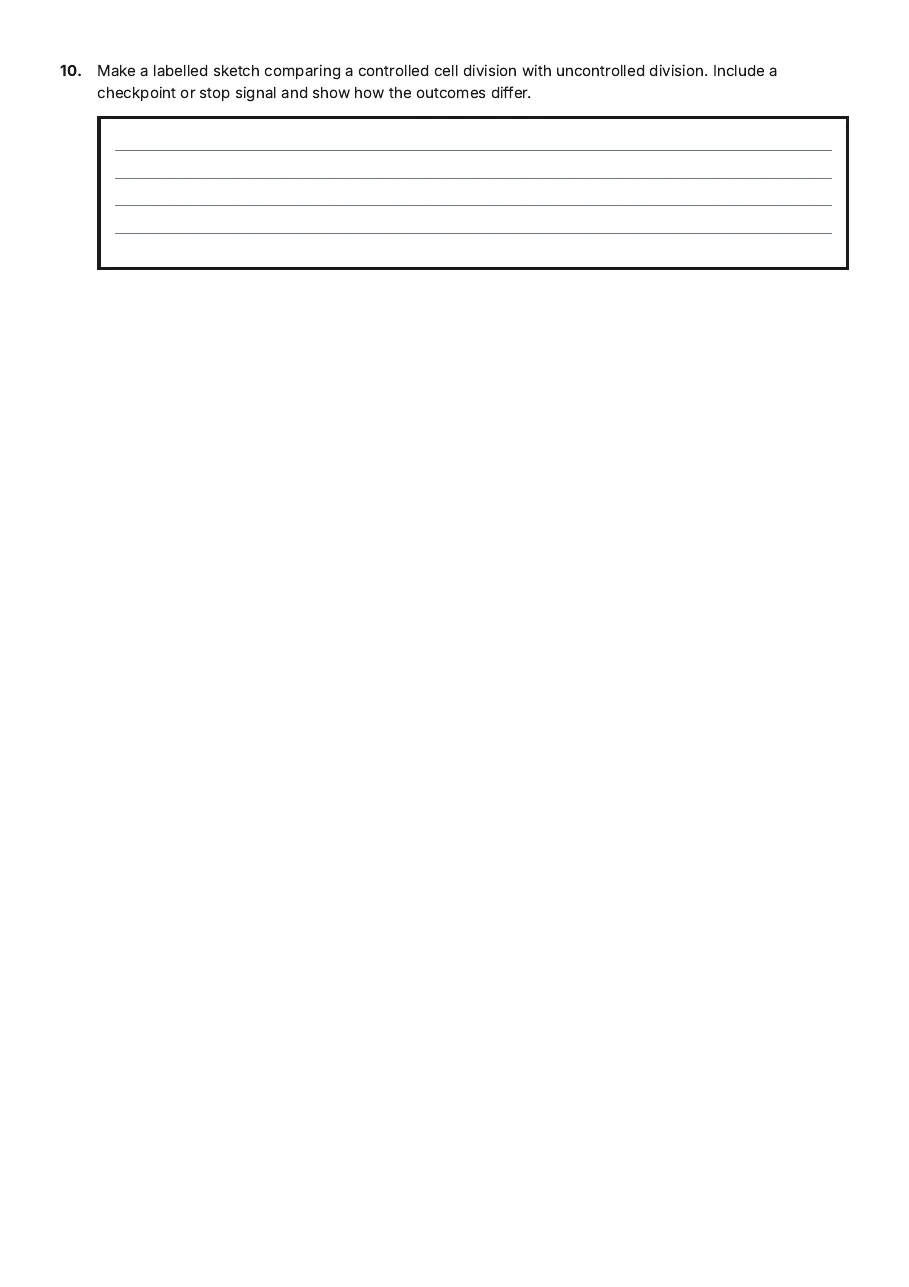
Page 3
About This Worksheet
Free in Kuraplan
Sign up free, grab the PDF, and customize it for your class.
Print-Ready
Formatted for standard paper. Clean layout, easy to read.
AI-Generated
Created with Kuraplan's AI, designed for real classroom use.
For Teachers & Parents
Use in classrooms, for homework, tutoring, or homeschool.
Need a custom version of this worksheet?
Kuraplan's AI generates custom worksheets in seconds — differentiated for every learner, aligned to your curriculum.
Generate Custom Worksheets — FreeMore Science Worksheets
Organism Classification Models
Free
Organism Classification Model Building
Free
Genes and Traits Introduction
Free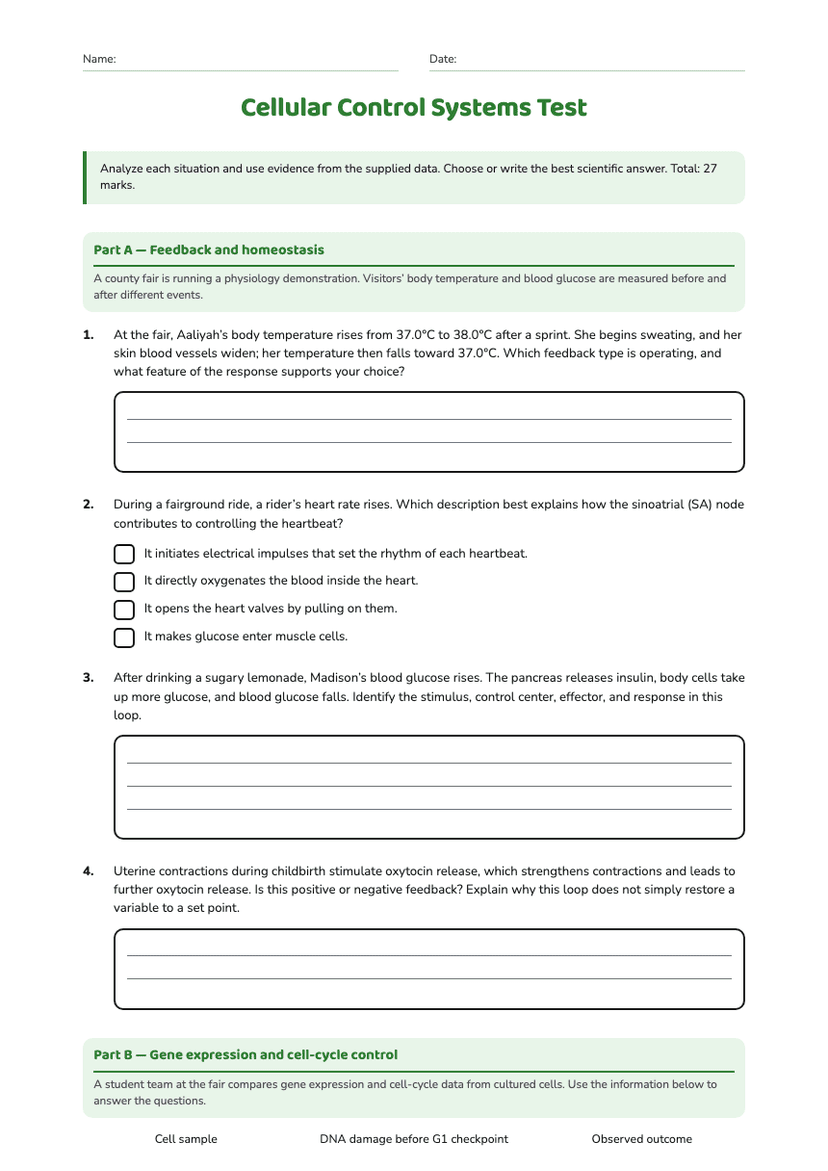
Cellular Control Systems Test
Free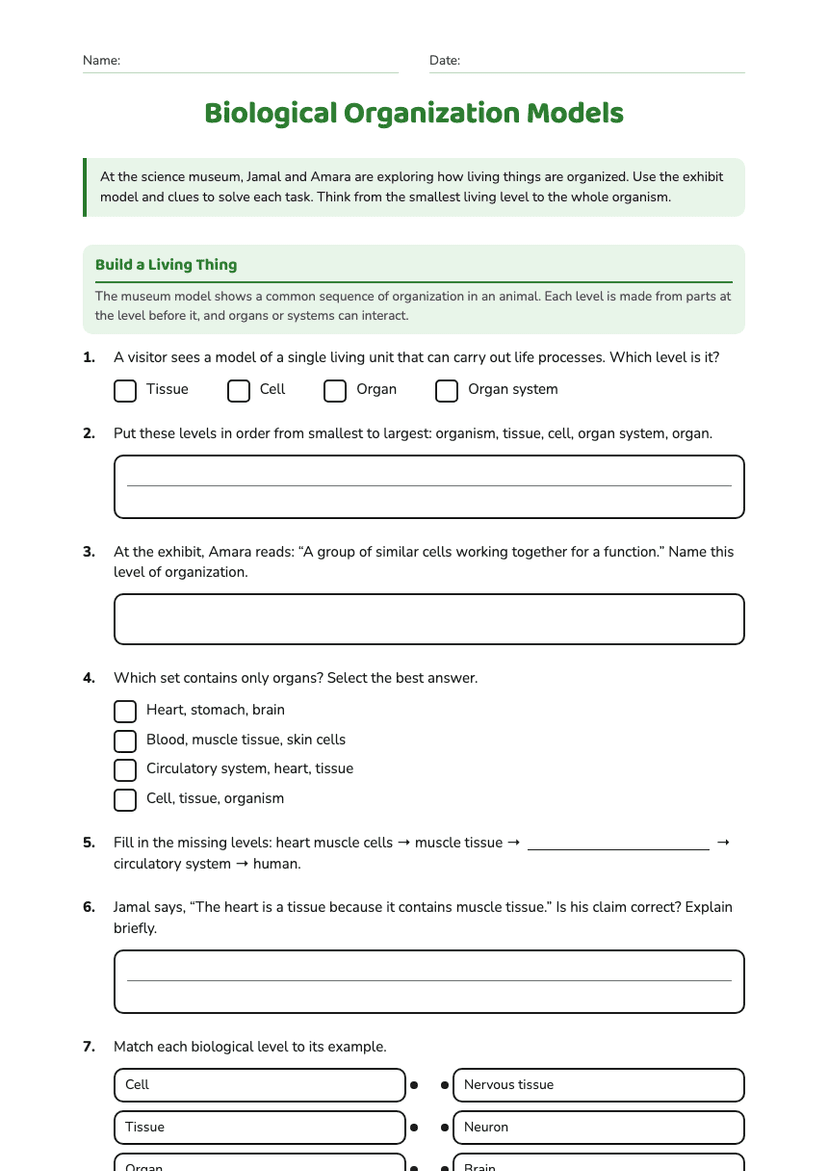
Biological Organization Models
Free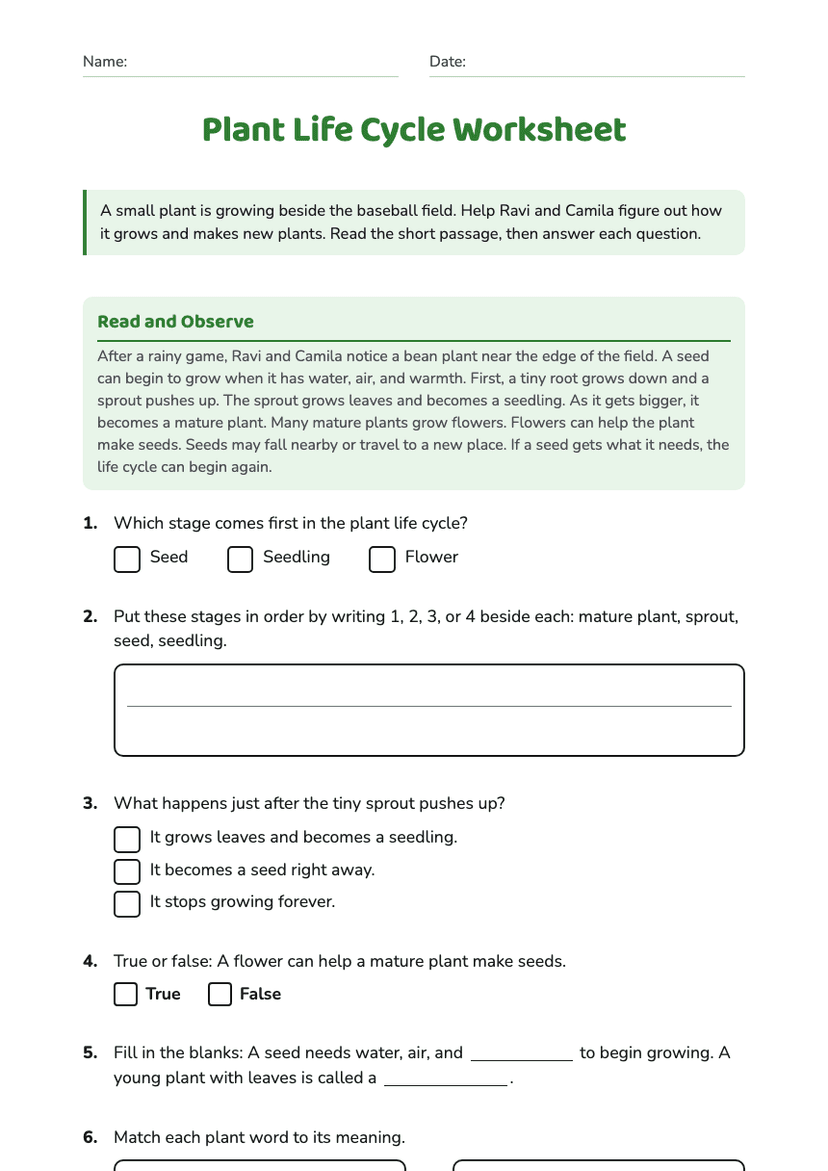
Plant Life Cycle Worksheet
Free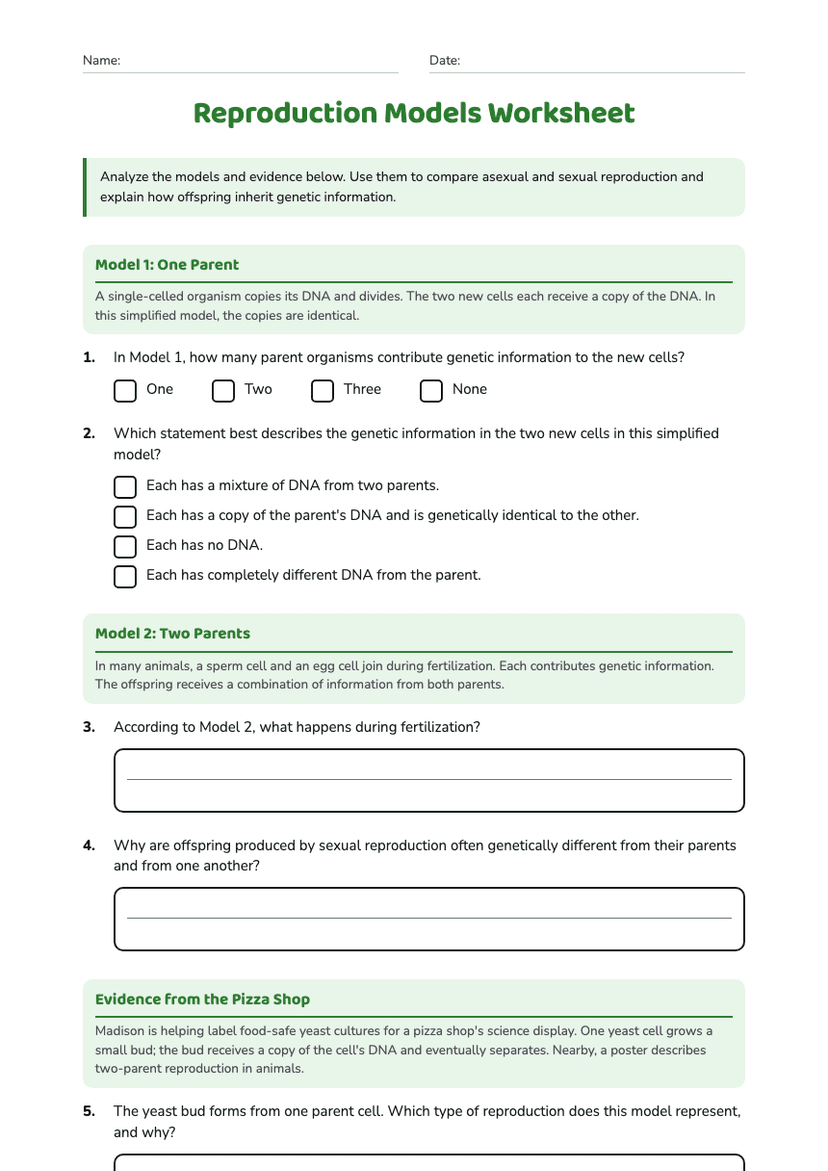
Reproduction Models Worksheet
Free