Franklin's Virtues Worksheet
A free social studies worksheet ready for your classroom. Open in Kuraplan to grab the print-ready PDF, customize it for your students, or generate a fresh version in seconds.

Franklin's Virtues Worksheet
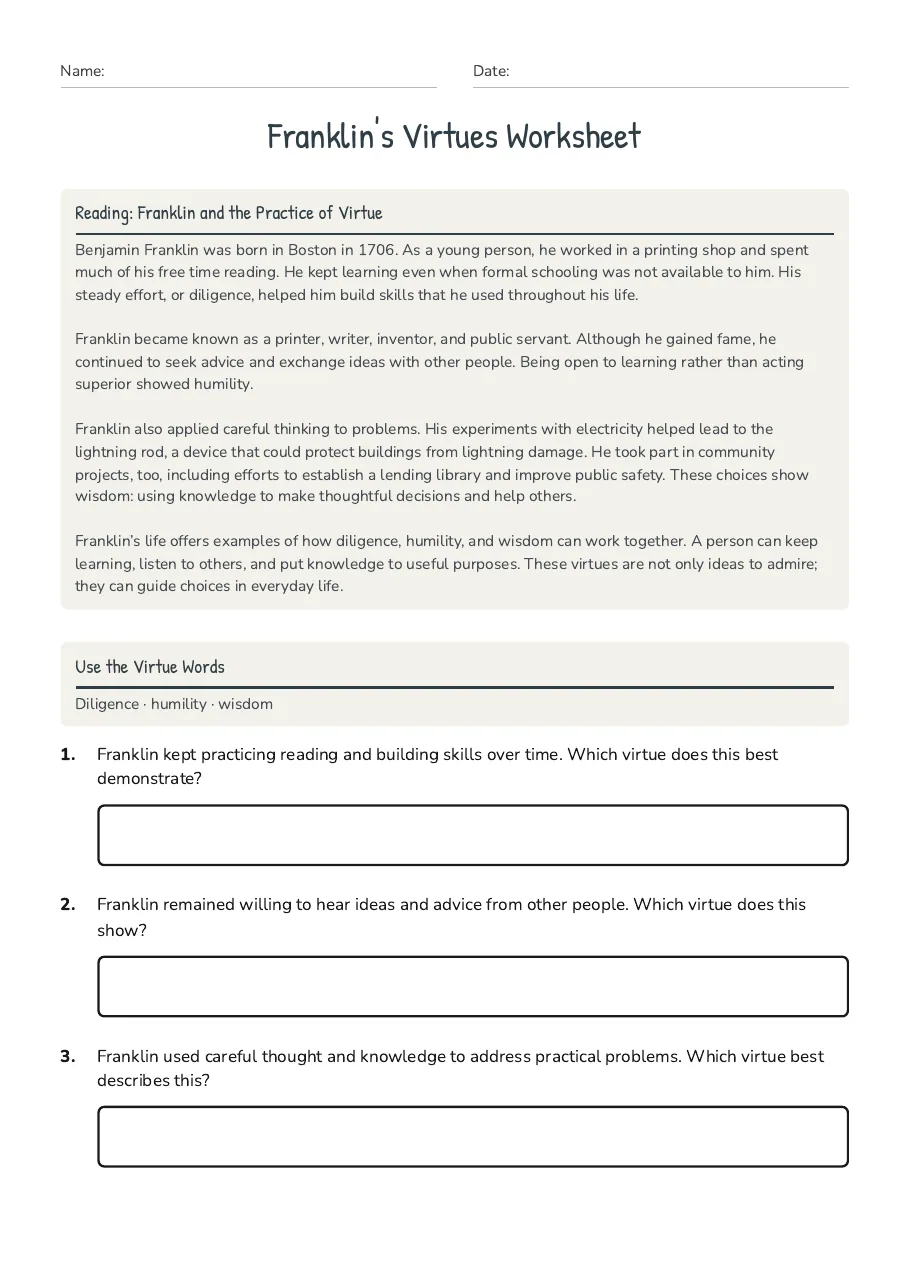
Reading: Franklin and the Practice of Virtue
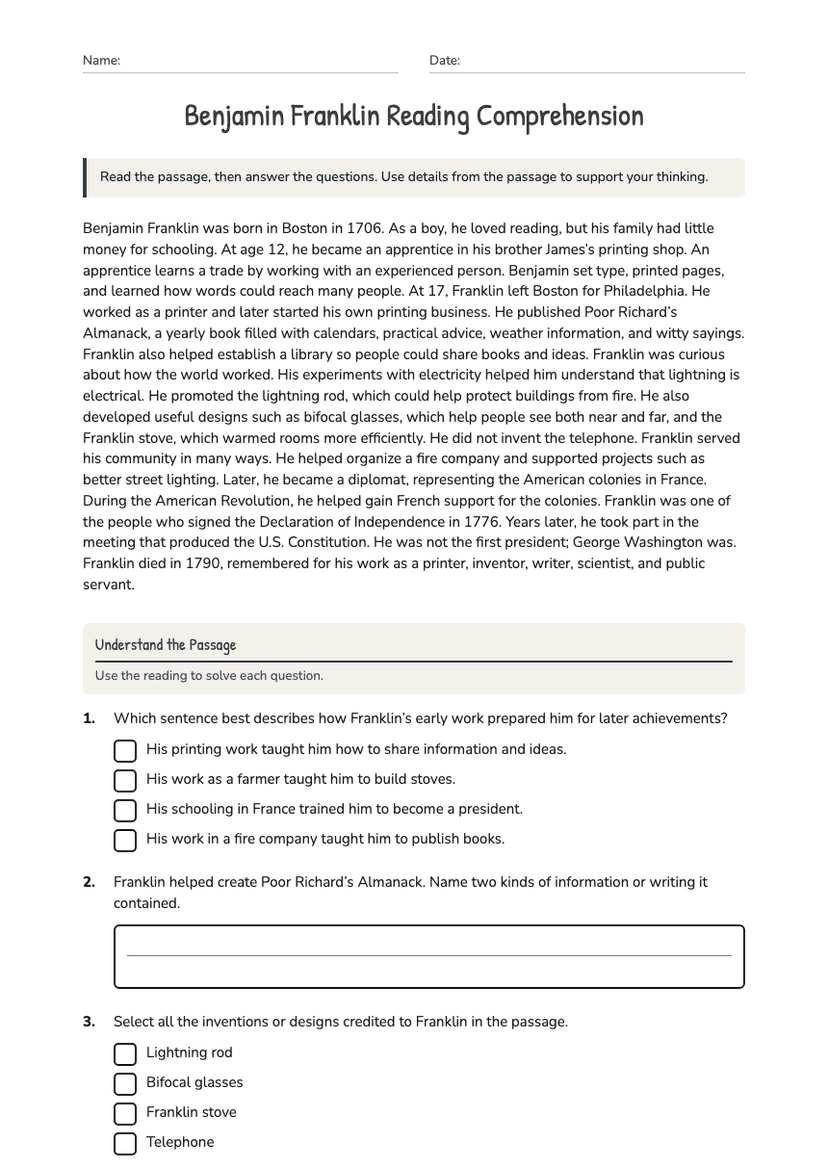
Benjamin Franklin was born in Boston in 1706. As a young person, he worked in a printing shop and spent much of his free time reading. He kept learning even when formal schooling was not available to him. His steady effort, or diligence, helped him build skills that he used throughout his life. Franklin became known as a printer, writer, inventor, and public servant. Although he gained fame, he continued to seek advice and exchange ideas with other people. Being open to learning rather than acting superior showed humility. Franklin also applied careful thinking to problems. His experiments with electricity helped lead to the lightning rod, a device that could protect buildings from lightning damage. He took part in community projects, too, including efforts to establish a lending library and improve public safety. These choices show wisdom: using knowledge to make thoughtful decisions and help others. Franklin’s life offers examples of how diligence, humility, and wisdom can work together. A person can keep learning, listen to others, and put knowledge to useful purposes. These virtues are not only ideas to admire; they can guide choices in everyday life.
Use the Virtue Words
Diligence · humility · wisdom
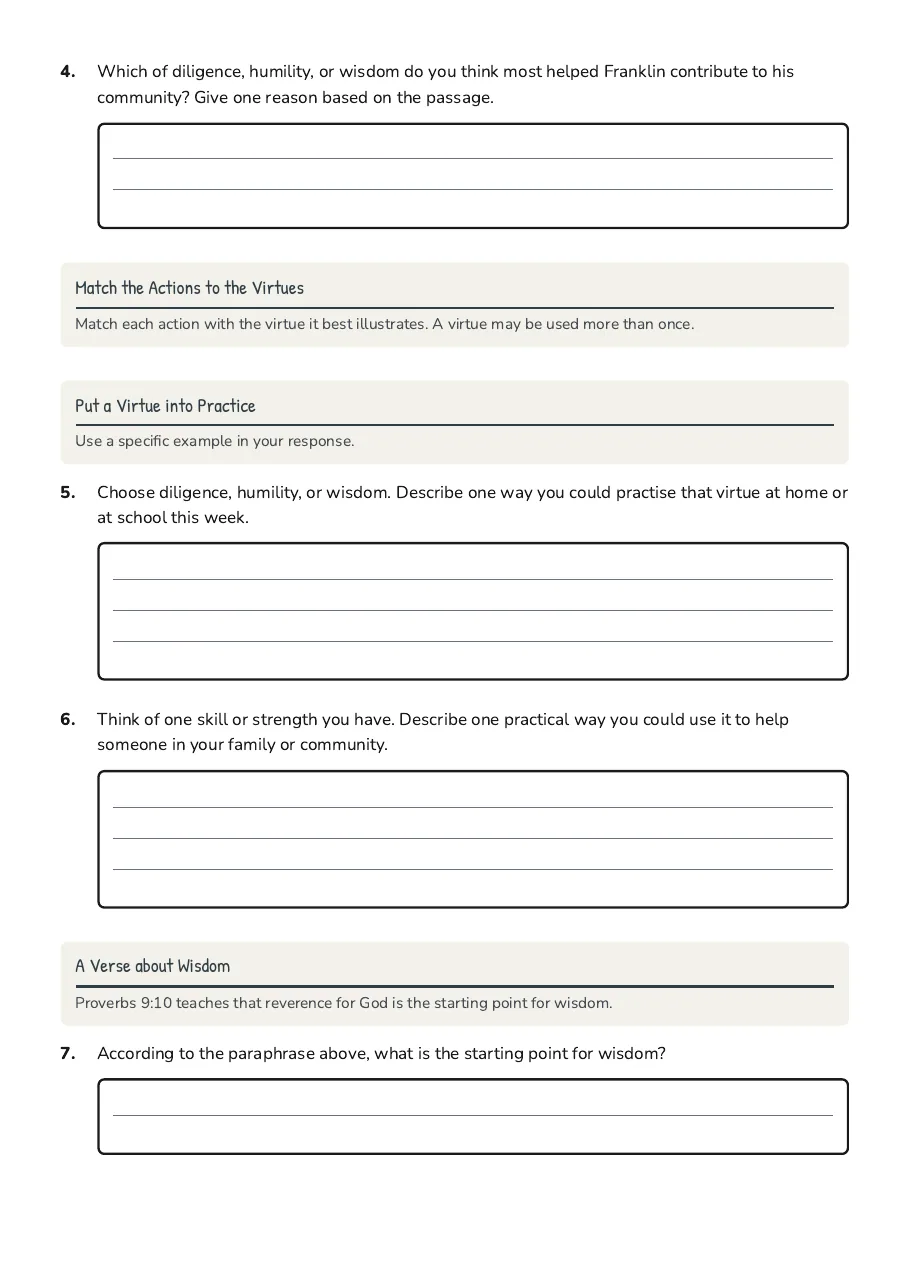
Match the Actions to the Virtues
Match each action with the virtue it best illustrates. A virtue may be used more than once.
Put a Virtue into Practice
Use a specific example in your response.
A Verse about Wisdom
Proverbs 9:10 teaches that reverence for God is the starting point for wisdom.
3 printable pages
Page 1
Page 2
Page 3
About This Worksheet
Free in Kuraplan
Sign up free, grab the PDF, and customize it for your class.
Print-Ready
Formatted for standard paper. Clean layout, easy to read.
AI-Generated
Created with Kuraplan's AI, designed for real classroom use.
For Teachers & Parents
Use in classrooms, for homework, tutoring, or homeschool.
Need a custom version of this worksheet?
Kuraplan's AI generates custom worksheets in seconds — differentiated for every learner, aligned to your curriculum.
Generate Custom Worksheets — Free