Language and Cultural Identity
A free languages worksheet ready for your classroom. Open in Kuraplan to grab the print-ready PDF, customize it for your students, or generate a fresh version in seconds.
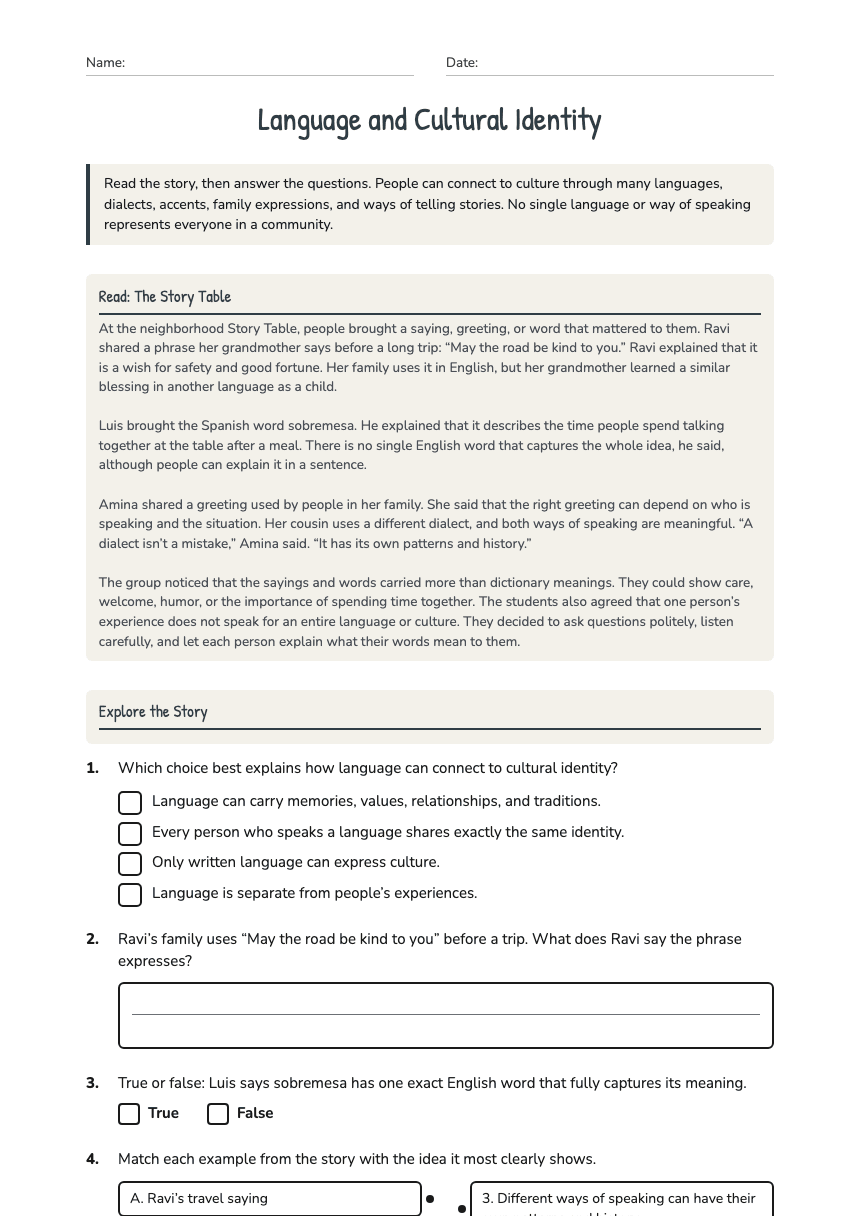
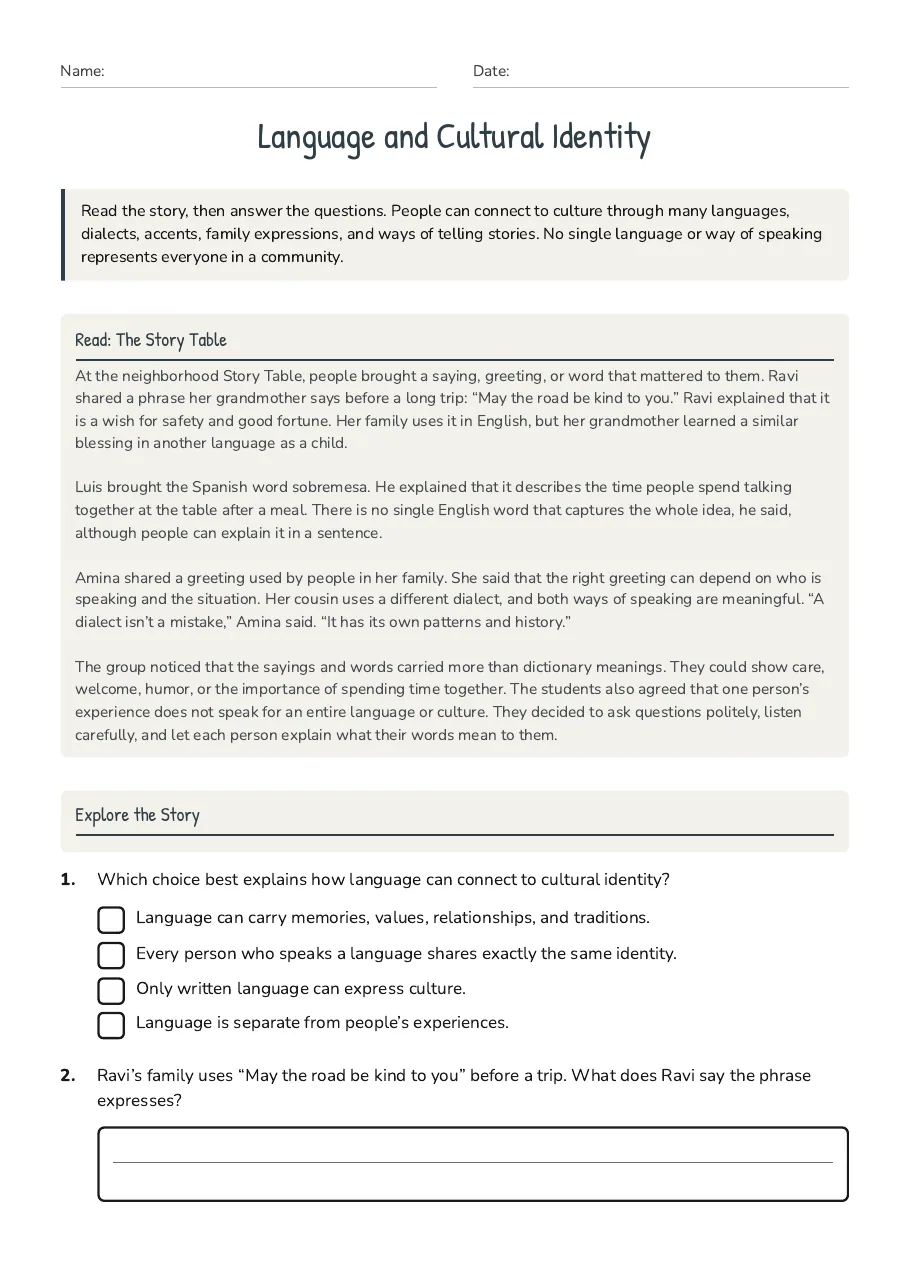
Language and Cultural Identity
Read: The Story Table
At the neighborhood Story Table, people brought a saying, greeting, or word that mattered to them. Ravi shared a phrase her grandmother says before a long trip: “May the road be kind to you.” Ravi explained that it is a wish for safety and good fortune. Her family uses it in English, but her grandmother learned a similar blessing in another language as a child. Luis brought the Spanish word sobremesa. He explained that it describes the time people spend talking together at the table after a meal. There is no single English word that captures the whole idea, he said, although people can explain it in a sentence. Amina shared a greeting used by people in her family. She said that the right greeting can depend on who is speaking and the situation. Her cousin uses a different dialect, and both ways of speaking are meaningful. “A dialect isn’t a mistake,” Amina said. “It has its own patterns and history.” The group noticed that the sayings and words carried more than dictionary meanings. They could show care, welcome, humor, or the importance of spending time together. The students also agreed that one person’s experience does not speak for an entire language or culture. They decided to ask questions politely, listen carefully, and let each person explain what their words mean to them.
Explore the Story
- Language can carry memories, values, relationships, and traditions.
- Every person who speaks a language shares exactly the same identity.
- Only written language can express culture.
- Language is separate from people’s experiences.
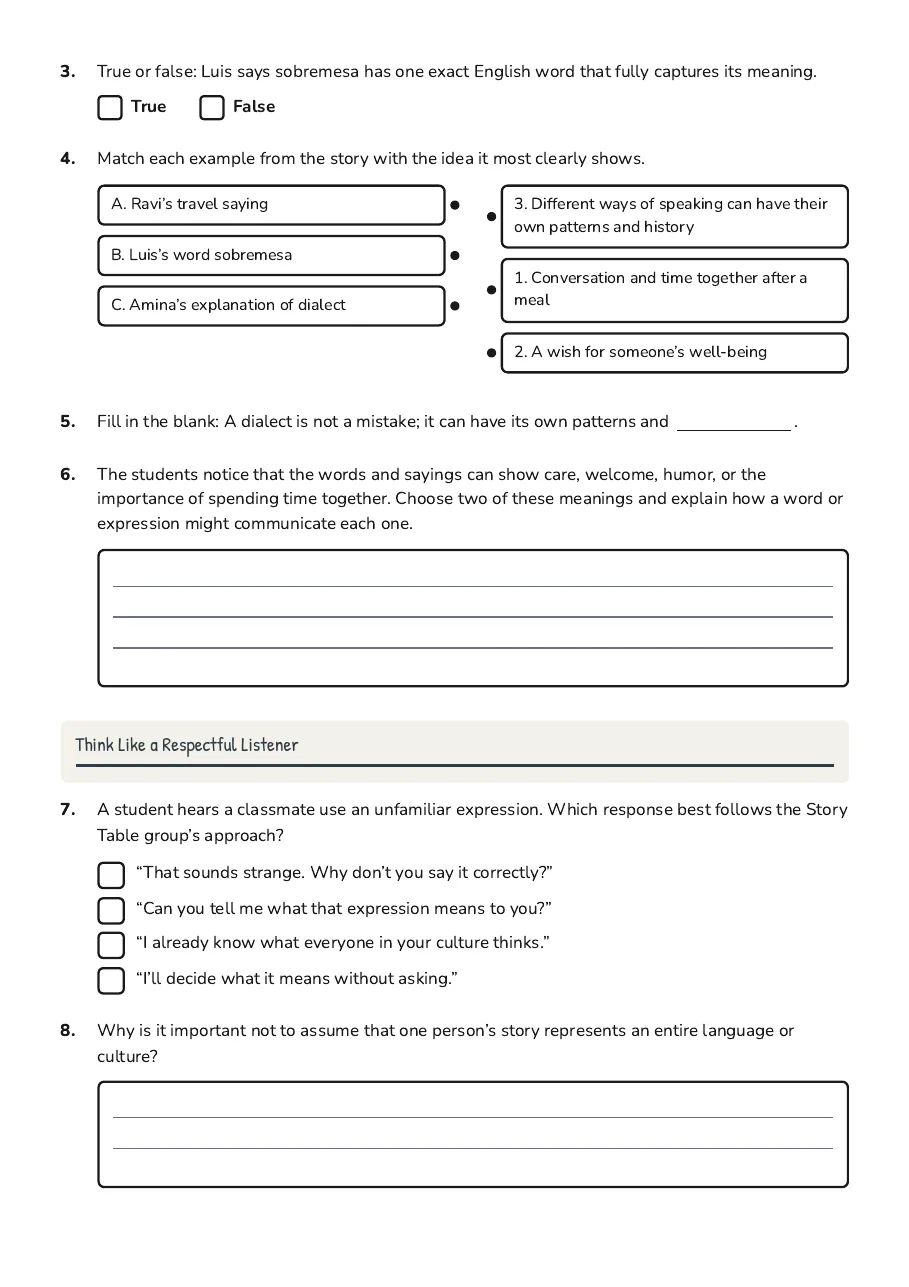
- A. Ravi’s travel saying
- B. Luis’s word sobremesa
- C. Amina’s explanation of dialect
- 3. Different ways of speaking can have their own patterns and history
- 1. Conversation and time together after a meal
- 2. A wish for someone’s well-being
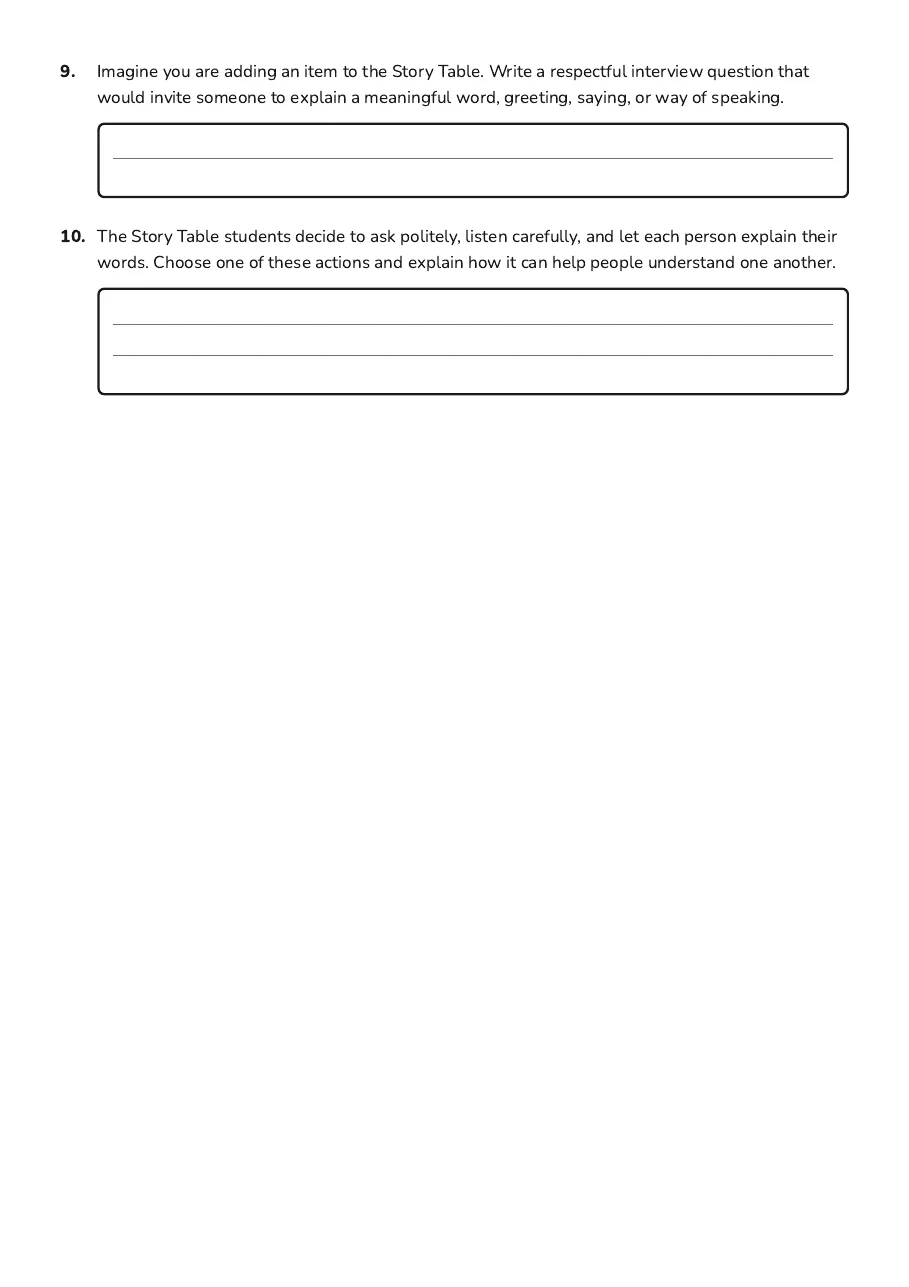
Think Like a Respectful Listener
- “That sounds strange. Why don’t you say it correctly?”
- “Can you tell me what that expression means to you?”
- “I already know what everyone in your culture thinks.”
- “I’ll decide what it means without asking.”
3 printable pages
Page 1
Page 2
Page 3
About This Worksheet
Free in Kuraplan
Sign up free, grab the PDF, and customize it for your class.
Print-Ready
Formatted for standard paper. Clean layout, easy to read.
AI-Generated
Created with Kuraplan's AI, designed for real classroom use.
For Teachers & Parents
Use in classrooms, for homework, tutoring, or homeschool.
Need a custom version of this worksheet?
Kuraplan's AI generates custom worksheets in seconds — differentiated for every learner, aligned to your curriculum.
Generate Custom Worksheets — FreeMore Languages Worksheets
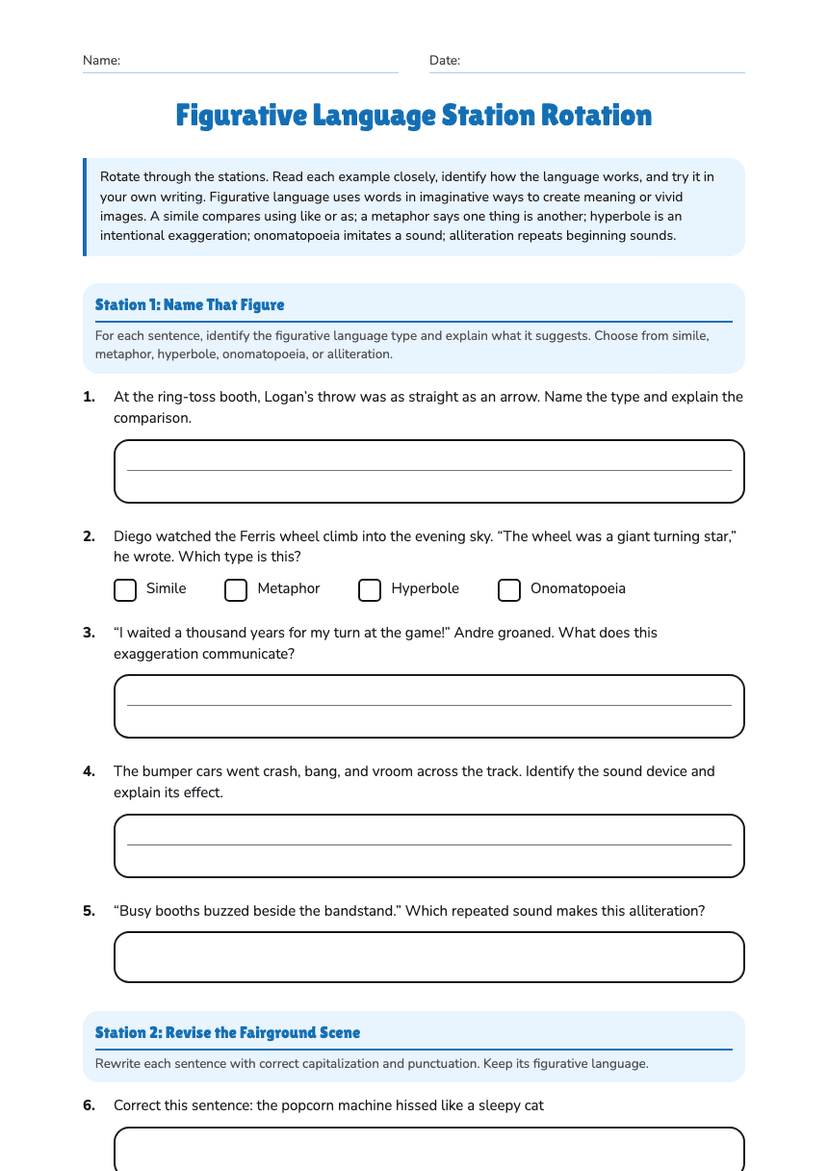
Figurative Language Station Rotation
Free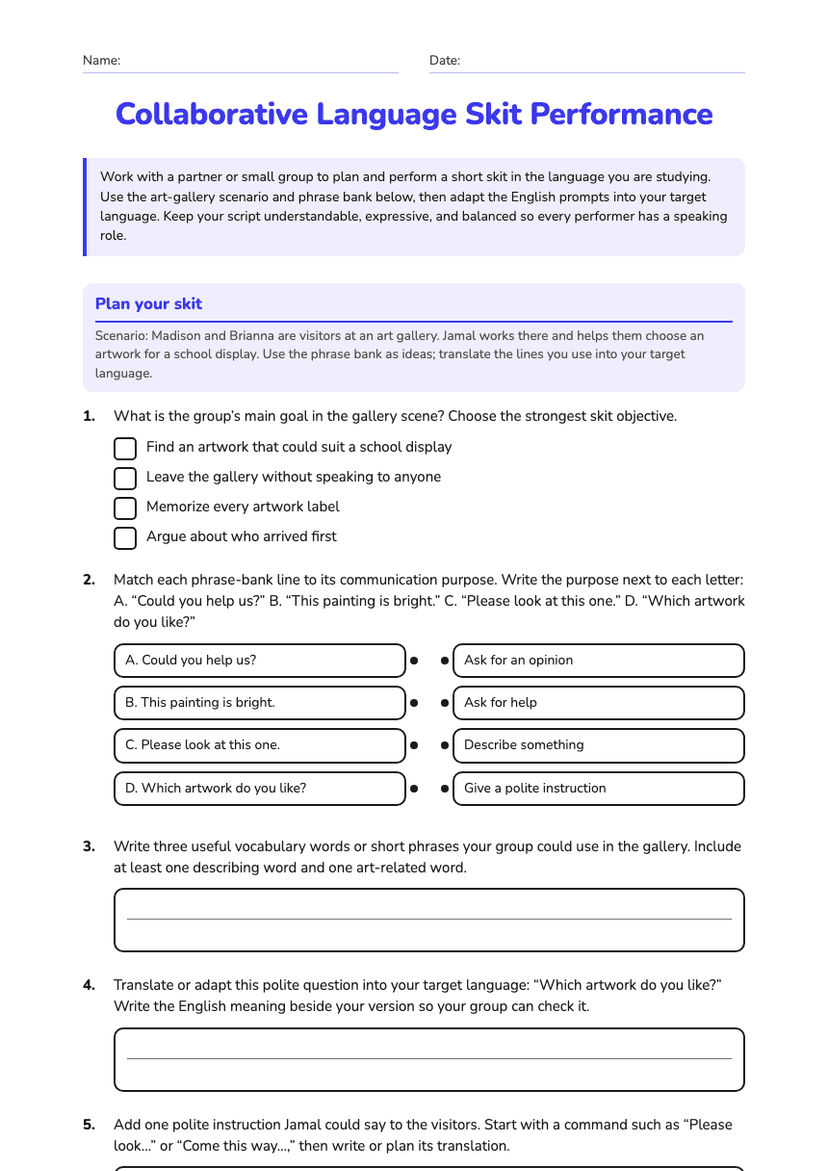
Collaborative Language Skit Performance
Free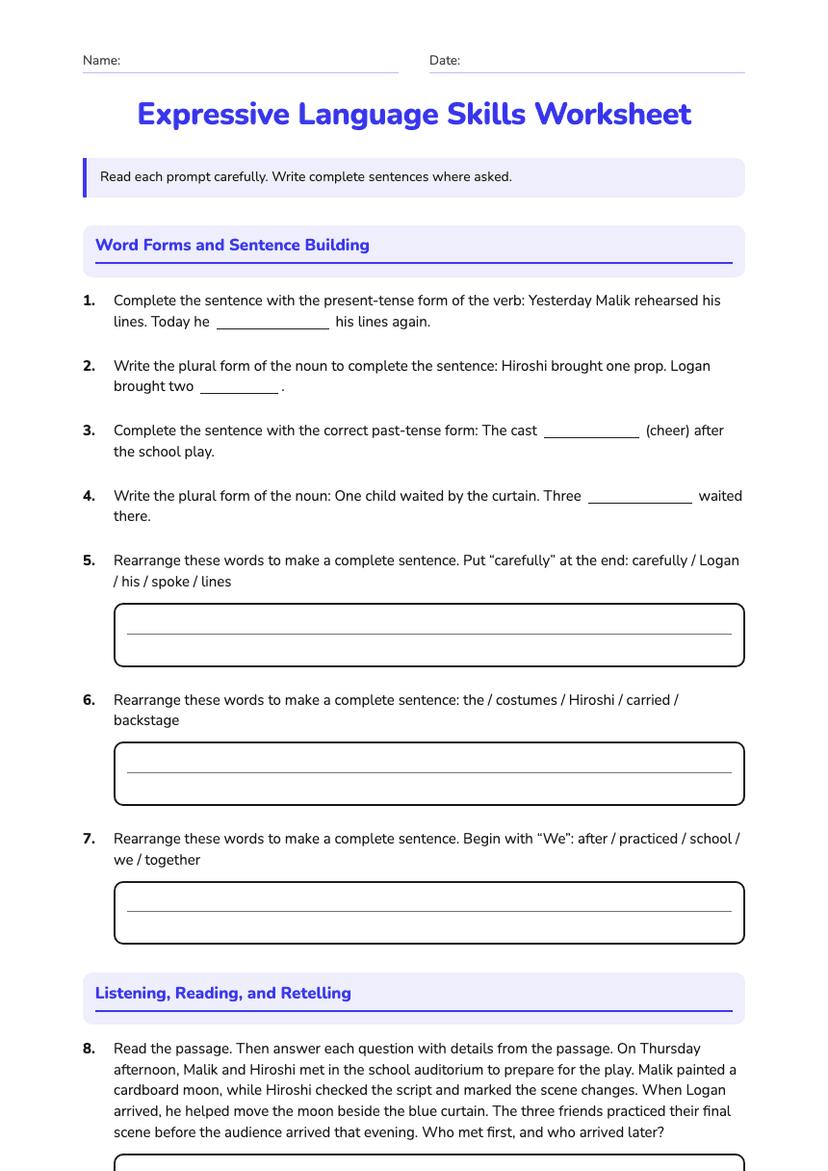
Expressive Language Skills Worksheet
Free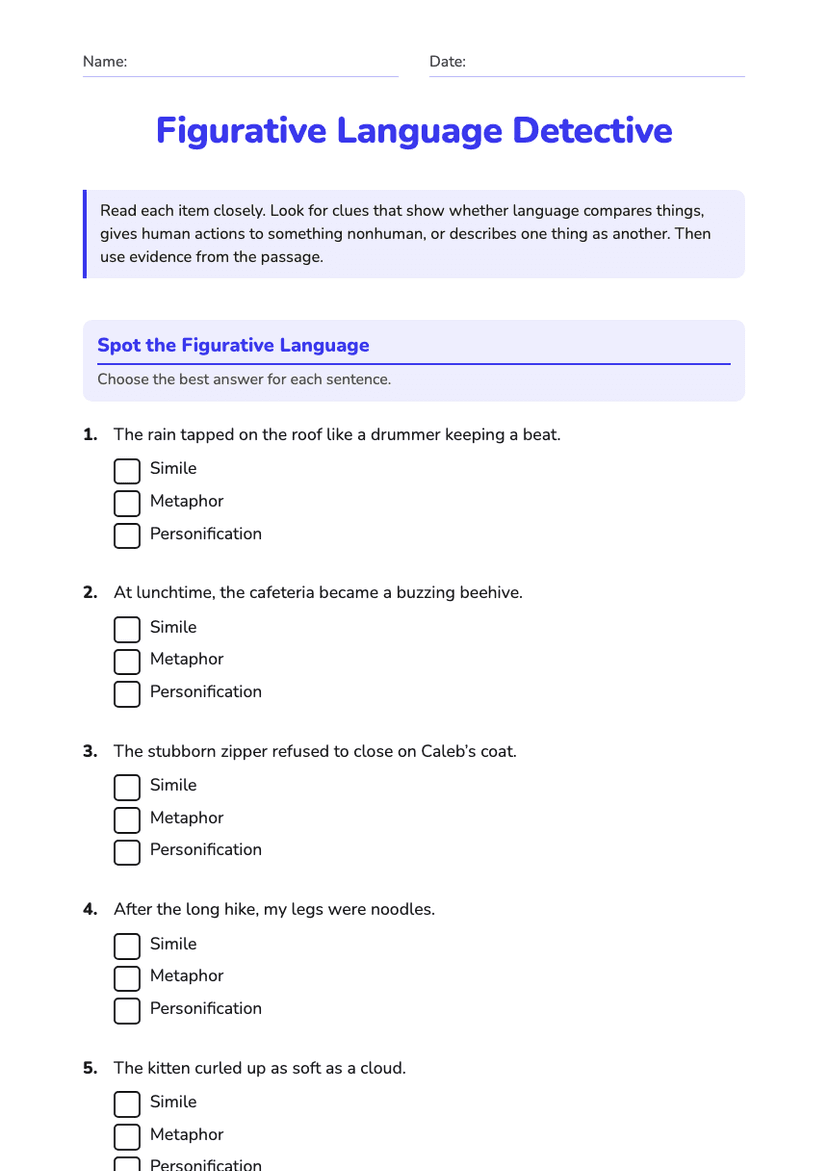
Figurative Language Detective
Free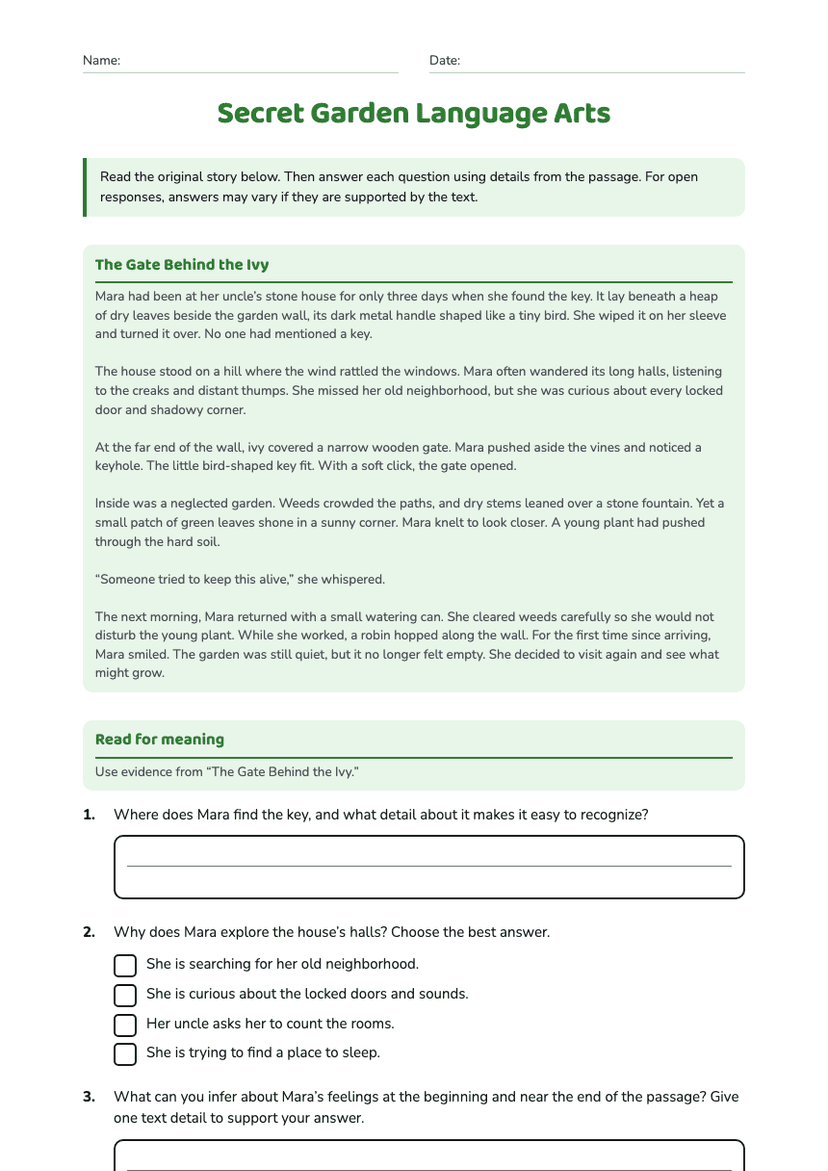
Secret Garden Language Arts
Free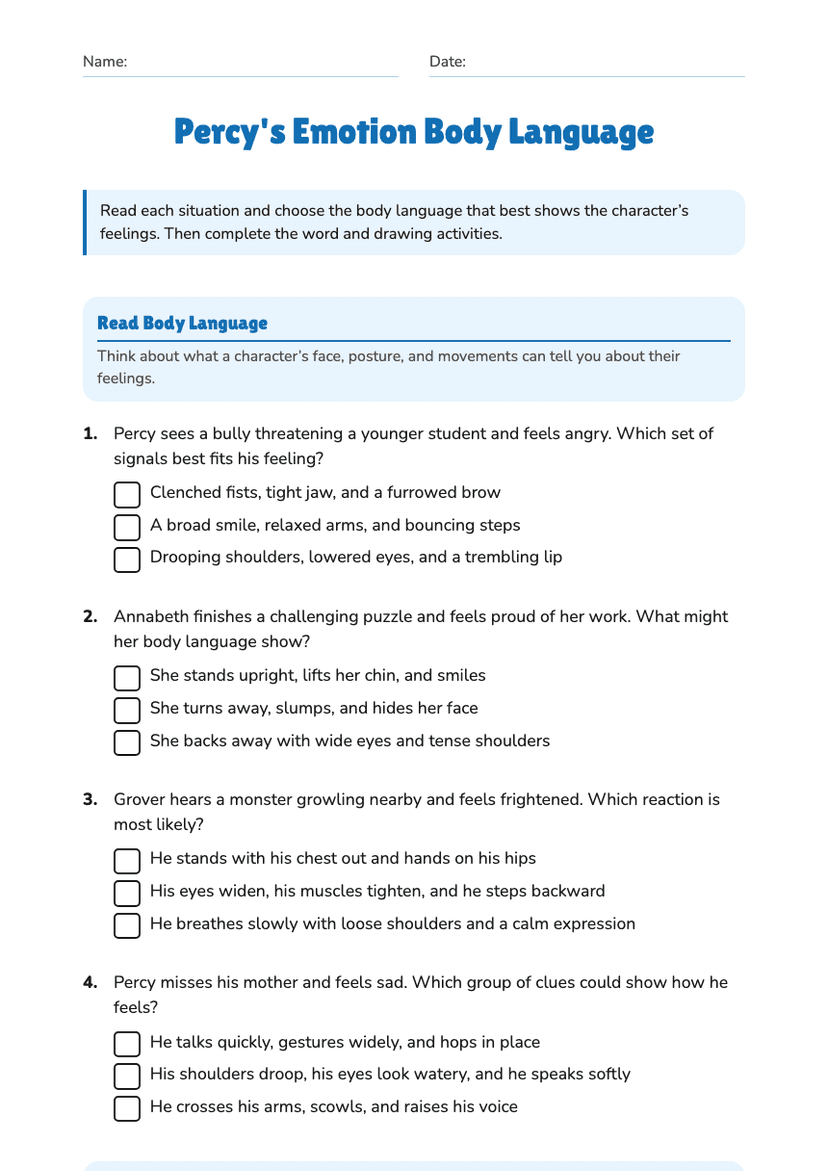
Percy's Emotion Body Language
Free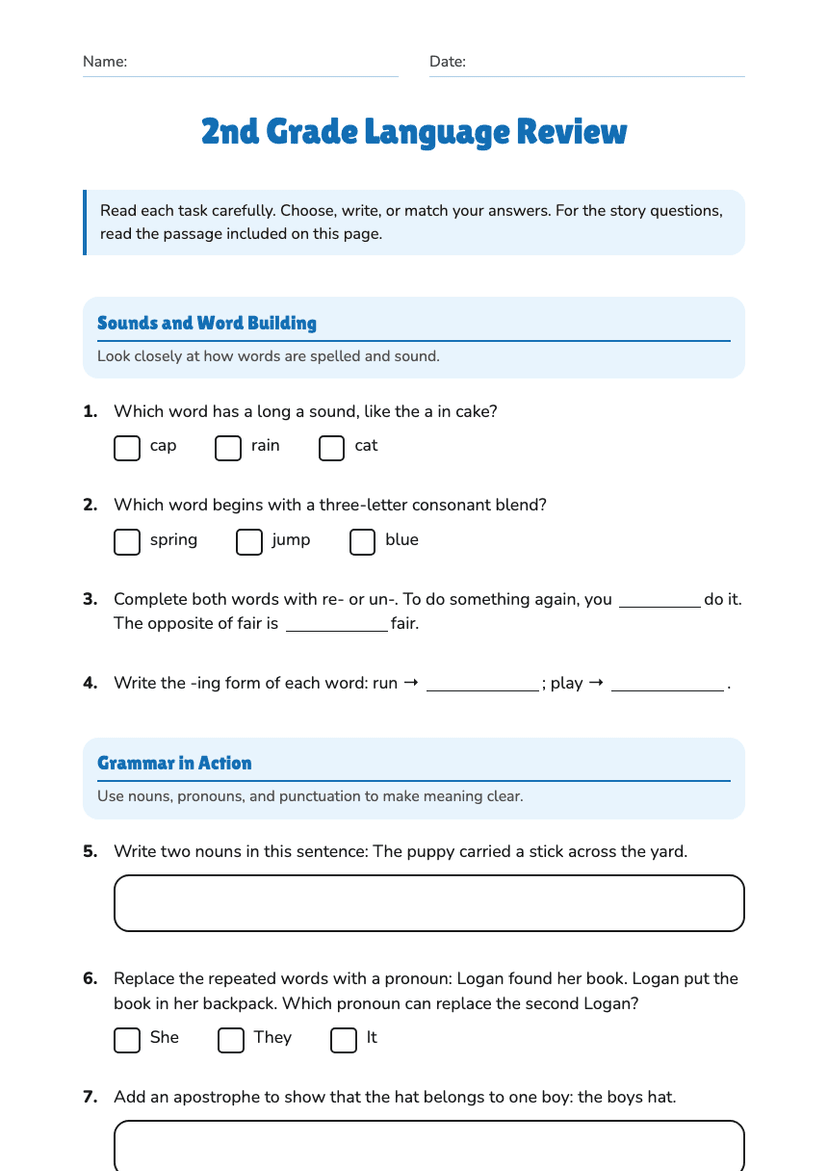
2nd Grade Language Review
Free