Photosynthesis Investigation Worksheet
A free science worksheet ready for your classroom. Open in Kuraplan to grab the print-ready PDF, customize it for your students, or generate a fresh version in seconds.
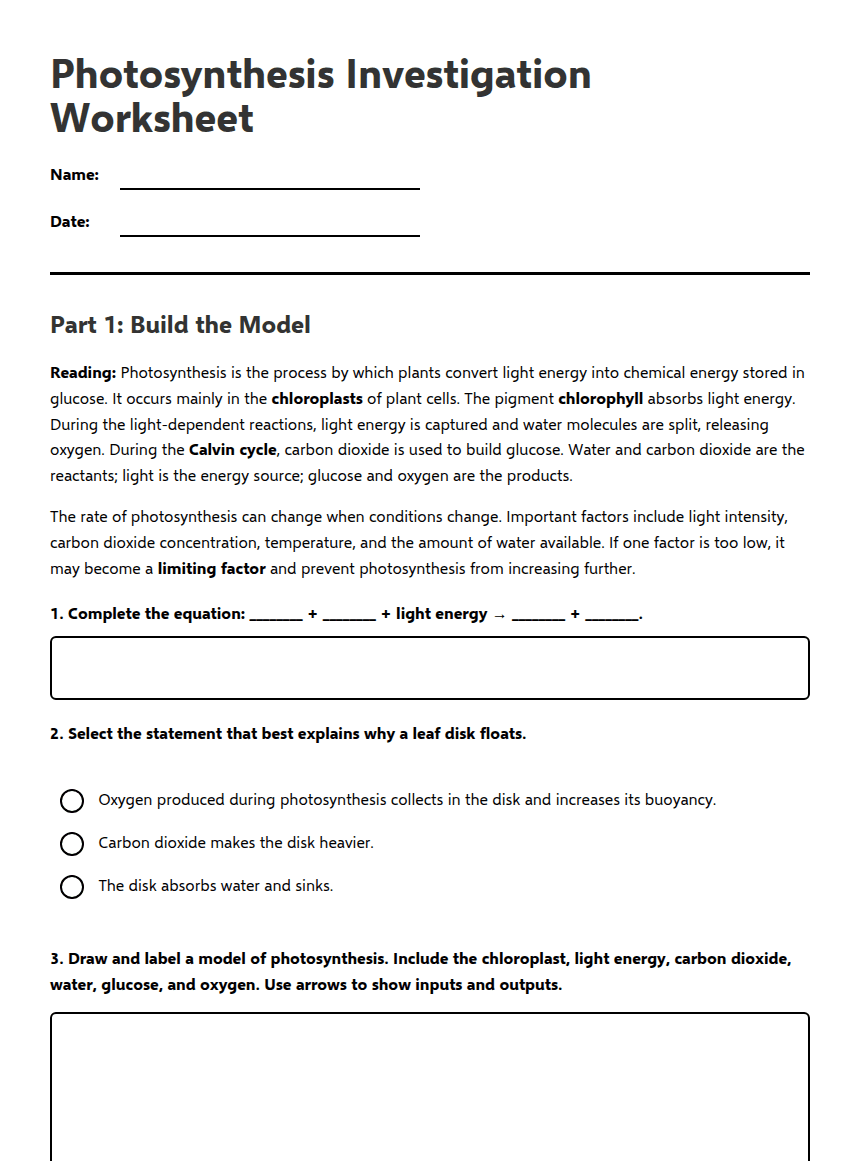
Photosynthesis Investigation Worksheet
Part 1: Build the Model
Reading: Photosynthesis is the process by which plants convert light energy into chemical energy stored in glucose. It occurs mainly in the chloroplasts of plant cells. The pigment chlorophyll absorbs light energy. During the light-dependent reactions, light energy is captured and water molecules are split, releasing oxygen. During the Calvin cycle, carbon dioxide is used to build glucose. Water and carbon dioxide are the reactants; light is the energy source; glucose and oxygen are the products.
The rate of photosynthesis can change when conditions change. Important factors include light intensity, carbon dioxide concentration, temperature, and the amount of water available. If one factor is too low, it may become a limiting factor and prevent photosynthesis from increasing further.
Part 2: Investigate Light and Photosynthesis
Investigation question: How does light affect the rate of photosynthesis?
Safety: Wear goggles, do not taste any materials, keep liquids away from electrical equipment, stop if equipment is damaged or liquid spills, and wash your hands when finished.
Procedure: 1. Place equal spinach leaf disks in dilute sodium bicarbonate solution. 2. Use a straw or syringe to remove trapped air from the disks. 3. Divide equal numbers of fully submerged disks between a bright-light cup and a dark cup. 4. Count the floating disks at 0, 5, 10, and 15 minutes. 5. Record observations clearly. Floating disks provide indirect evidence of oxygen production.
Independent variable: ________________________________________________
Dependent variable: _________________________________________________
One controlled variable: ______________________________________________
Bright-light cup: 0 minutes ______ 5 minutes ______ 10 minutes ______ 15 minutes ______
Dark cup: 0 minutes ______ 5 minutes ______ 10 minutes ______ 15 minutes ______
Part 3: Explain and Reflect
Claim:
Evidence and reasoning:
Answer Key
1. Carbon dioxide + water + light energy → glucose + oxygen.
2. Oxygen produced during photosynthesis collects in the disk and increases its buoyancy.
3. Diagram should show light entering the chloroplast; carbon dioxide and water entering; glucose and oxygen leaving.
4. A-3, B-1, C-4, D-2.
5. Independent variable: light condition or light availability. Dependent variable: number of floating disks or inferred oxygen production. Controls may include disk number and size, solution concentration, temperature, cup size, and time.
6-8. Answers depend on group data. Expected pattern: disks in bright light generally float sooner or in greater numbers than disks kept in darkness.
9. A strong response uses a numerical comparison, states whether the evidence supports the explanation, and identifies a limitation such as unequal disk size, temperature differences, incomplete air removal, or small sample size.
10. A different factor, such as carbon dioxide concentration, temperature, water availability, or chlorophyll capacity, may limit the rate even when more light is available.
11. Photosynthesis produces glucose and oxygen, which cellular respiration uses to release usable energy. Cellular respiration produces carbon dioxide and water, which photosynthesis can use.
12. Responses should include a clear claim, a specific data point or pattern, and reasoning connecting floating disks with oxygen production.
Teacher Notes and Literacy Alignment
Before materials are distributed, check that students can identify the independent and dependent variables and explain why disks must begin fully submerged. During the investigation, assess accurate sequencing, safety, role participation, counting, and data recording. Accept varied numerical results because groups may differ in disk size, light distance, or air removal.
RST.9-10.4: Students determine the meaning of technical terms such as reactant, product, chlorophyll, limiting factor, and buoyancy using context and the matching activity.
RST.9-10.5: Students analyze how the reading and numbered procedure organize information to explain and test a scientific question.
RST.9-10.7: Students translate written observations into a data record and line graph, then use quantitative evidence to evaluate an explanation.
About This Worksheet
Free in Kuraplan
Sign up free, grab the PDF, and customize it for your class.
Print-Ready
Formatted for standard paper. Clean layout, easy to read.
AI-Generated
Created with Kuraplan's AI, designed for real classroom use.
For Teachers & Parents
Use in classrooms, for homework, tutoring, or homeschool.
Need a custom version of this worksheet?
Kuraplan's AI generates custom worksheets in seconds — differentiated for every learner, aligned to your curriculum.
Generate Custom Worksheets — FreeMore Science Worksheets
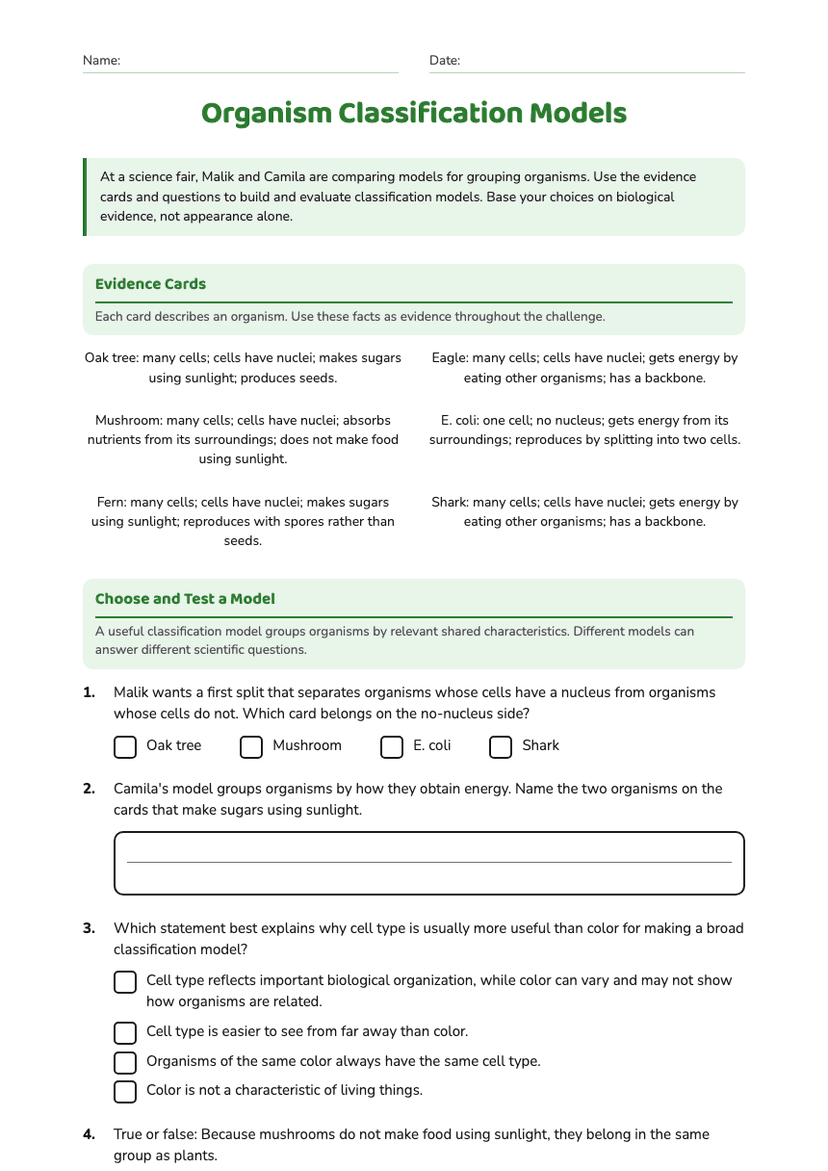
Organism Classification Models
Free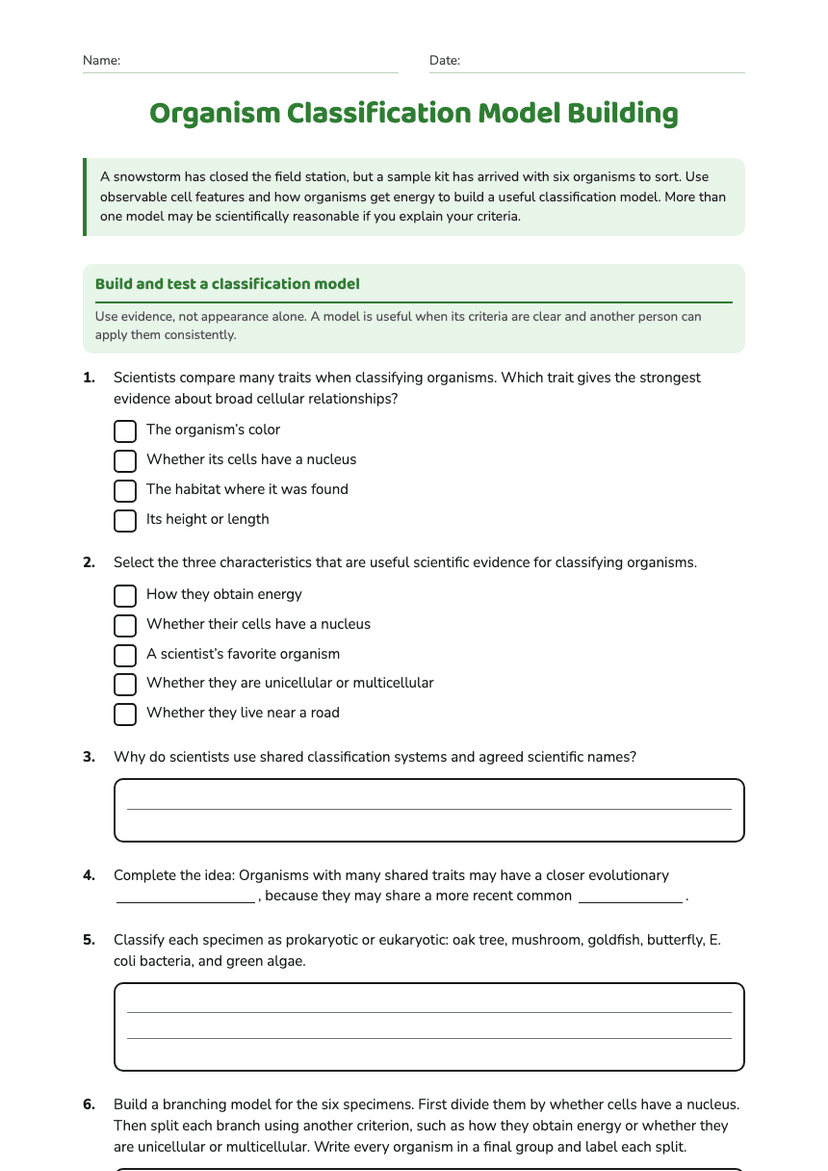
Organism Classification Model Building
Free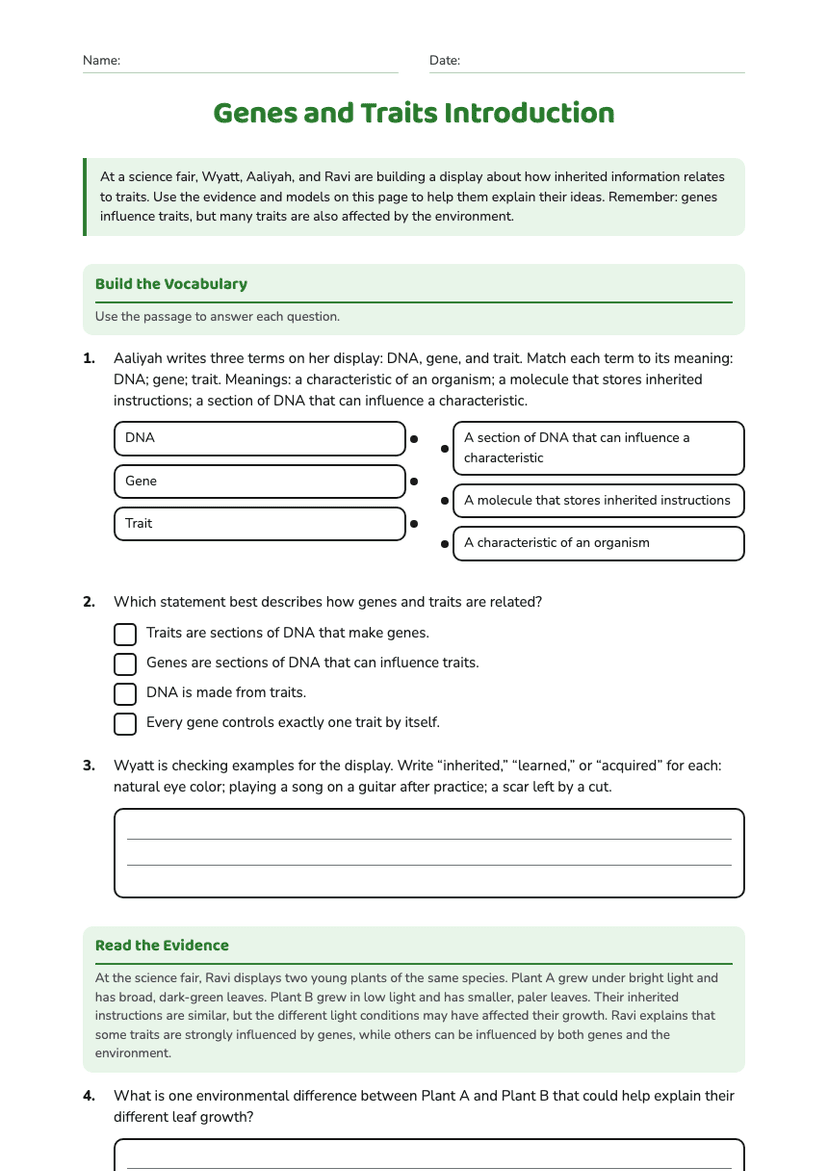
Genes and Traits Introduction
Free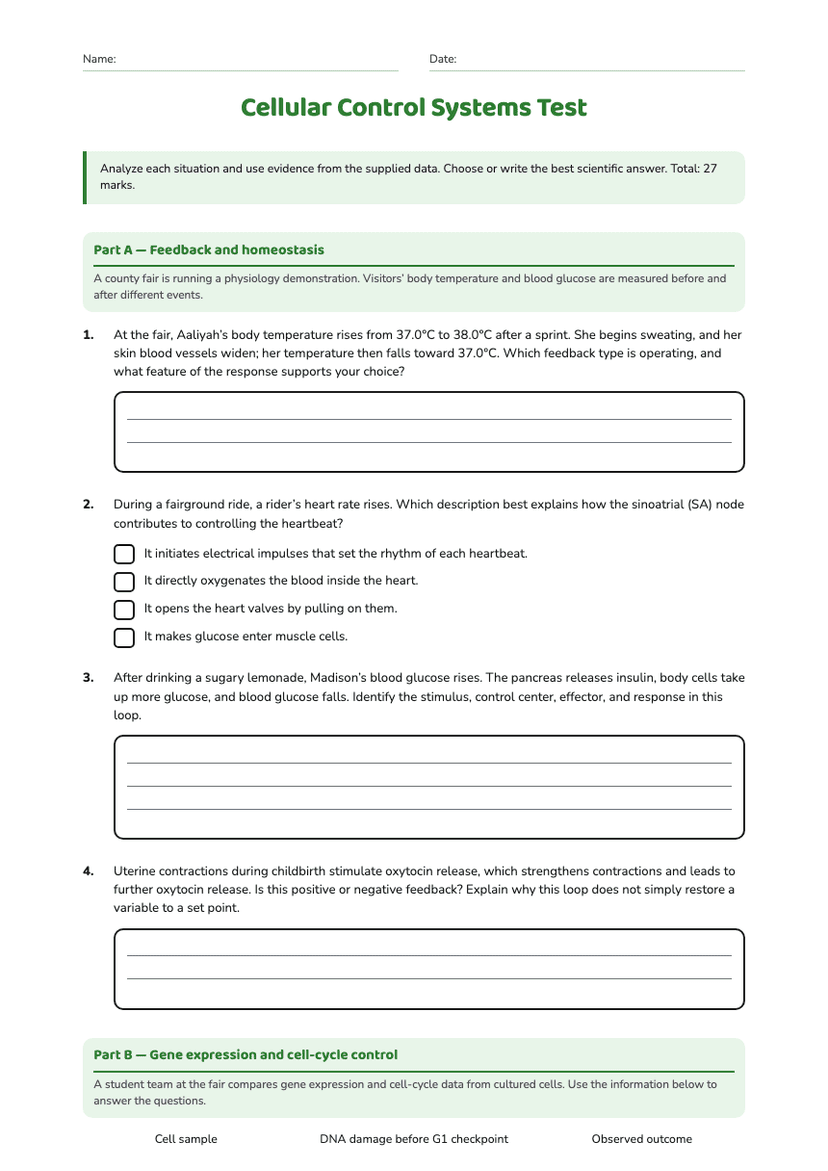
Cellular Control Systems Test
Free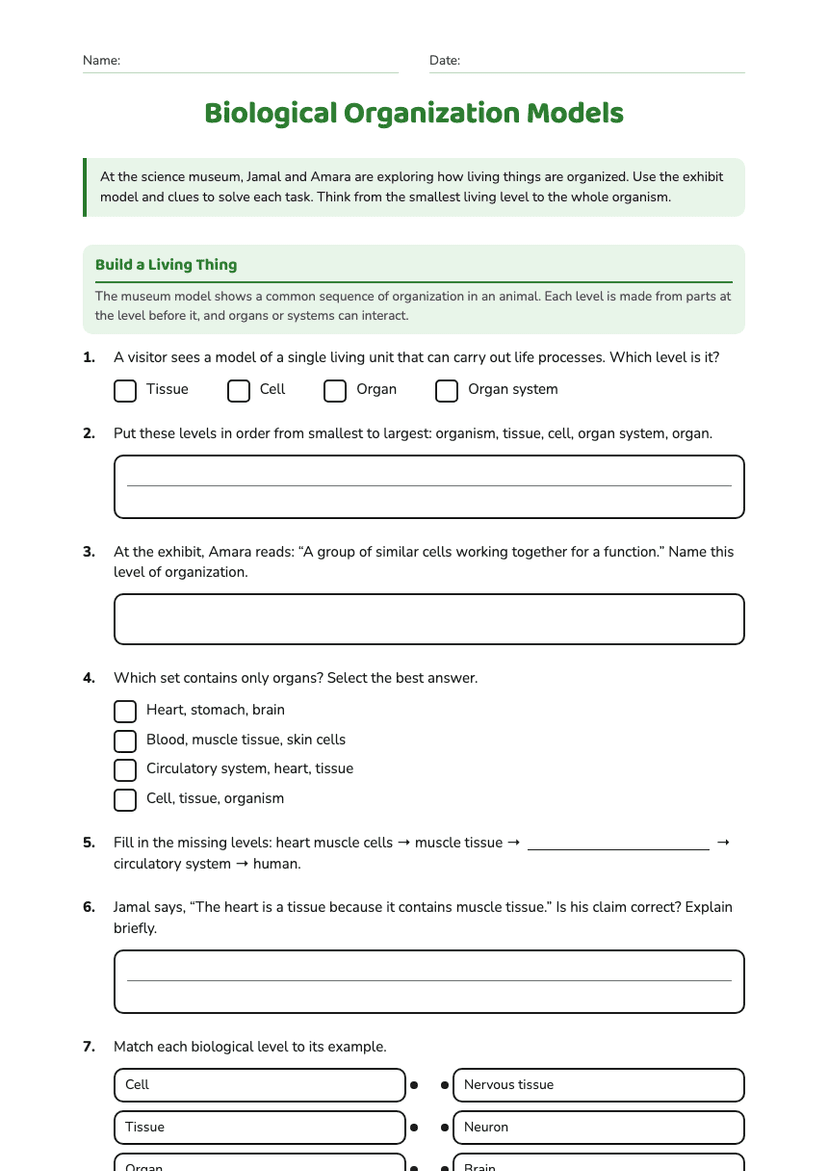
Biological Organization Models
Free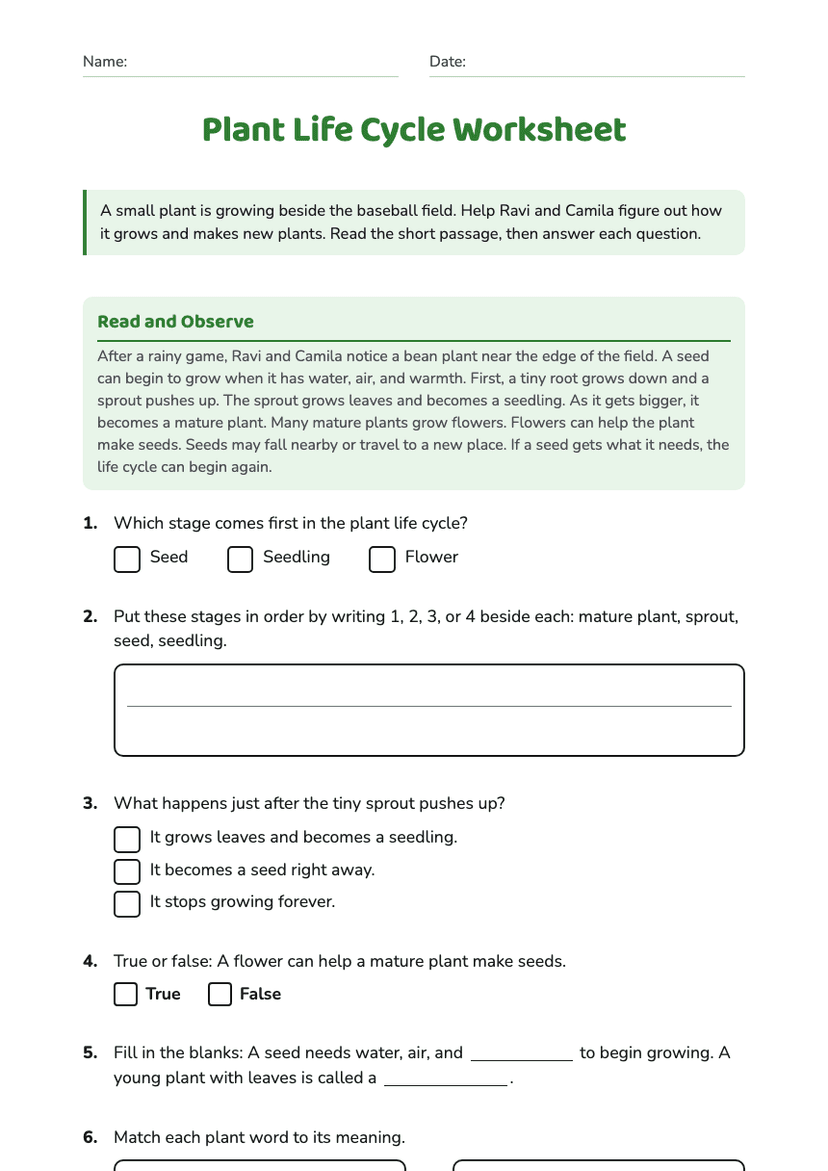
Plant Life Cycle Worksheet
Free
Reproduction Models Worksheet
Free