Salem Witch Trials Inferences
A free english (ela) worksheet ready for your classroom. Open in Kuraplan to grab the print-ready PDF, customize it for your students, or generate a fresh version in seconds.
Salem Witch Trials Inferences
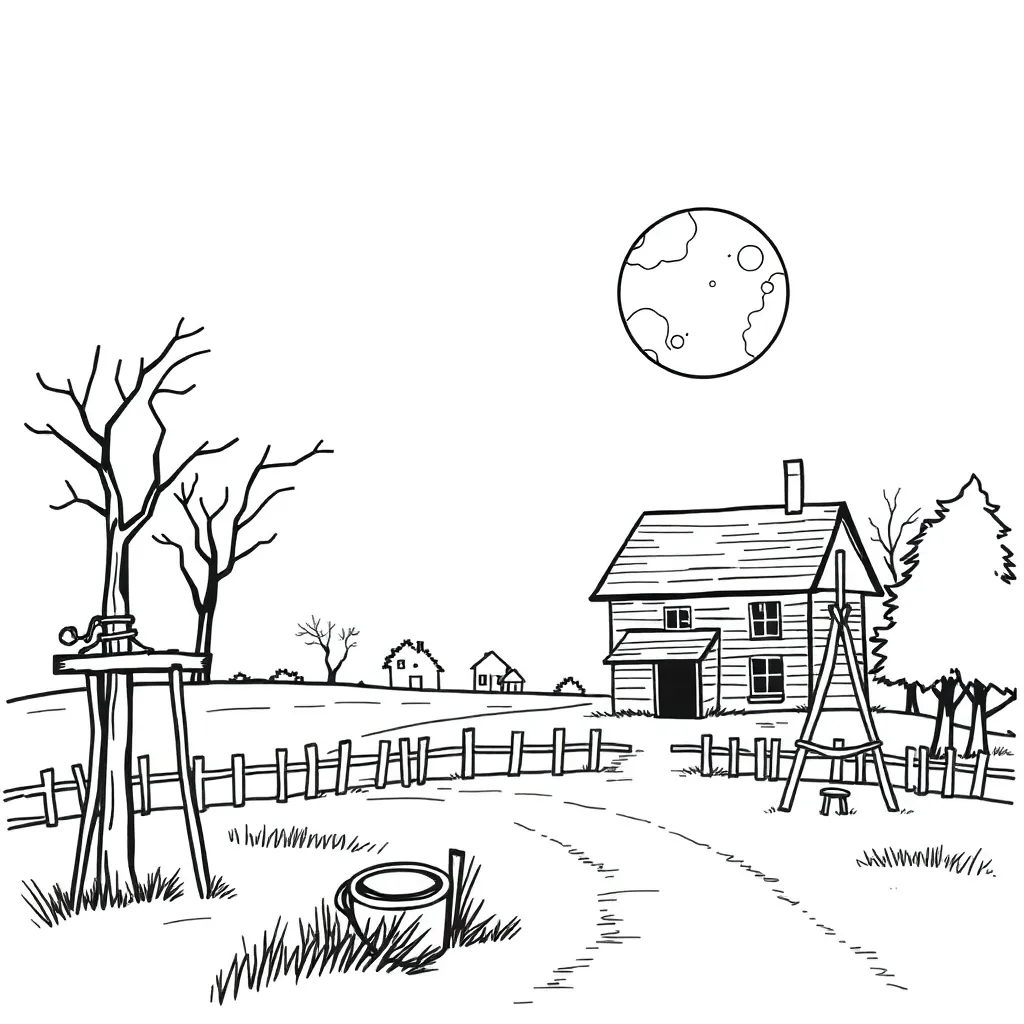
📖 Reading Passage: The Salem Witch Trials
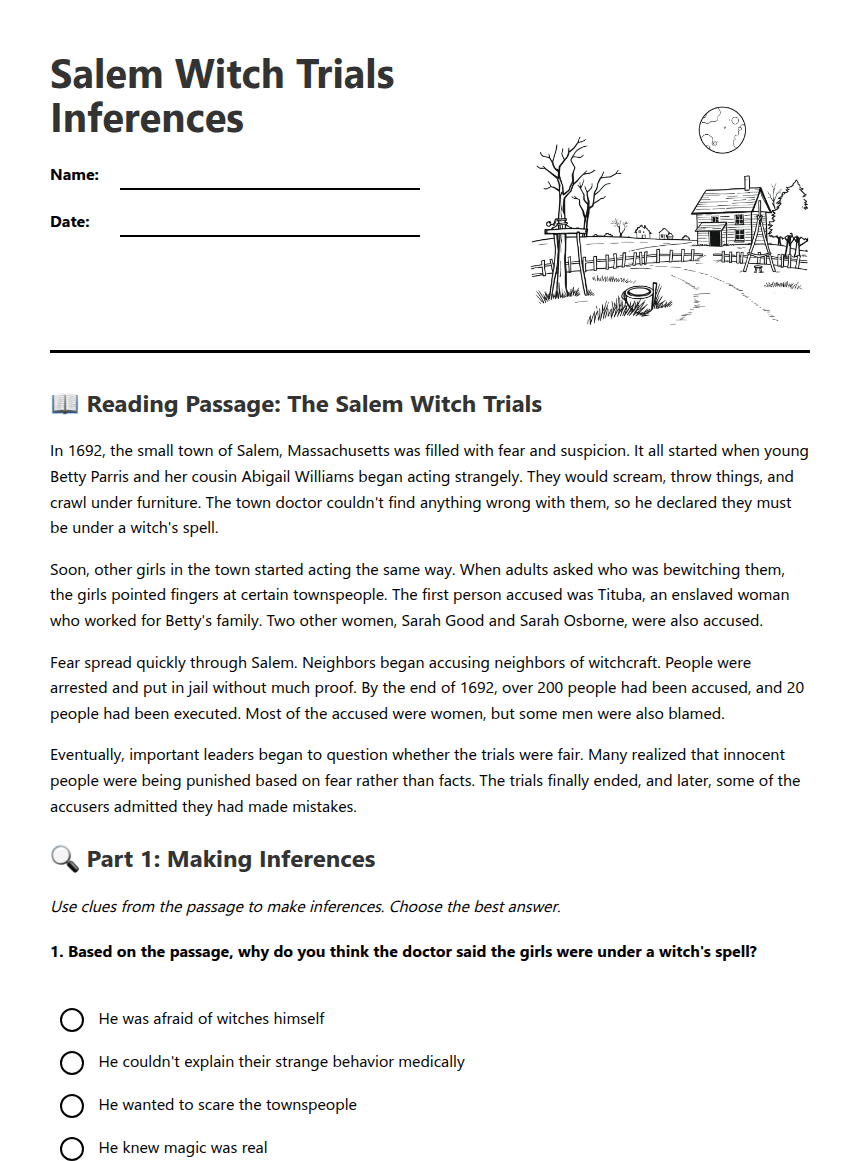
In 1692, the small town of Salem, Massachusetts was filled with fear and suspicion. It all started when young Betty Parris and her cousin Abigail Williams began acting strangely. They would scream, throw things, and crawl under furniture. The town doctor couldn't find anything wrong with them, so he declared they must be under a witch's spell.
Soon, other girls in the town started acting the same way. When adults asked who was bewitching them, the girls pointed fingers at certain townspeople. The first person accused was Tituba, an enslaved woman who worked for Betty's family. Two other women, Sarah Good and Sarah Osborne, were also accused.
Fear spread quickly through Salem. Neighbors began accusing neighbors of witchcraft. People were arrested and put in jail without much proof. By the end of 1692, over 200 people had been accused, and 20 people had been executed. Most of the accused were women, but some men were also blamed.
Eventually, important leaders began to question whether the trials were fair. Many realized that innocent people were being punished based on fear rather than facts. The trials finally ended, and later, some of the accusers admitted they had made mistakes.
🔍 Part 1: Making Inferences
Use clues from the passage to make inferences. Choose the best answer.
✏️ Part 2: Text Evidence and Inferences
About This Worksheet
Free in Kuraplan
Sign up free, grab the PDF, and customize it for your class.
Print-Ready
Formatted for standard paper. Clean layout, easy to read.
AI-Generated
Created with Kuraplan's AI, designed for real classroom use.
For Teachers & Parents
Use in classrooms, for homework, tutoring, or homeschool.
Need a custom version of this worksheet?
Kuraplan's AI generates custom worksheets in seconds — differentiated for every learner, aligned to your curriculum.
Generate Custom Worksheets — FreeMore English (ELA) Worksheets
Theme and Textual Evidence
Free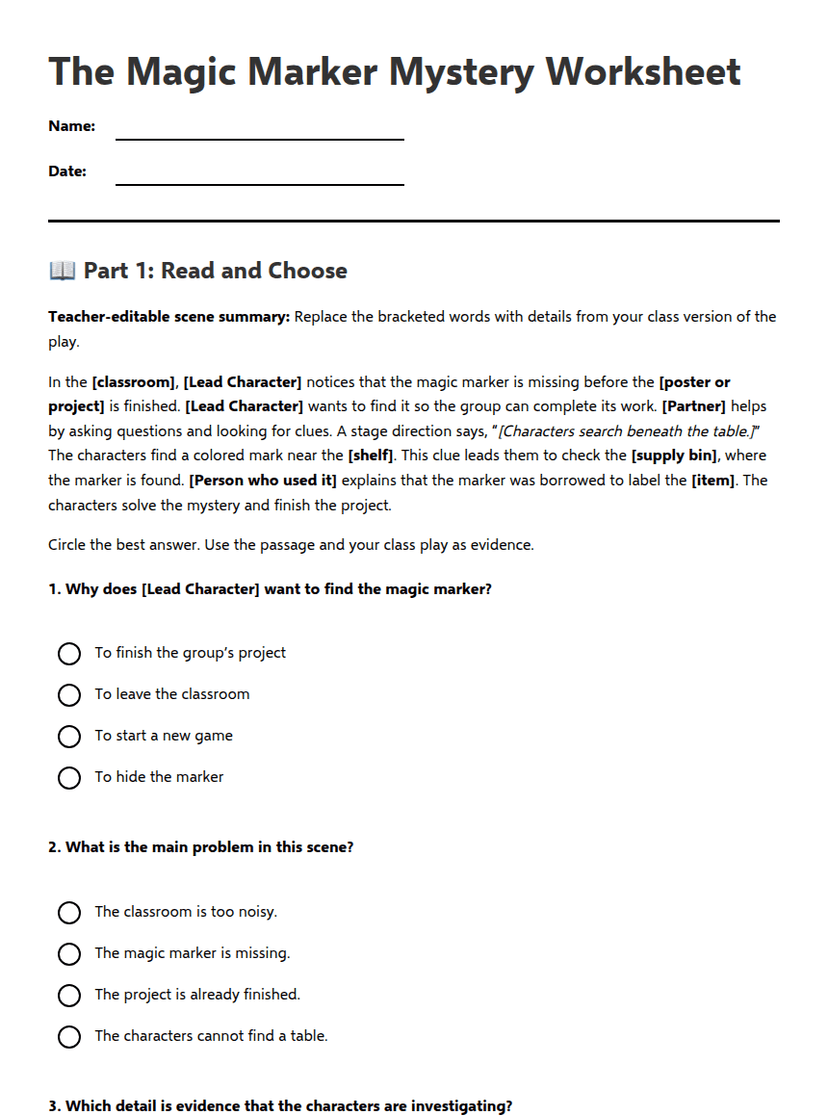
The Magic Marker Mystery Worksheet
Free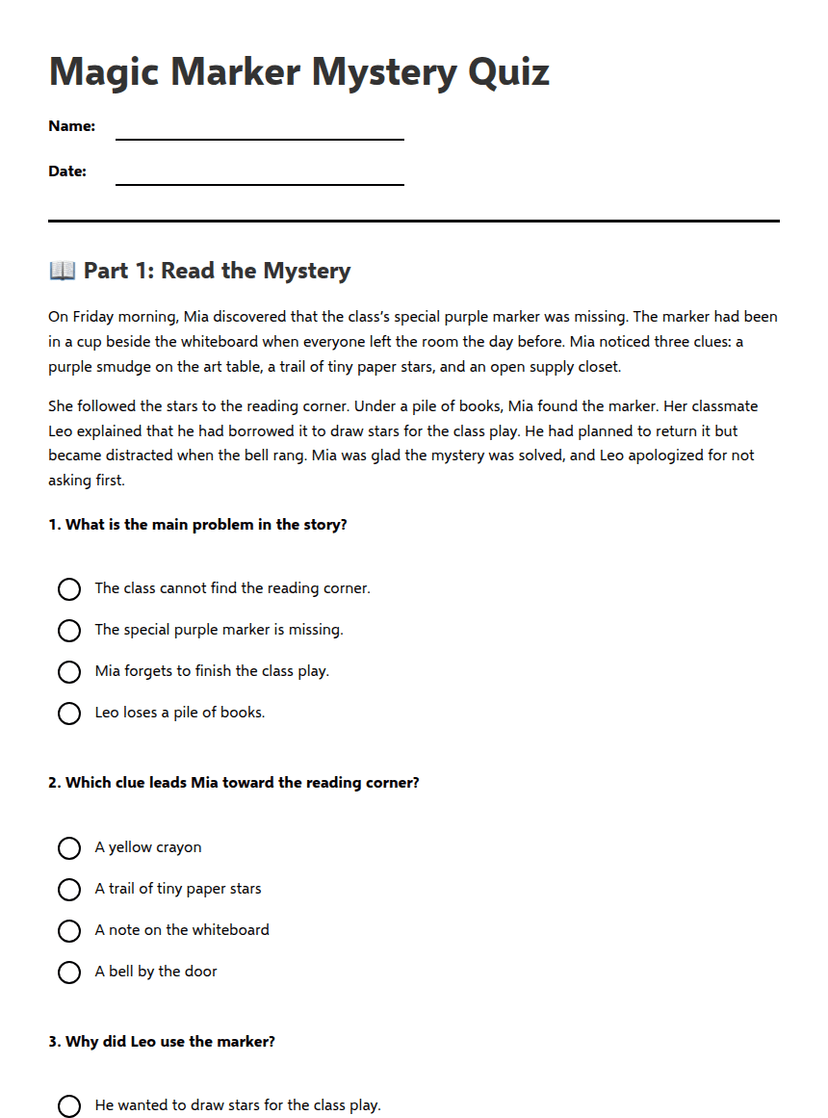
Magic Marker Mystery Quiz
Free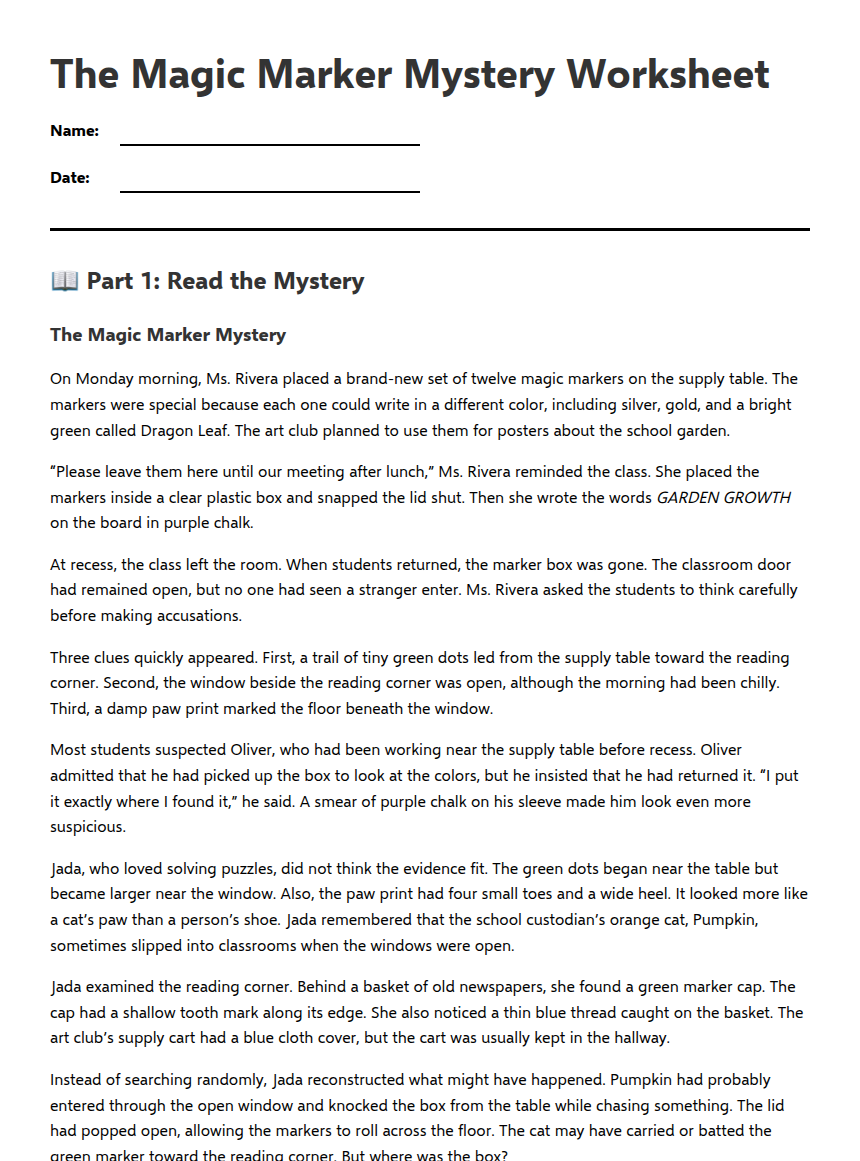
The Magic Marker Mystery Worksheet
Free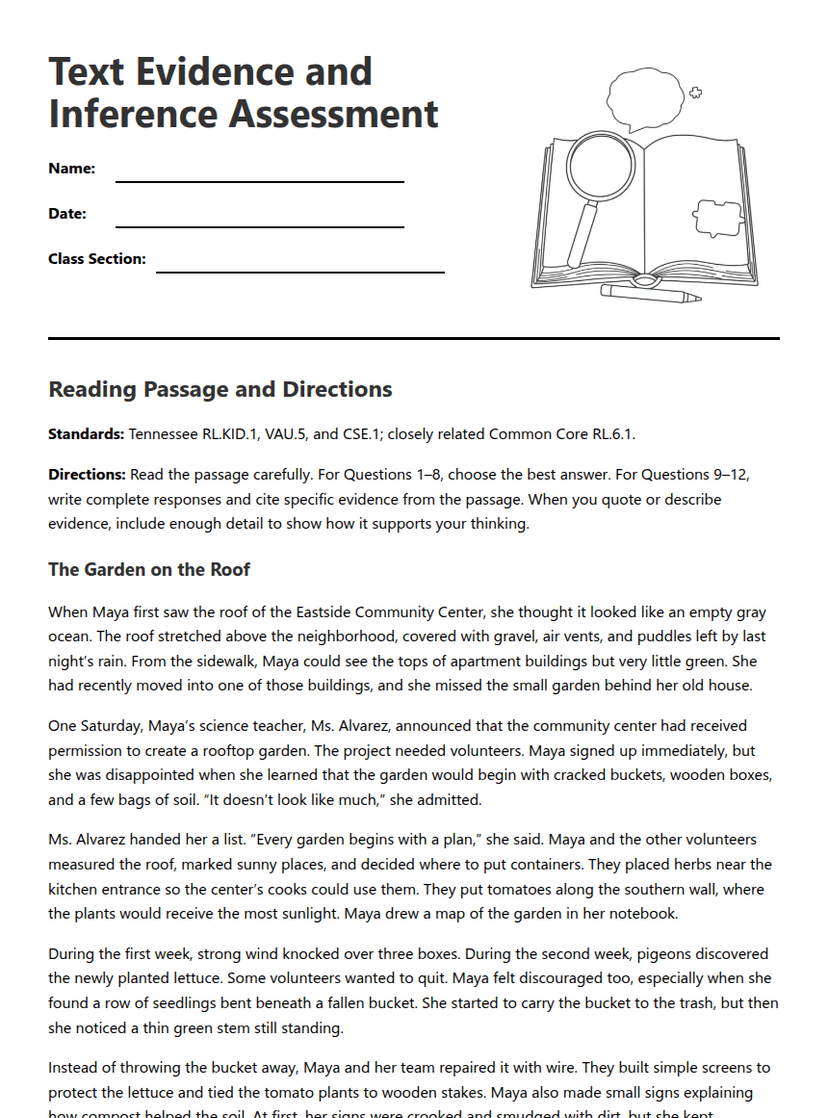
Text Evidence and Inference Assessment
Free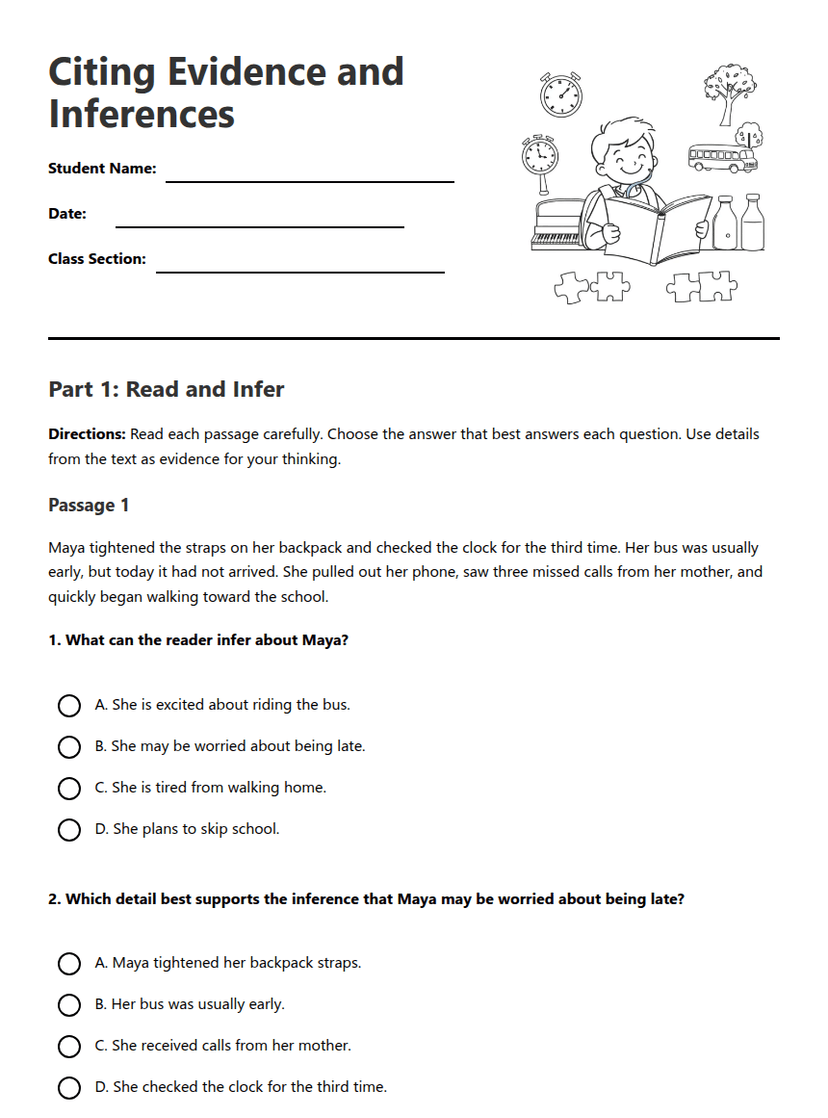
Citing Evidence and Inferences
Free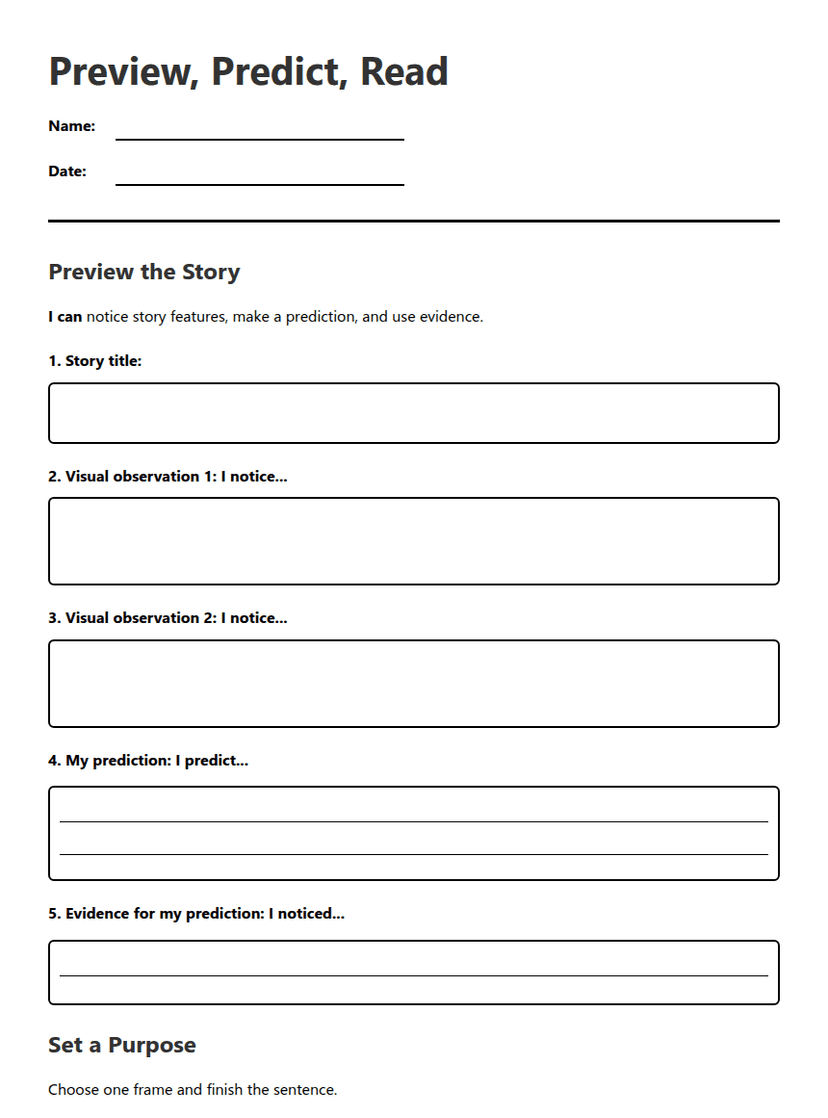
Preview, Predict, Read”】【
Free