English (ELA)FreePrintable

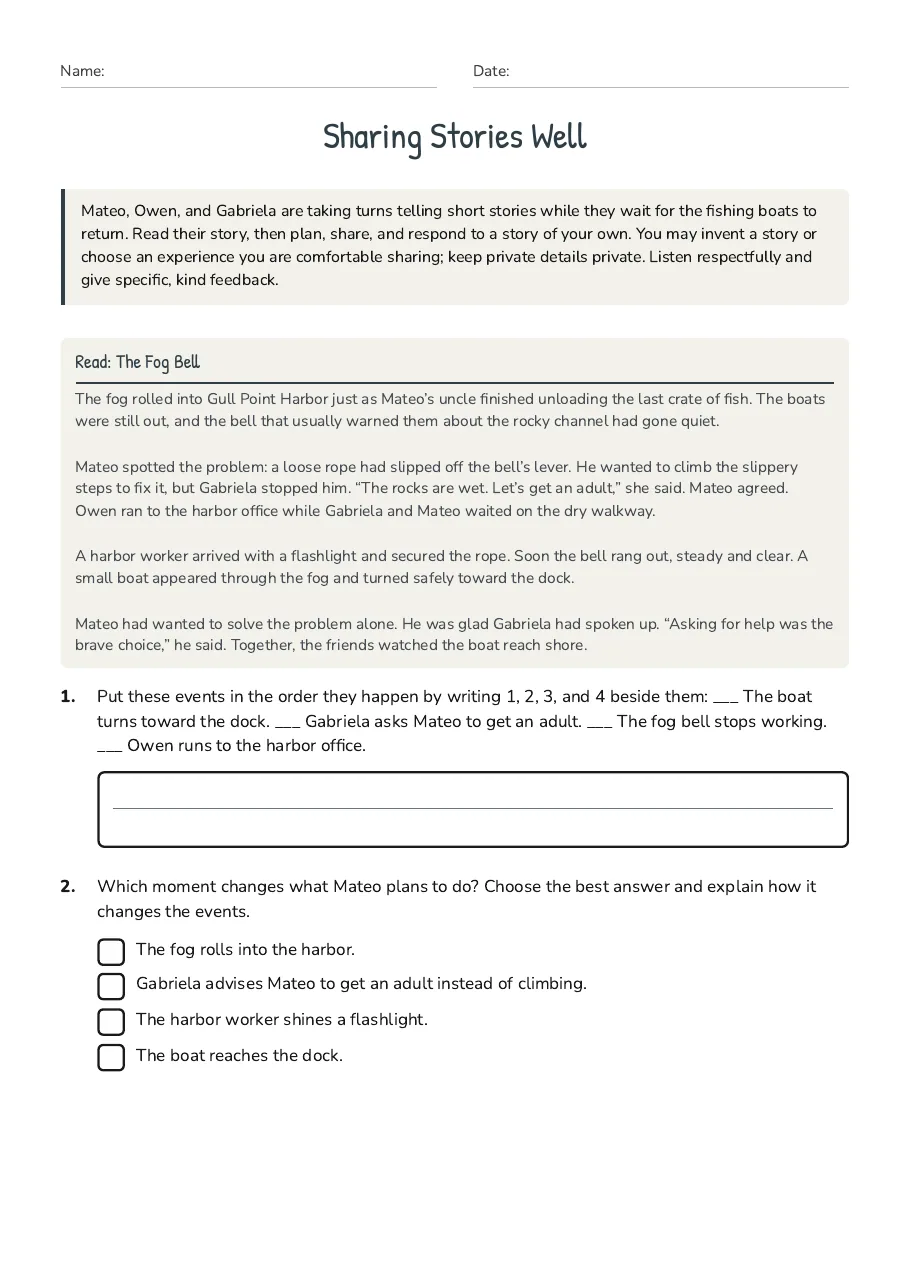
Sharing Stories Wellinermi

A free english (ela) worksheet ready for your classroom. Open in Kuraplan to grab the print-ready PDF, customize it for your students, or generate a fresh version in seconds.
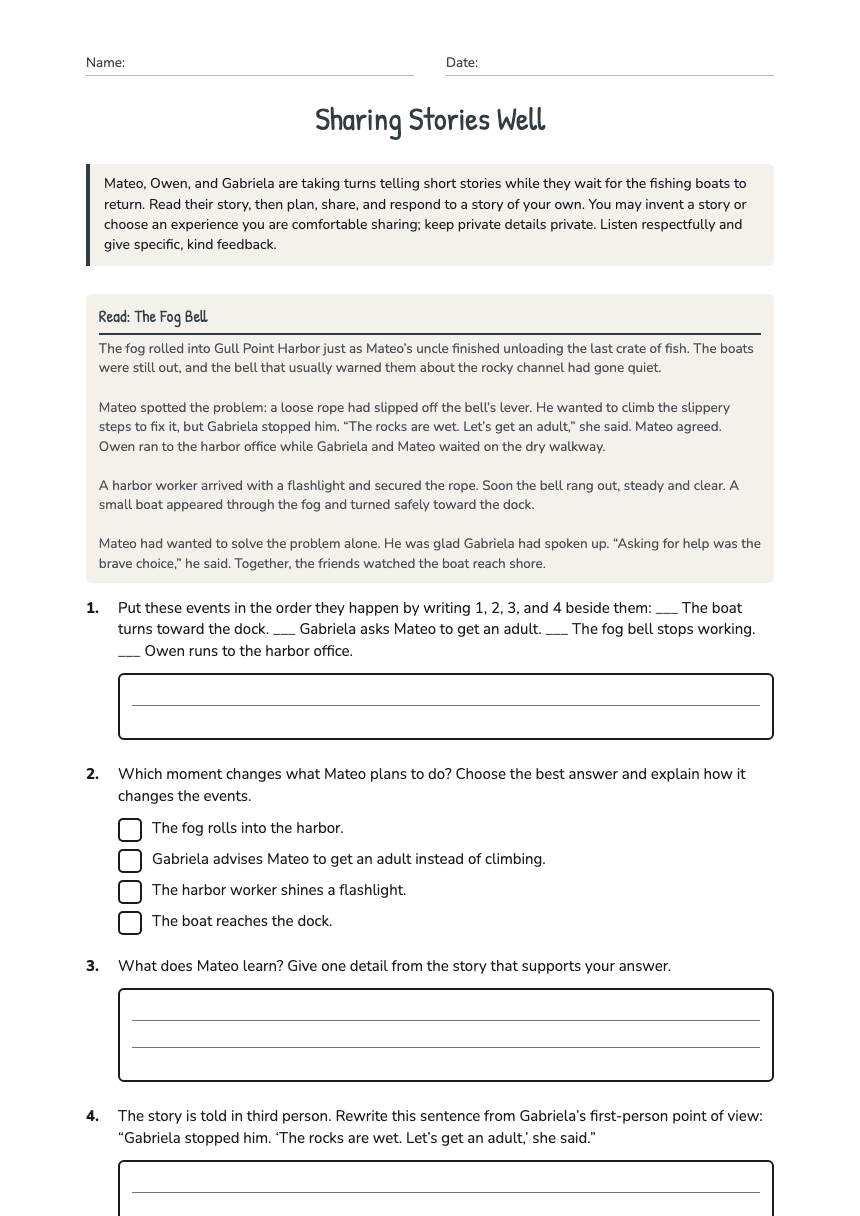
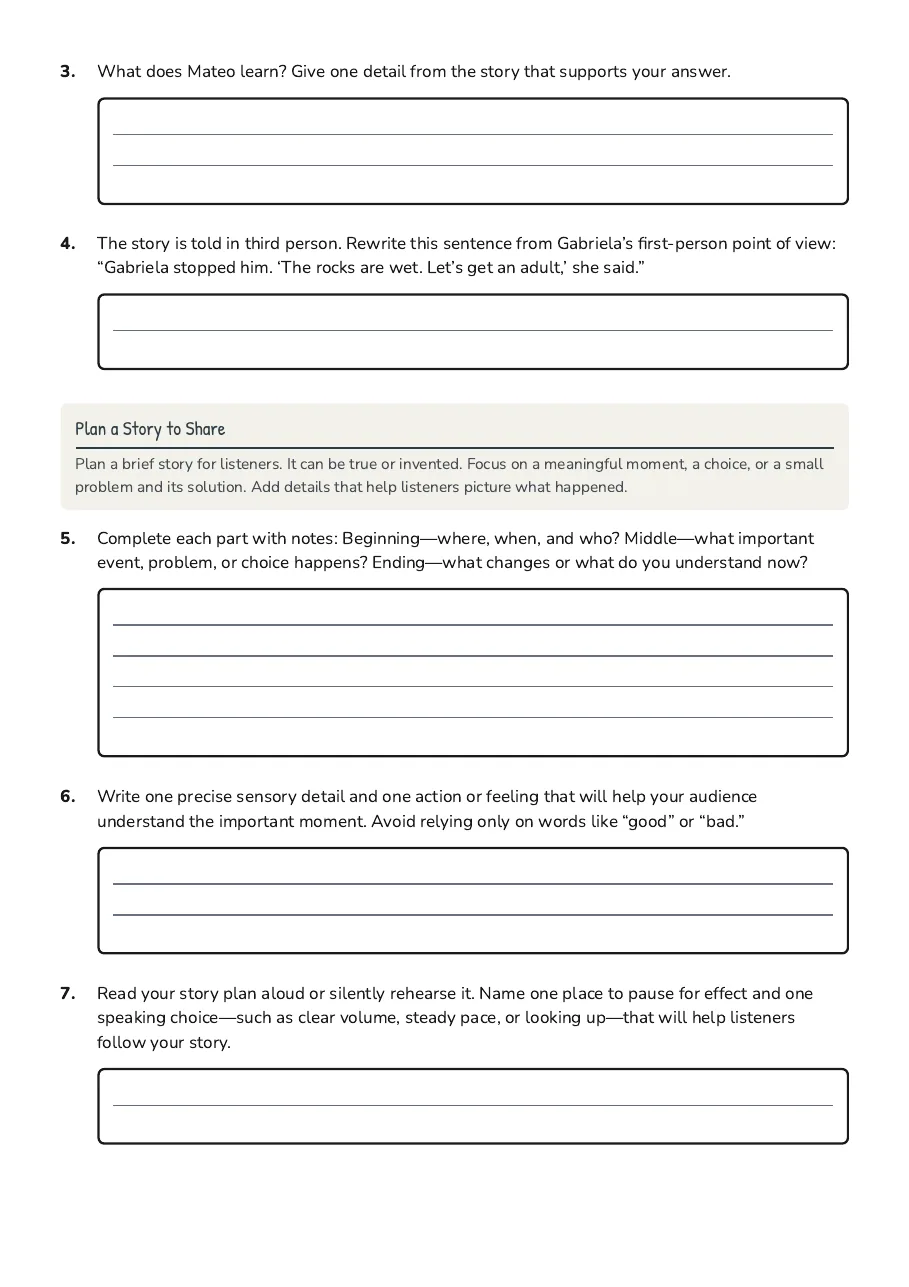
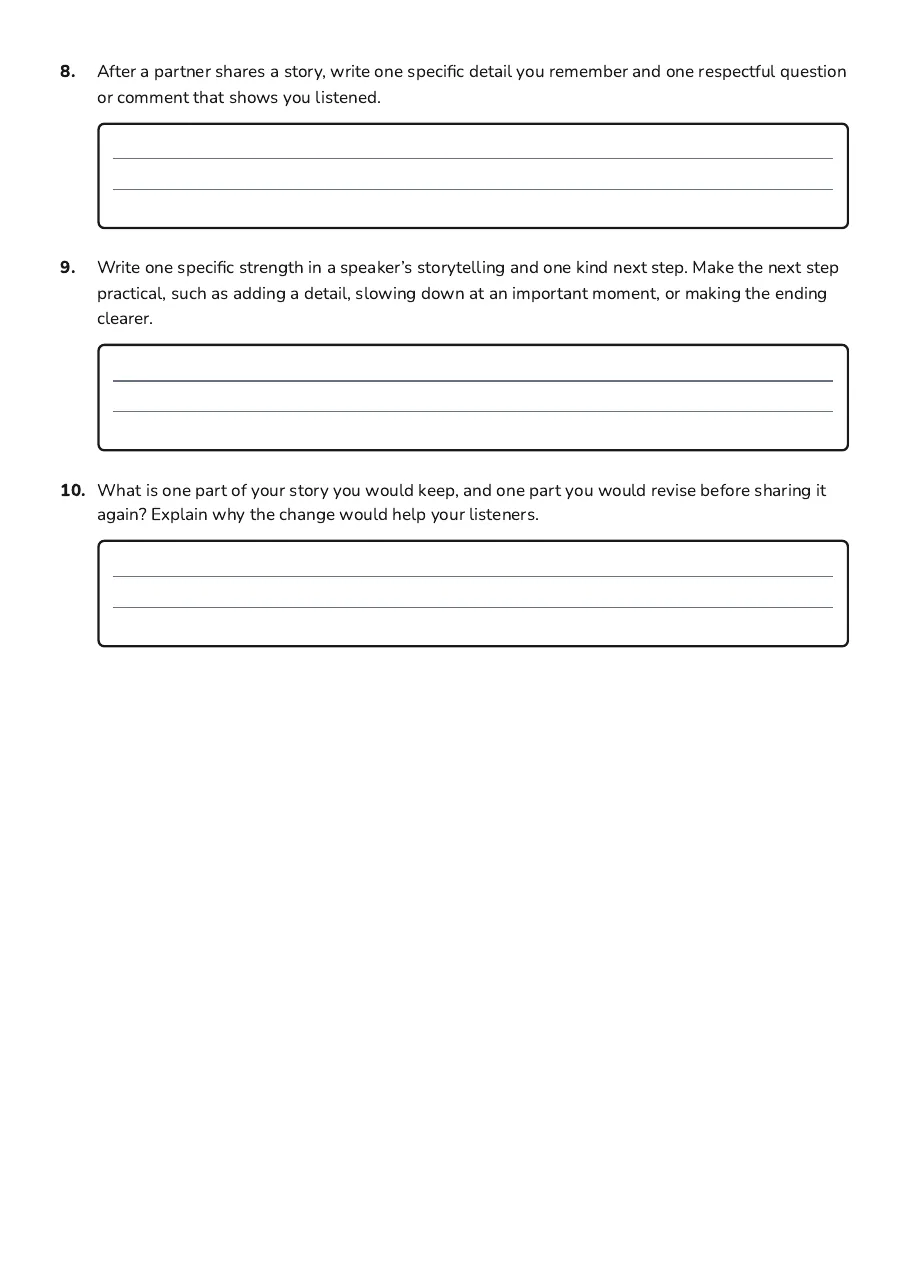
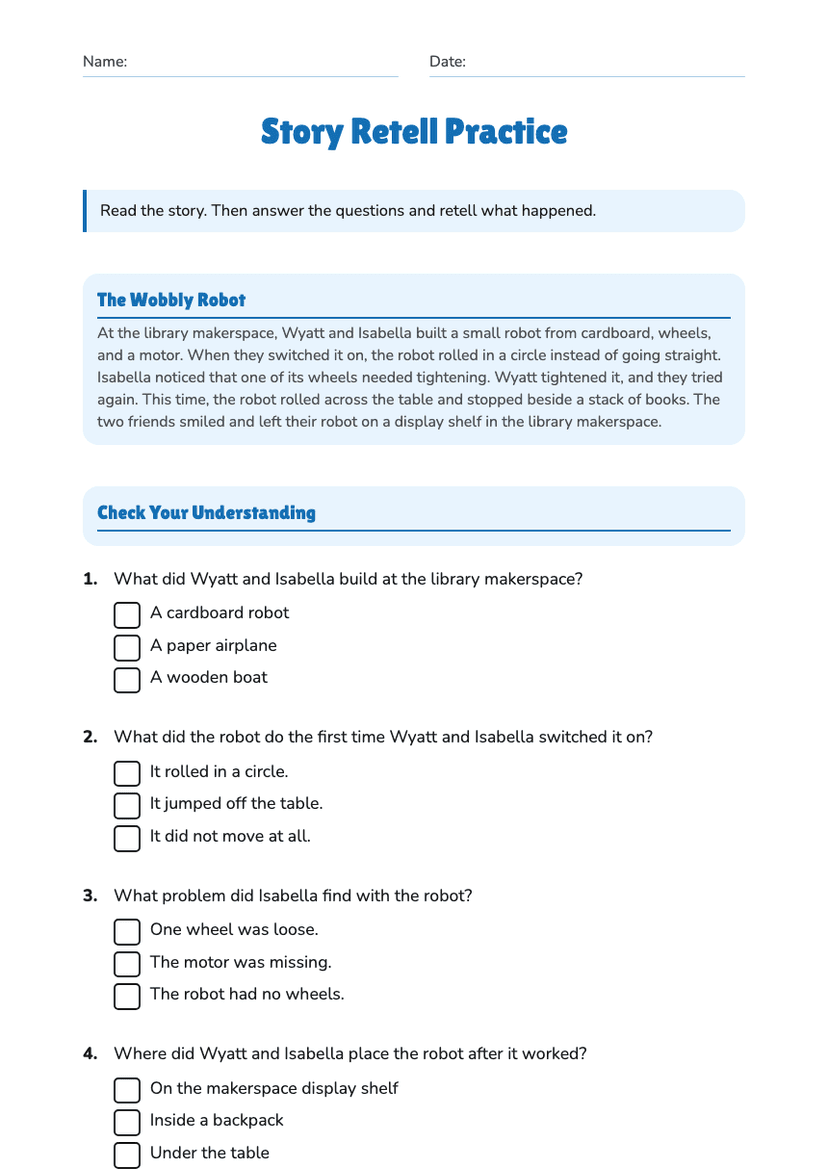
Sharing Stories Wellinermi worksheet preview

Sharing Stories Wellinermi

📖 Part 1: Plan a Safe, Meaningful Story

Choose a school-appropriate story. You may share a real experience, use a fictional story, or change personal details to protect your privacy. Every person’s identity, community, faith, and values should be discussed with respect.

Story structure: The beginning introduces the setting, people, and situation. The middle tells about a problem, important event, or choice. The ending explains what happened, what changed, or what you learned.

Success criteria: I can organize my story, speak clearly for my audience, listen respectfully, use evidence from the anchor text, and identify a strength and a next step.

1. Working title and presentation format

Title: ____________________________________    I will: ☐ speak live   ☐ read my draft   ☐ record   ☐ present with a partner

2. Beginning: Where and when does the story happen? Who is involved?

Setting: _________________________________________________

People or characters: ______________________________________

3. Middle: What important event, problem, or choice moves the story forward?
4. Details and meaning

Sensory detail: I could see/hear/feel/smell/taste ________________________________

Feeling: ____________________    Message, value, or lesson: ____________________

🗣️ Part 2: Rehearse, Share, and Listen

5. Sequencing checklist

I introduce the setting and people.

I tell the important event or choice in order.

I include feelings, sensory details, or specific actions.

I end with a reflection, message, or lesson.

I stay within the agreed time limit.

6. Speaking reminders

Volume: My voice is loud enough for the audience.

Pace: I speak steadily and pause at important moments.

Eye contact: I look up when I can, or use another respectful way to connect.

Description: I use precise words and details instead of only saying “good” or “bad.”

7. Evidence-based response to the anchor text

Use this frame: I think __________________ because the text says/shows __________________, which means __________________.

8. Active-listening response for a classmate

Speaker’s title or initials: __________________________________

I noticed… ________________________________________________

I wondered… _______________________________________________

A detail I remember is… ____________________________________

One strength: __________________________   One helpful next step: __________________________

🌱 Part 3: Reflect and Grow

9. Self-assessment

Circle or check one number for each statement: 1 = not yet, 2 = beginning, 3 = almost there, 4 = confident.

I organized my story clearly.   1   2   3   4

I used an appropriate volume and pace.   1   2   3   4

I used details to help the audience understand.   1   2   3   4

I listened respectfully and gave useful feedback.   1   2   3   4

I used evidence to support my response to the anchor text.   1   2   3   4

10. Exit reflection

One skill I improved was ________________________________________________

One strength in my work was _____________________________________________

One next step is _______________________________________________________

Support Menu

Word bank: identity, community, belonging, choice, value, evidence, detail, reflection, audience, sequence, perspective.

Sentence frames: “At first, …” “Then, …” “Because of this, …” “I felt … when …” “This shows …” “I agree with ___ because …” “I would like to add …”

You may use labeled notes, a visual sequence, speech-to-text, extra rehearsal time, a quiet practice space, or a live, recorded, partner, or gallery-walk presentation. You may pass on sharing a private detail and fictionalize it instead.

Extension

Retell one short part of your story from another character’s point of view. Experiment with pacing: slow down at a tense moment and pause before an important choice. Explain how this changes the audience’s understanding.

Teacher Assessment Guide

Look for: organized beginning, middle, and ending; clear and audible delivery; appropriate pace and descriptive language; respectful listening; one specific strength and next step; and an anchor-text response that states an idea, names relevant evidence, and explains its meaning. Accept oral, recorded, partner, or written responses when appropriate. For EAL learners, assess ideas and communication while allowing sentence frames, processing time, and labeled notes.

CCSS connections: SL.5.1, SL.5.4, and SL.8.1—participate respectfully in collaborative discussions, present organized information with supporting evidence, and adapt speech to audience and task.

About This Worksheet

Free in Kuraplan

Sign up free, grab the PDF, and customize it for your class.

Print-Ready

Formatted for standard paper. Clean layout, easy to read.

AI-Generated

Created with Kuraplan's AI, designed for real classroom use.

For Teachers & Parents

Use in classrooms, for homework, tutoring, or homeschool.

Need a custom version of this worksheet?

Kuraplan's AI generates custom worksheets in seconds — differentiated for every learner, aligned to your curriculum.

Generate Custom Worksheets — Free
No credit card Curriculum-aligned Under 60 seconds