ScienceFreePrintable

Stimulus and Response Notes

A free science worksheet ready for your classroom. Open in Kuraplan to grab the print-ready PDF, customize it for your students, or generate a fresh version in seconds.
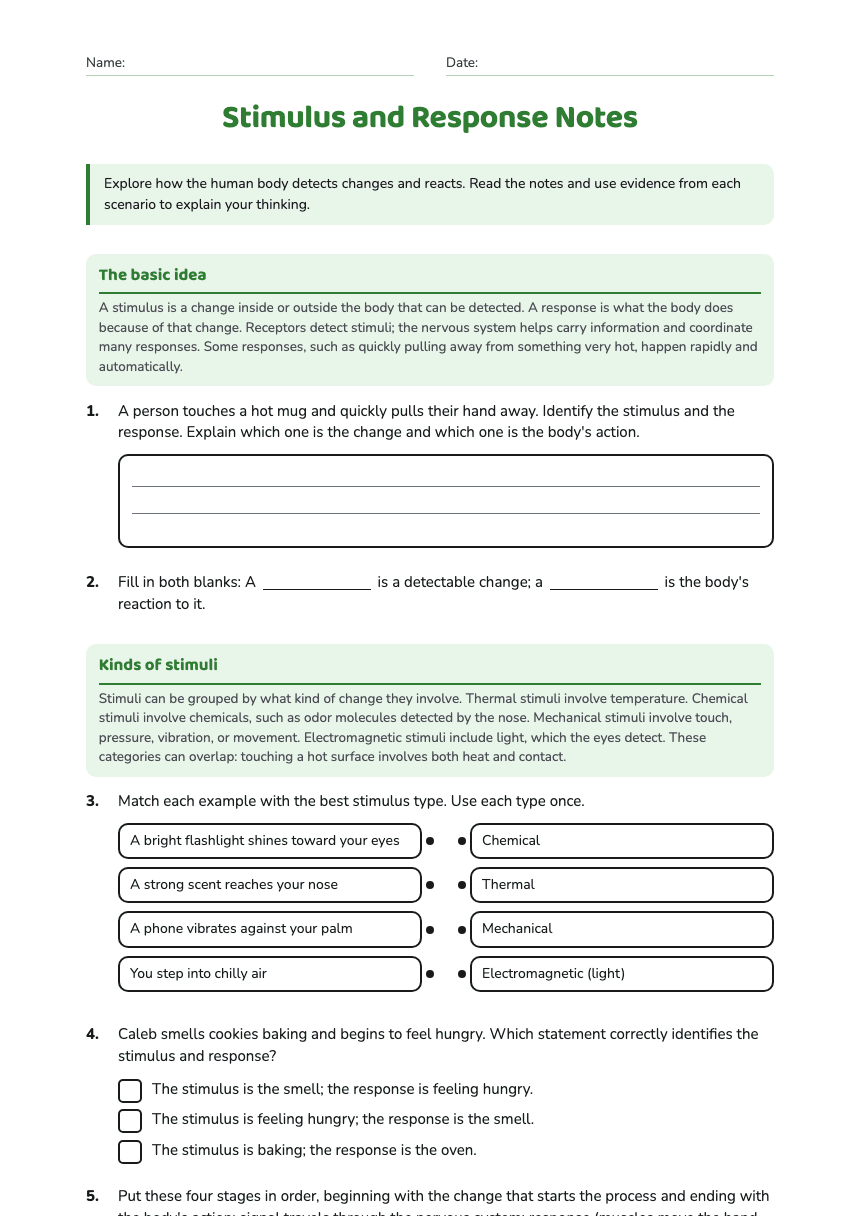
Stimulus and Response Notes worksheet preview
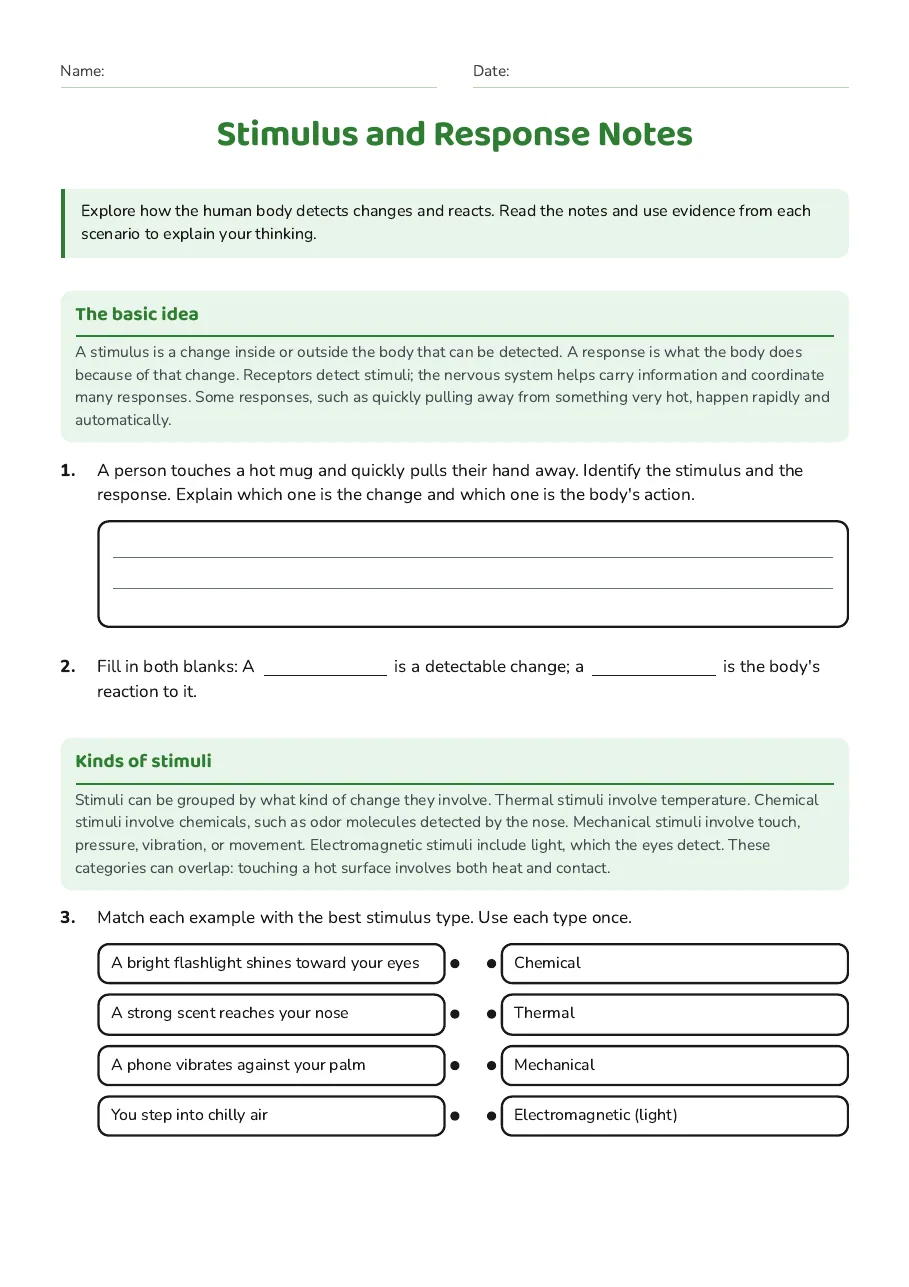
Name:Date:

Stimulus and Response Notes

Explore how the human body detects changes and reacts. Read the notes and use evidence from each scenario to explain your thinking.

The basic idea

A stimulus is a change inside or outside the body that can be detected. A response is what the body does because of that change. Receptors detect stimuli; the nervous system helps carry information and coordinate many responses. Some responses, such as quickly pulling away from something very hot, happen rapidly and automatically.

1.A person touches a hot mug and quickly pulls their hand away. Identify the stimulus and the response. Explain which one is the change and which one is the body's action.
2.Fill in both blanks: A is a detectable change; a is the body's reaction to it.

Kinds of stimuli

Stimuli can be grouped by what kind of change they involve. Thermal stimuli involve temperature. Chemical stimuli involve chemicals, such as odor molecules detected by the nose. Mechanical stimuli involve touch, pressure, vibration, or movement. Electromagnetic stimuli include light, which the eyes detect. These categories can overlap: touching a hot surface involves both heat and contact.

3.Match each example with the best stimulus type. Use each type once.
  • A bright flashlight shines toward your eyes
  • A strong scent reaches your nose
  • A phone vibrates against your palm
  • You step into chilly air
  • Chemical
  • Thermal
  • Mechanical
  • Electromagnetic (light)
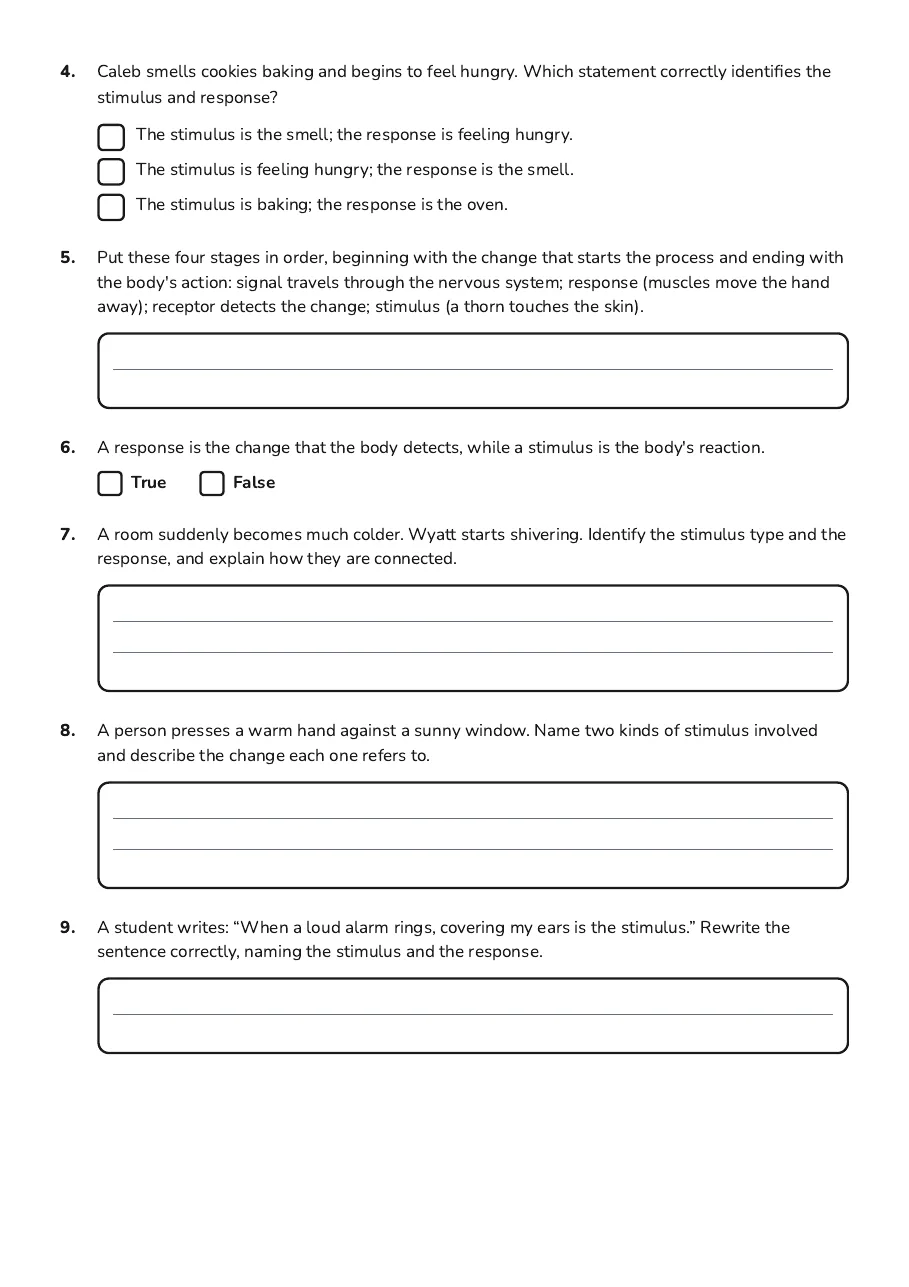
4.Caleb smells cookies baking and begins to feel hungry. Which statement correctly identifies the stimulus and response?
  • The stimulus is the smell; the response is feeling hungry.
  • The stimulus is feeling hungry; the response is the smell.
  • The stimulus is baking; the response is the oven.
5.Put these four stages in order, beginning with the change that starts the process and ending with the body's action: signal travels through the nervous system; response (muscles move the hand away); receptor detects the change; stimulus (a thorn touches the skin).
6.A response is the change that the body detects, while a stimulus is the body's reaction.
TrueFalse
7.A room suddenly becomes much colder. Wyatt starts shivering. Identify the stimulus type and the response, and explain how they are connected.
8.A person presses a warm hand against a sunny window. Name two kinds of stimulus involved and describe the change each one refers to.
9.A student writes: “When a loud alarm rings, covering my ears is the stimulus.” Rewrite the sentence correctly, naming the stimulus and the response.
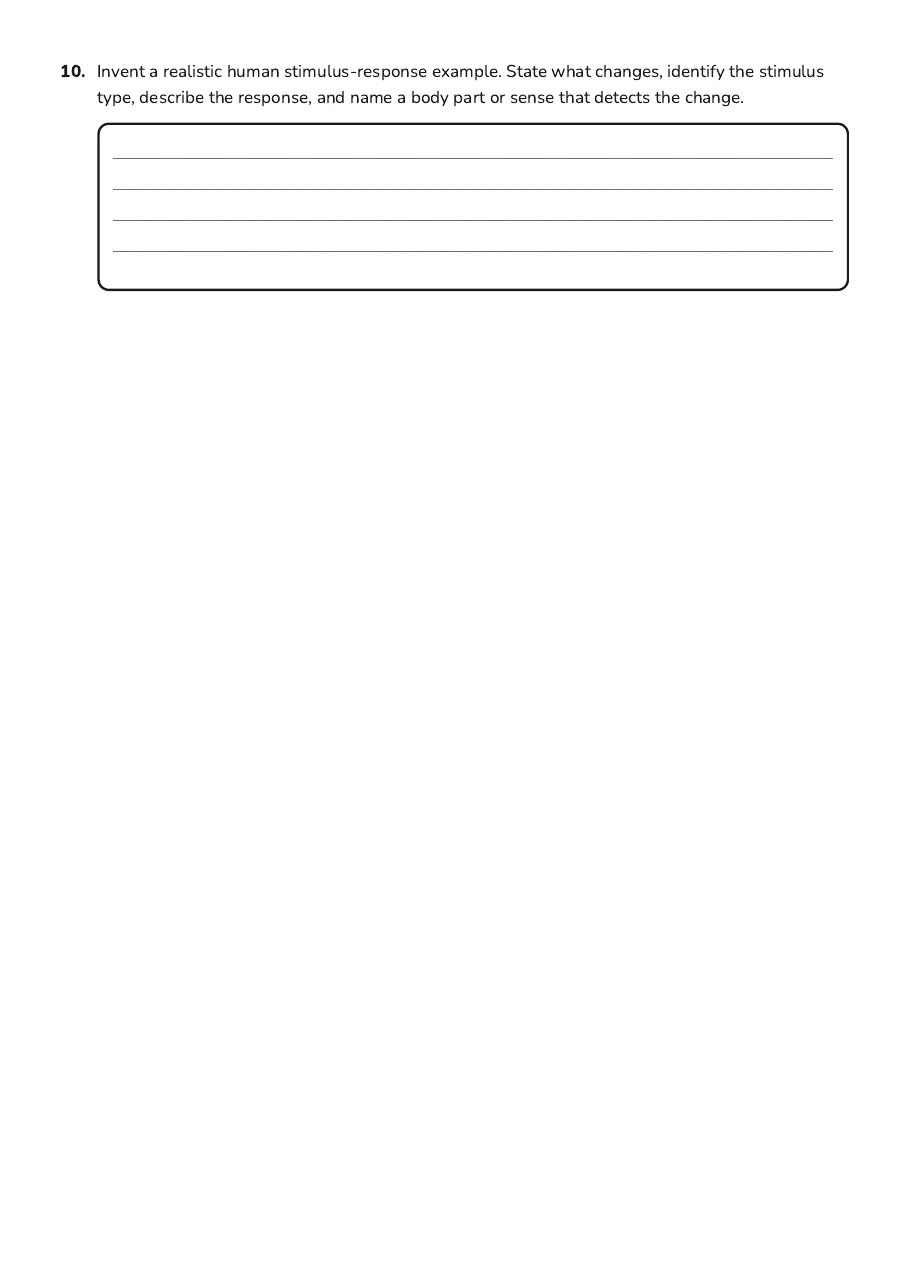
10.Invent a realistic human stimulus-response example. State what changes, identify the stimulus type, describe the response, and name a body part or sense that detects the change.

3 printable pages

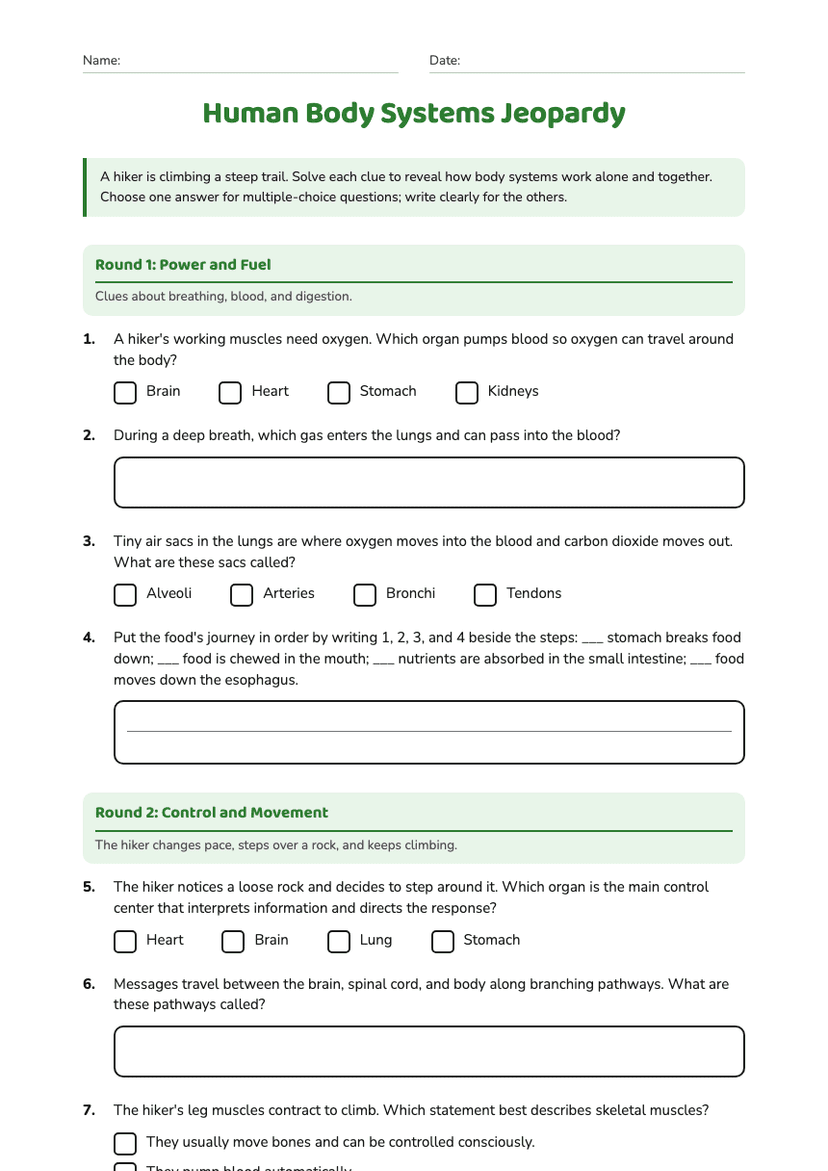
  • Stimulus and Response Notes, page 1 of 3: The basic idea, Kinds of stimuli

    Page 1

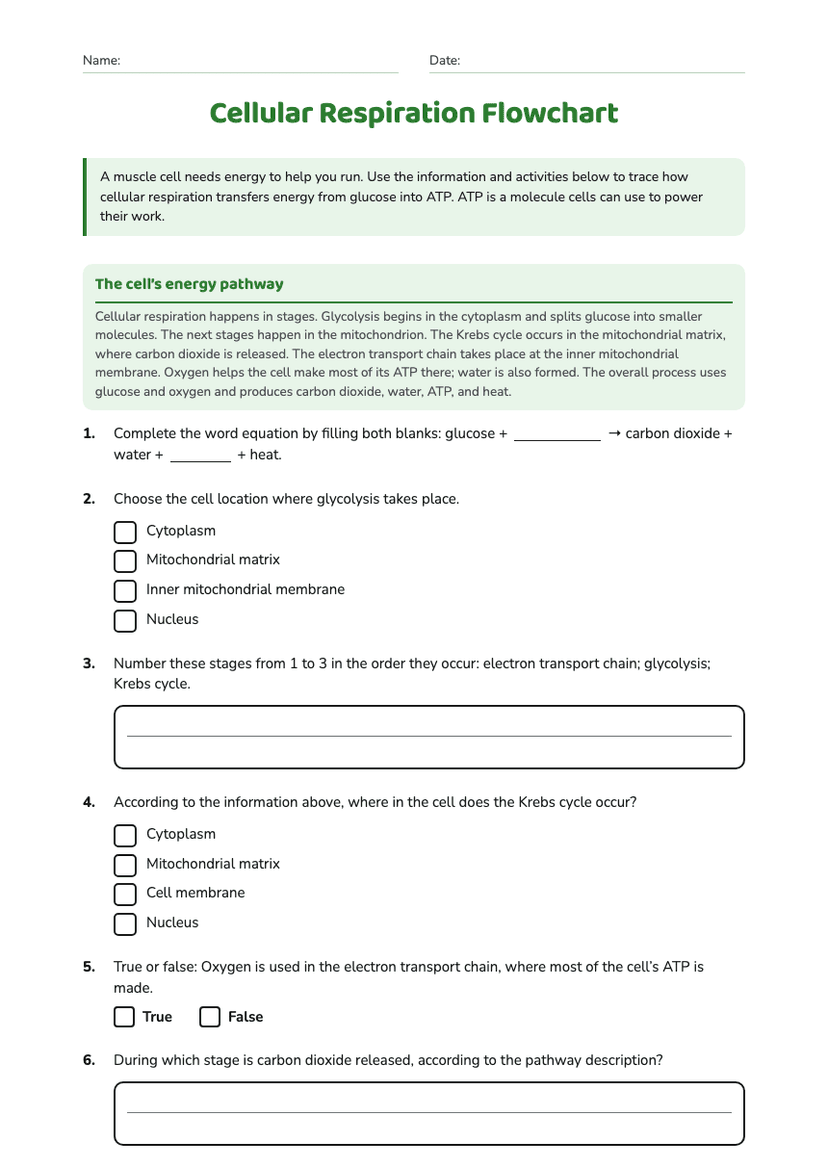
  • Stimulus and Response Notes, page 2 of 3: 4. Caleb smells cookies baking and begins to feel hungry. Which statement correctly…

    Page 2

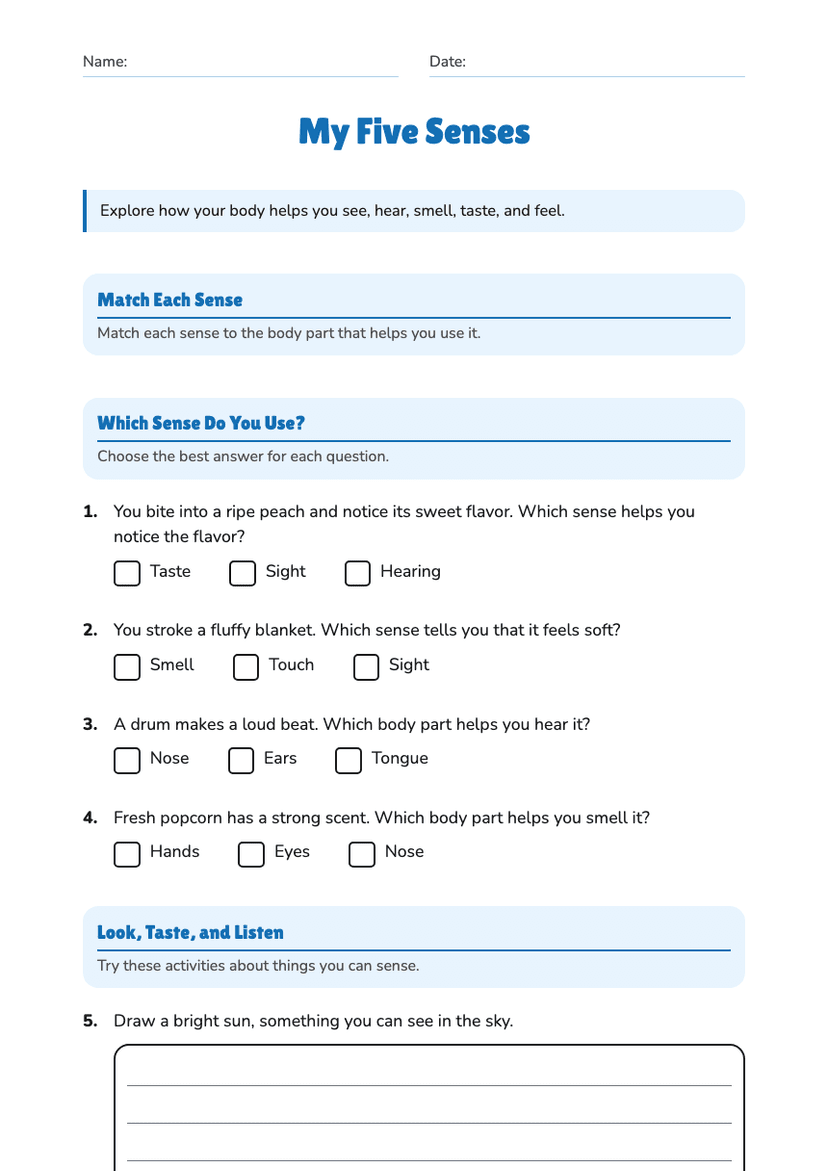
  • Stimulus and Response Notes, page 3 of 3: 10. Invent a realistic human stimulus-response example. State what changes, identify the…

    Page 3

About This Worksheet

Free in Kuraplan

Sign up free, grab the PDF, and customize it for your class.

Print-Ready

Formatted for standard paper. Clean layout, easy to read.

AI-Generated

Created with Kuraplan's AI, designed for real classroom use.

For Teachers & Parents

Use in classrooms, for homework, tutoring, or homeschool.

Need a custom version of this worksheet?

Kuraplan's AI generates custom worksheets in seconds — differentiated for every learner, aligned to your curriculum.

Generate Custom Worksheets — Free
No credit card Curriculum-aligned Under 60 seconds