Age Group Nutrition Needs
A free health worksheet ready for your classroom. Open in Kuraplan to grab the print-ready PDF, customize it for your students, or generate a fresh version in seconds.
Age Group Nutrition Needs
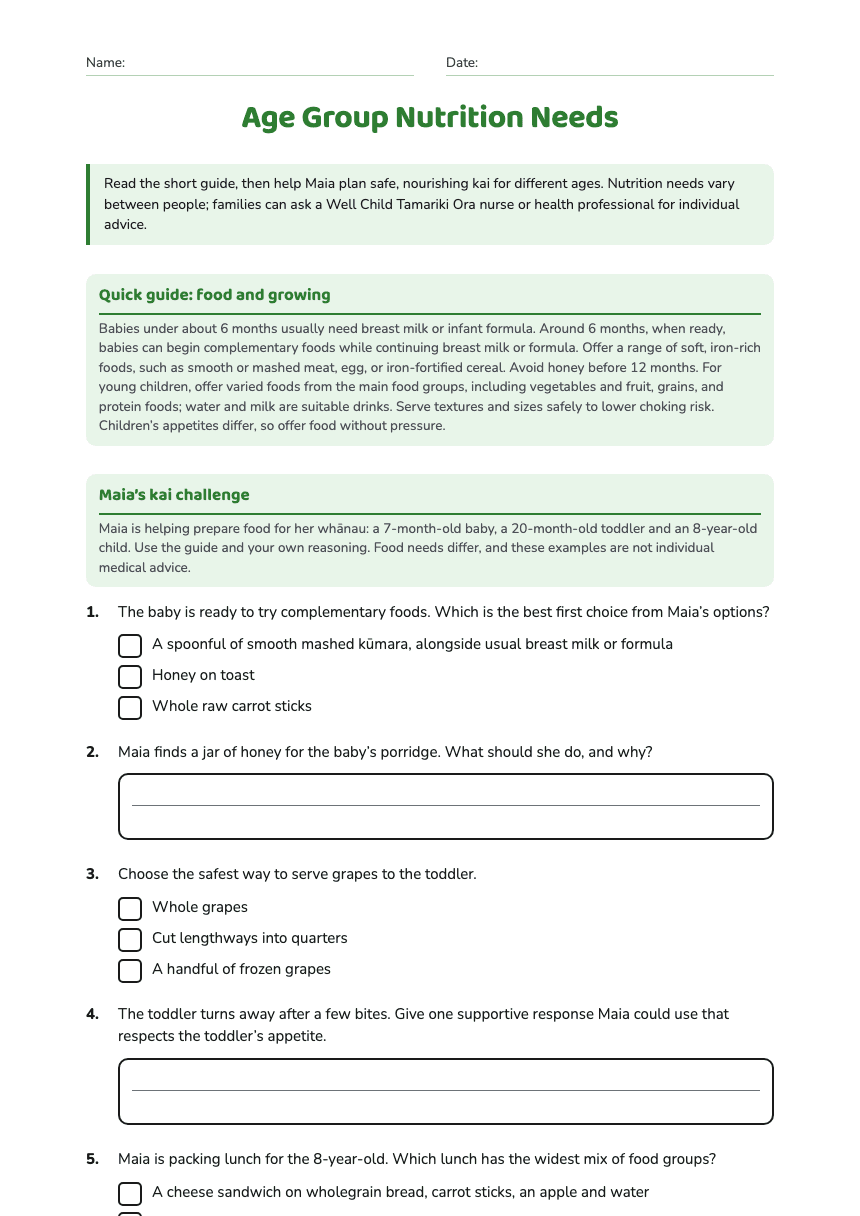
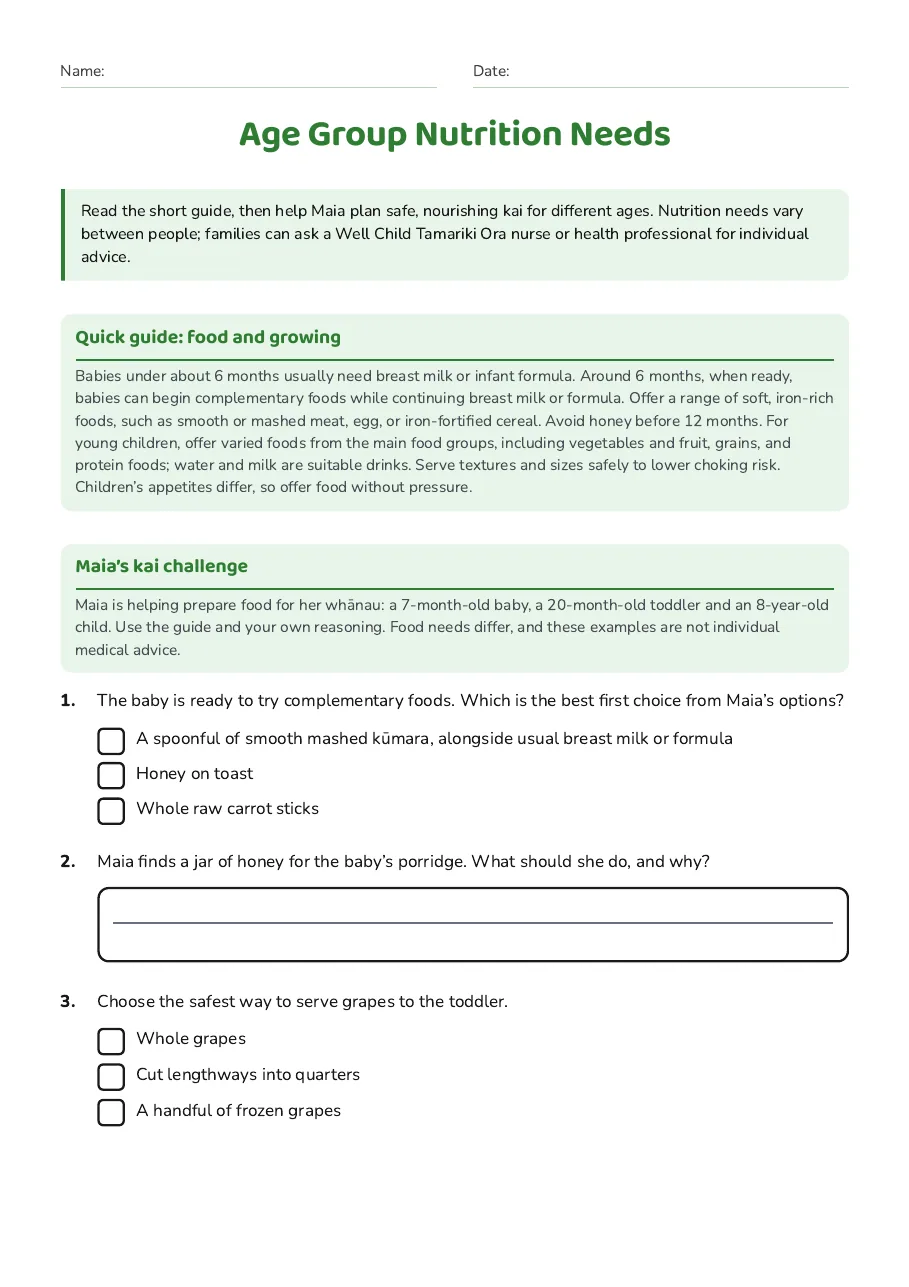
Quick guide: food and growing
Babies under about 6 months usually need breast milk or infant formula. Around 6 months, when ready, babies can begin complementary foods while continuing breast milk or formula. Offer a range of soft, iron-rich foods, such as smooth or mashed meat, egg, or iron-fortified cereal. Avoid honey before 12 months. For young children, offer varied foods from the main food groups, including vegetables and fruit, grains, and protein foods; water and milk are suitable drinks. Serve textures and sizes safely to lower choking risk. Children’s appetites differ, so offer food without pressure.
Maia’s kai challenge
Maia is helping prepare food for her whānau: a 7-month-old baby, a 20-month-old toddler and an 8-year-old child. Use the guide and your own reasoning. Food needs differ, and these examples are not individual medical advice.
- A spoonful of smooth mashed kūmara, alongside usual breast milk or formula
- Honey on toast
- Whole raw carrot sticks
- Whole grapes
- Cut lengthways into quarters
- A handful of frozen grapes
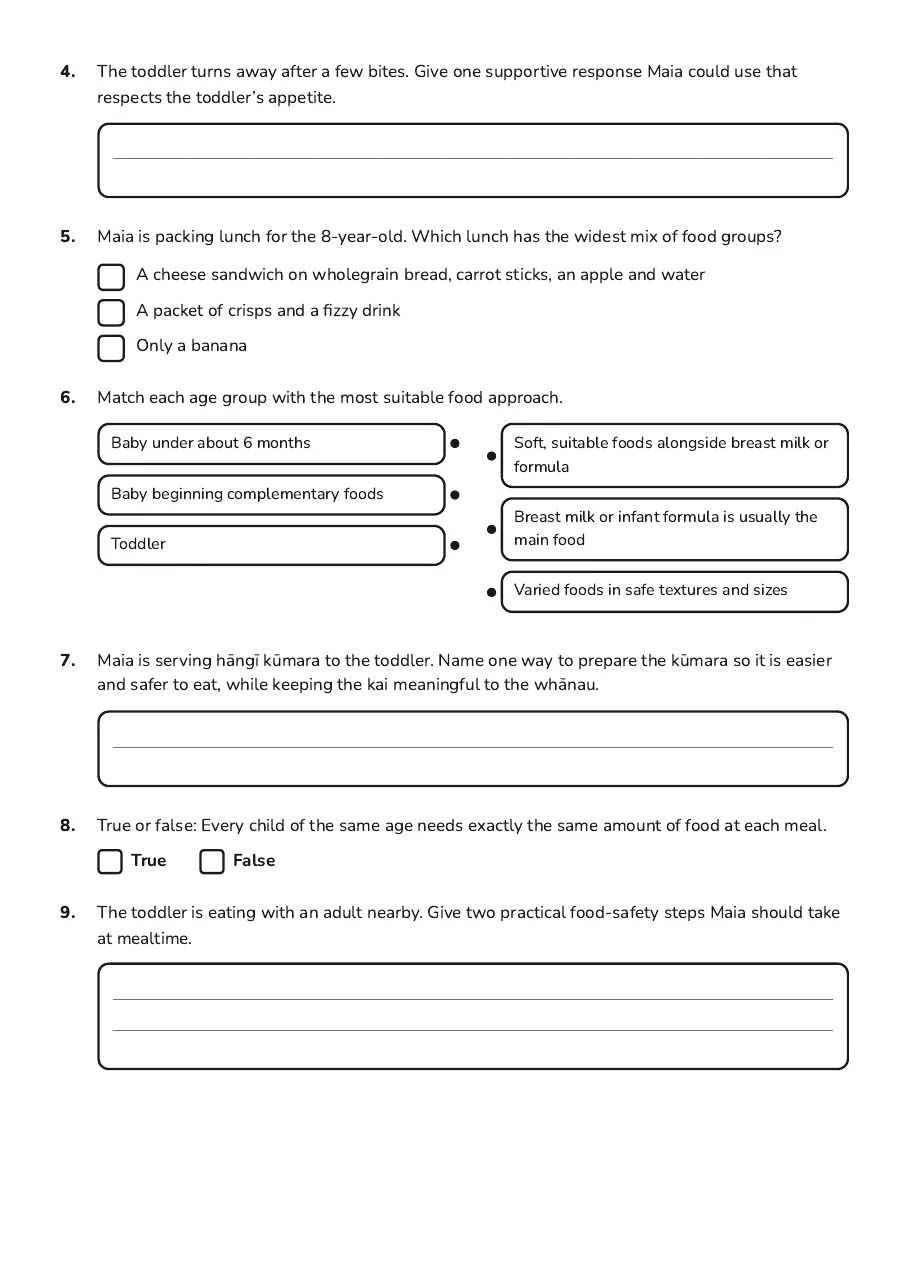
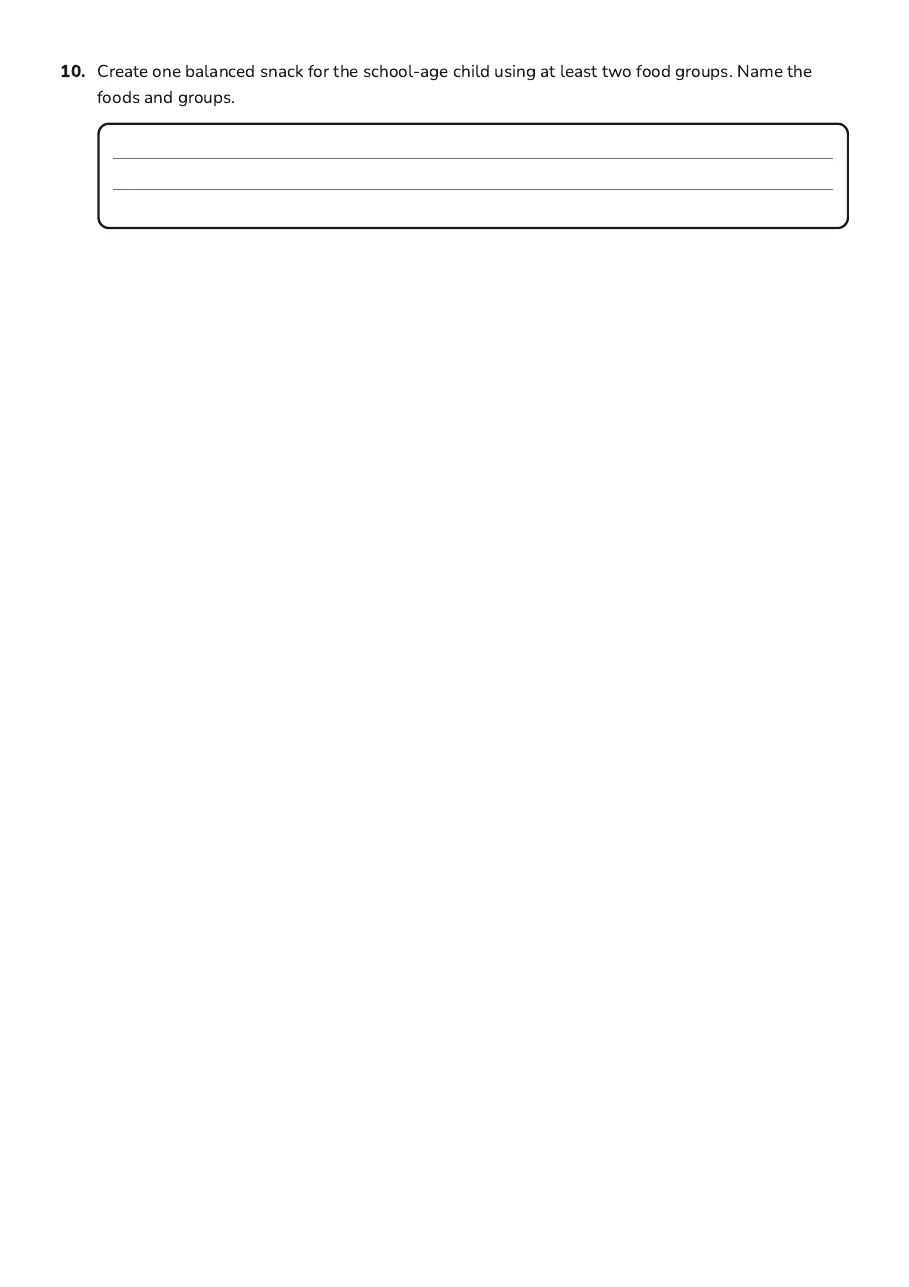
- A cheese sandwich on wholegrain bread, carrot sticks, an apple and water
- A packet of crisps and a fizzy drink
- Only a banana
- Baby under about 6 months
- Baby beginning complementary foods
- Toddler
- Soft, suitable foods alongside breast milk or formula
- Breast milk or infant formula is usually the main food
- Varied foods in safe textures and sizes
3 printable pages
Page 1
Page 2
Page 3
About This Worksheet
Free in Kuraplan
Sign up free, grab the PDF, and customize it for your class.
Print-Ready
Formatted for standard paper. Clean layout, easy to read.
AI-Generated
Created with Kuraplan's AI, designed for real classroom use.
For Teachers & Parents
Use in classrooms, for homework, tutoring, or homeschool.
Need a custom version of this worksheet?
Kuraplan's AI generates custom worksheets in seconds — differentiated for every learner, aligned to your curriculum.
Generate Custom Worksheets — FreeMore Health Worksheets
Pasifika Diet & Health Choices
Free
Adolescent Nutrition Needs Worksheet
Free
Gluten-Free Living Essentials
Free
Street Food Nutrition Analysis
Free
Healthy Eating Essentials
Free
Nutrition Basics Worksheet
Free
Food Groups Sorting Activity
Free