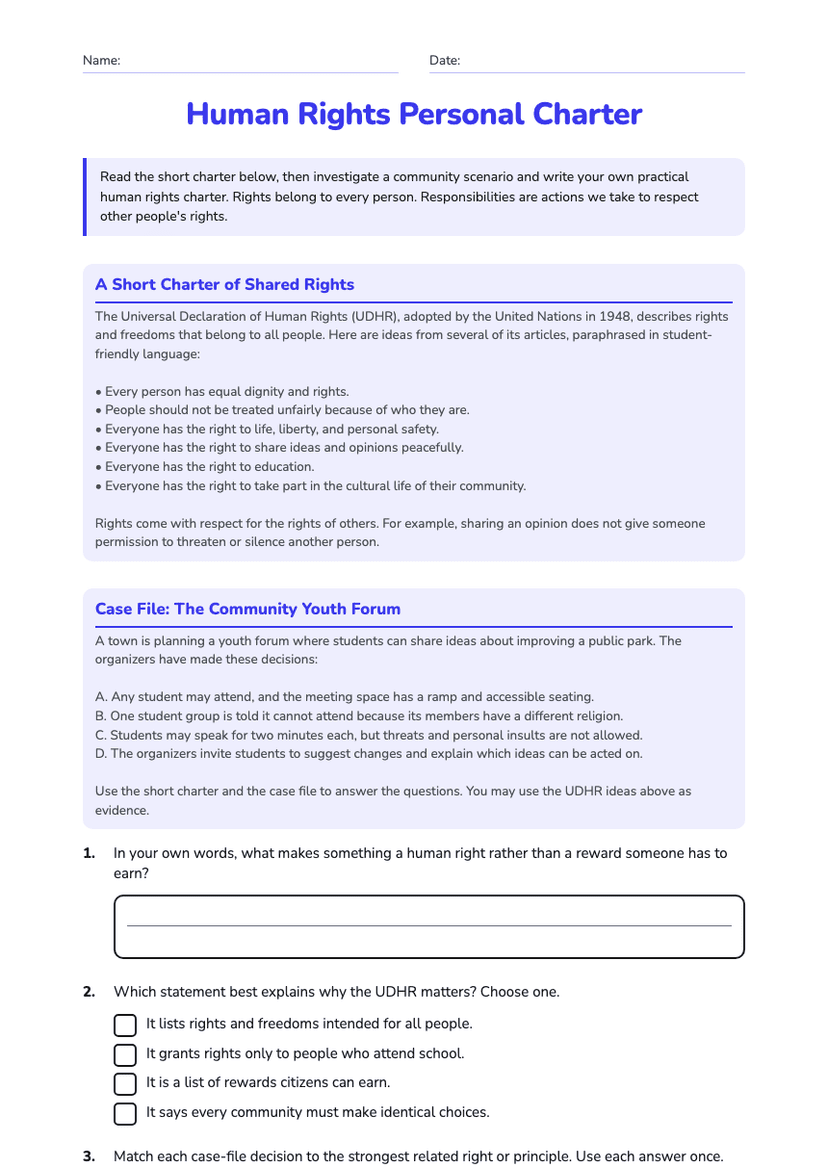
Brown v. Board Analysis
A free social studies worksheet ready for your classroom. Open in Kuraplan to grab the print-ready PDF, customize it for your students, or generate a fresh version in seconds.
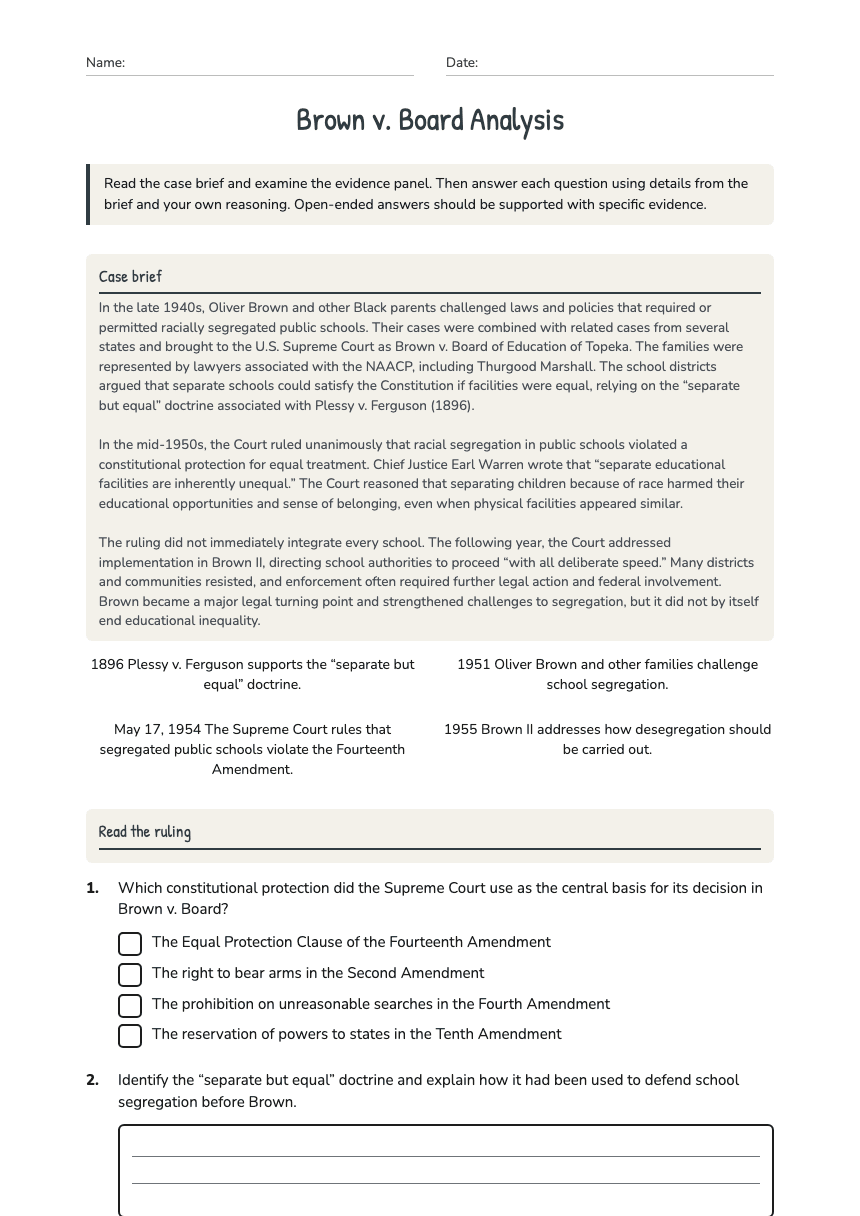
Brown v. Board Analysis
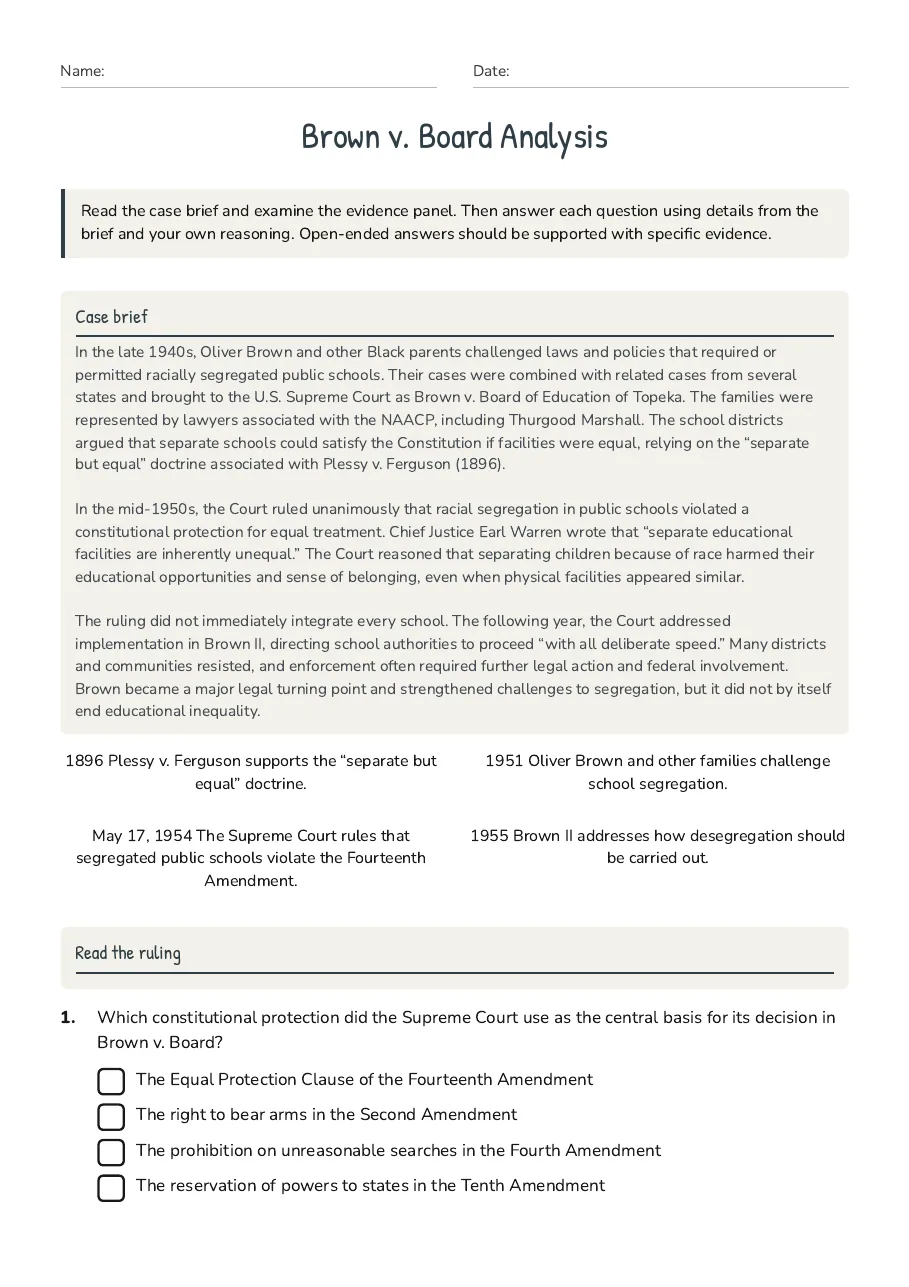
Case brief
In the late 1940s, Oliver Brown and other Black parents challenged laws and policies that required or permitted racially segregated public schools. Their cases were combined with related cases from several states and brought to the U.S. Supreme Court as Brown v. Board of Education of Topeka. The families were represented by lawyers associated with the NAACP, including Thurgood Marshall. The school districts argued that separate schools could satisfy the Constitution if facilities were equal, relying on the “separate but equal” doctrine associated with Plessy v. Ferguson (1896). In the mid-1950s, the Court ruled unanimously that racial segregation in public schools violated a constitutional protection for equal treatment. Chief Justice Earl Warren wrote that “separate educational facilities are inherently unequal.” The Court reasoned that separating children because of race harmed their educational opportunities and sense of belonging, even when physical facilities appeared similar. The ruling did not immediately integrate every school. The following year, the Court addressed implementation in Brown II, directing school authorities to proceed “with all deliberate speed.” Many districts and communities resisted, and enforcement often required further legal action and federal involvement. Brown became a major legal turning point and strengthened challenges to segregation, but it did not by itself end educational inequality.
1896 Plessy v. Ferguson supports the “separate but equal” doctrine.
1951 Oliver Brown and other families challenge school segregation.
May 17, 1954 The Supreme Court rules that segregated public schools violate the Fourteenth Amendment.
1955 Brown II addresses how desegregation should be carried out.
Read the ruling
- The Equal Protection Clause of the Fourteenth Amendment
- The right to bear arms in the Second Amendment
- The prohibition on unreasonable searches in the Fourth Amendment
- The reservation of powers to states in the Tenth Amendment
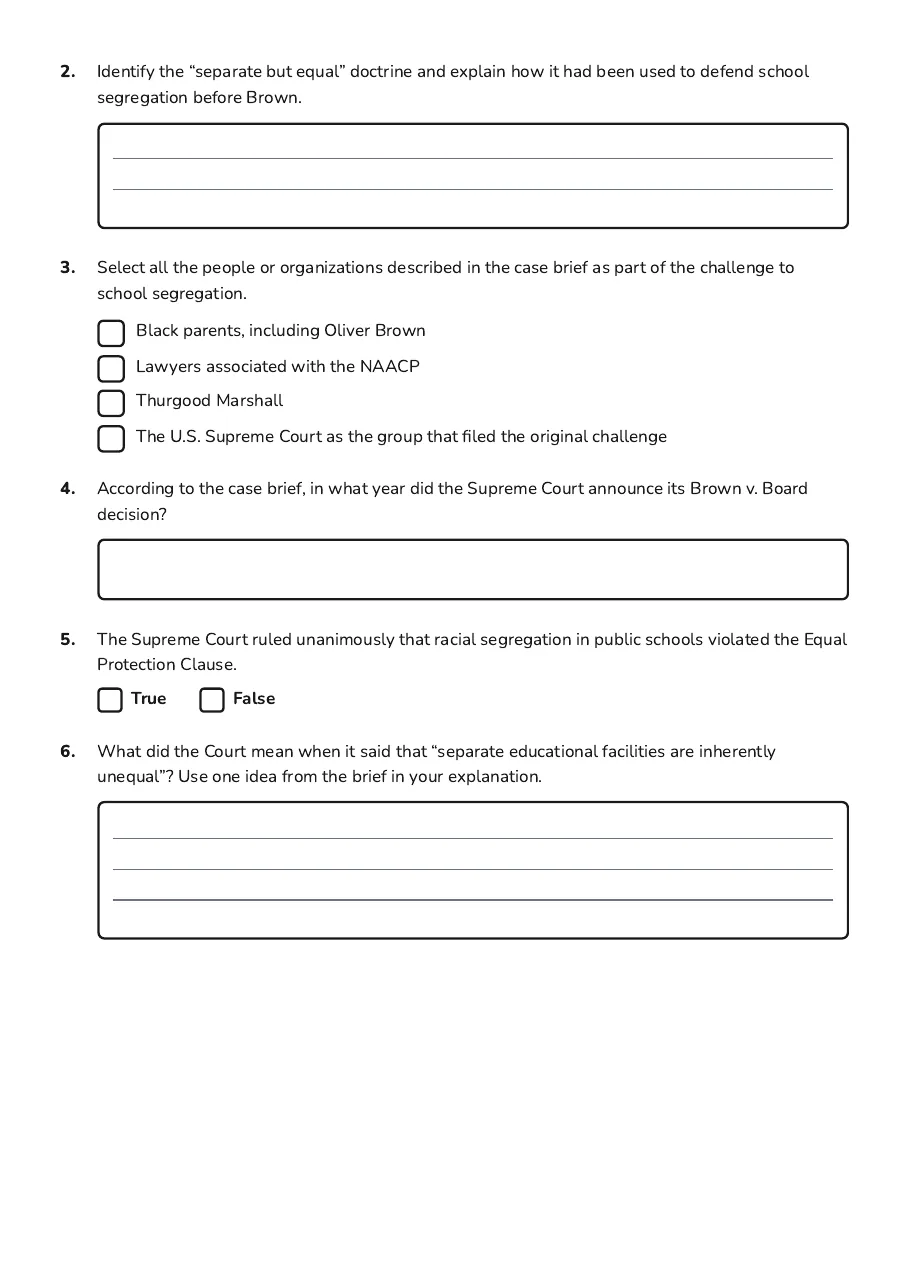
- Black parents, including Oliver Brown
- Lawyers associated with the NAACP
- Thurgood Marshall
- The U.S. Supreme Court as the group that filed the original challenge
Interpret the impact
3 printable pages
Page 1
Page 2
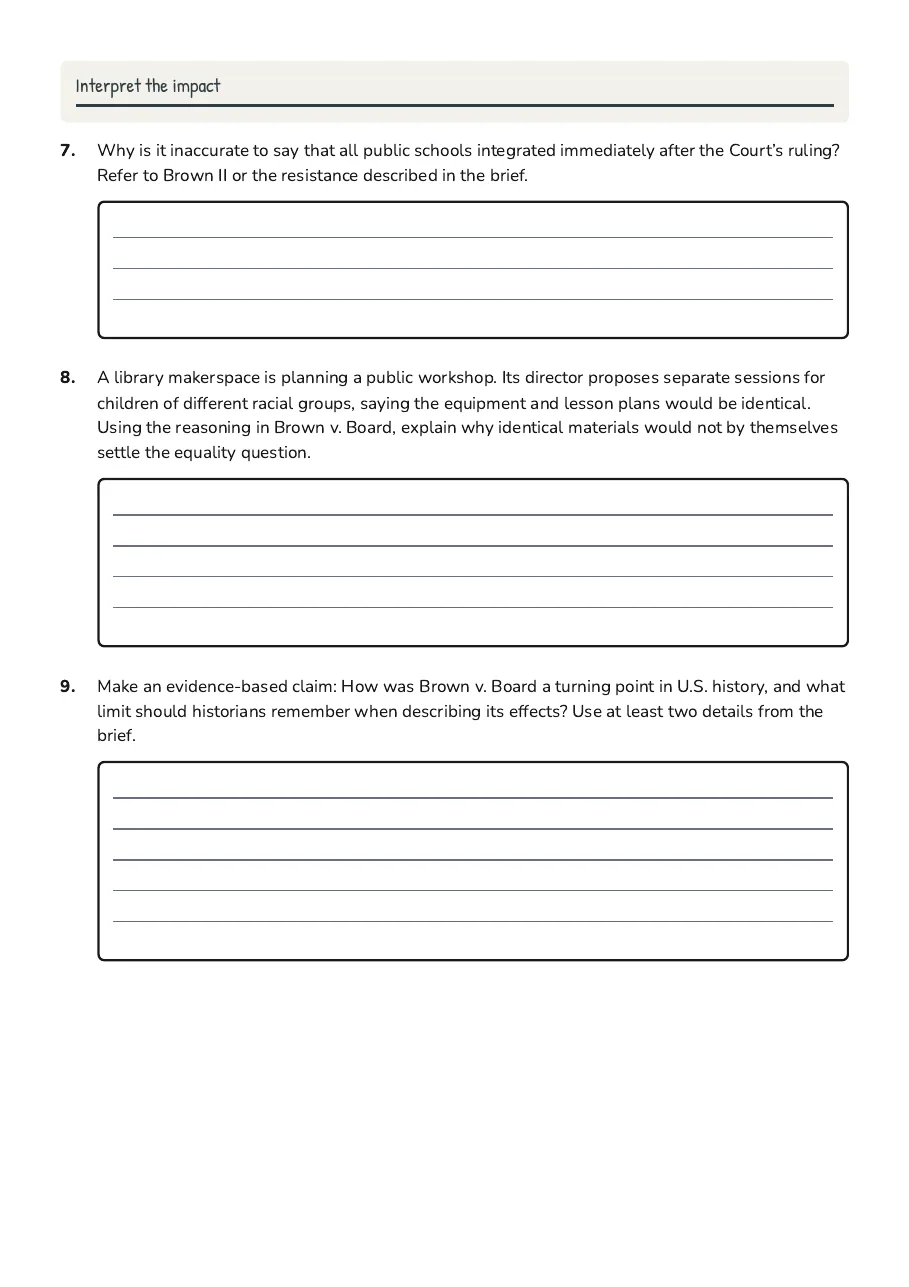
Page 3
About This Worksheet
Free in Kuraplan
Sign up free, grab the PDF, and customize it for your class.
Print-Ready
Formatted for standard paper. Clean layout, easy to read.
AI-Generated
Created with Kuraplan's AI, designed for real classroom use.
For Teachers & Parents
Use in classrooms, for homework, tutoring, or homeschool.
Need a custom version of this worksheet?
Kuraplan's AI generates custom worksheets in seconds — differentiated for every learner, aligned to your curriculum.
Generate Custom Worksheets — FreeMore Social Studies Worksheets
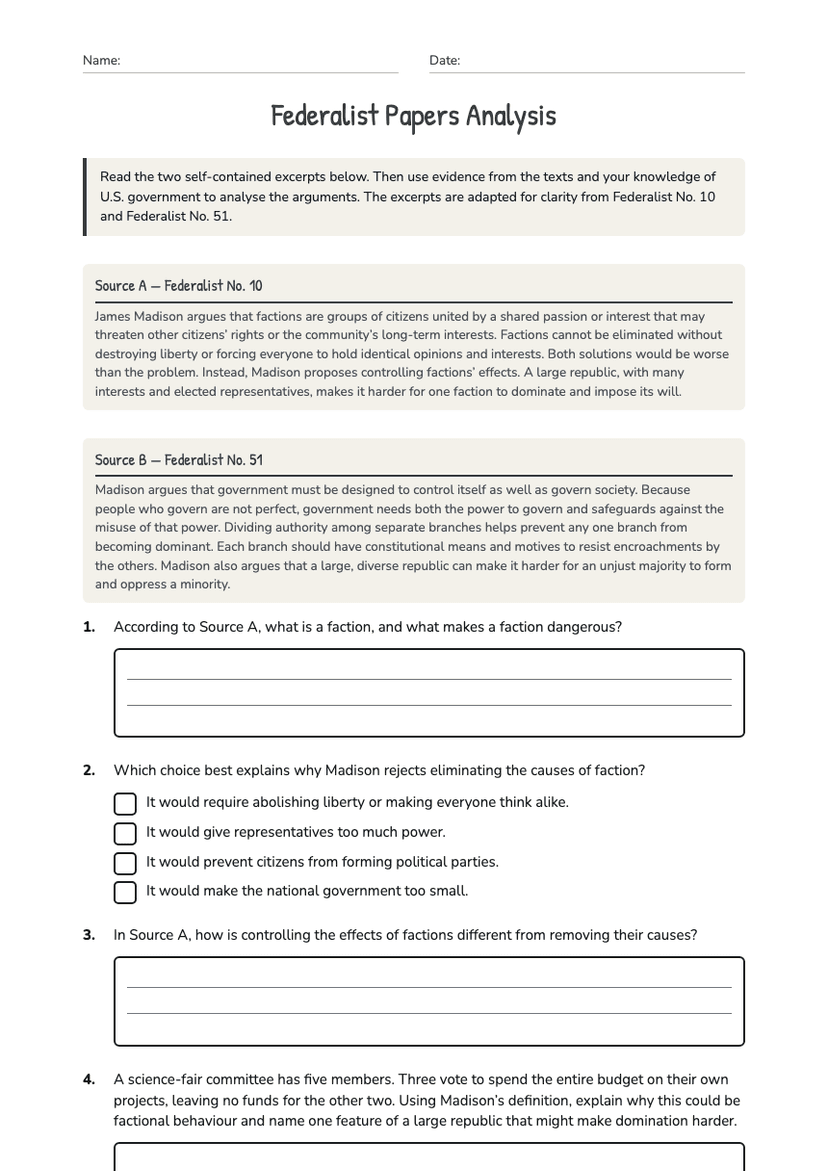
Federalist Papers Analysis
Free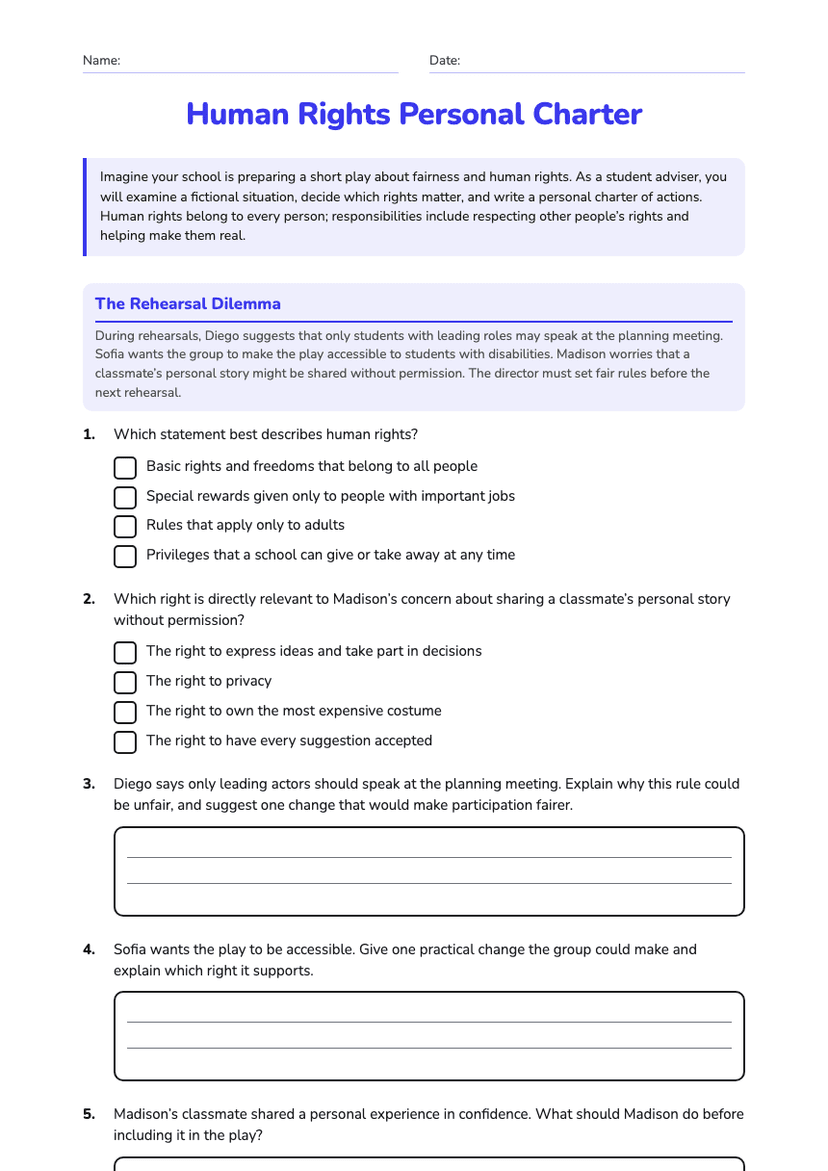
Human Rights Personal Charter
Free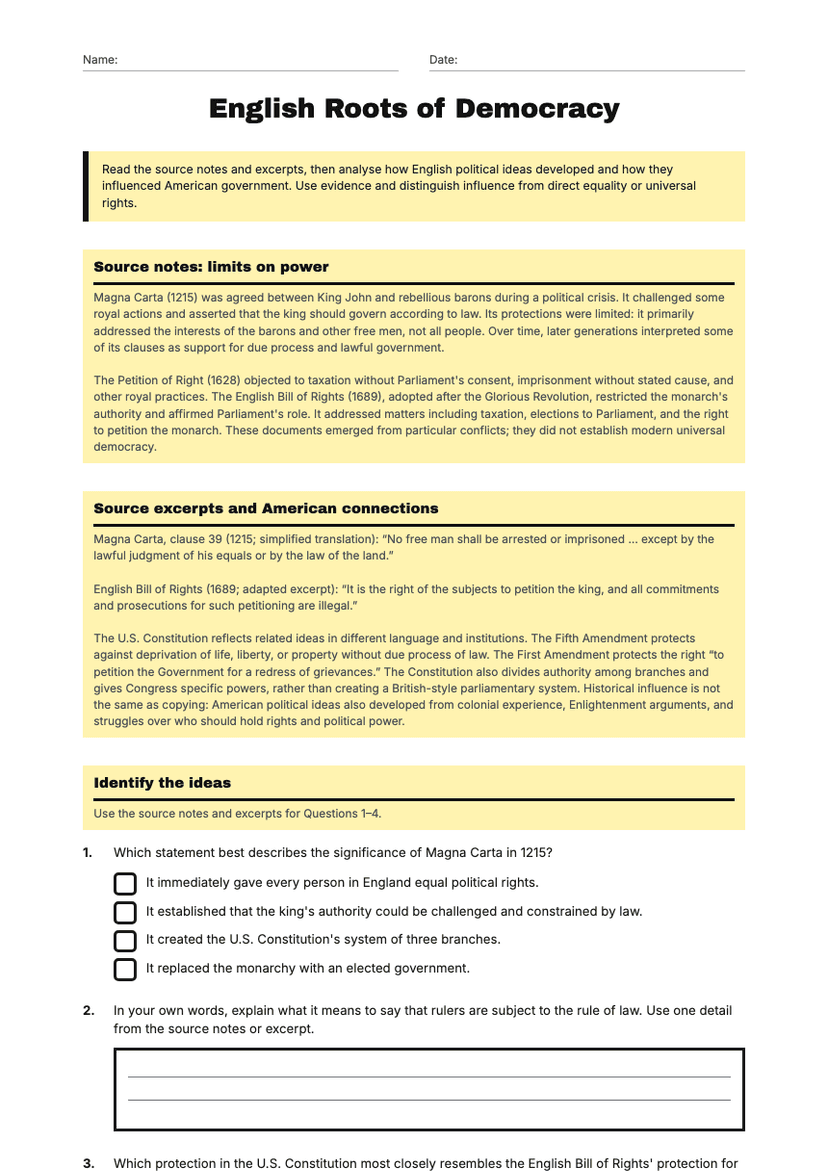
English Roots of Democracy
Free
Government Structures Introduction
Free
LBJ's Civil Rights Fight
Free
U.S. Government Quiz
Free
Introduction to Government
Free