Cell Structures & Functions
A free science worksheet ready for your classroom. Open in Kuraplan to grab the print-ready PDF, customize it for your students, or generate a fresh version in seconds.
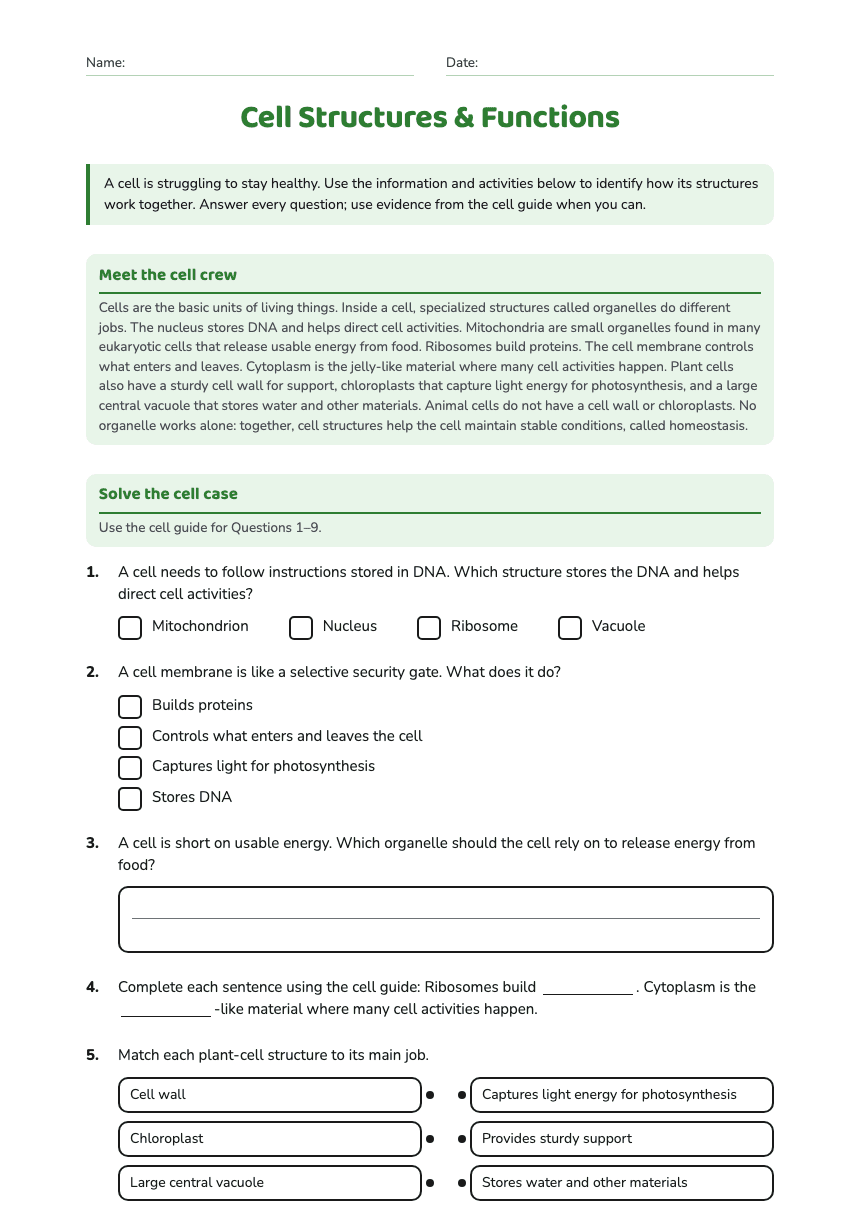
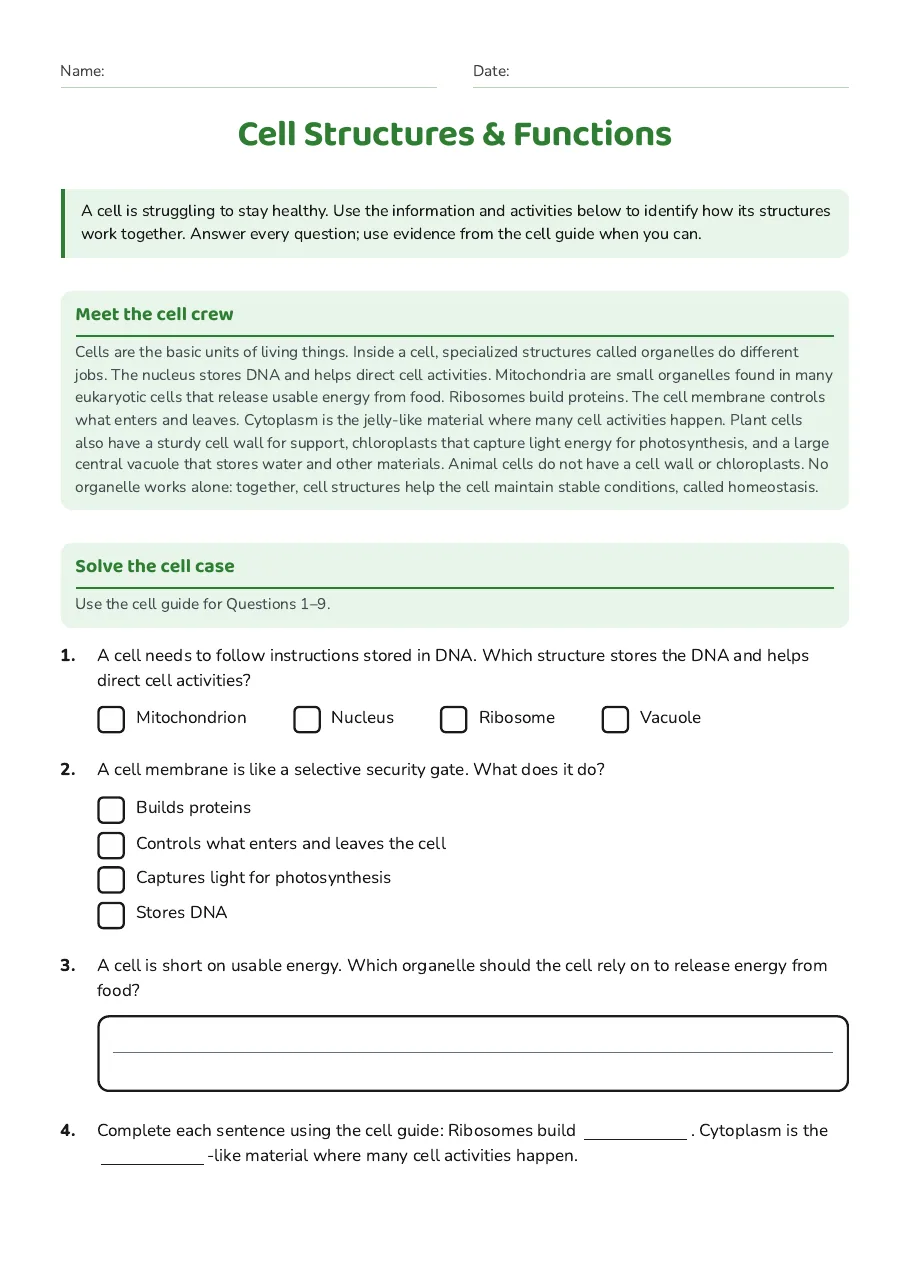
Cell Structures & Functions
Meet the cell crew
Cells are the basic units of living things. Inside a cell, specialized structures called organelles do different jobs. The nucleus stores DNA and helps direct cell activities. Mitochondria are small organelles found in many eukaryotic cells that release usable energy from food. Ribosomes build proteins. The cell membrane controls what enters and leaves. Cytoplasm is the jelly-like material where many cell activities happen. Plant cells also have a sturdy cell wall for support, chloroplasts that capture light energy for photosynthesis, and a large central vacuole that stores water and other materials. Animal cells do not have a cell wall or chloroplasts. No organelle works alone: together, cell structures help the cell maintain stable conditions, called homeostasis.
Solve the cell case
Use the cell guide for Questions 1–9.
- Mitochondrion
- Nucleus
- Ribosome
- Vacuole
- Builds proteins
- Controls what enters and leaves the cell
- Captures light for photosynthesis
- Stores DNA
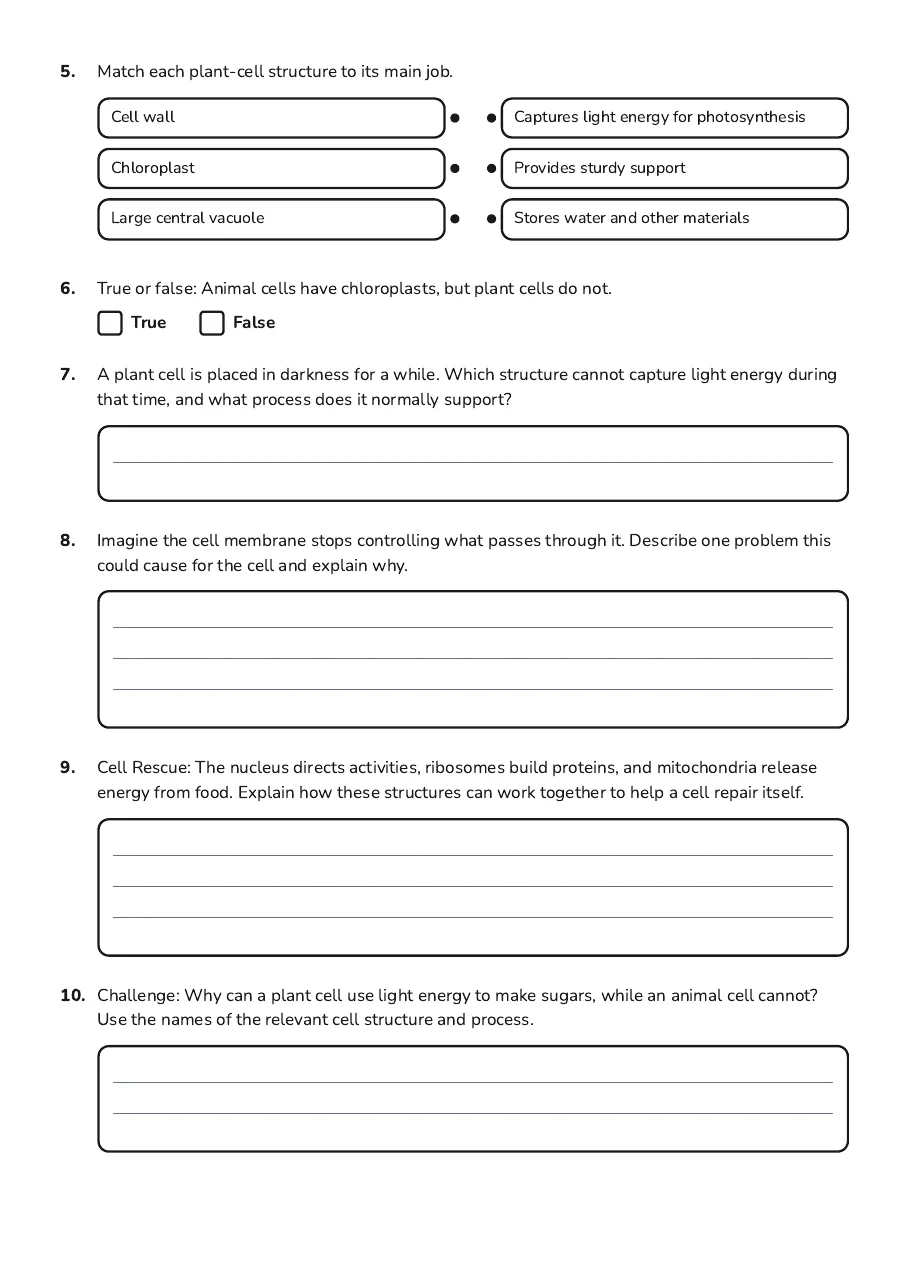
- Cell wall
- Chloroplast
- Large central vacuole
- Captures light energy for photosynthesis
- Provides sturdy support
- Stores water and other materials
2 printable pages
Page 1
Page 2
About This Worksheet
Free in Kuraplan
Sign up free, grab the PDF, and customize it for your class.
Print-Ready
Formatted for standard paper. Clean layout, easy to read.
AI-Generated
Created with Kuraplan's AI, designed for real classroom use.
For Teachers & Parents
Use in classrooms, for homework, tutoring, or homeschool.
Need a custom version of this worksheet?
Kuraplan's AI generates custom worksheets in seconds — differentiated for every learner, aligned to your curriculum.
Generate Custom Worksheets — FreeMore Science Worksheets
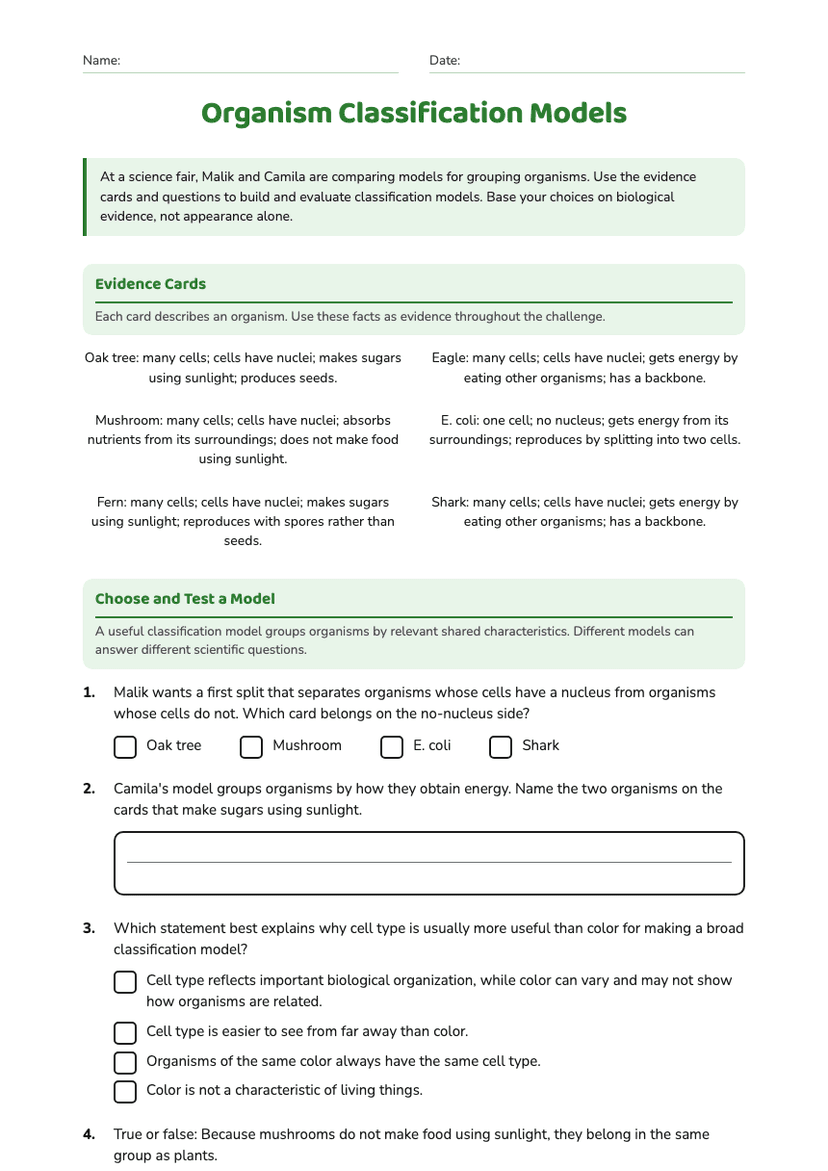
Organism Classification Models
Free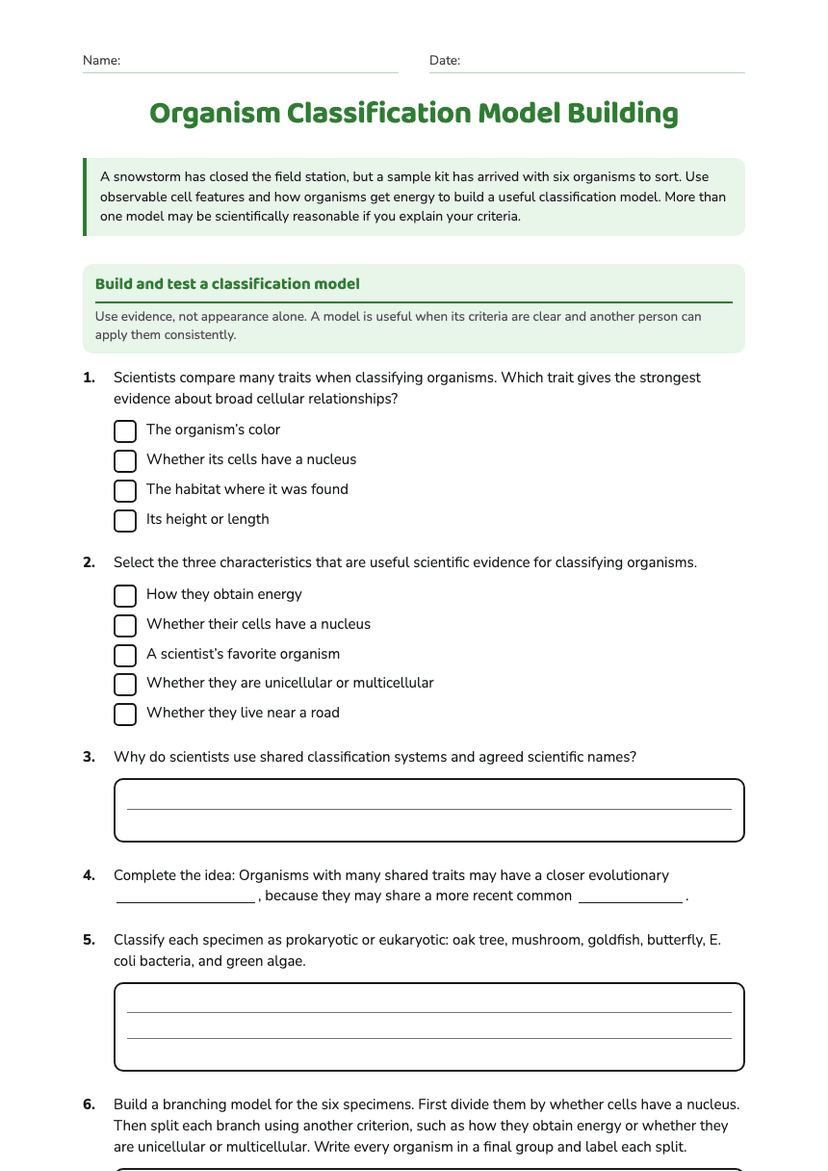
Organism Classification Model Building
Free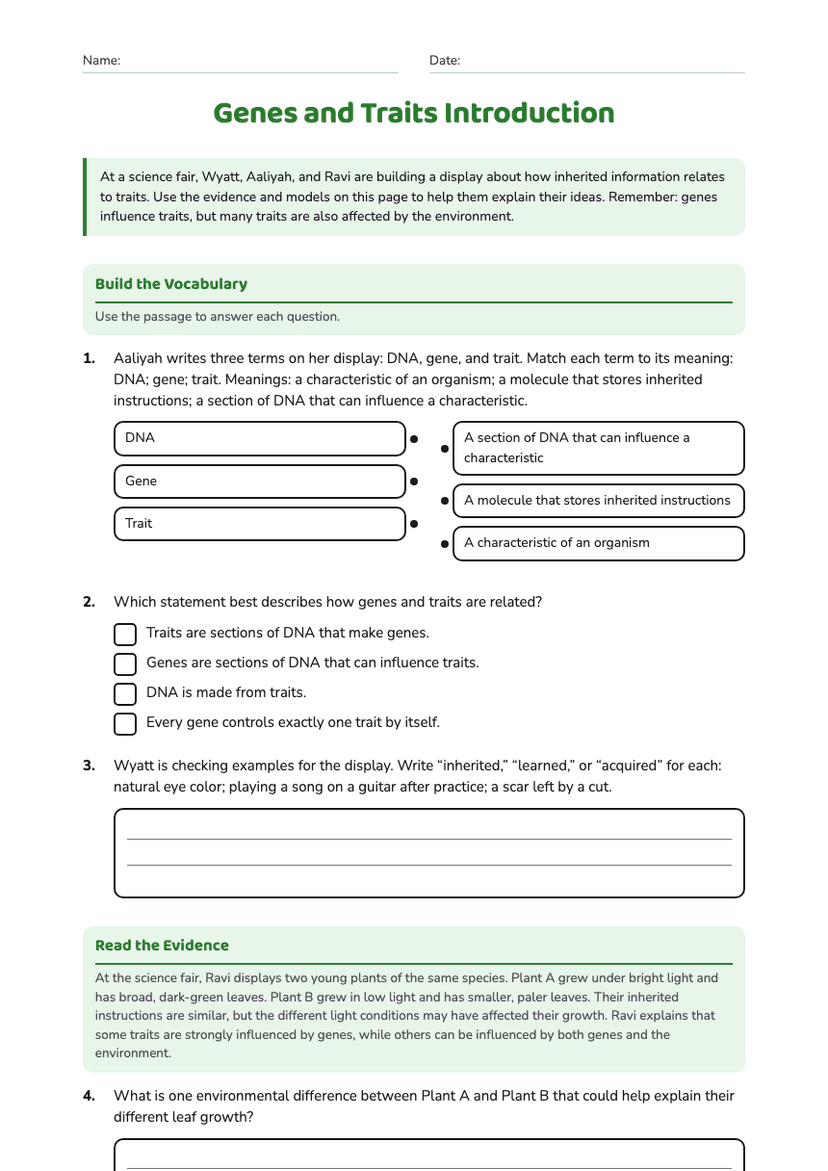
Genes and Traits Introduction
Free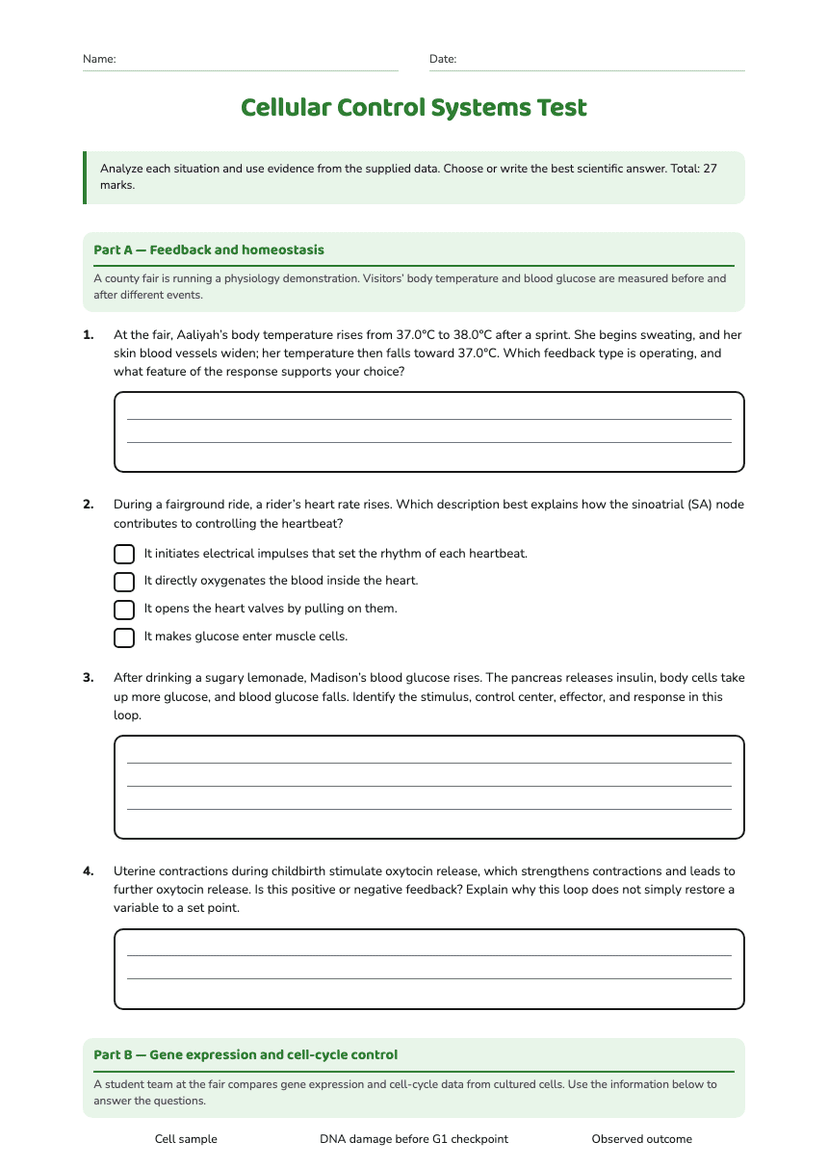
Cellular Control Systems Test
Free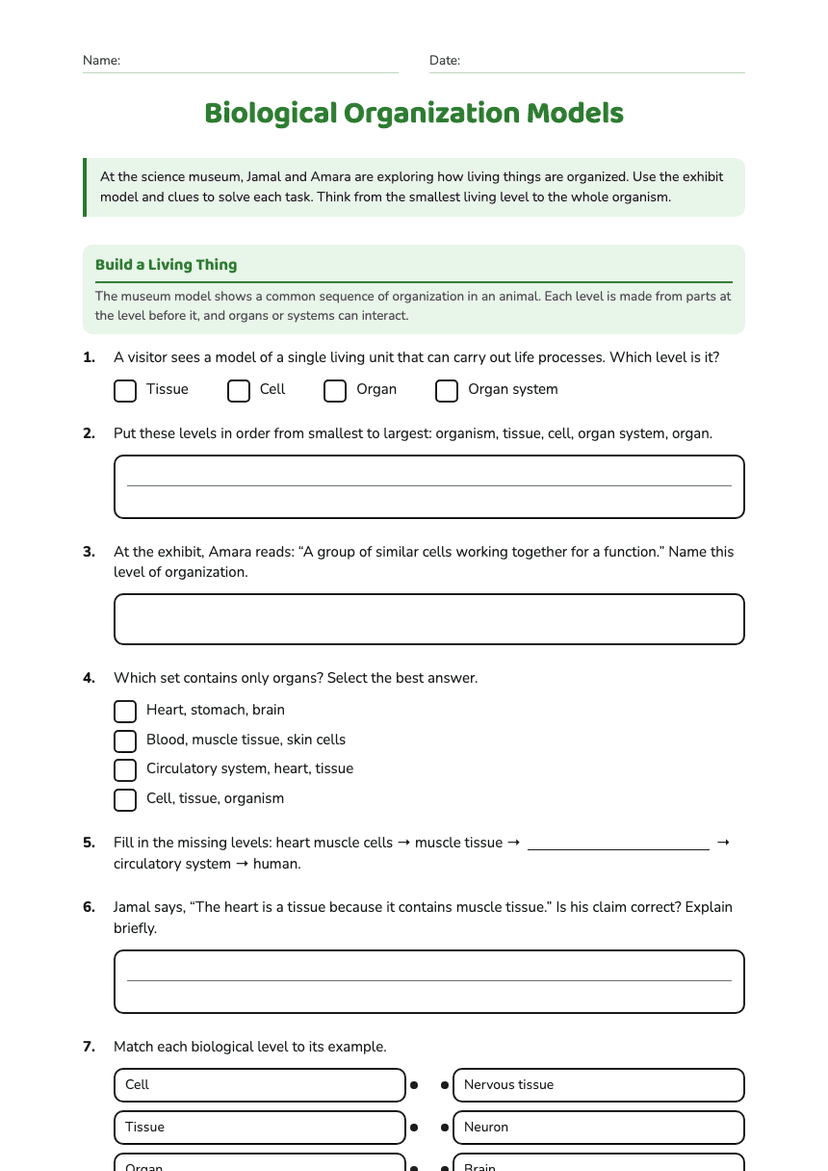
Biological Organization Models
Free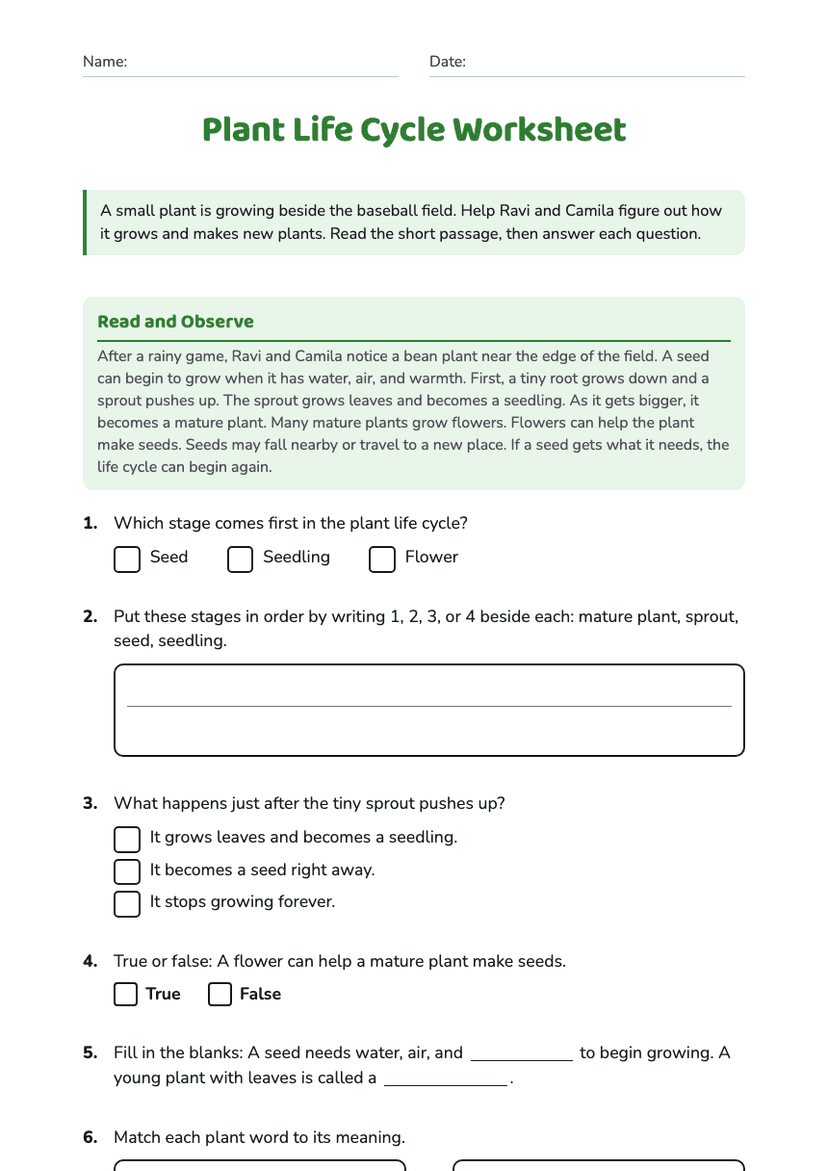
Plant Life Cycle Worksheet
Free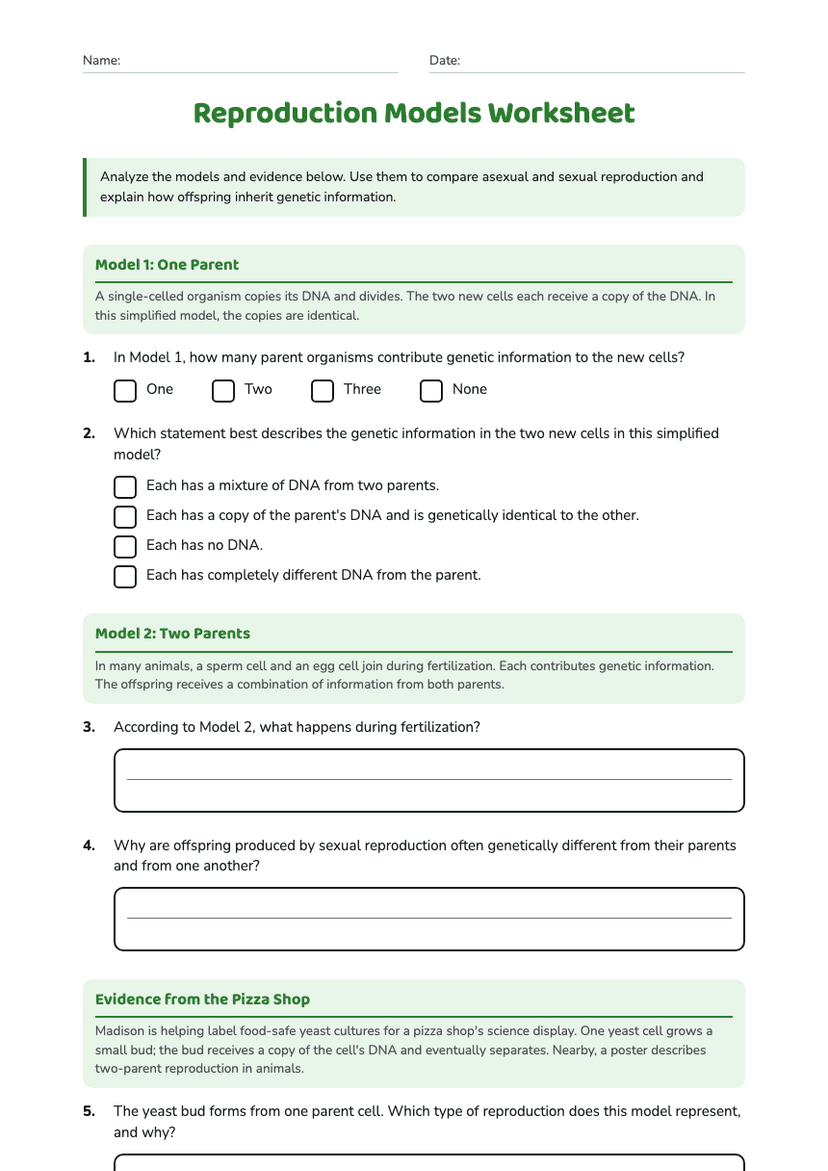
Reproduction Models Worksheet
Free