Cell Theory Lab Exploration
A free science worksheet ready for your classroom. Open in Kuraplan to grab the print-ready PDF, customize it for your students, or generate a fresh version in seconds.
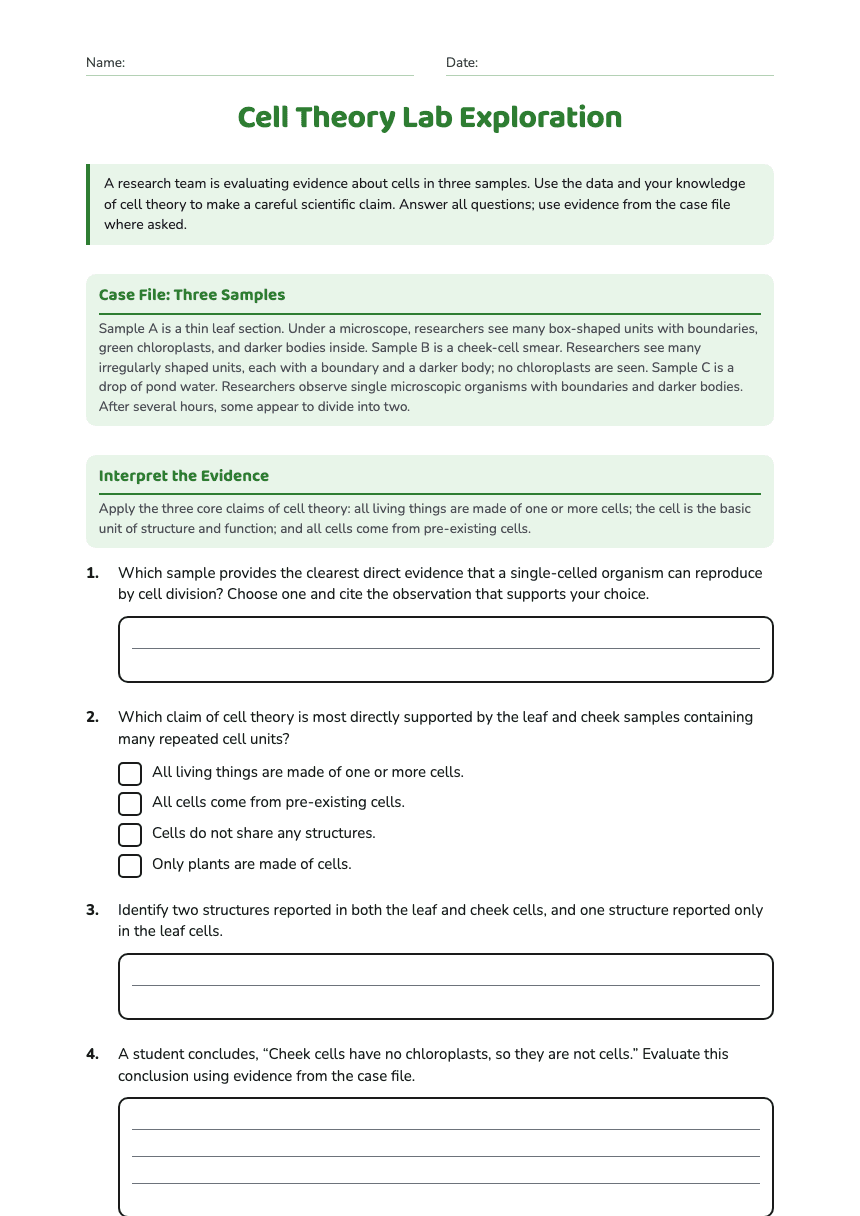
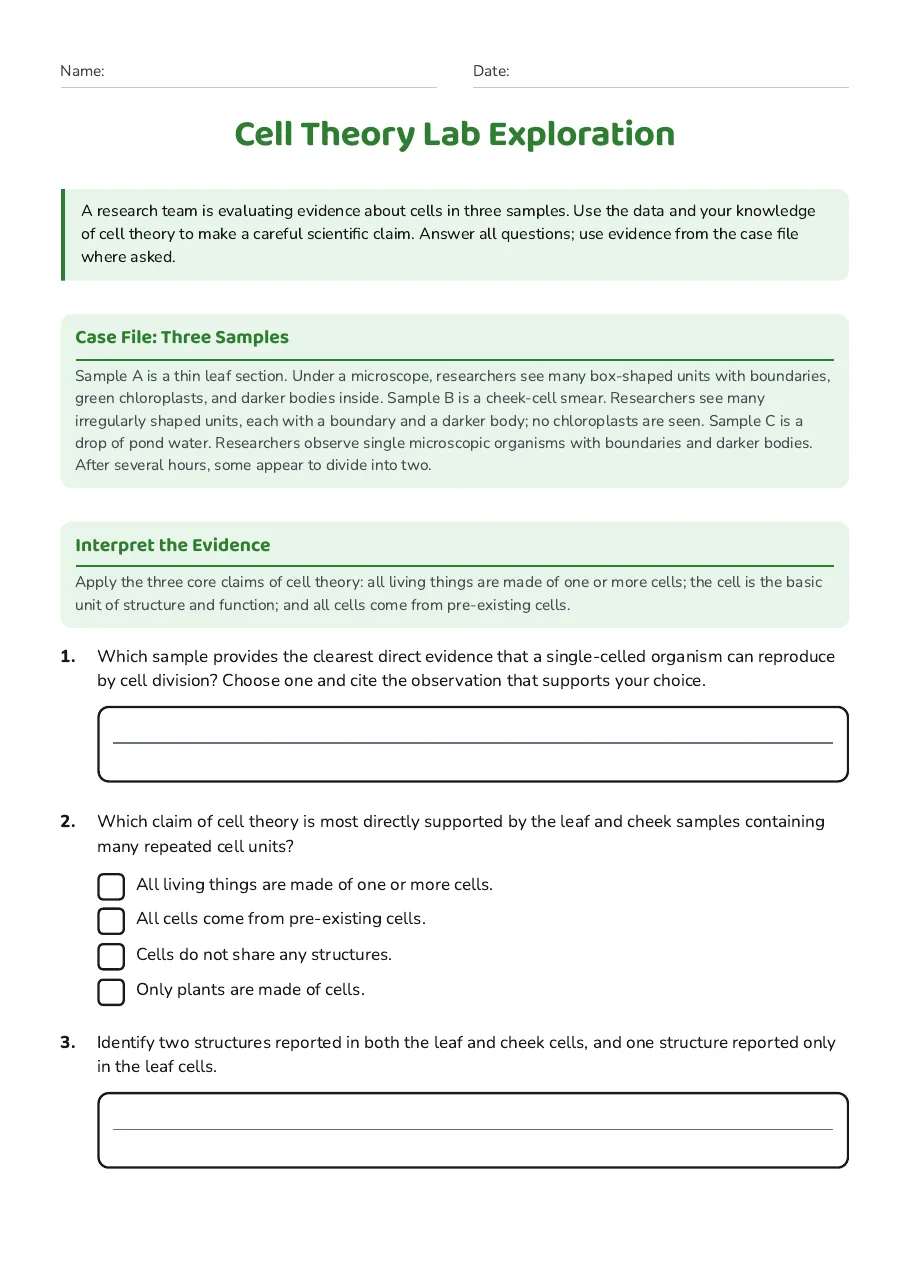
Cell Theory Lab Exploration
Case File: Three Samples
Sample A is a thin leaf section. Under a microscope, researchers see many box-shaped units with boundaries, green chloroplasts, and darker bodies inside. Sample B is a cheek-cell smear. Researchers see many irregularly shaped units, each with a boundary and a darker body; no chloroplasts are seen. Sample C is a drop of pond water. Researchers observe single microscopic organisms with boundaries and darker bodies. After several hours, some appear to divide into two.
Interpret the Evidence
Apply the three core claims of cell theory: all living things are made of one or more cells; the cell is the basic unit of structure and function; and all cells come from pre-existing cells.
- All living things are made of one or more cells.
- All cells come from pre-existing cells.
- Cells do not share any structures.
- Only plants are made of cells.
2 printable pages
Page 1
Page 2
About This Worksheet
Free in Kuraplan
Sign up free, grab the PDF, and customize it for your class.
Print-Ready
Formatted for standard paper. Clean layout, easy to read.
AI-Generated
Created with Kuraplan's AI, designed for real classroom use.
For Teachers & Parents
Use in classrooms, for homework, tutoring, or homeschool.
Need a custom version of this worksheet?
Kuraplan's AI generates custom worksheets in seconds — differentiated for every learner, aligned to your curriculum.
Generate Custom Worksheets — FreeMore Science Worksheets
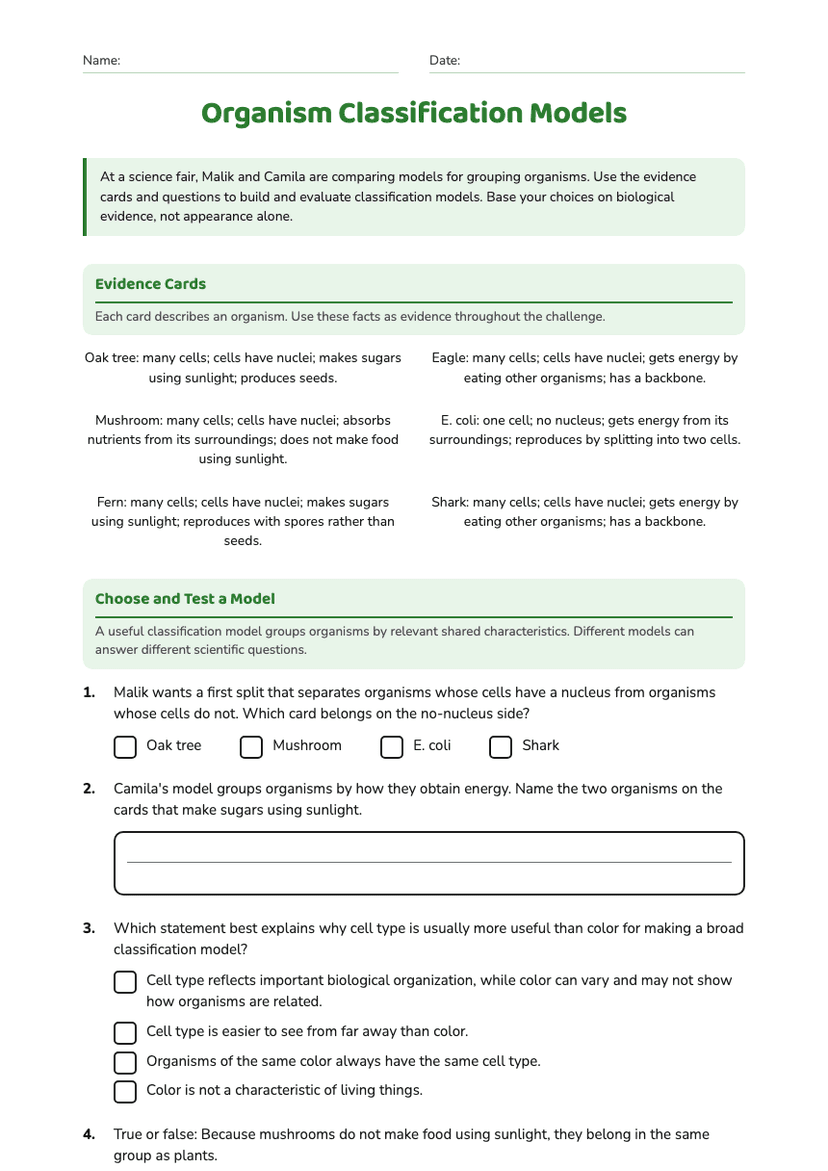
Organism Classification Models
Free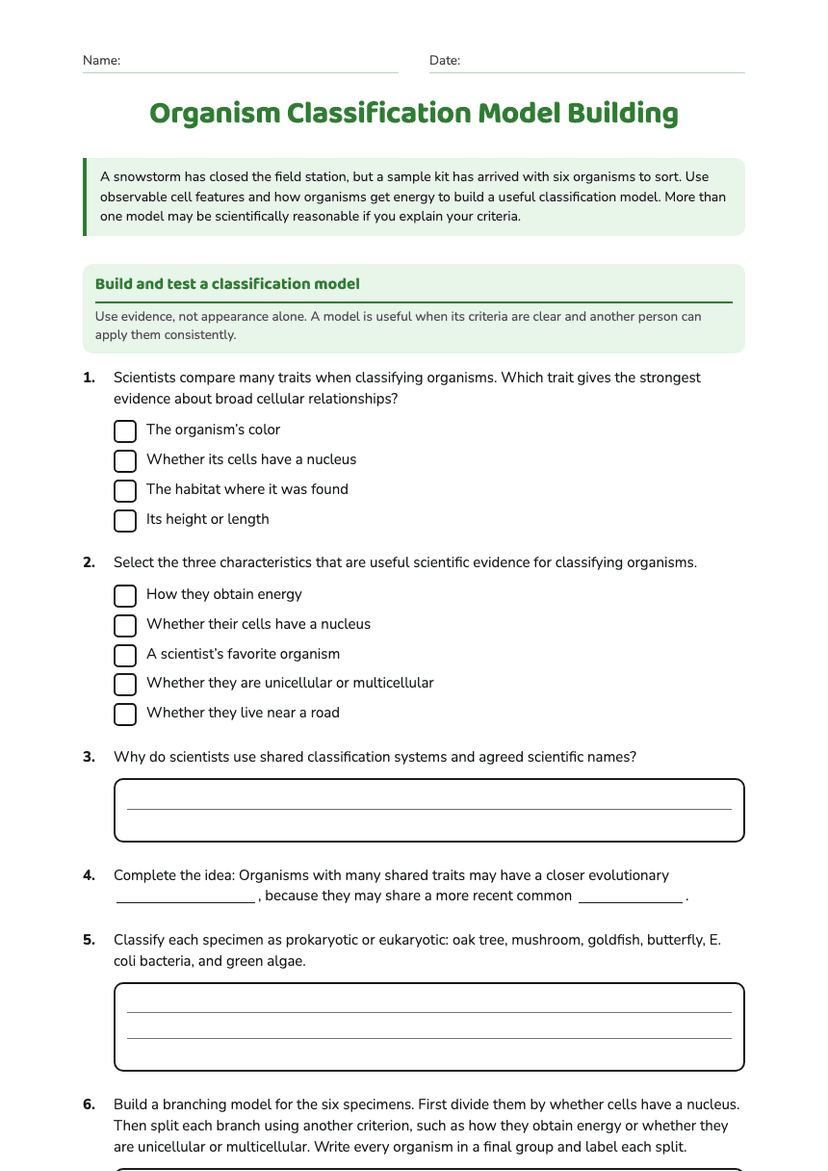
Organism Classification Model Building
Free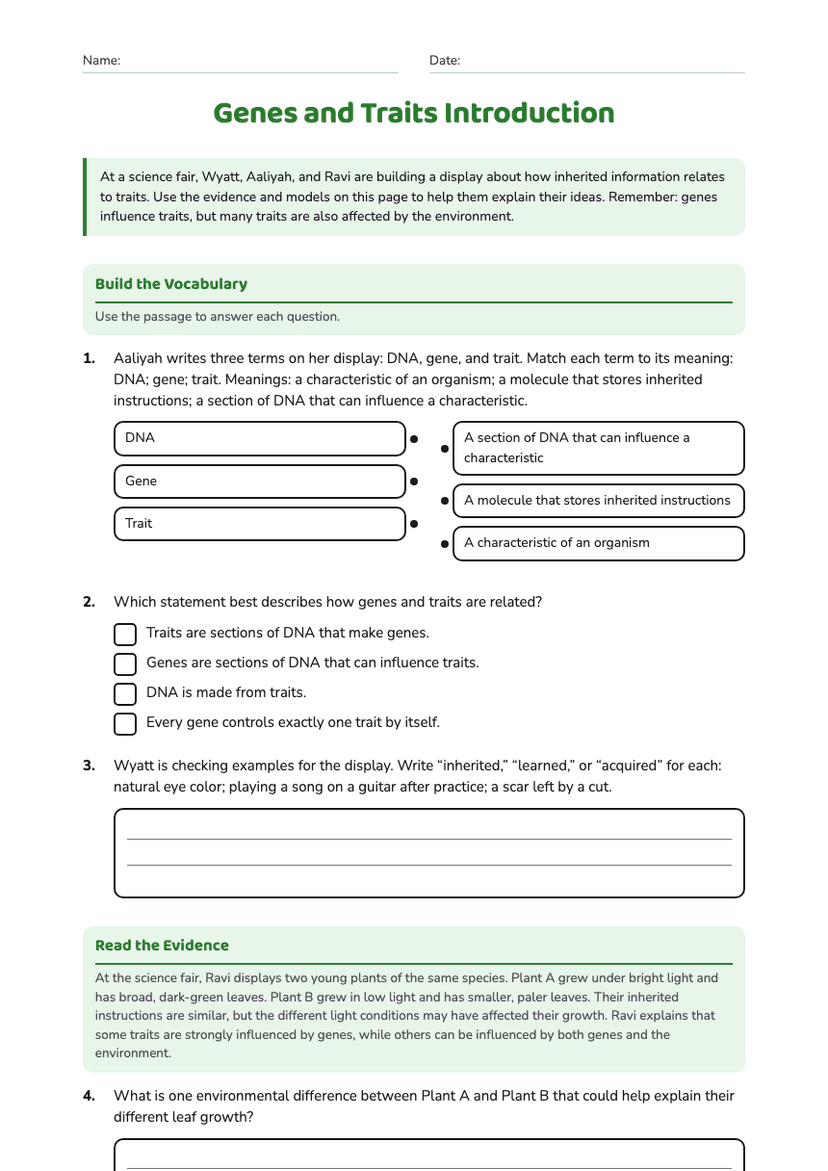
Genes and Traits Introduction
Free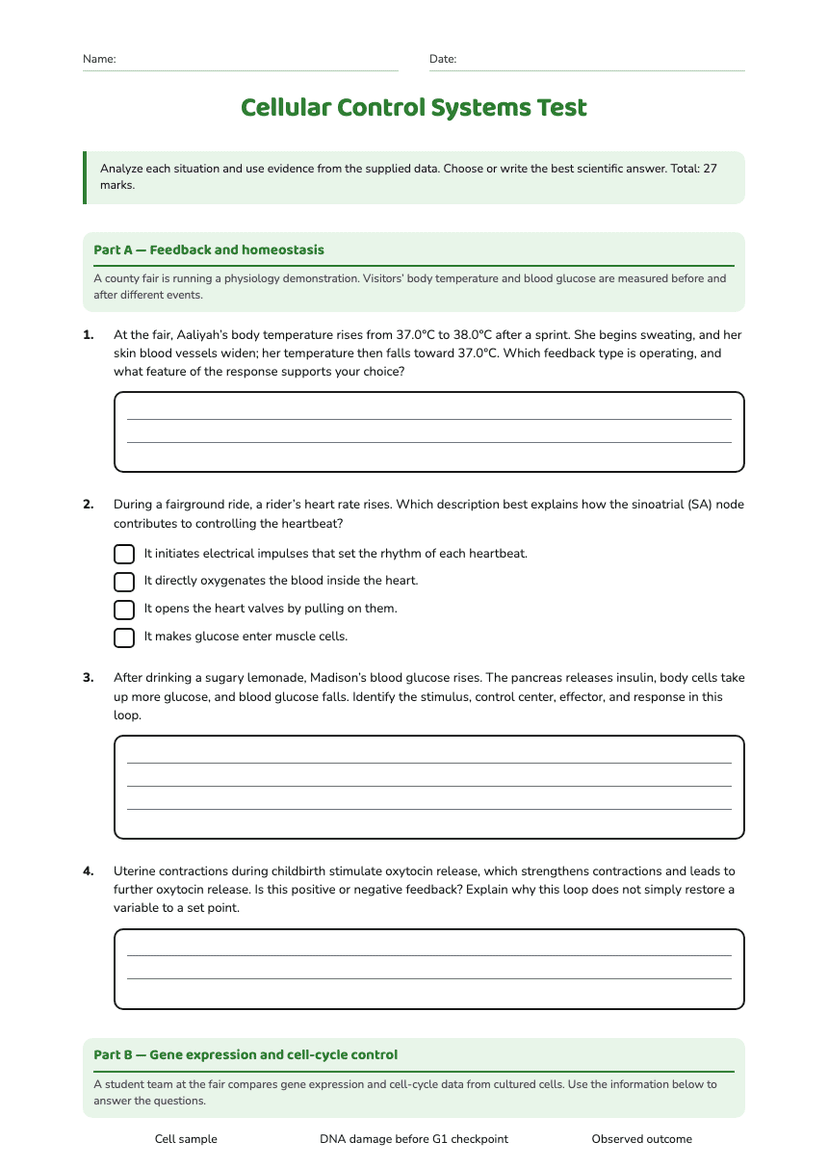
Cellular Control Systems Test
Free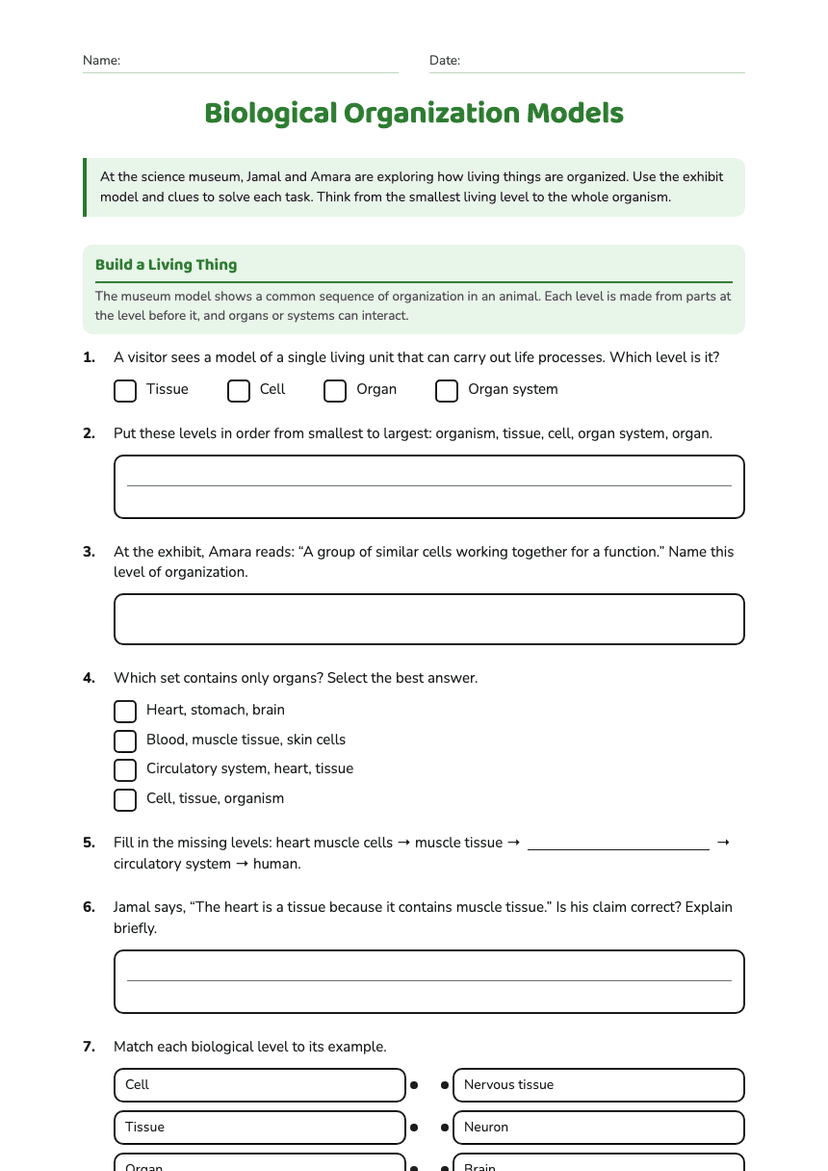
Biological Organization Models
Free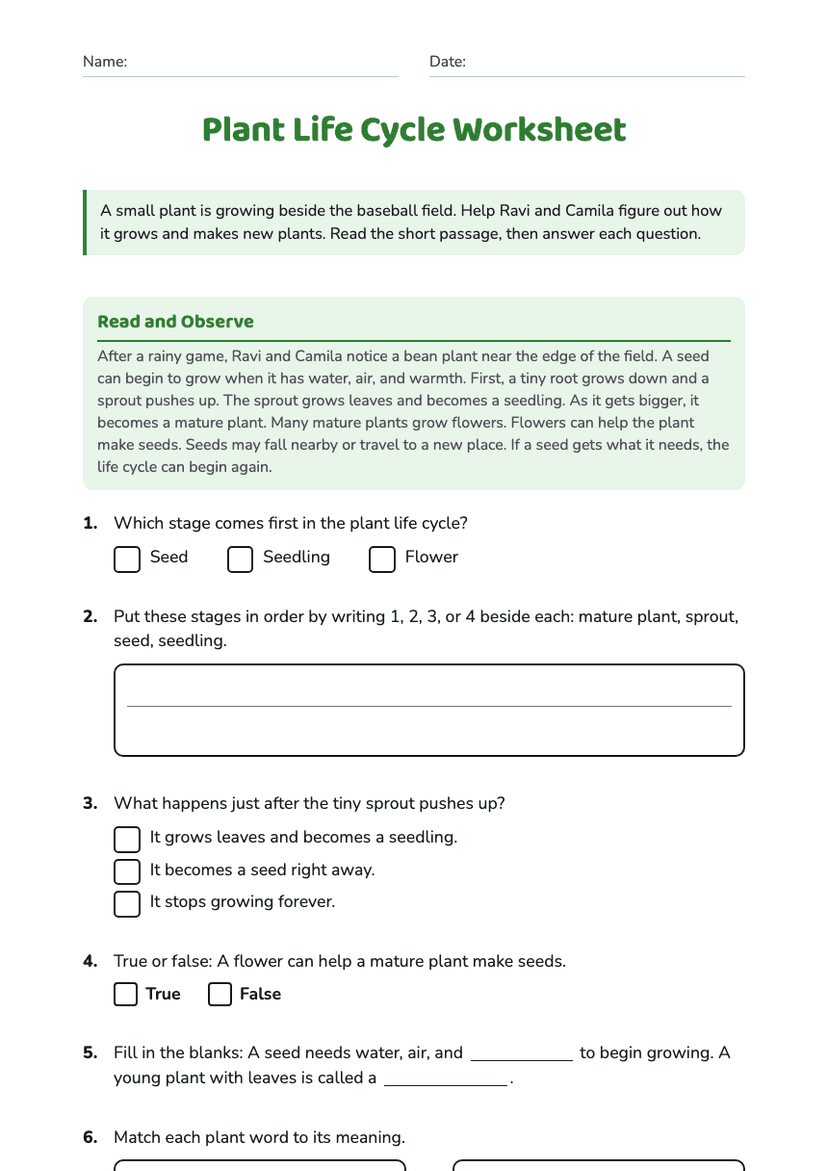
Plant Life Cycle Worksheet
Free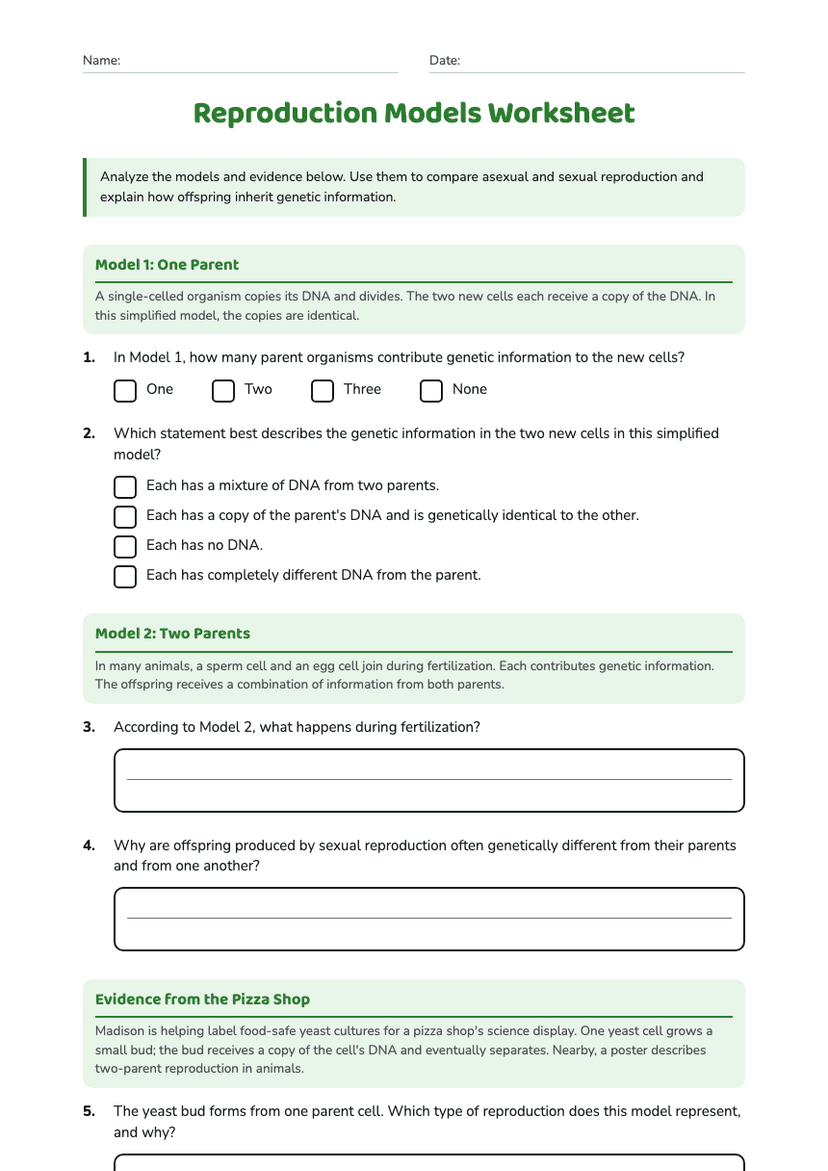
Reproduction Models Worksheet
Free