Exploring the Food Chain
A free science worksheet ready for your classroom. Open in Kuraplan to grab the print-ready PDF, customize it for your students, or generate a fresh version in seconds.
Exploring the Food Chain
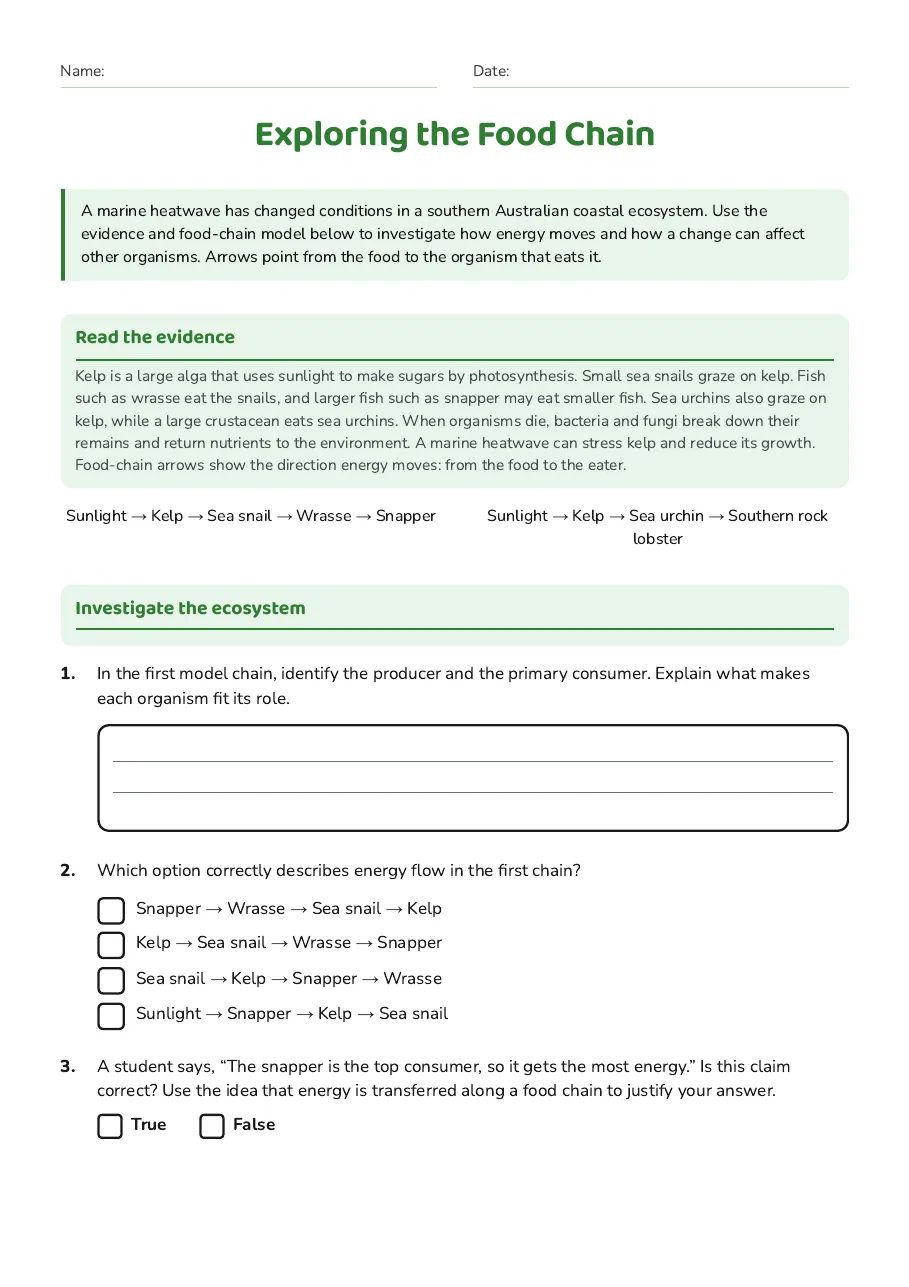
Read the evidence
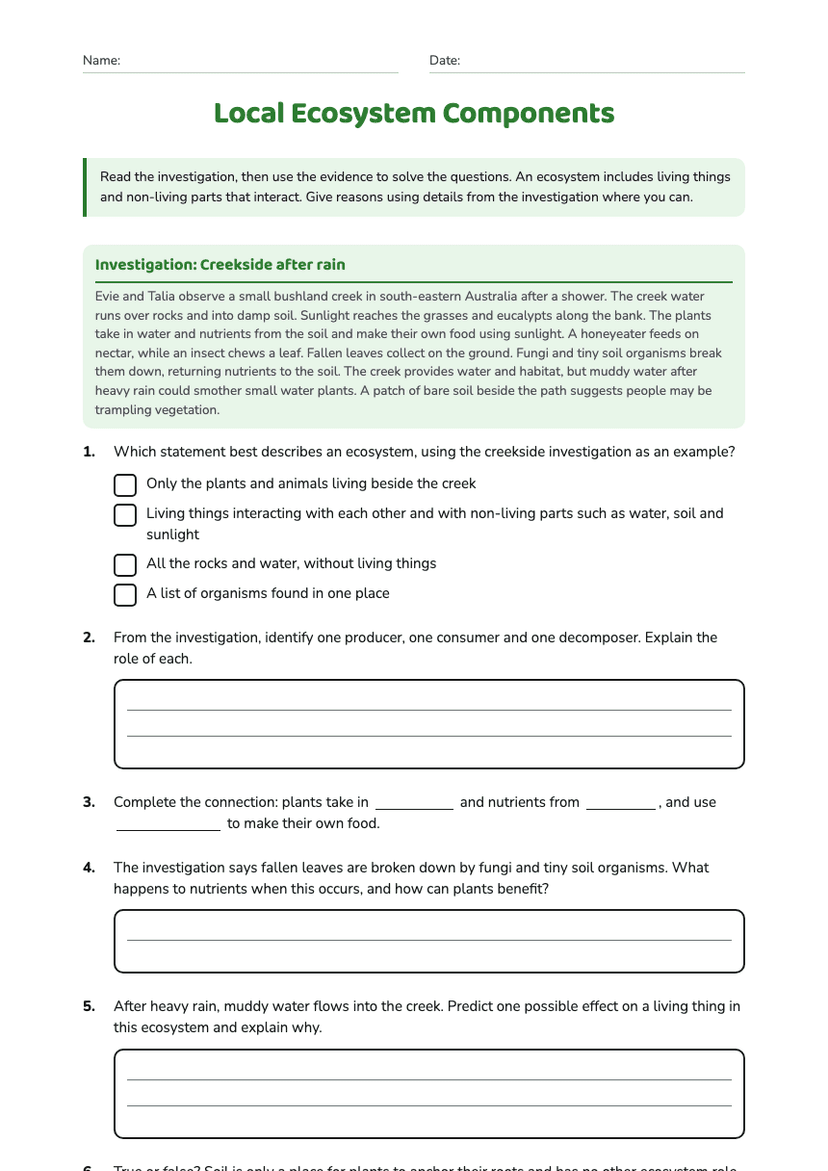
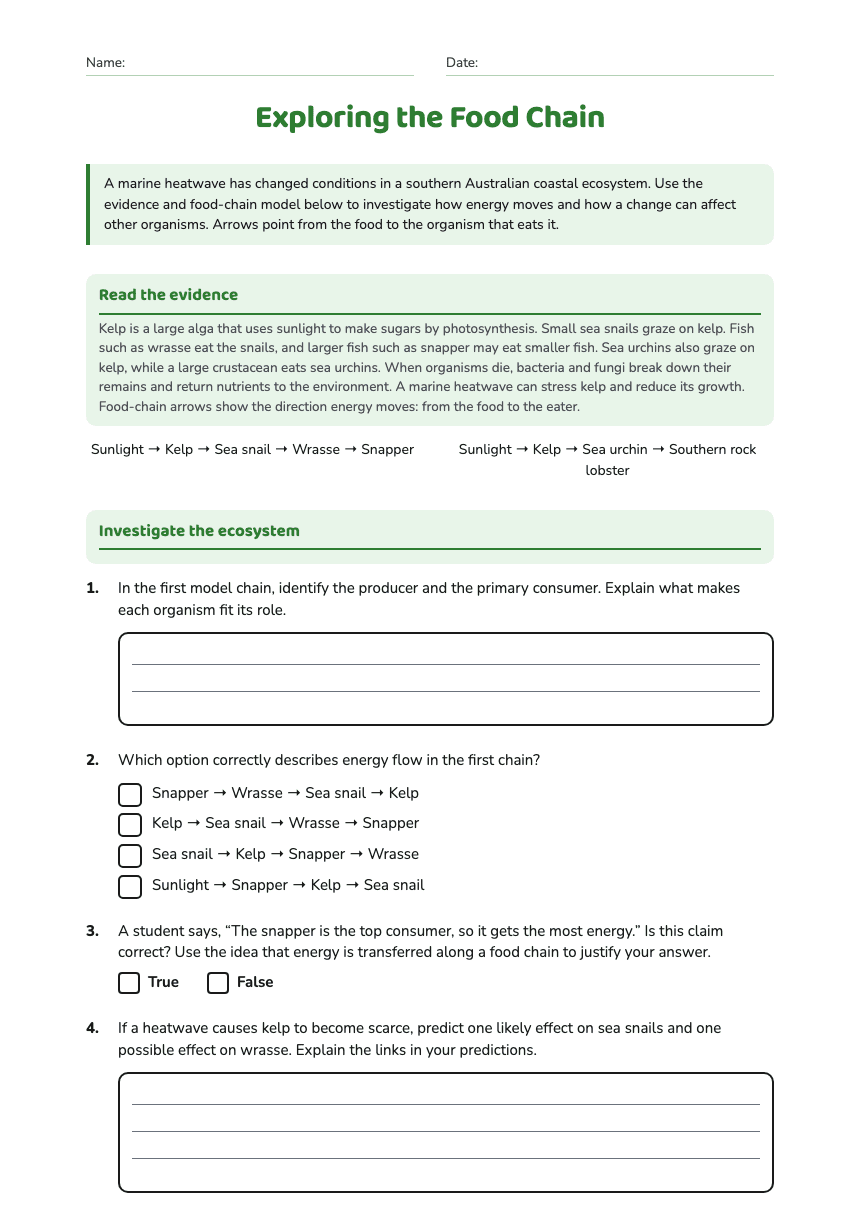
Kelp is a large alga that uses sunlight to make sugars by photosynthesis. Small sea snails graze on kelp. Fish such as wrasse eat the snails, and larger fish such as snapper may eat smaller fish. Sea urchins also graze on kelp, while a large crustacean eats sea urchins. When organisms die, bacteria and fungi break down their remains and return nutrients to the environment. A marine heatwave can stress kelp and reduce its growth. Food-chain arrows show the direction energy moves: from the food to the eater.
Sunlight → Kelp → Sea snail → Wrasse → Snapper
Sunlight → Kelp → Sea urchin → Southern rock lobster
Investigate the ecosystem
- Snapper → Wrasse → Sea snail → Kelp
- Kelp → Sea snail → Wrasse → Snapper
- Sea snail → Kelp → Snapper → Wrasse
- Sunlight → Snapper → Kelp → Sea snail
2 printable pages
Page 1
Page 2
About This Worksheet
Free in Kuraplan
Sign up free, grab the PDF, and customize it for your class.
Print-Ready
Formatted for standard paper. Clean layout, easy to read.
AI-Generated
Created with Kuraplan's AI, designed for real classroom use.
For Teachers & Parents
Use in classrooms, for homework, tutoring, or homeschool.
Need a custom version of this worksheet?
Kuraplan's AI generates custom worksheets in seconds — differentiated for every learner, aligned to your curriculum.
Generate Custom Worksheets — FreeMore Science Worksheets
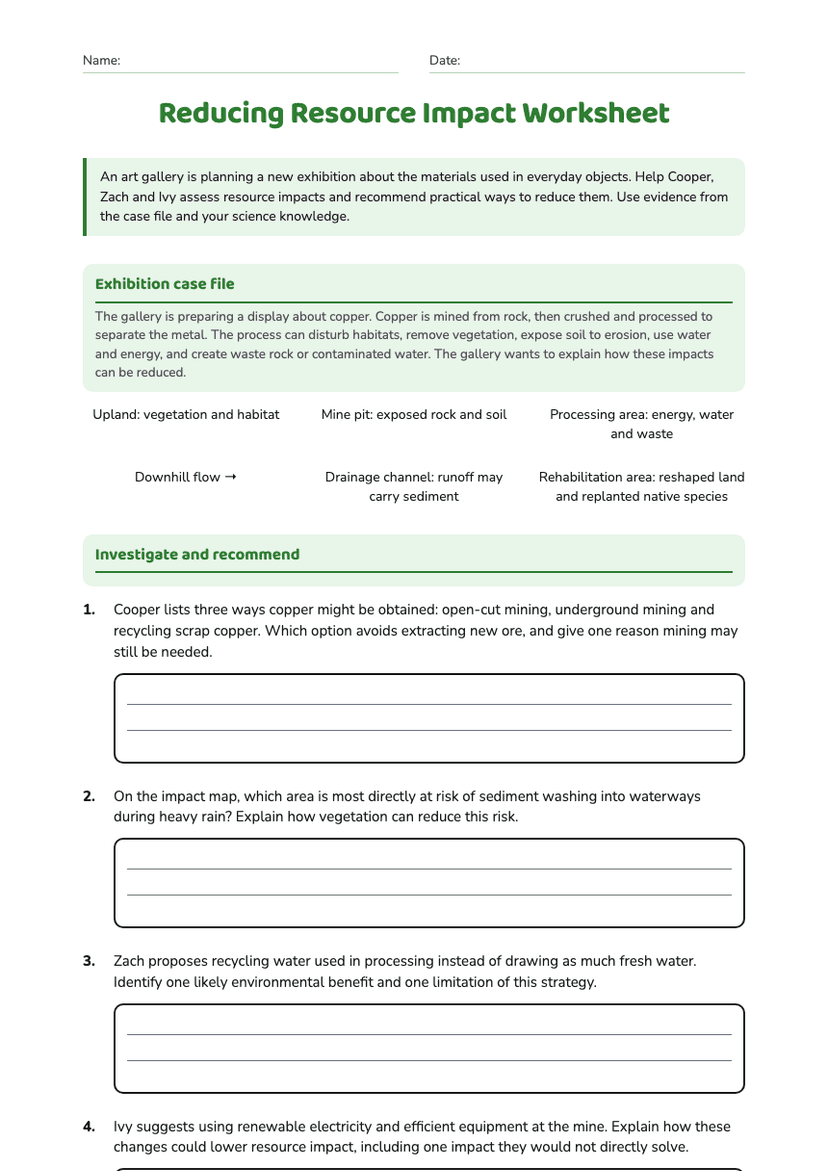
Reducing Resource Impact Worksheet
Free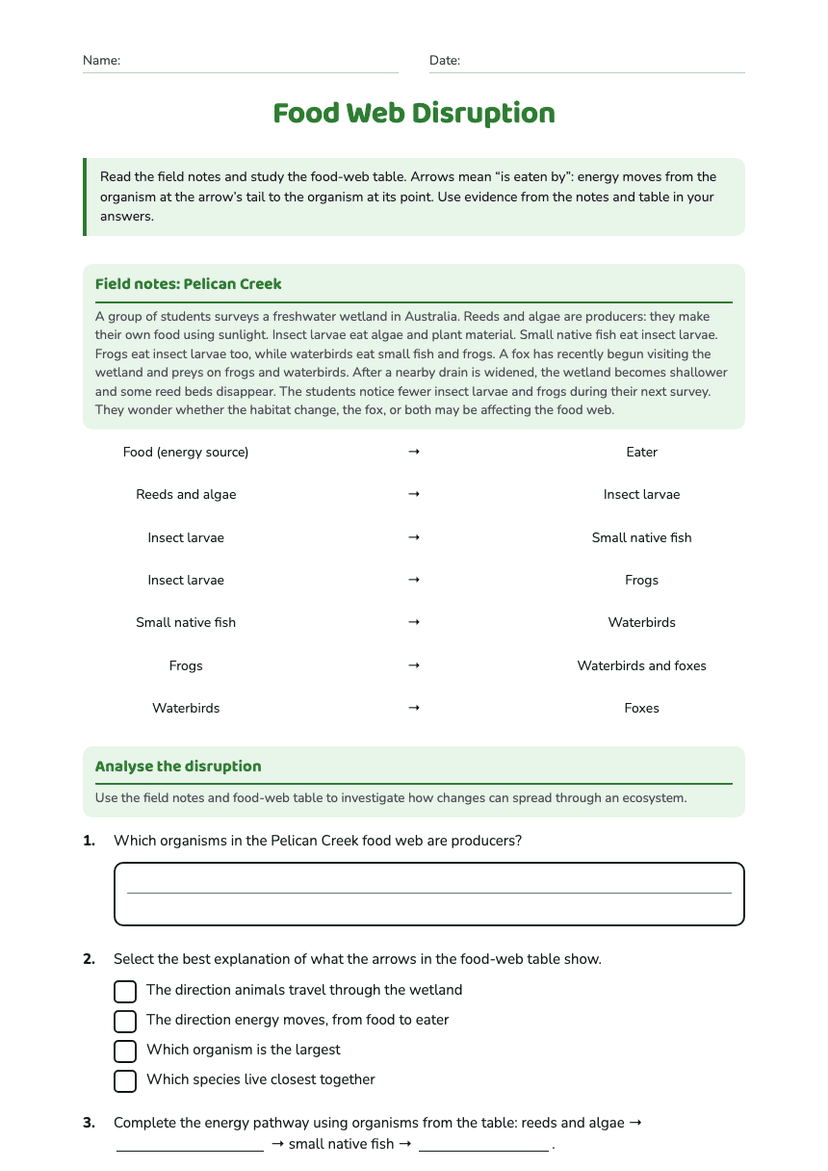
Food Web Disruption
Free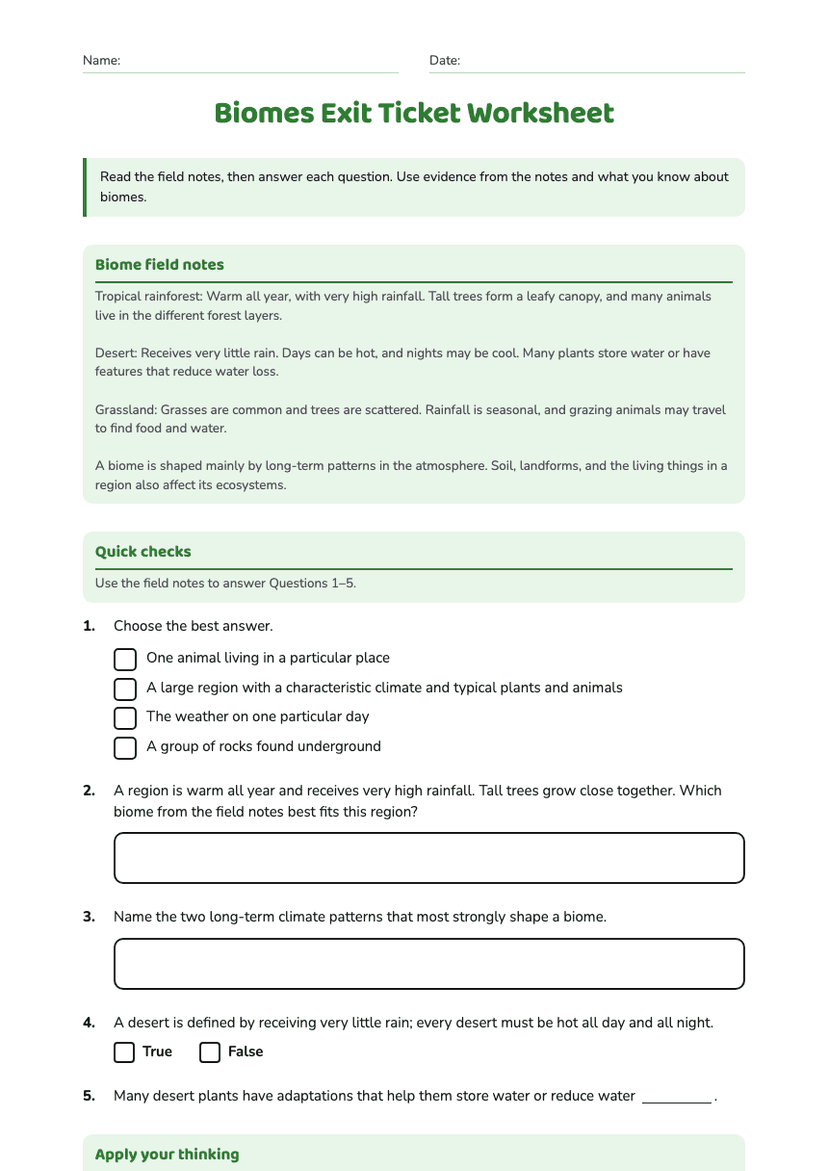
Biomes Exit Ticket Worksheet
Free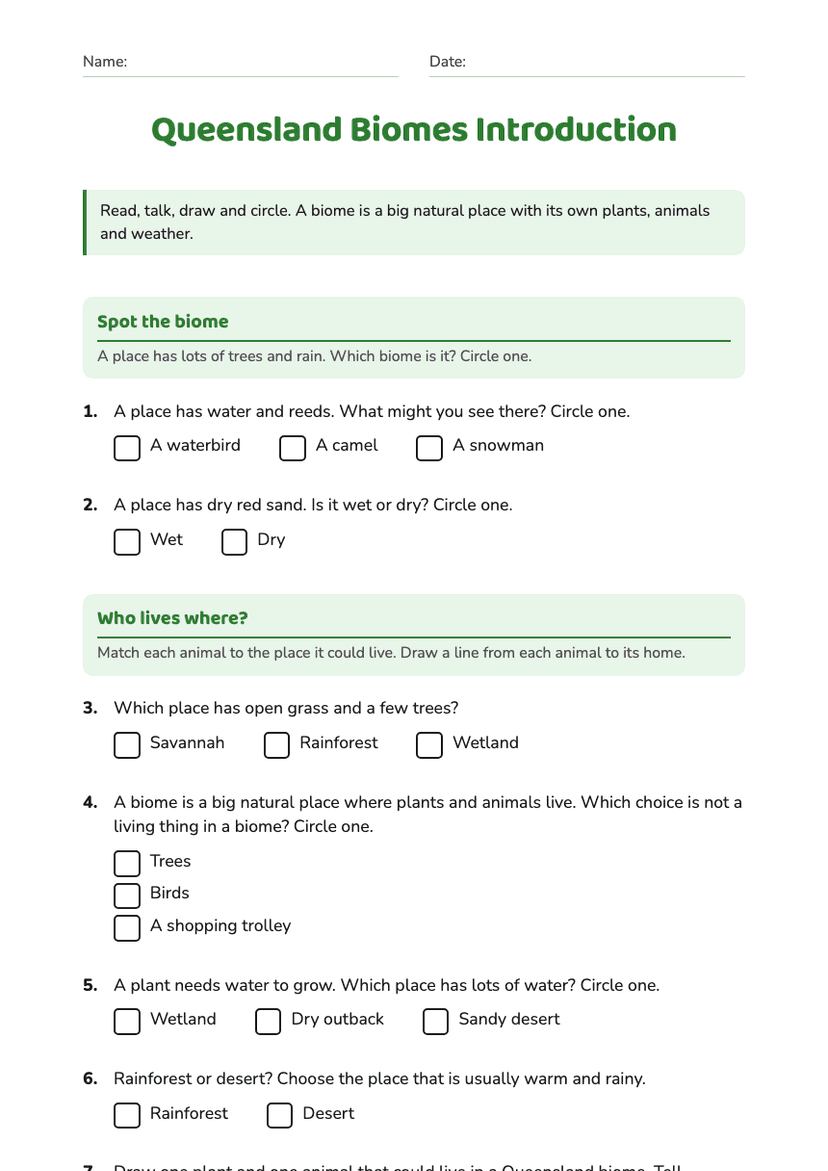
Queensland Biomes Introduction
Free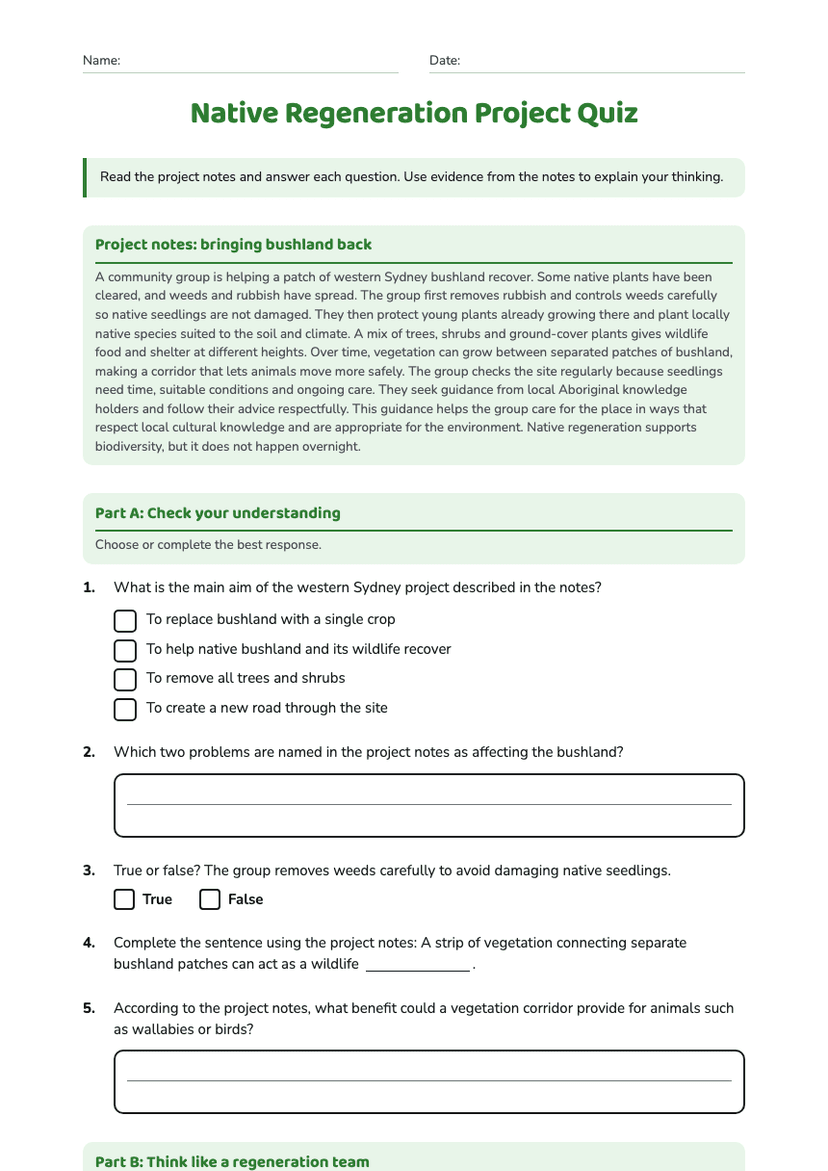
Native Regeneration Project Quiz
Free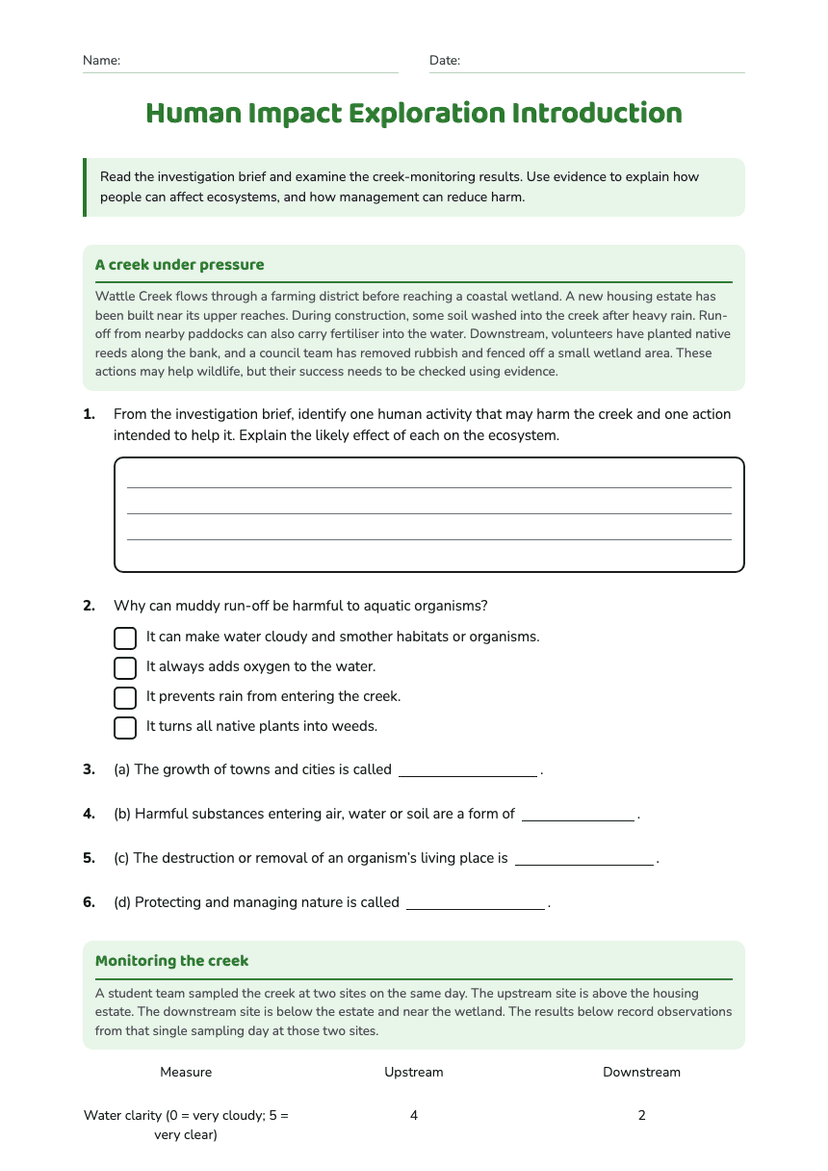
Human Impact Exploration Introduction
Free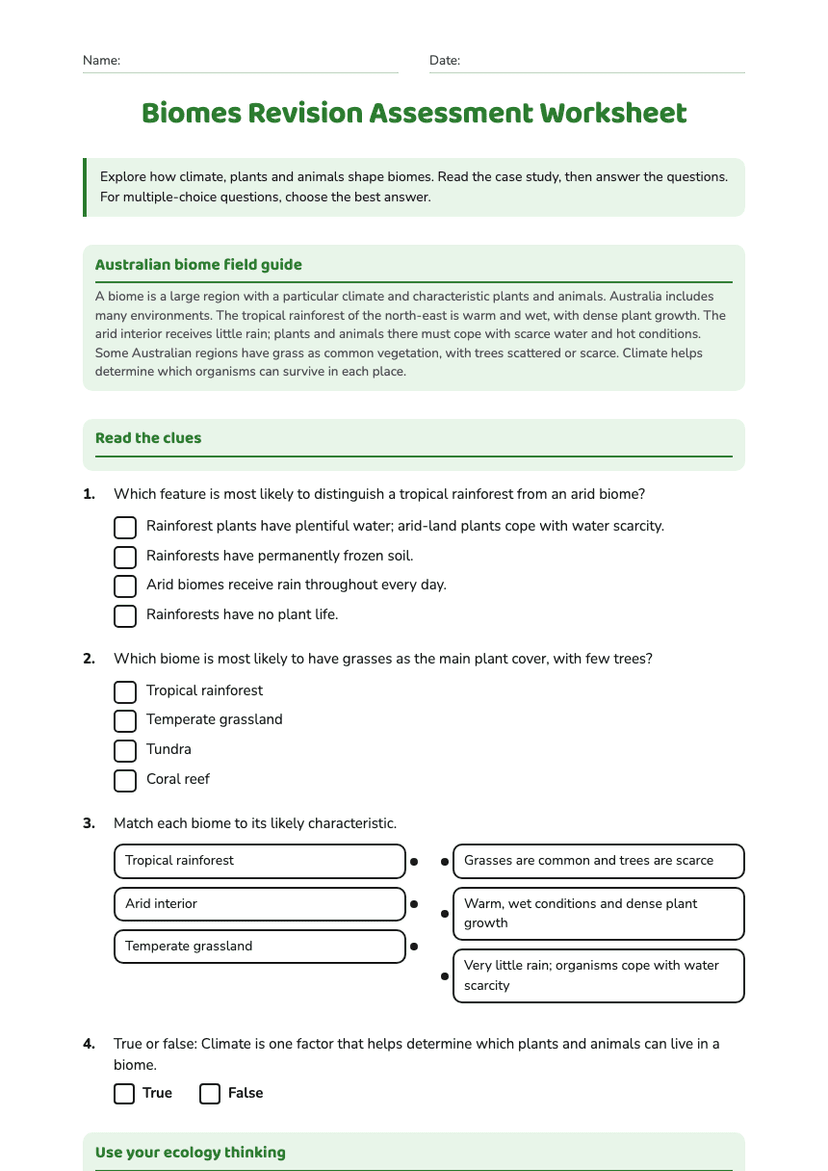
Biomes Revision Assessment Worksheet
Free