Fertile Crescent Geography
A free social studies worksheet ready for your classroom. Open in Kuraplan to grab the print-ready PDF, customize it for your students, or generate a fresh version in seconds.
Fertile Crescent Geography
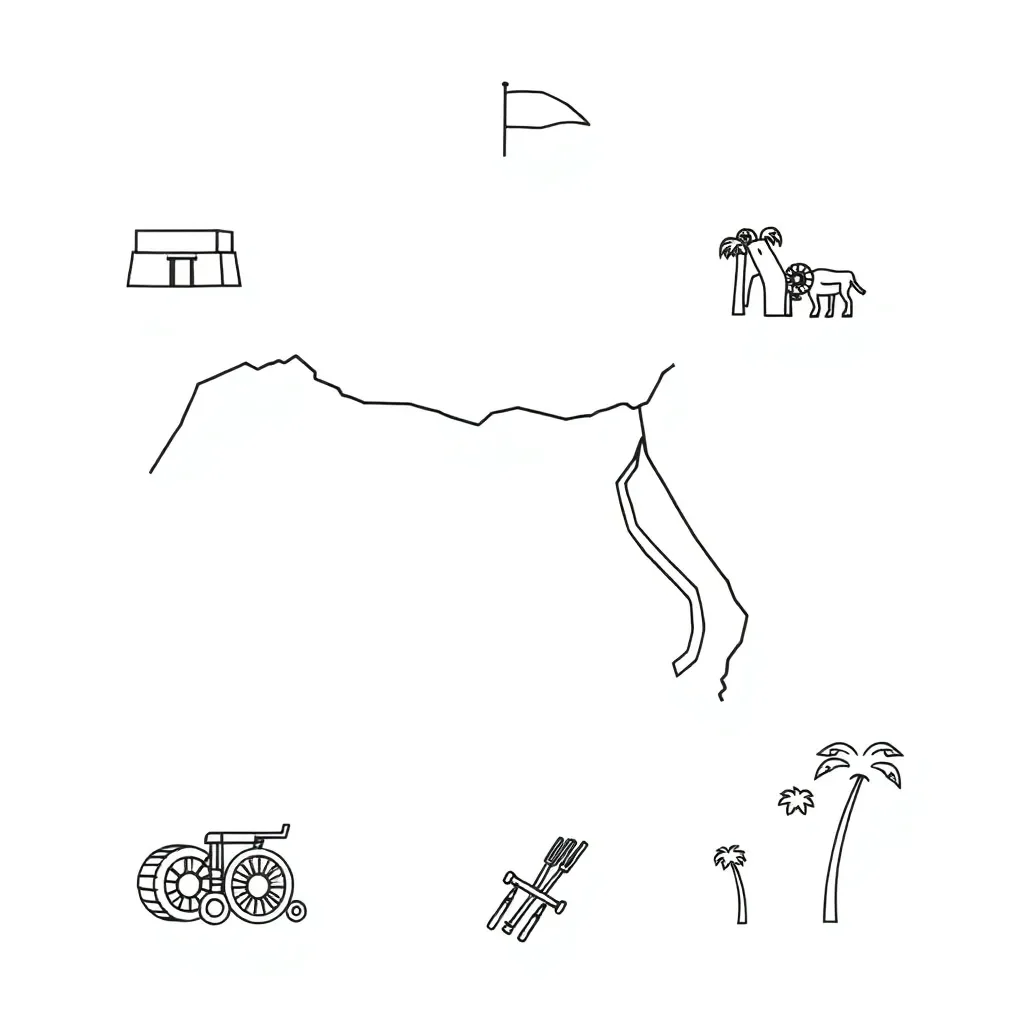
🗺️ Part 1: Map Skills and Geography
📚 Part 2: Vocabulary Matching
The _________________ was important to early humans because rivers deposited rich _________ that made the soil perfect for growing crops. When there wasn't enough rain, ancient people learned to _____________ their fields by digging channels to bring water from the rivers.
✏️ Part 3: Critical Thinking
Teacher Notes: Provide students with a blank outline map of the ancient Middle East showing the Fertile Crescent region. Have vocabulary index cards available for reference during the matching activity.
🔑 Answer Key - Separate Page
Students should correctly identify and label all four items on their map. The Fertile Crescent region should be colored green and encompasses the area between the Tigris and Euphrates rivers, extending from modern-day Iraq through parts of Syria, Lebanon, and Israel/Palestine.
C) Both A and B are correct - The Fertile Crescent is named for both its crescent shape and its fertile soil.
B) Tigris and Euphrates
Fertile Crescent → A crescent-shaped region with fertile land where early civilizations began
Silt → Fine soil deposited by rivers that makes land good for farming
Irrigate → To supply water to crops through channels or pipes
The Fertile Crescent was important to early humans because rivers deposited rich silt that made the soil perfect for growing crops. When there wasn't enough rain, ancient people learned to irrigate their fields by digging channels to bring water from the rivers.
Students should mention at least three of the following: fresh water for drinking, fertile soil for farming, transportation routes, fish for food, protection from enemies, trade opportunities, or reliable water source for animals.
Students should explain that the Fertile Crescent provided the resources (water, fertile soil, food) necessary for people to stop being nomads and settle in permanent communities, leading to the development of agriculture, cities, and complex societies.
Students should discuss how irrigation allowed people to: farm in areas without enough rainfall, grow more food, support larger populations, settle permanently in one place, develop specialized jobs beyond farming, and create more complex societies.
About This Worksheet
Free in Kuraplan
Sign up free, grab the PDF, and customize it for your class.
Print-Ready
Formatted for standard paper. Clean layout, easy to read.
AI-Generated
Created with Kuraplan's AI, designed for real classroom use.
For Teachers & Parents
Use in classrooms, for homework, tutoring, or homeschool.
Need a custom version of this worksheet?
Kuraplan's AI generates custom worksheets in seconds — differentiated for every learner, aligned to your curriculum.
Generate Custom Worksheets — FreeMore Social Studies Worksheets
Create Your Map Legend
Free
Town Map Detectives
Free
Rivers Shape Civilizations
Free
Continents: Maps and Globes
Free
Native American Regions Map
Free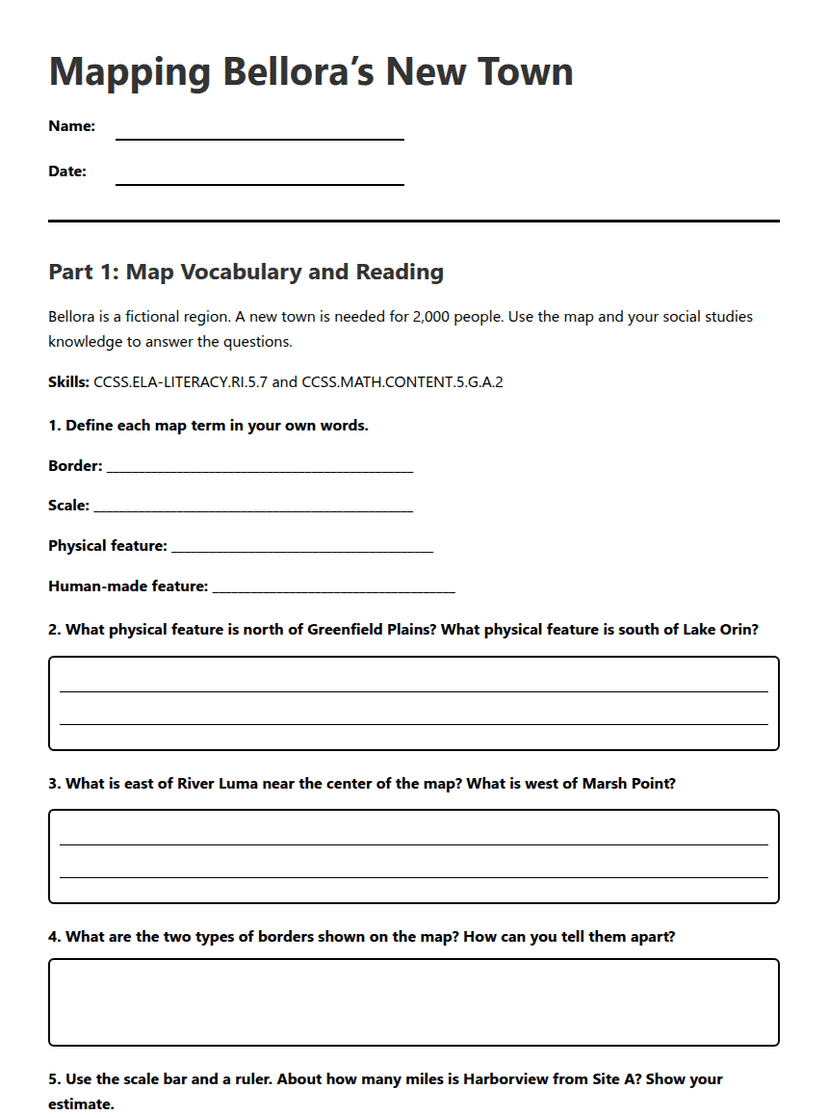
Mapping Bellora’s New Town
Free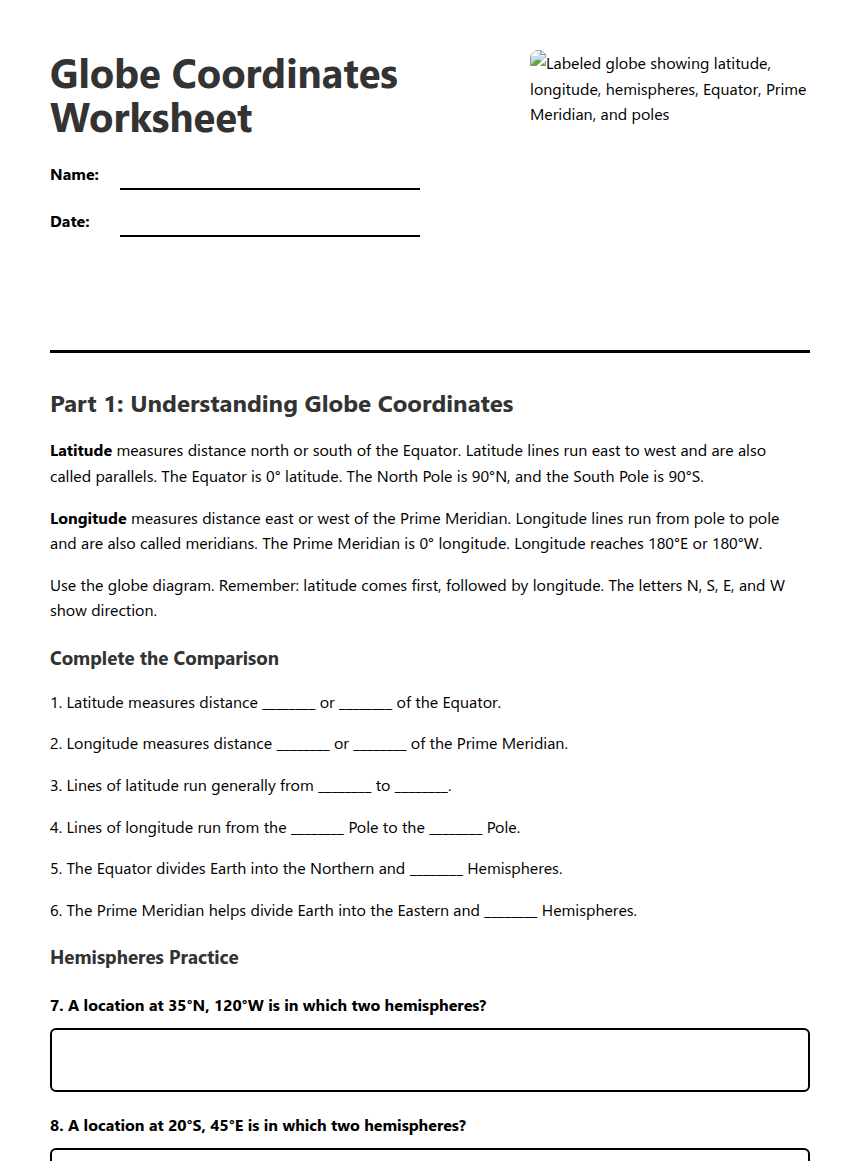
Globe Coordinates Worksheet
Free