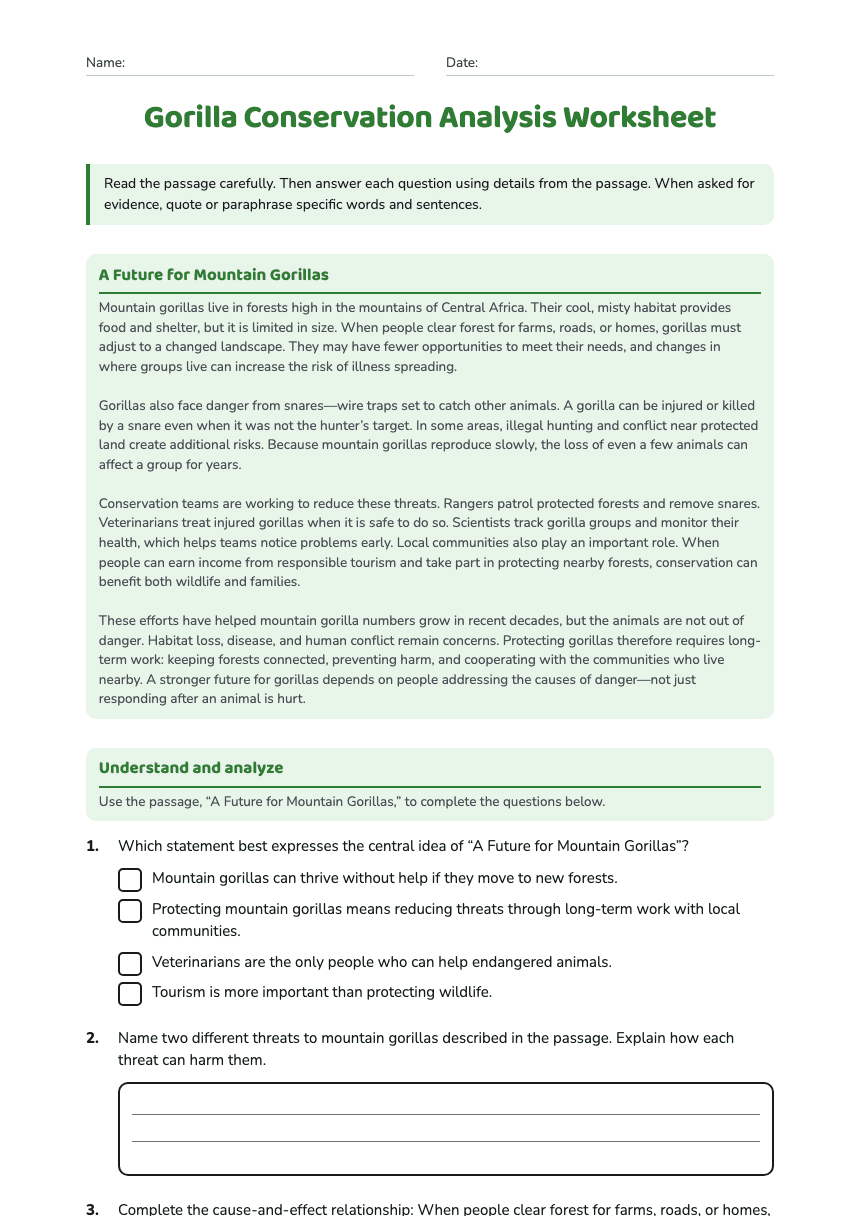
Gorilla Conservation Analysis Worksheet
A free english (ela) worksheet ready for your classroom. Open in Kuraplan to grab the print-ready PDF, customize it for your students, or generate a fresh version in seconds.
Gorilla Conservation Analysis Worksheet
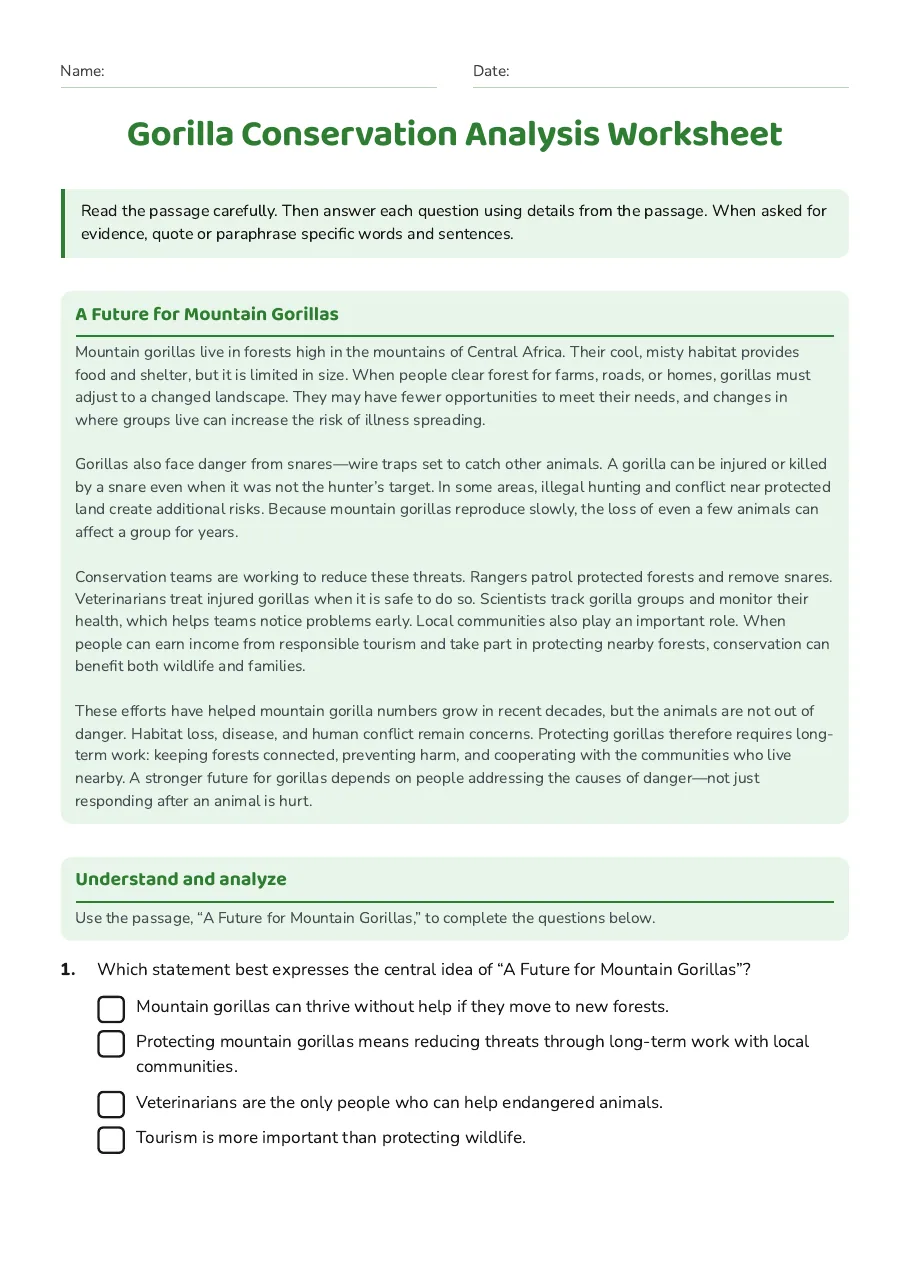
A Future for Mountain Gorillas
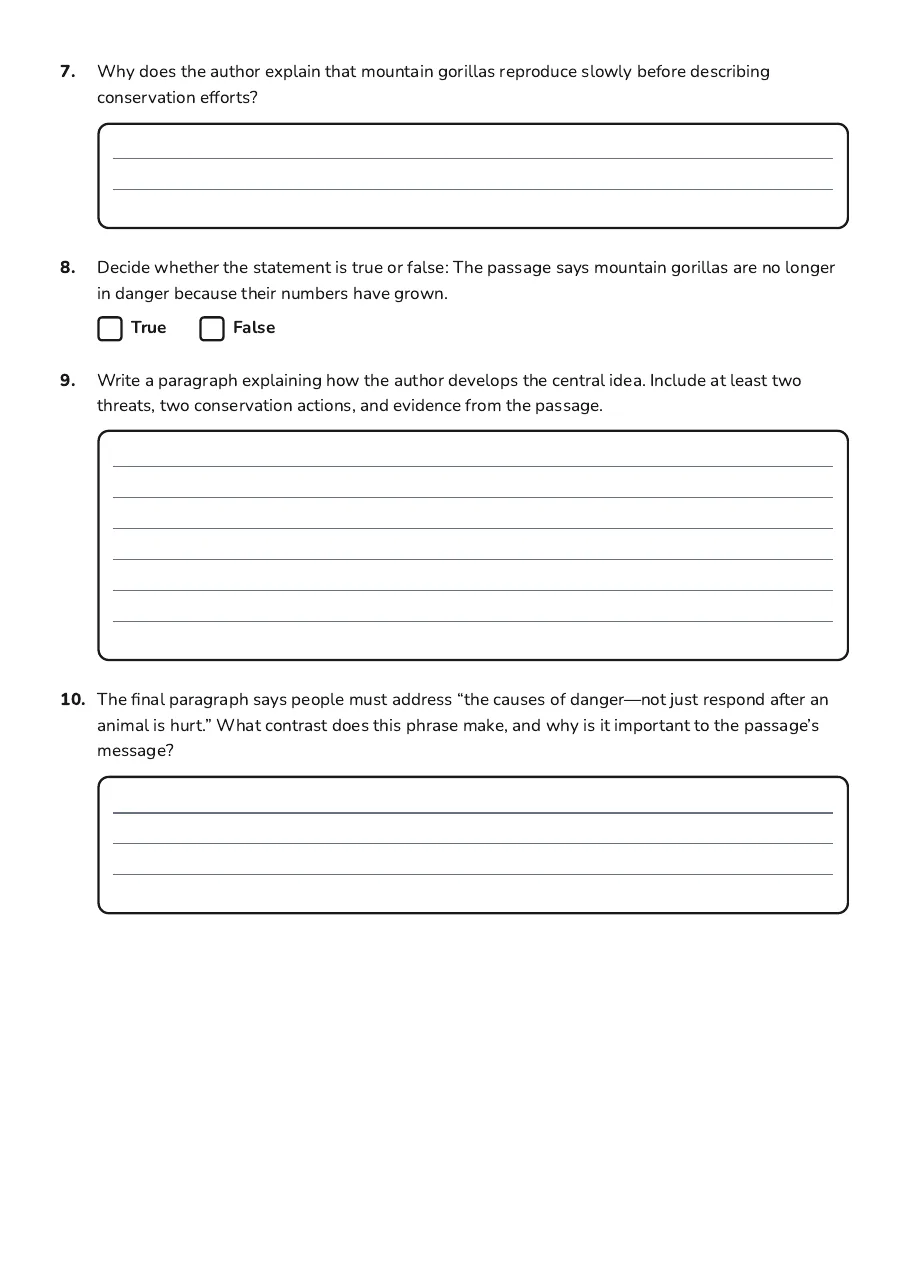
Mountain gorillas live in forests high in the mountains of Central Africa. Their cool, misty habitat provides food and shelter, but it is limited in size. When people clear forest for farms, roads, or homes, gorillas must adjust to a changed landscape. They may have fewer opportunities to meet their needs, and changes in where groups live can increase the risk of illness spreading. Gorillas also face danger from snares—wire traps set to catch other animals. A gorilla can be injured or killed by a snare even when it was not the hunter’s target. In some areas, illegal hunting and conflict near protected land create additional risks. Because mountain gorillas reproduce slowly, the loss of even a few animals can affect a group for years. Conservation teams are working to reduce these threats. Rangers patrol protected forests and remove snares. Veterinarians treat injured gorillas when it is safe to do so. Scientists track gorilla groups and monitor their health, which helps teams notice problems early. Local communities also play an important role. When people can earn income from responsible tourism and take part in protecting nearby forests, conservation can benefit both wildlife and families. These efforts have helped mountain gorilla numbers grow in recent decades, but the animals are not out of danger. Habitat loss, disease, and human conflict remain concerns. Protecting gorillas therefore requires long-term work: keeping forests connected, preventing harm, and cooperating with the communities who live nearby. A stronger future for gorillas depends on people addressing the causes of danger—not just responding after an animal is hurt.
Understand and analyze
Use the passage, “A Future for Mountain Gorillas,” to complete the questions below.
- Mountain gorillas can thrive without help if they move to new forests.
- Protecting mountain gorillas means reducing threats through long-term work with local communities.
- Veterinarians are the only people who can help endangered animals.
- Tourism is more important than protecting wildlife.
- Rangers patrol forests
- Veterinarians treat injured gorillas
- Scientists monitor gorilla groups
- Communities take part in forest protection
- Provide care when treatment is safe
- Connect conservation with benefits for local families
- Help prevent harm and remove snares
- Help teams notice health problems early
3 printable pages
Page 1

Page 2
Page 3
About This Worksheet
Free in Kuraplan
Sign up free, grab the PDF, and customize it for your class.
Print-Ready
Formatted for standard paper. Clean layout, easy to read.
AI-Generated
Created with Kuraplan's AI, designed for real classroom use.
For Teachers & Parents
Use in classrooms, for homework, tutoring, or homeschool.
Need a custom version of this worksheet?
Kuraplan's AI generates custom worksheets in seconds — differentiated for every learner, aligned to your curriculum.
Generate Custom Worksheets — Free