Social StudiesFreePrintable

Political Issues Research Debate

A free social studies worksheet ready for your classroom. Open in Kuraplan to grab the print-ready PDF, customize it for your students, or generate a fresh version in seconds.
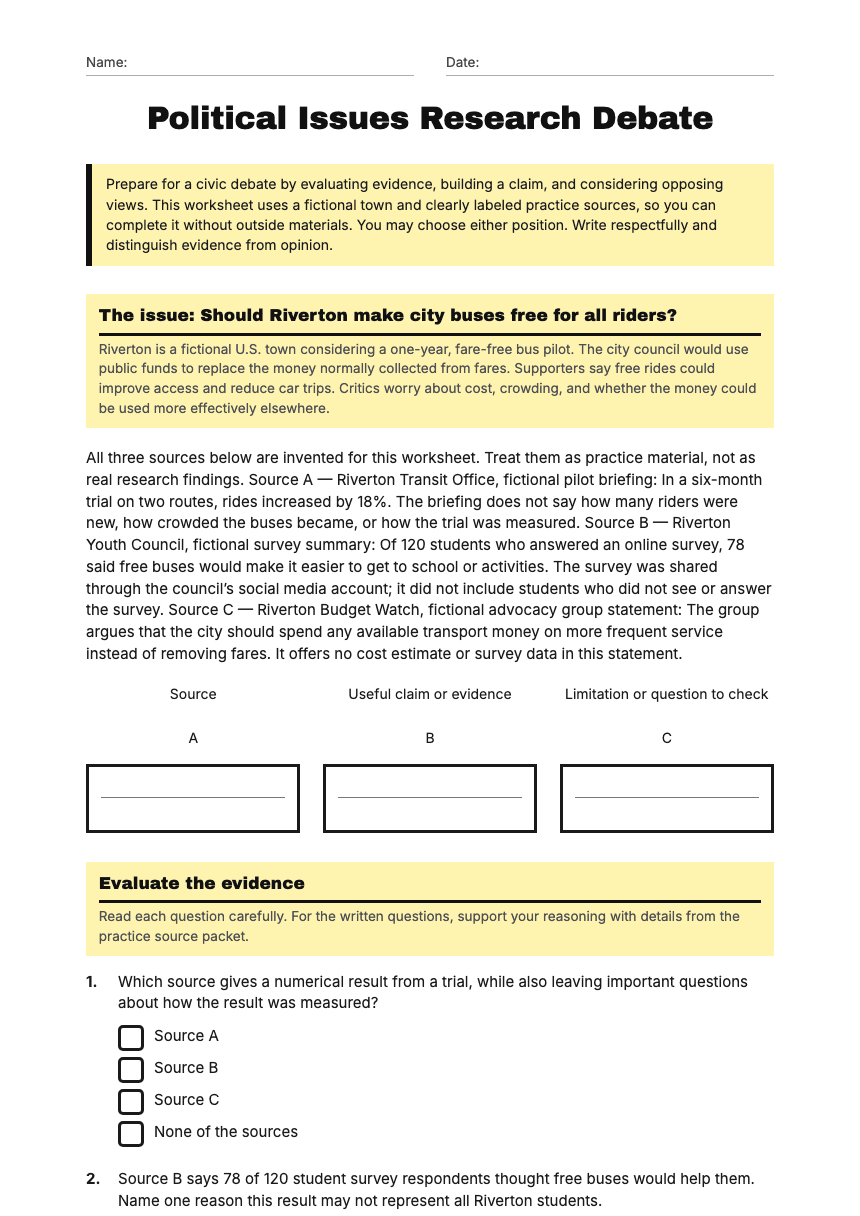
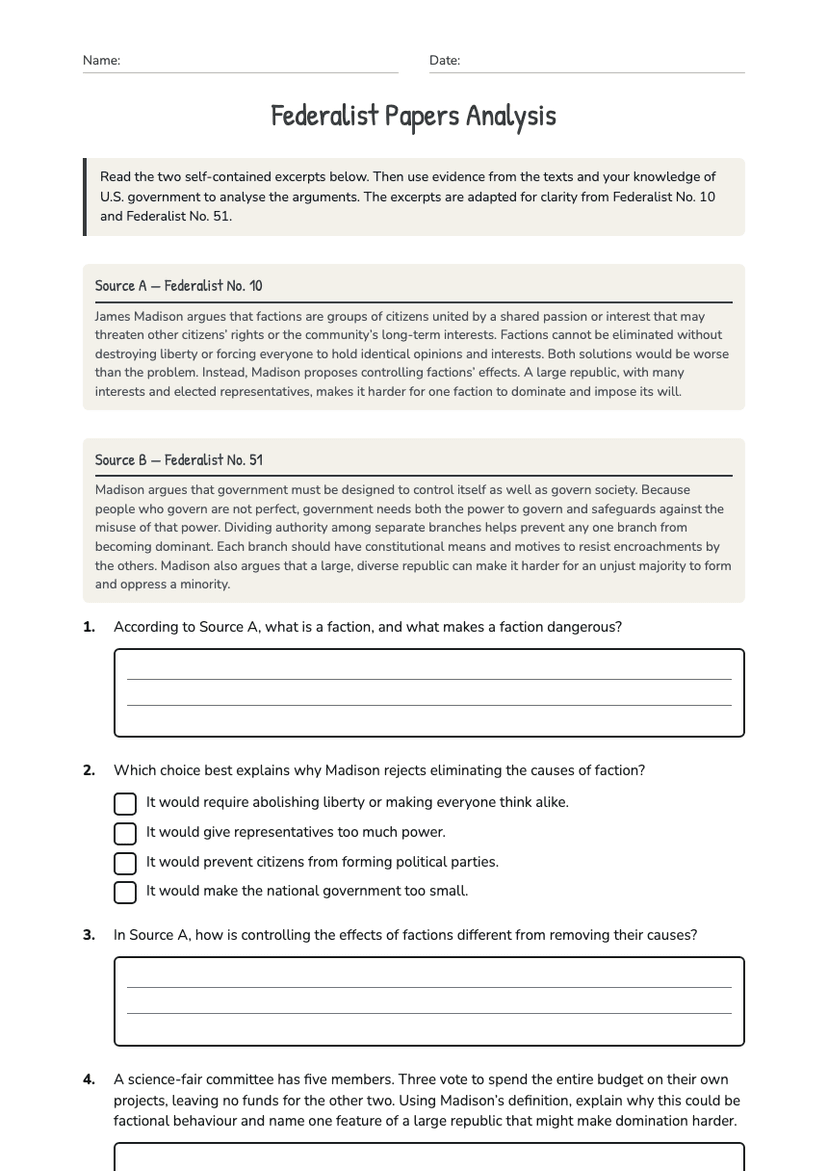
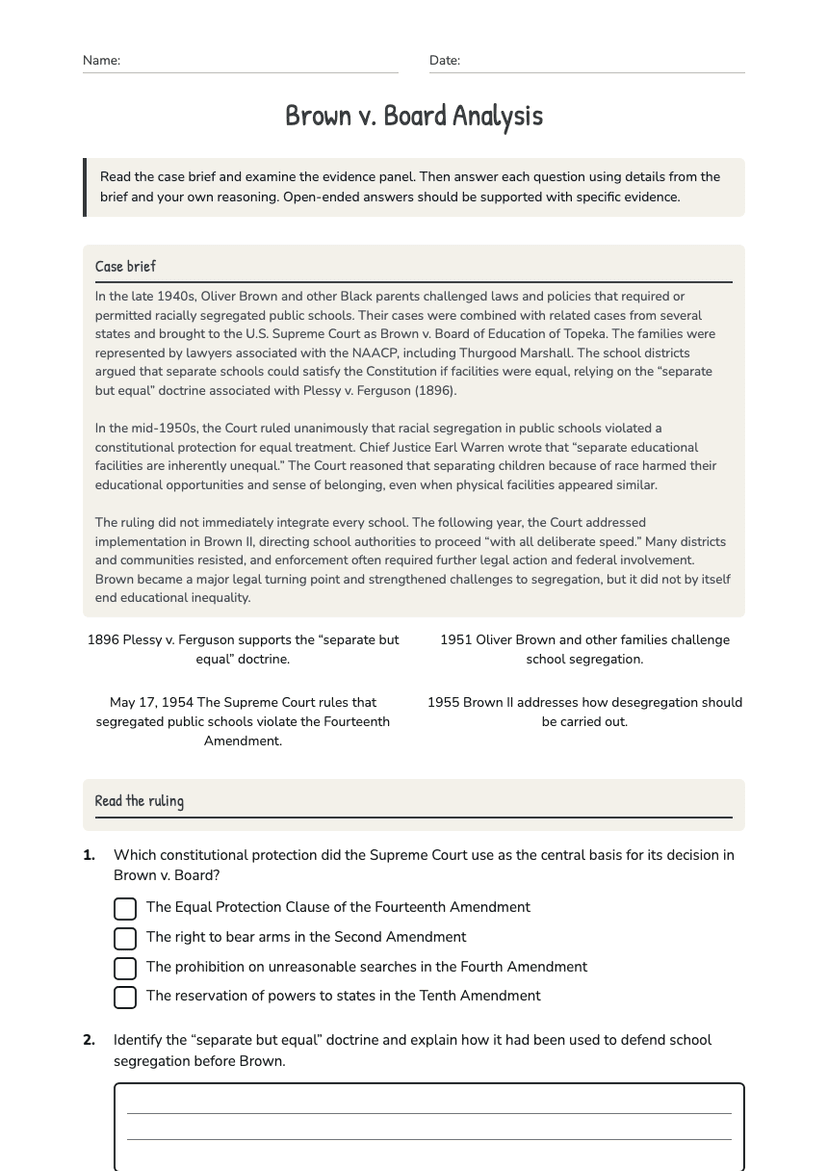
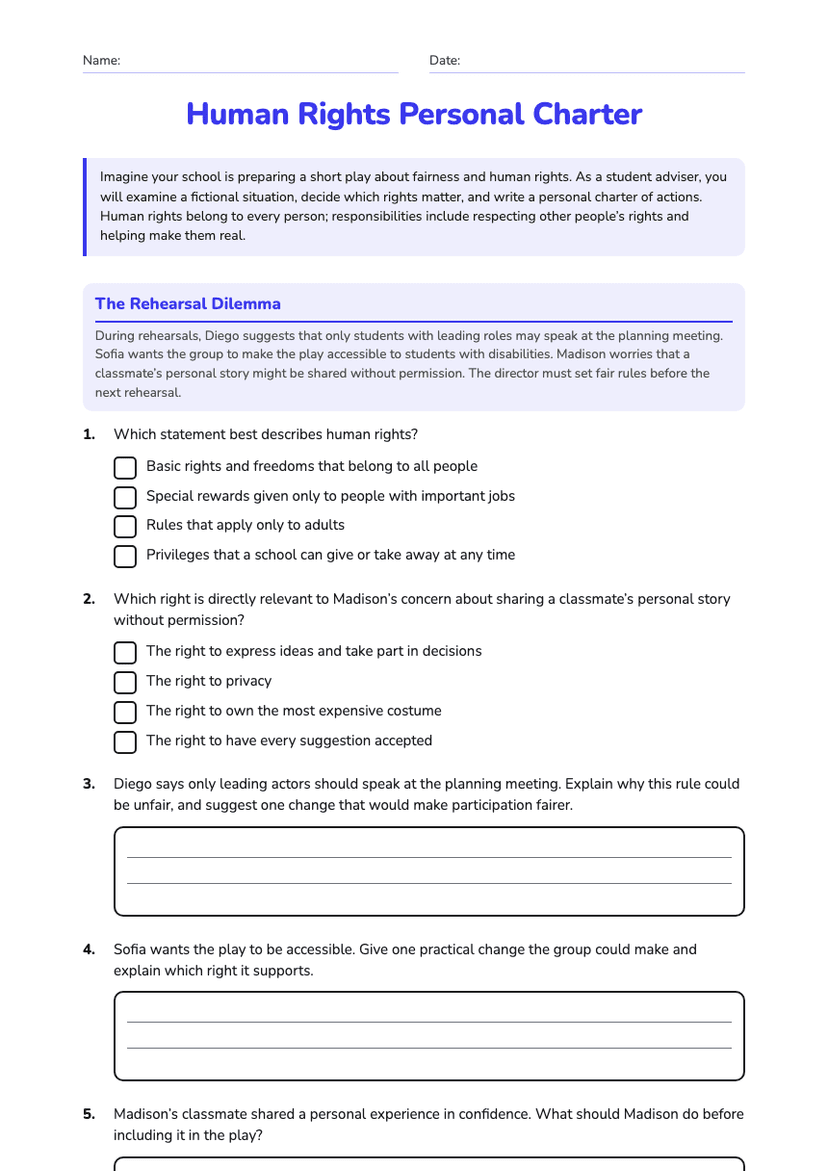
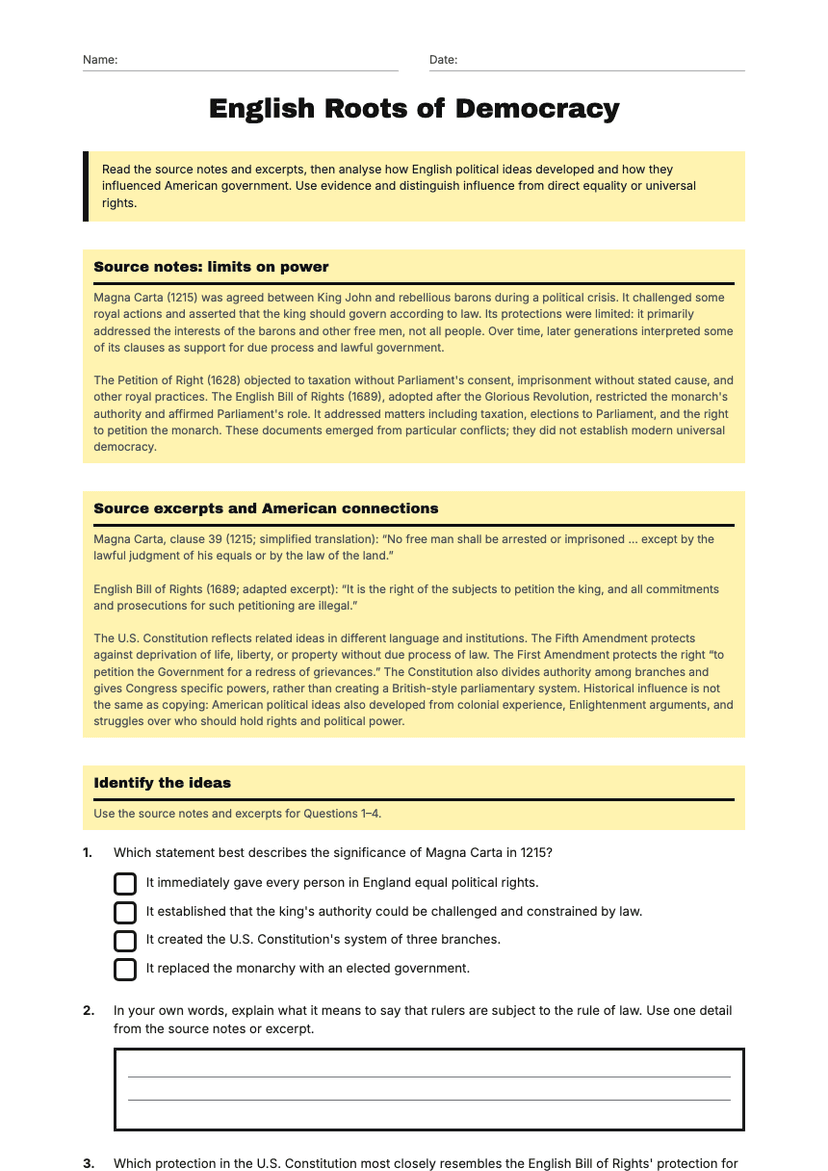
Political Issues Research Debate worksheet preview
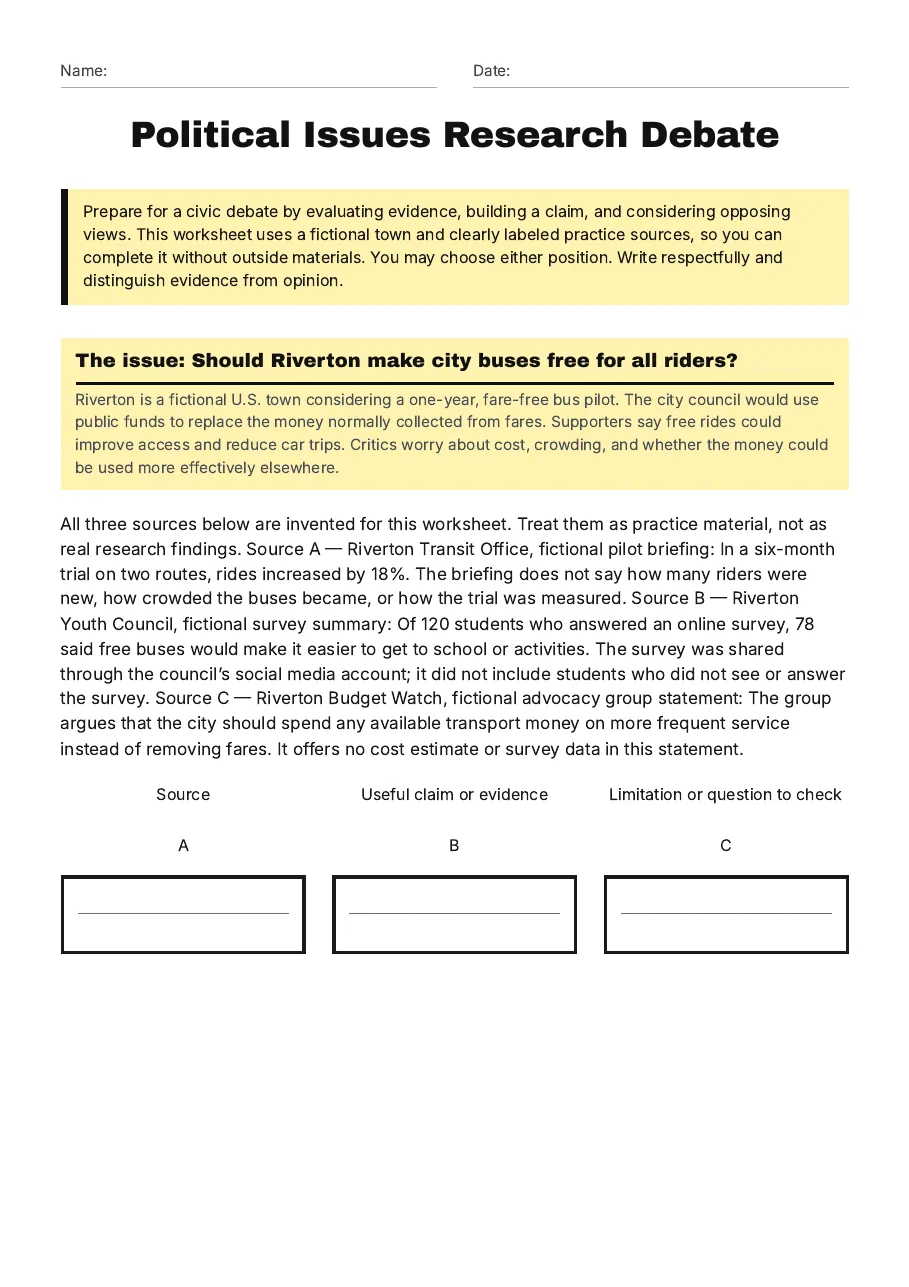
Name:Date:

Political Issues Research Debate

Prepare for a civic debate by evaluating evidence, building a claim, and considering opposing views. This worksheet uses a fictional town and clearly labeled practice sources, so you can complete it without outside materials. You may choose either position. Write respectfully and distinguish evidence from opinion.

The issue: Should Riverton make city buses free for all riders?

Riverton is a fictional U.S. town considering a one-year, fare-free bus pilot. The city council would use public funds to replace the money normally collected from fares. Supporters say free rides could improve access and reduce car trips. Critics worry about cost, crowding, and whether the money could be used more effectively elsewhere.

All three sources below are invented for this worksheet. Treat them as practice material, not as real research findings. Source A — Riverton Transit Office, fictional pilot briefing: In a six-month trial on two routes, rides increased by 18%. The briefing does not say how many riders were new, how crowded the buses became, or how the trial was measured. Source B — Riverton Youth Council, fictional survey summary: Of 120 students who answered an online survey, 78 said free buses would make it easier to get to school or activities. The survey was shared through the council’s social media account; it did not include students who did not see or answer the survey. Source C — Riverton Budget Watch, fictional advocacy group statement: The group argues that the city should spend any available transport money on more frequent service instead of removing fares. It offers no cost estimate or survey data in this statement.

Source

Useful claim or evidence

Limitation or question to check

A

B

C

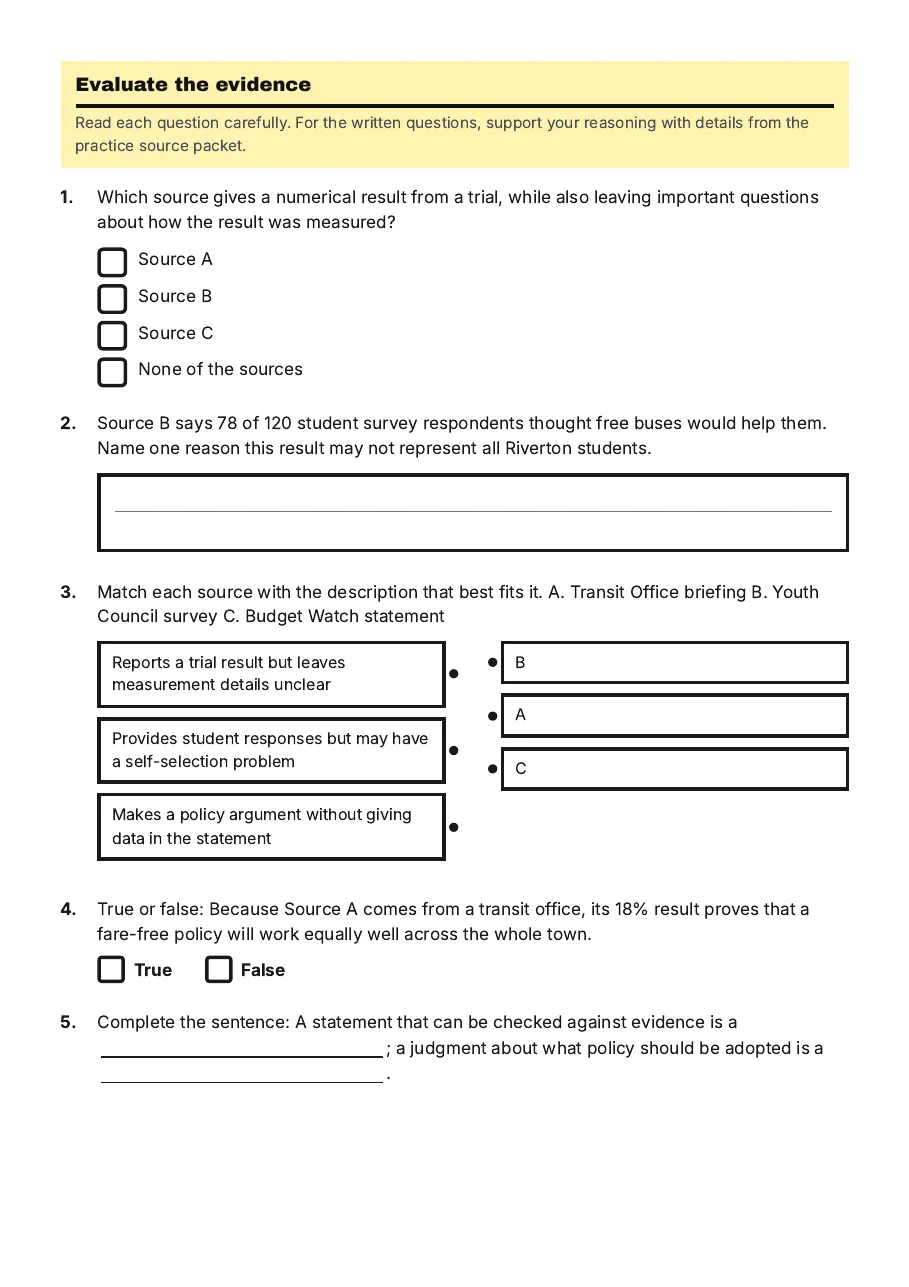
Evaluate the evidence

Read each question carefully. For the written questions, support your reasoning with details from the practice source packet.

1.Which source gives a numerical result from a trial, while also leaving important questions about how the result was measured?
  • Source A
  • Source B
  • Source C
  • None of the sources
2.Source B says 78 of 120 student survey respondents thought free buses would help them. Name one reason this result may not represent all Riverton students.
3.Match each source with the description that best fits it. A. Transit Office briefing B. Youth Council survey C. Budget Watch statement
  • Reports a trial result but leaves measurement details unclear
  • Provides student responses but may have a self-selection problem
  • Makes a policy argument without giving data in the statement
  • B
  • A
  • C
4.True or false: Because Source A comes from a transit office, its 18% result proves that a fare-free policy will work equally well across the whole town.
TrueFalse
5.Complete the sentence: A statement that can be checked against evidence is a ; a judgment about what policy should be adopted is a .

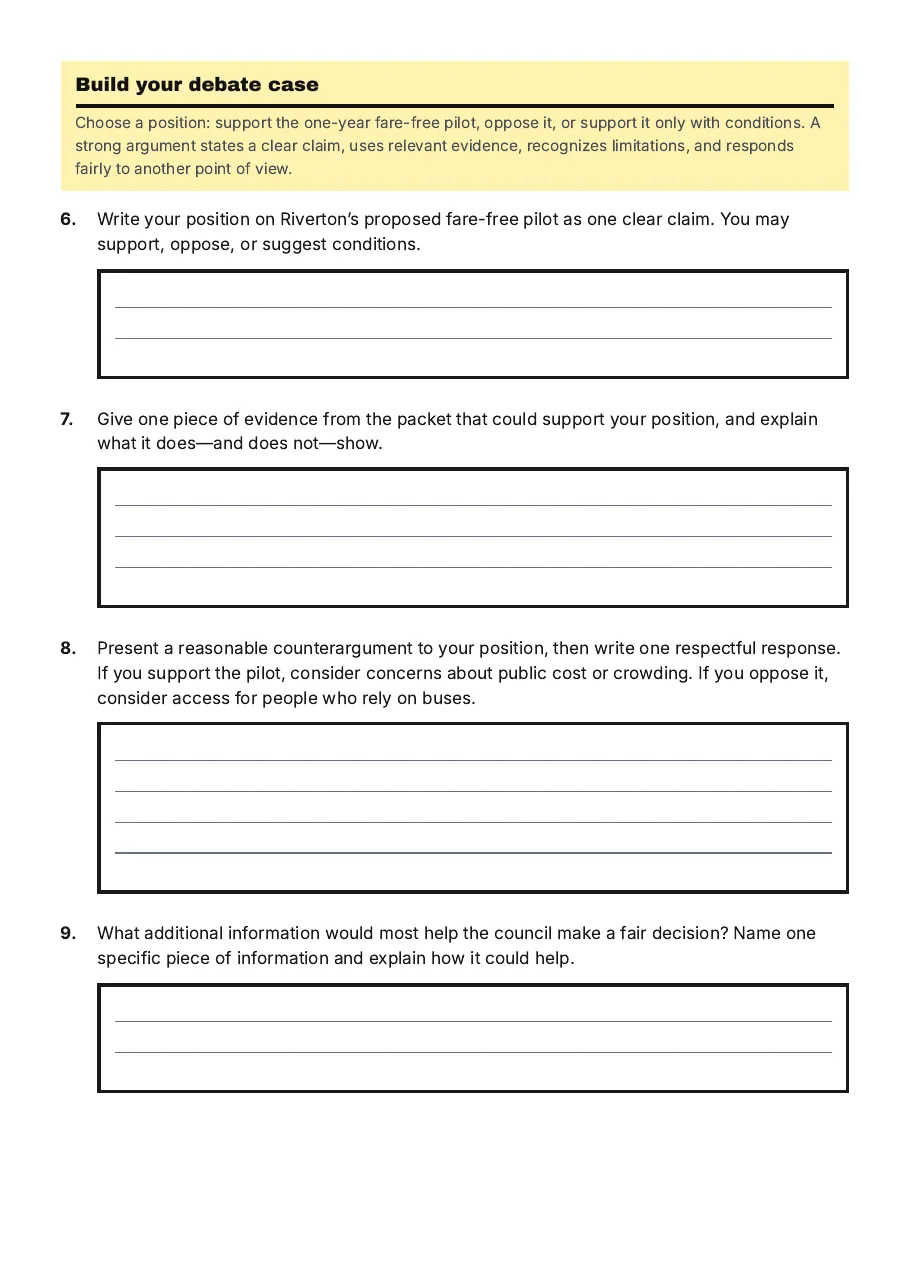
Build your debate case

Choose a position: support the one-year fare-free pilot, oppose it, or support it only with conditions. A strong argument states a clear claim, uses relevant evidence, recognizes limitations, and responds fairly to another point of view.

6.Write your position on Riverton’s proposed fare-free pilot as one clear claim. You may support, oppose, or suggest conditions.
7.Give one piece of evidence from the packet that could support your position, and explain what it does—and does not—show.
8.Present a reasonable counterargument to your position, then write one respectful response. If you support the pilot, consider concerns about public cost or crowding. If you oppose it, consider access for people who rely on buses.
9.What additional information would most help the council make a fair decision? Name one specific piece of information and explain how it could help.

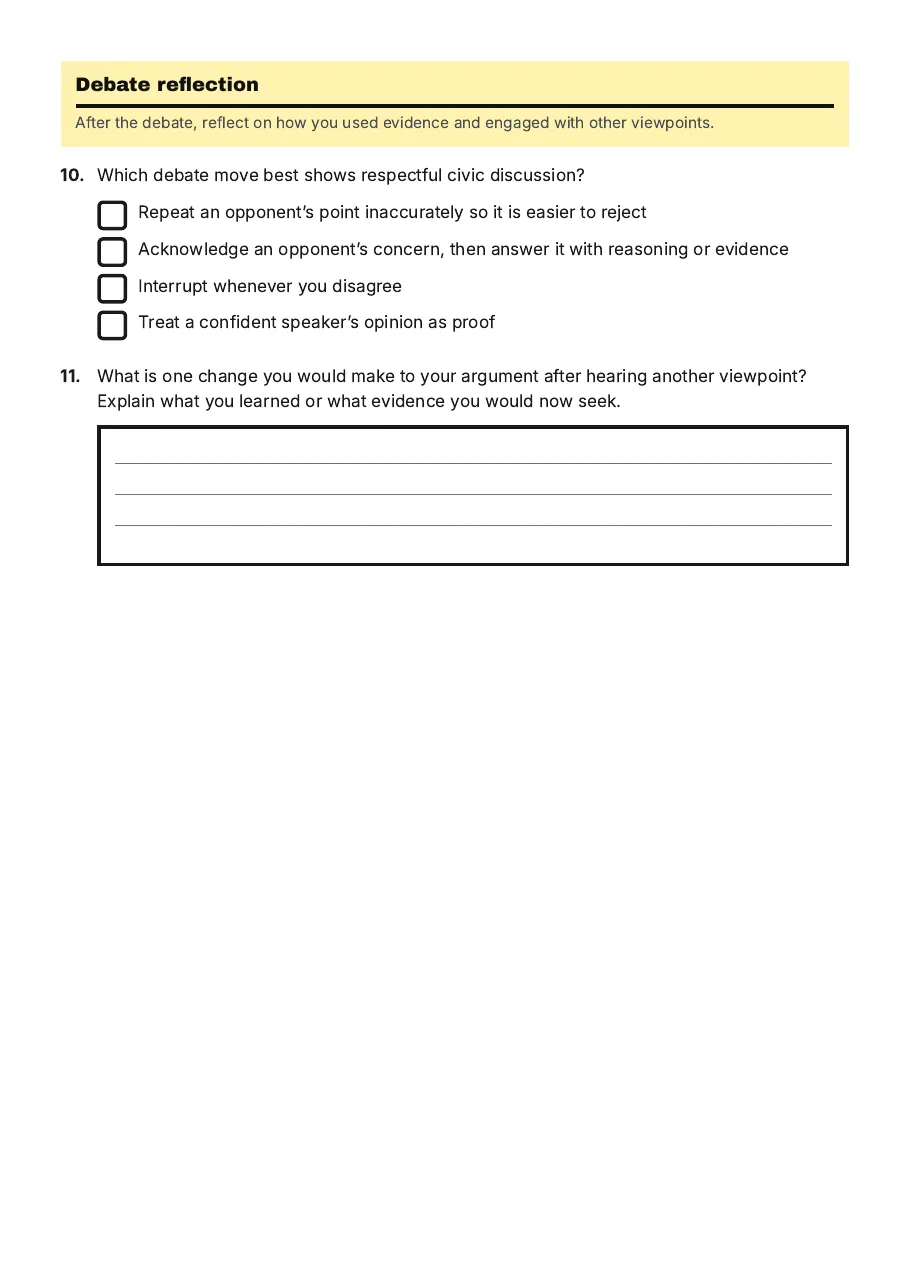
Debate reflection

After the debate, reflect on how you used evidence and engaged with other viewpoints.

10.Which debate move best shows respectful civic discussion?
  • Repeat an opponent’s point inaccurately so it is easier to reject
  • Acknowledge an opponent’s concern, then answer it with reasoning or evidence
  • Interrupt whenever you disagree
  • Treat a confident speaker’s opinion as proof
11.What is one change you would make to your argument after hearing another viewpoint? Explain what you learned or what evidence you would now seek.

4 printable pages

  • Political Issues Research Debate, page 1 of 4: The issue: Should Riverton make city buses free for all riders?

    Page 1

  • Political Issues Research Debate, page 2 of 4: Evaluate the evidence

    Page 2

  • Political Issues Research Debate, page 3 of 4: Build your debate case

    Page 3

  • Political Issues Research Debate, page 4 of 4: Debate reflection

    Page 4

About This Worksheet

Free in Kuraplan

Sign up free, grab the PDF, and customize it for your class.

Print-Ready

Formatted for standard paper. Clean layout, easy to read.

AI-Generated

Created with Kuraplan's AI, designed for real classroom use.

For Teachers & Parents

Use in classrooms, for homework, tutoring, or homeschool.

Need a custom version of this worksheet?

Kuraplan's AI generates custom worksheets in seconds — differentiated for every learner, aligned to your curriculum.

Generate Custom Worksheets — Free
No credit card Curriculum-aligned Under 60 seconds