States of Matter Investigation
A free science worksheet ready for your classroom. Open in Kuraplan to grab the print-ready PDF, customize it for your students, or generate a fresh version in seconds.
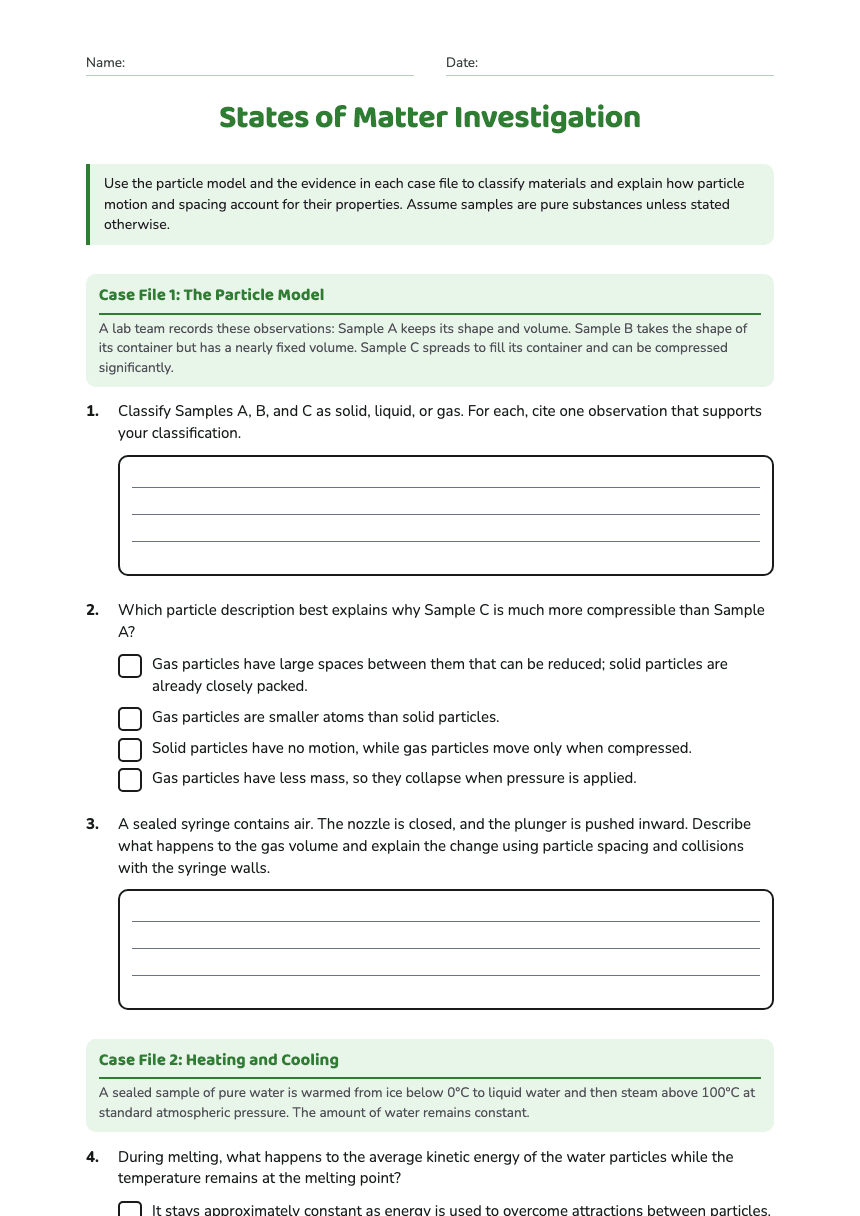
States of Matter Investigation
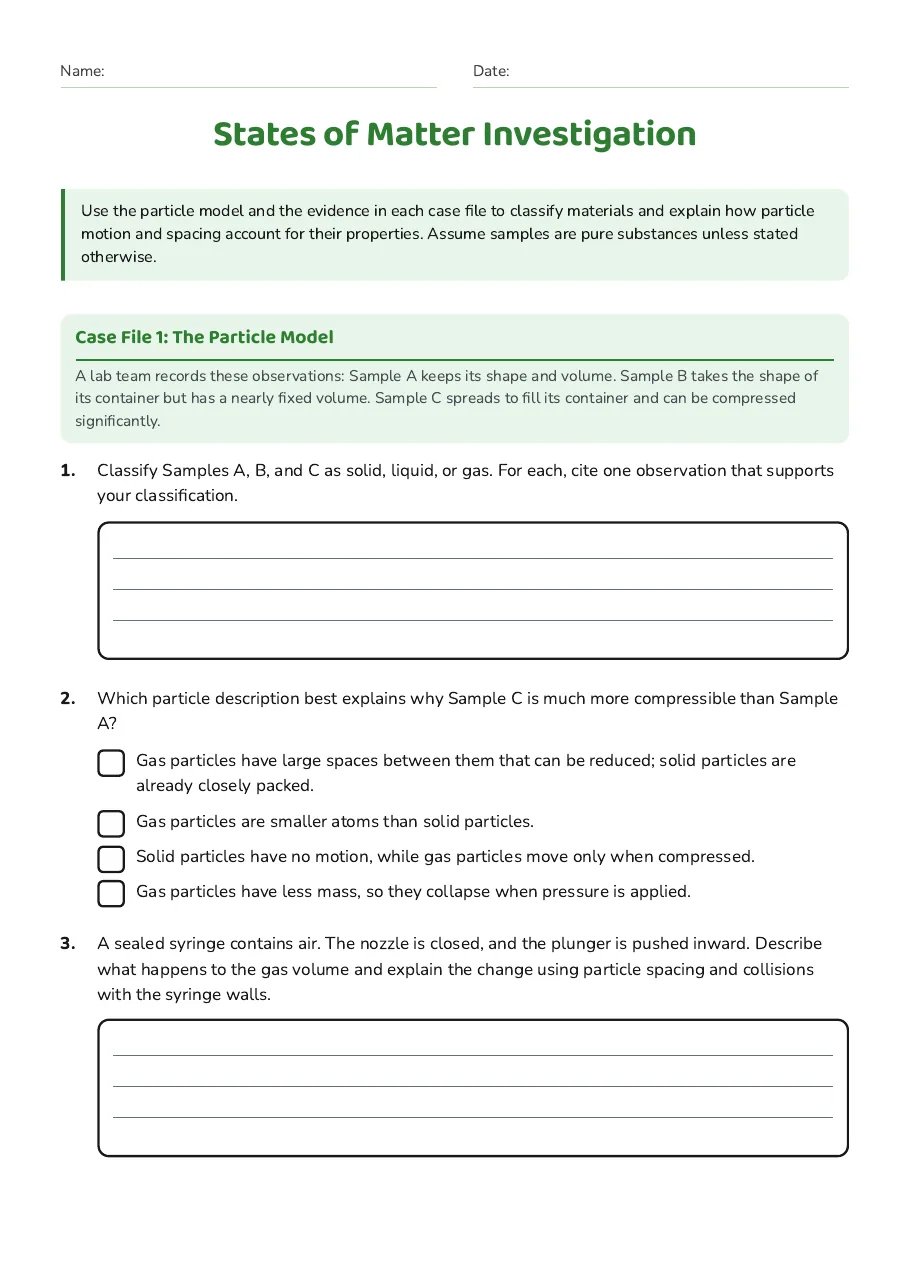
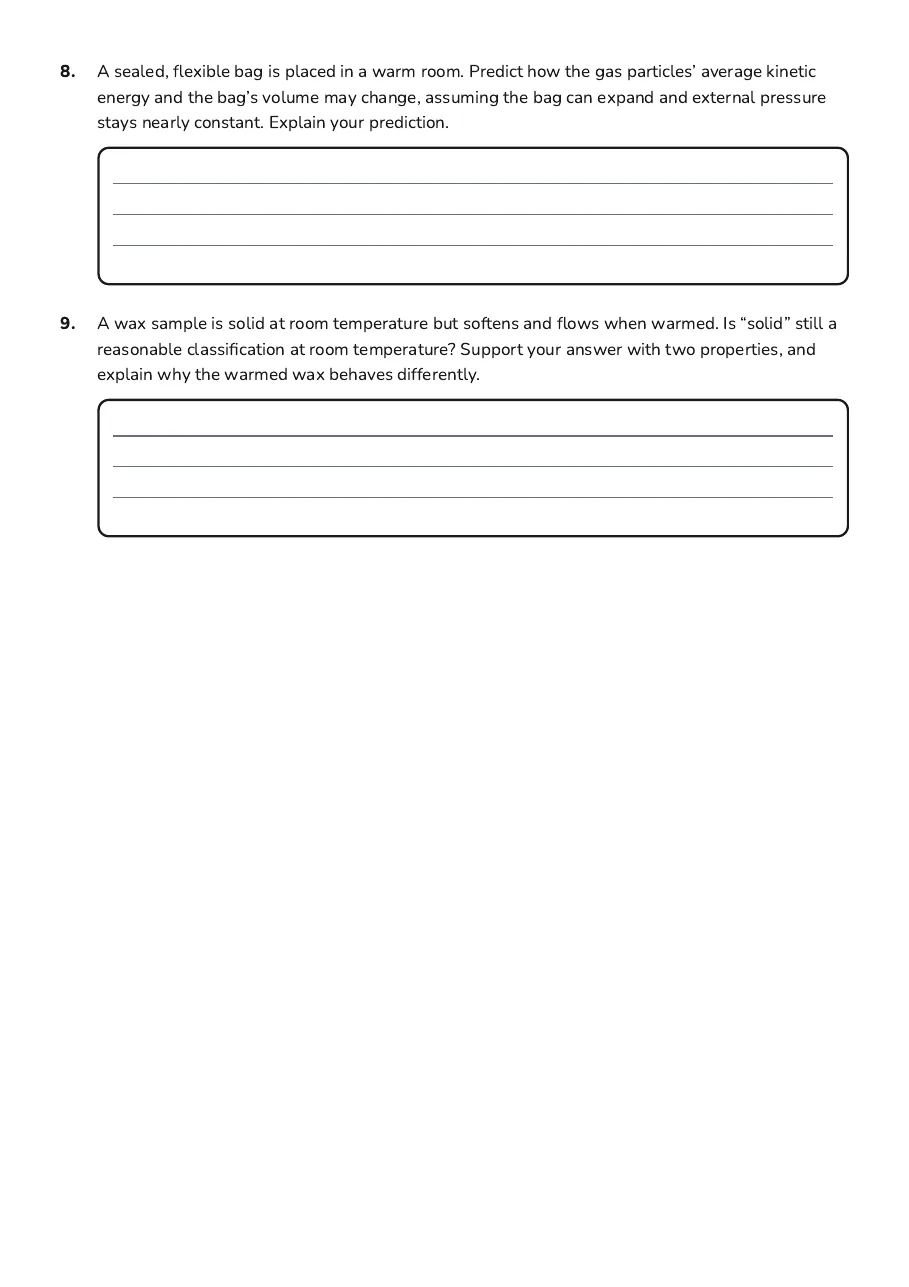
Case File 1: The Particle Model
A lab team records these observations: Sample A keeps its shape and volume. Sample B takes the shape of its container but has a nearly fixed volume. Sample C spreads to fill its container and can be compressed significantly.
- Gas particles have large spaces between them that can be reduced; solid particles are already closely packed.
- Gas particles are smaller atoms than solid particles.
- Solid particles have no motion, while gas particles move only when compressed.
- Gas particles have less mass, so they collapse when pressure is applied.
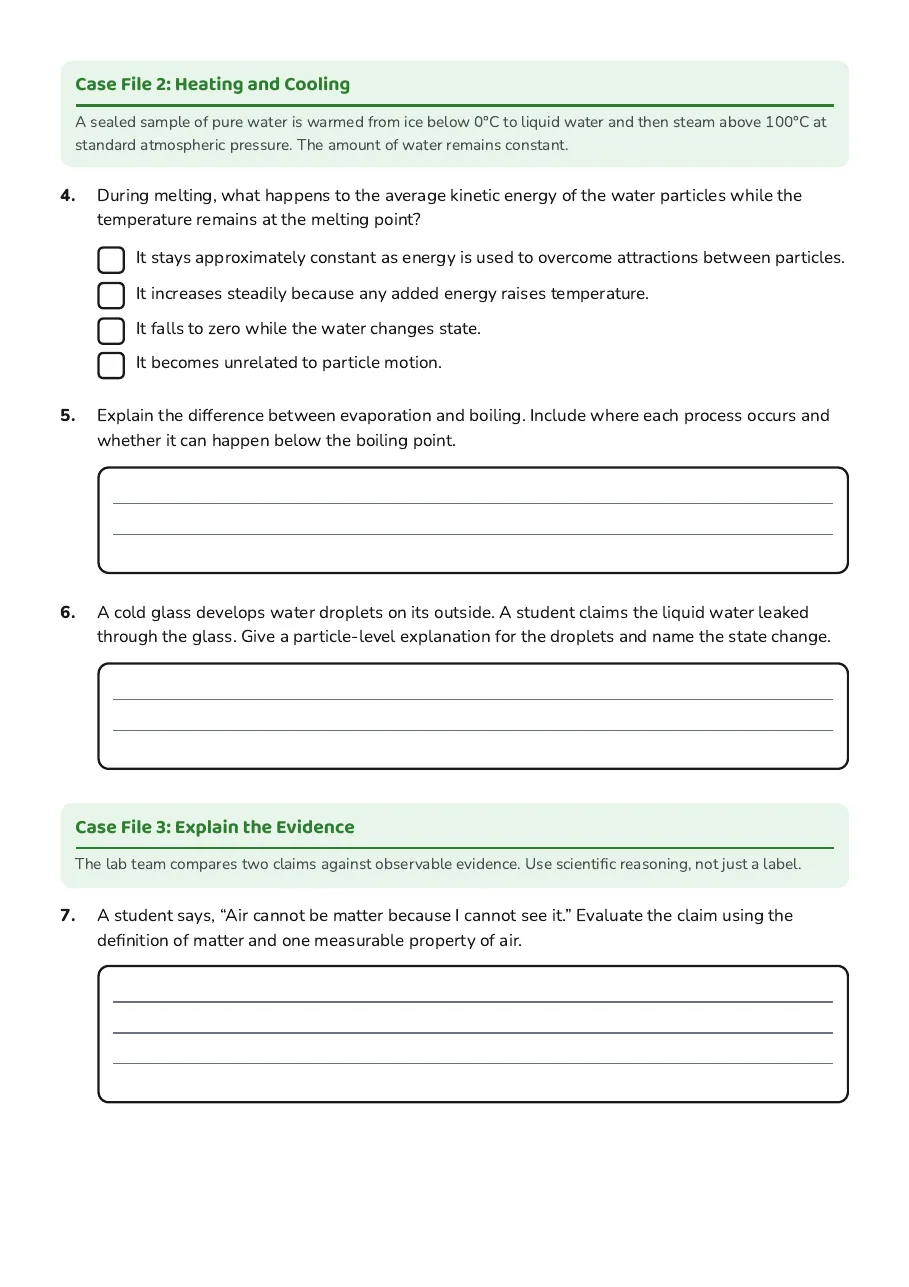
Case File 2: Heating and Cooling
A sealed sample of pure water is warmed from ice below 0°C to liquid water and then steam above 100°C at standard atmospheric pressure. The amount of water remains constant.
- It stays approximately constant as energy is used to overcome attractions between particles.
- It increases steadily because any added energy raises temperature.
- It falls to zero while the water changes state.
- It becomes unrelated to particle motion.
Case File 3: Explain the Evidence
The lab team compares two claims against observable evidence. Use scientific reasoning, not just a label.
3 printable pages
Page 1
Page 2
Page 3
About This Worksheet
Free in Kuraplan
Sign up free, grab the PDF, and customize it for your class.
Print-Ready
Formatted for standard paper. Clean layout, easy to read.
AI-Generated
Created with Kuraplan's AI, designed for real classroom use.
For Teachers & Parents
Use in classrooms, for homework, tutoring, or homeschool.
Need a custom version of this worksheet?
Kuraplan's AI generates custom worksheets in seconds — differentiated for every learner, aligned to your curriculum.
Generate Custom Worksheets — FreeMore Science Worksheets
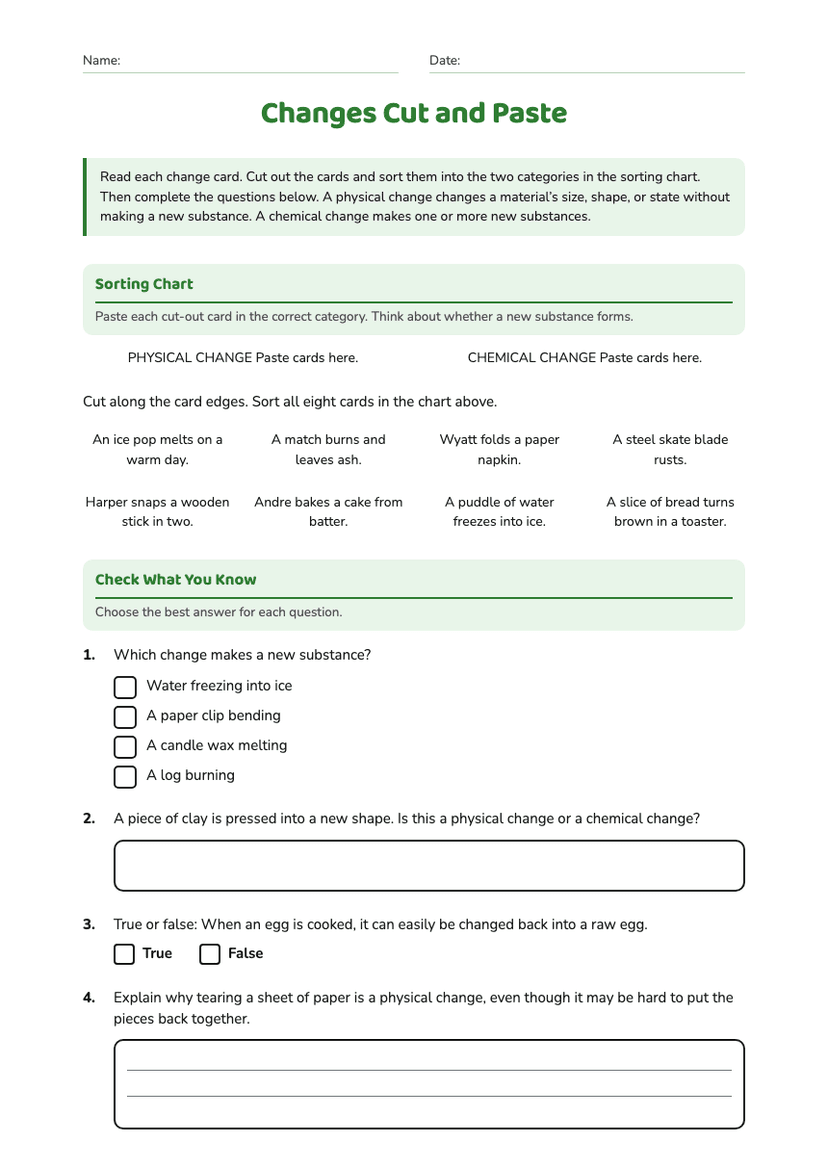
Changes Cut and Paste
Free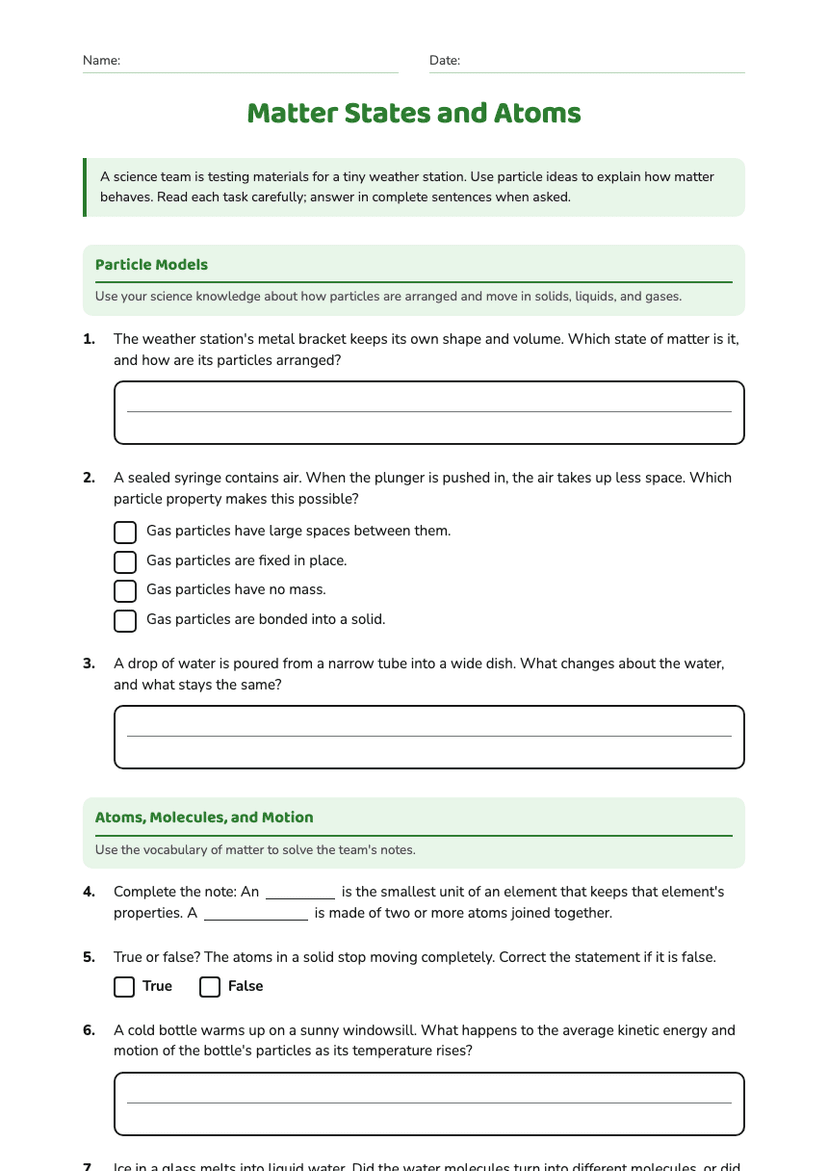
Matter States and Atoms
Free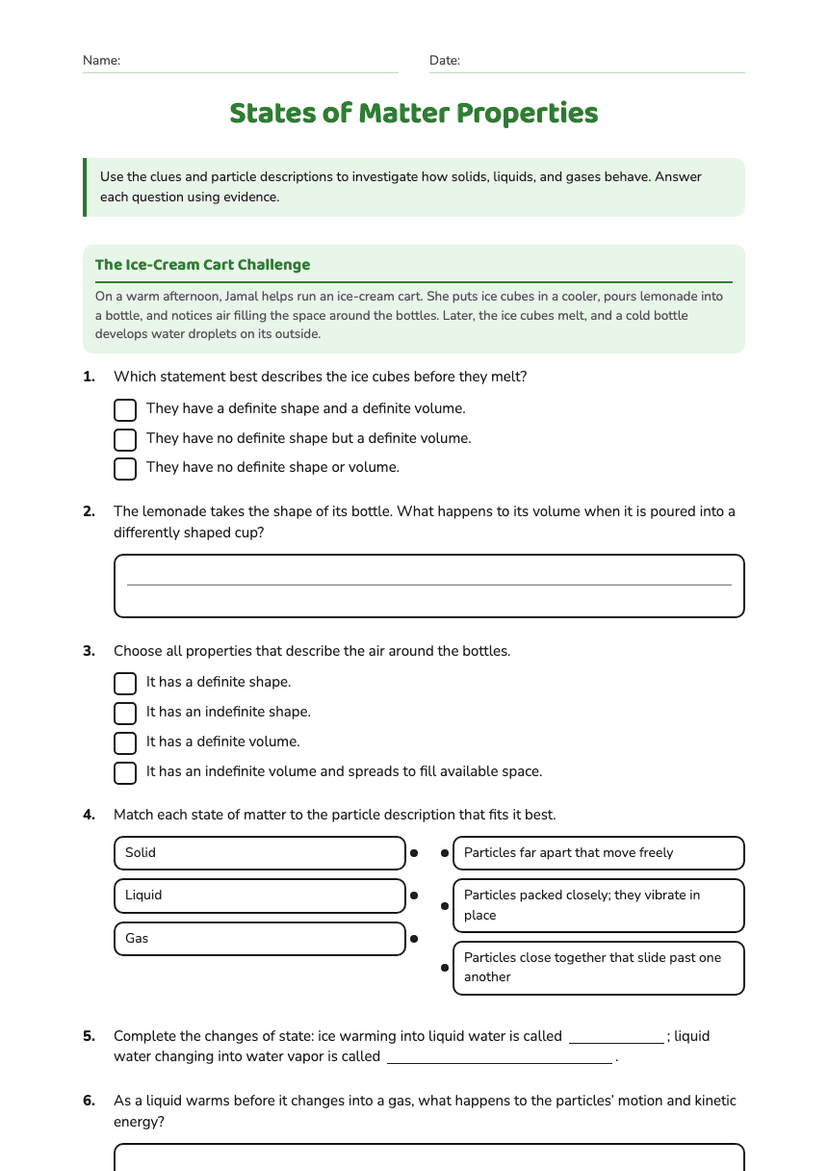
States of Matter Properties
Free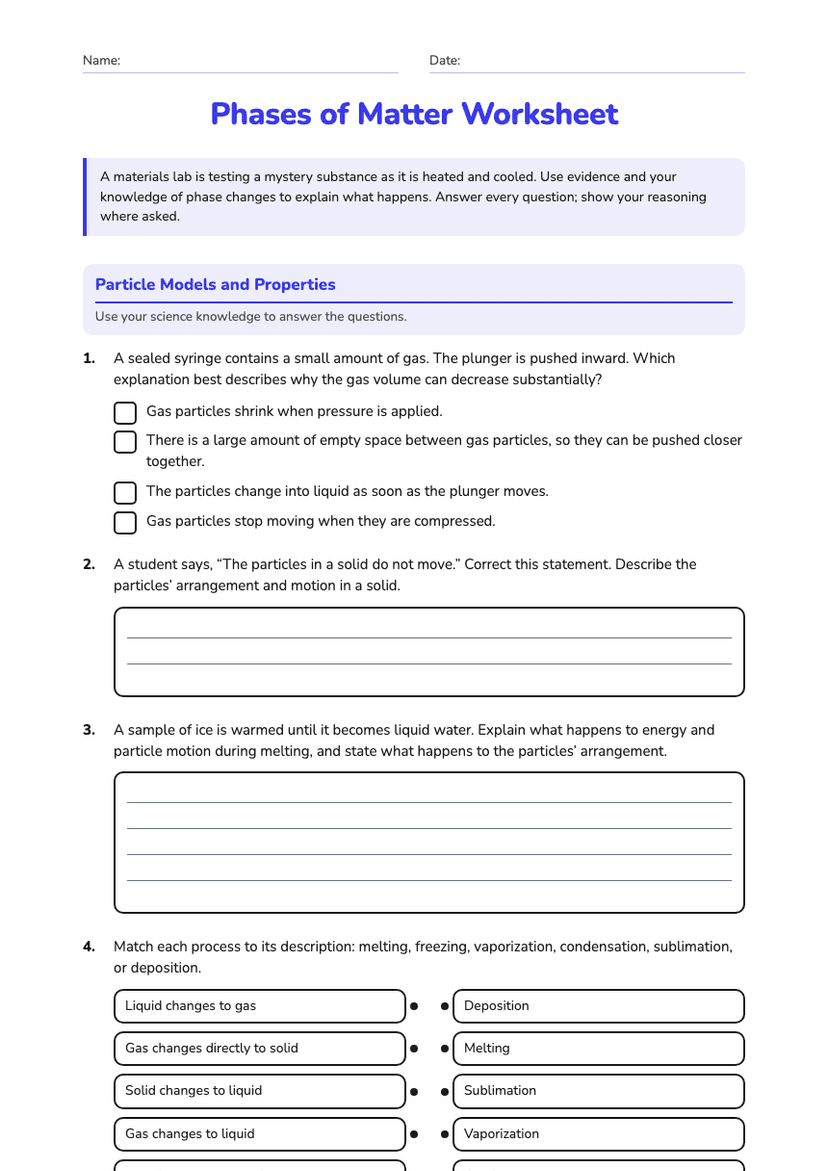
Phases of Matter Worksheet
Free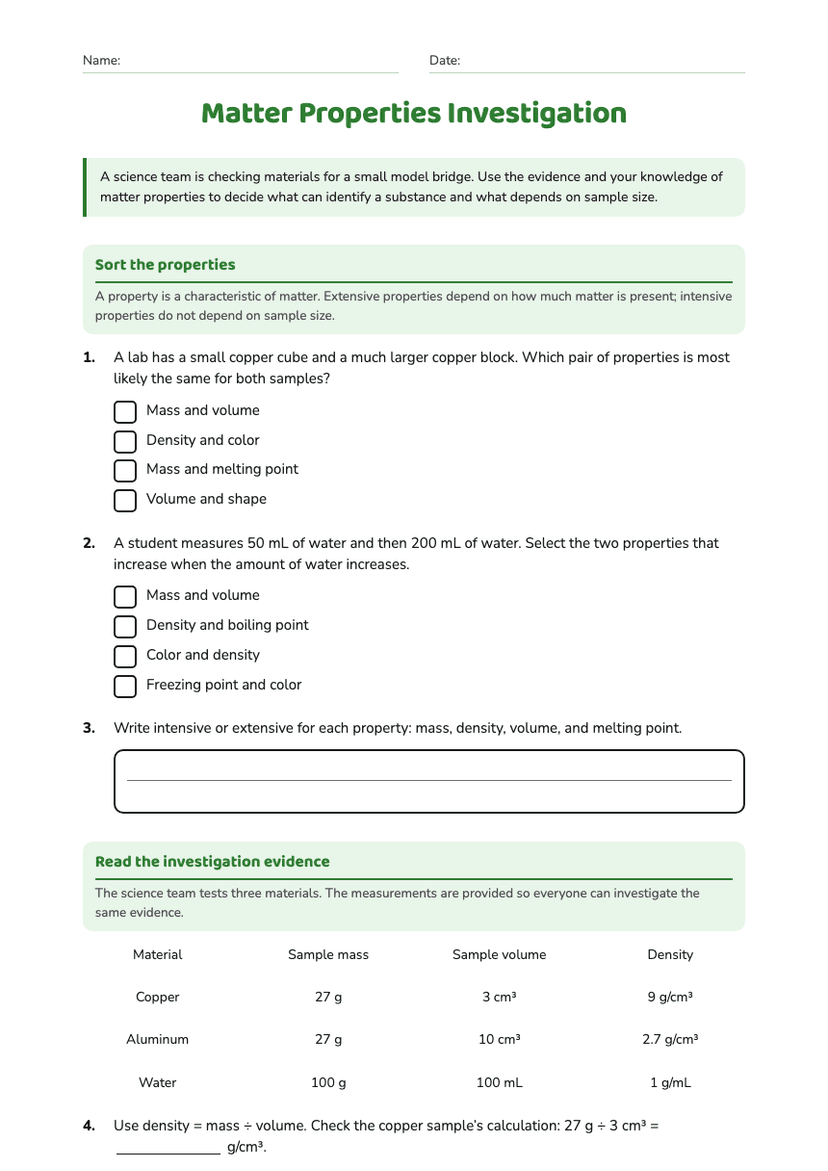
Matter Properties Investigation
Free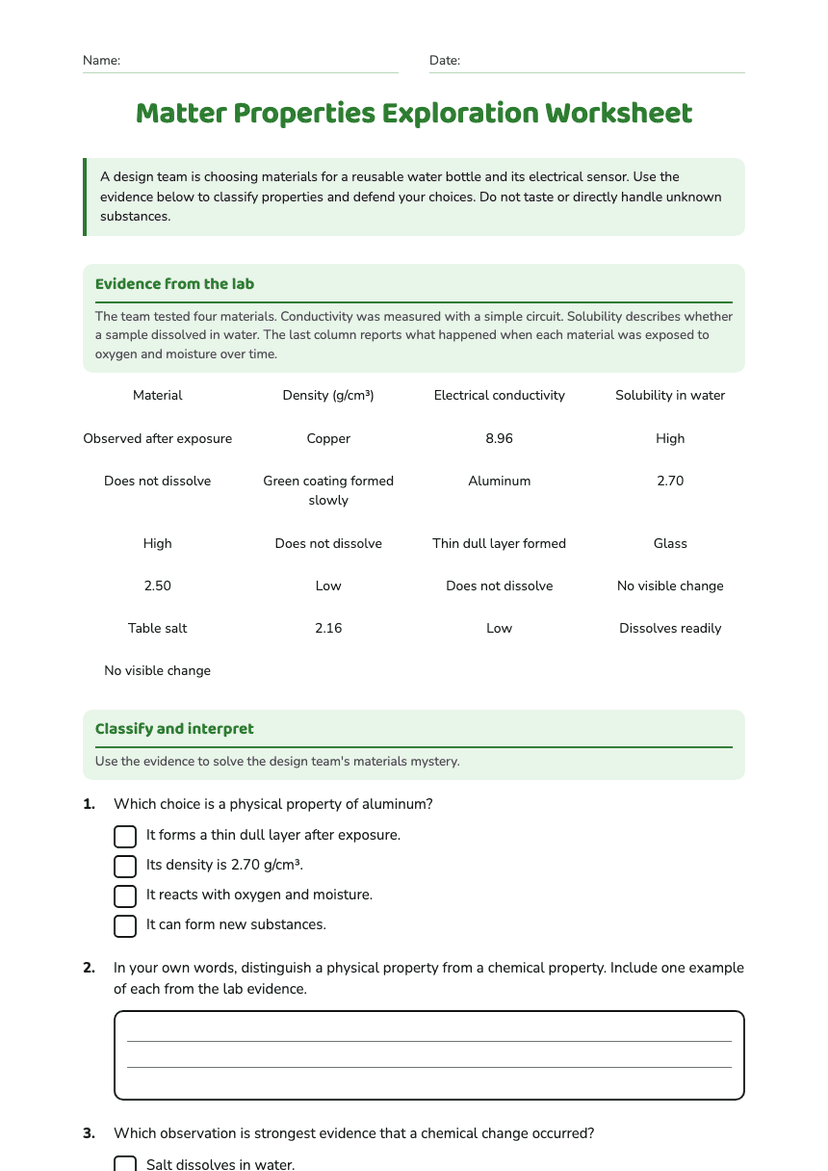
Matter Properties Exploration Worksheet
Free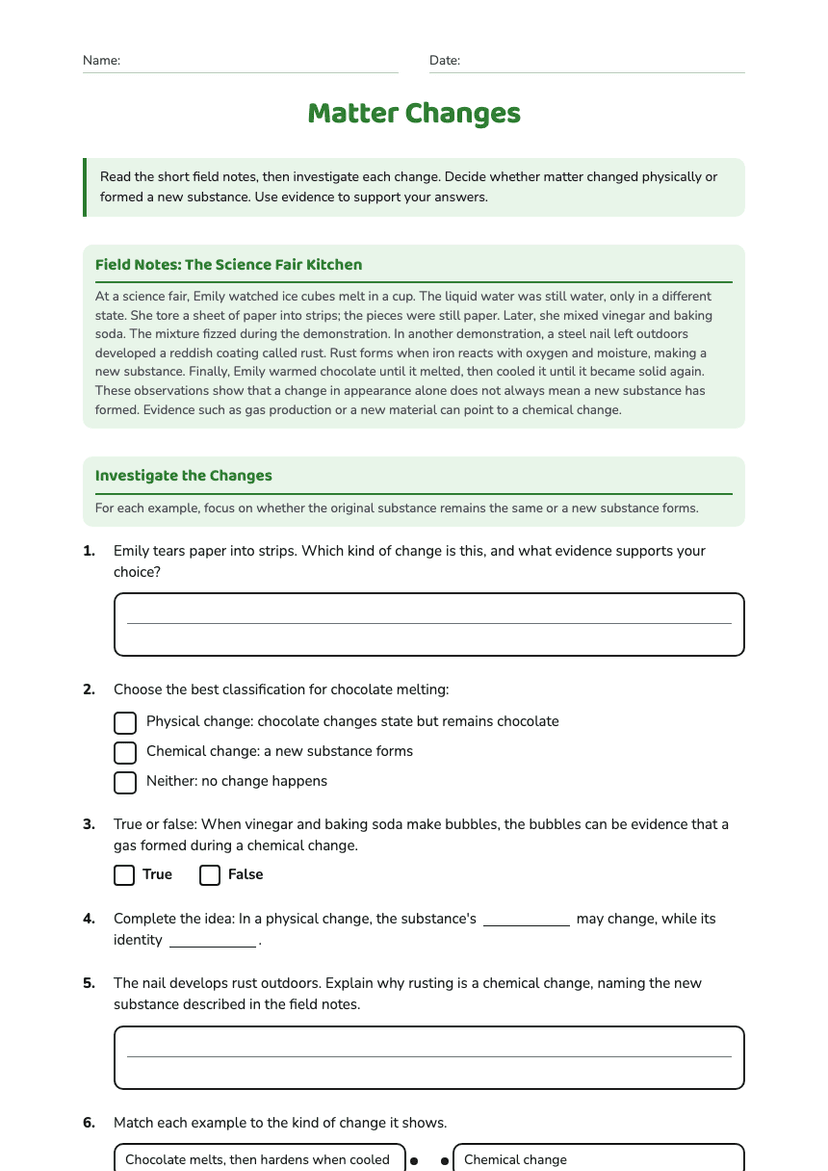
Matter Changes
Free