Outdoor Risk Management Worksheet
A free pe worksheet ready for your classroom. Open in Kuraplan to grab the print-ready PDF, customize it for your students, or generate a fresh version in seconds.
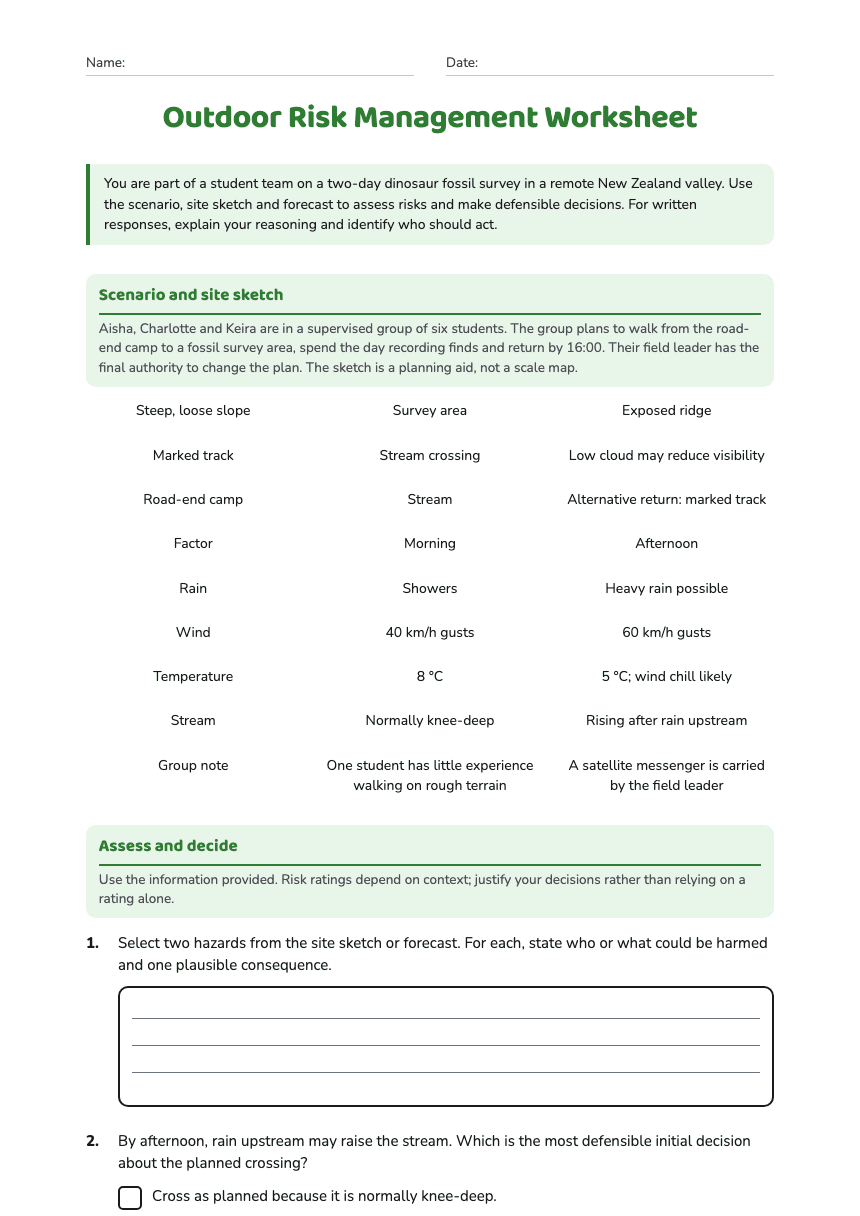
Outdoor Risk Management Worksheet
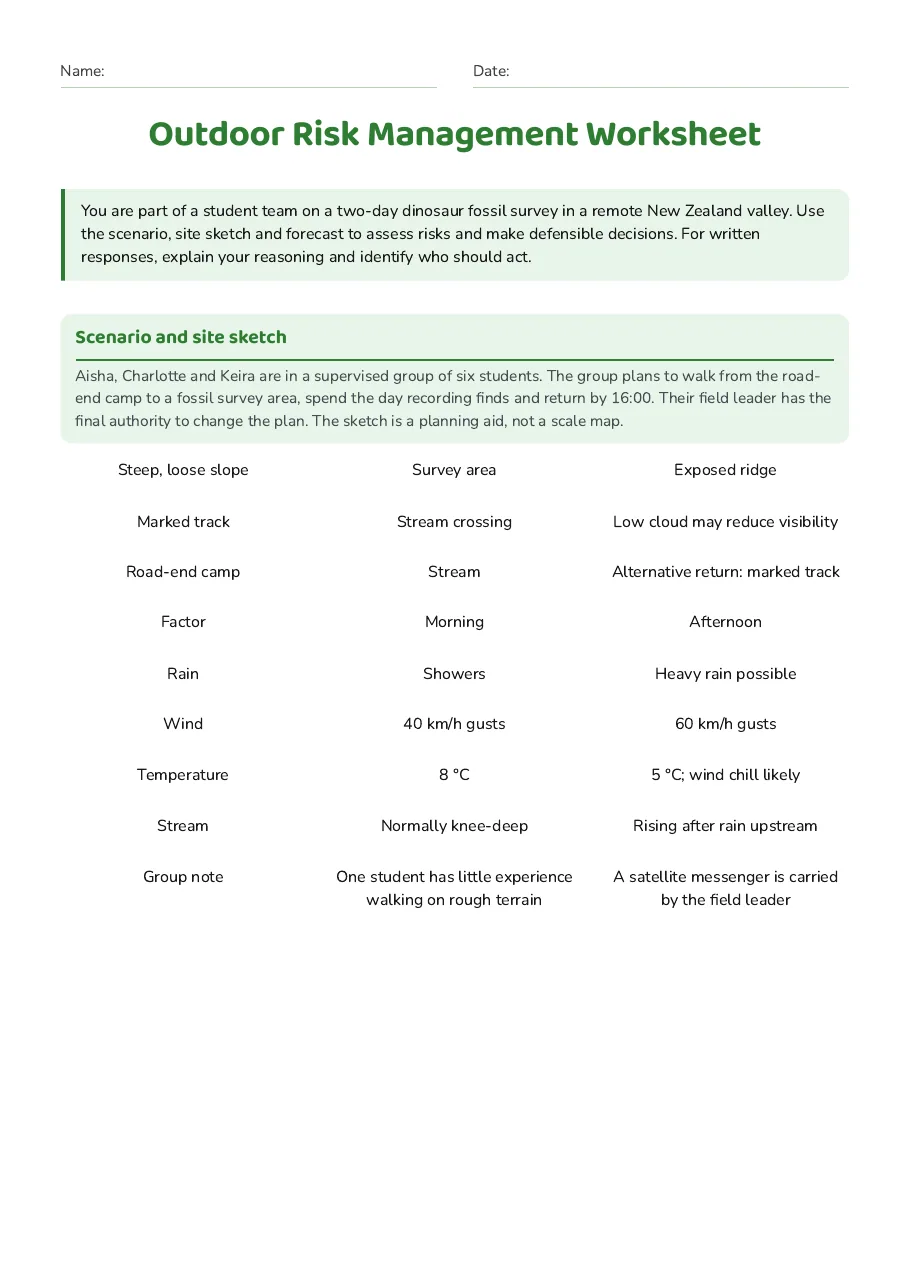
Scenario and site sketch
Aisha, Charlotte and Keira are in a supervised group of six students. The group plans to walk from the road-end camp to a fossil survey area, spend the day recording finds and return by 16:00. Their field leader has the final authority to change the plan. The sketch is a planning aid, not a scale map.
Steep, loose slope
Survey area
Exposed ridge
Marked track
Stream crossing
Low cloud may reduce visibility
Road-end camp
Stream
Alternative return: marked track
Factor
Morning
Afternoon
Rain
Showers
Heavy rain possible
Wind
40 km/h gusts
60 km/h gusts
Temperature
8 °C
5 °C; wind chill likely
Stream
Normally knee-deep
Rising after rain upstream
Group note
One student has little experience walking on rough terrain
A satellite messenger is carried by the field leader
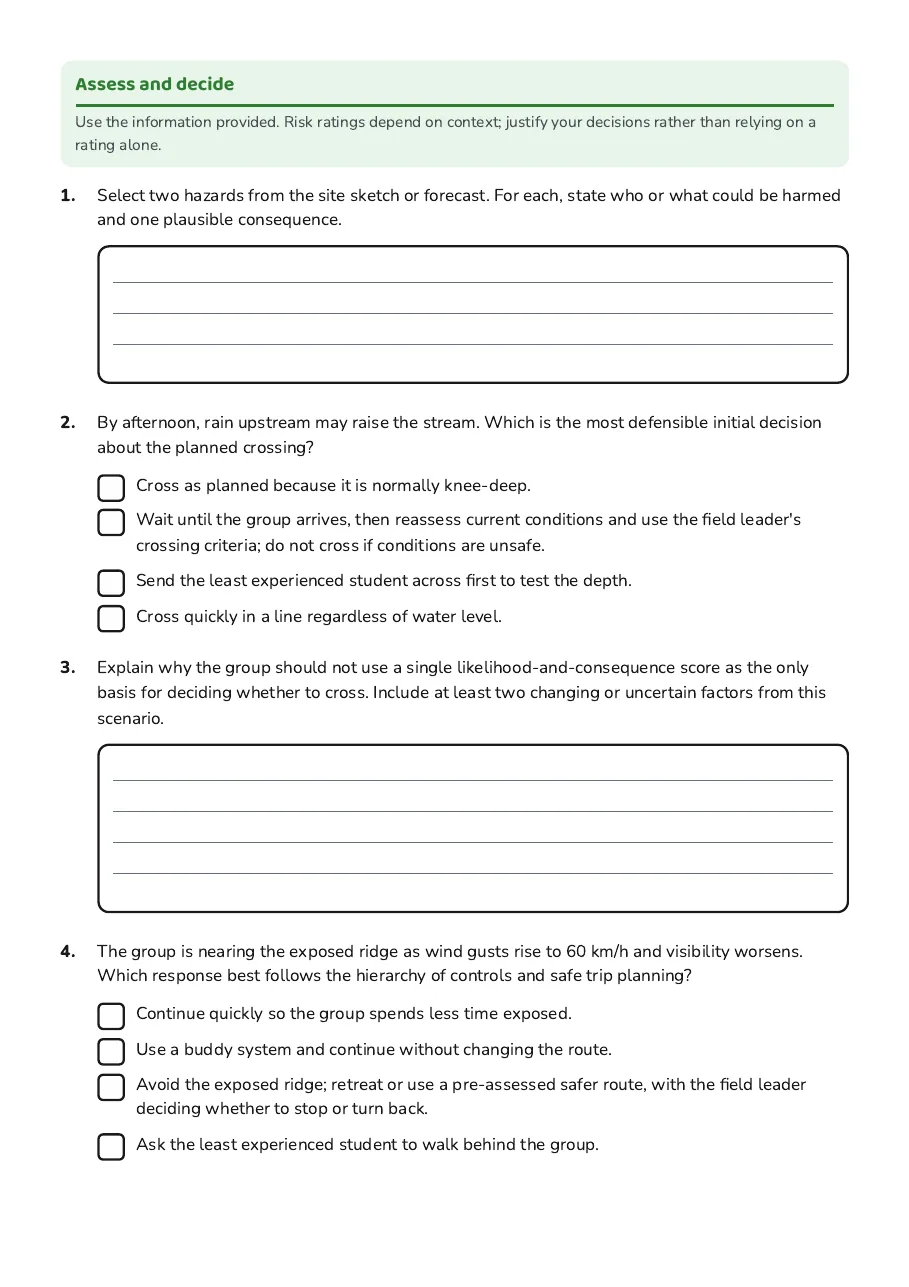
Assess and decide
Use the information provided. Risk ratings depend on context; justify your decisions rather than relying on a rating alone.
- Cross as planned because it is normally knee-deep.
- Wait until the group arrives, then reassess current conditions and use the field leader's crossing criteria; do not cross if conditions are unsafe.
- Send the least experienced student across first to test the depth.
- Cross quickly in a line regardless of water level.
- Continue quickly so the group spends less time exposed.
- Use a buddy system and continue without changing the route.
- Avoid the exposed ridge; retreat or use a pre-assessed safer route, with the field leader deciding whether to stop or turn back.
- Ask the least experienced student to walk behind the group.
Prepare and respond
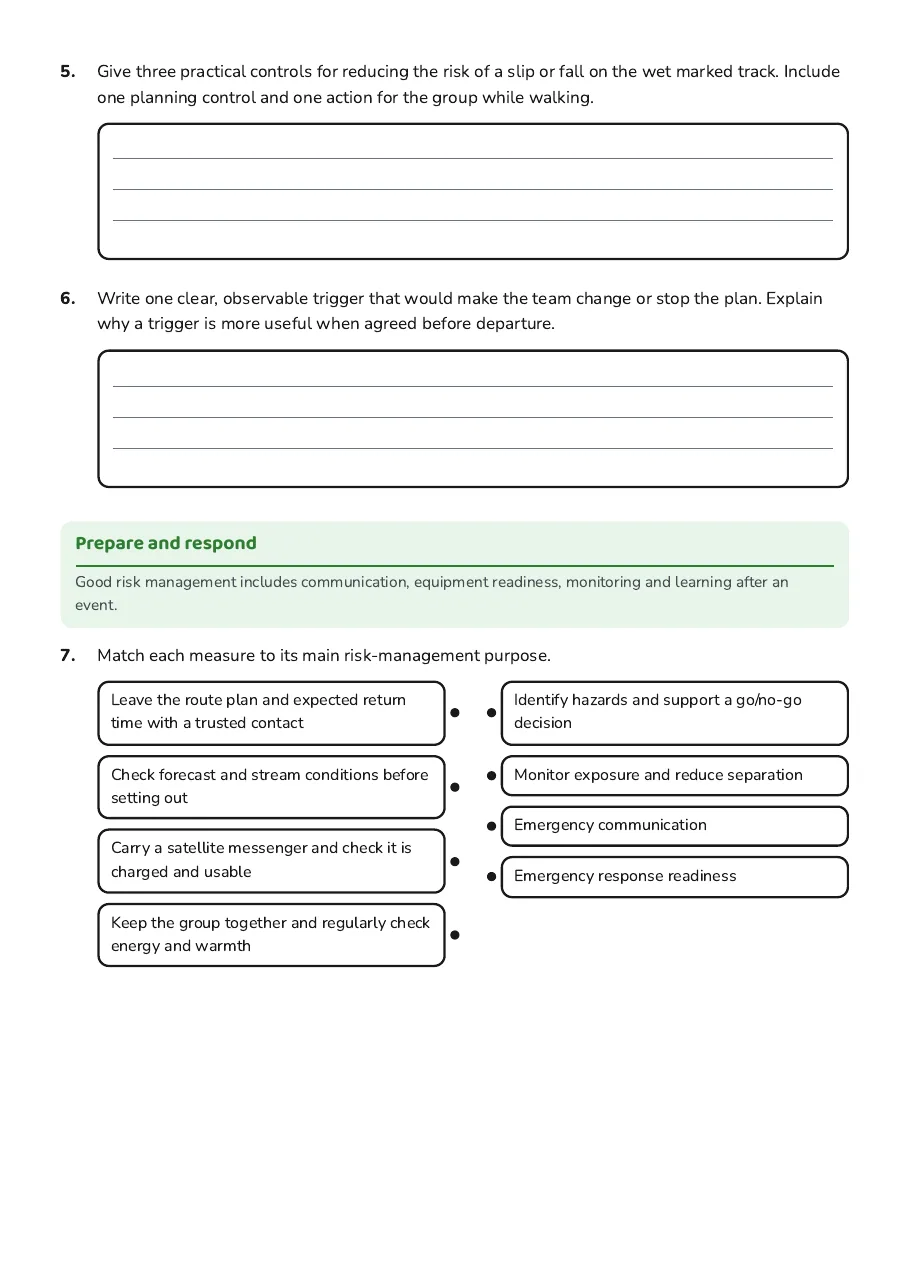
Good risk management includes communication, equipment readiness, monitoring and learning after an event.
- Leave the route plan and expected return time with a trusted contact
- Check forecast and stream conditions before setting out
- Carry a satellite messenger and check it is charged and usable
- Keep the group together and regularly check energy and warmth
- Identify hazards and support a go/no-go decision
- Monitor exposure and reduce separation
- Emergency communication
- Emergency response readiness
4 printable pages
Page 1
Page 2
Page 3
Page 4
About This Worksheet
Free in Kuraplan
Sign up free, grab the PDF, and customize it for your class.
Print-Ready
Formatted for standard paper. Clean layout, easy to read.
AI-Generated
Created with Kuraplan's AI, designed for real classroom use.
For Teachers & Parents
Use in classrooms, for homework, tutoring, or homeschool.
Need a custom version of this worksheet?
Kuraplan's AI generates custom worksheets in seconds — differentiated for every learner, aligned to your curriculum.
Generate Custom Worksheets — FreeMore PE Worksheets
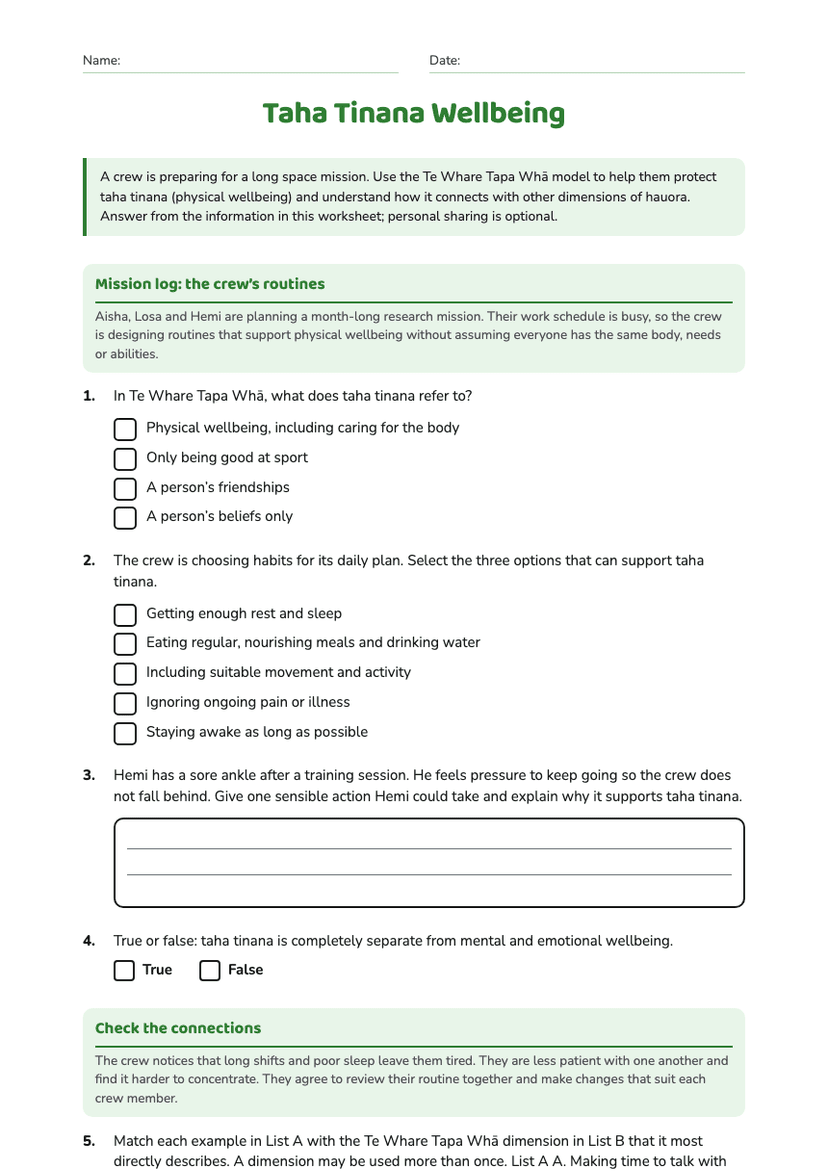
Taha Tinana Wellbeing
Free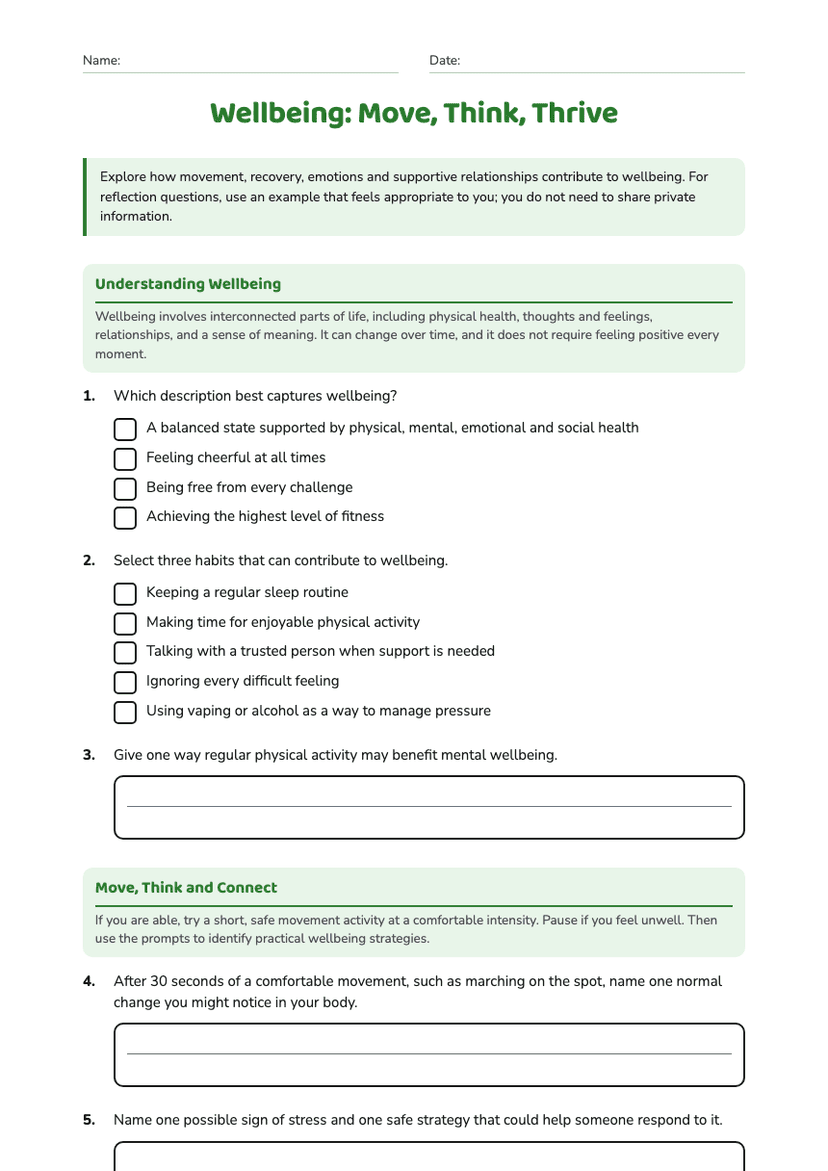
Wellbeing: Move, Think, Thrive
Free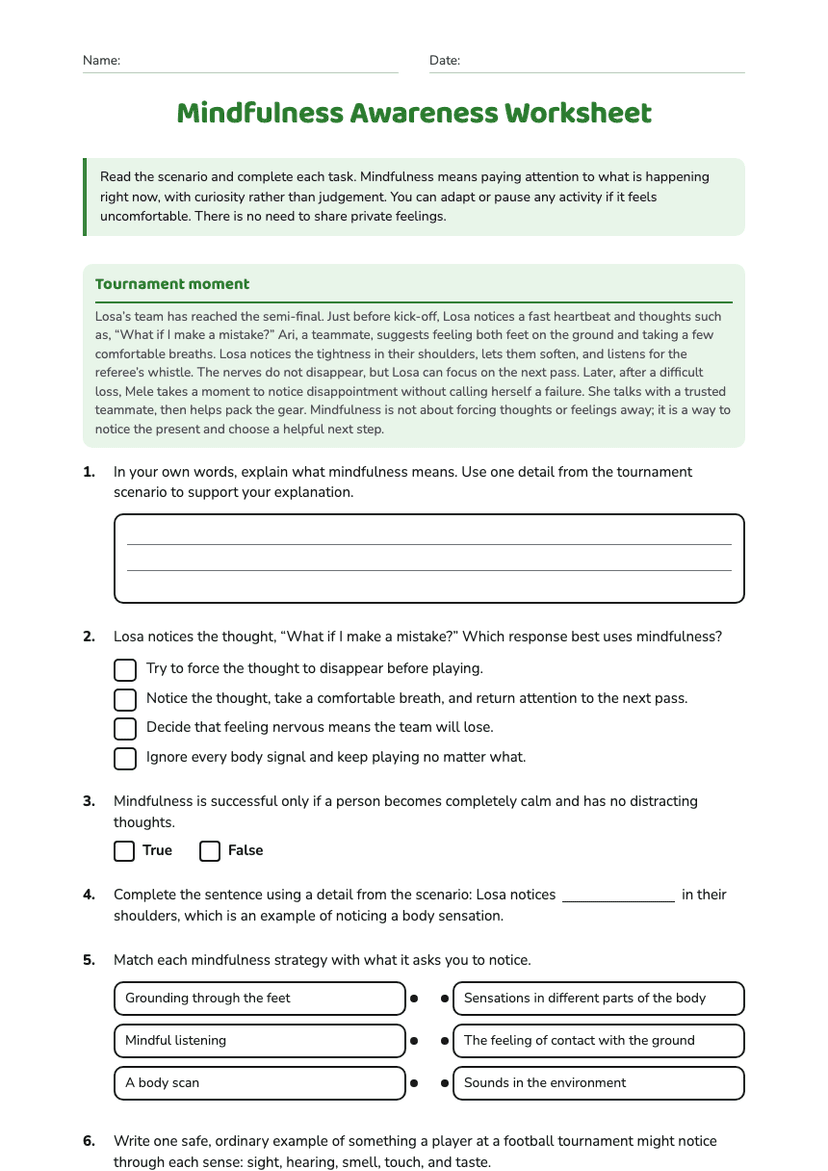
Mindfulness Awareness Worksheet
Free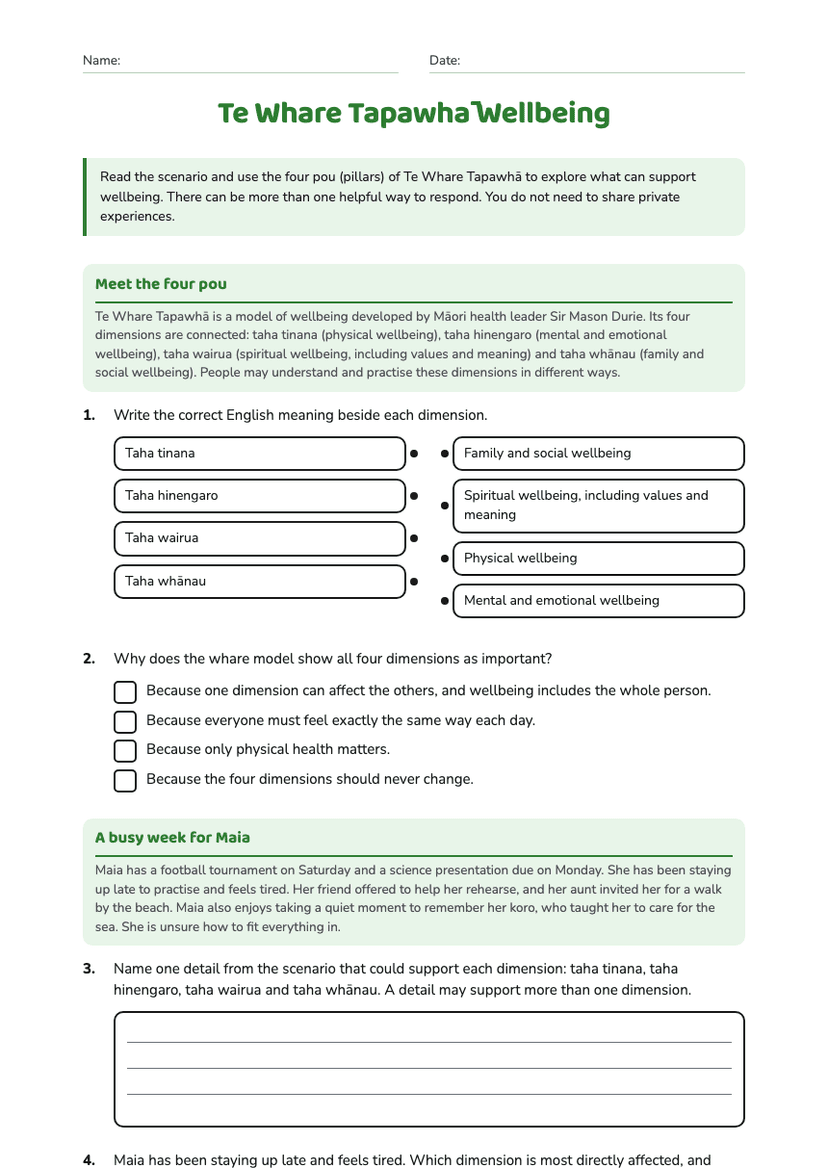
Te Whare Tapawhā Wellbeing
Free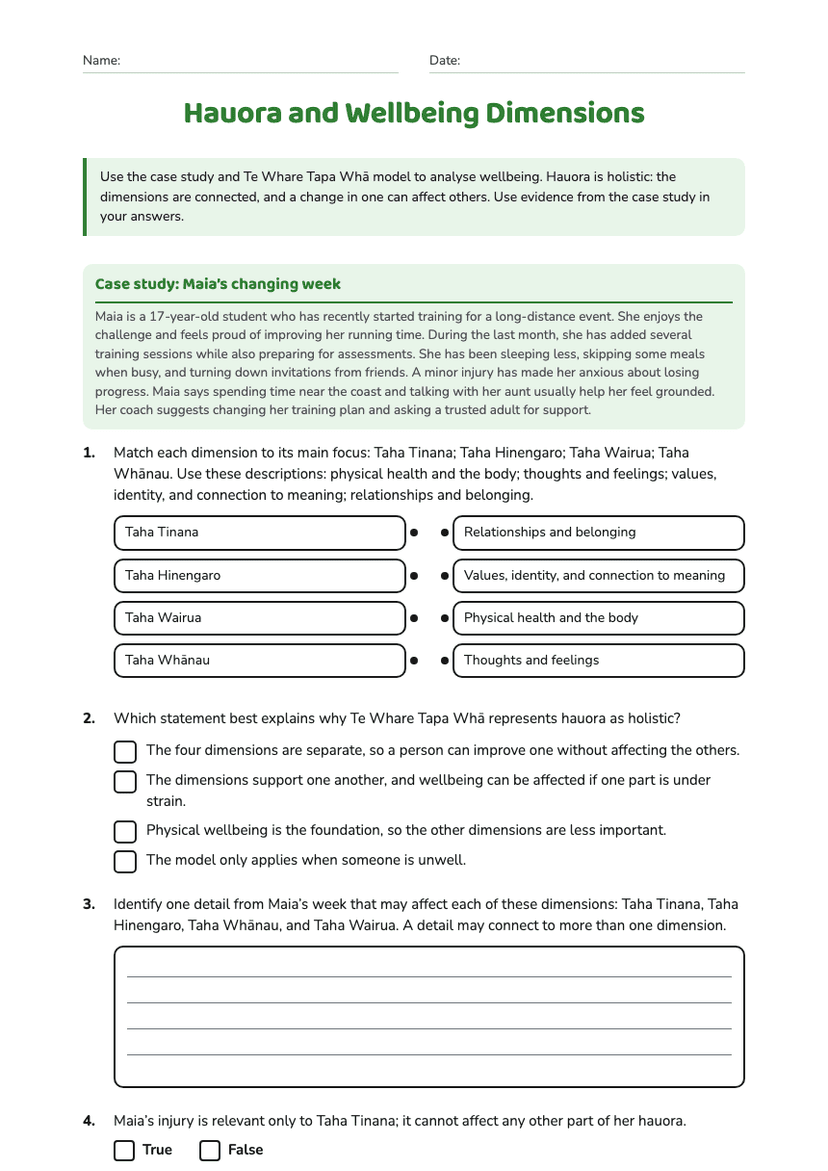
Hauora and Wellbeing Dimensions
Free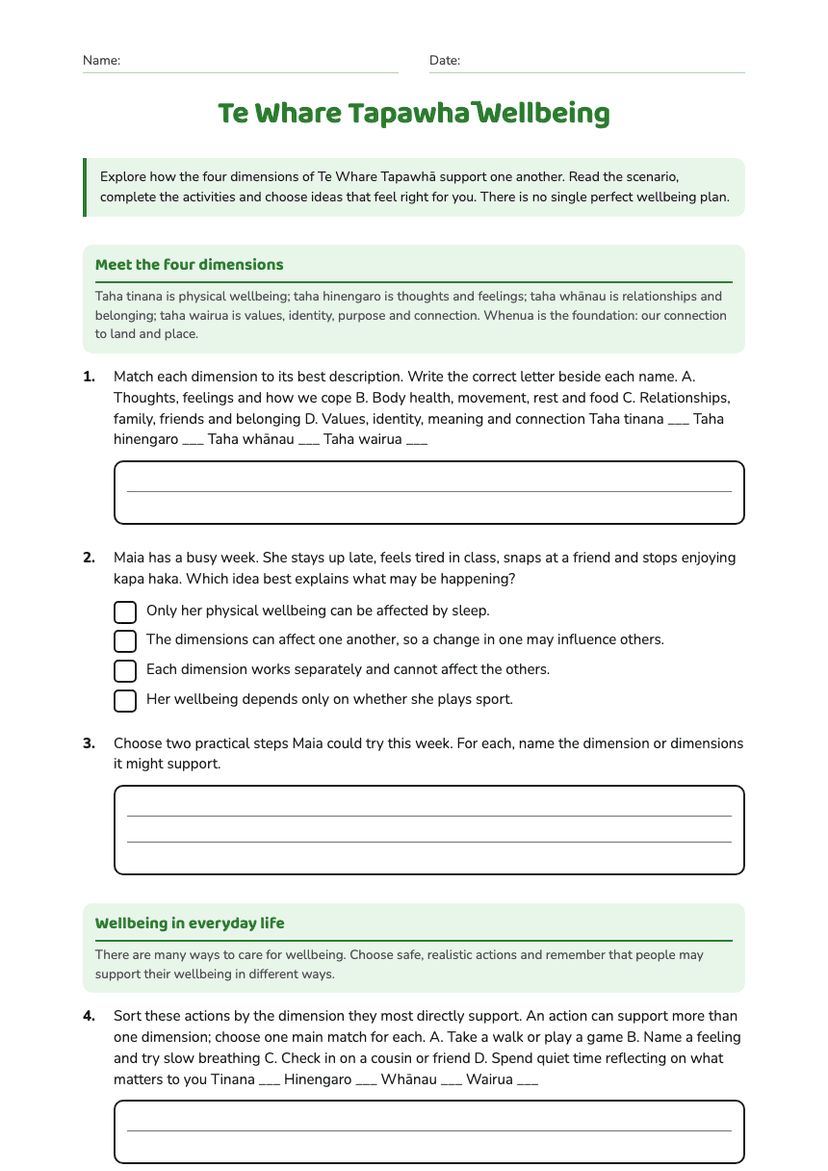
Te Whare Tapawhā Wellbeing
Free
Understanding Hauora Wellbeing
Free