African American Lives, Colonial–1860
A free us history worksheet ready for your classroom. Open in Kuraplan to grab the print-ready PDF, customize it for your students, or generate a fresh version in seconds.
African American Lives, Colonial–1860
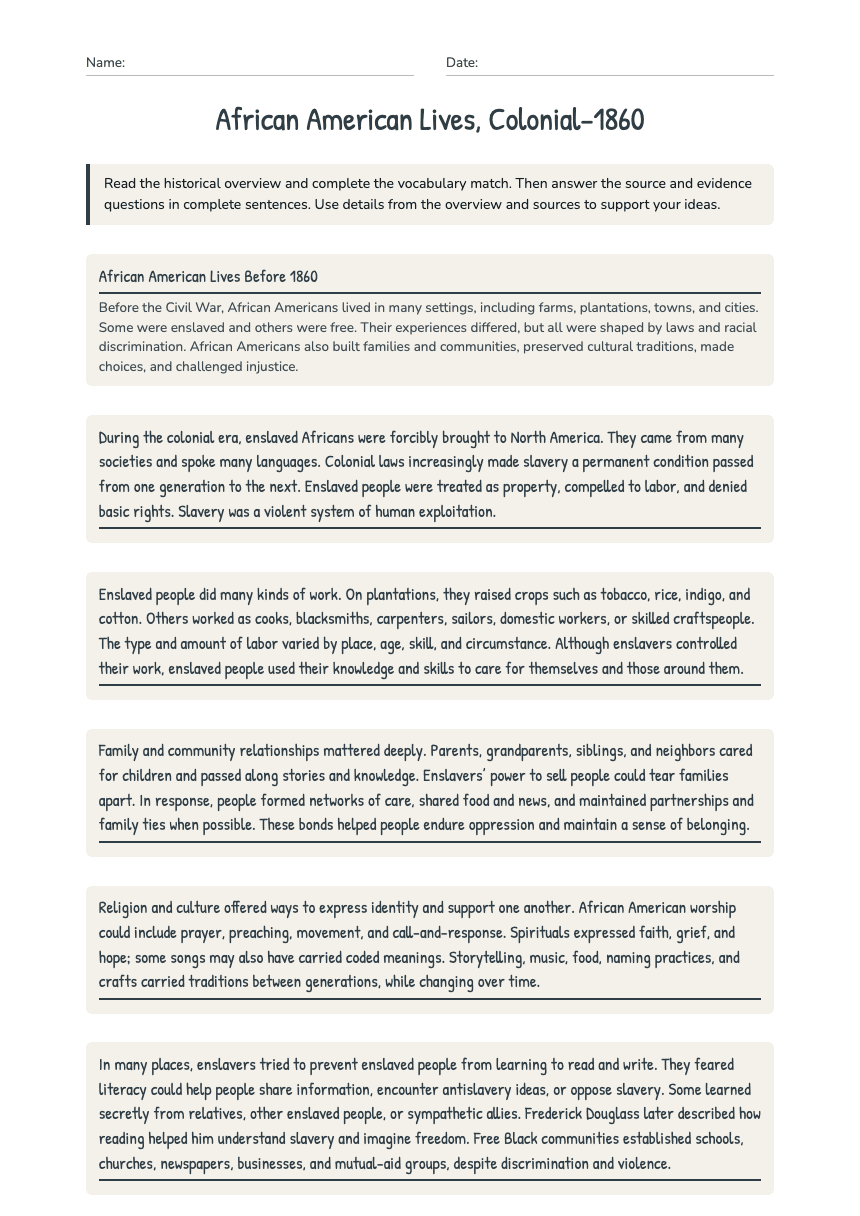
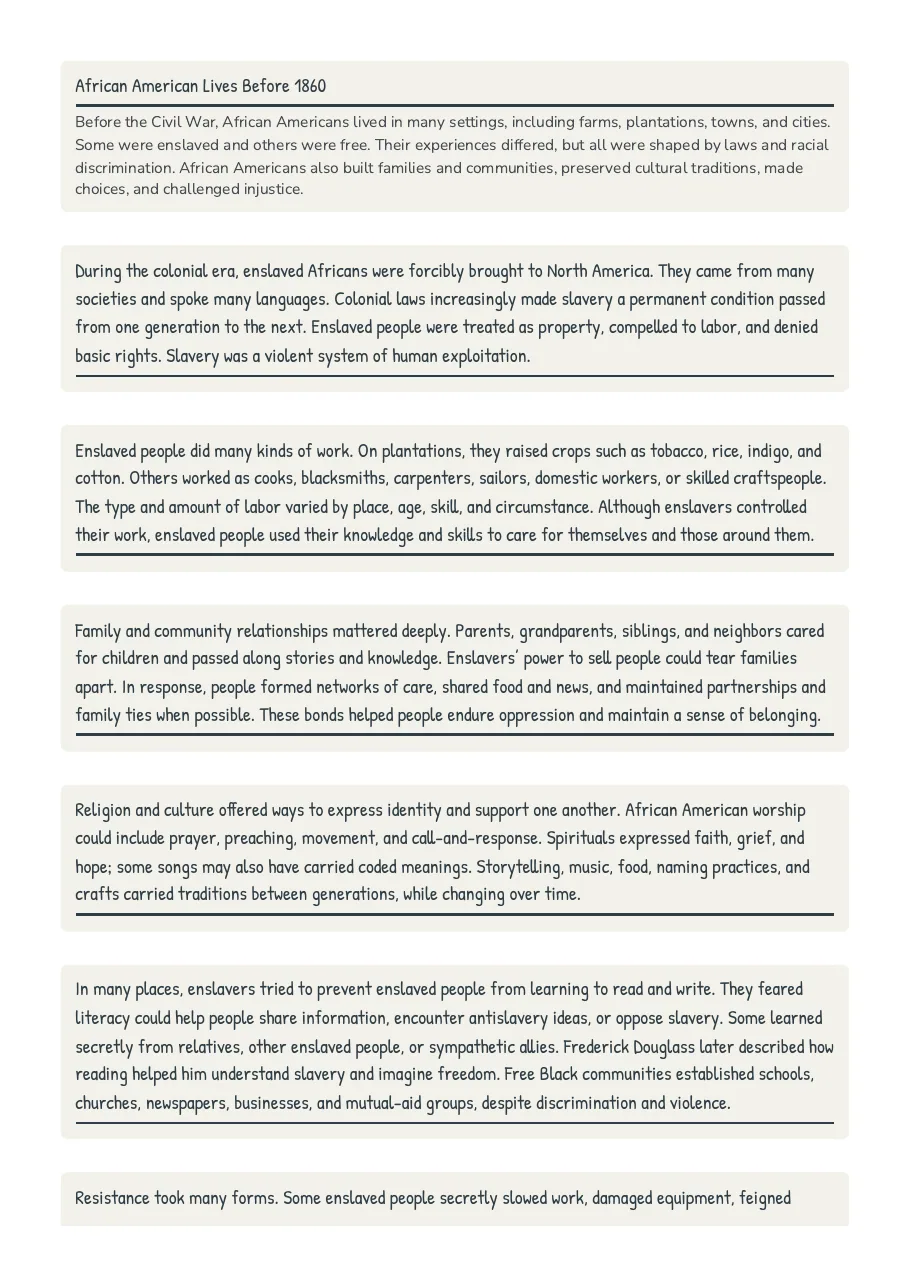
African American Lives Before 1860
Before the Civil War, African Americans lived in many settings, including farms, plantations, towns, and cities. Some were enslaved and others were free. Their experiences differed, but all were shaped by laws and racial discrimination. African Americans also built families and communities, preserved cultural traditions, made choices, and challenged injustice.
During the colonial era, enslaved Africans were forcibly brought to North America. They came from many societies and spoke many languages. Colonial laws increasingly made slavery a permanent condition passed from one generation to the next. Enslaved people were treated as property, compelled to labor, and denied basic rights. Slavery was a violent system of human exploitation.
Enslaved people did many kinds of work. On plantations, they raised crops such as tobacco, rice, indigo, and cotton. Others worked as cooks, blacksmiths, carpenters, sailors, domestic workers, or skilled craftspeople. The type and amount of labor varied by place, age, skill, and circumstance. Although enslavers controlled their work, enslaved people used their knowledge and skills to care for themselves and those around them.
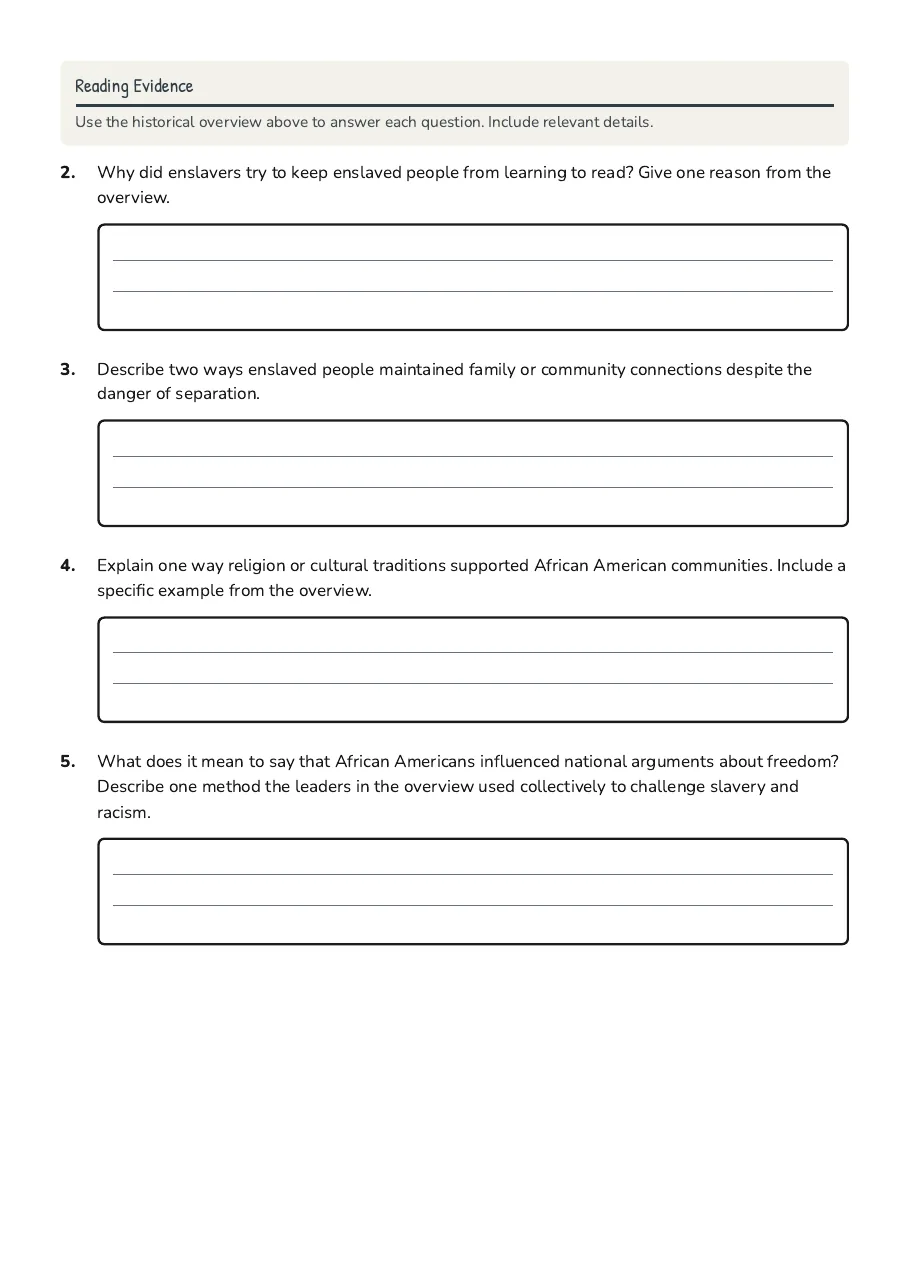
Family and community relationships mattered deeply. Parents, grandparents, siblings, and neighbors cared for children and passed along stories and knowledge. Enslavers’ power to sell people could tear families apart. In response, people formed networks of care, shared food and news, and maintained partnerships and family ties when possible. These bonds helped people endure oppression and maintain a sense of belonging.
Religion and culture offered ways to express identity and support one another. African American worship could include prayer, preaching, movement, and call-and-response. Spirituals expressed faith, grief, and hope; some songs may also have carried coded meanings. Storytelling, music, food, naming practices, and crafts carried traditions between generations, while changing over time.
In many places, enslavers tried to prevent enslaved people from learning to read and write. They feared literacy could help people share information, encounter antislavery ideas, or oppose slavery. Some learned secretly from relatives, other enslaved people, or sympathetic allies. Frederick Douglass later described how reading helped him understand slavery and imagine freedom. Free Black communities established schools, churches, newspapers, businesses, and mutual-aid groups, despite discrimination and violence.
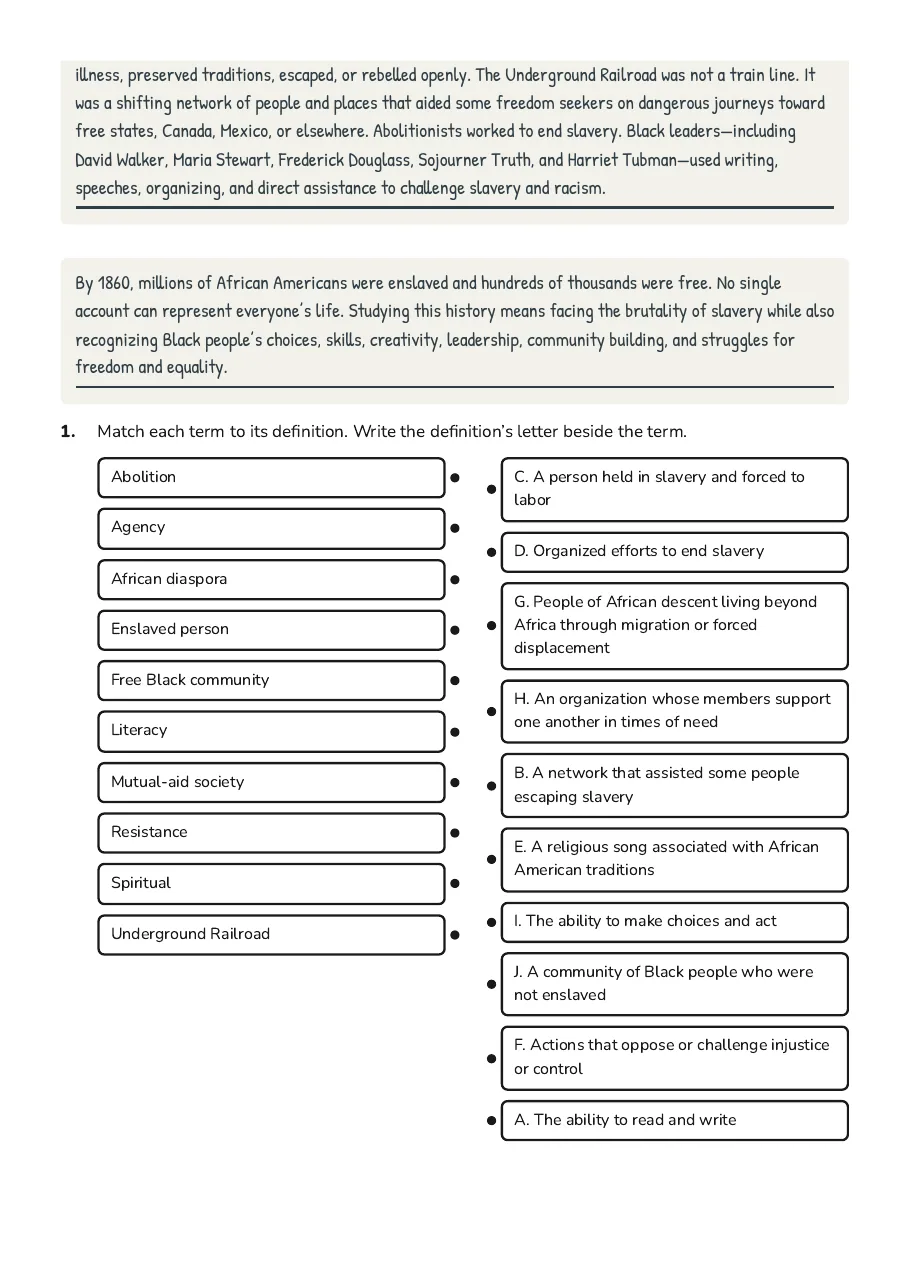
Resistance took many forms. Some enslaved people secretly slowed work, damaged equipment, feigned illness, preserved traditions, escaped, or rebelled openly. The Underground Railroad was not a train line. It was a shifting network of people and places that aided some freedom seekers on dangerous journeys toward free states, Canada, Mexico, or elsewhere. Abolitionists worked to end slavery. Black leaders—including David Walker, Maria Stewart, Frederick Douglass, Sojourner Truth, and Harriet Tubman—used writing, speeches, organizing, and direct assistance to challenge slavery and racism.
By 1860, millions of African Americans were enslaved and hundreds of thousands were free. No single account can represent everyone’s life. Studying this history means facing the brutality of slavery while also recognizing Black people’s choices, skills, creativity, leadership, community building, and struggles for freedom and equality.
- Abolition
- Agency
- African diaspora
- Enslaved person
- Free Black community
- Literacy
- Mutual-aid society
- Resistance
- Spiritual
- Underground Railroad
- C. A person held in slavery and forced to labor
- D. Organized efforts to end slavery
- G. People of African descent living beyond Africa through migration or forced displacement
- H. An organization whose members support one another in times of need
- B. A network that assisted some people escaping slavery
- E. A religious song associated with African American traditions
- I. The ability to make choices and act
- J. A community of Black people who were not enslaved
- F. Actions that oppose or challenge injustice or control
- A. The ability to read and write
Reading Evidence
Use the historical overview above to answer each question. Include relevant details.
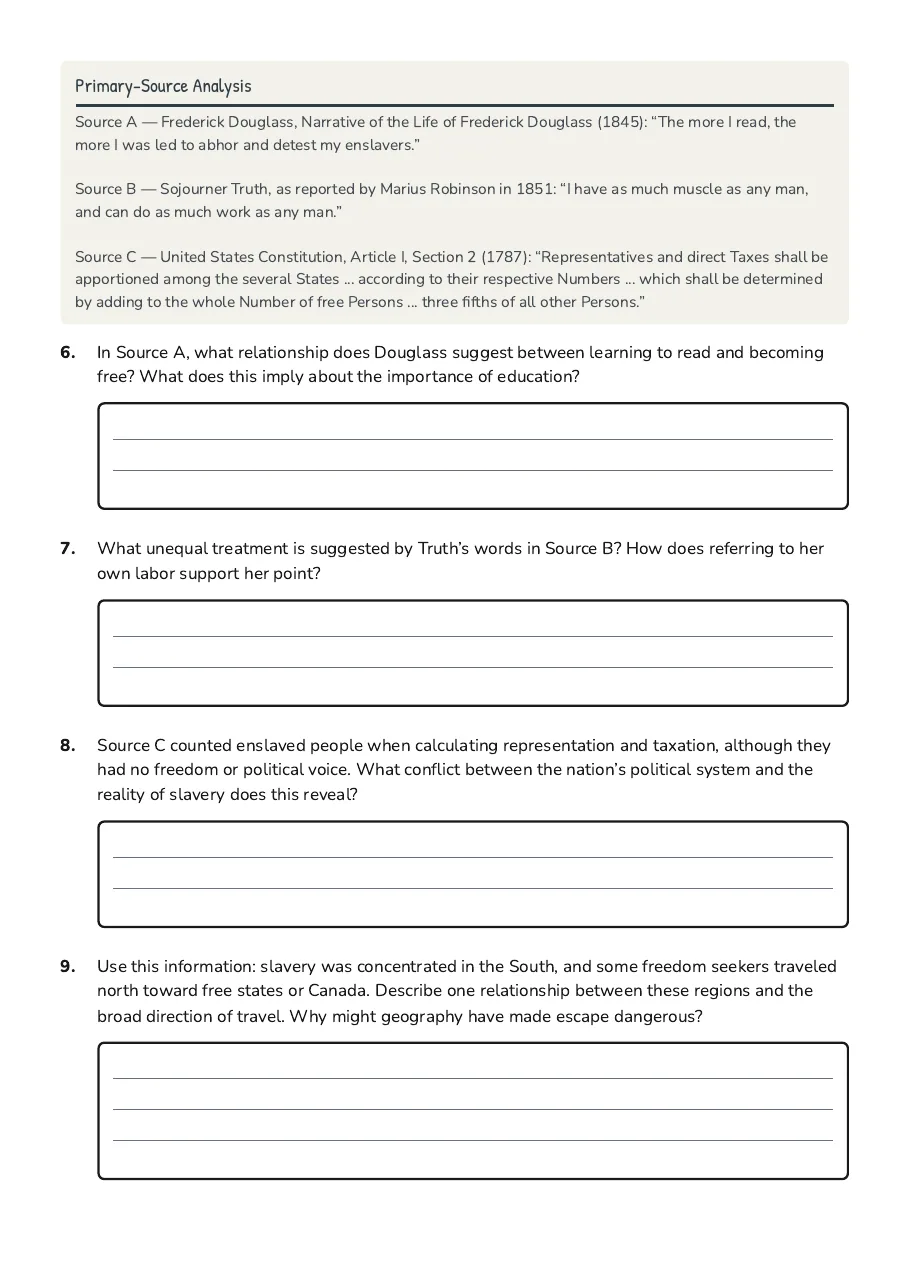
Primary-Source Analysis
Source A — Frederick Douglass, Narrative of the Life of Frederick Douglass (1845): “The more I read, the more I was led to abhor and detest my enslavers.” Source B — Sojourner Truth, as reported by Marius Robinson in 1851: “I have as much muscle as any man, and can do as much work as any man.” Source C — United States Constitution, Article I, Section 2 (1787): “Representatives and direct Taxes shall be apportioned among the several States ... according to their respective Numbers ... which shall be determined by adding to the whole Number of free Persons ... three fifths of all other Persons.”
6 printable pages

Page 1
Page 2
Page 3
Page 4
Page 5

Page 6
About This Worksheet
Free in Kuraplan
Sign up free, grab the PDF, and customize it for your class.
Print-Ready
Formatted for standard paper. Clean layout, easy to read.
AI-Generated
Created with Kuraplan's AI, designed for real classroom use.
For Teachers & Parents
Use in classrooms, for homework, tutoring, or homeschool.
Need a custom version of this worksheet?
Kuraplan's AI generates custom worksheets in seconds — differentiated for every learner, aligned to your curriculum.
Generate Custom Worksheets — FreeMore US History Worksheets
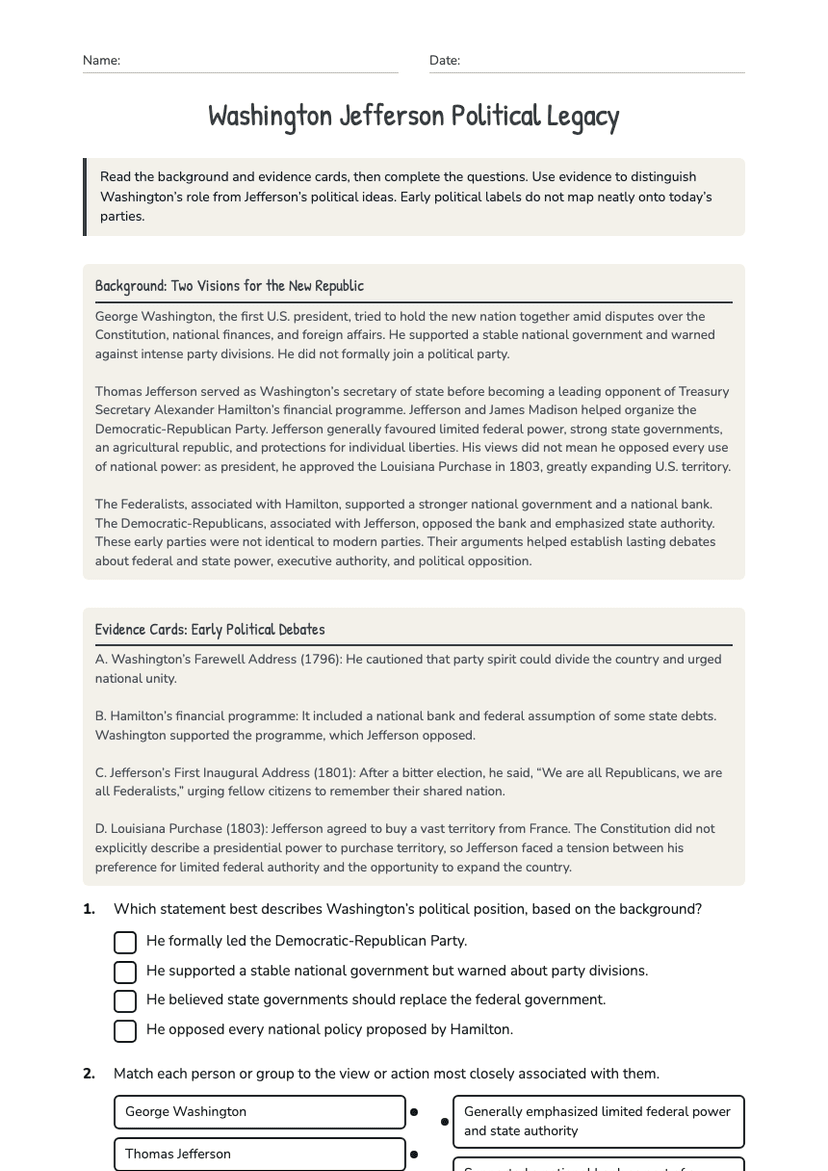
Washington Jefferson Political Legacy
Free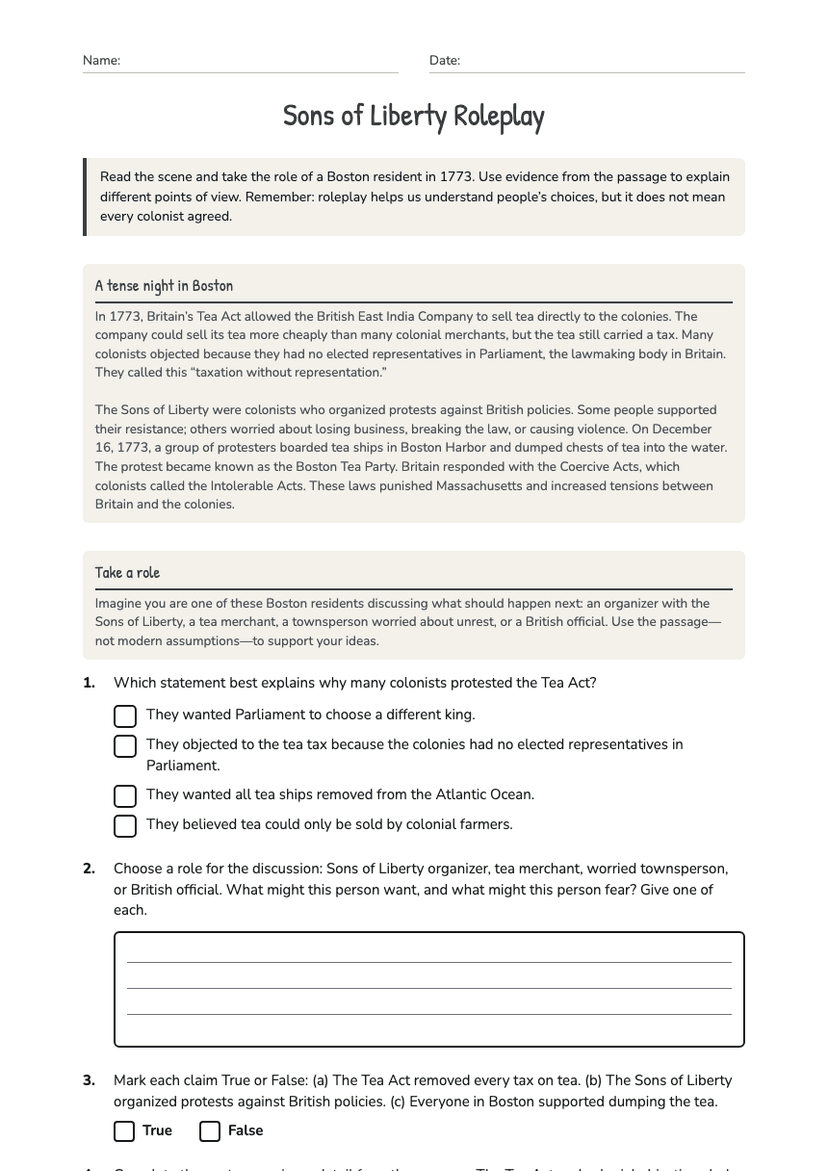
Sons of Liberty Roleplay
Free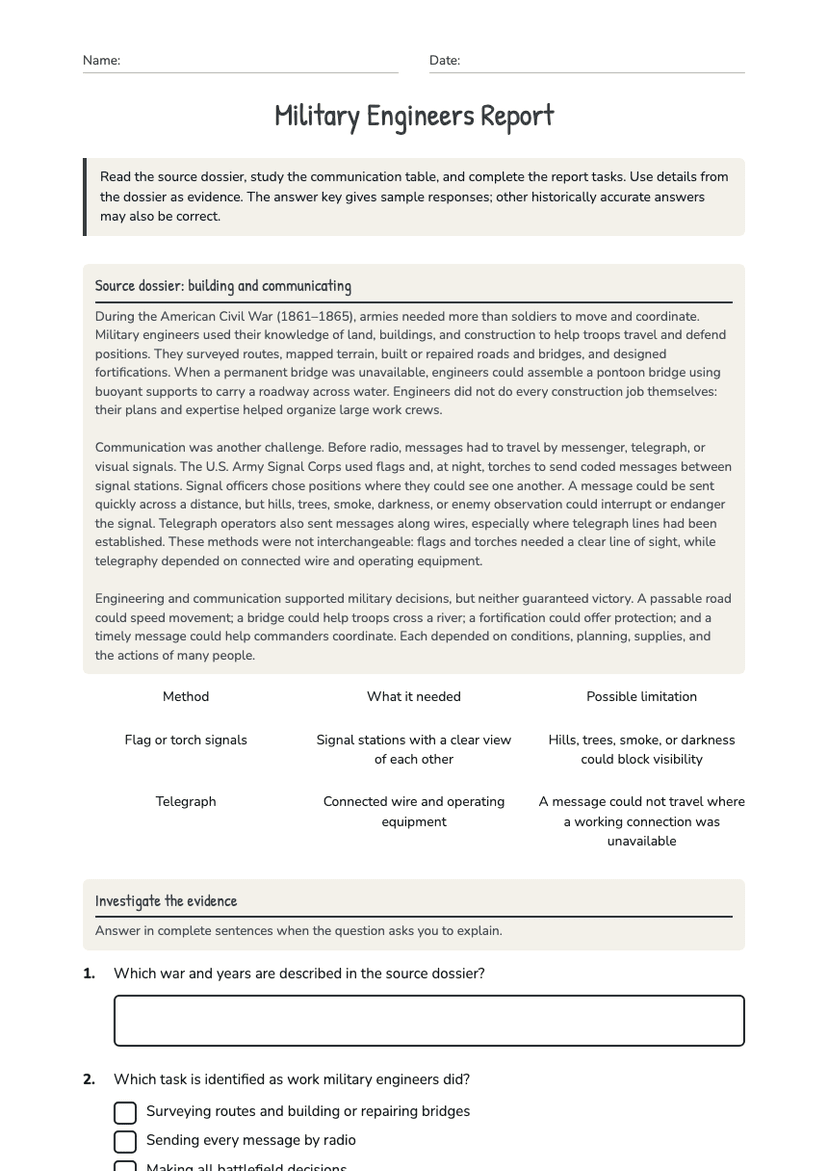
Military Engineers Report
Free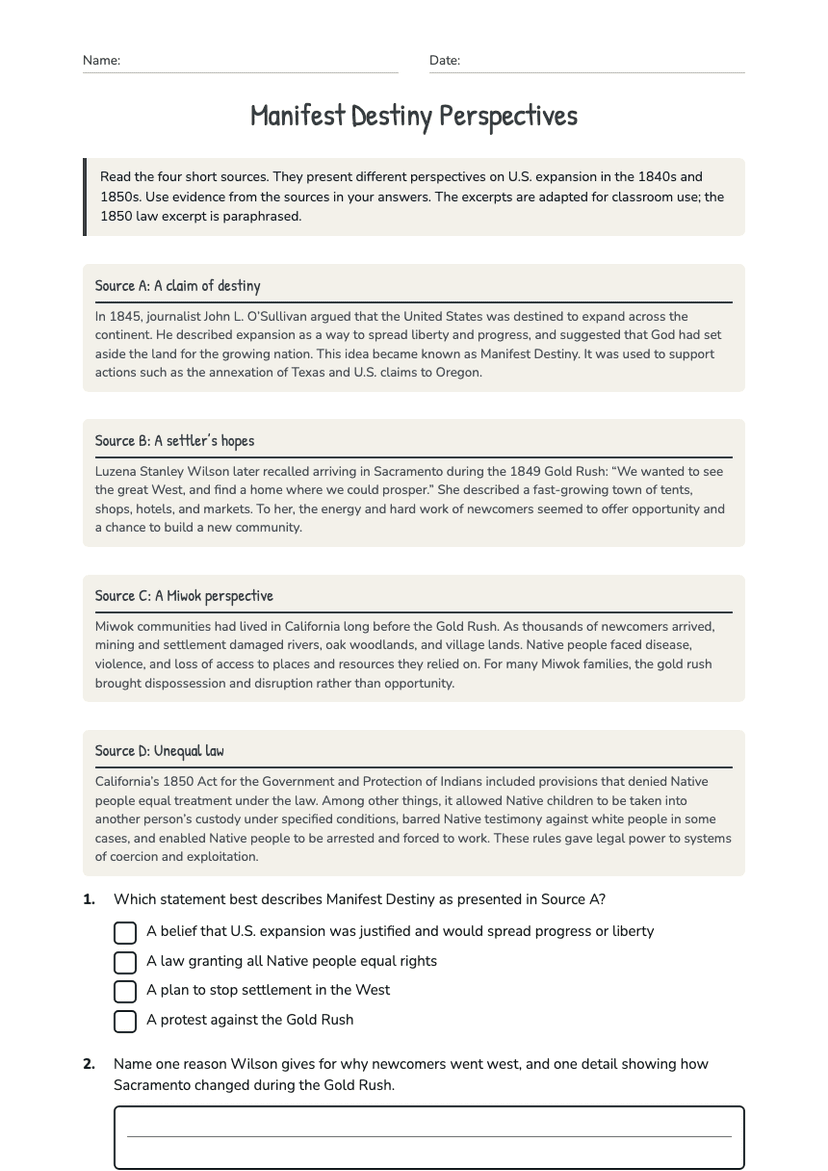
Manifest Destiny Perspectives
Free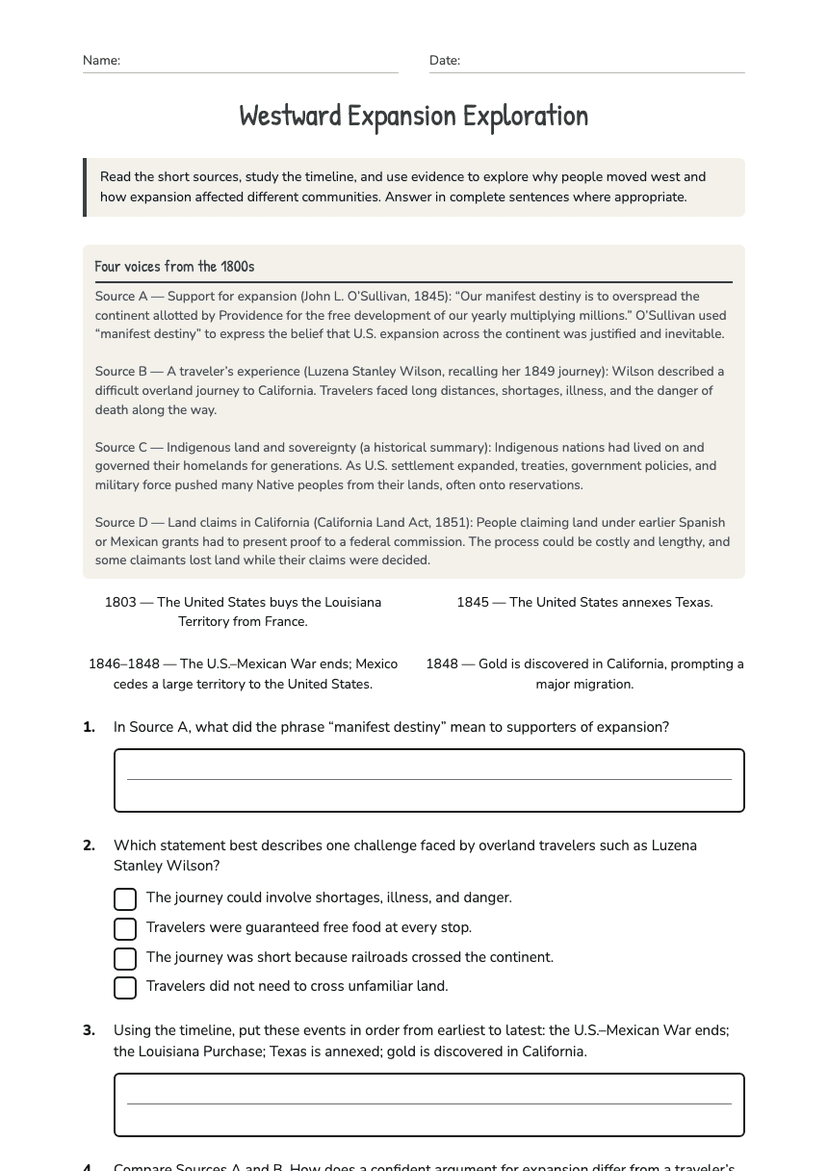
Westward Expansion Exploration
Free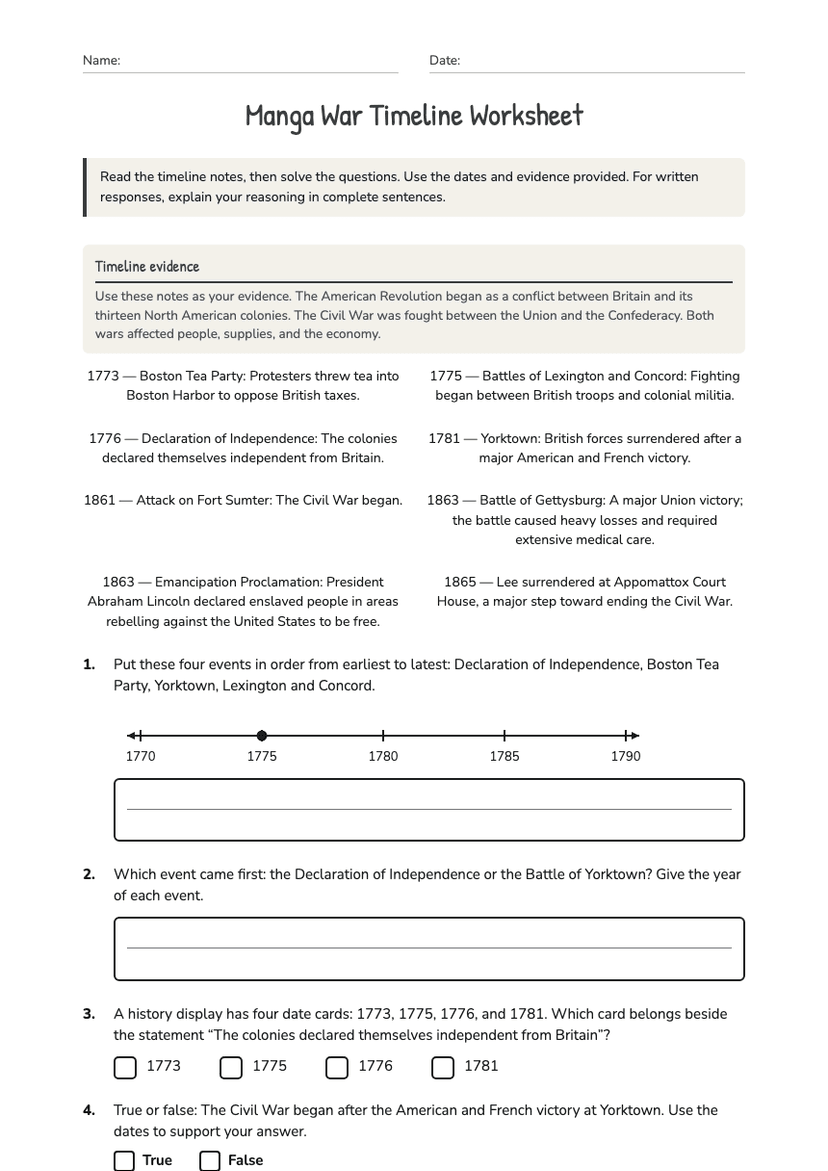
Manga War Timeline Worksheet
Free
Washington vs Jefferson Politics
Free