Listening in Public Speaking
A free english (ela) worksheet ready for your classroom. Open in Kuraplan to grab the print-ready PDF, customize it for your students, or generate a fresh version in seconds.
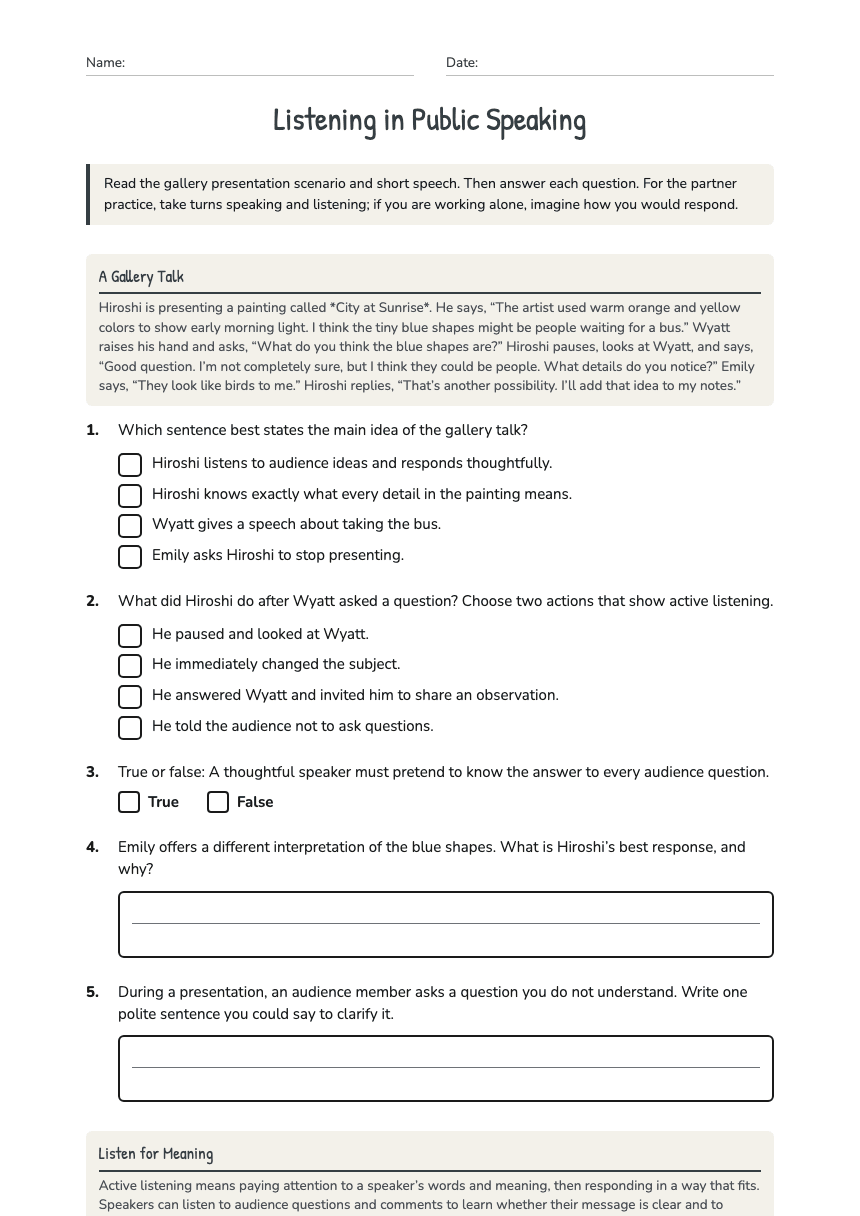
Listening in Public Speaking
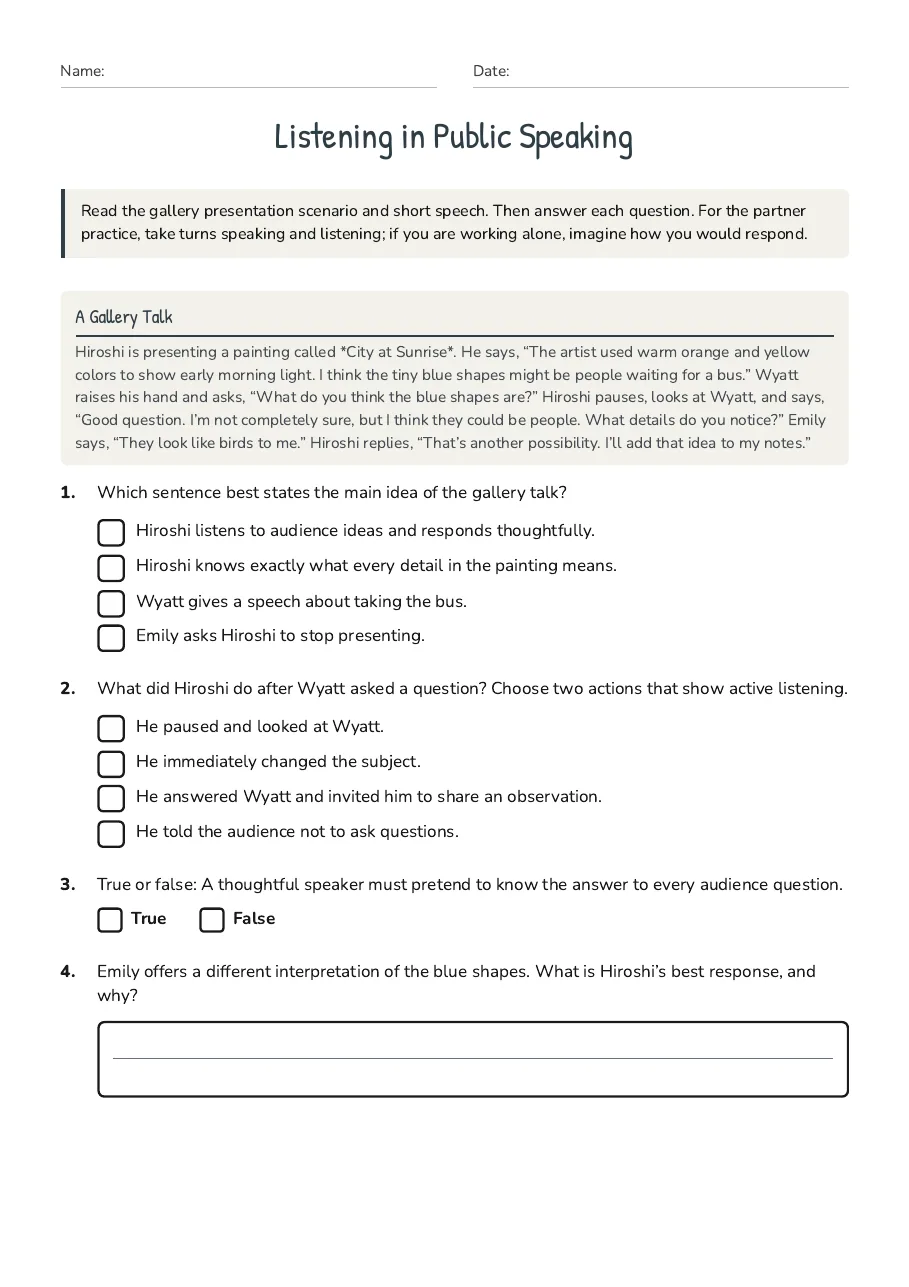
A Gallery Talk
Hiroshi is presenting a painting called *City at Sunrise*. He says, “The artist used warm orange and yellow colors to show early morning light. I think the tiny blue shapes might be people waiting for a bus.” Wyatt raises his hand and asks, “What do you think the blue shapes are?” Hiroshi pauses, looks at Wyatt, and says, “Good question. I’m not completely sure, but I think they could be people. What details do you notice?” Emily says, “They look like birds to me.” Hiroshi replies, “That’s another possibility. I’ll add that idea to my notes.”
- Hiroshi listens to audience ideas and responds thoughtfully.
- Hiroshi knows exactly what every detail in the painting means.
- Wyatt gives a speech about taking the bus.
- Emily asks Hiroshi to stop presenting.
- He paused and looked at Wyatt.
- He immediately changed the subject.
- He answered Wyatt and invited him to share an observation.
- He told the audience not to ask questions.
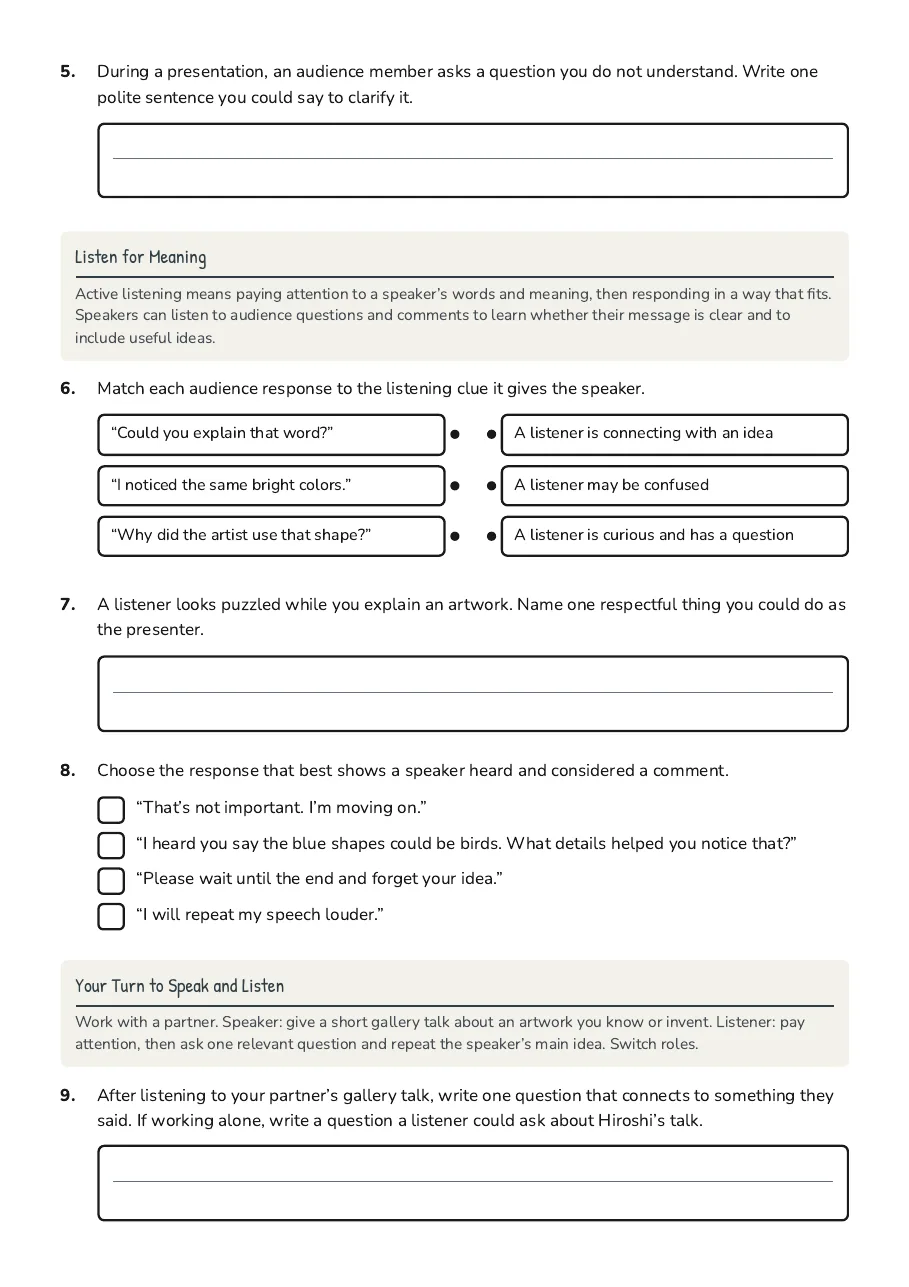
Listen for Meaning
Active listening means paying attention to a speaker’s words and meaning, then responding in a way that fits. Speakers can listen to audience questions and comments to learn whether their message is clear and to include useful ideas.
- “Could you explain that word?”
- “I noticed the same bright colors.”
- “Why did the artist use that shape?”
- A listener is connecting with an idea
- A listener may be confused
- A listener is curious and has a question
- “That’s not important. I’m moving on.”
- “I heard you say the blue shapes could be birds. What details helped you notice that?”
- “Please wait until the end and forget your idea.”
- “I will repeat my speech louder.”
Your Turn to Speak and Listen
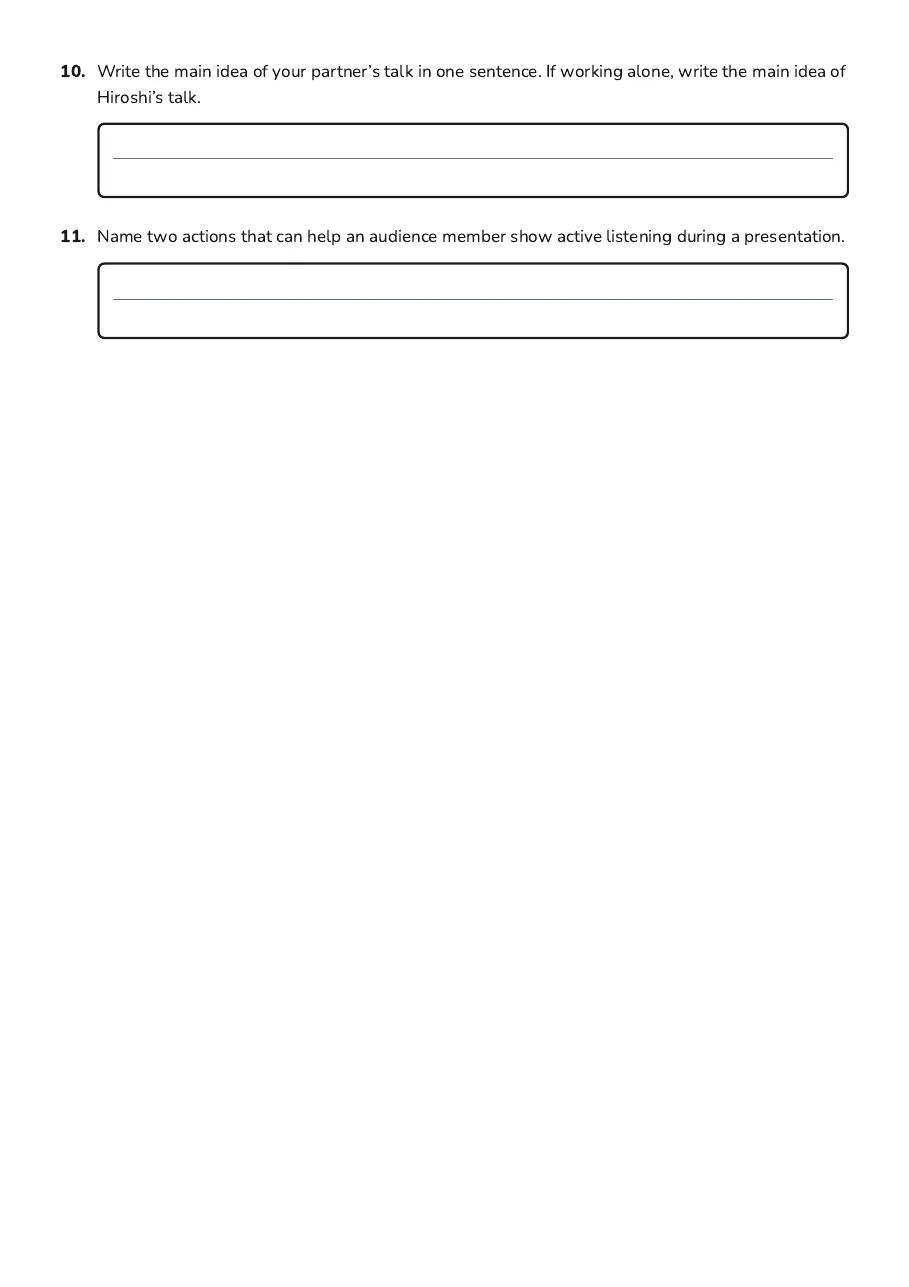
Work with a partner. Speaker: give a short gallery talk about an artwork you know or invent. Listener: pay attention, then ask one relevant question and repeat the speaker’s main idea. Switch roles.
3 printable pages
Page 1
Page 2
Page 3
About This Worksheet
Free in Kuraplan
Sign up free, grab the PDF, and customize it for your class.
Print-Ready
Formatted for standard paper. Clean layout, easy to read.
AI-Generated
Created with Kuraplan's AI, designed for real classroom use.
For Teachers & Parents
Use in classrooms, for homework, tutoring, or homeschool.
Need a custom version of this worksheet?
Kuraplan's AI generates custom worksheets in seconds — differentiated for every learner, aligned to your curriculum.
Generate Custom Worksheets — FreeMore English (ELA) Worksheets
Expressive Language Skills Worksheet
Free
My Favorite Things Worksheet
Free
Expected vs Unexpected Conversations
Free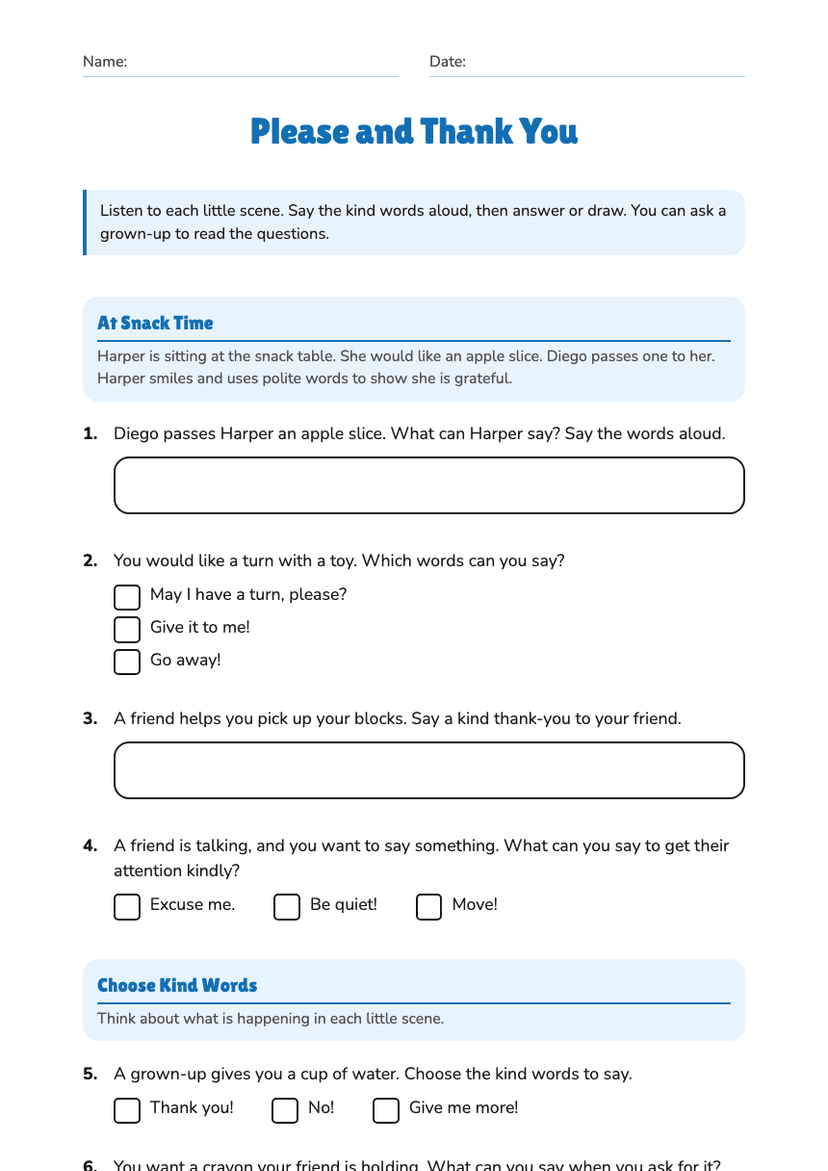
Please and Thank You
Free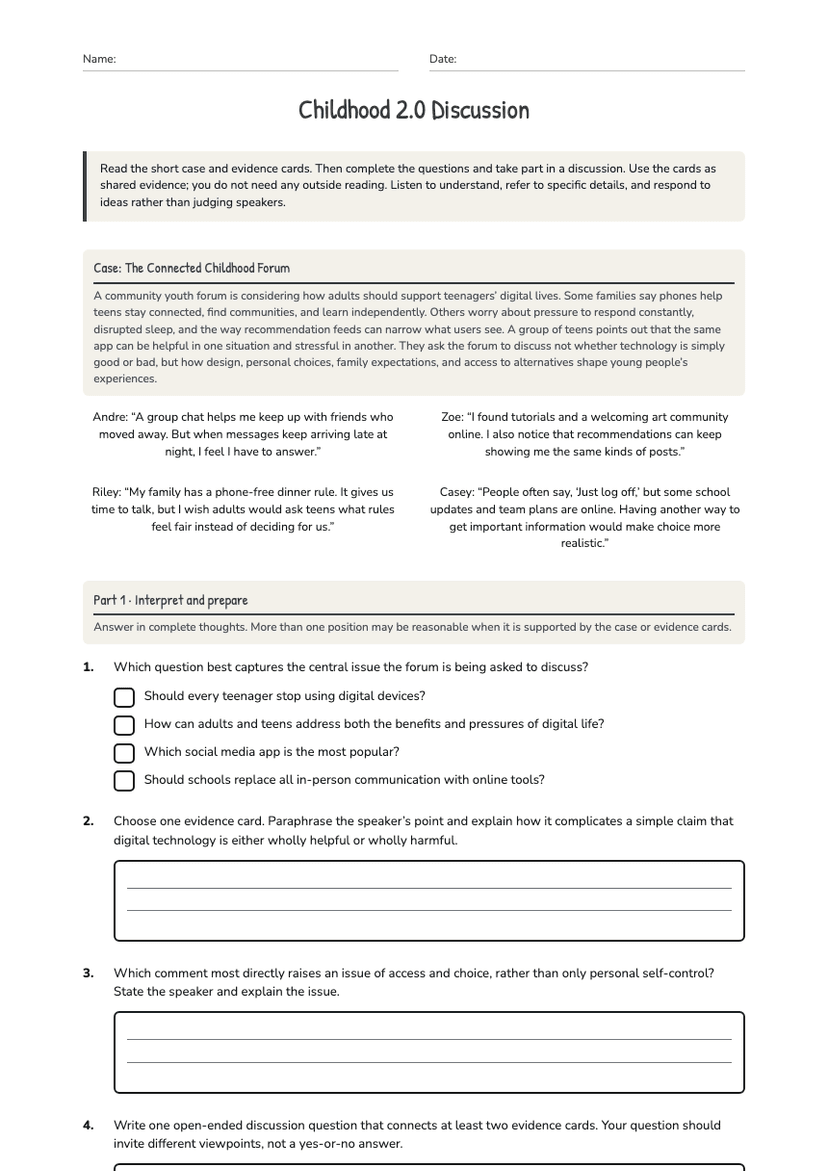
Childhood 2.0 Discussion
Free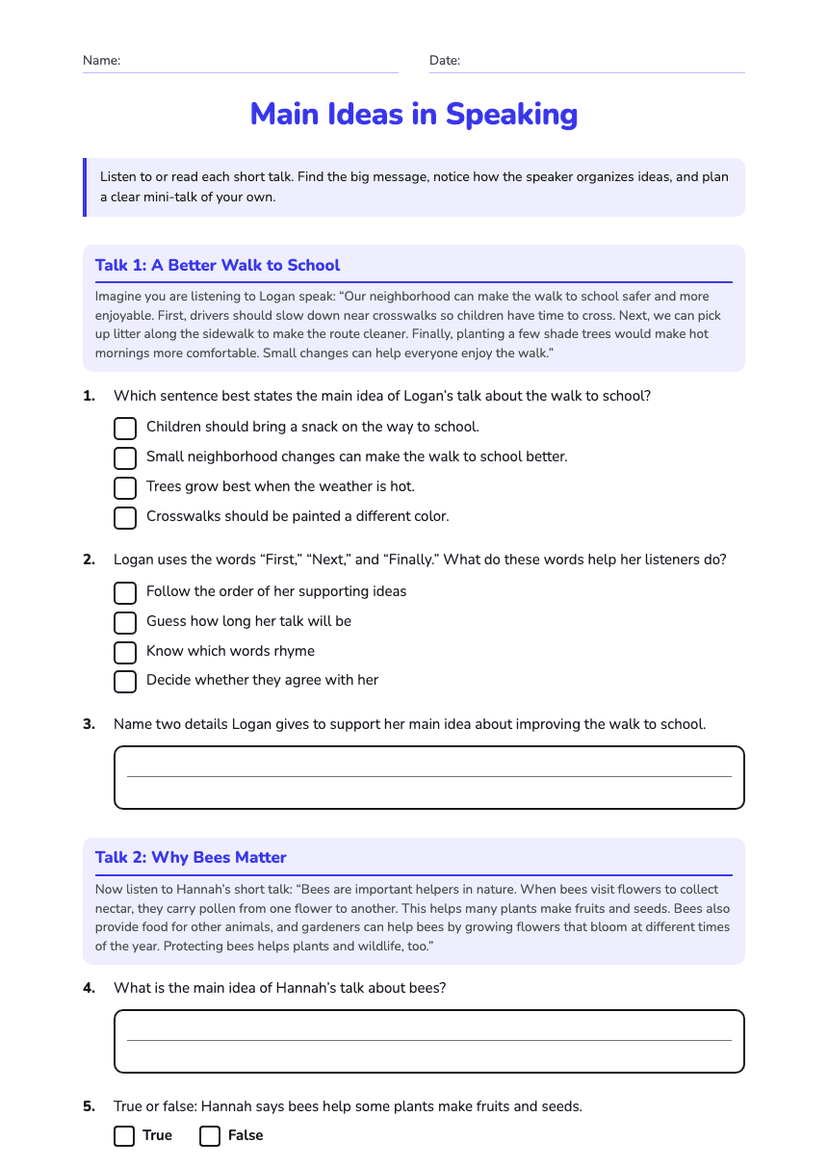
Main Ideas in Speaking
Free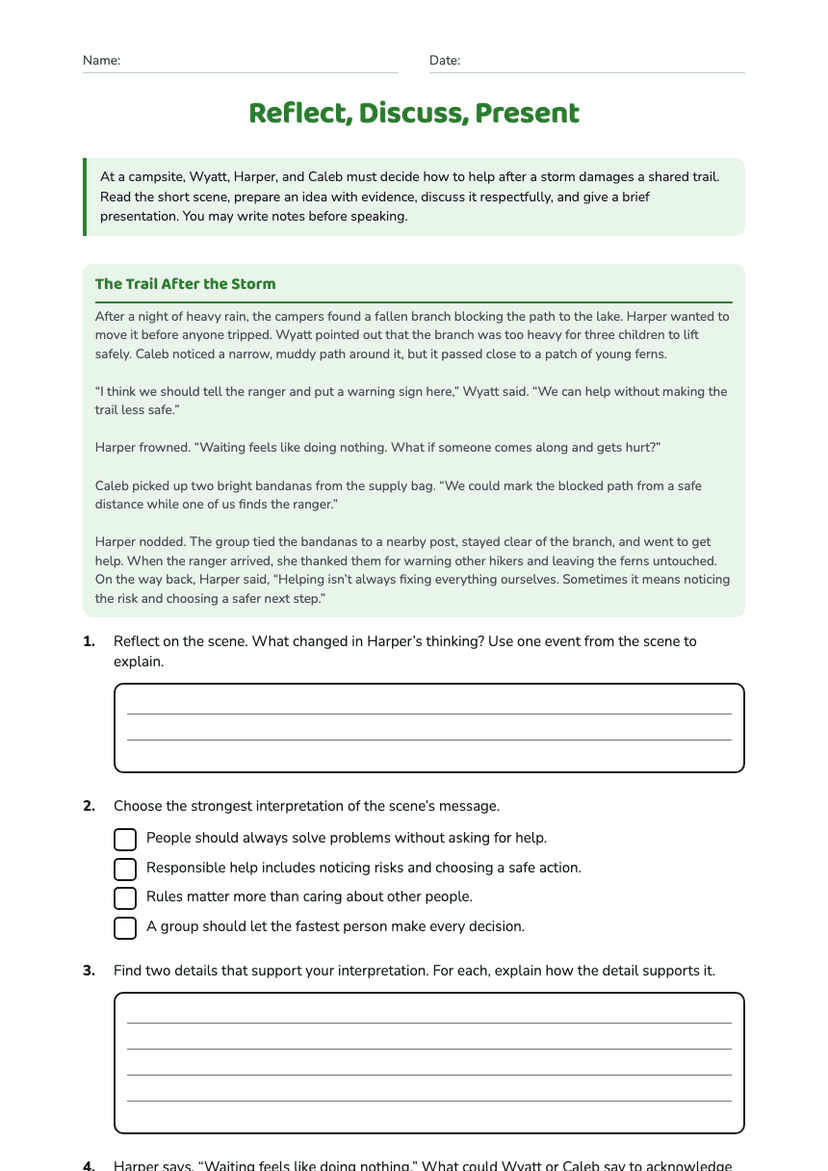
Reflect, Discuss, Present
Free