Natural Selection Probability Models
A free science worksheet ready for your classroom. Open in Kuraplan to grab the print-ready PDF, customize it for your students, or generate a fresh version in seconds.
Natural Selection Probability Models
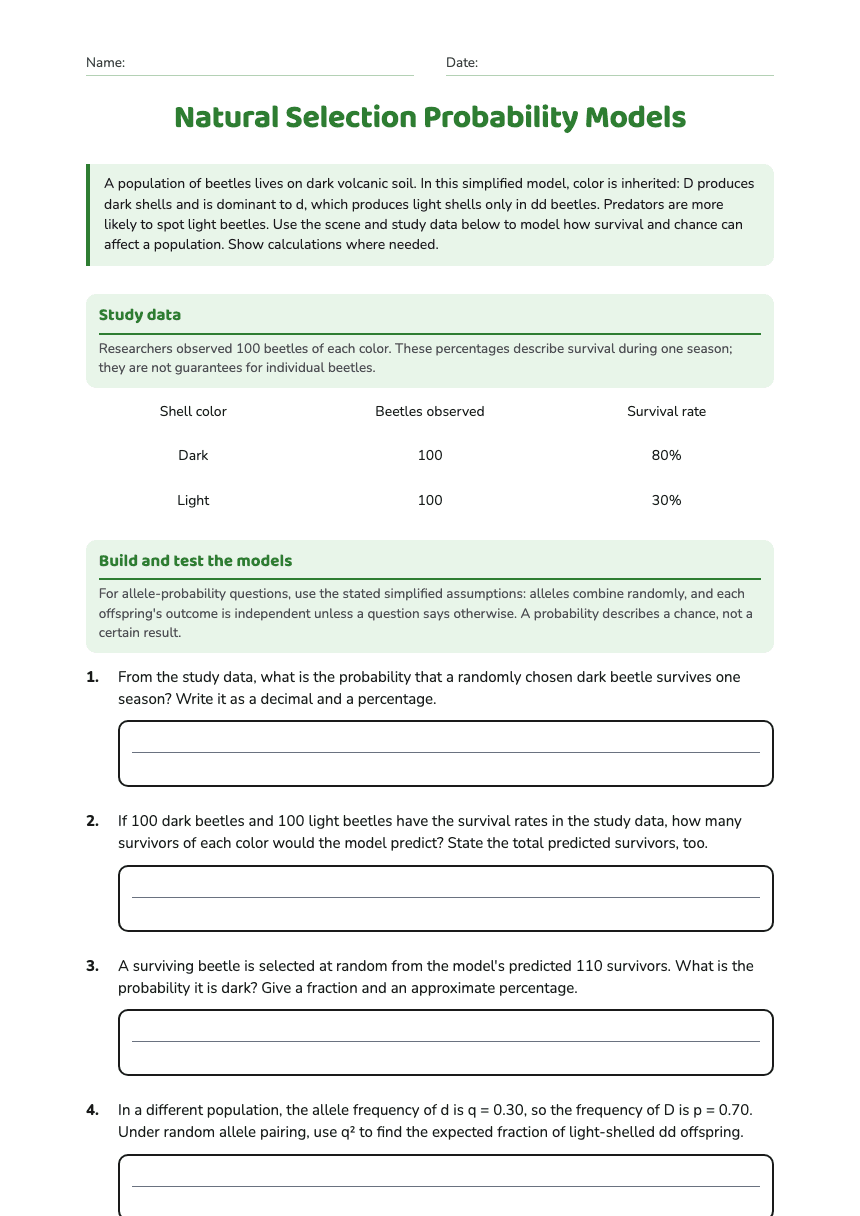
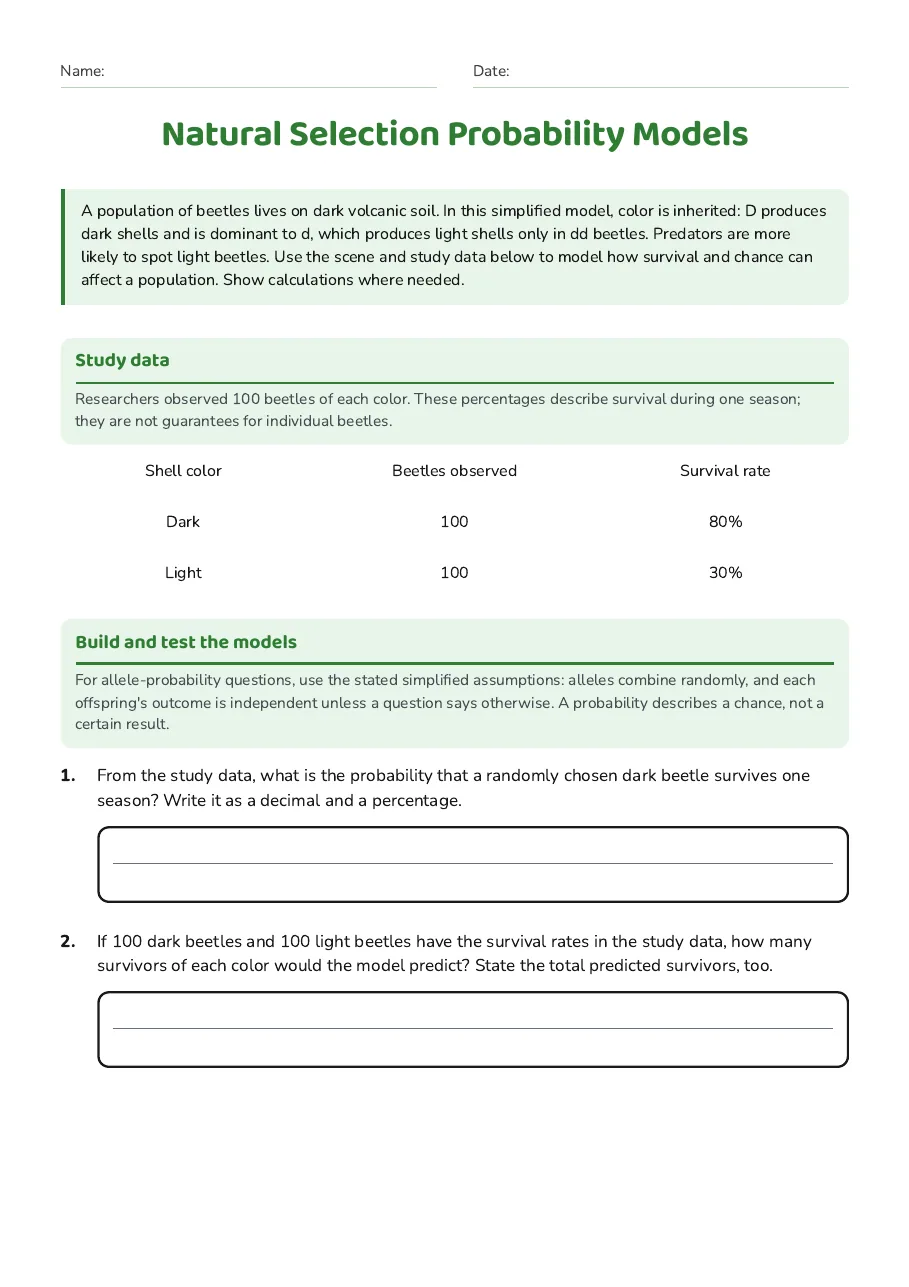
Study data
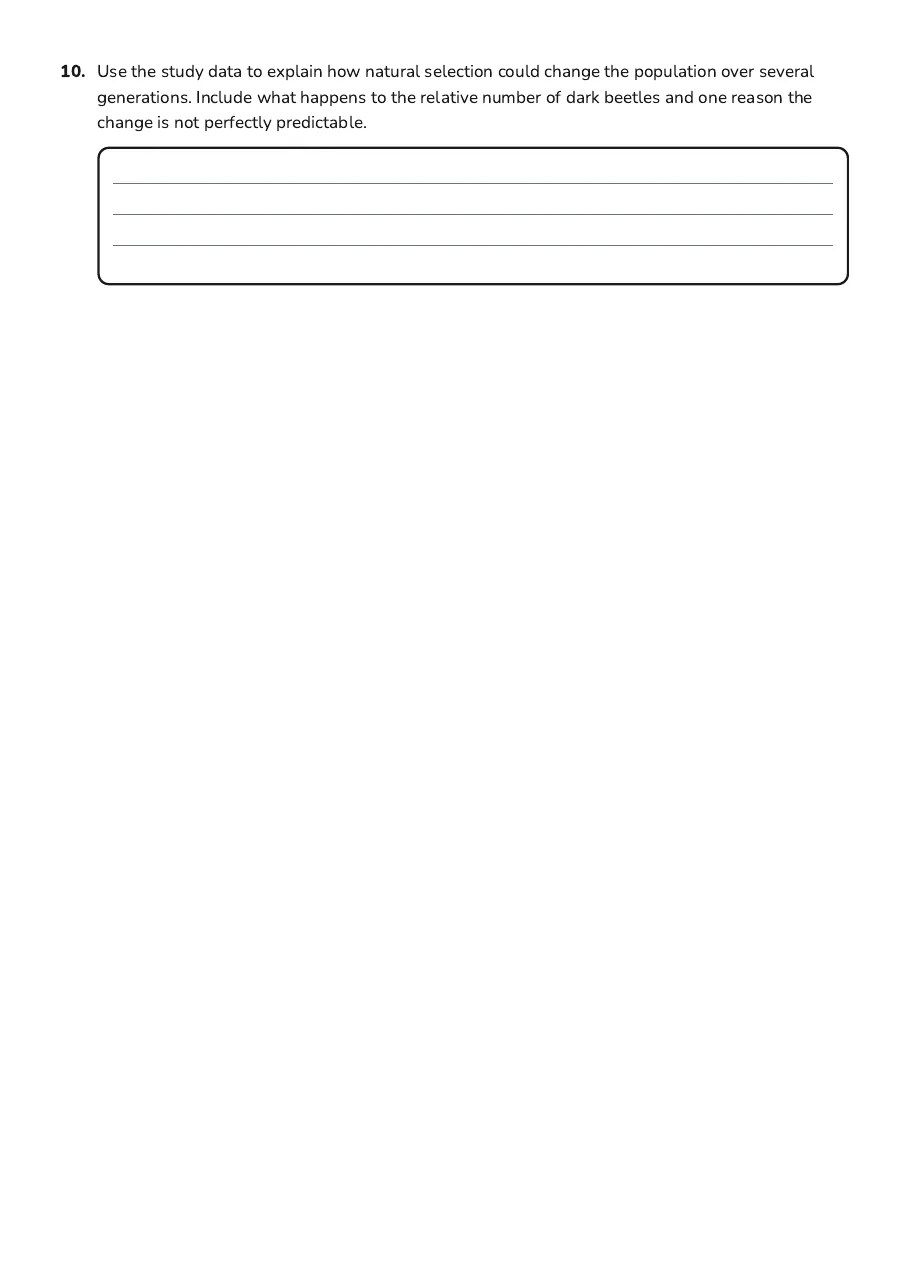
Researchers observed 100 beetles of each color. These percentages describe survival during one season; they are not guarantees for individual beetles.
Shell color
Beetles observed
Survival rate
Dark
100
80%
Light
100
30%
Build and test the models
For allele-probability questions, use the stated simplified assumptions: alleles combine randomly, and each offspring's outcome is independent unless a question says otherwise. A probability describes a chance, not a certain result.
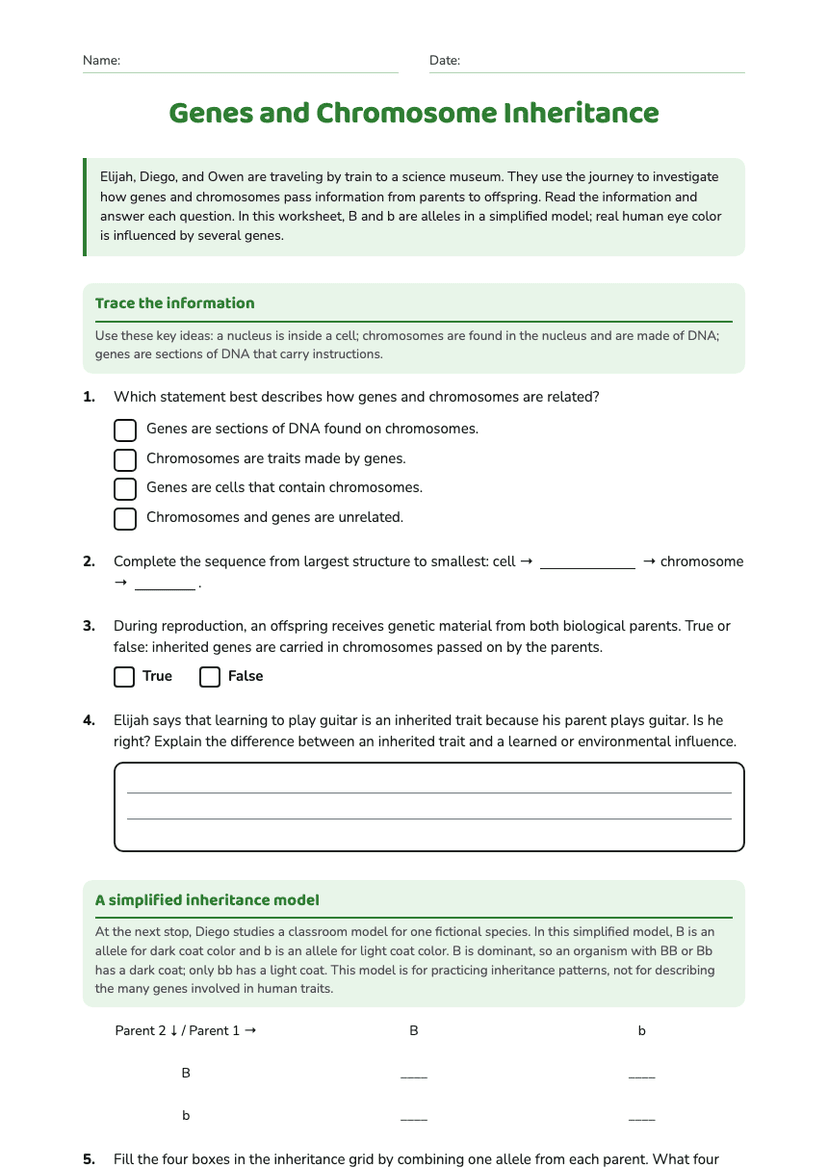
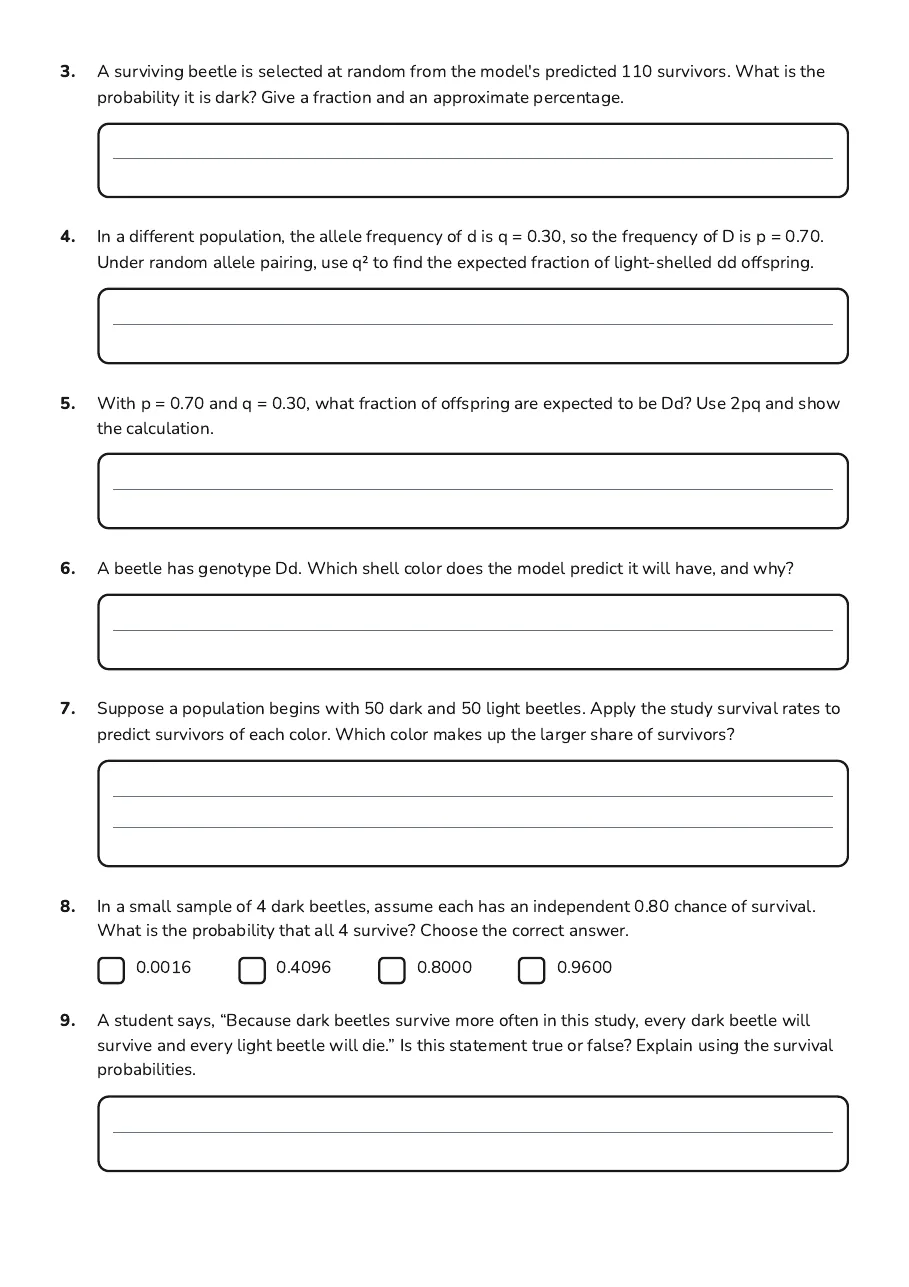
- 0.0016
- 0.4096
- 0.8000
- 0.9600
3 printable pages
Page 1
Page 2
Page 3
About This Worksheet
Free in Kuraplan
Sign up free, grab the PDF, and customize it for your class.
Print-Ready
Formatted for standard paper. Clean layout, easy to read.
AI-Generated
Created with Kuraplan's AI, designed for real classroom use.
For Teachers & Parents
Use in classrooms, for homework, tutoring, or homeschool.
Need a custom version of this worksheet?
Kuraplan's AI generates custom worksheets in seconds — differentiated for every learner, aligned to your curriculum.
Generate Custom Worksheets — FreeMore Science Worksheets
Organism Classification Models
Free
Organism Classification Model Building
Free
Genes and Traits Introduction
Free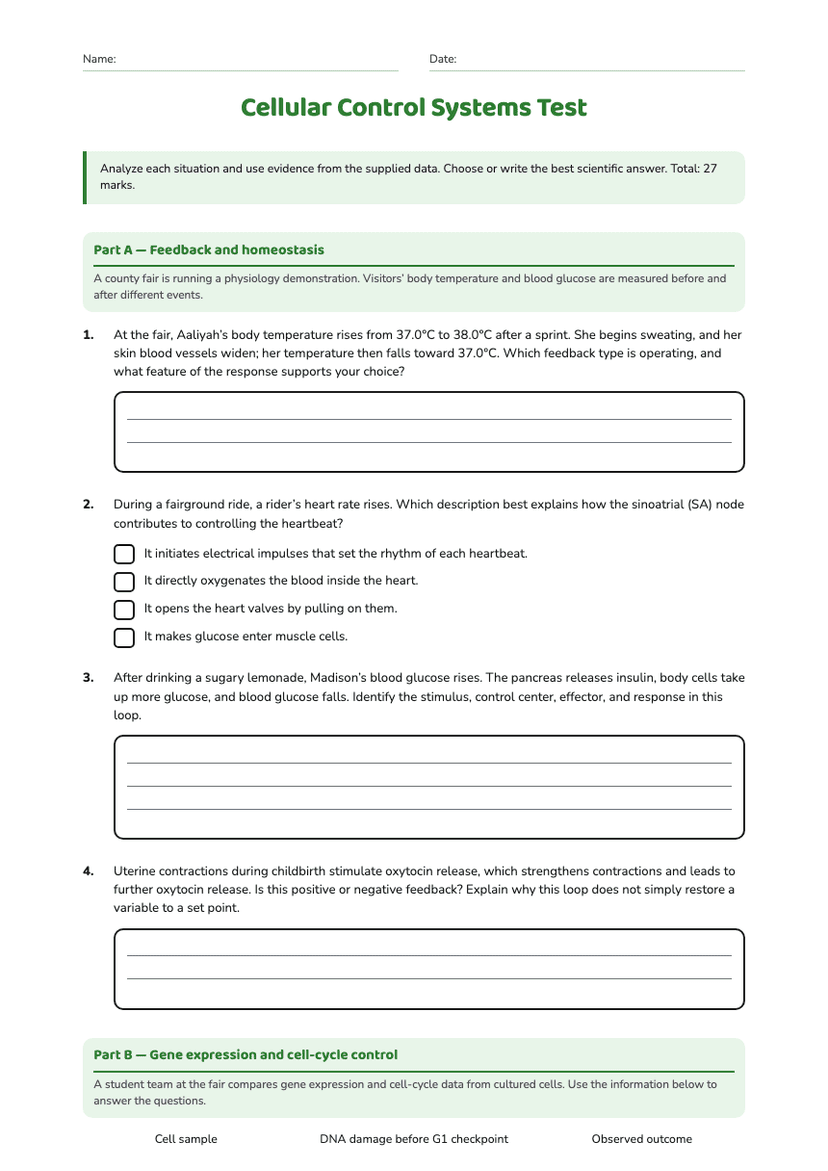
Cellular Control Systems Test
Free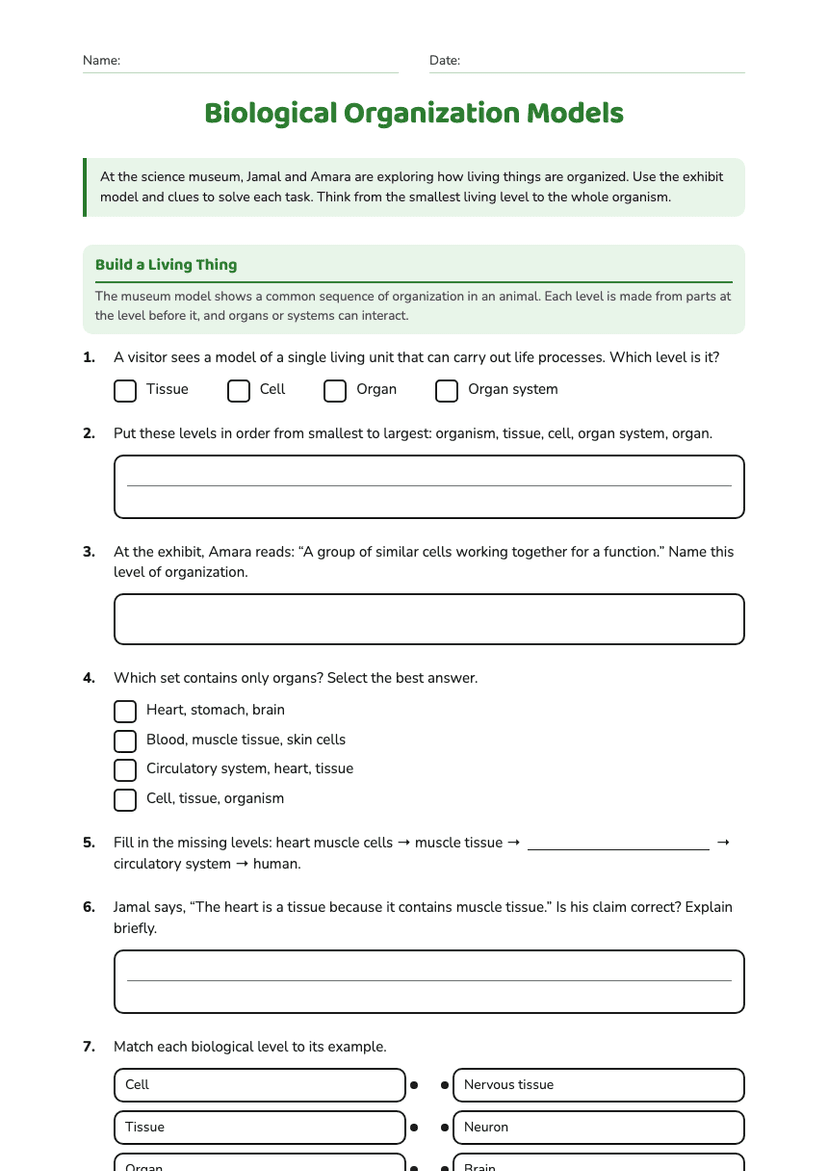
Biological Organization Models
Free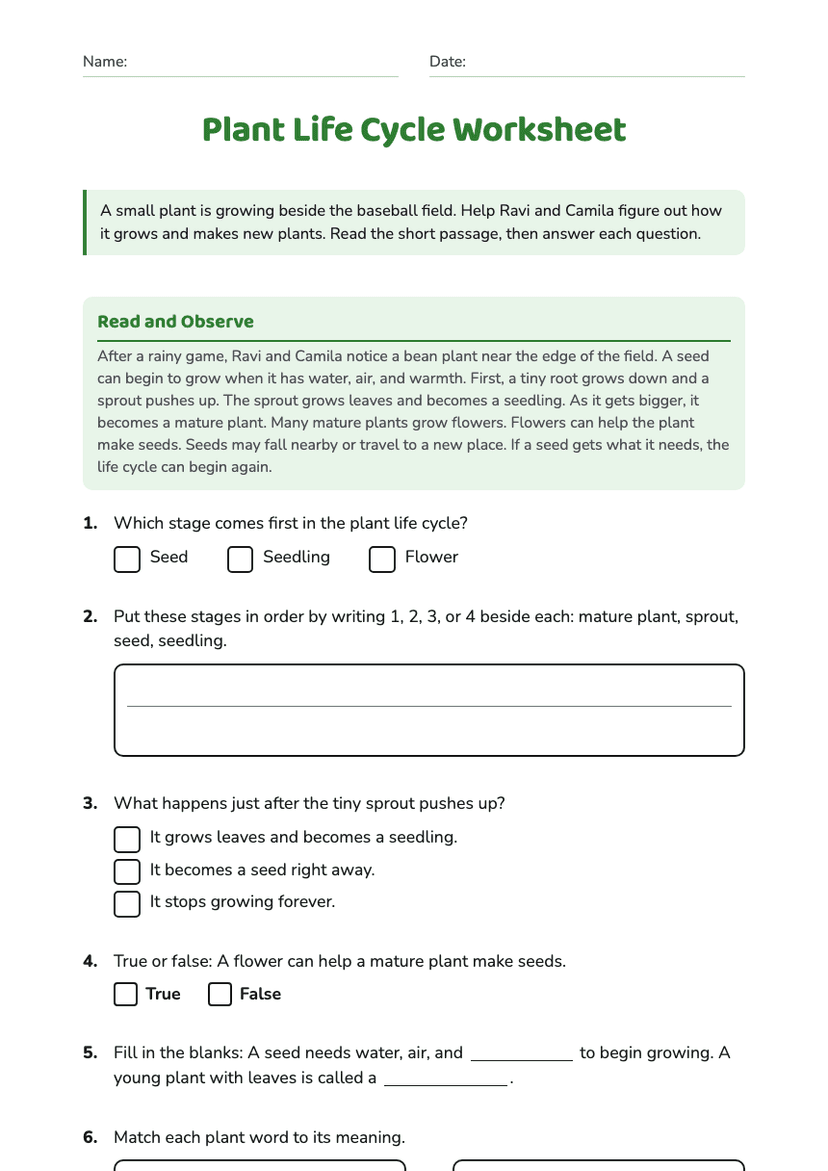
Plant Life Cycle Worksheet
Free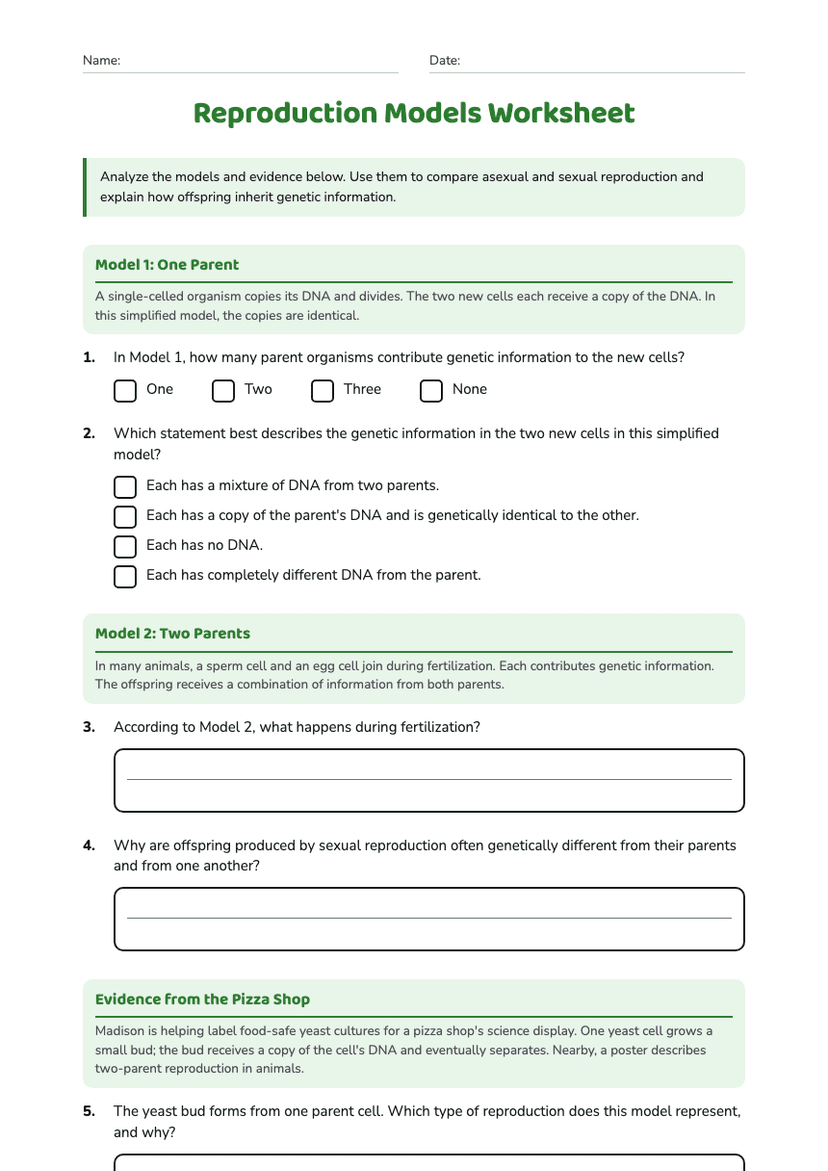
Reproduction Models Worksheet
Free