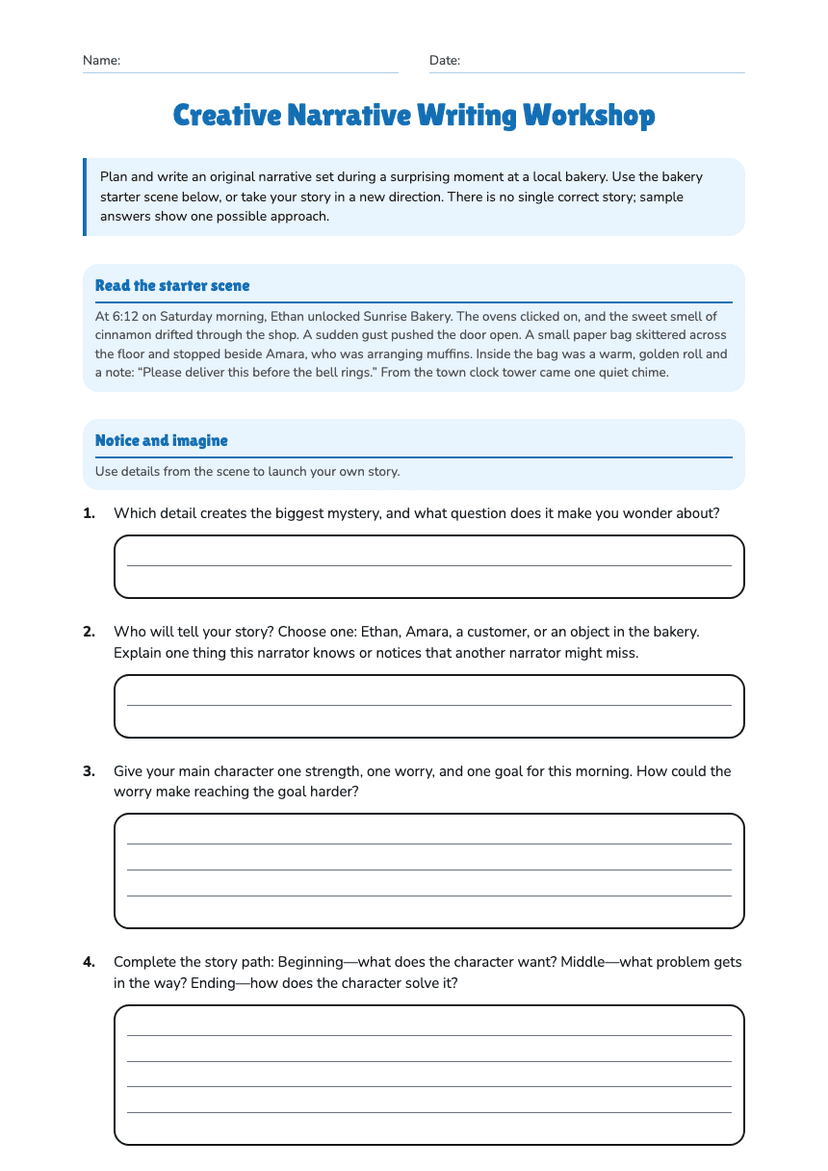
Personal Narrative Planner & Draft
A free english (ela) worksheet ready for your classroom. Open in Kuraplan to grab the print-ready PDF, customize it for your students, or generate a fresh version in seconds.
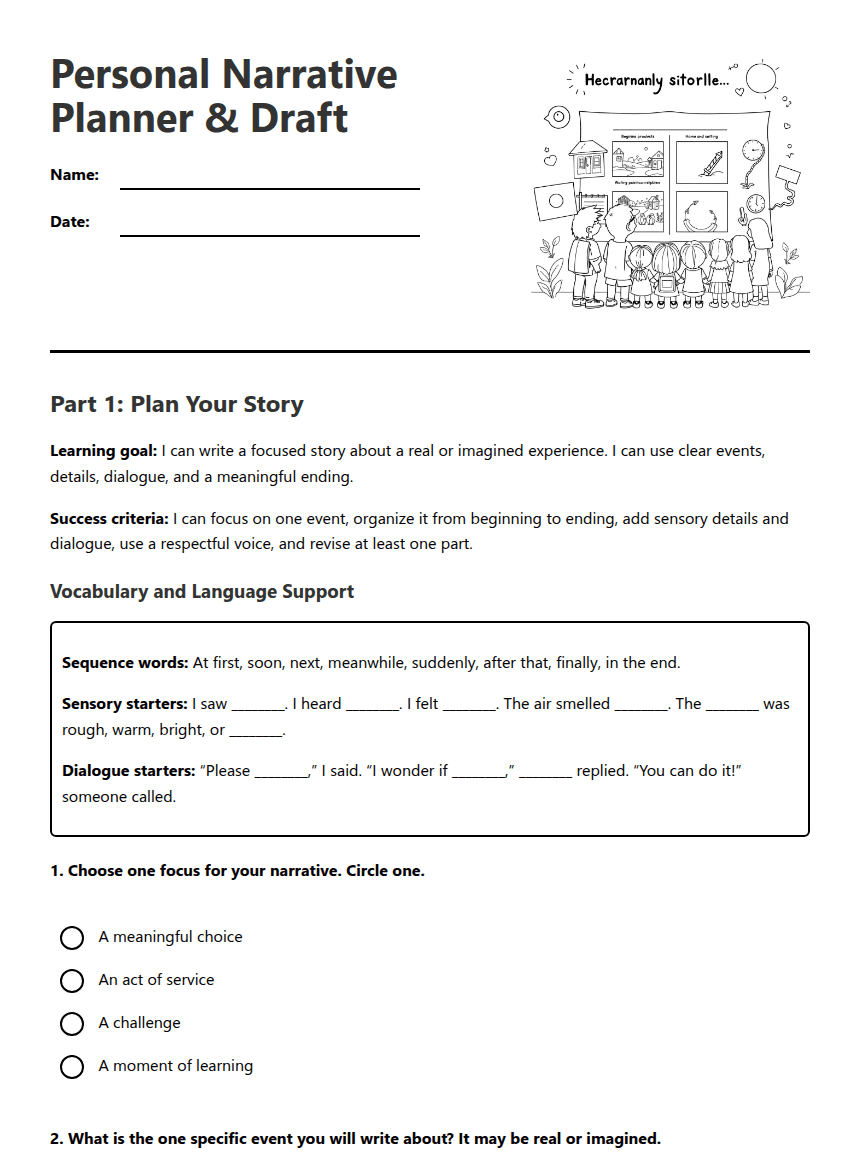
Personal Narrative Planner & Draft
Part 1: Plan Your Story
Learning goal: I can write a focused story about a real or imagined experience. I can use clear events, details, dialogue, and a meaningful ending.
Success criteria: I can focus on one event, organize it from beginning to ending, add sensory details and dialogue, use a respectful voice, and revise at least one part.
Vocabulary and Language Support
Sequence words: At first, soon, next, meanwhile, suddenly, after that, finally, in the end.
Sensory starters: I saw ________. I heard ________. I felt ________. The air smelled ________. The ________ was rough, warm, bright, or ________.
Dialogue starters: “Please ________,” I said. “I wonder if ________,” ________ replied. “You can do it!” someone called.
Beginning: Who is there? Where and when does it happen? What is the situation?
Middle: What important events happen? What problem or challenge develops?
Turning point: What choice, action, discovery, or change matters most?
Ending: How does the event end? What do you learn, decide, or understand?
Part 2: Draft and Improve
Writing directions: Begin by placing the reader in the moment. Develop the most important event with specific details. Use sequence words to guide the reader. End by showing why the experience matters.
Revision Checklist
Core expectations: Check each item after rereading.
My story focuses on one meaningful event. I have a clear beginning, middle, turning point, and ending. I used sequence words to show the order of events. I included specific sensory details. I included dialogue or planned dialogue that reveals character or moves the story forward. My tone is respectful, and my ending shows meaning or learning.Extension for advanced writers:
I used pacing purposefully by slowing down an important moment or speeding through a less important one. I tried a purposeful craft move, such as a brief flashback, a change in viewpoint, or dialogue that reveals motivation.Teacher Support Guide
Look for: A focused real or imagined event; a logical beginning, middle, turning point, and ending; descriptive details; sequence words; dialogue used for a purpose; a respectful tone; and a meaningful change, decision, or realization.
Support for EAL learners and diverse learners: Allow oral rehearsal with a partner, drawing or strongest-language notes before English drafting, sentence frames, a personal word bank, and a completed example. Confer briefly to narrow broad topics. Scribe key ideas when needed, provide the first planning box together, reduce the expected length, or offer a beginning-middle-ending storyboard.
Partner response prompts: “Where could you picture the event clearly?” and “Where could the writer add a detail or explain the meaning?” Students may read aloud, summarize orally, or give feedback using these prompts.
Extension: Invite advanced writers to experiment with pacing, a brief flashback, a shift in viewpoint, or dialogue that reveals motivation. Ask them to explain how the choice strengthens the narrative.
Quick evidence check: Review the plan and draft for clear event sequence and meaning. Check whether the student underlined a sensory detail, circled a sequence word, boxed dialogue, and made at least one revision.
About This Worksheet
Free in Kuraplan
Sign up free, grab the PDF, and customize it for your class.
Print-Ready
Formatted for standard paper. Clean layout, easy to read.
AI-Generated
Created with Kuraplan's AI, designed for real classroom use.
For Teachers & Parents
Use in classrooms, for homework, tutoring, or homeschool.
Need a custom version of this worksheet?
Kuraplan's AI generates custom worksheets in seconds — differentiated for every learner, aligned to your curriculum.
Generate Custom Worksheets — FreeMore English (ELA) Worksheets
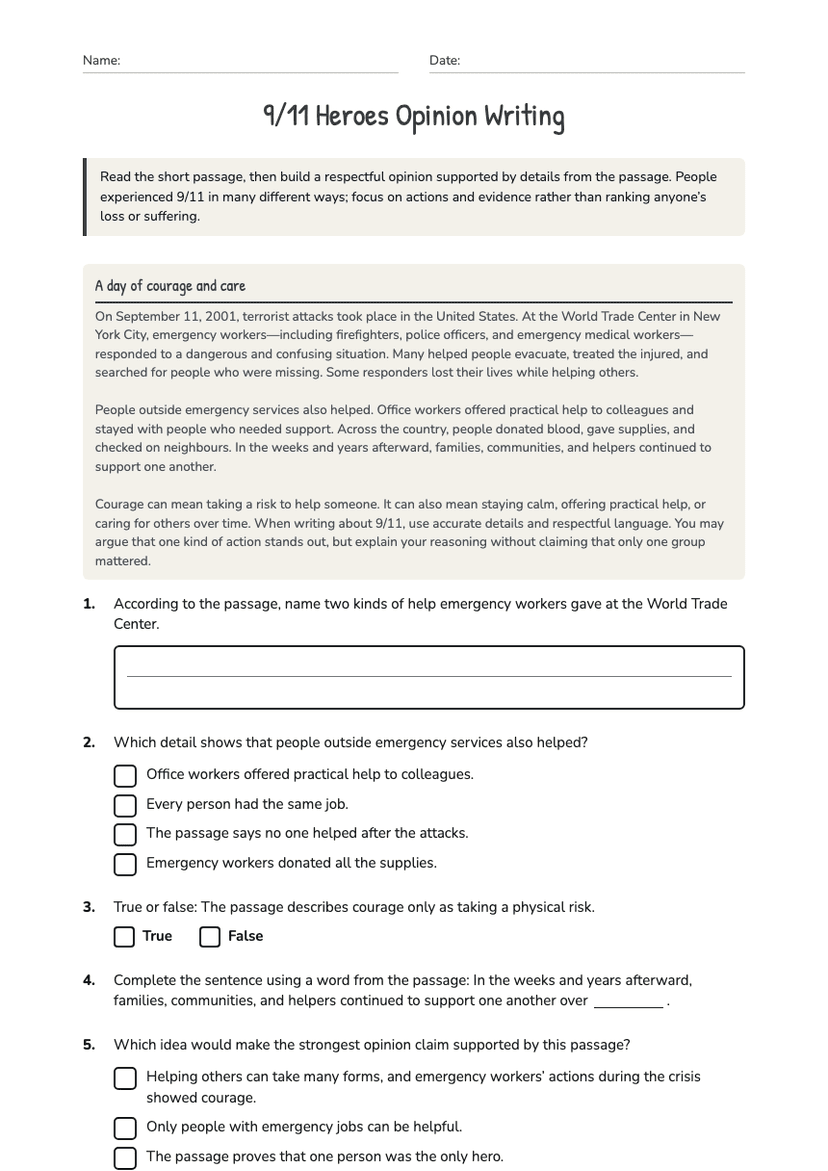
9/11 Heroes Opinion Writing
Free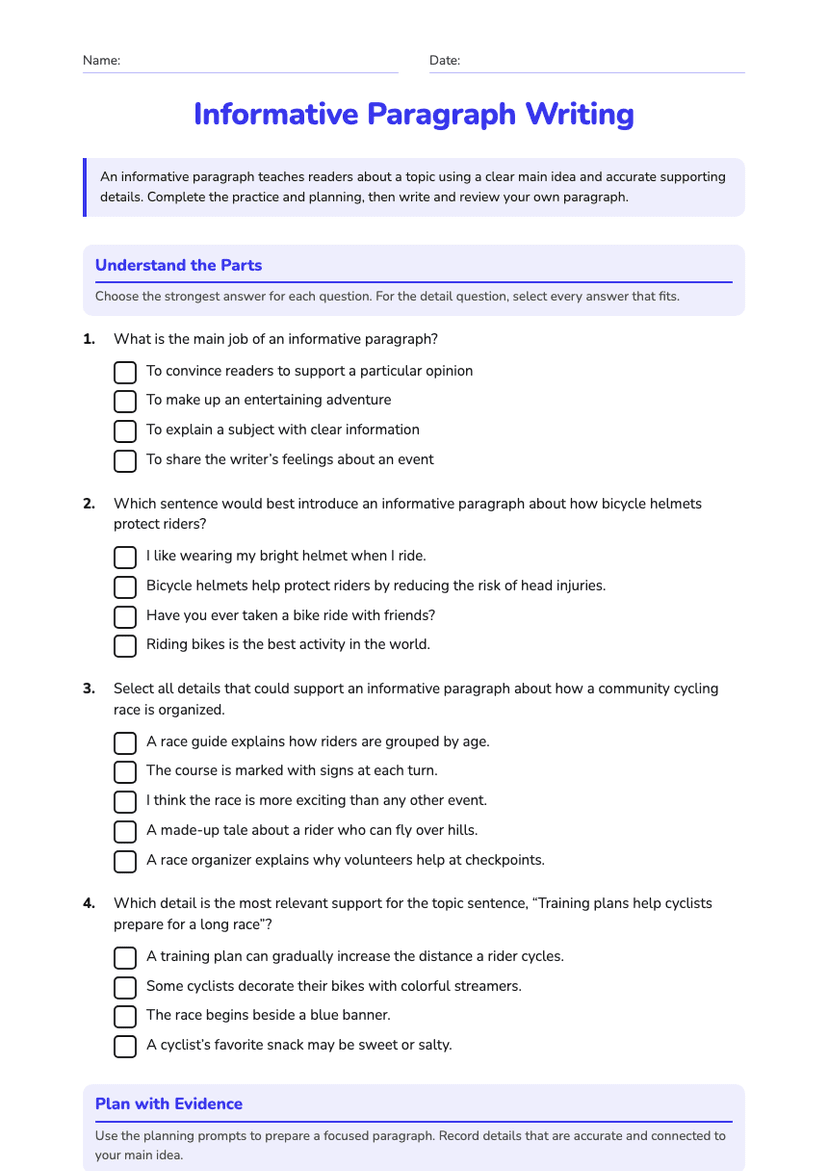
Informative Paragraph Writing
Free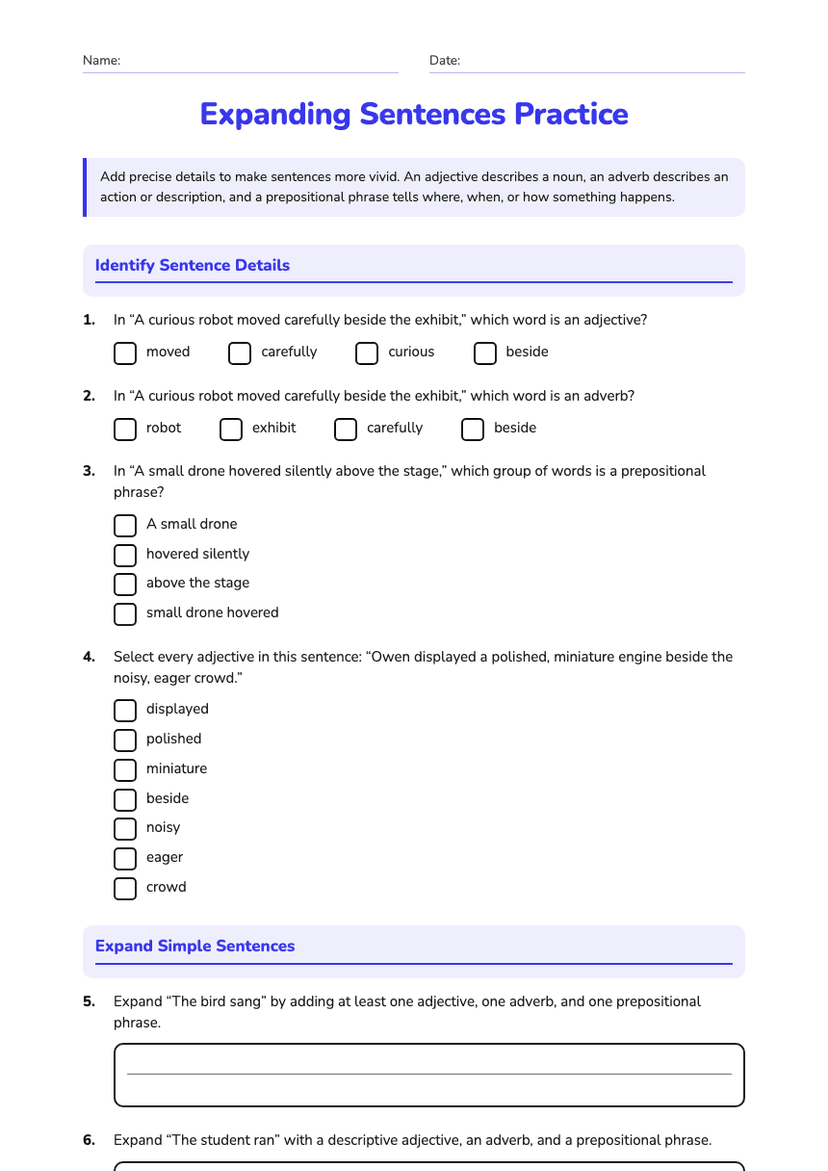
Expanding Sentences Practice
Free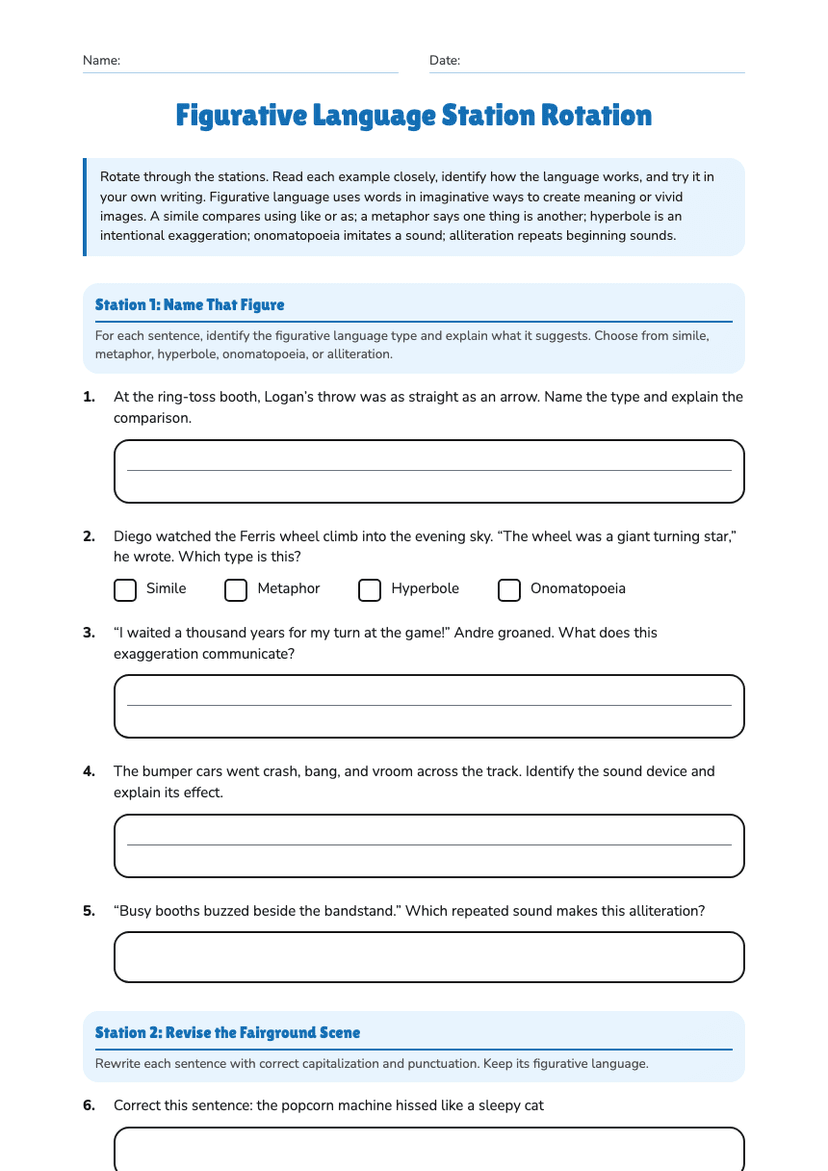
Figurative Language Station Rotation
Free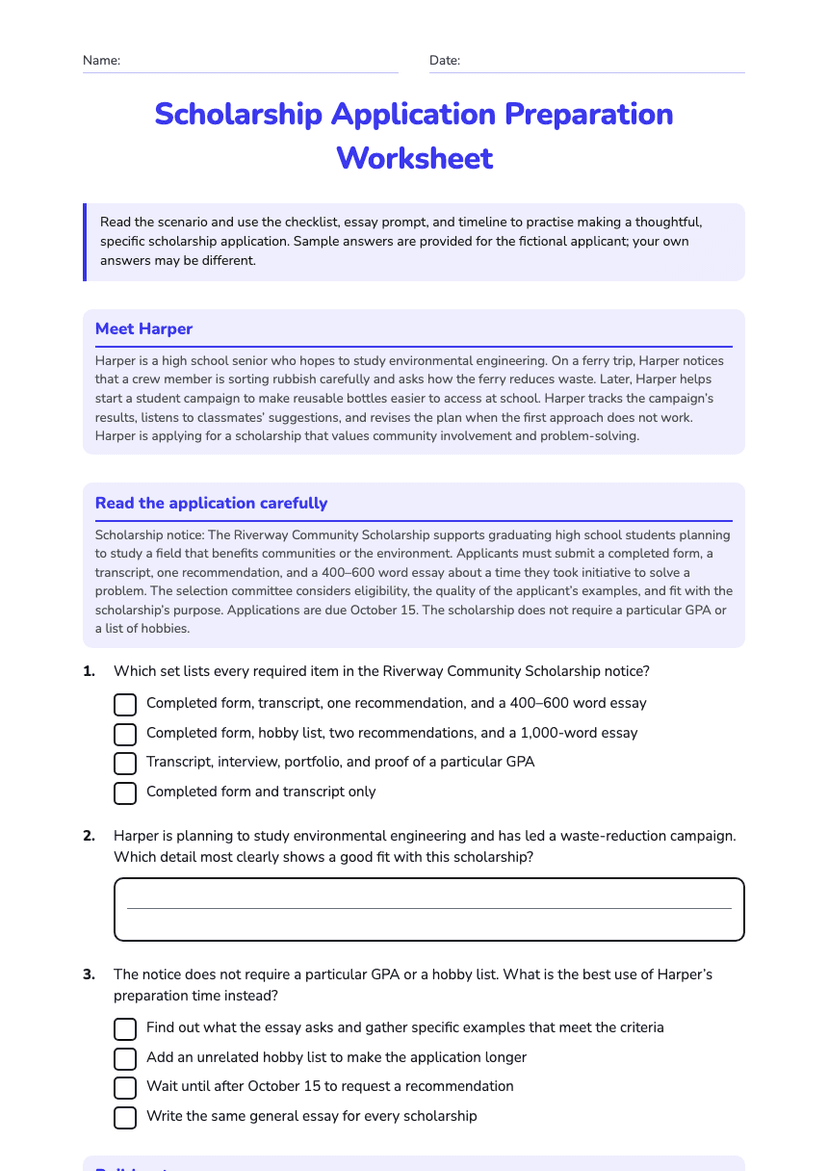
Scholarship Application Preparation Worksheet
Free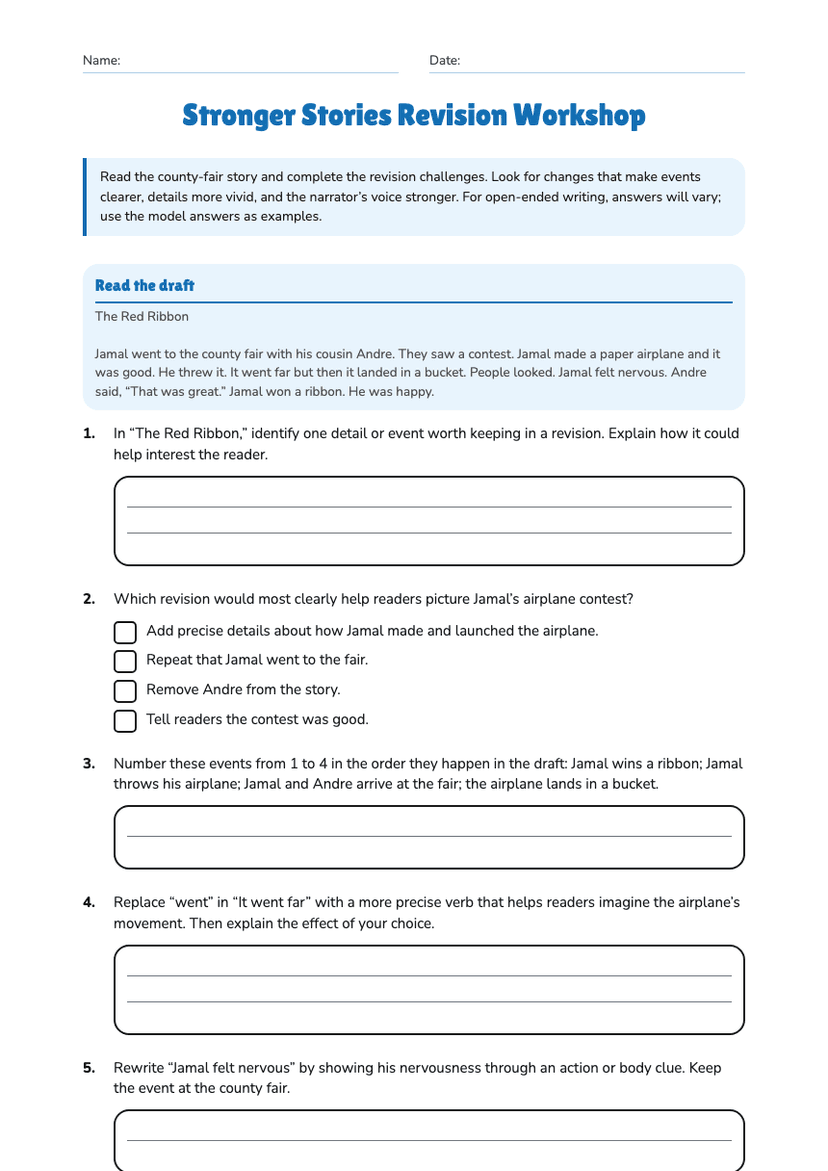
Stronger Stories Revision Workshop
Free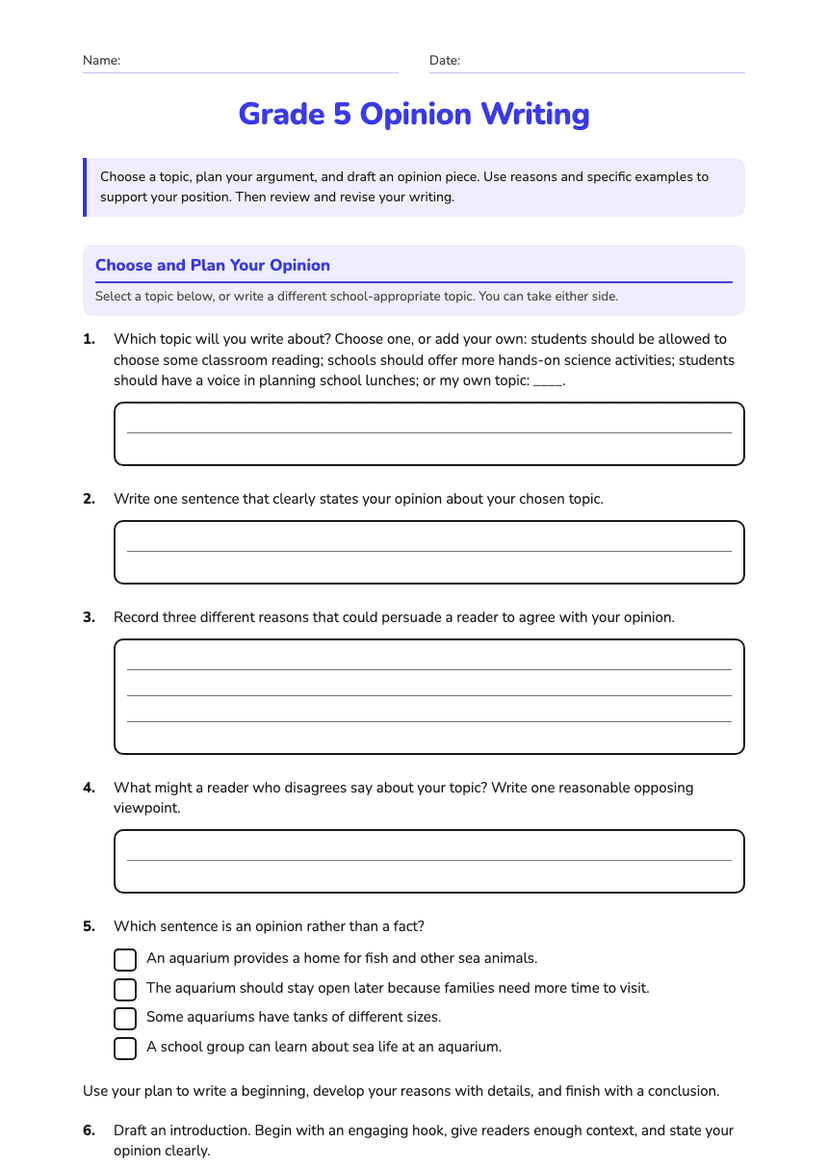
Grade 5 Opinion Writing
Free