Seismic Waves Slinky Lab
A free science worksheet ready for your classroom. Open in Kuraplan to grab the print-ready PDF, customize it for your students, or generate a fresh version in seconds.
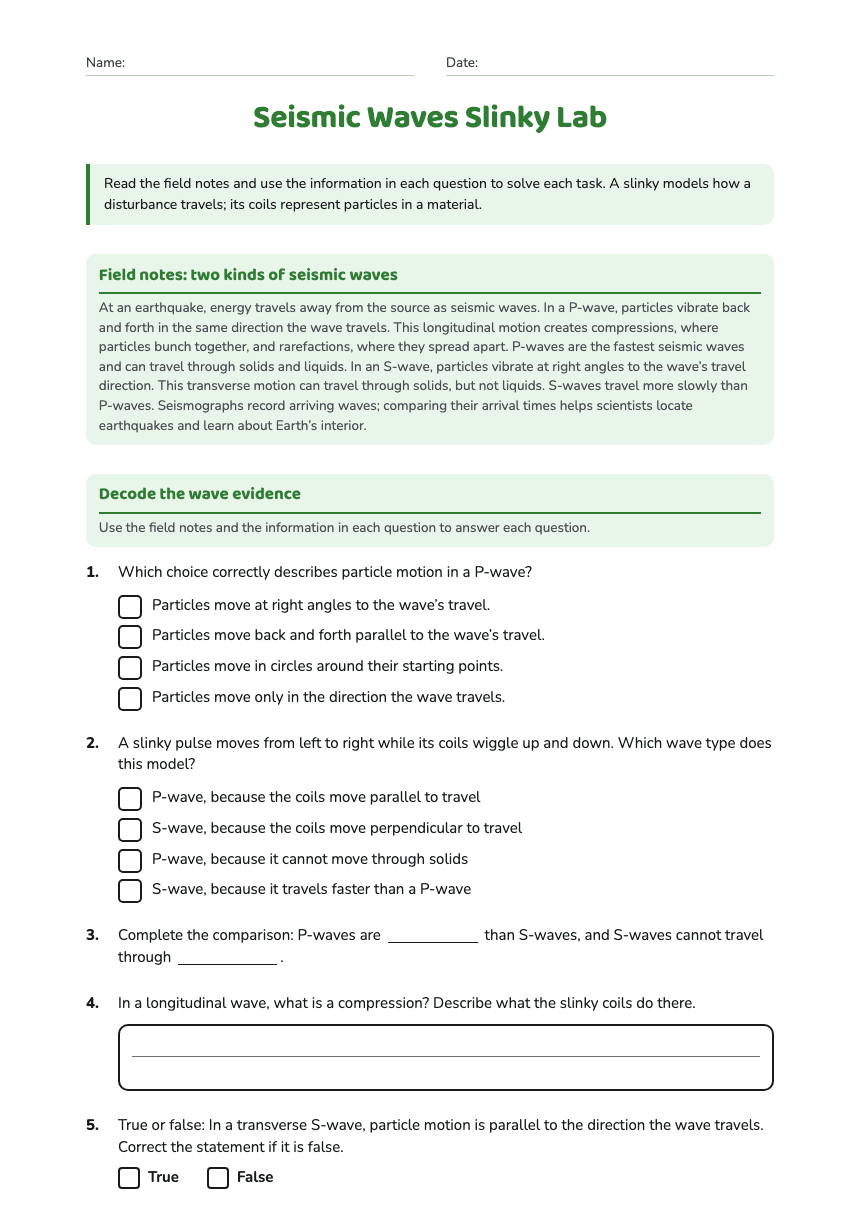
Seismic Waves Slinky Lab
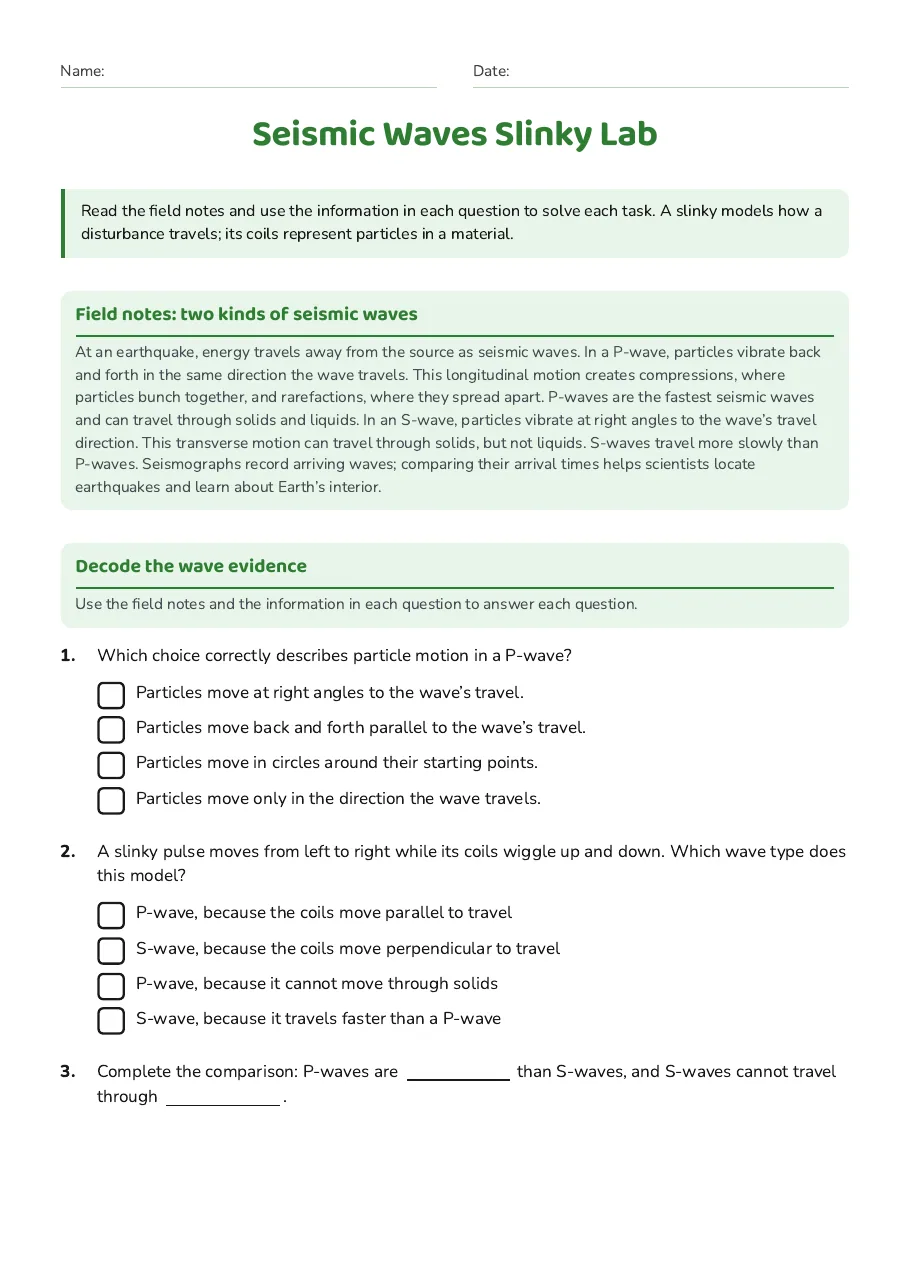
Field notes: two kinds of seismic waves
At an earthquake, energy travels away from the source as seismic waves. In a P-wave, particles vibrate back and forth in the same direction the wave travels. This longitudinal motion creates compressions, where particles bunch together, and rarefactions, where they spread apart. P-waves are the fastest seismic waves and can travel through solids and liquids. In an S-wave, particles vibrate at right angles to the wave’s travel direction. This transverse motion can travel through solids, but not liquids. S-waves travel more slowly than P-waves. Seismographs record arriving waves; comparing their arrival times helps scientists locate earthquakes and learn about Earth’s interior.
Decode the wave evidence
Use the field notes and the information in each question to answer each question.
- Particles move at right angles to the wave’s travel.
- Particles move back and forth parallel to the wave’s travel.
- Particles move in circles around their starting points.
- Particles move only in the direction the wave travels.
- P-wave, because the coils move parallel to travel
- S-wave, because the coils move perpendicular to travel
- P-wave, because it cannot move through solids
- S-wave, because it travels faster than a P-wave
2 printable pages
Page 1
Page 2
About This Worksheet
Free in Kuraplan
Sign up free, grab the PDF, and customize it for your class.
Print-Ready
Formatted for standard paper. Clean layout, easy to read.
AI-Generated
Created with Kuraplan's AI, designed for real classroom use.
For Teachers & Parents
Use in classrooms, for homework, tutoring, or homeschool.
Need a custom version of this worksheet?
Kuraplan's AI generates custom worksheets in seconds — differentiated for every learner, aligned to your curriculum.
Generate Custom Worksheets — FreeMore Science Worksheets
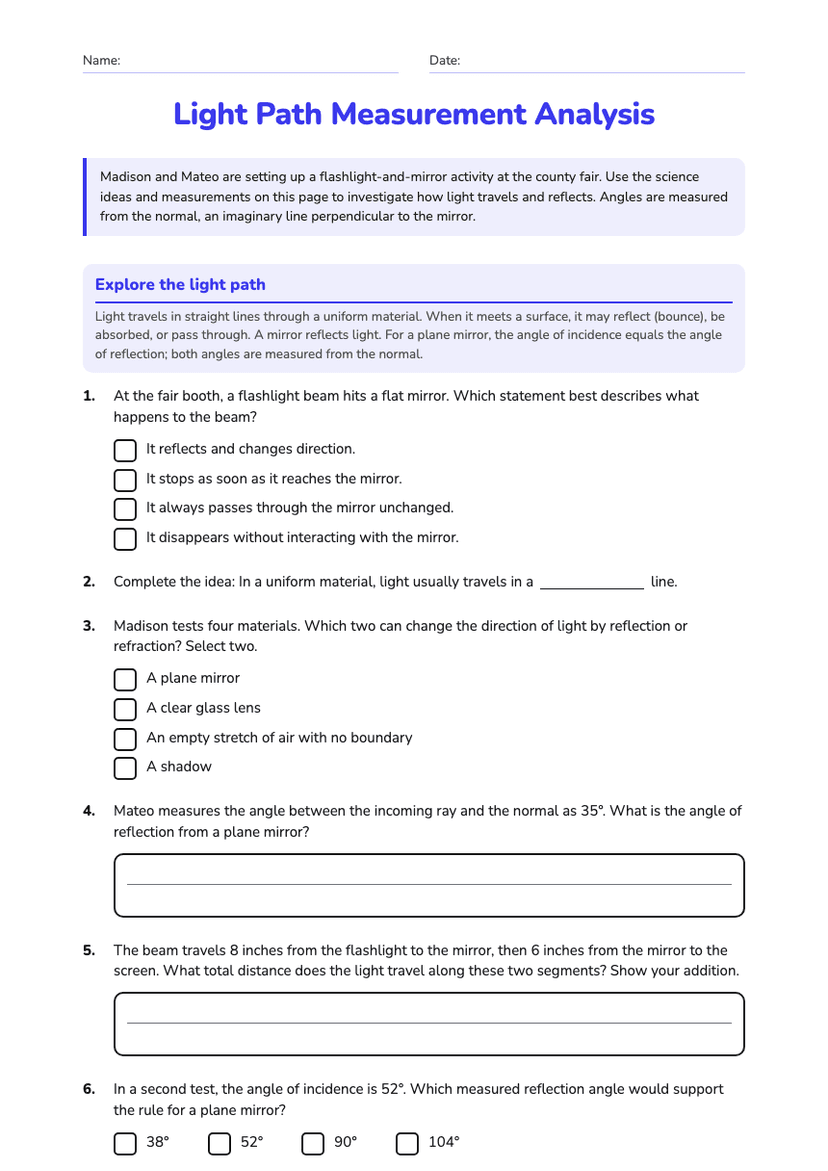
Light Path Measurement Analysis
Free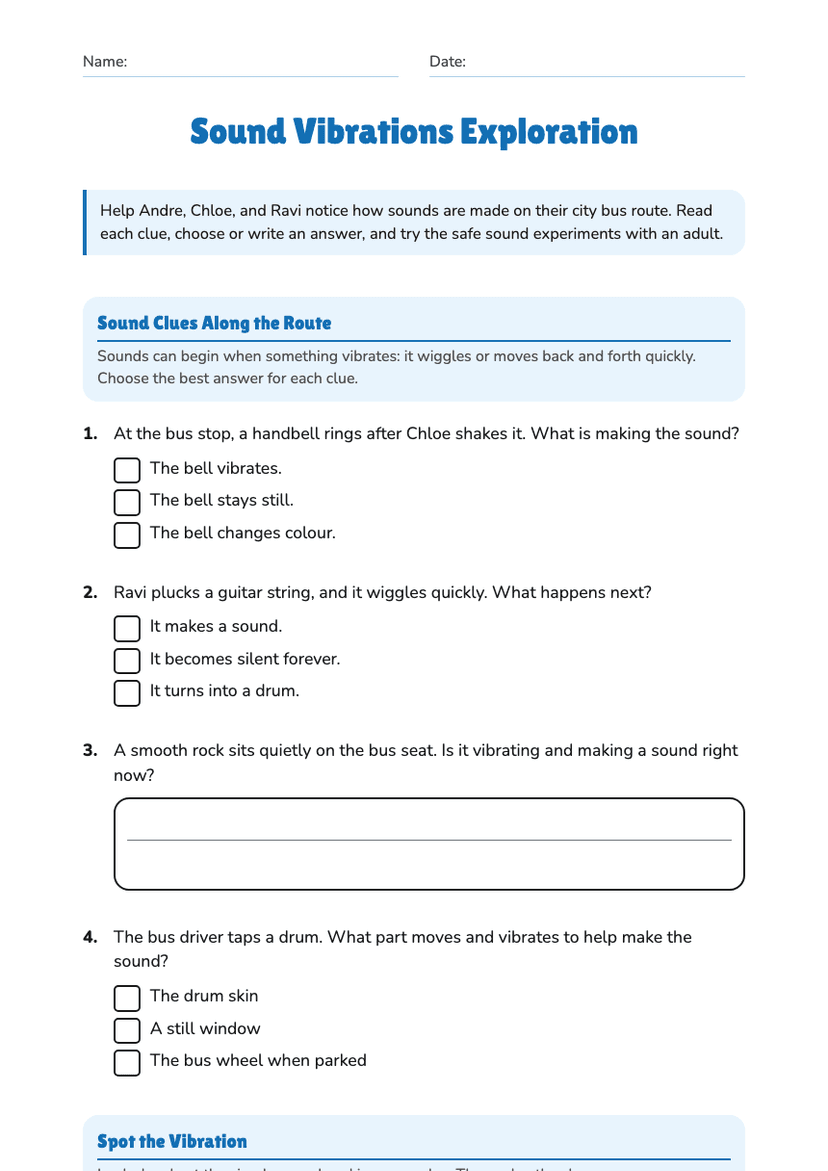
Sound Vibrations Exploration
Free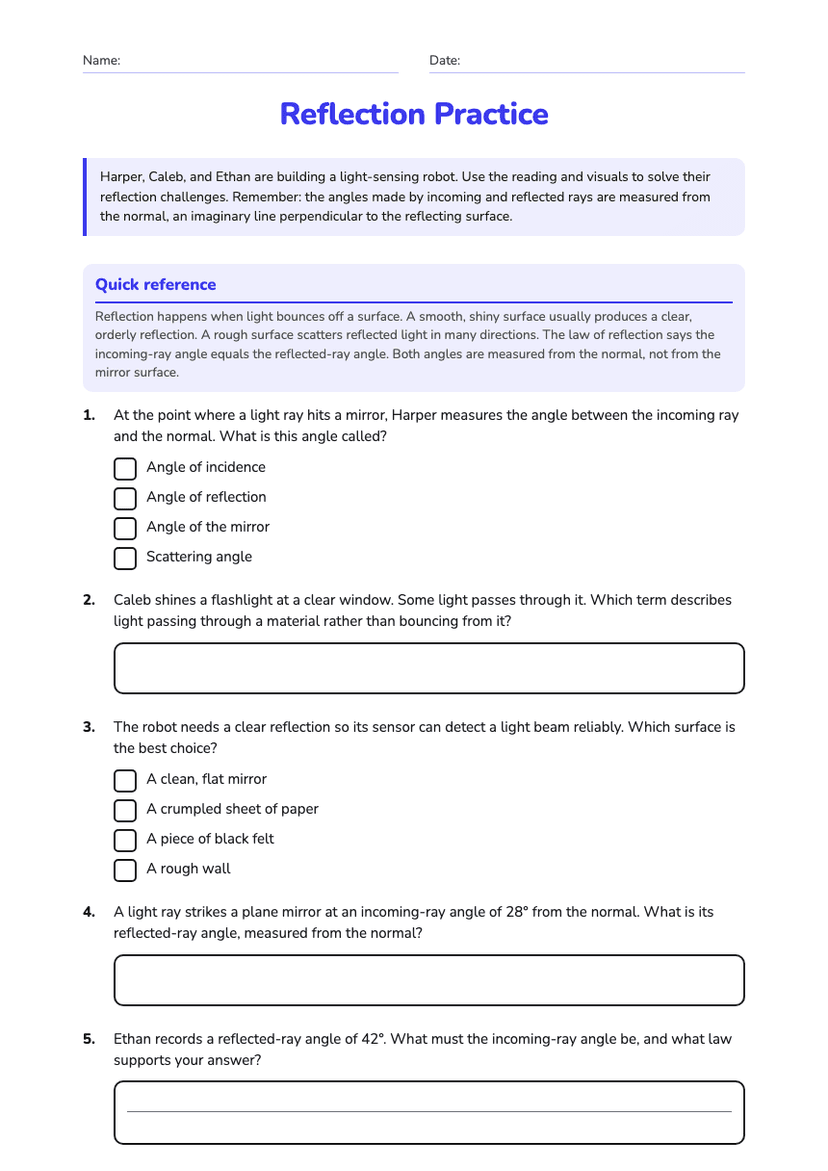
Reflection Practice
Free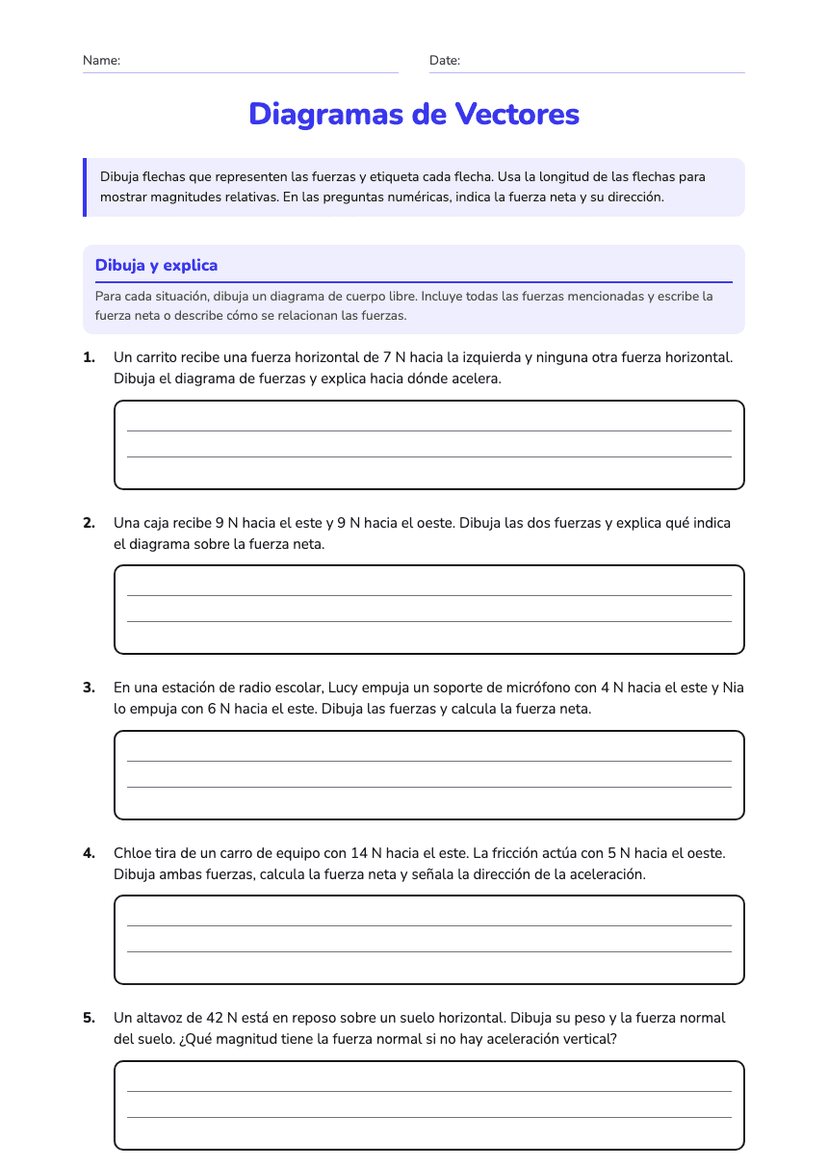
Diagramas de Vectores
Free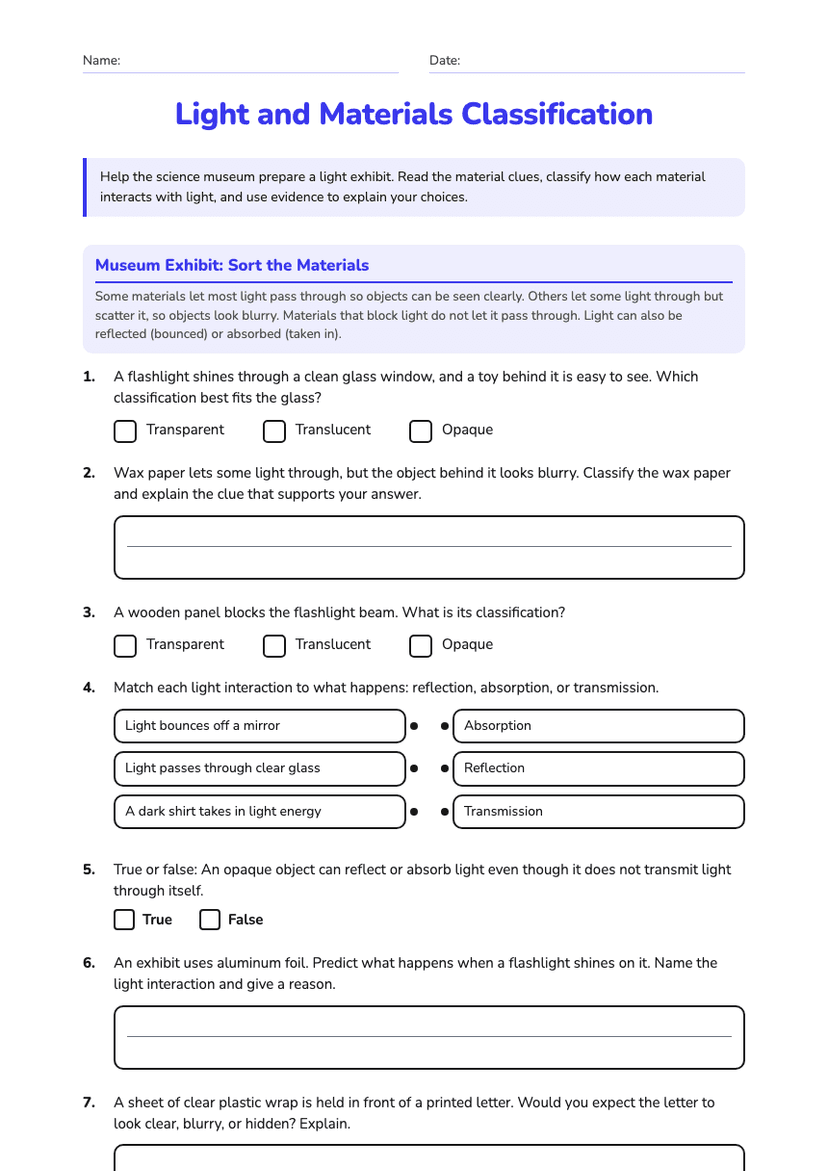
Light and Materials Classification
Free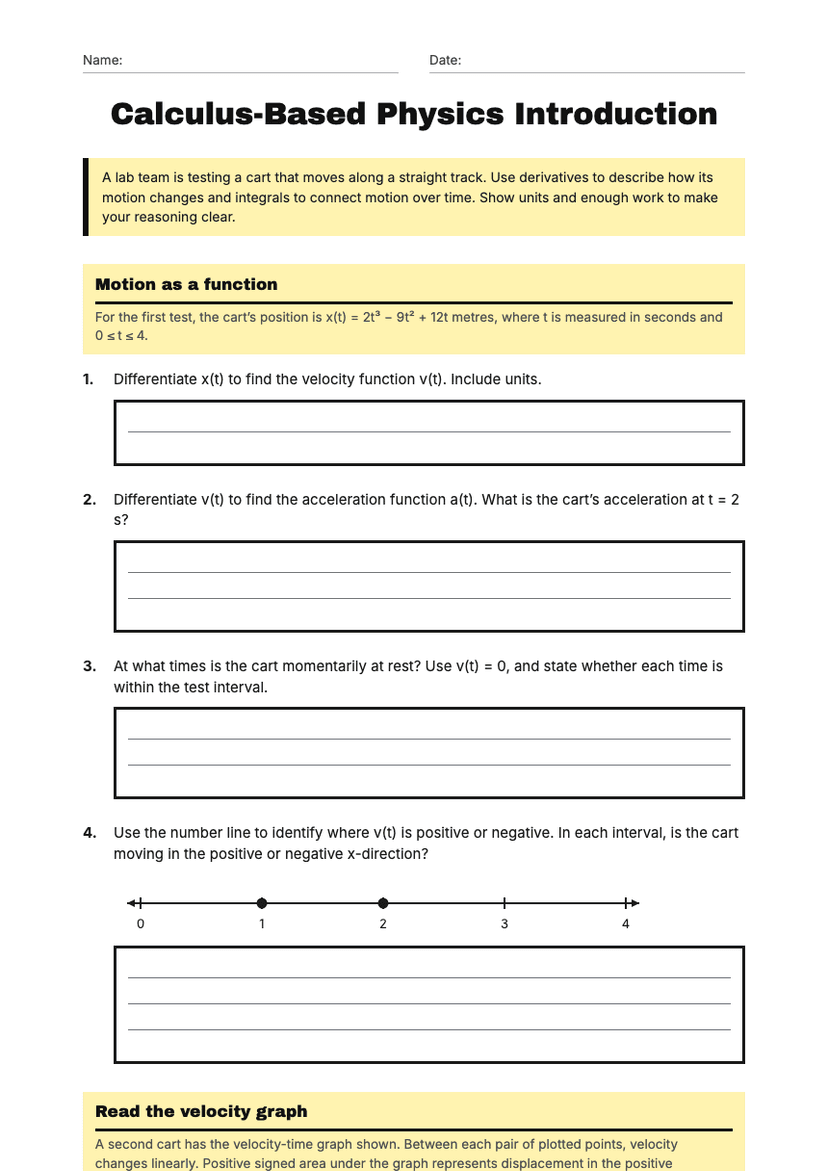
Calculus-Based Physics Introduction
Free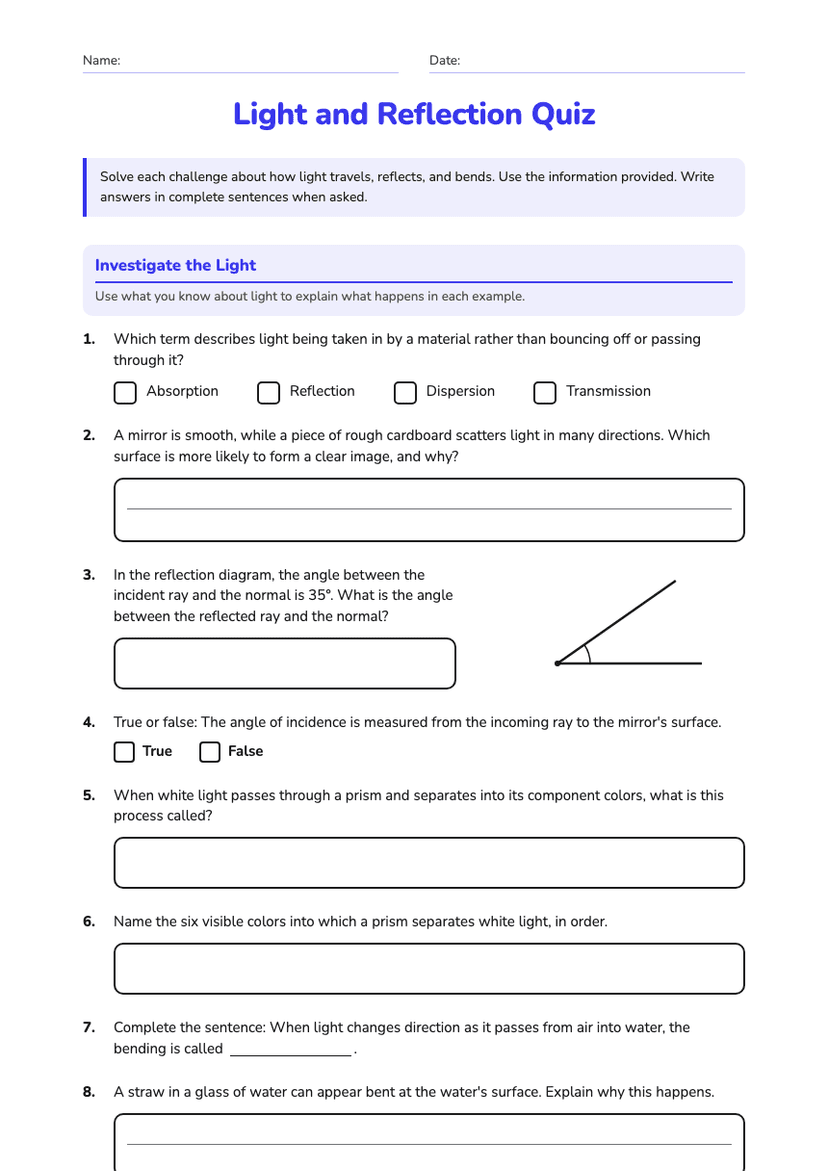
Light and Reflection Quiz
Free