Grasslands Ecosystem Worksheet
A free science worksheet ready for your classroom. Open in Kuraplan to grab the print-ready PDF, customize it for your students, or generate a fresh version in seconds.
Grasslands Ecosystem Worksheet
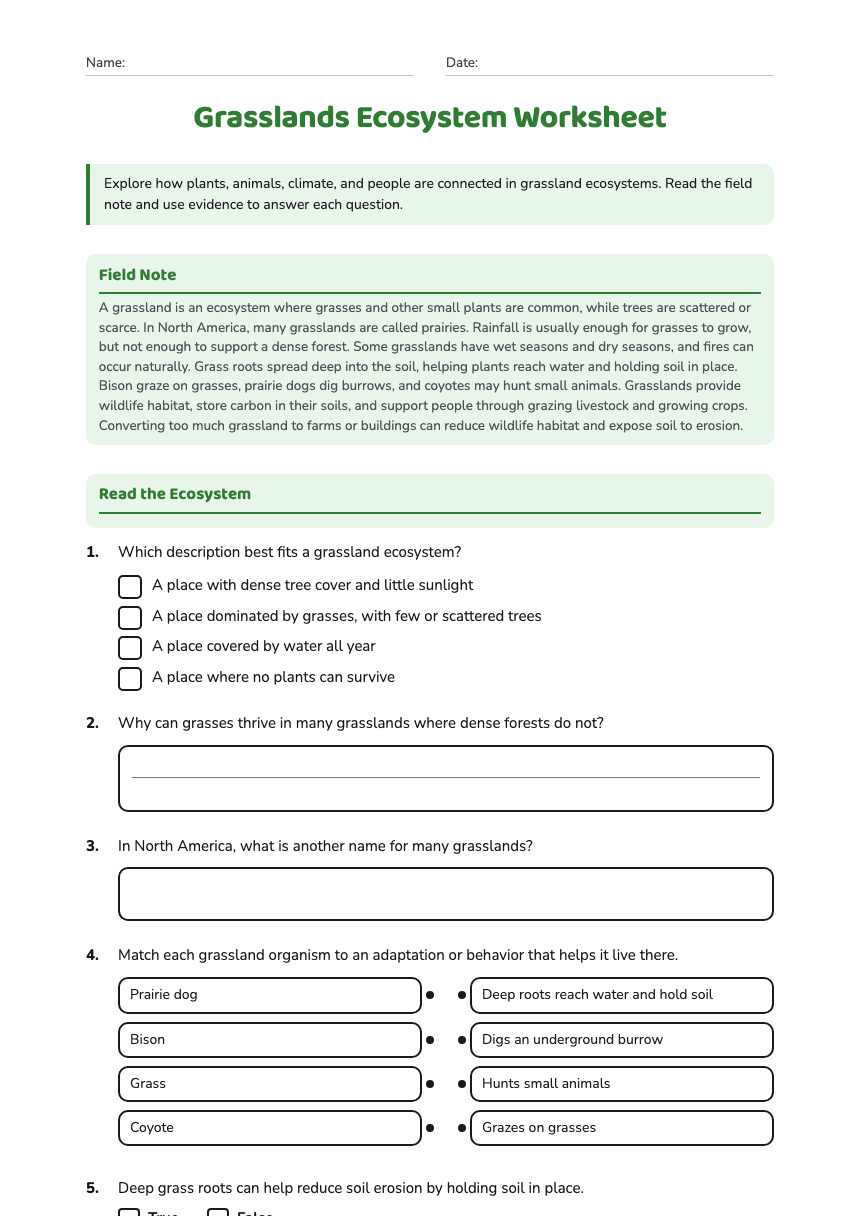
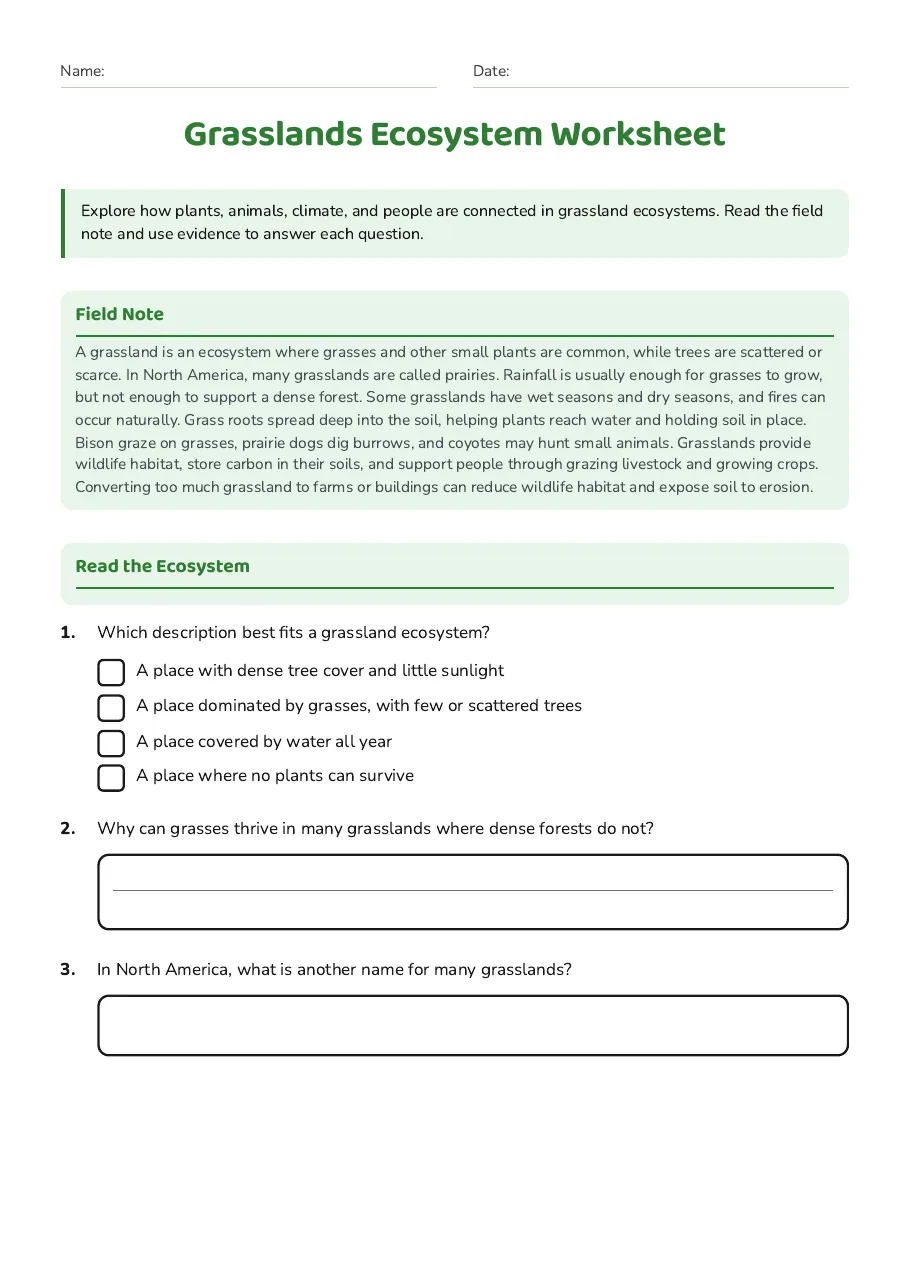
Field Note
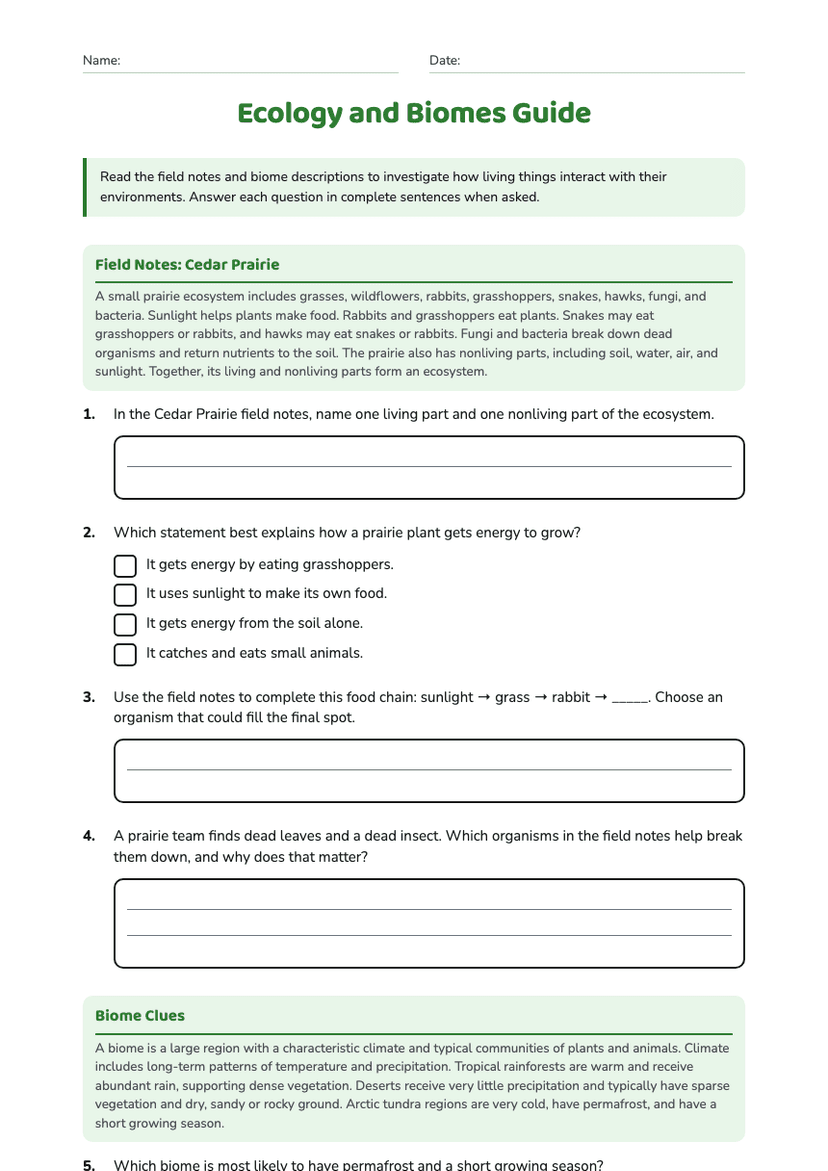
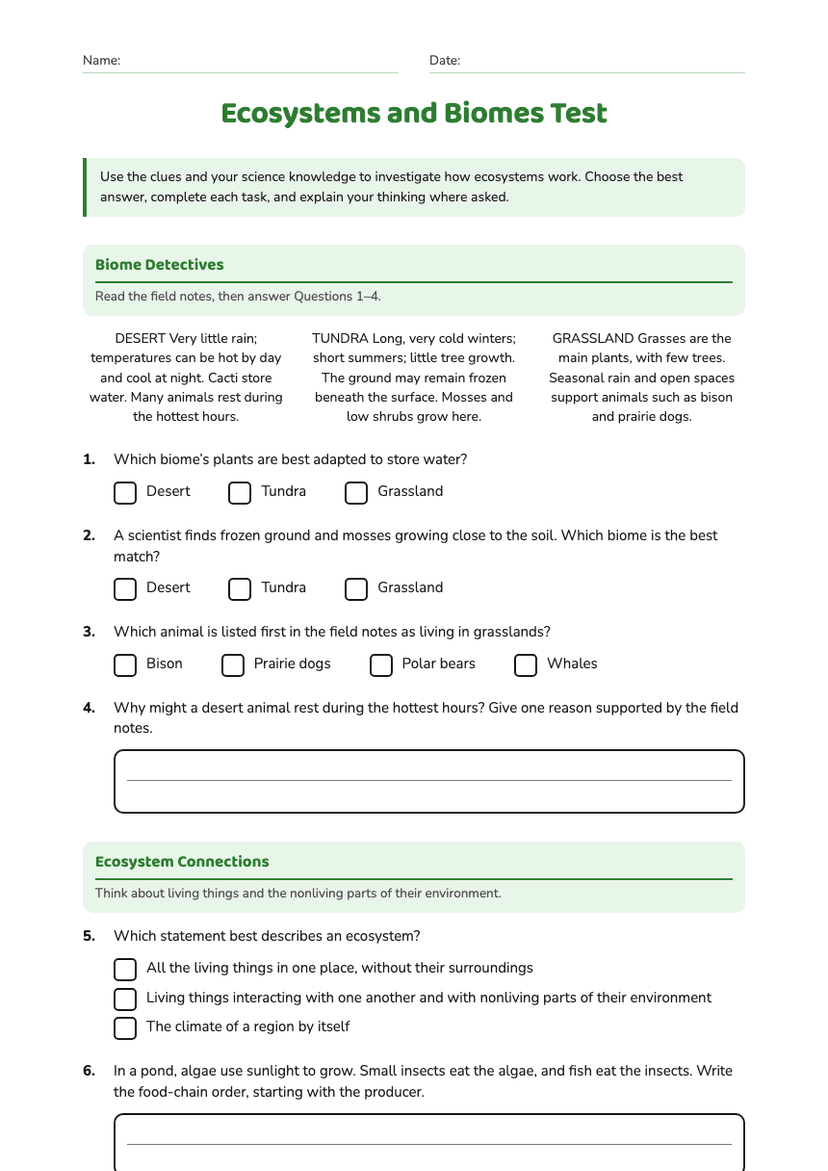
A grassland is an ecosystem where grasses and other small plants are common, while trees are scattered or scarce. In North America, many grasslands are called prairies. Rainfall is usually enough for grasses to grow, but not enough to support a dense forest. Some grasslands have wet seasons and dry seasons, and fires can occur naturally. Grass roots spread deep into the soil, helping plants reach water and holding soil in place. Bison graze on grasses, prairie dogs dig burrows, and coyotes may hunt small animals. Grasslands provide wildlife habitat, store carbon in their soils, and support people through grazing livestock and growing crops. Converting too much grassland to farms or buildings can reduce wildlife habitat and expose soil to erosion.
Read the Ecosystem
- A place with dense tree cover and little sunlight
- A place dominated by grasses, with few or scattered trees
- A place covered by water all year
- A place where no plants can survive
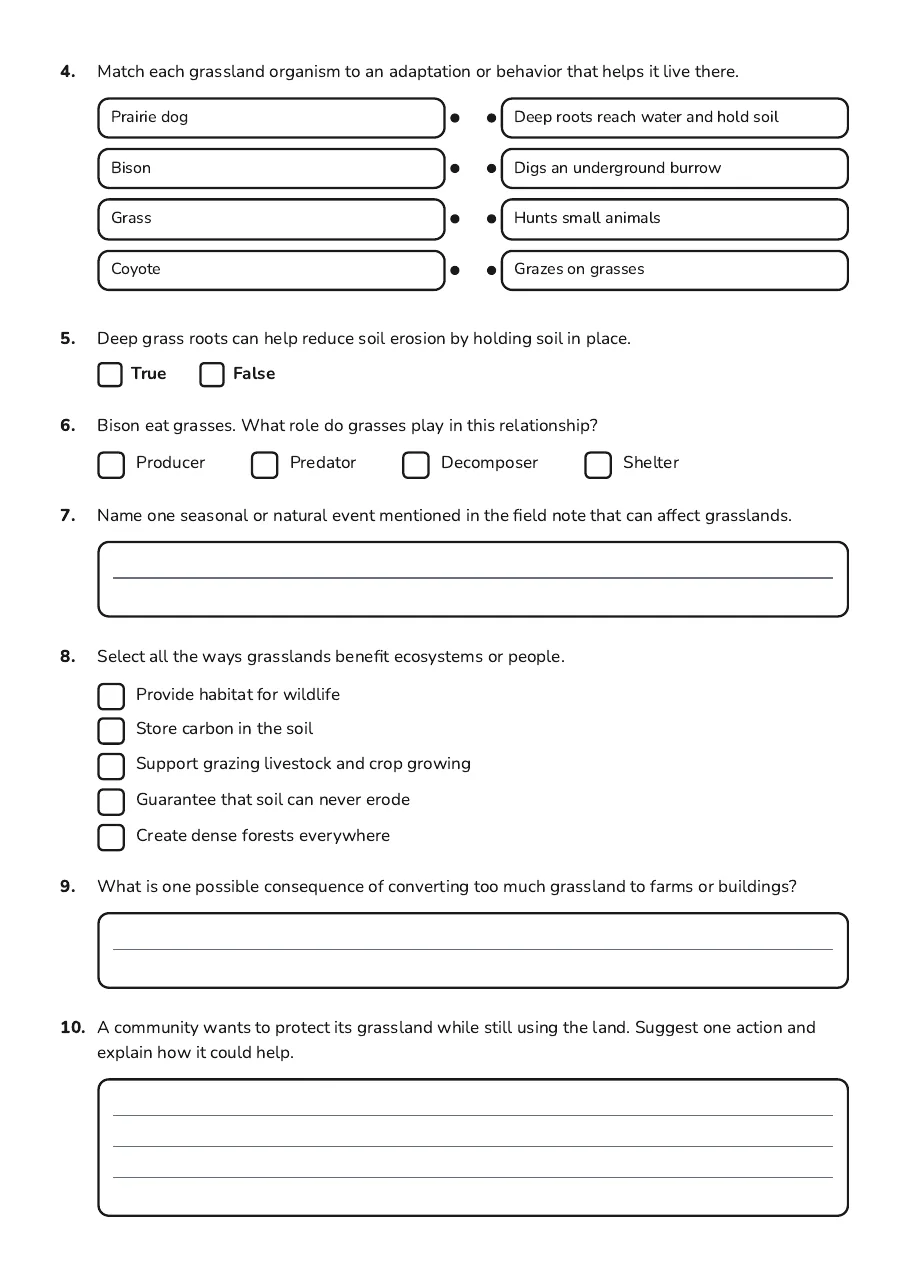
- Prairie dog
- Bison
- Grass
- Coyote
- Deep roots reach water and hold soil
- Digs an underground burrow
- Hunts small animals
- Grazes on grasses
- Producer
- Predator
- Decomposer
- Shelter
- Provide habitat for wildlife
- Store carbon in the soil
- Support grazing livestock and crop growing
- Guarantee that soil can never erode
- Create dense forests everywhere
2 printable pages
Page 1
Page 2
About This Worksheet
Free in Kuraplan
Sign up free, grab the PDF, and customize it for your class.
Print-Ready
Formatted for standard paper. Clean layout, easy to read.
AI-Generated
Created with Kuraplan's AI, designed for real classroom use.
For Teachers & Parents
Use in classrooms, for homework, tutoring, or homeschool.
Need a custom version of this worksheet?
Kuraplan's AI generates custom worksheets in seconds — differentiated for every learner, aligned to your curriculum.
Generate Custom Worksheets — Free