Aerobic Cycle Tempo Training
A free health worksheet ready for your classroom. Open in Kuraplan to grab the print-ready PDF, customize it for your students, or generate a fresh version in seconds.
Aerobic Cycle Tempo Training
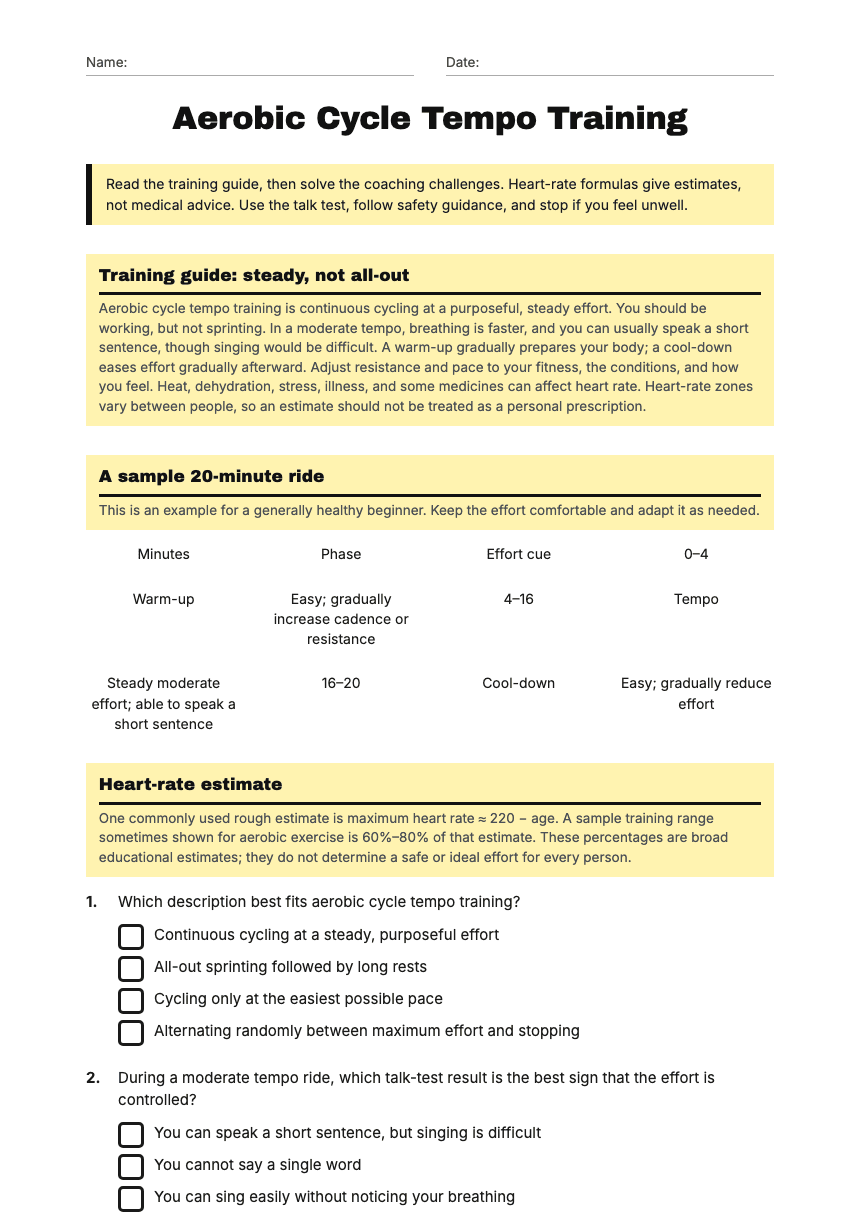
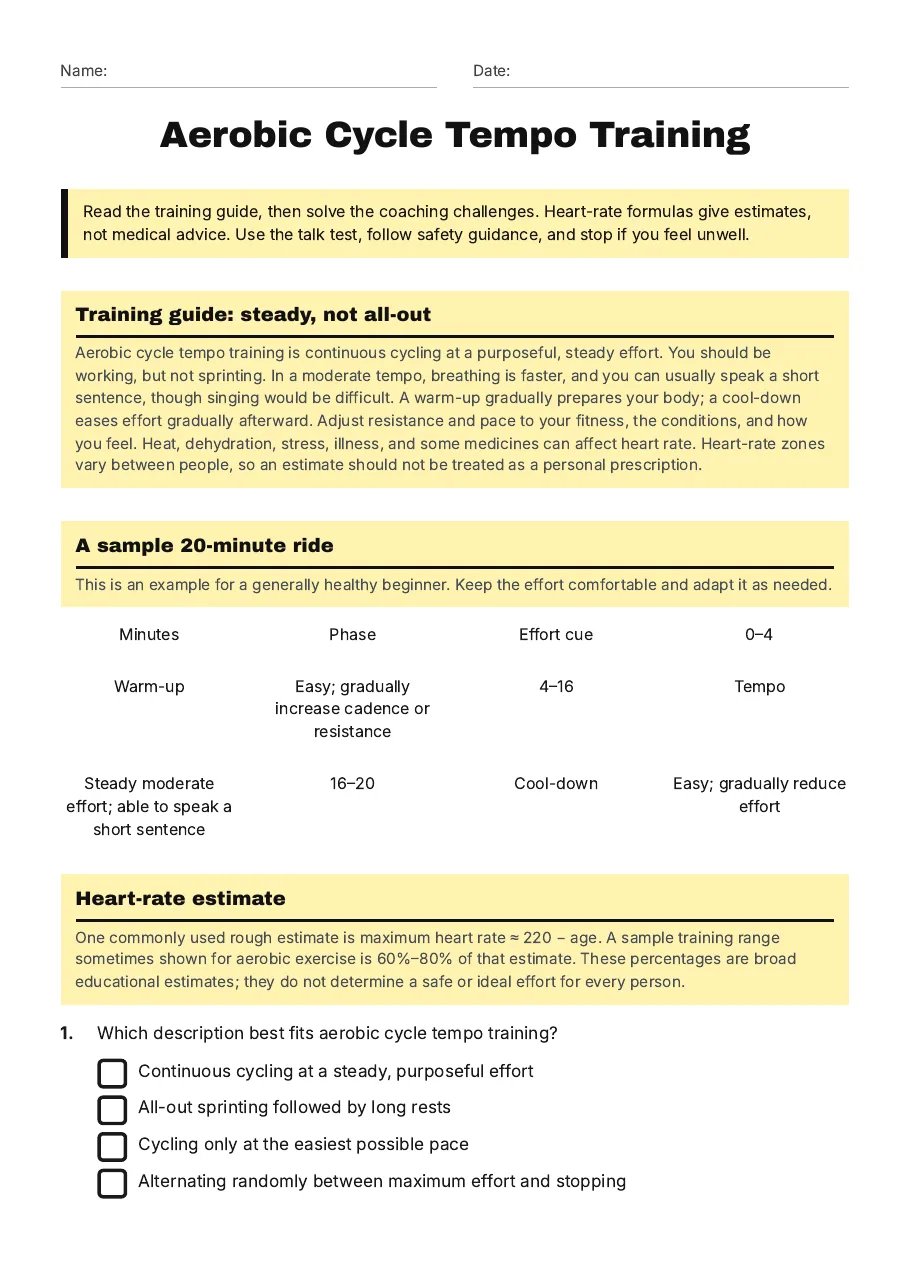
Training guide: steady, not all-out
Aerobic cycle tempo training is continuous cycling at a purposeful, steady effort. You should be working, but not sprinting. In a moderate tempo, breathing is faster, and you can usually speak a short sentence, though singing would be difficult. A warm-up gradually prepares your body; a cool-down eases effort gradually afterward. Adjust resistance and pace to your fitness, the conditions, and how you feel. Heat, dehydration, stress, illness, and some medicines can affect heart rate. Heart-rate zones vary between people, so an estimate should not be treated as a personal prescription.
A sample 20-minute ride
This is an example for a generally healthy beginner. Keep the effort comfortable and adapt it as needed.
Minutes
Phase
Effort cue
0–4
Warm-up
Easy; gradually increase cadence or resistance
4–16
Tempo
Steady moderate effort; able to speak a short sentence
16–20
Cool-down
Easy; gradually reduce effort
Heart-rate estimate
One commonly used rough estimate is maximum heart rate ≈ 220 − age. A sample training range sometimes shown for aerobic exercise is 60%–80% of that estimate. These percentages are broad educational estimates; they do not determine a safe or ideal effort for every person.
- Continuous cycling at a steady, purposeful effort
- All-out sprinting followed by long rests
- Cycling only at the easiest possible pace
- Alternating randomly between maximum effort and stopping
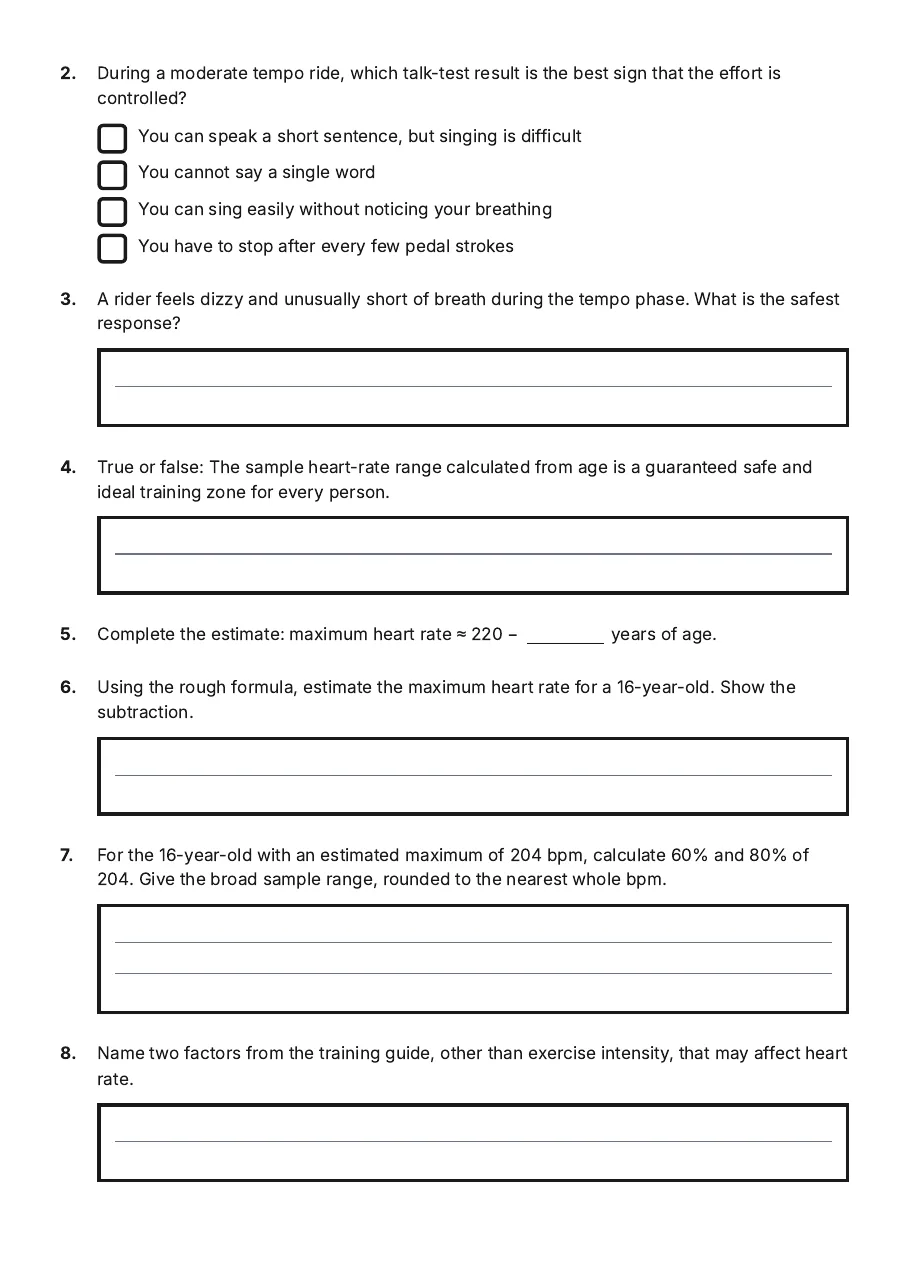
- You can speak a short sentence, but singing is difficult
- You cannot say a single word
- You can sing easily without noticing your breathing
- You have to stop after every few pedal strokes
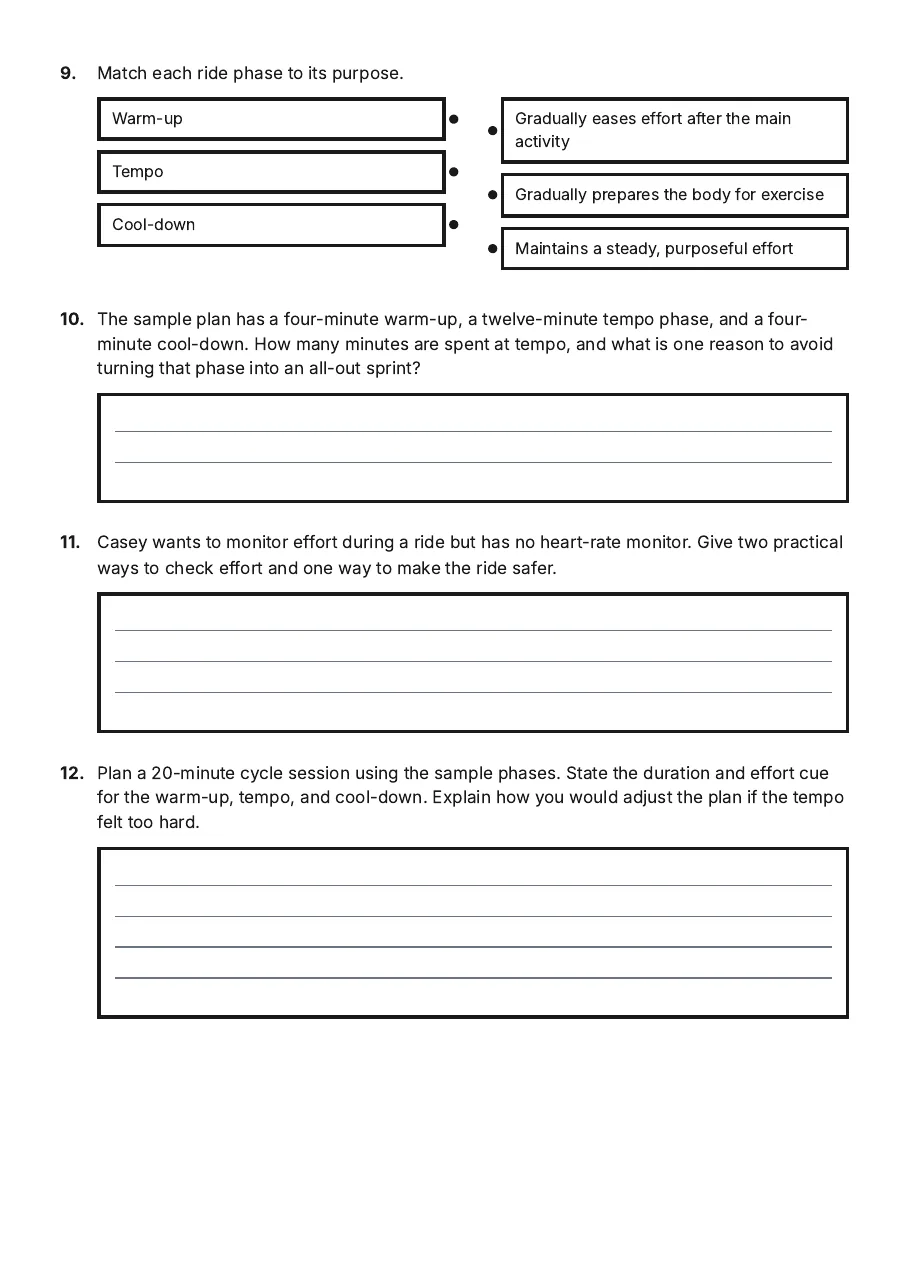
- Warm-up
- Tempo
- Cool-down
- Gradually eases effort after the main activity
- Gradually prepares the body for exercise
- Maintains a steady, purposeful effort
3 printable pages
Page 1
Page 2
Page 3
About This Worksheet
Free in Kuraplan
Sign up free, grab the PDF, and customize it for your class.
Print-Ready
Formatted for standard paper. Clean layout, easy to read.
AI-Generated
Created with Kuraplan's AI, designed for real classroom use.
For Teachers & Parents
Use in classrooms, for homework, tutoring, or homeschool.
Need a custom version of this worksheet?
Kuraplan's AI generates custom worksheets in seconds — differentiated for every learner, aligned to your curriculum.
Generate Custom Worksheets — Free