Civil War Beginnings Worksheet
A free us history worksheet ready for your classroom. Open in Kuraplan to grab the print-ready PDF, customize it for your students, or generate a fresh version in seconds.
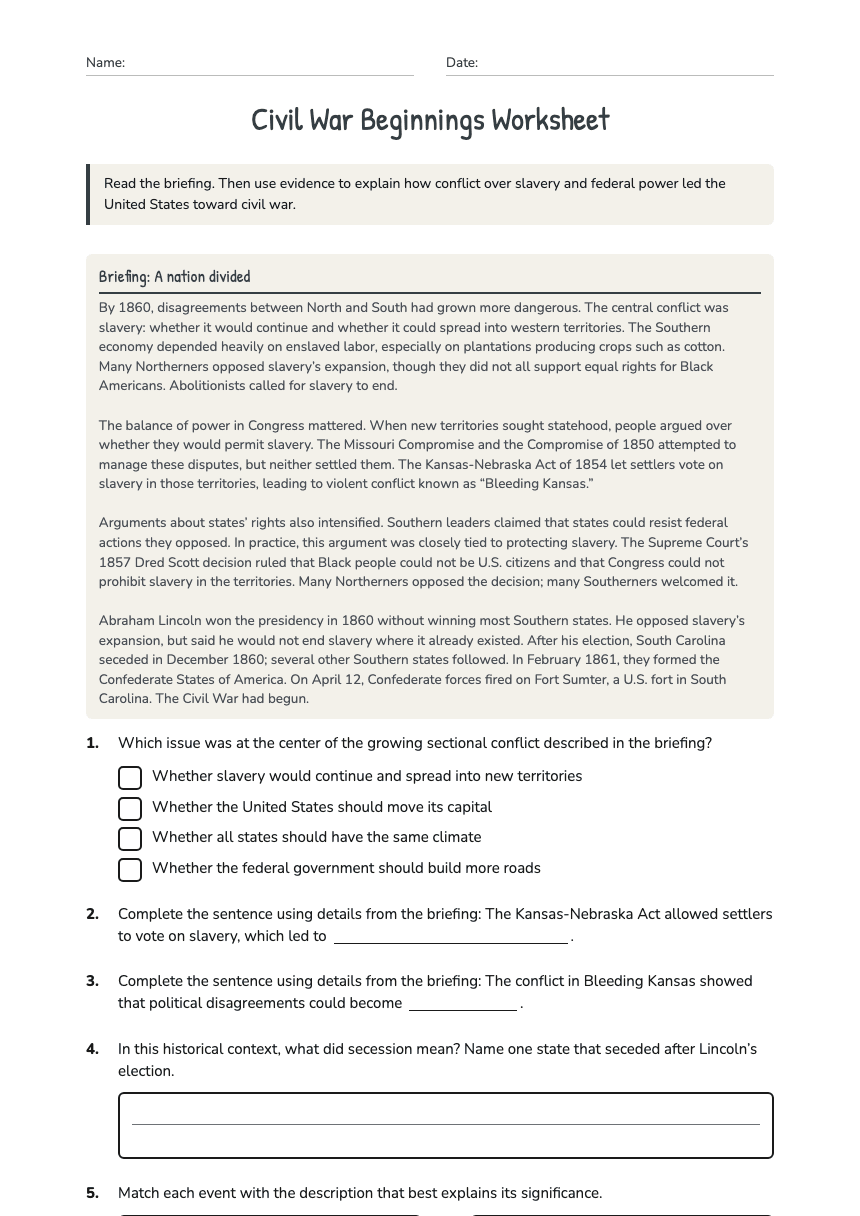
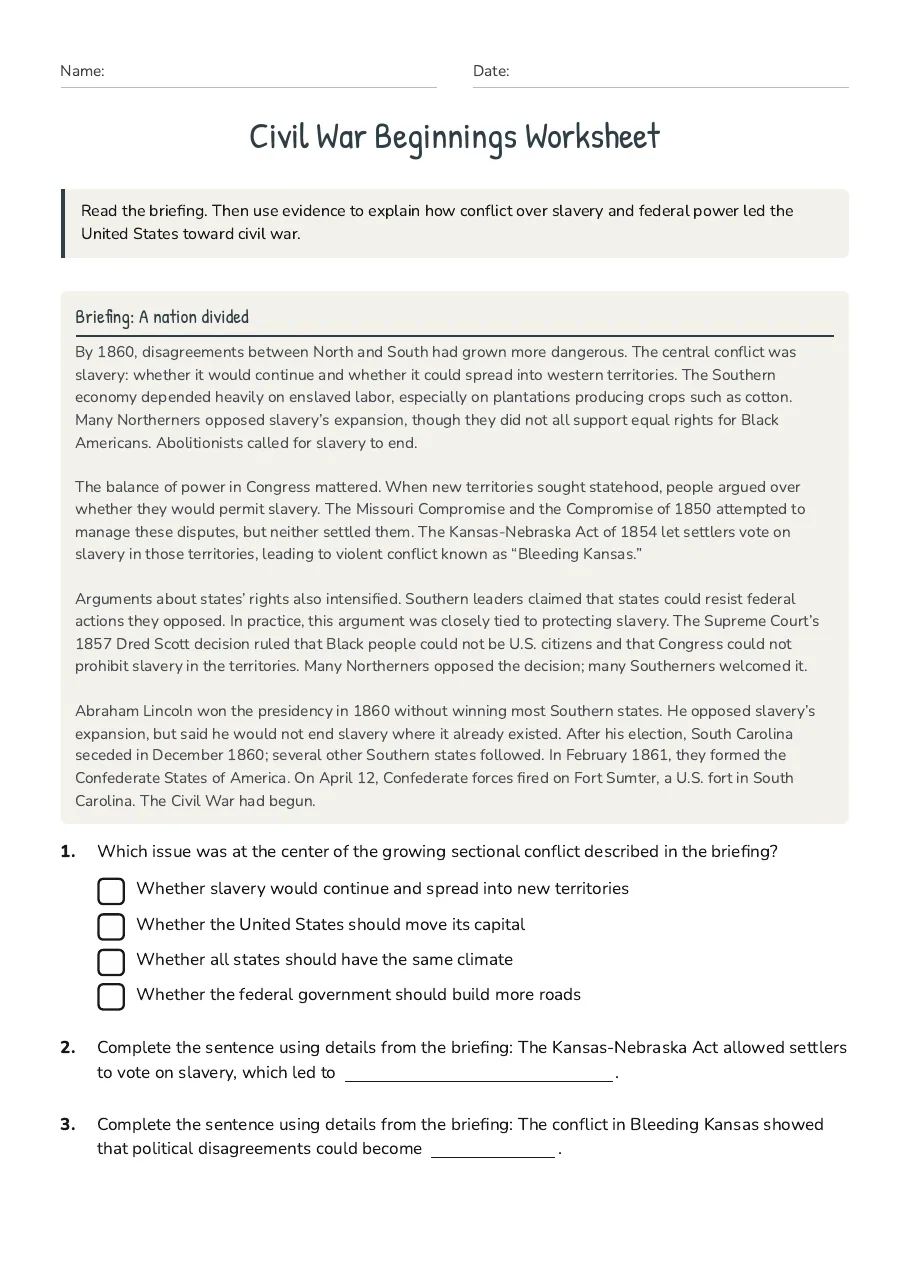
Civil War Beginnings Worksheet
Briefing: A nation divided
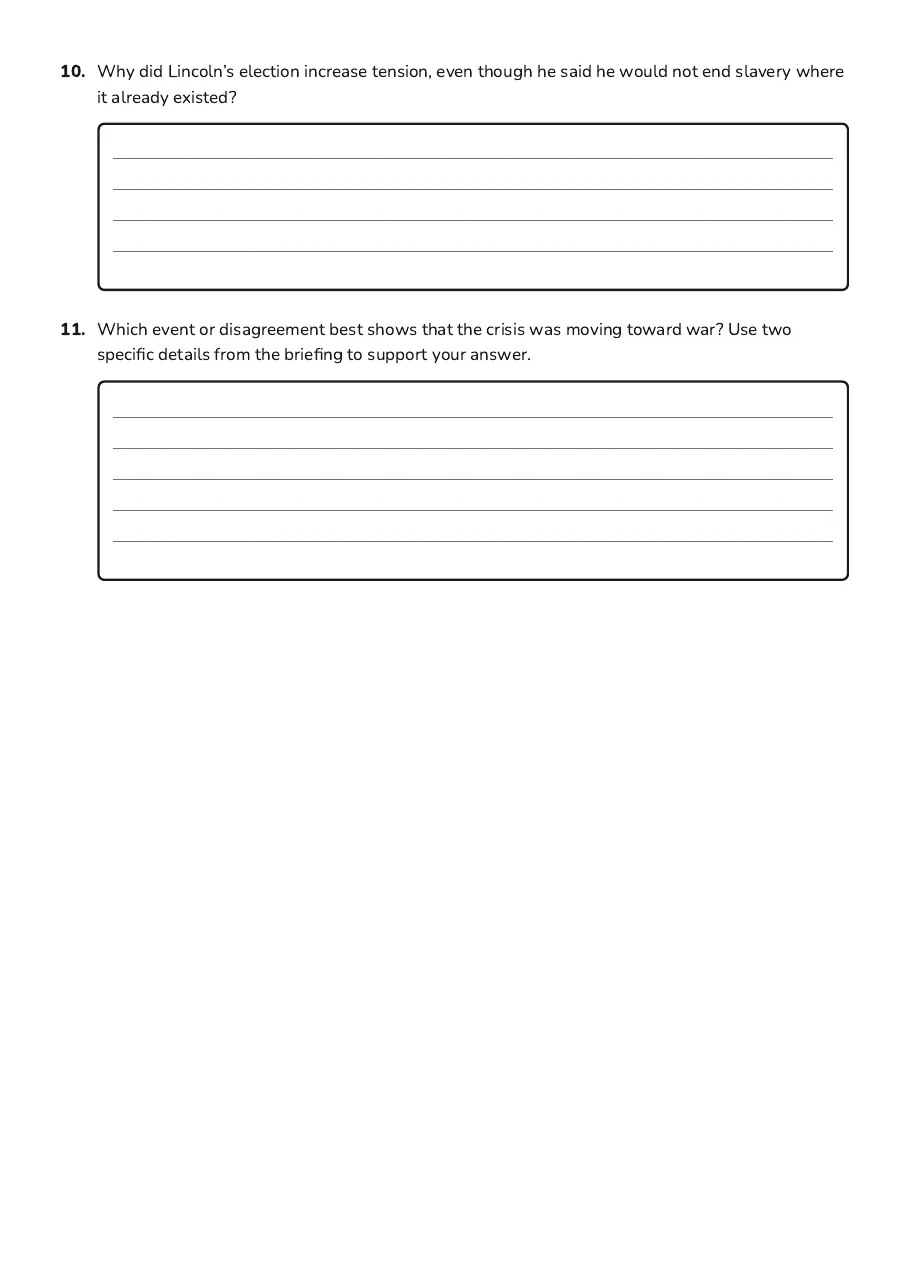
By 1860, disagreements between North and South had grown more dangerous. The central conflict was slavery: whether it would continue and whether it could spread into western territories. The Southern economy depended heavily on enslaved labor, especially on plantations producing crops such as cotton. Many Northerners opposed slavery’s expansion, though they did not all support equal rights for Black Americans. Abolitionists called for slavery to end. The balance of power in Congress mattered. When new territories sought statehood, people argued over whether they would permit slavery. The Missouri Compromise and the Compromise of 1850 attempted to manage these disputes, but neither settled them. The Kansas-Nebraska Act of 1854 let settlers vote on slavery in those territories, leading to violent conflict known as “Bleeding Kansas.” Arguments about states’ rights also intensified. Southern leaders claimed that states could resist federal actions they opposed. In practice, this argument was closely tied to protecting slavery. The Supreme Court’s 1857 Dred Scott decision ruled that Black people could not be U.S. citizens and that Congress could not prohibit slavery in the territories. Many Northerners opposed the decision; many Southerners welcomed it. Abraham Lincoln won the presidency in 1860 without winning most Southern states. He opposed slavery’s expansion, but said he would not end slavery where it already existed. After his election, South Carolina seceded in December 1860; several other Southern states followed. In February 1861, they formed the Confederate States of America. On April 12, Confederate forces fired on Fort Sumter, a U.S. fort in South Carolina. The Civil War had begun.
- Whether slavery would continue and spread into new territories
- Whether the United States should move its capital
- Whether all states should have the same climate
- Whether the federal government should build more roads
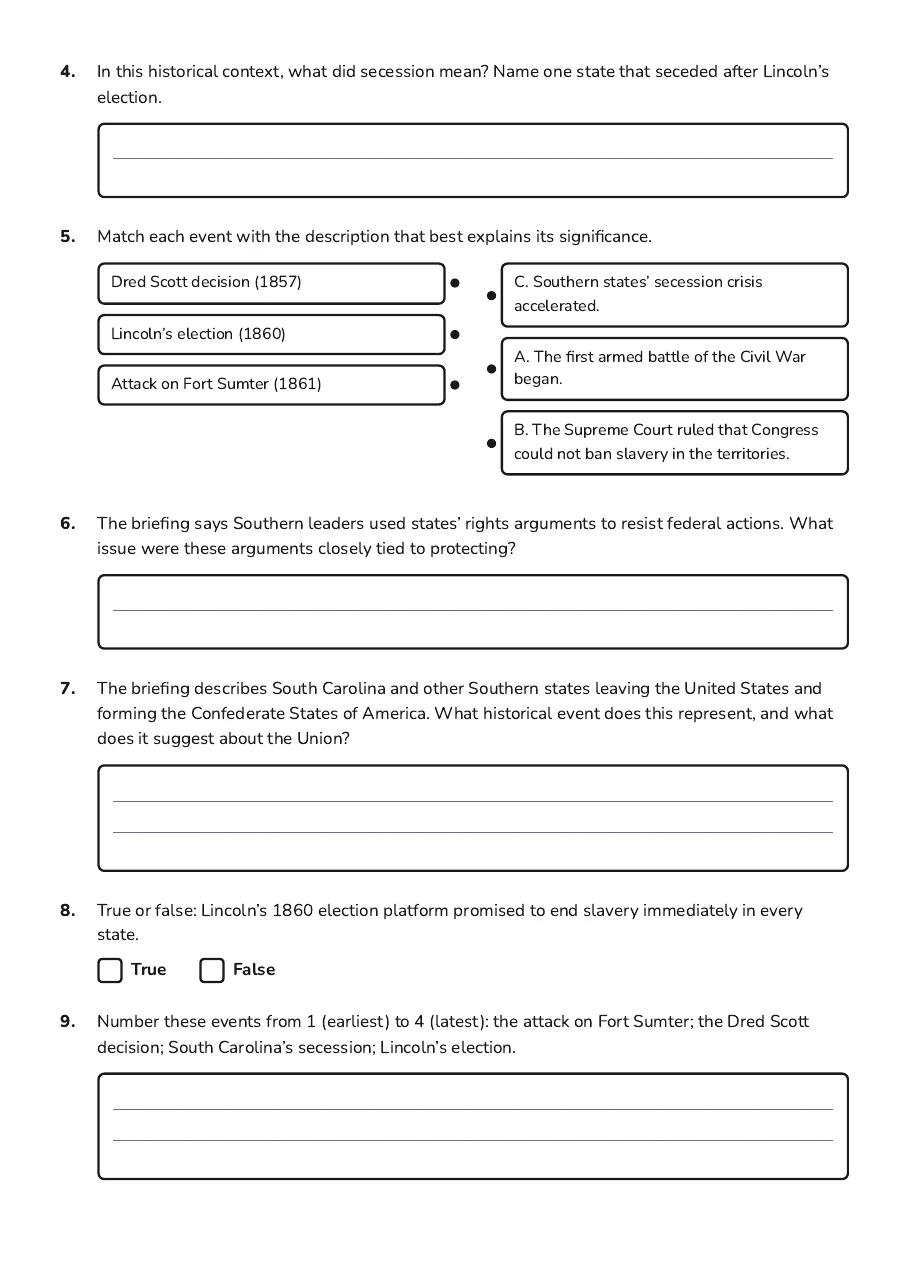
- Dred Scott decision (1857)
- Lincoln’s election (1860)
- Attack on Fort Sumter (1861)
- C. Southern states’ secession crisis accelerated.
- A. The first armed battle of the Civil War began.
- B. The Supreme Court ruled that Congress could not ban slavery in the territories.
3 printable pages
Page 1
Page 2
Page 3
About This Worksheet
Free in Kuraplan
Sign up free, grab the PDF, and customize it for your class.
Print-Ready
Formatted for standard paper. Clean layout, easy to read.
AI-Generated
Created with Kuraplan's AI, designed for real classroom use.
For Teachers & Parents
Use in classrooms, for homework, tutoring, or homeschool.
Need a custom version of this worksheet?
Kuraplan's AI generates custom worksheets in seconds — differentiated for every learner, aligned to your curriculum.
Generate Custom Worksheets — FreeMore US History Worksheets
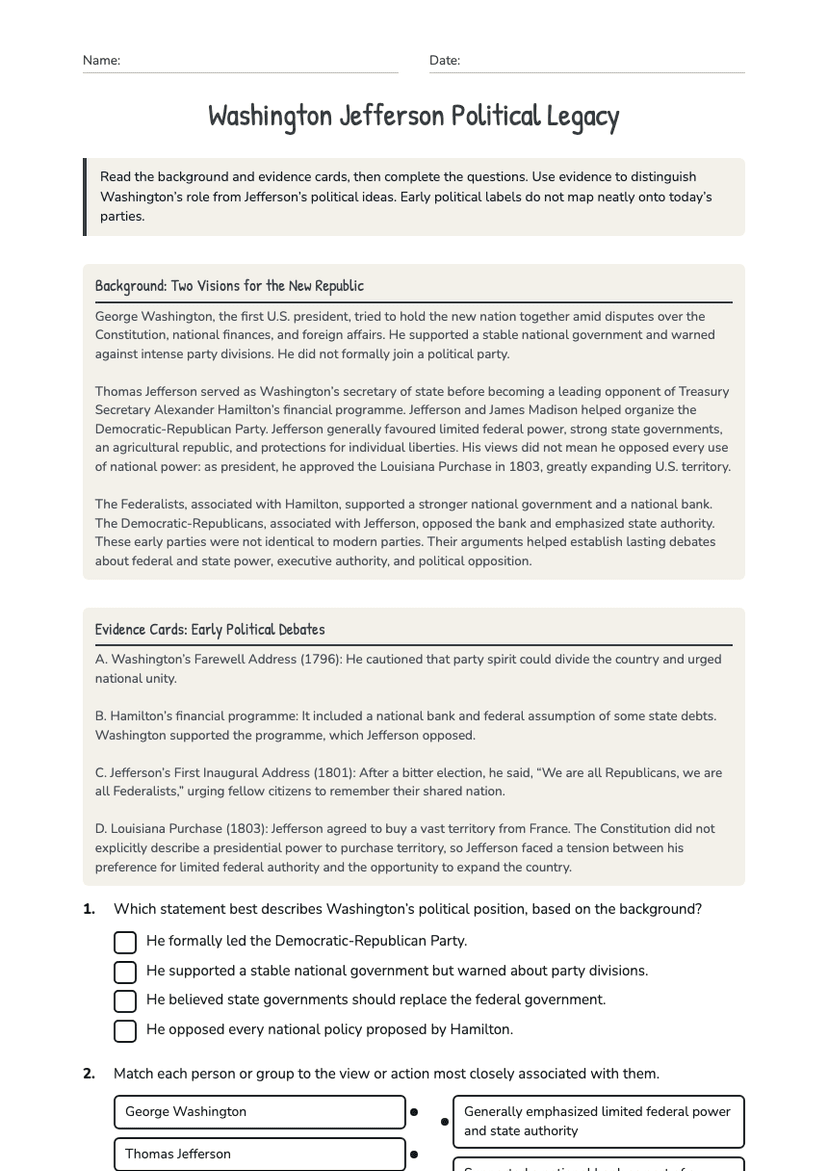
Washington Jefferson Political Legacy
Free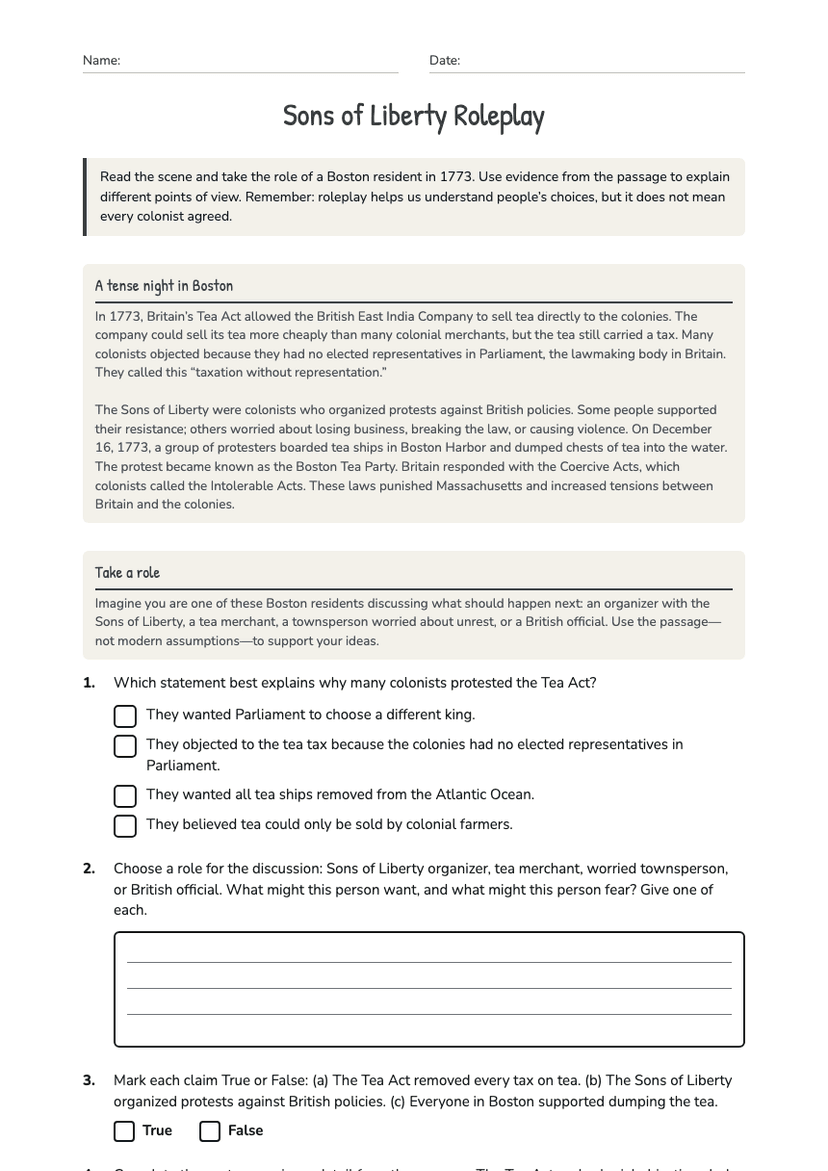
Sons of Liberty Roleplay
Free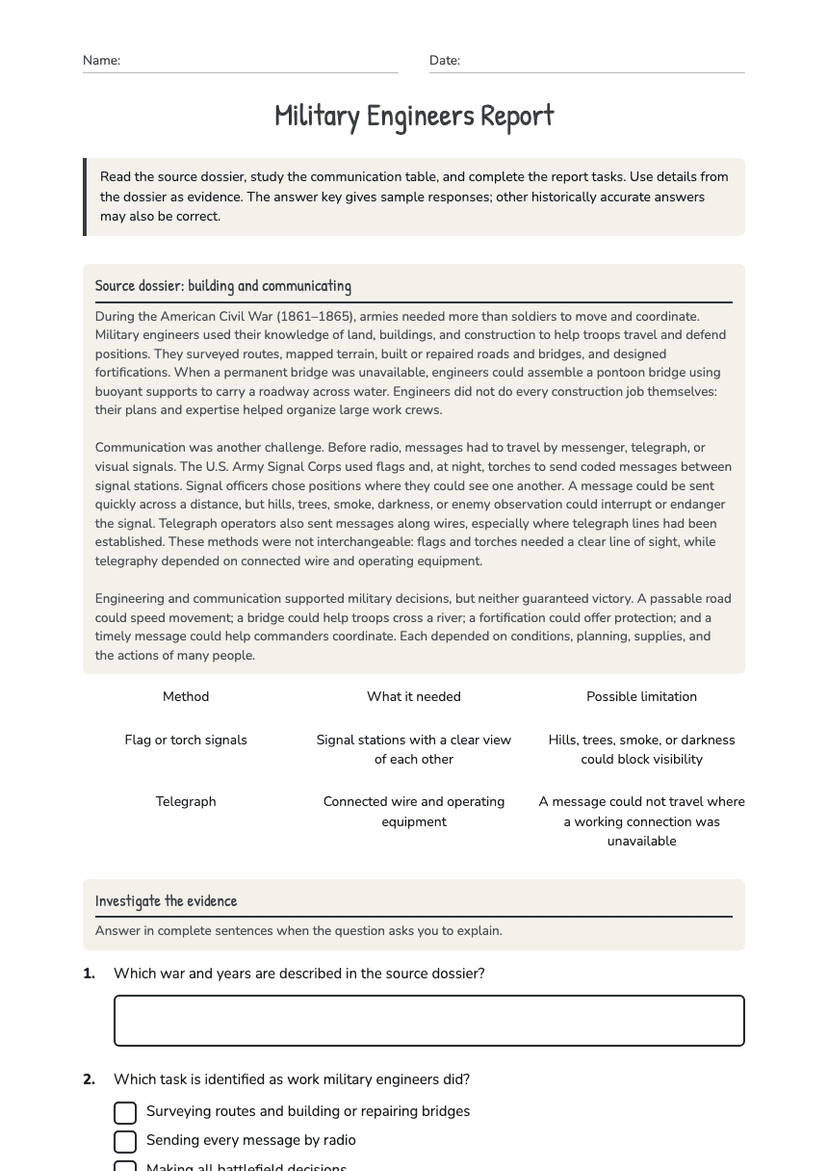
Military Engineers Report
Free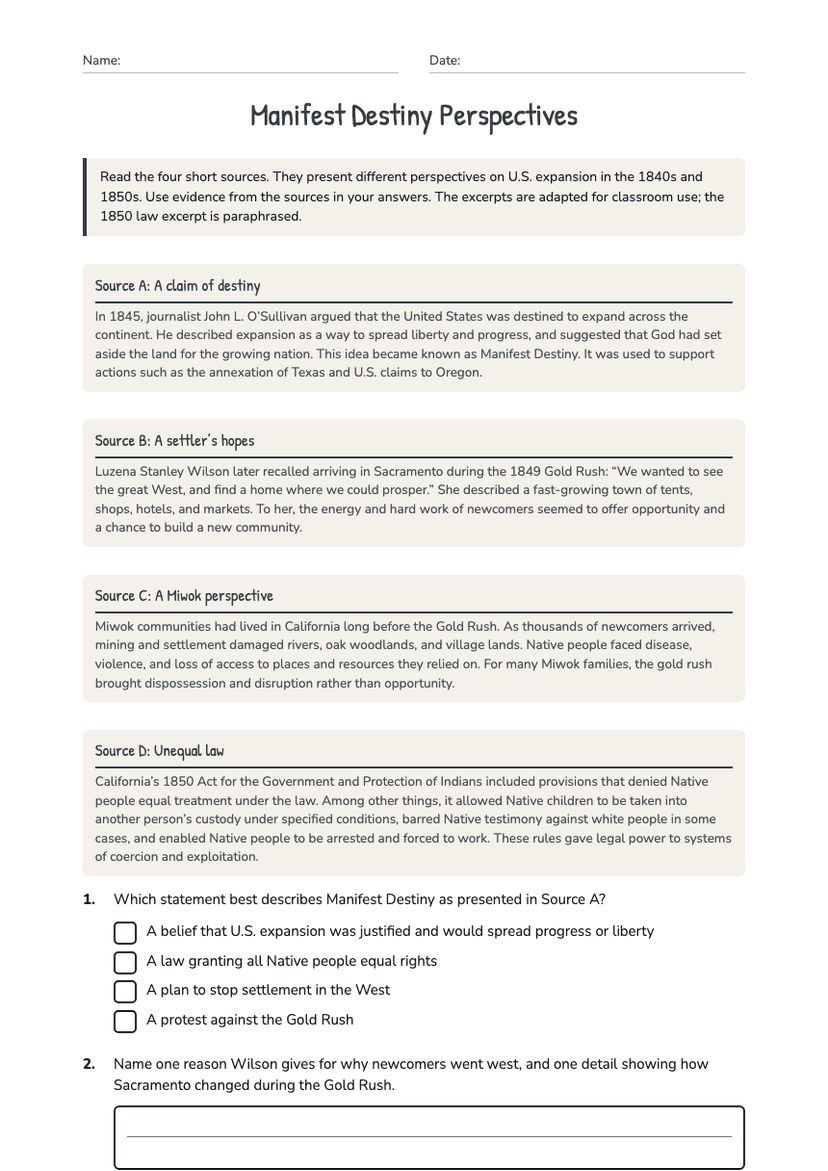
Manifest Destiny Perspectives
Free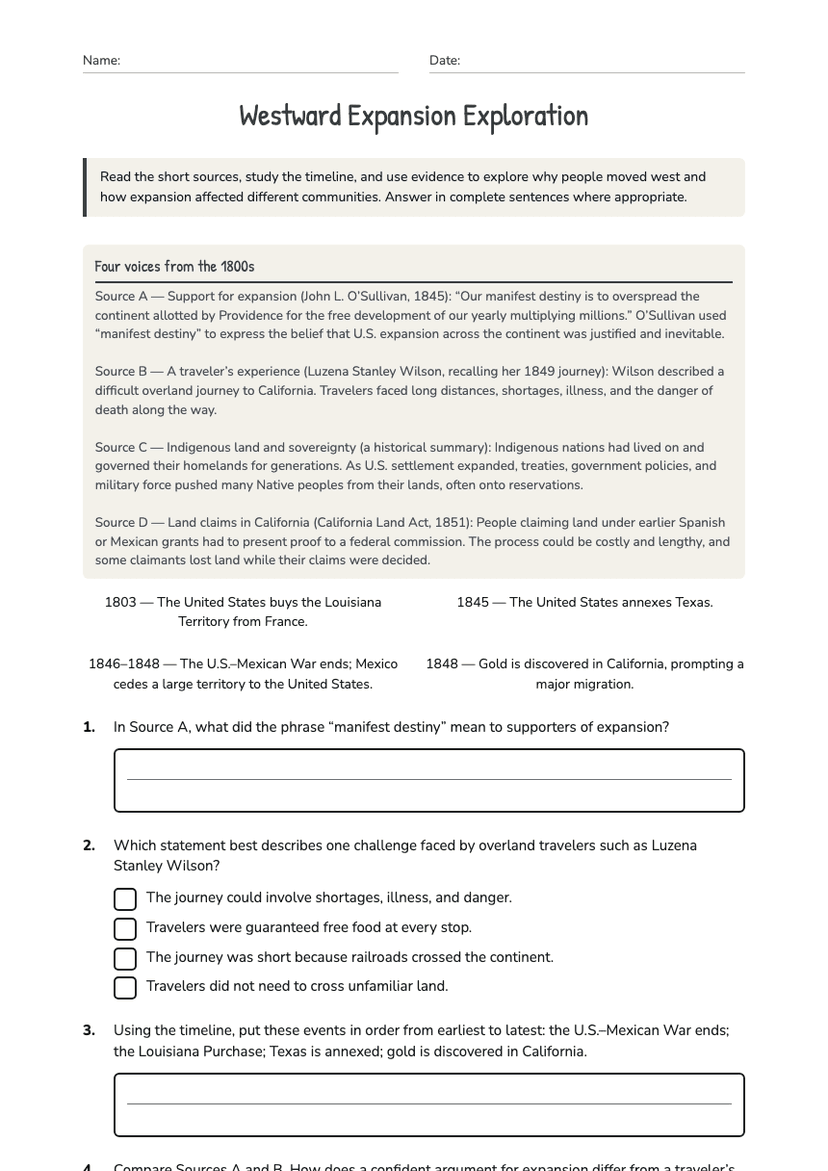
Westward Expansion Exploration
Free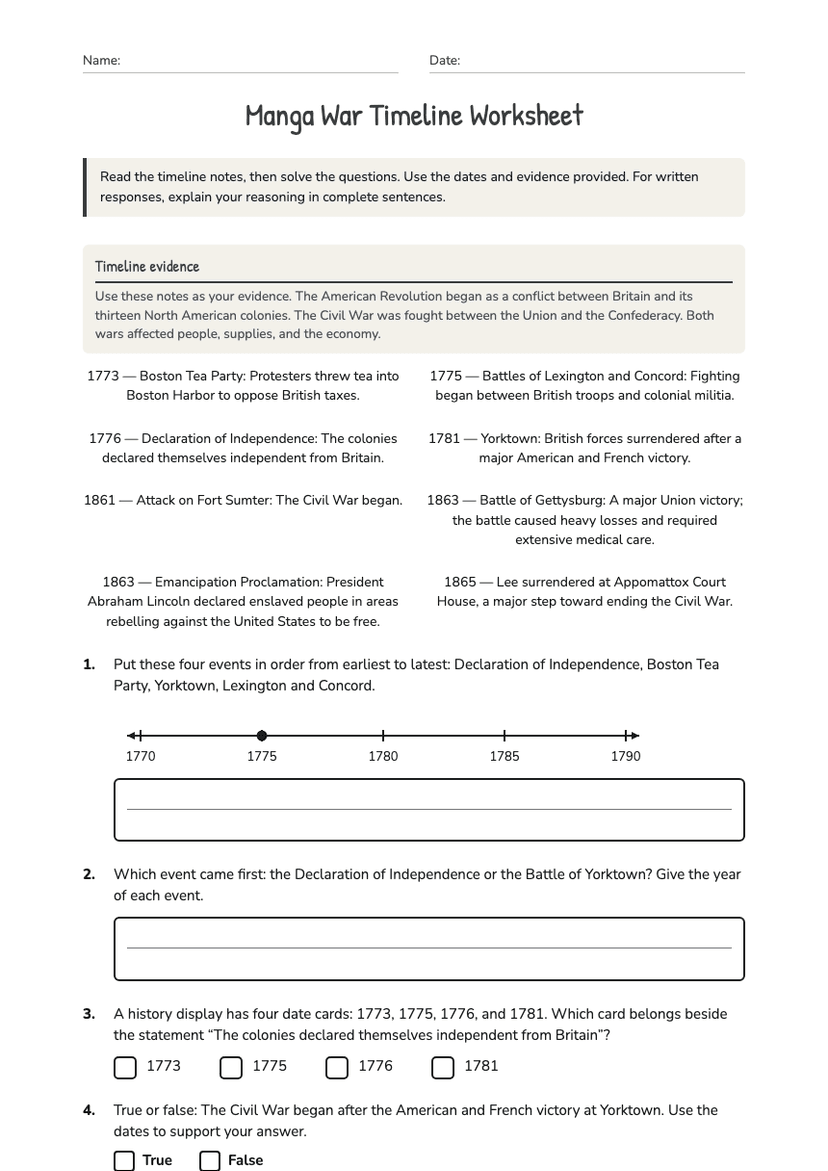
Manga War Timeline Worksheet
Free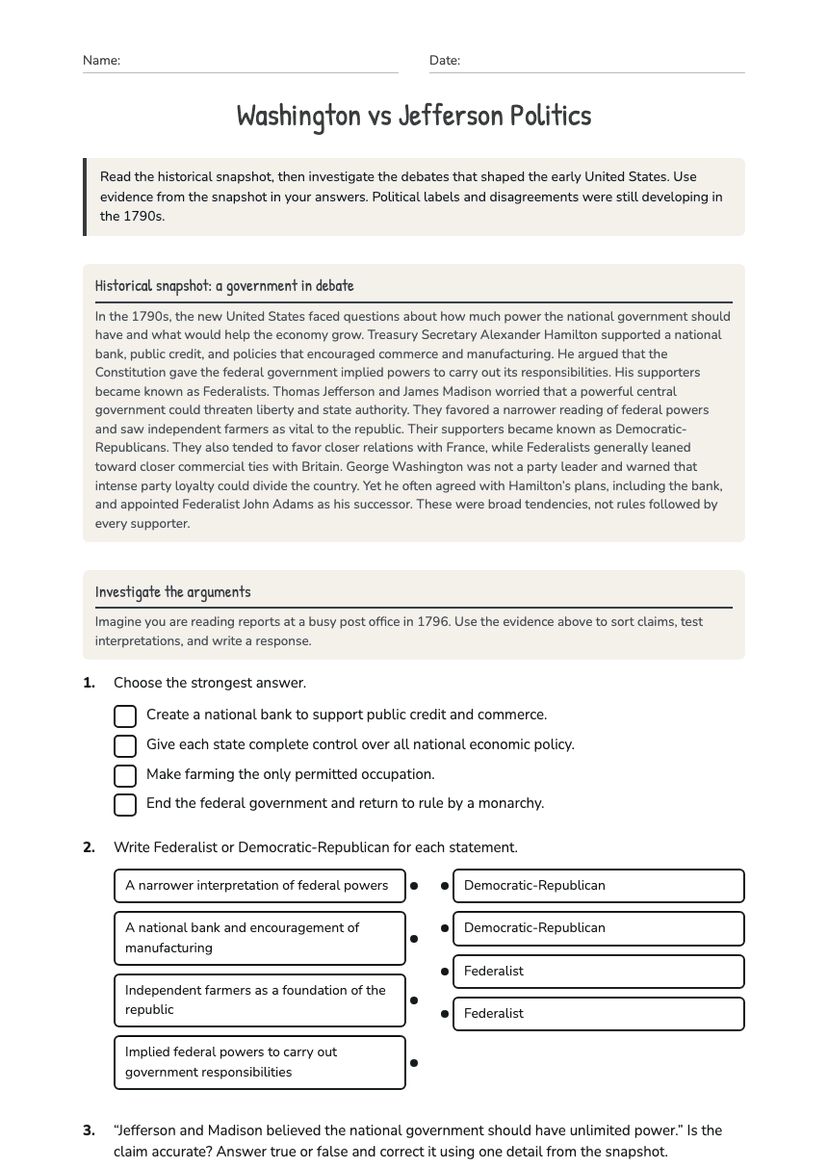
Washington vs Jefferson Politics
Free