Military Engineers Report
A free us history worksheet ready for your classroom. Open in Kuraplan to grab the print-ready PDF, customize it for your students, or generate a fresh version in seconds.
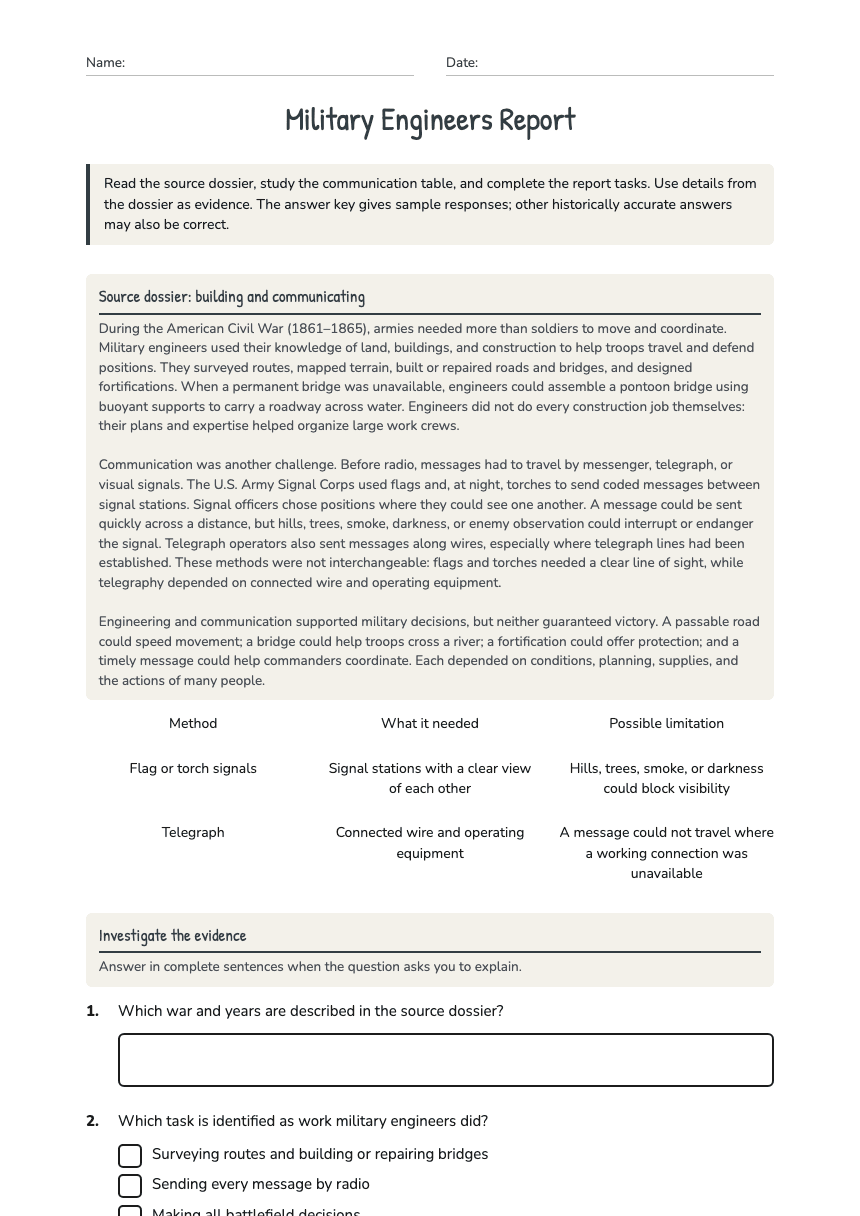
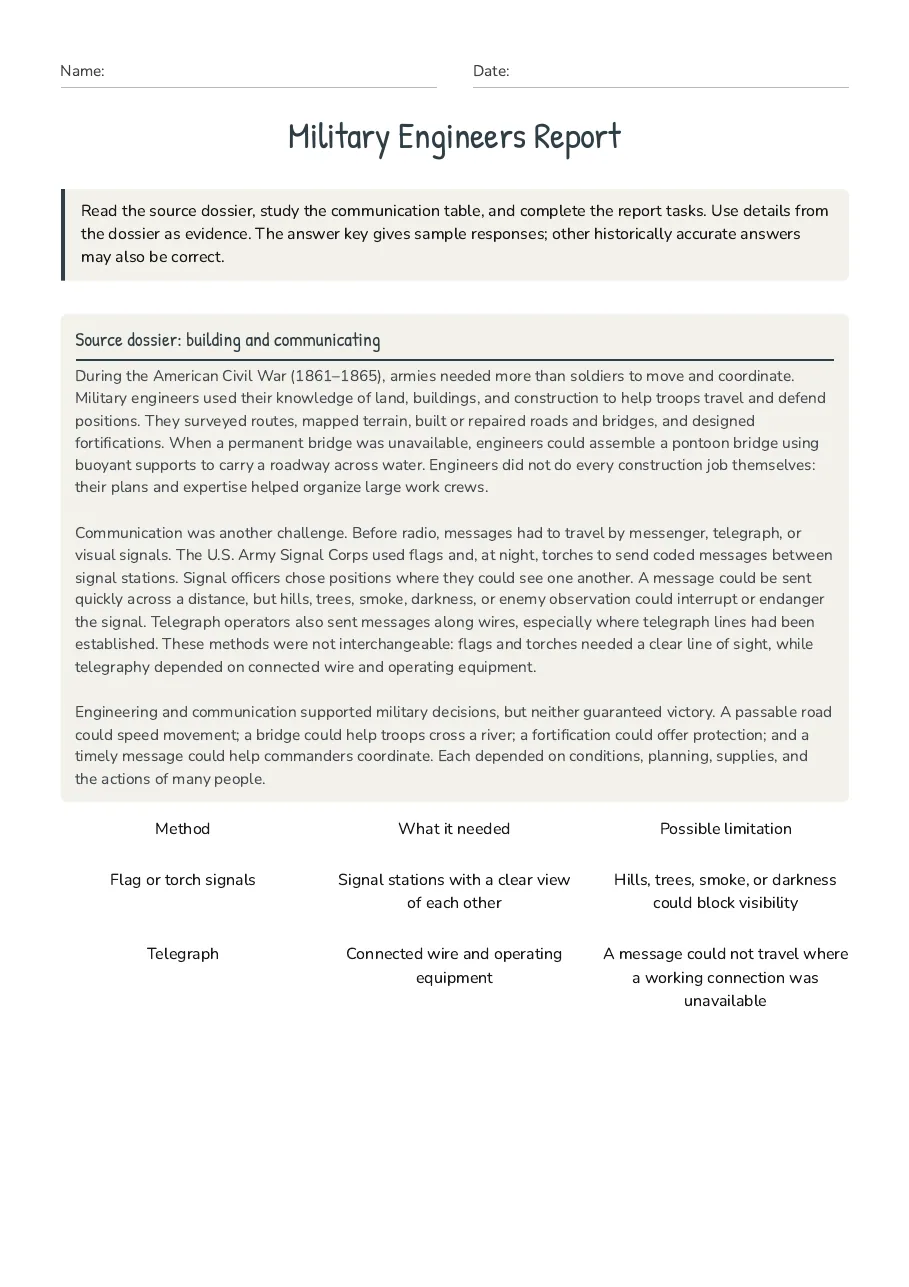
Military Engineers Report
Source dossier: building and communicating
During the American Civil War (1861–1865), armies needed more than soldiers to move and coordinate. Military engineers used their knowledge of land, buildings, and construction to help troops travel and defend positions. They surveyed routes, mapped terrain, built or repaired roads and bridges, and designed fortifications. When a permanent bridge was unavailable, engineers could assemble a pontoon bridge using buoyant supports to carry a roadway across water. Engineers did not do every construction job themselves: their plans and expertise helped organize large work crews. Communication was another challenge. Before radio, messages had to travel by messenger, telegraph, or visual signals. The U.S. Army Signal Corps used flags and, at night, torches to send coded messages between signal stations. Signal officers chose positions where they could see one another. A message could be sent quickly across a distance, but hills, trees, smoke, darkness, or enemy observation could interrupt or endanger the signal. Telegraph operators also sent messages along wires, especially where telegraph lines had been established. These methods were not interchangeable: flags and torches needed a clear line of sight, while telegraphy depended on connected wire and operating equipment. Engineering and communication supported military decisions, but neither guaranteed victory. A passable road could speed movement; a bridge could help troops cross a river; a fortification could offer protection; and a timely message could help commanders coordinate. Each depended on conditions, planning, supplies, and the actions of many people.
Method
What it needed
Possible limitation
Flag or torch signals
Signal stations with a clear view of each other
Hills, trees, smoke, or darkness could block visibility
Telegraph
Connected wire and operating equipment
A message could not travel where a working connection was unavailable
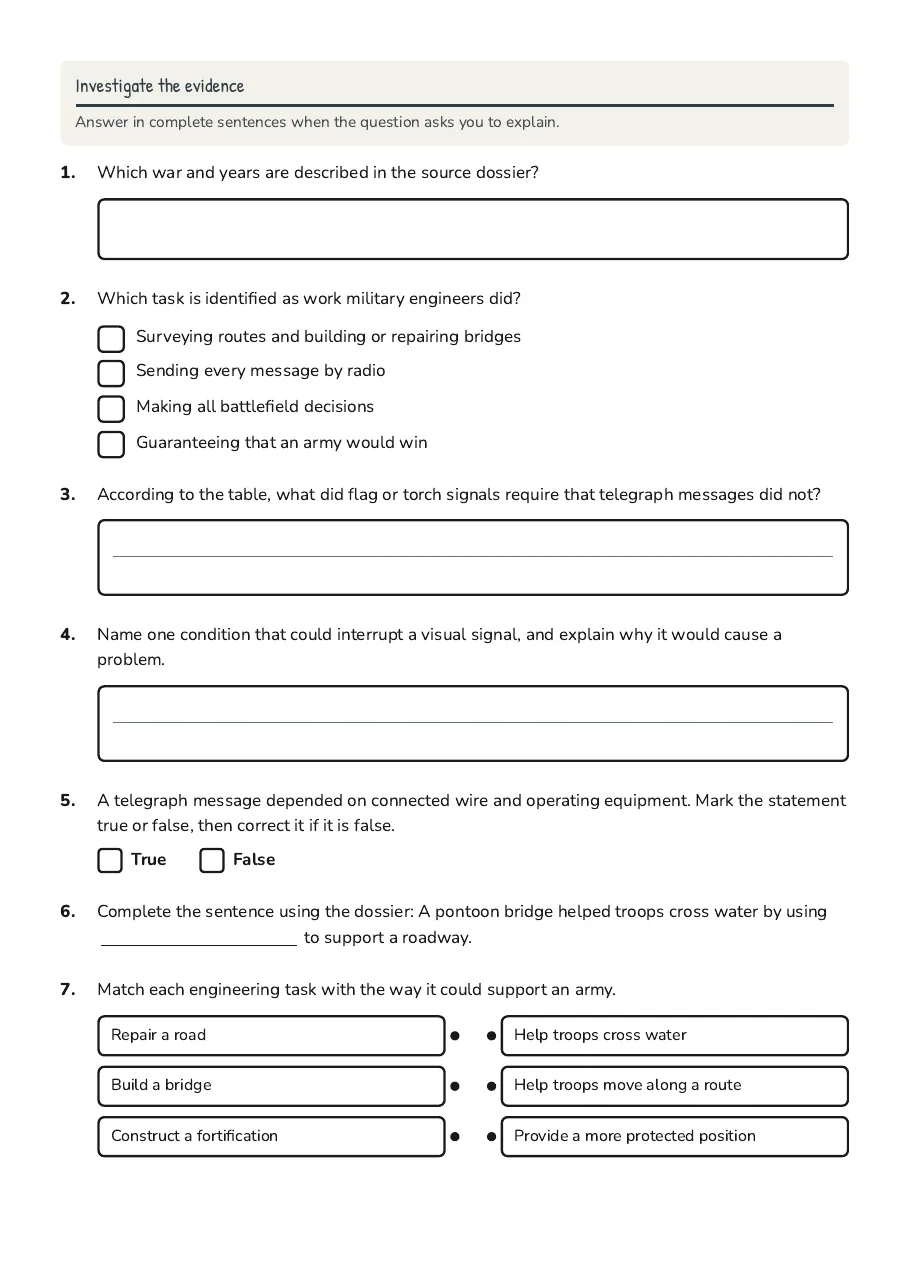
Investigate the evidence
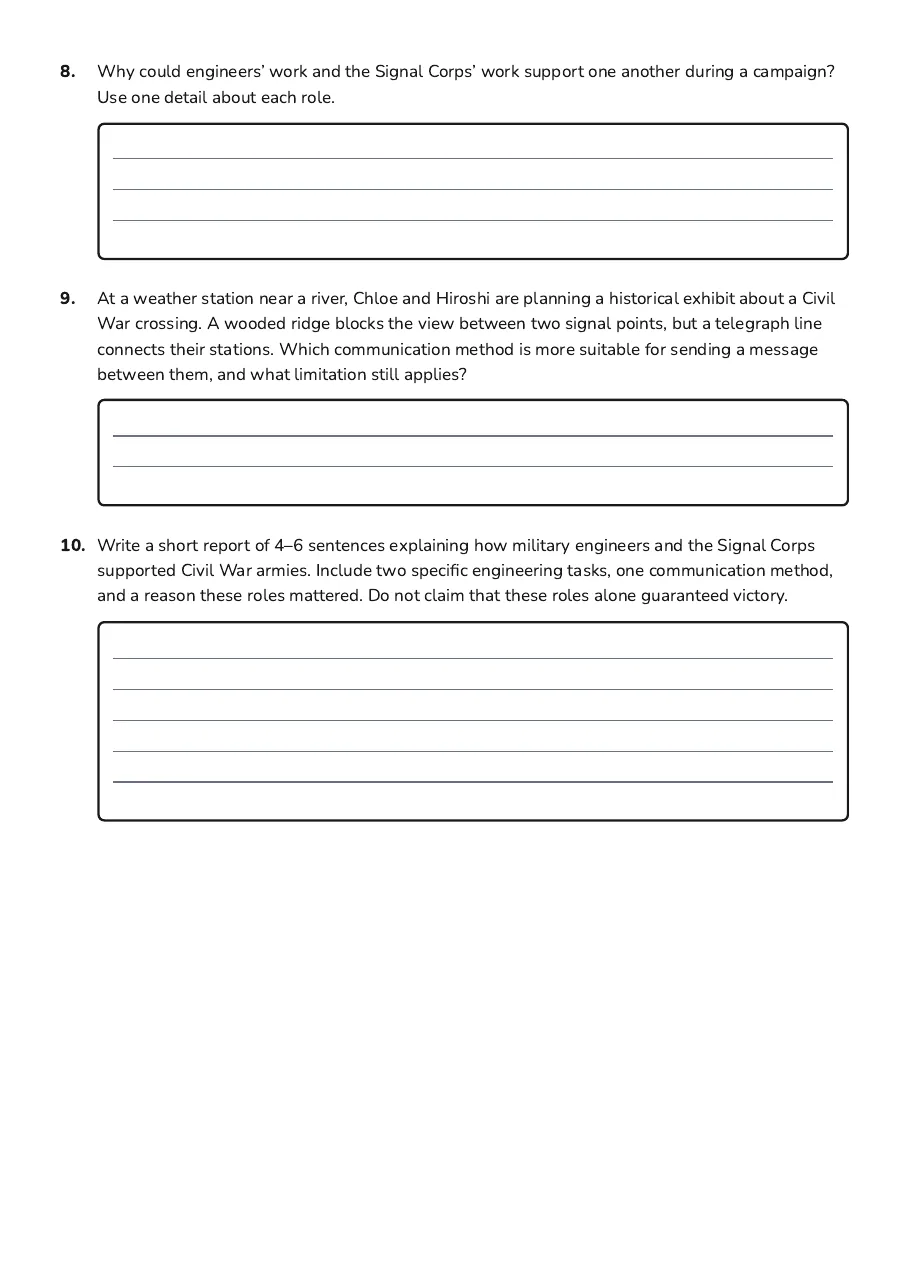
Answer in complete sentences when the question asks you to explain.
- Surveying routes and building or repairing bridges
- Sending every message by radio
- Making all battlefield decisions
- Guaranteeing that an army would win
- Repair a road
- Build a bridge
- Construct a fortification
- Help troops cross water
- Help troops move along a route
- Provide a more protected position
3 printable pages
Page 1
Page 2
Page 3
About This Worksheet
Free in Kuraplan
Sign up free, grab the PDF, and customize it for your class.
Print-Ready
Formatted for standard paper. Clean layout, easy to read.
AI-Generated
Created with Kuraplan's AI, designed for real classroom use.
For Teachers & Parents
Use in classrooms, for homework, tutoring, or homeschool.
Need a custom version of this worksheet?
Kuraplan's AI generates custom worksheets in seconds — differentiated for every learner, aligned to your curriculum.
Generate Custom Worksheets — FreeMore US History Worksheets
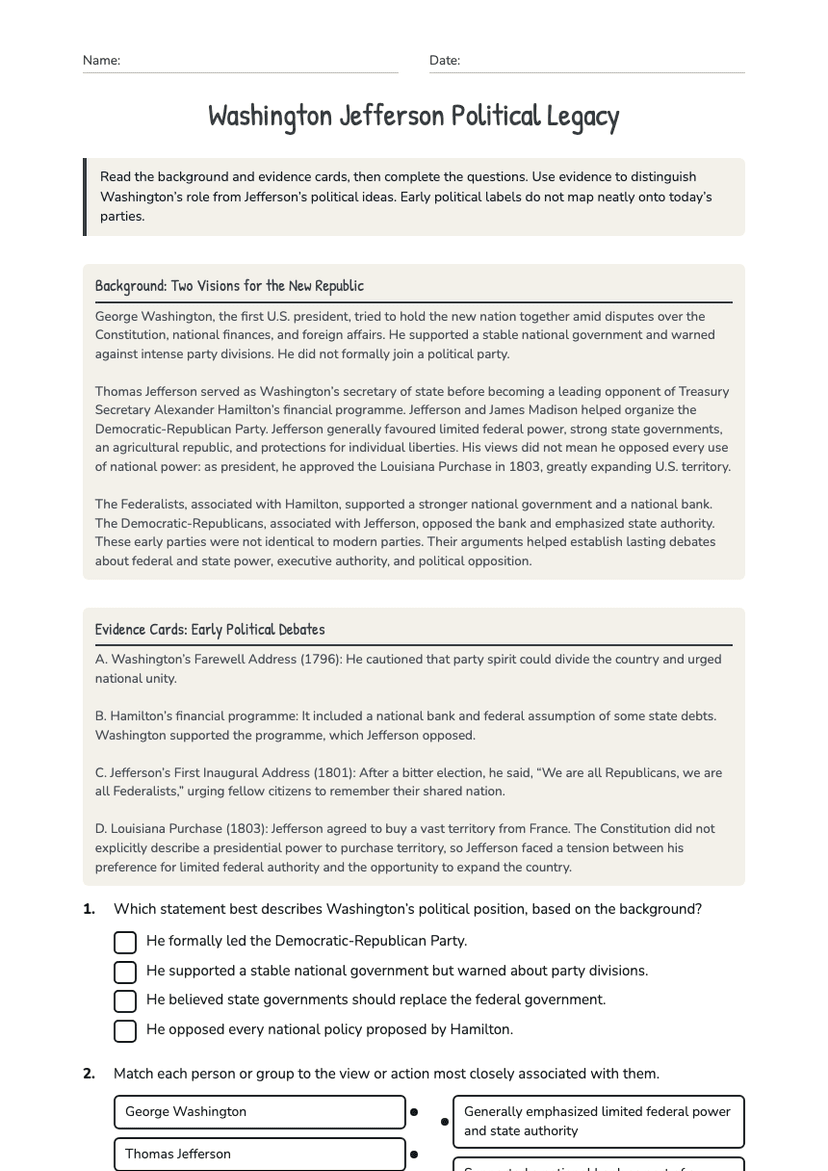
Washington Jefferson Political Legacy
Free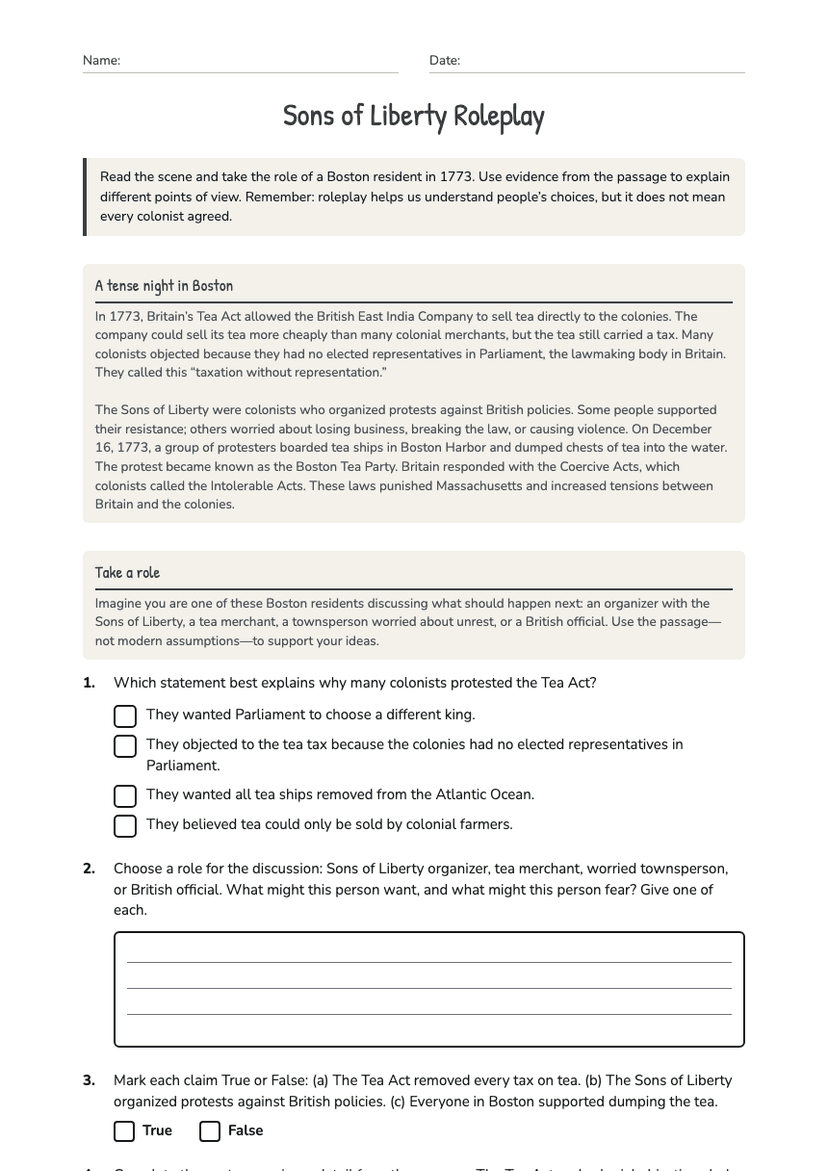
Sons of Liberty Roleplay
Free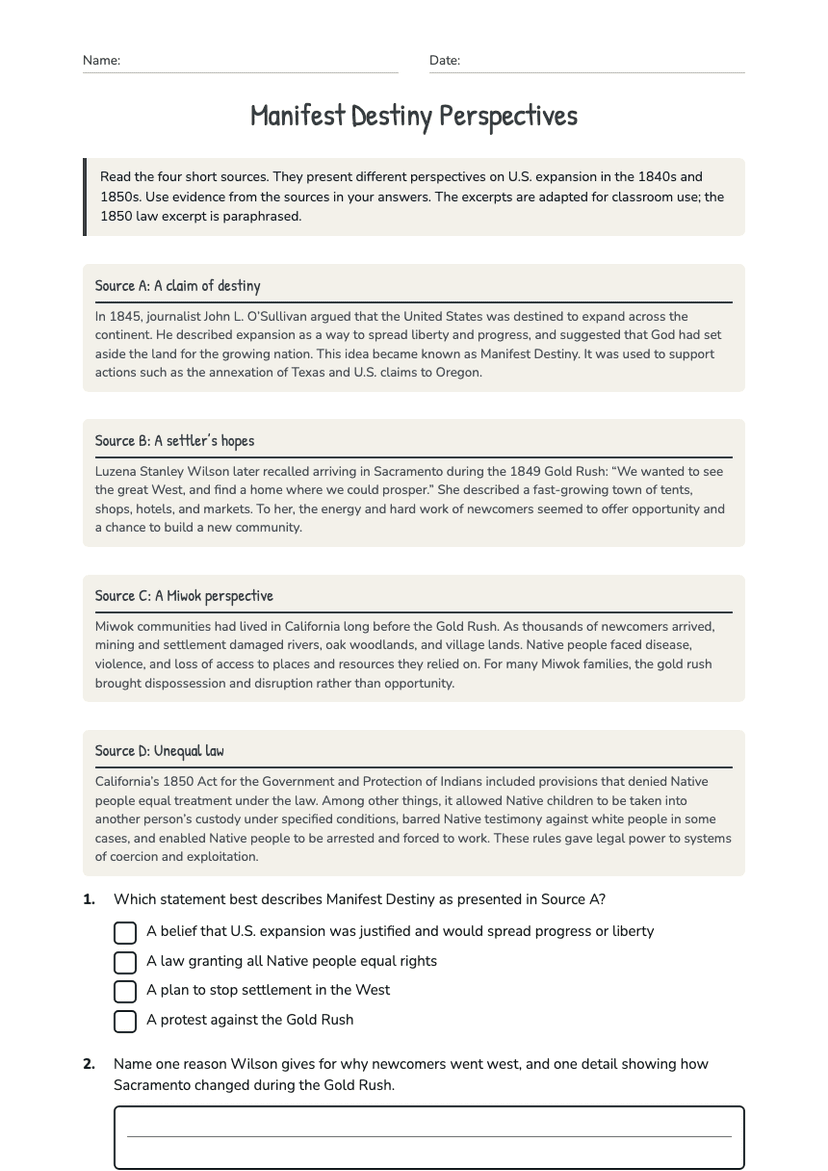
Manifest Destiny Perspectives
Free
Westward Expansion Exploration
Free
Manga War Timeline Worksheet
Free
Washington vs Jefferson Politics
Free
Arkansas History Made Accessible
Free