Primary Secondary Source Analysis
A free social studies worksheet ready for your classroom. Open in Kuraplan to grab the print-ready PDF, customize it for your students, or generate a fresh version in seconds.
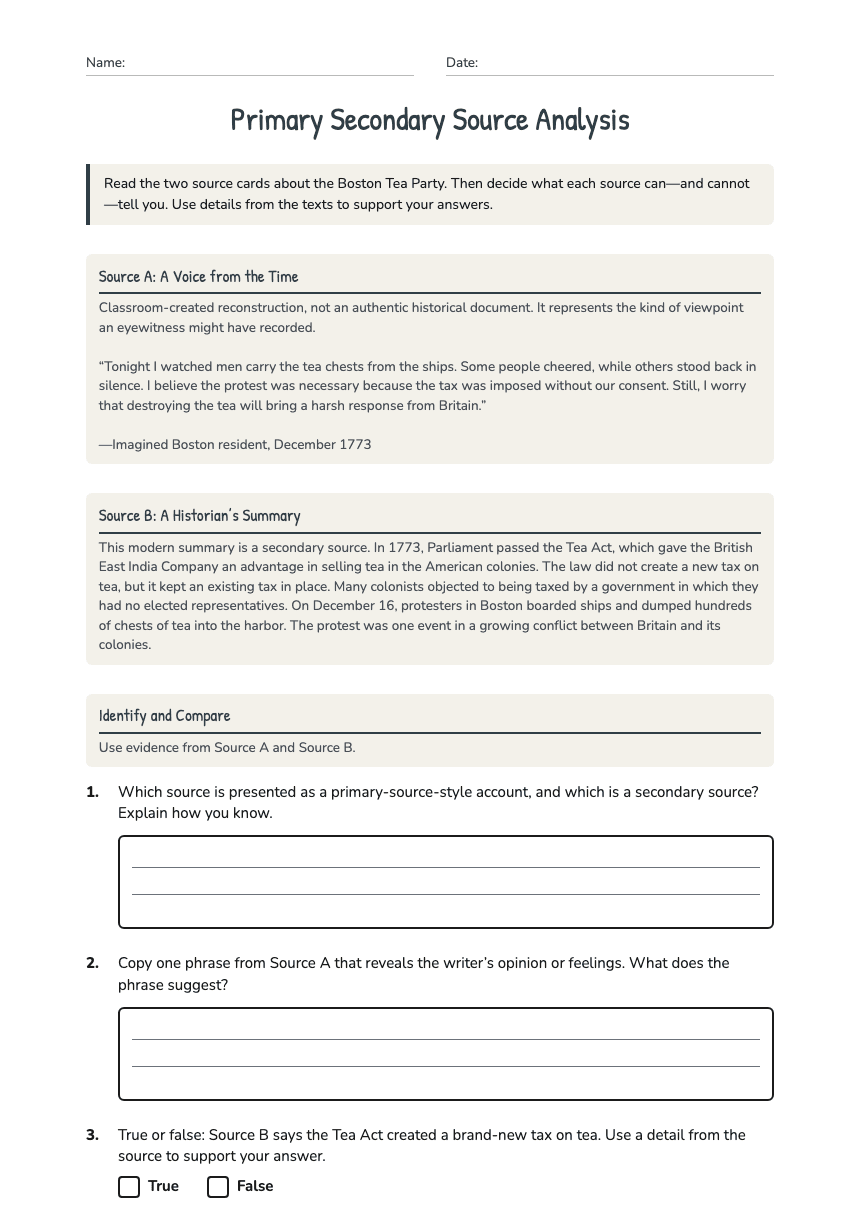
Primary Secondary Source Analysis
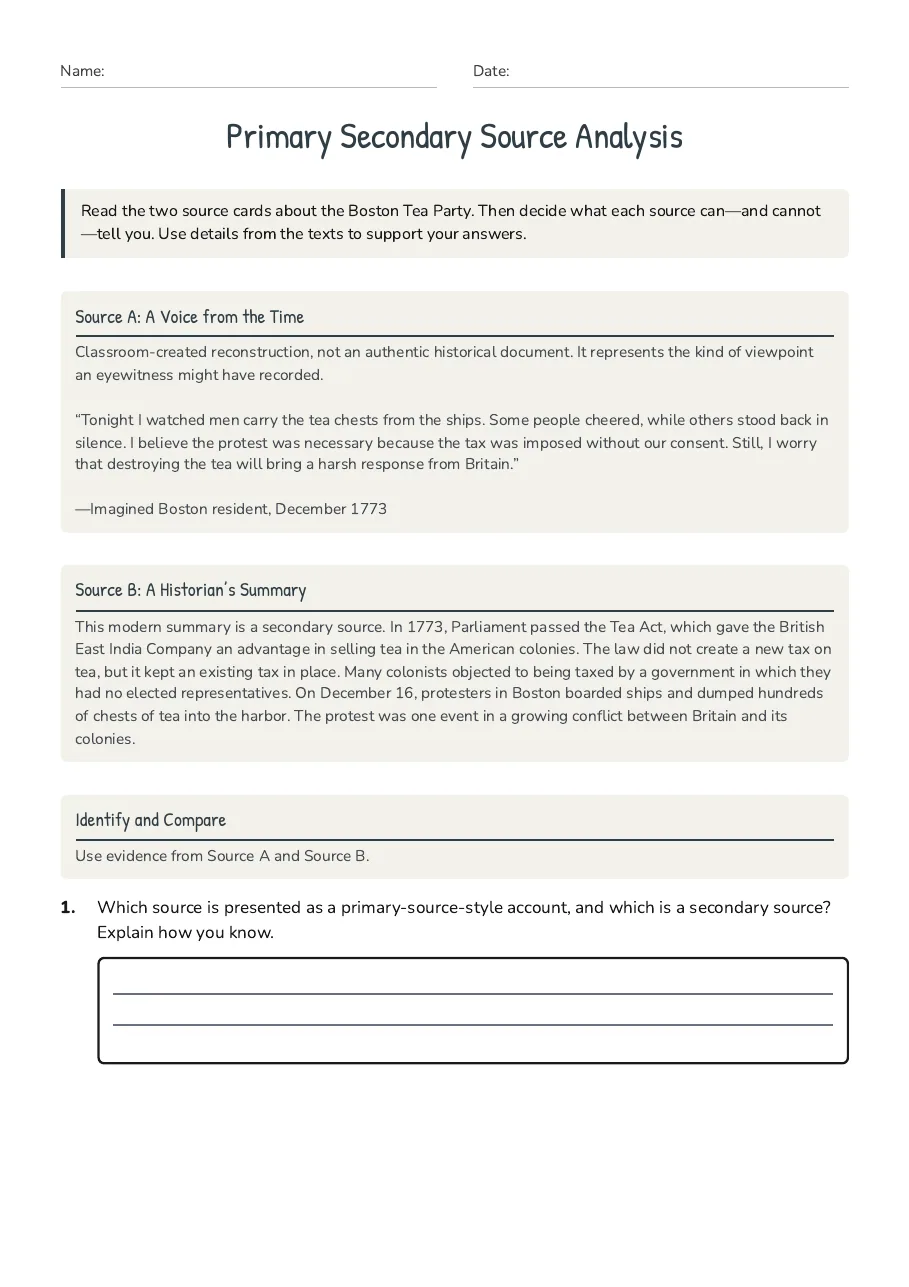
Source A: A Voice from the Time
Classroom-created reconstruction, not an authentic historical document. It represents the kind of viewpoint an eyewitness might have recorded. “Tonight I watched men carry the tea chests from the ships. Some people cheered, while others stood back in silence. I believe the protest was necessary because the tax was imposed without our consent. Still, I worry that destroying the tea will bring a harsh response from Britain.” —Imagined Boston resident, December 1773
Source B: A Historian’s Summary
This modern summary is a secondary source. In 1773, Parliament passed the Tea Act, which gave the British East India Company an advantage in selling tea in the American colonies. The law did not create a new tax on tea, but it kept an existing tax in place. Many colonists objected to being taxed by a government in which they had no elected representatives. On December 16, protesters in Boston boarded ships and dumped hundreds of chests of tea into the harbor. The protest was one event in a growing conflict between Britain and its colonies.
Identify and Compare
Use evidence from Source A and Source B.
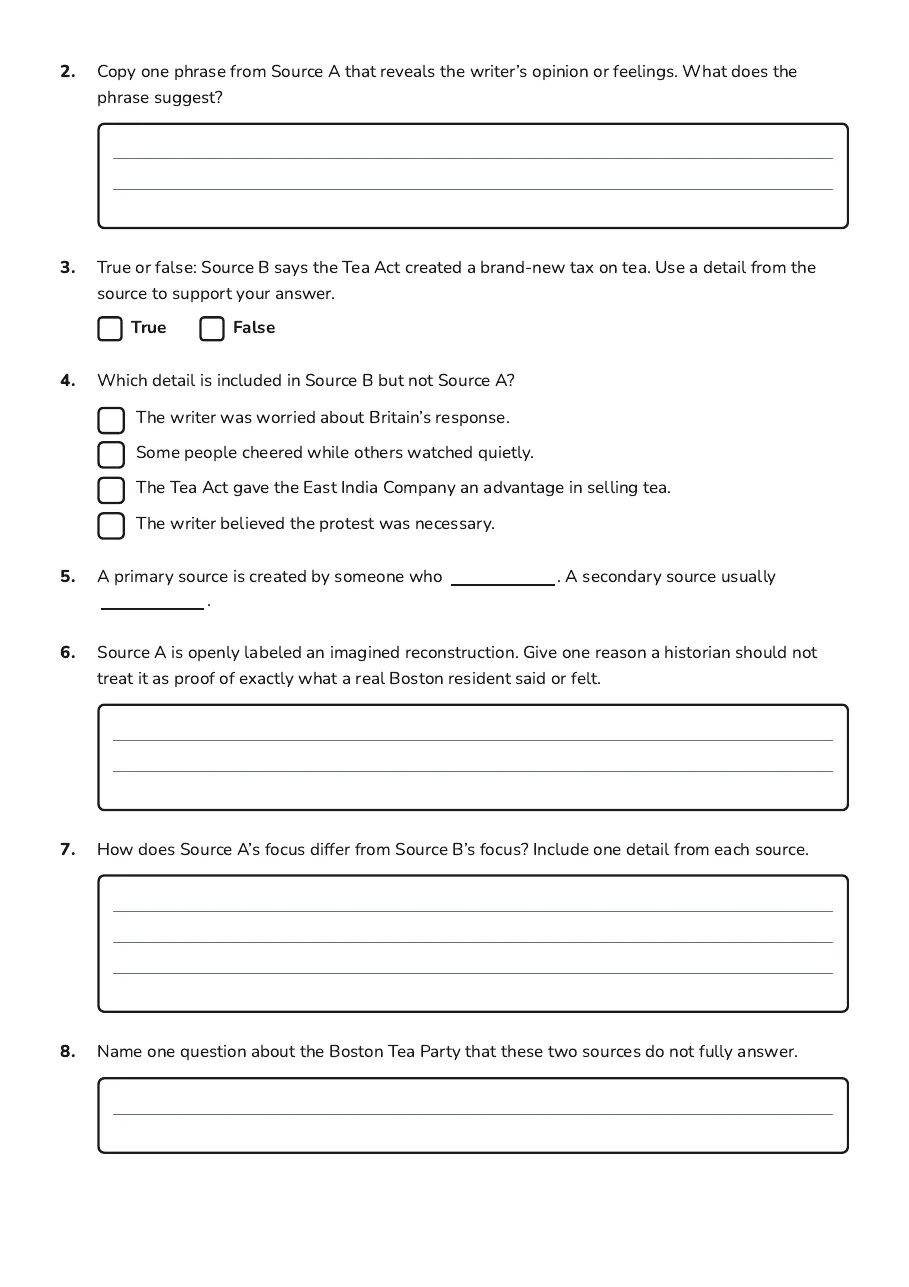
- The writer was worried about Britain’s response.
- Some people cheered while others watched quietly.
- The Tea Act gave the East India Company an advantage in selling tea.
- The writer believed the protest was necessary.
3 printable pages
Page 1
Page 2
Page 3
About This Worksheet
Free in Kuraplan
Sign up free, grab the PDF, and customize it for your class.
Print-Ready
Formatted for standard paper. Clean layout, easy to read.
AI-Generated
Created with Kuraplan's AI, designed for real classroom use.
For Teachers & Parents
Use in classrooms, for homework, tutoring, or homeschool.
Need a custom version of this worksheet?
Kuraplan's AI generates custom worksheets in seconds — differentiated for every learner, aligned to your curriculum.
Generate Custom Worksheets — Free