Washington Jefferson Political Legacy
A free us history worksheet ready for your classroom. Open in Kuraplan to grab the print-ready PDF, customize it for your students, or generate a fresh version in seconds.
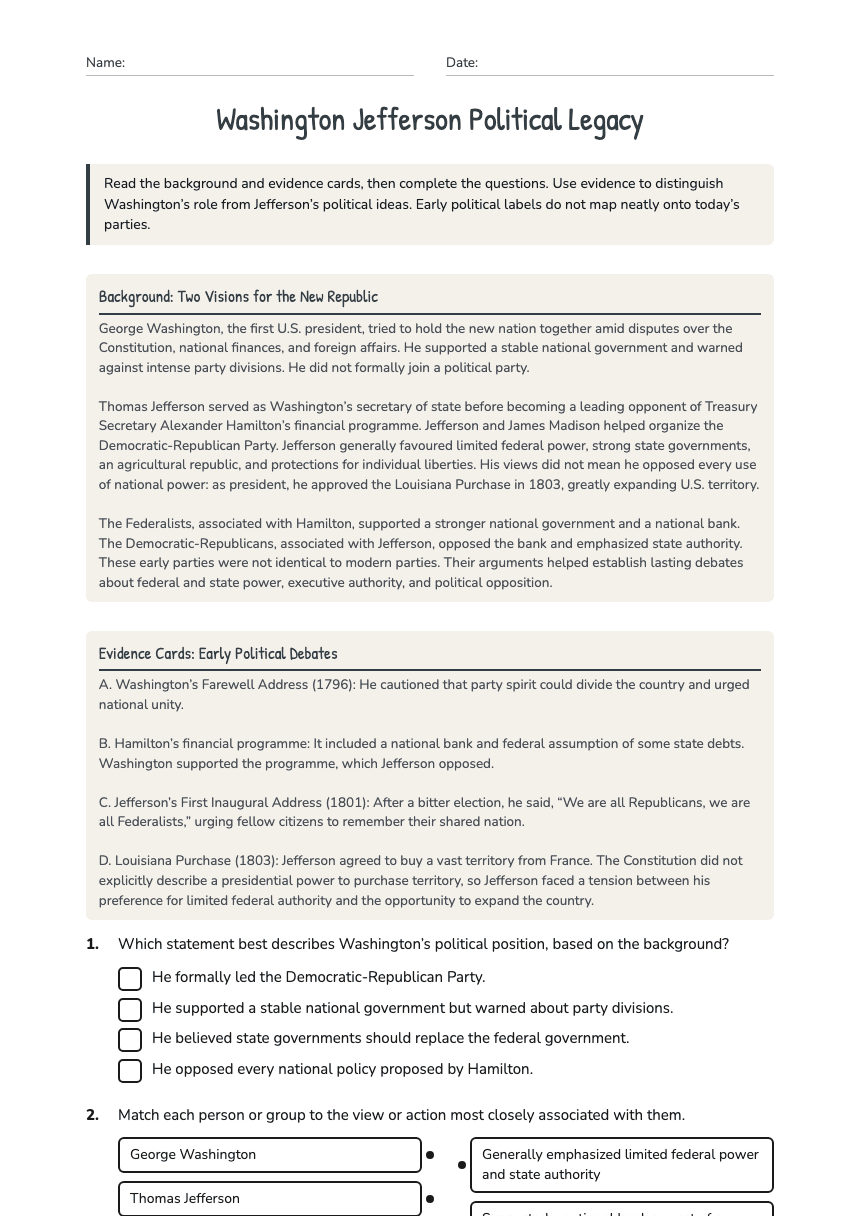
Washington Jefferson Political Legacy
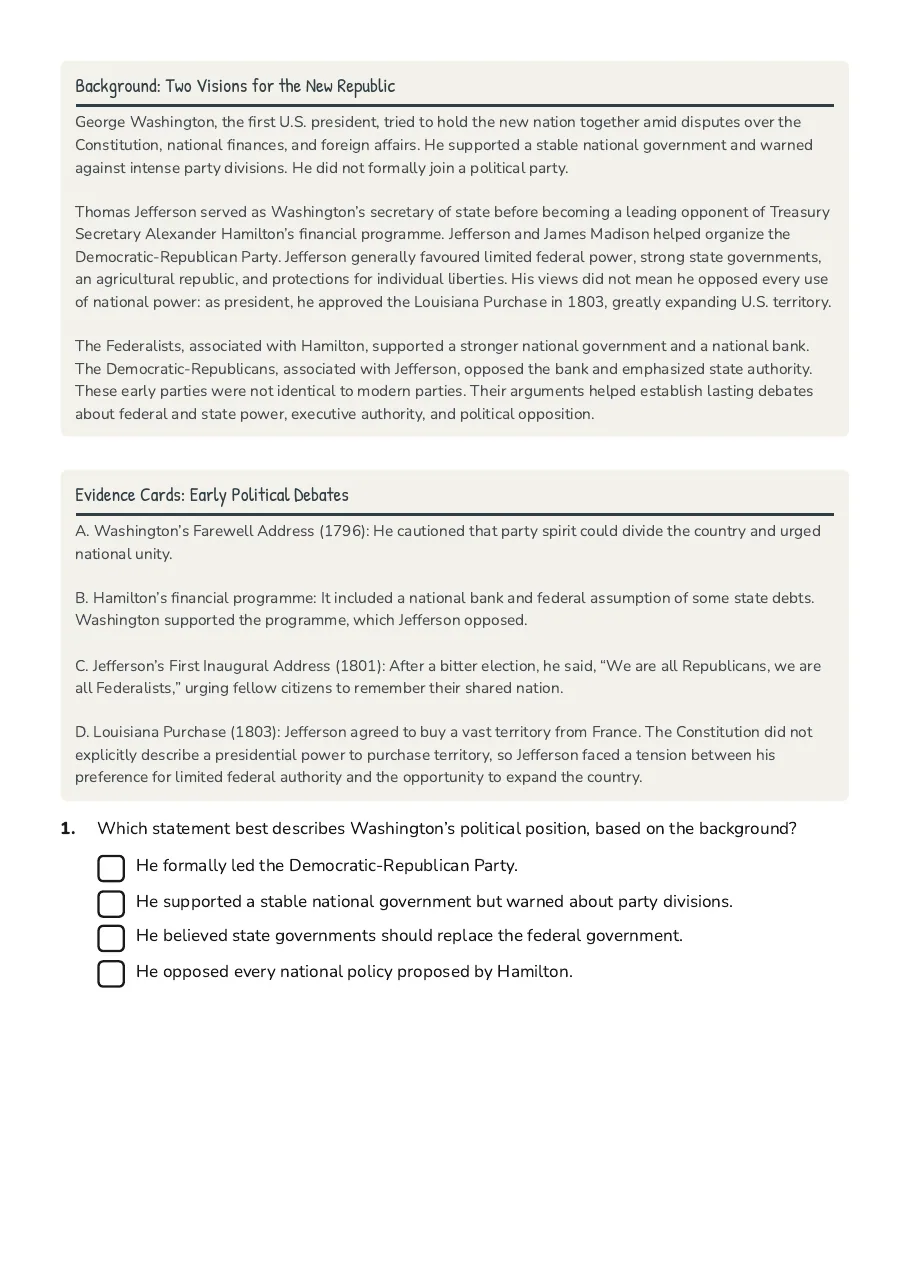
Background: Two Visions for the New Republic
George Washington, the first U.S. president, tried to hold the new nation together amid disputes over the Constitution, national finances, and foreign affairs. He supported a stable national government and warned against intense party divisions. He did not formally join a political party. Thomas Jefferson served as Washington’s secretary of state before becoming a leading opponent of Treasury Secretary Alexander Hamilton’s financial programme. Jefferson and James Madison helped organize the Democratic-Republican Party. Jefferson generally favoured limited federal power, strong state governments, an agricultural republic, and protections for individual liberties. His views did not mean he opposed every use of national power: as president, he approved the Louisiana Purchase in 1803, greatly expanding U.S. territory. The Federalists, associated with Hamilton, supported a stronger national government and a national bank. The Democratic-Republicans, associated with Jefferson, opposed the bank and emphasized state authority. These early parties were not identical to modern parties. Their arguments helped establish lasting debates about federal and state power, executive authority, and political opposition.
Evidence Cards: Early Political Debates
A. Washington’s Farewell Address (1796): He cautioned that party spirit could divide the country and urged national unity. B. Hamilton’s financial programme: It included a national bank and federal assumption of some state debts. Washington supported the programme, which Jefferson opposed. C. Jefferson’s First Inaugural Address (1801): After a bitter election, he said, “We are all Republicans, we are all Federalists,” urging fellow citizens to remember their shared nation. D. Louisiana Purchase (1803): Jefferson agreed to buy a vast territory from France. The Constitution did not explicitly describe a presidential power to purchase territory, so Jefferson faced a tension between his preference for limited federal authority and the opportunity to expand the country.
- He formally led the Democratic-Republican Party.
- He supported a stable national government but warned about party divisions.
- He believed state governments should replace the federal government.
- He opposed every national policy proposed by Hamilton.
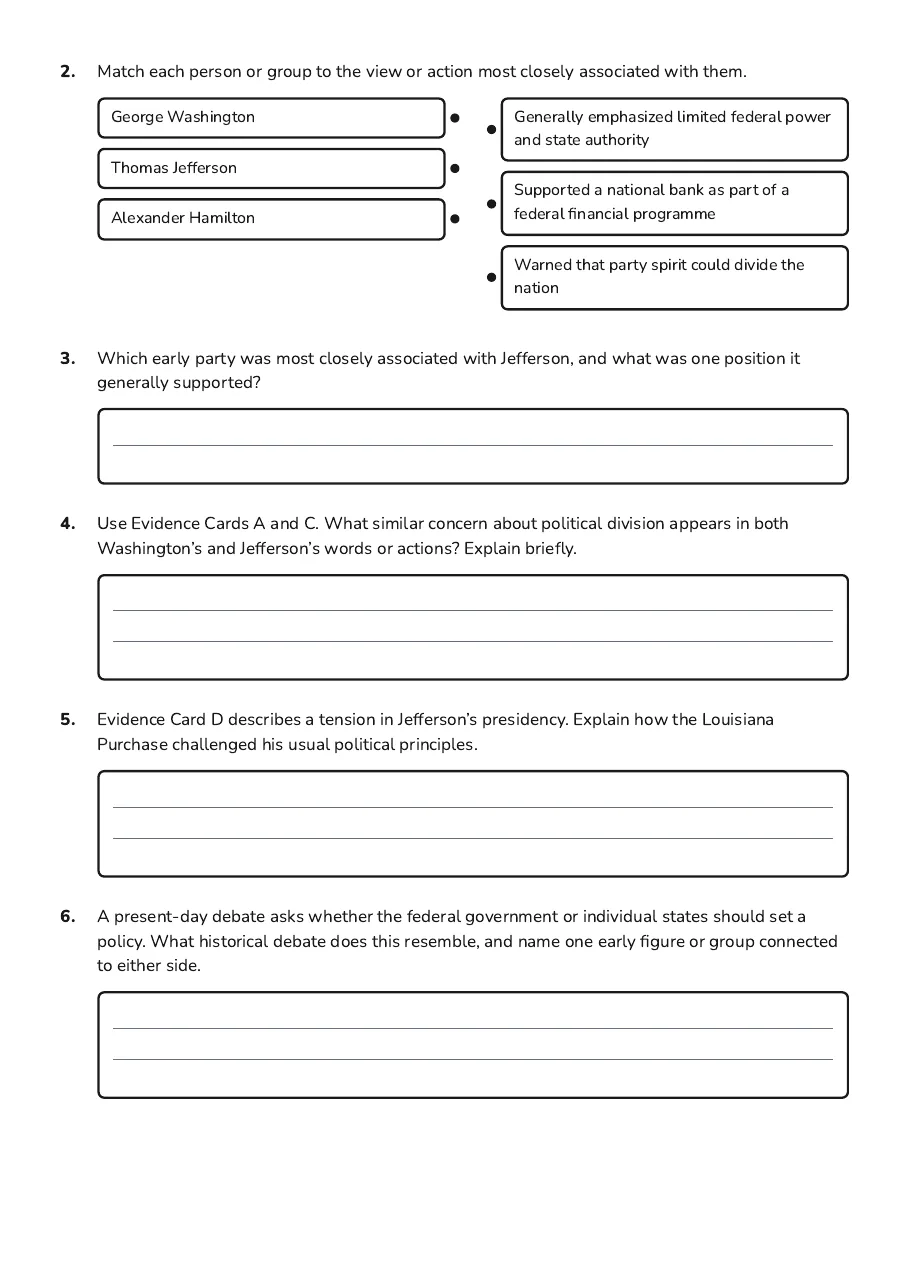
- George Washington
- Thomas Jefferson
- Alexander Hamilton
- Generally emphasized limited federal power and state authority
- Supported a national bank as part of a federal financial programme
- Warned that party spirit could divide the nation
4 printable pages

Page 1
Page 2
Page 3
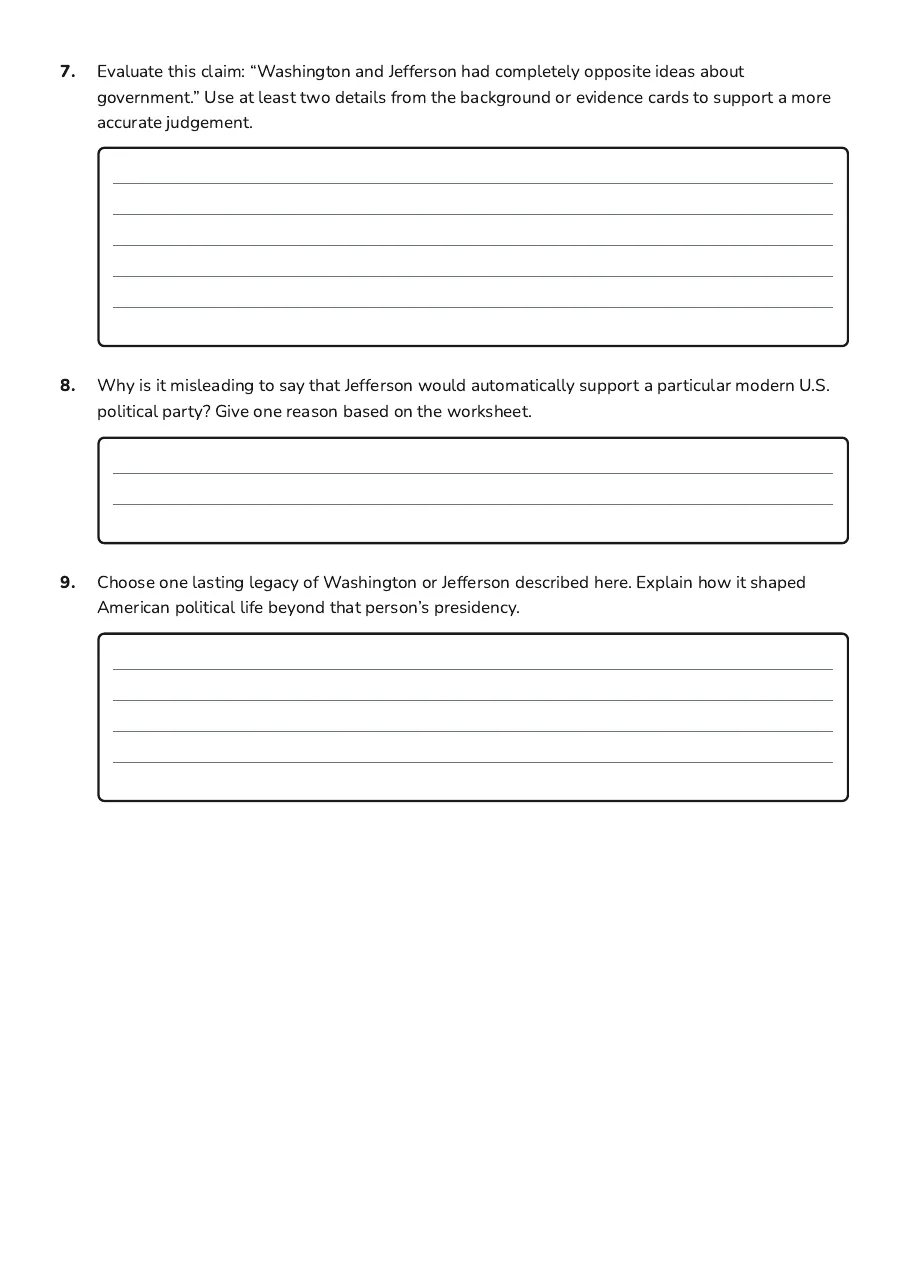
Page 4
About This Worksheet
Free in Kuraplan
Sign up free, grab the PDF, and customize it for your class.
Print-Ready
Formatted for standard paper. Clean layout, easy to read.
AI-Generated
Created with Kuraplan's AI, designed for real classroom use.
For Teachers & Parents
Use in classrooms, for homework, tutoring, or homeschool.
Need a custom version of this worksheet?
Kuraplan's AI generates custom worksheets in seconds — differentiated for every learner, aligned to your curriculum.
Generate Custom Worksheets — FreeMore US History Worksheets
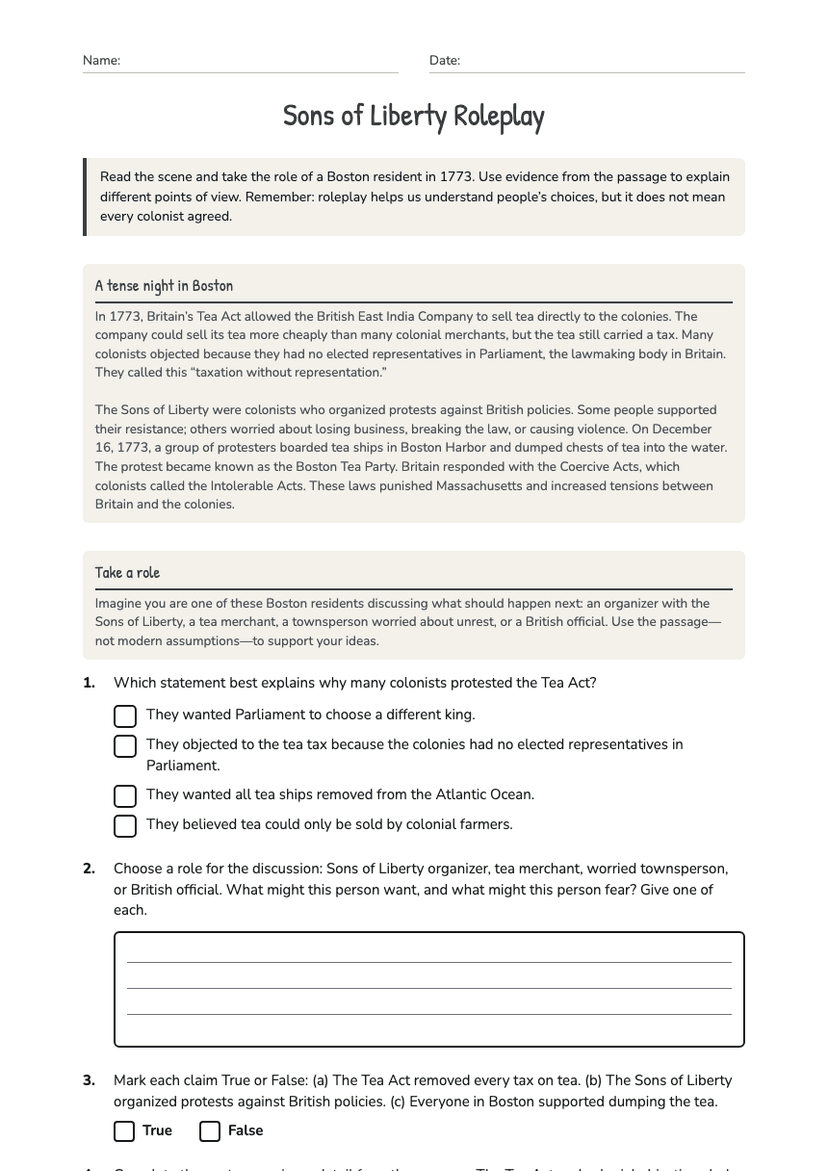
Sons of Liberty Roleplay
Free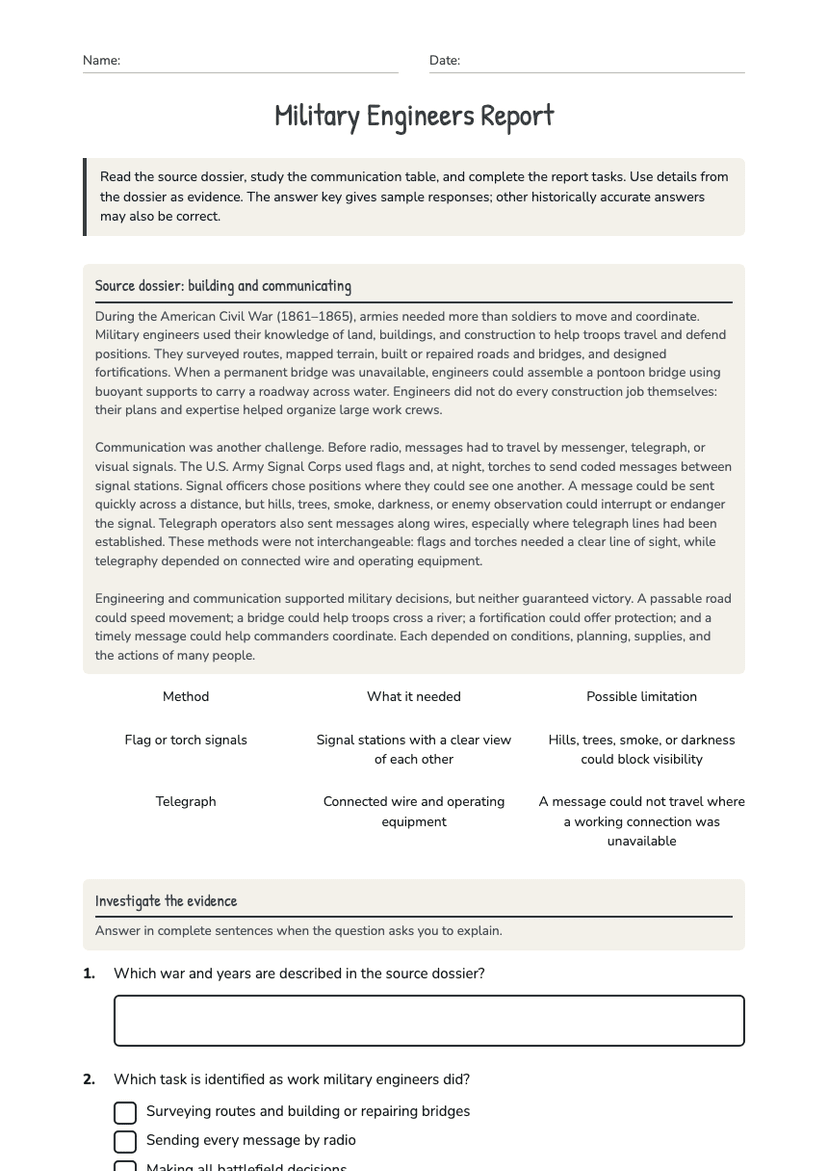
Military Engineers Report
Free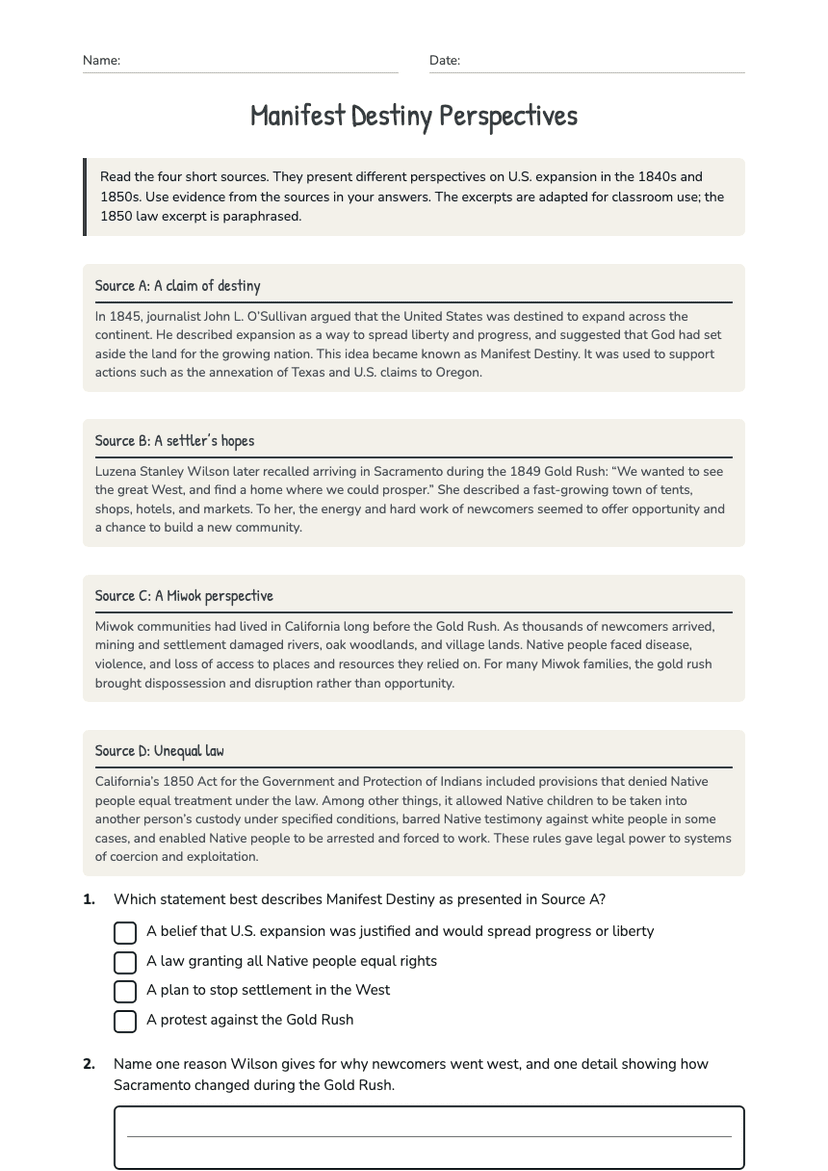
Manifest Destiny Perspectives
Free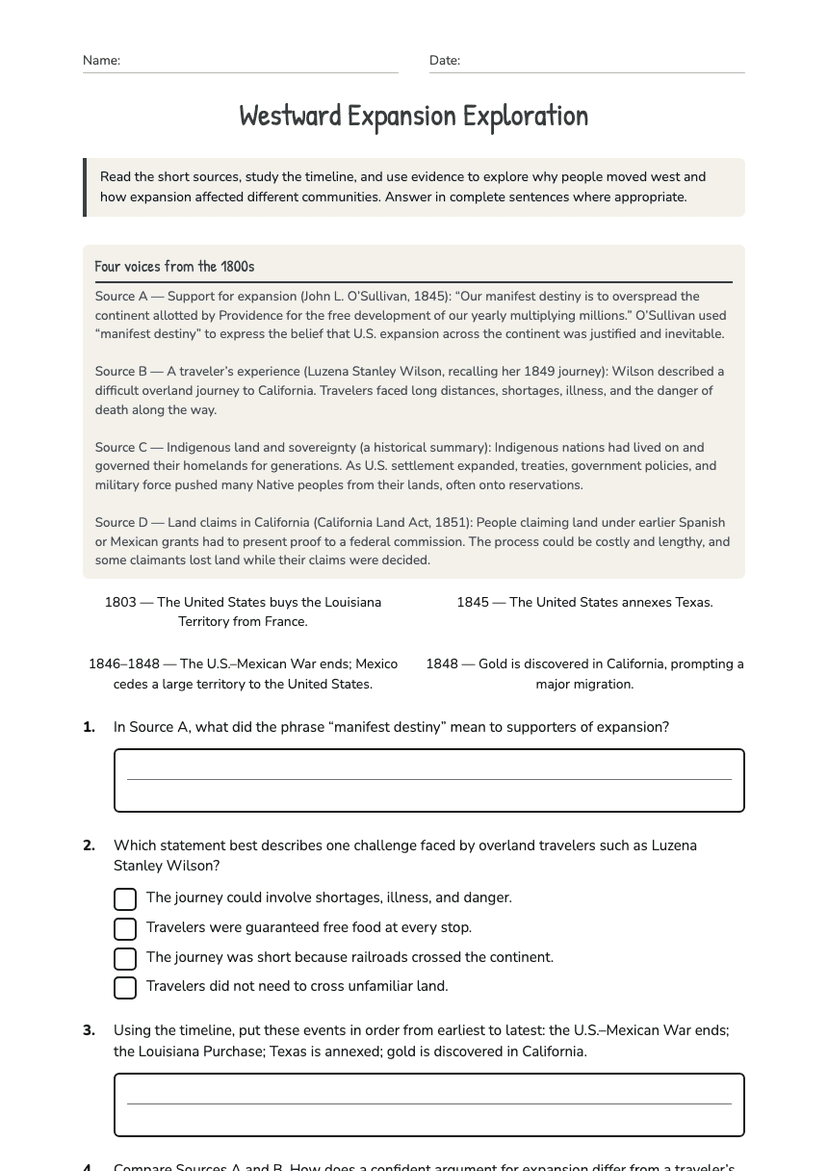
Westward Expansion Exploration
Free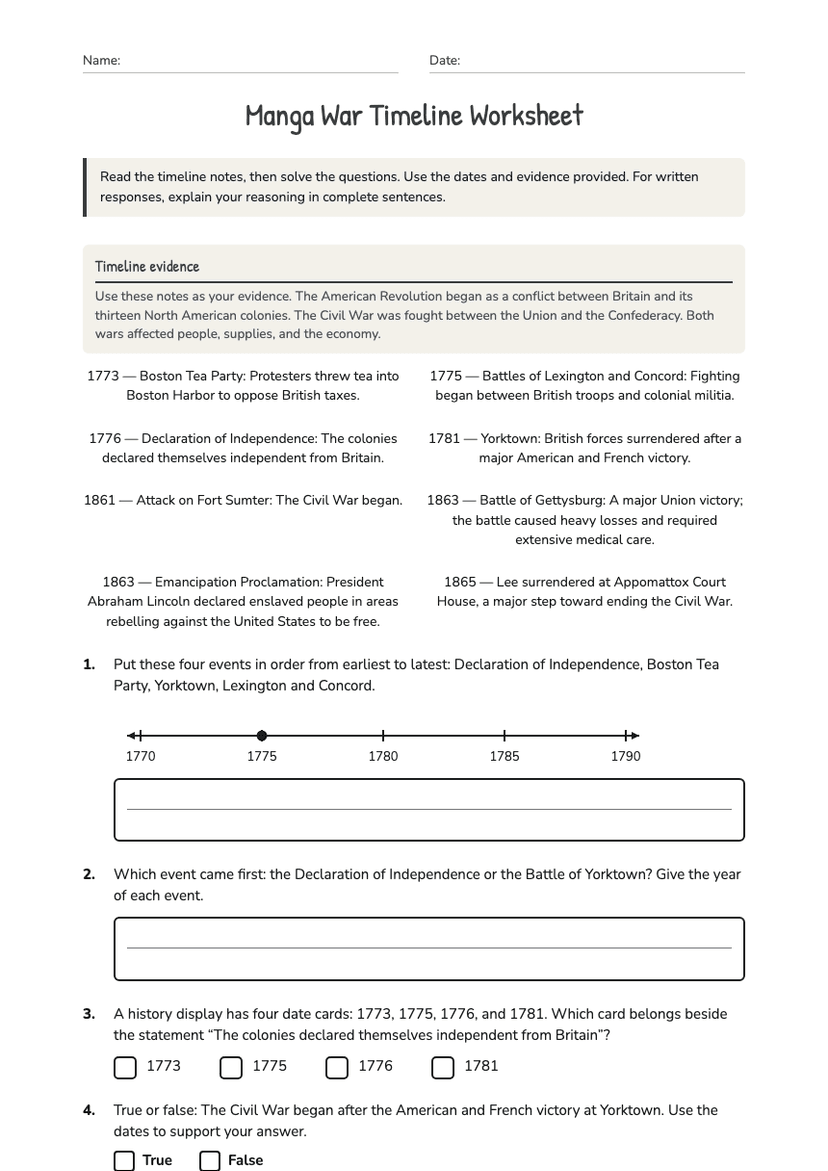
Manga War Timeline Worksheet
Free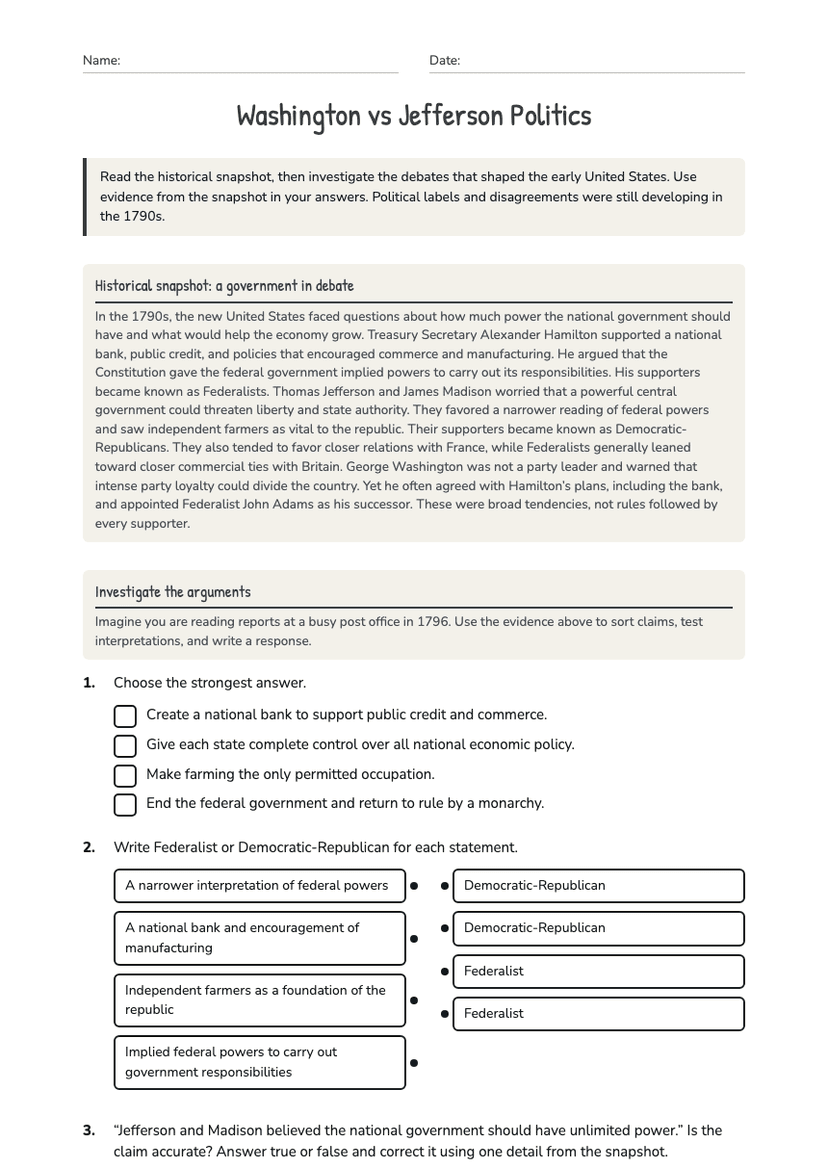
Washington vs Jefferson Politics
Free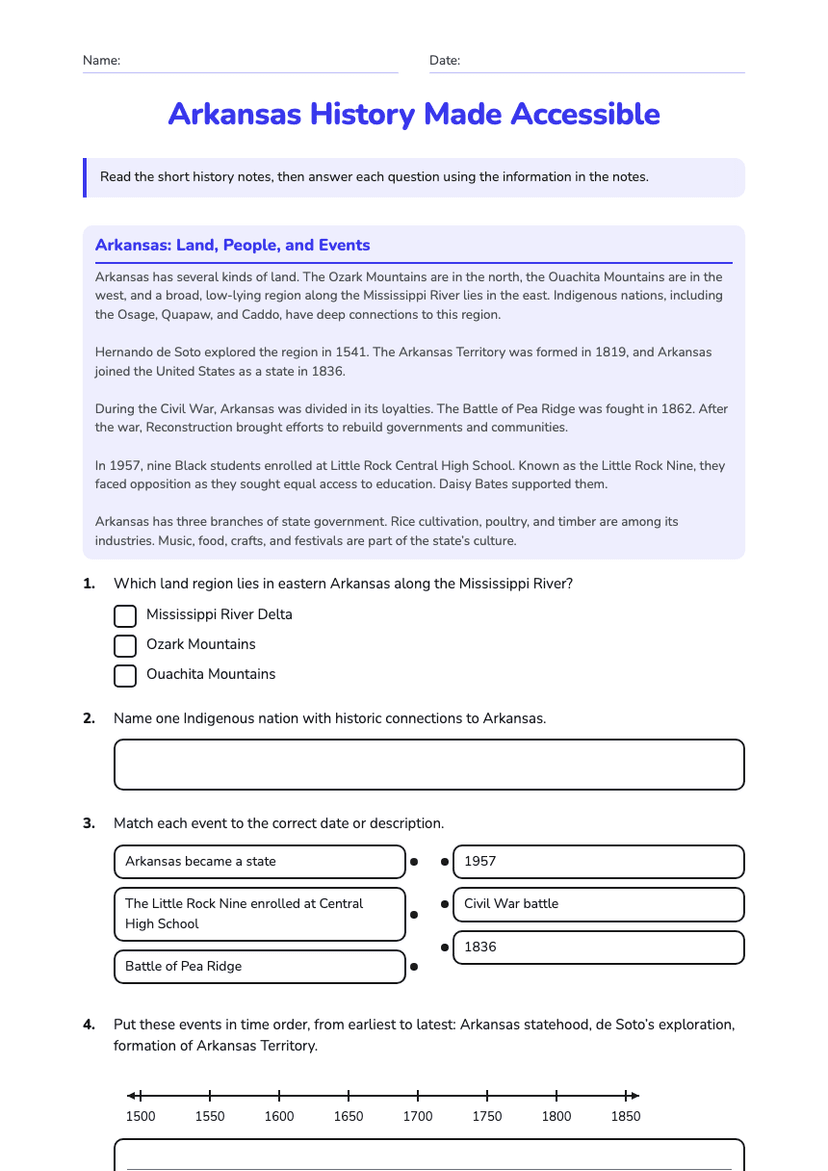
Arkansas History Made Accessible
Free