Understanding Coeliac Disease
A free health worksheet ready for your classroom. Open in Kuraplan to grab the print-ready PDF, customize it for your students, or generate a fresh version in seconds.
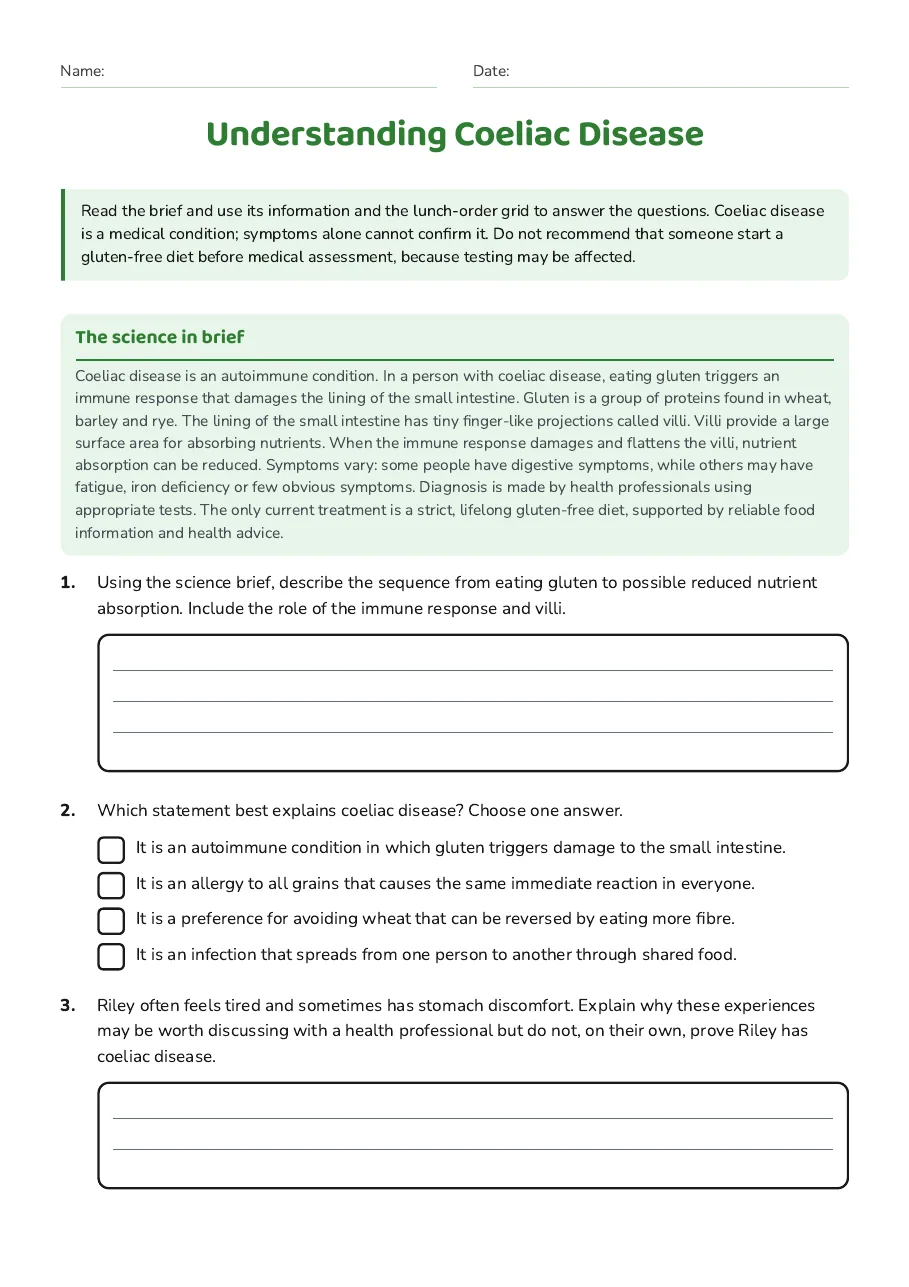
Understanding Coeliac Disease
The science in brief
Coeliac disease is an autoimmune condition. In a person with coeliac disease, eating gluten triggers an immune response that damages the lining of the small intestine. Gluten is a group of proteins found in wheat, barley and rye. The lining of the small intestine has tiny finger-like projections called villi. Villi provide a large surface area for absorbing nutrients. When the immune response damages and flattens the villi, nutrient absorption can be reduced. Symptoms vary: some people have digestive symptoms, while others may have fatigue, iron deficiency or few obvious symptoms. Diagnosis is made by health professionals using appropriate tests. The only current treatment is a strict, lifelong gluten-free diet, supported by reliable food information and health advice.
- It is an autoimmune condition in which gluten triggers damage to the small intestine.
- It is an allergy to all grains that causes the same immediate reaction in everyone.
- It is a preference for avoiding wheat that can be reversed by eating more fibre.
- It is an infection that spreads from one person to another through shared food.
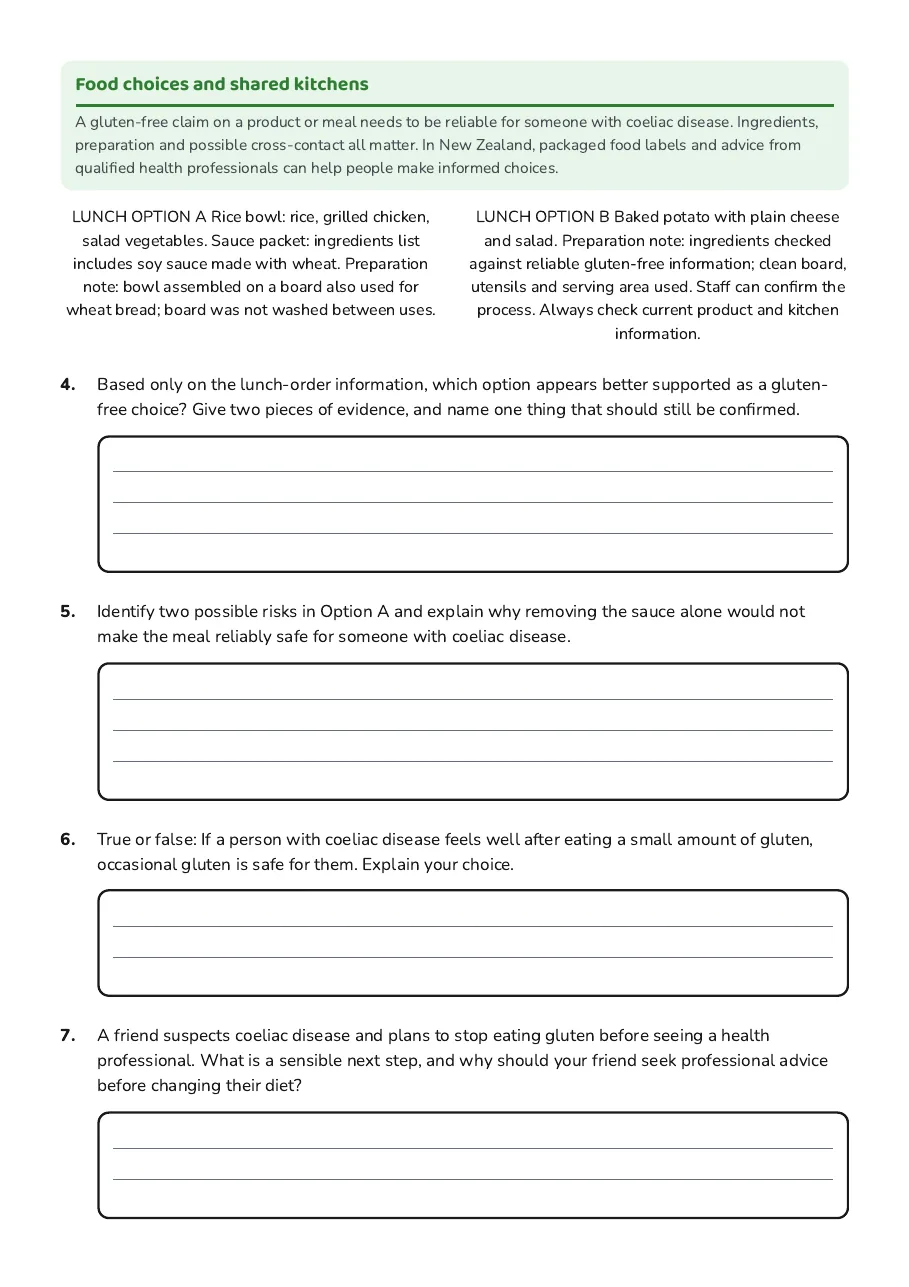
Food choices and shared kitchens
A gluten-free claim on a product or meal needs to be reliable for someone with coeliac disease. Ingredients, preparation and possible cross-contact all matter. In New Zealand, packaged food labels and advice from qualified health professionals can help people make informed choices.
LUNCH OPTION A Rice bowl: rice, grilled chicken, salad vegetables. Sauce packet: ingredients list includes soy sauce made with wheat. Preparation note: bowl assembled on a board also used for wheat bread; board was not washed between uses.
LUNCH OPTION B Baked potato with plain cheese and salad. Preparation note: ingredients checked against reliable gluten-free information; clean board, utensils and serving area used. Staff can confirm the process. Always check current product and kitchen information.
3 printable pages
Page 1
Page 2
Page 3
About This Worksheet
Free in Kuraplan
Sign up free, grab the PDF, and customize it for your class.
Print-Ready
Formatted for standard paper. Clean layout, easy to read.
AI-Generated
Created with Kuraplan's AI, designed for real classroom use.
For Teachers & Parents
Use in classrooms, for homework, tutoring, or homeschool.
Need a custom version of this worksheet?
Kuraplan's AI generates custom worksheets in seconds — differentiated for every learner, aligned to your curriculum.
Generate Custom Worksheets — FreeMore Health Worksheets
Pasifika Diet & Health Choices
Free
Adolescent Nutrition Needs Worksheet
Free
Gluten-Free Living Essentials
Free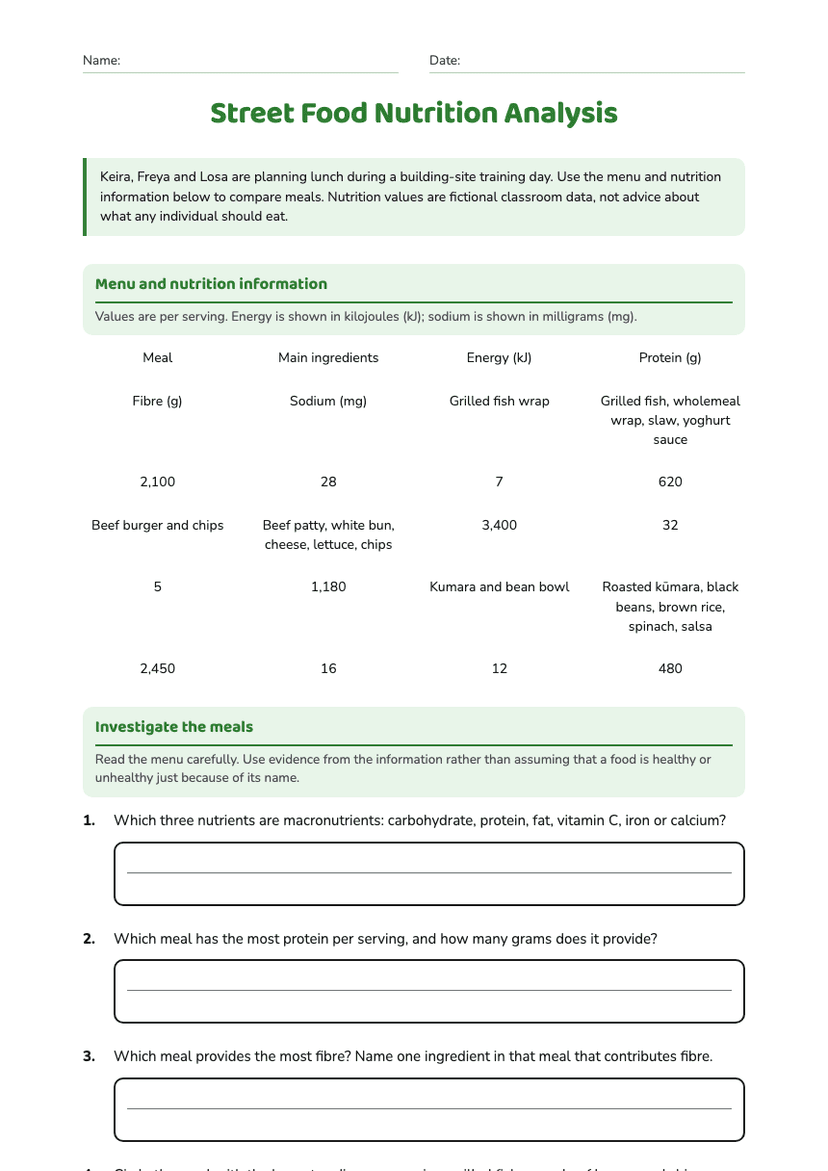
Street Food Nutrition Analysis
Free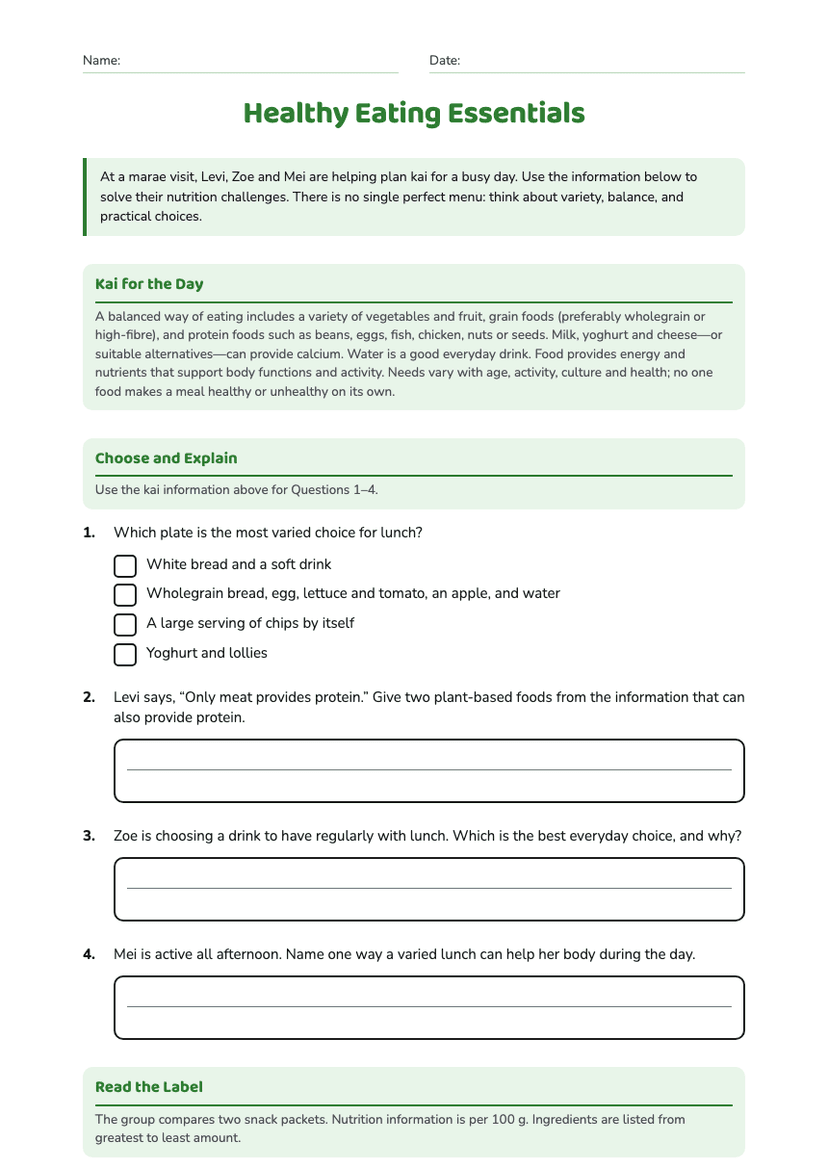
Healthy Eating Essentials
Free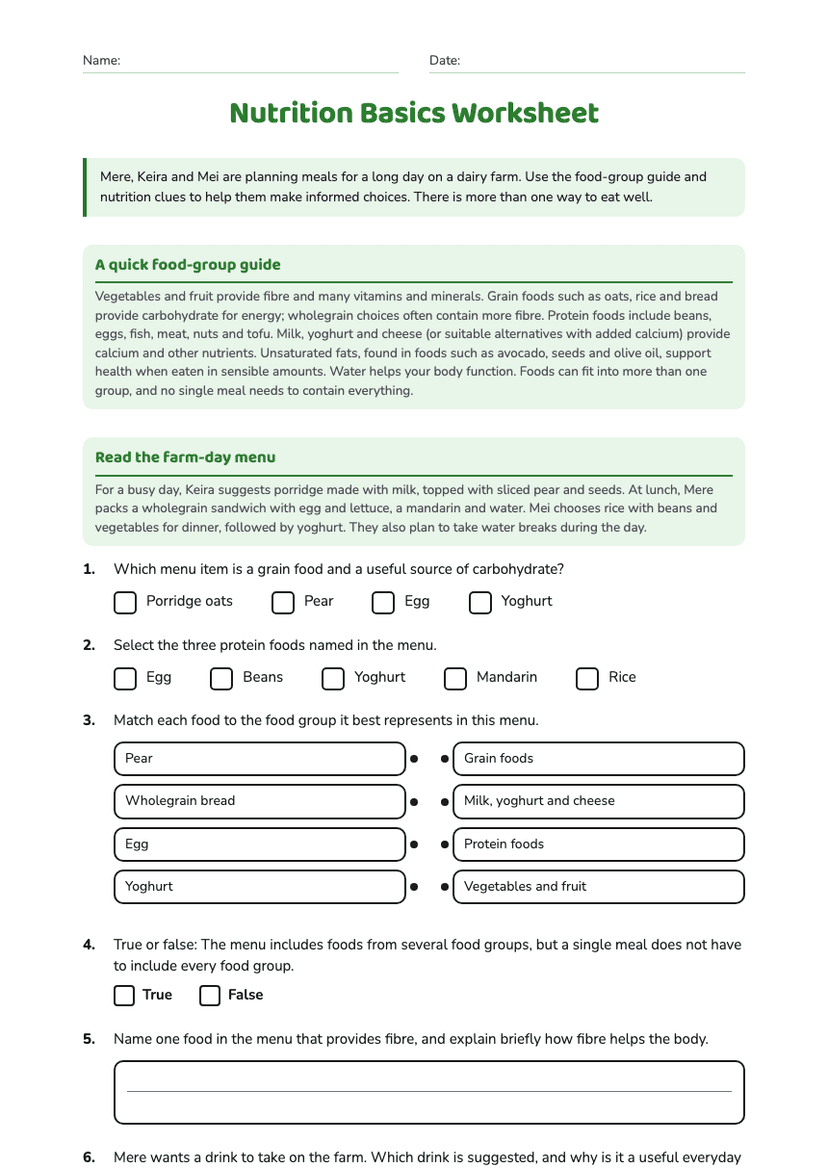
Nutrition Basics Worksheet
Free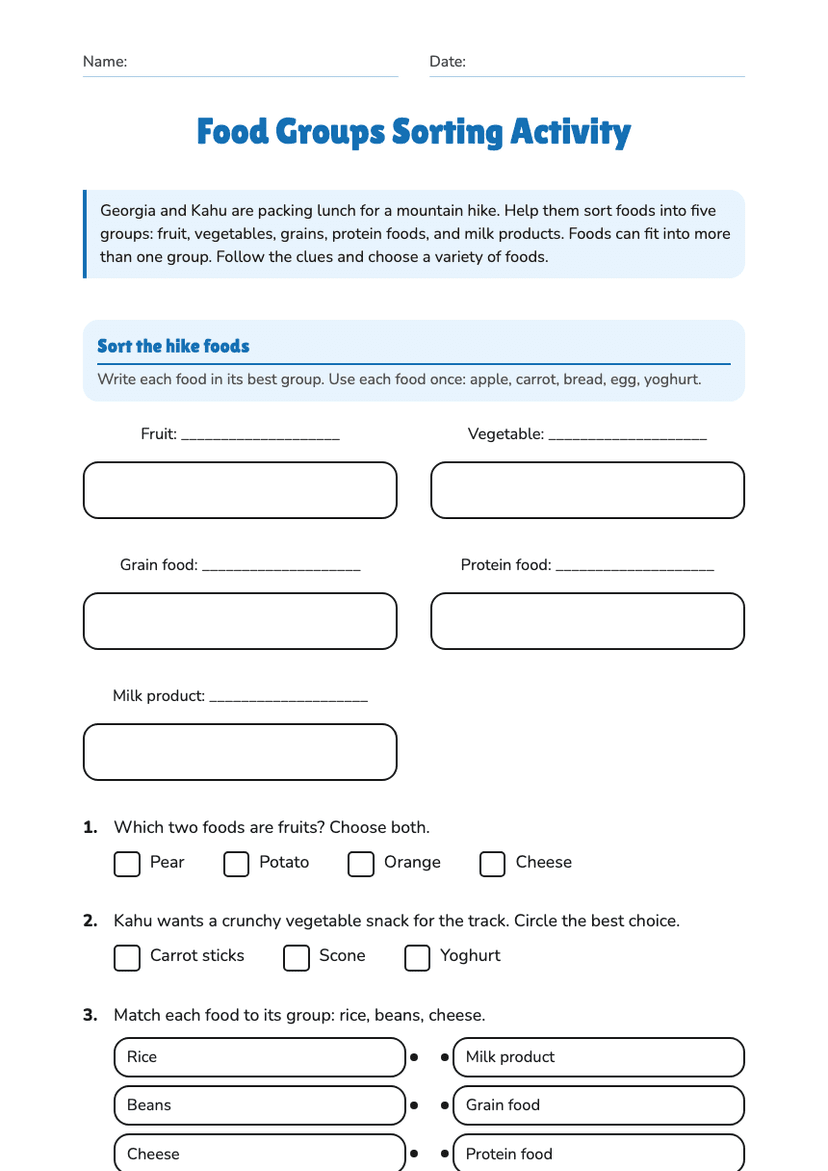
Food Groups Sorting Activity
Free