Atoms and Molecules Reading
A free science worksheet ready for your classroom. Open in Kuraplan to grab the print-ready PDF, customize it for your students, or generate a fresh version in seconds.
Atoms and Molecules Reading
📖 Reading Passage: The Building Blocks of Matter
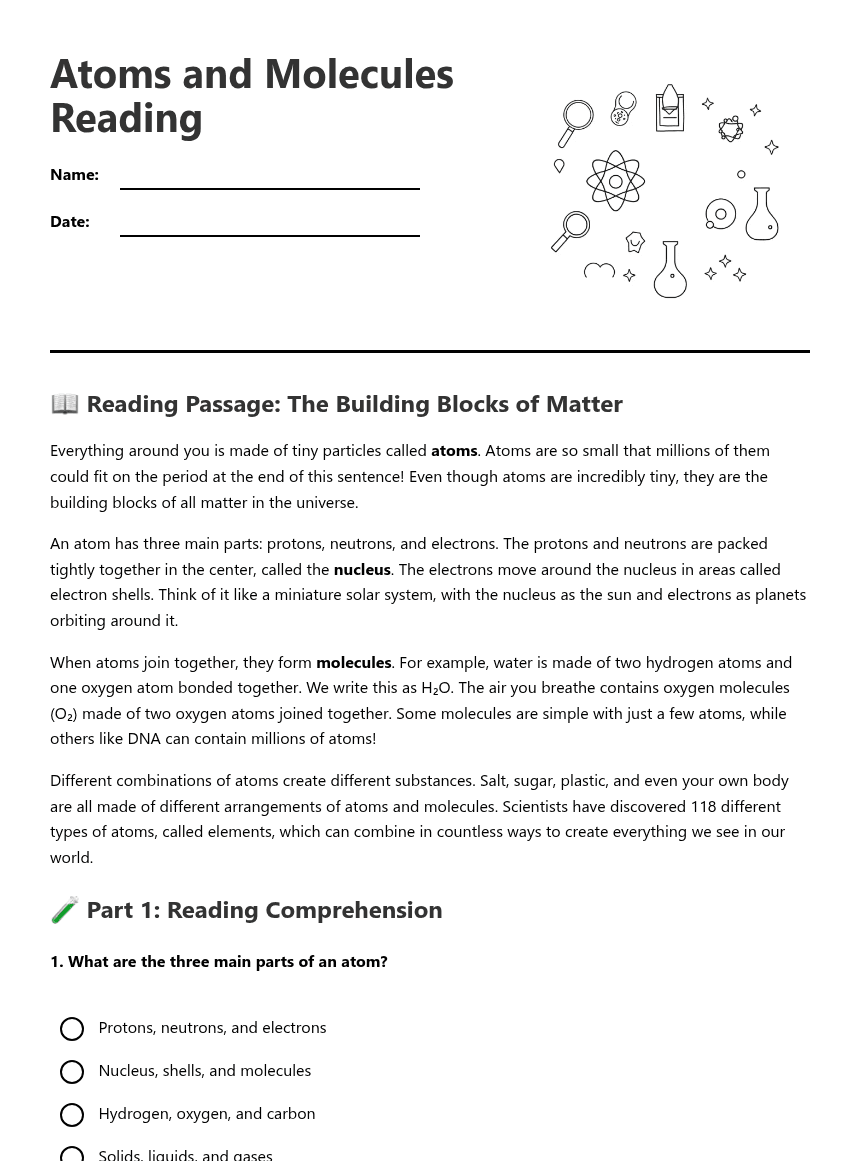
Everything around you is made of tiny particles called atoms. Atoms are so small that millions of them could fit on the period at the end of this sentence! Even though atoms are incredibly tiny, they are the building blocks of all matter in the universe.
An atom has three main parts: protons, neutrons, and electrons. The protons and neutrons are packed tightly together in the center, called the nucleus. The electrons move around the nucleus in areas called electron shells. Think of it like a miniature solar system, with the nucleus as the sun and electrons as planets orbiting around it.
When atoms join together, they form molecules. For example, water is made of two hydrogen atoms and one oxygen atom bonded together. We write this as H₂O. The air you breathe contains oxygen molecules (O₂) made of two oxygen atoms joined together. Some molecules are simple with just a few atoms, while others like DNA can contain millions of atoms!
Different combinations of atoms create different substances. Salt, sugar, plastic, and even your own body are all made of different arrangements of atoms and molecules. Scientists have discovered 118 different types of atoms, called elements, which can combine in countless ways to create everything we see in our world.
🧪 Part 1: Reading Comprehension
Scientists have discovered _______ different types of atoms.
✏️ Part 2: Critical Thinking and Writing
About This Worksheet
Free in Kuraplan
Sign up free, grab the PDF, and customize it for your class.
Print-Ready
Formatted for standard paper. Clean layout, easy to read.
AI-Generated
Created with Kuraplan's AI, designed for real classroom use.
For Teachers & Parents
Use in classrooms, for homework, tutoring, or homeschool.
Need a custom version of this worksheet?
Kuraplan's AI generates custom worksheets in seconds — differentiated for every learner, aligned to your curriculum.
Generate Custom Worksheets — FreeMore Science Worksheets
Lithium Element Worksheet
Free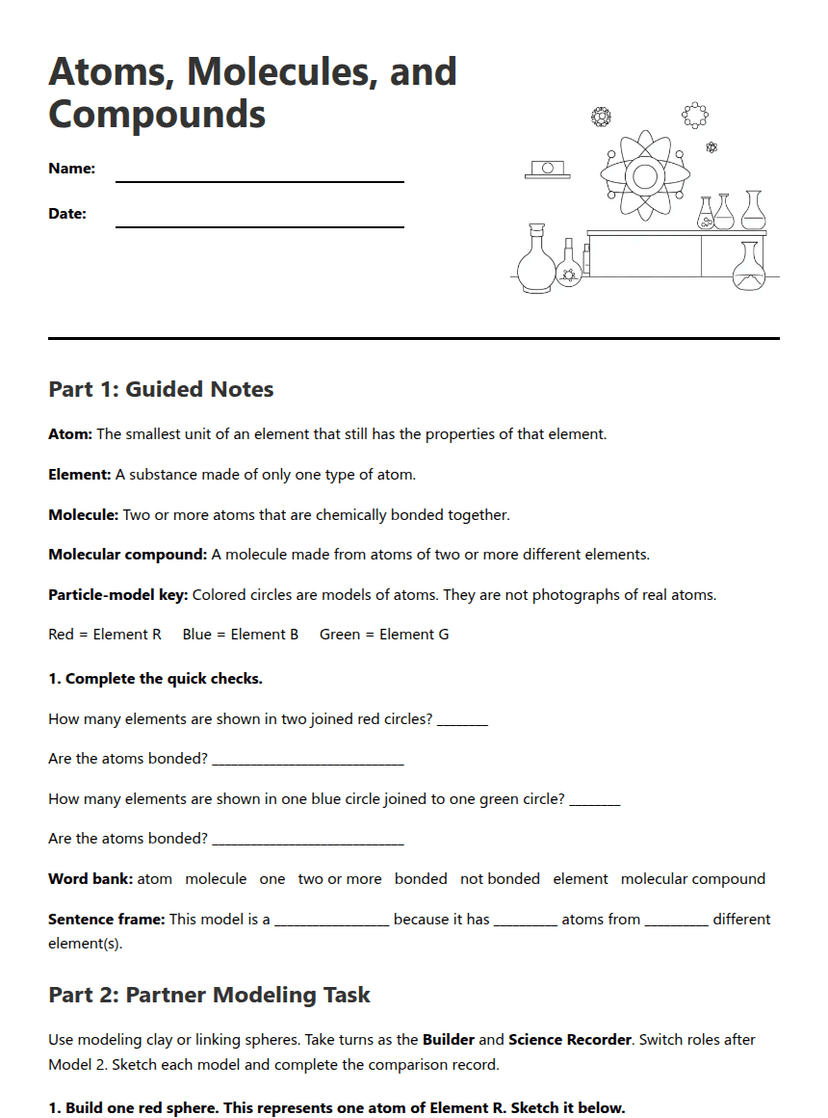
Atoms, Molecules, and Compounds
Free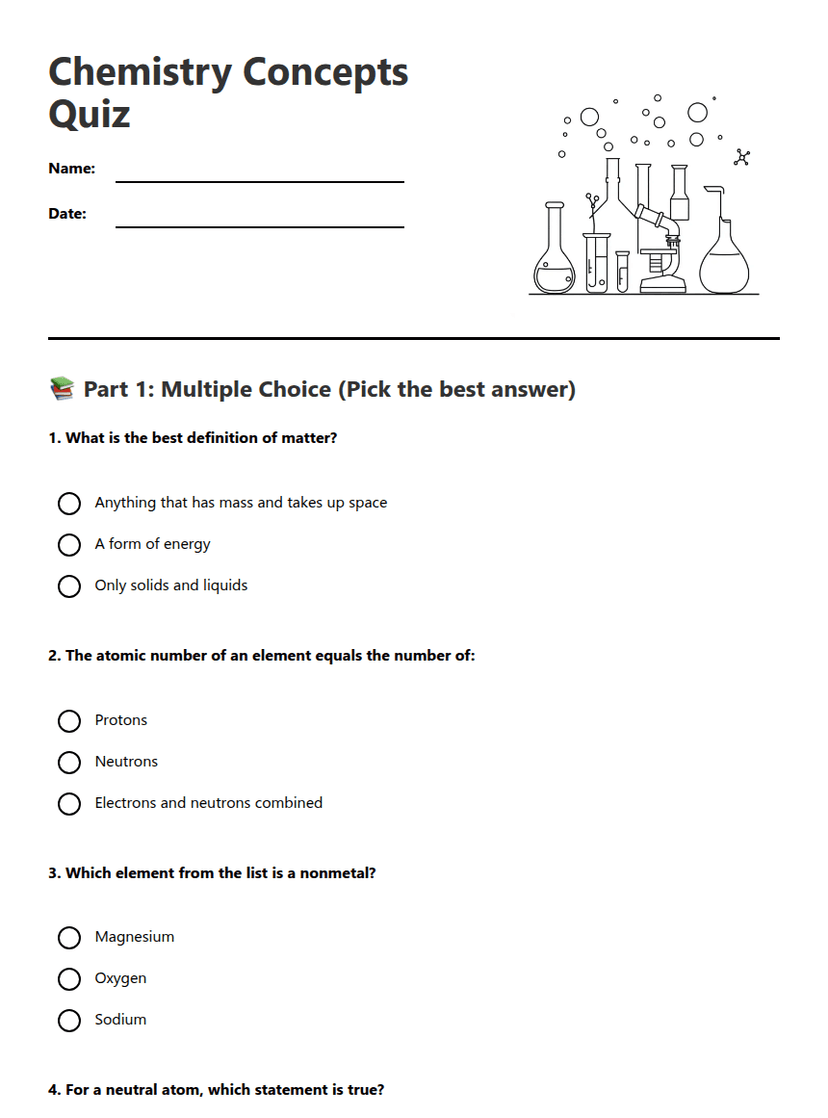
Chemistry Concepts Quiz
Free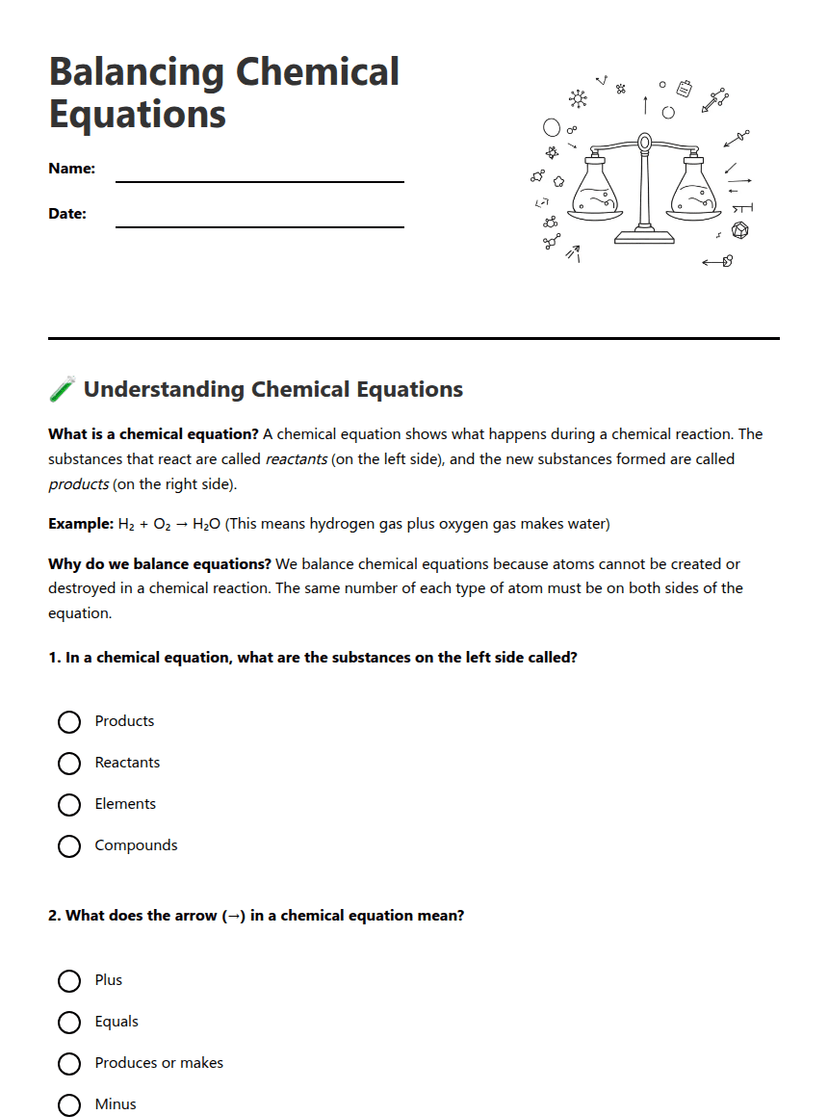
Balancing Chemical Equations
Free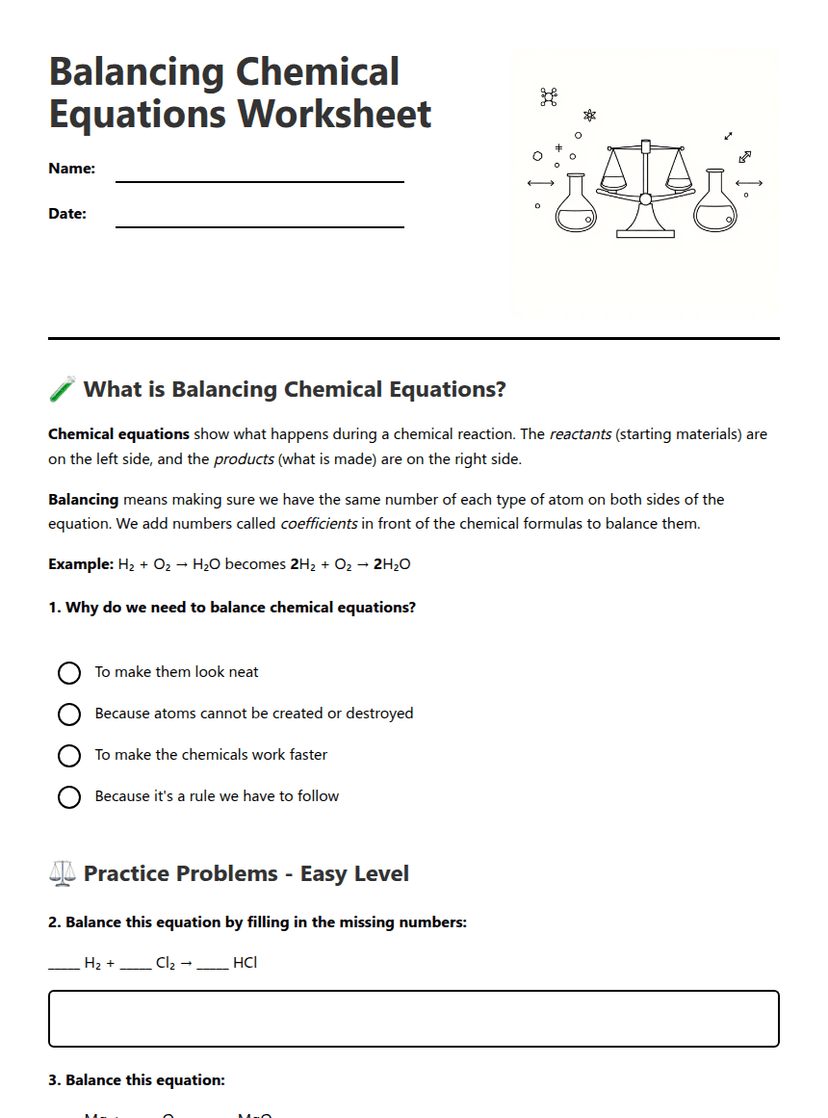
Balancing Chemical Equations Worksheet
Free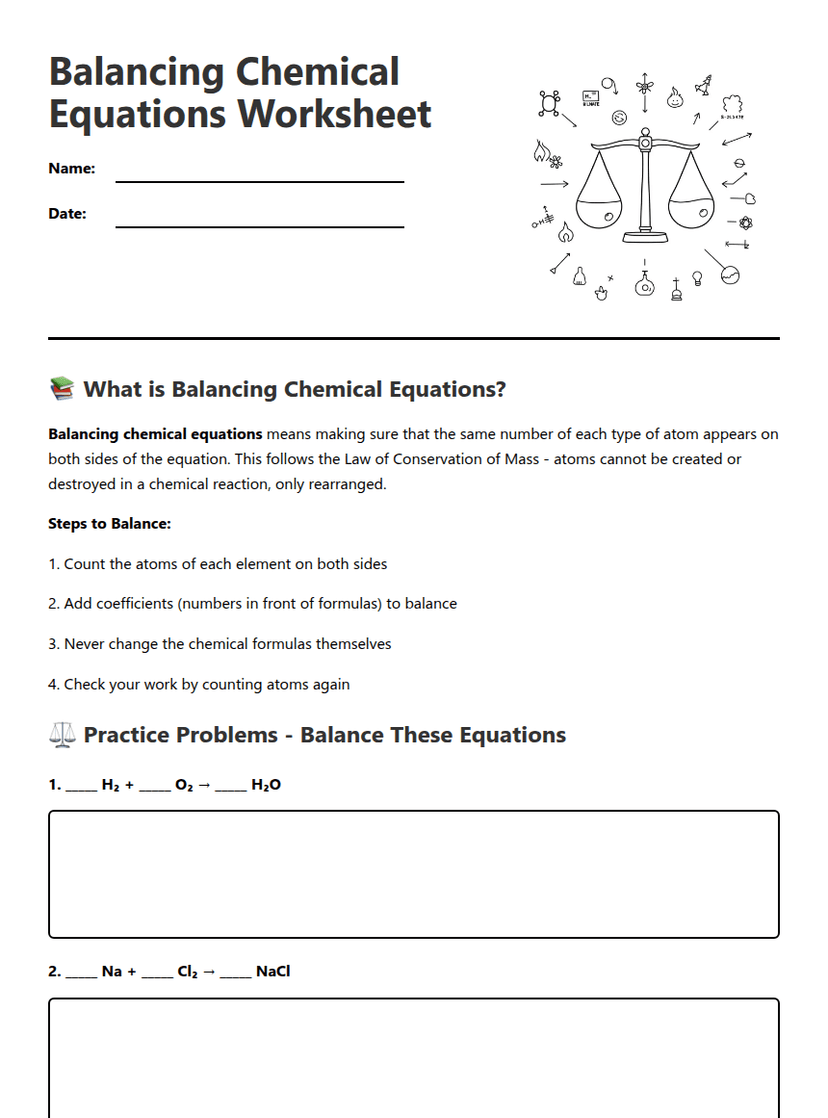
Balancing Chemical Equations Worksheet
Free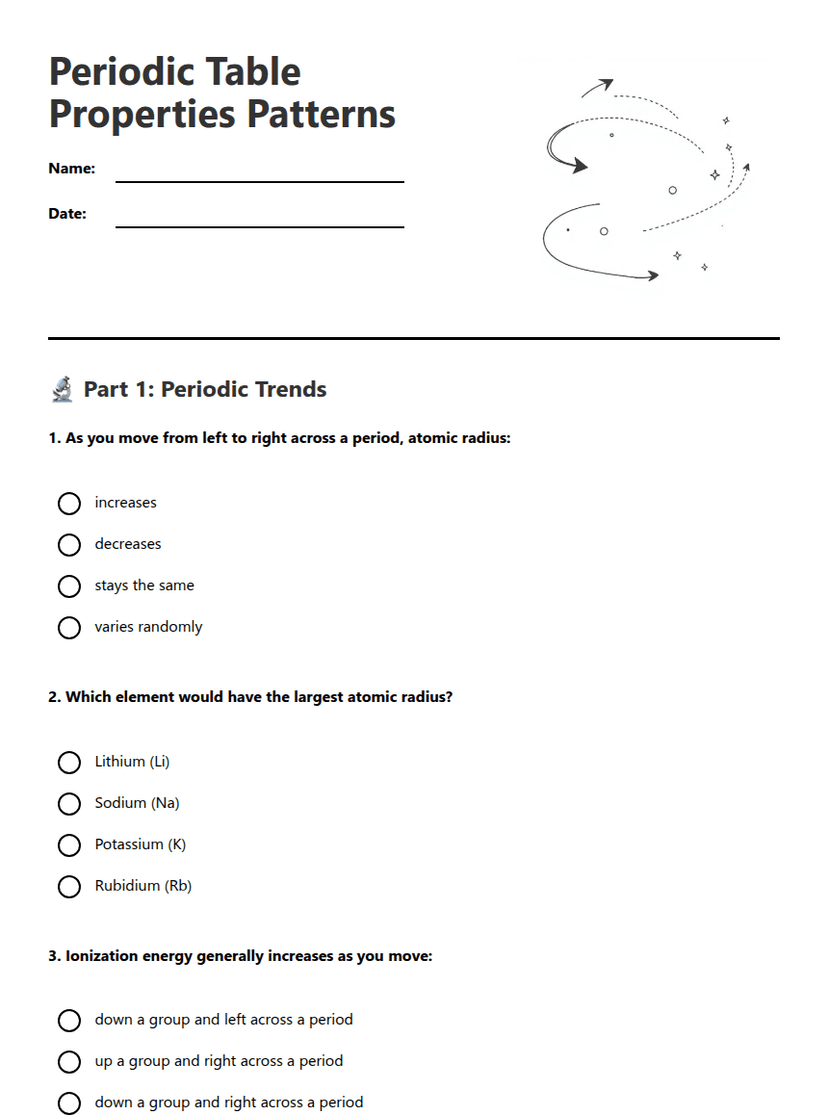
Periodic Table Properties Patterns
Free