Separation Techniques & Density
A free science worksheet ready for your classroom. Open in Kuraplan to grab the print-ready PDF, customize it for your students, or generate a fresh version in seconds.
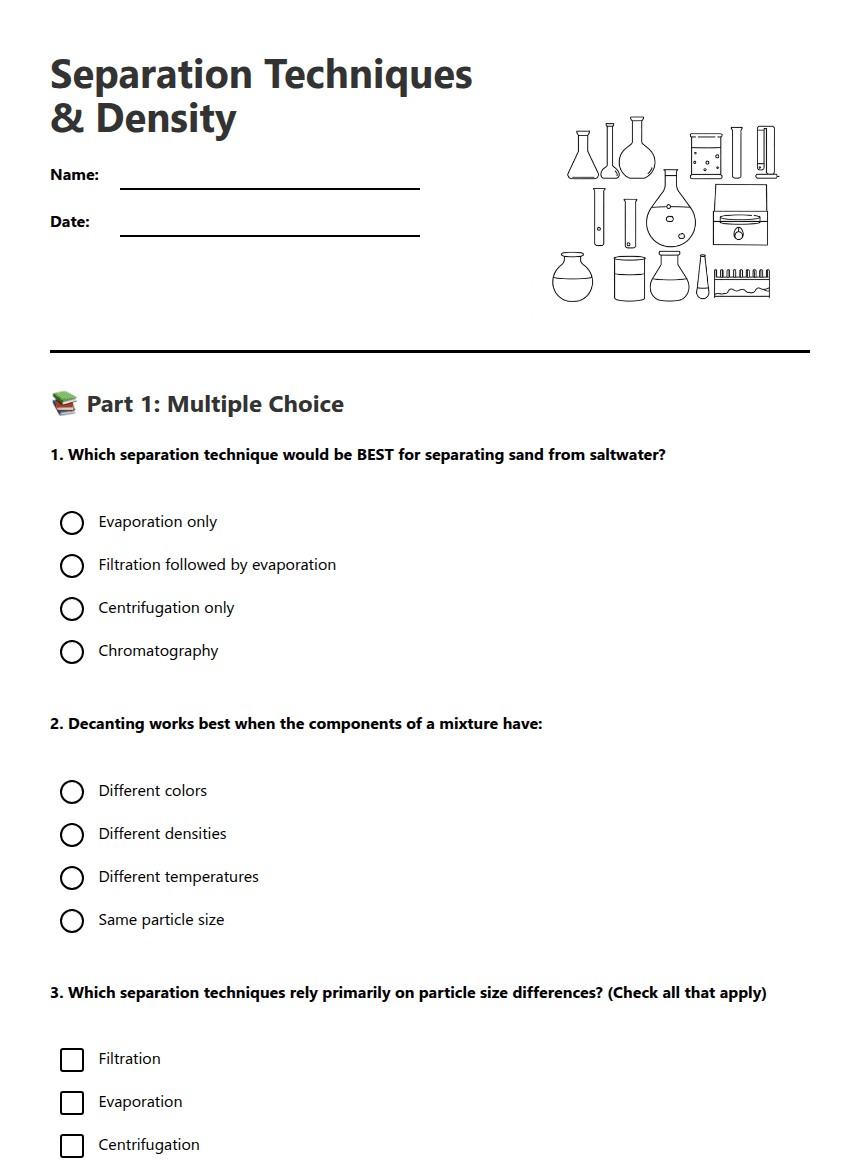
Separation Techniques & Density
📚 Part 1: Multiple Choice
🧮 Part 2: Density Calculations
Substance A: Mass = 45.6 g, Volume = 12.0 mL
Density = __________ g/mL
Substance B: Mass = 28.4 g, Volume = 8.5 mL
Density = __________ g/mL
🔬 Part 3: Separation Design Challenge
• Iron filings (magnetic, insoluble in water)
• Sand (non-magnetic, insoluble in water, density = 2.6 g/mL)
• Salt (soluble in water)
• Vegetable oil (insoluble in water, density = 0.9 g/mL)
Design a step-by-step separation procedure to isolate each component. List the techniques you would use and explain why each step would work:
Step 1: ________________________________________________
Reason: _______________________________________________
Step 2: ________________________________________________
Reason: _______________________________________________
Step 3: ________________________________________________
Reason: _______________________________________________
Step 4: ________________________________________________
Reason: _______________________________________________
About This Worksheet
Free in Kuraplan
Sign up free, grab the PDF, and customize it for your class.
Print-Ready
Formatted for standard paper. Clean layout, easy to read.
AI-Generated
Created with Kuraplan's AI, designed for real classroom use.
For Teachers & Parents
Use in classrooms, for homework, tutoring, or homeschool.
Need a custom version of this worksheet?
Kuraplan's AI generates custom worksheets in seconds — differentiated for every learner, aligned to your curriculum.
Generate Custom Worksheets — FreeMore Science Worksheets
Lithium Element Worksheet
Free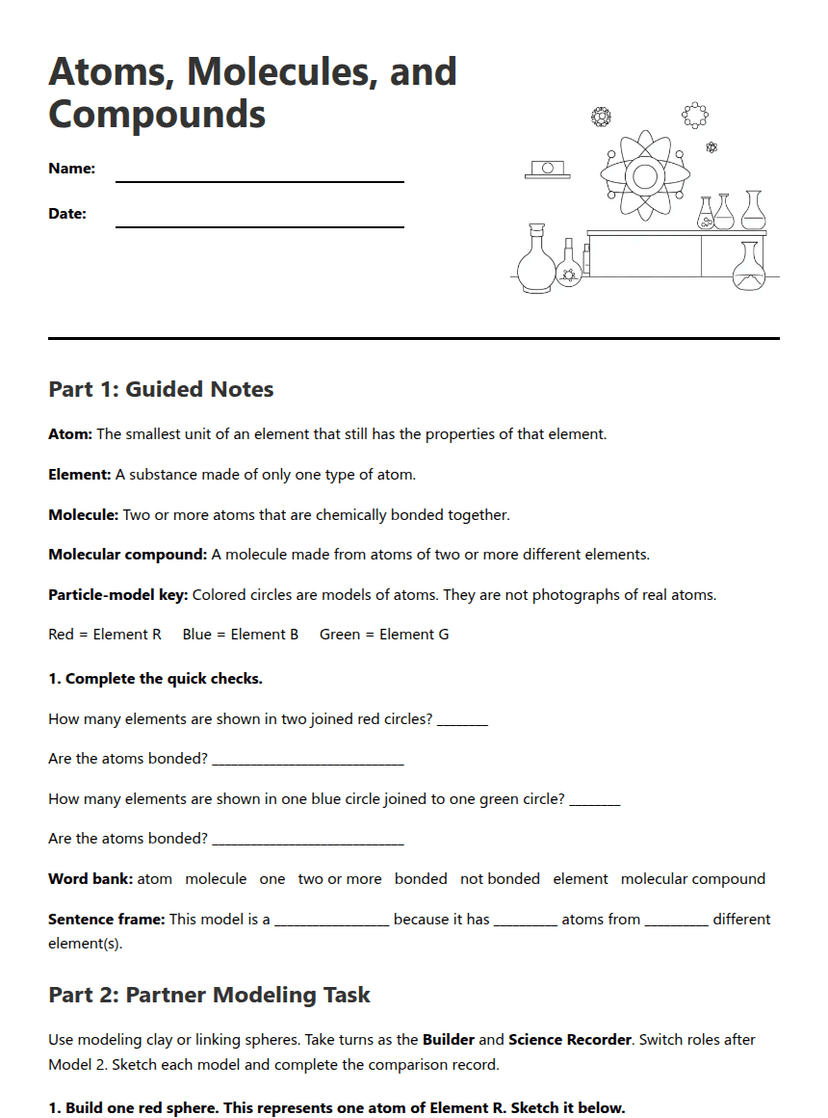
Atoms, Molecules, and Compounds
Free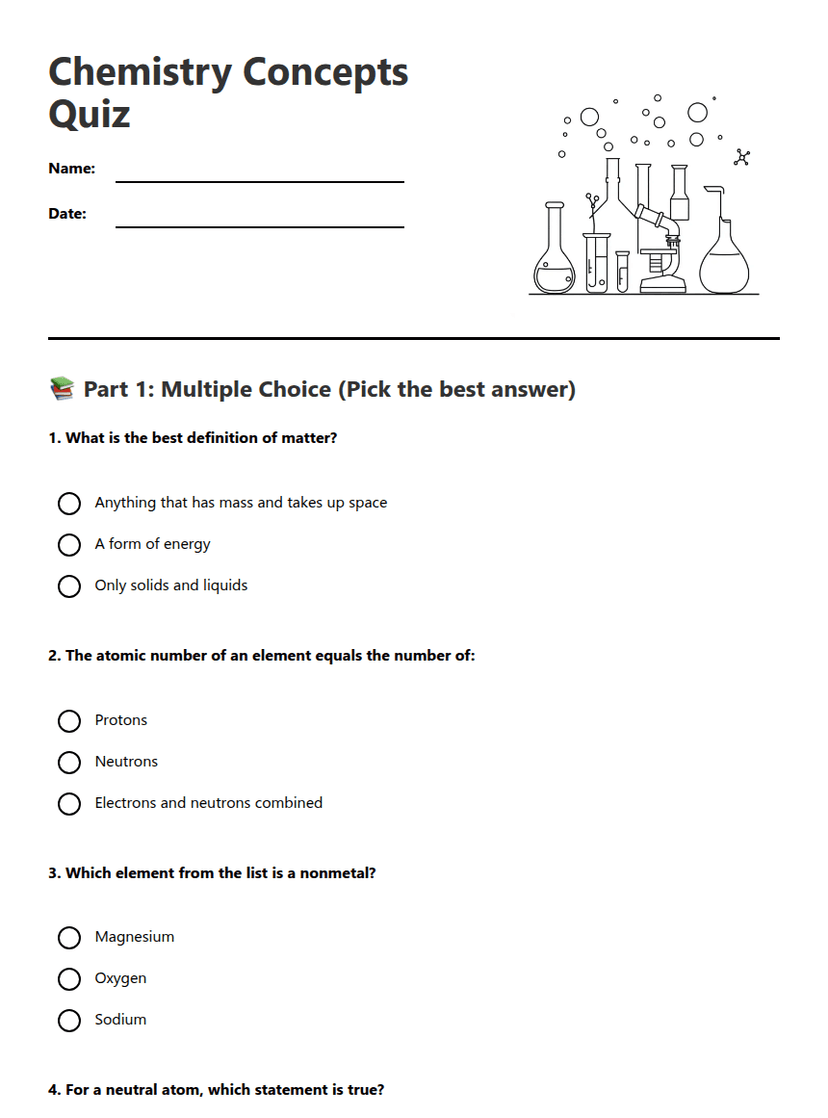
Chemistry Concepts Quiz
Free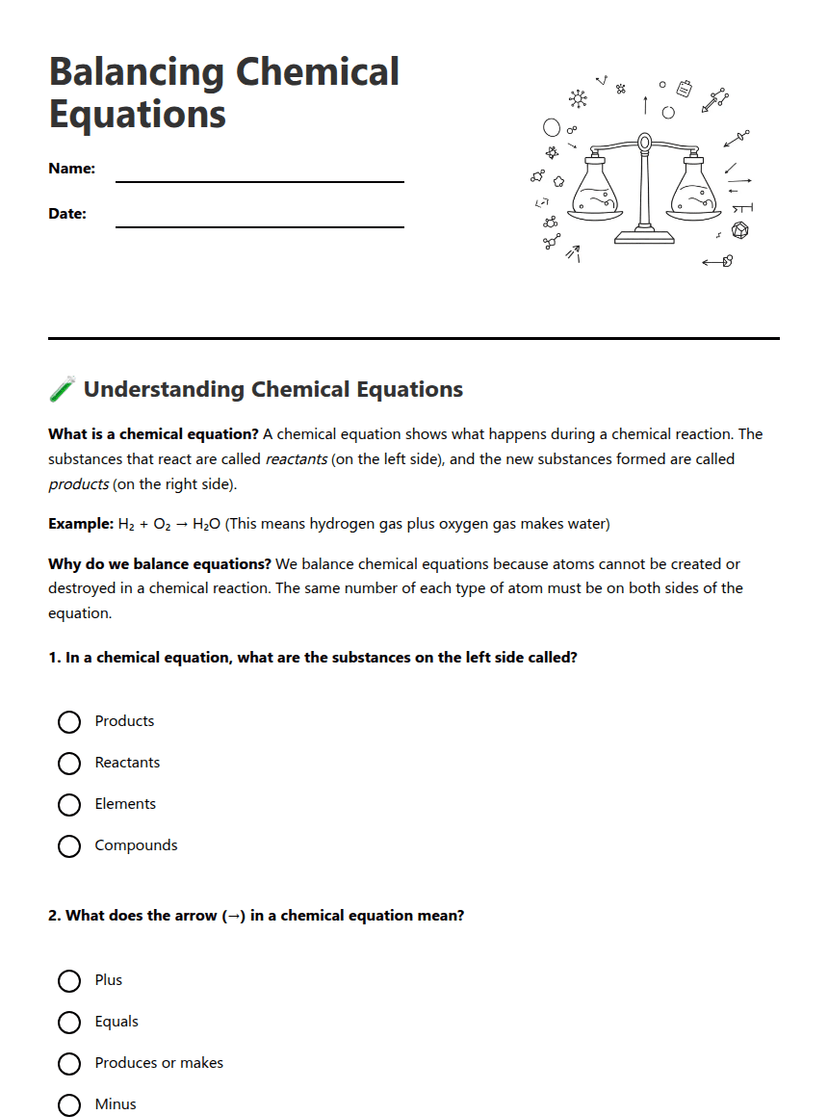
Balancing Chemical Equations
Free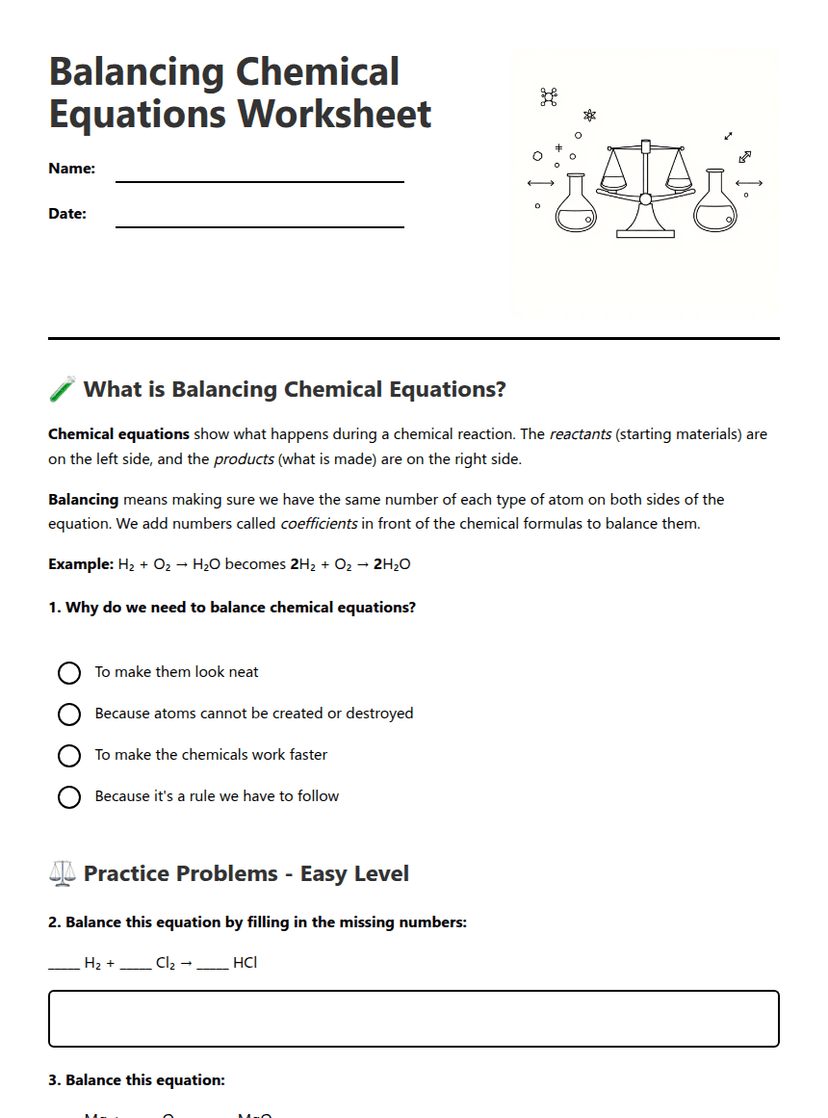
Balancing Chemical Equations Worksheet
Free
Balancing Chemical Equations Worksheet
Free
Periodic Table Properties Patterns
Free