Early Humans and Prehistory
A free us history worksheet ready for your classroom. Open in Kuraplan to grab the print-ready PDF, customize it for your students, or generate a fresh version in seconds.
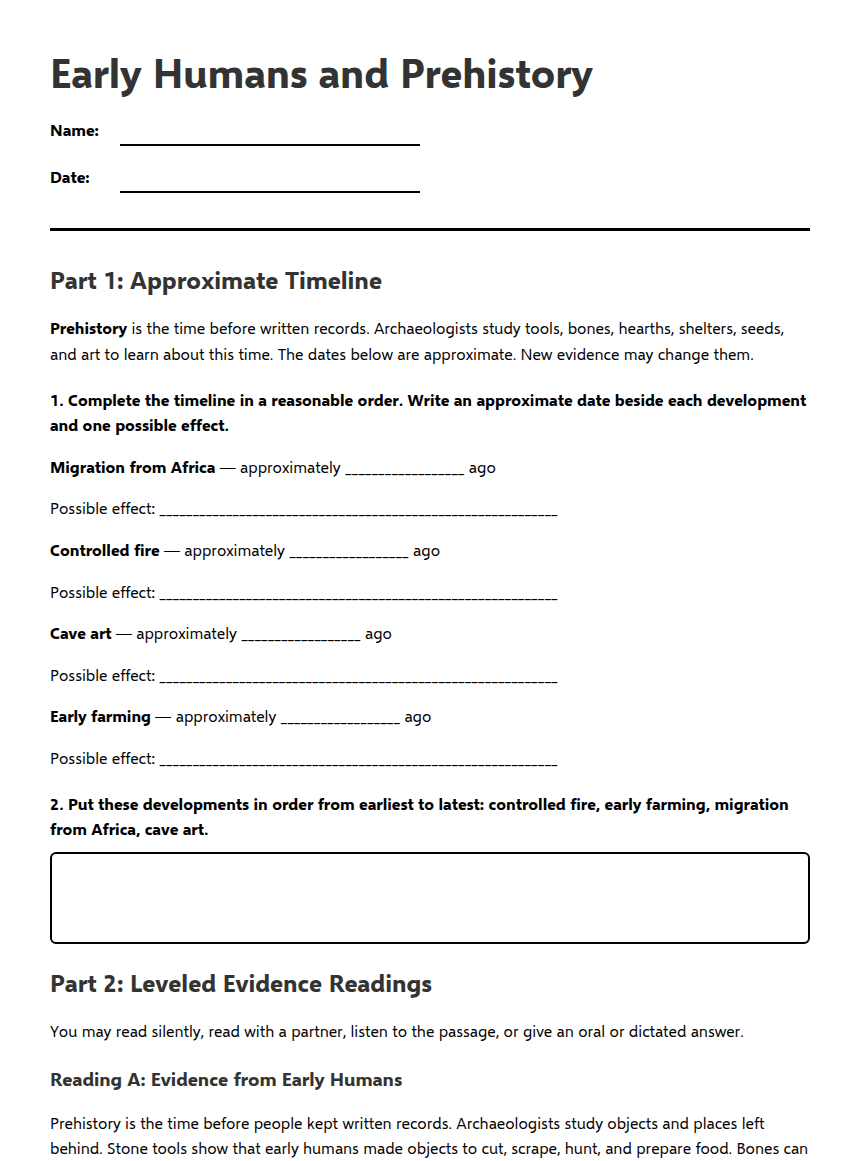
Early Humans and Prehistory
Part 1: Approximate Timeline
Prehistory is the time before written records. Archaeologists study tools, bones, hearths, shelters, seeds, and art to learn about this time. The dates below are approximate. New evidence may change them.
Migration from Africa — approximately __________________ ago
Possible effect: ____________________________________________________________
Controlled fire — approximately __________________ ago
Possible effect: ____________________________________________________________
Cave art — approximately __________________ ago
Possible effect: ____________________________________________________________
Early farming — approximately __________________ ago
Possible effect: ____________________________________________________________
Part 2: Leveled Evidence Readings
You may read silently, read with a partner, listen to the passage, or give an oral or dictated answer.
Reading A: Evidence from Early Humans
Prehistory is the time before people kept written records. Archaeologists study objects and places left behind. Stone tools show that early humans made objects to cut, scrape, hunt, and prepare food. Bones can show what people ate. Hearths, or old fire places, can show that people controlled fire. Early humans began in Africa and later migrated to other regions. Many groups were hunter-gatherers. They hunted animals and gathered wild plants. They moved when food or water became scarce. Much later, some people began farming. Farming helped some communities stay in one place.
Reading B: Tools, Fire, and Farming
Archaeologists use evidence to make careful ideas about prehistory. Migration means movement from one region to another. Early humans migrated from Africa over many thousands of years. A hunter-gatherer got food by hunting animals and gathering wild plants. A hearth is a place where a controlled fire burned. Fire gave people warmth, light, protection, and cooked food. The Agricultural Revolution was the gradual change toward growing plants and keeping animals. Domesticate means to change plants or animals so people can raise them and use them. Farming began in different places at different times. It helped some groups build larger, more settled communities.
Reading C: Did One Event Cause Another?
Some developments in prehistory happened in a sequence, but sequence does not always prove cause. Early humans migrated from Africa long before the first farming communities appeared. During this long period, people made tools, used fire, hunted, gathered plants, and created cave art. These developments happened at different times and in different places. Farming began when some communities increasingly grew useful plants and kept animals. A warmer climate may have made certain plants easier to grow. Knowledge of plants, population changes, and local resources may also have mattered. Archaeologists can find domesticated seeds and settled villages, but they cannot see every decision people made. Therefore, migration came before farming, but migration alone cannot be proven to have caused farming.
Preceded: _________________________________________________
Evidence: __________________________________________________
May have helped cause: ______________________________________
Evidence: __________________________________________________
Reading D: Evaluating a Claim about Farming
An author claims, “People began farming only because they wanted to live in permanent settlements.” Archaeological evidence partly supports this claim, but it does not prove the whole explanation. In some regions, evidence of domesticated seeds appears with villages where people stayed for longer periods. Farming could provide a more dependable supply of certain foods, and settled communities could grow larger. However, the evidence also shows that the Agricultural Revolution began in different places at different times. People may have responded to climate, local plants and animals, population changes, or knowledge passed through communities. Farming also required difficult labor and could bring disease or unequal access to resources. Archaeologists can study seeds, tools, bones, and buildings, but these sources do not reveal every motivation. The evidence supports a connection between farming and settled life, while leaving the author’s single-cause claim incomplete.
Part 3: Common Assessment
About This Worksheet
Free in Kuraplan
Sign up free, grab the PDF, and customize it for your class.
Print-Ready
Formatted for standard paper. Clean layout, easy to read.
AI-Generated
Created with Kuraplan's AI, designed for real classroom use.
For Teachers & Parents
Use in classrooms, for homework, tutoring, or homeschool.
Need a custom version of this worksheet?
Kuraplan's AI generates custom worksheets in seconds — differentiated for every learner, aligned to your curriculum.
Generate Custom Worksheets — FreeMore US History Worksheets

Washington Jefferson Political Legacy
Free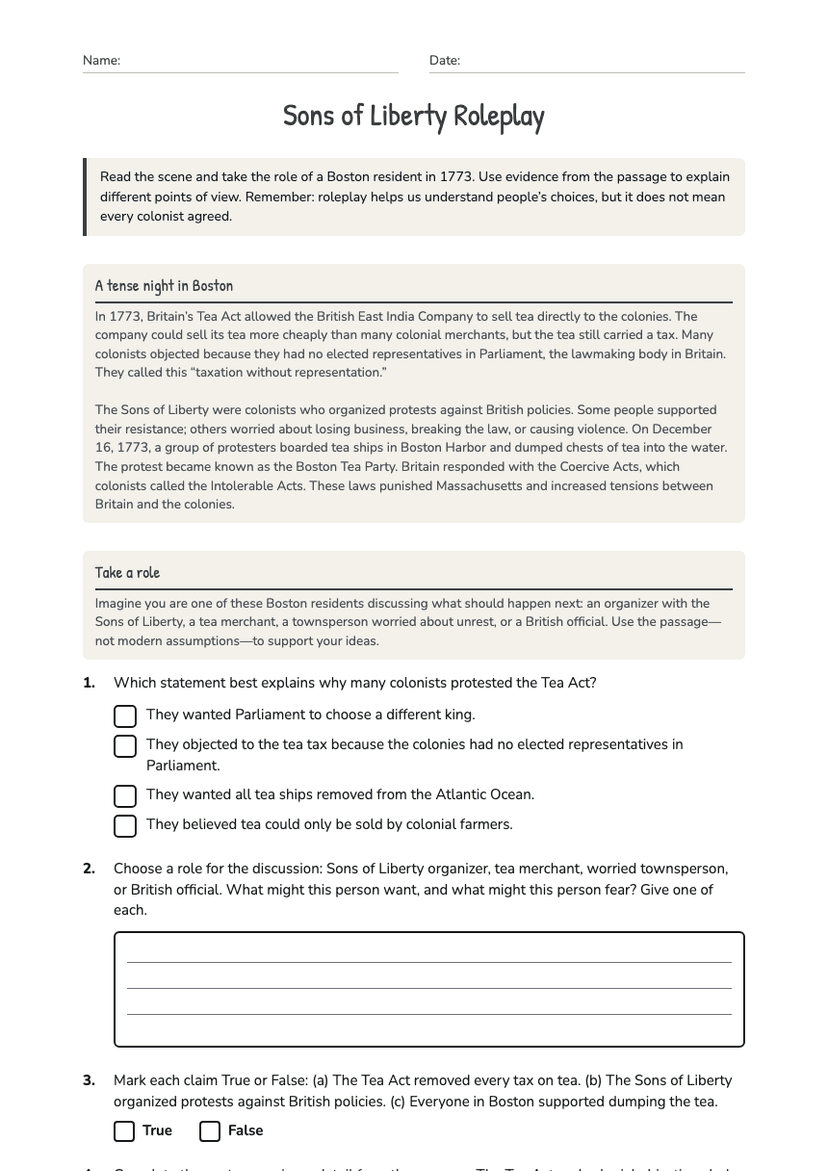
Sons of Liberty Roleplay
Free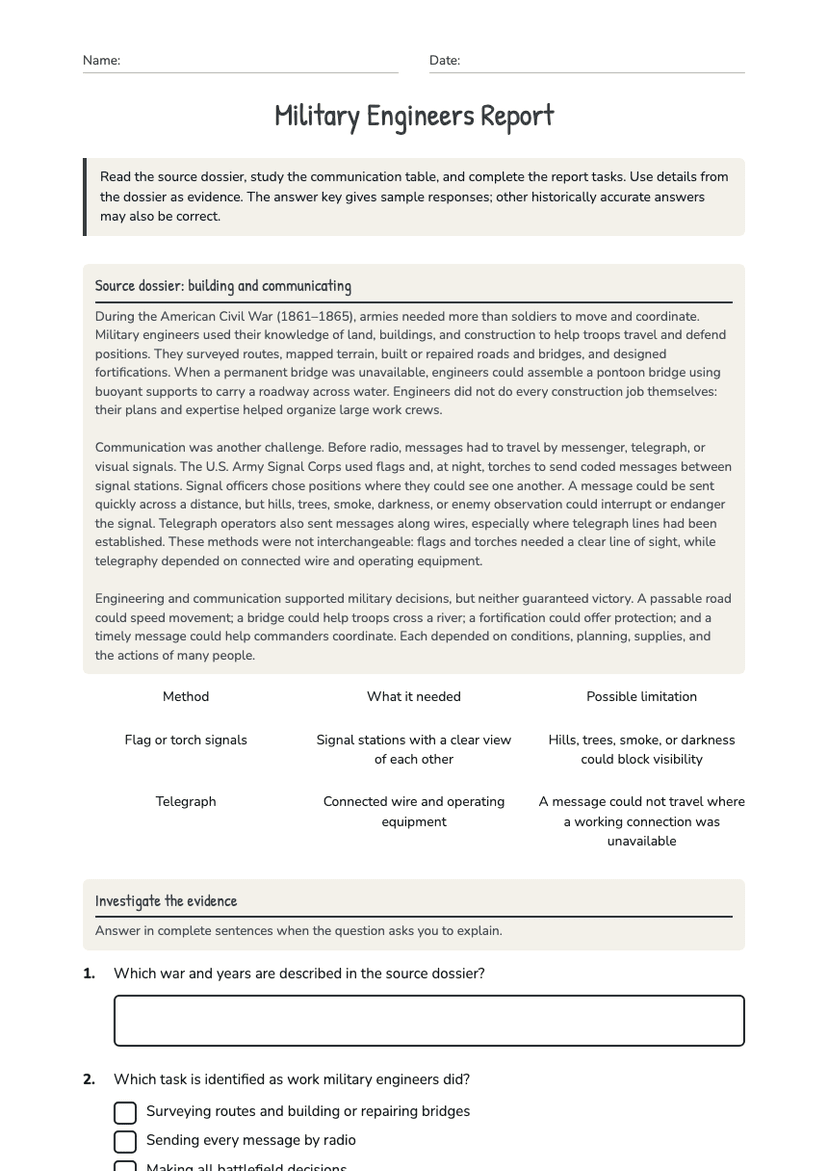
Military Engineers Report
Free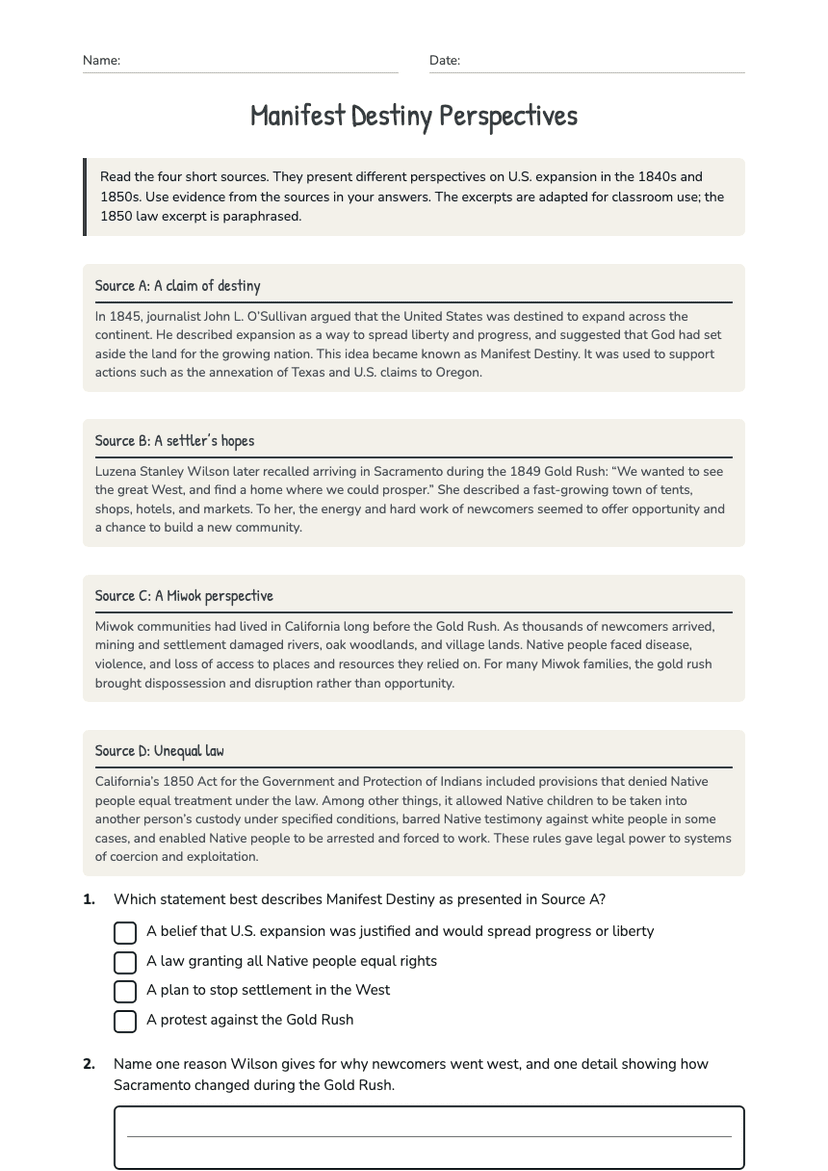
Manifest Destiny Perspectives
Free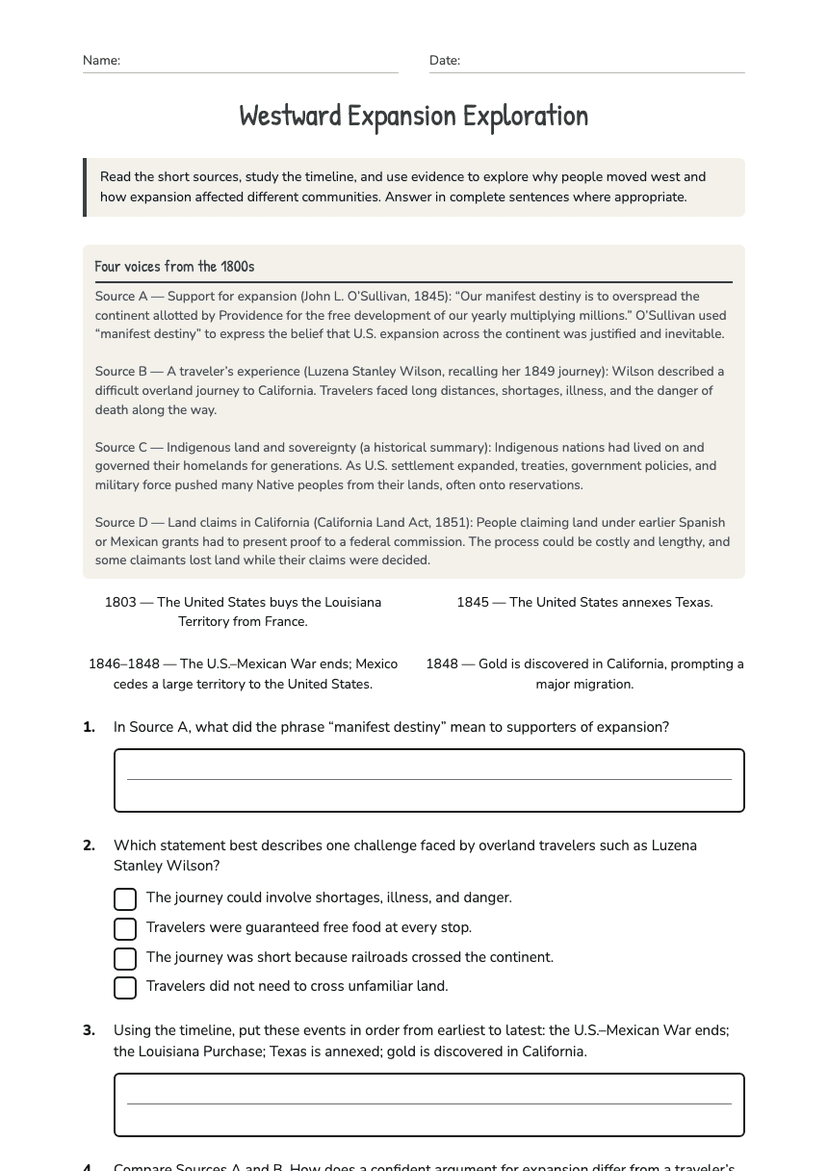
Westward Expansion Exploration
Free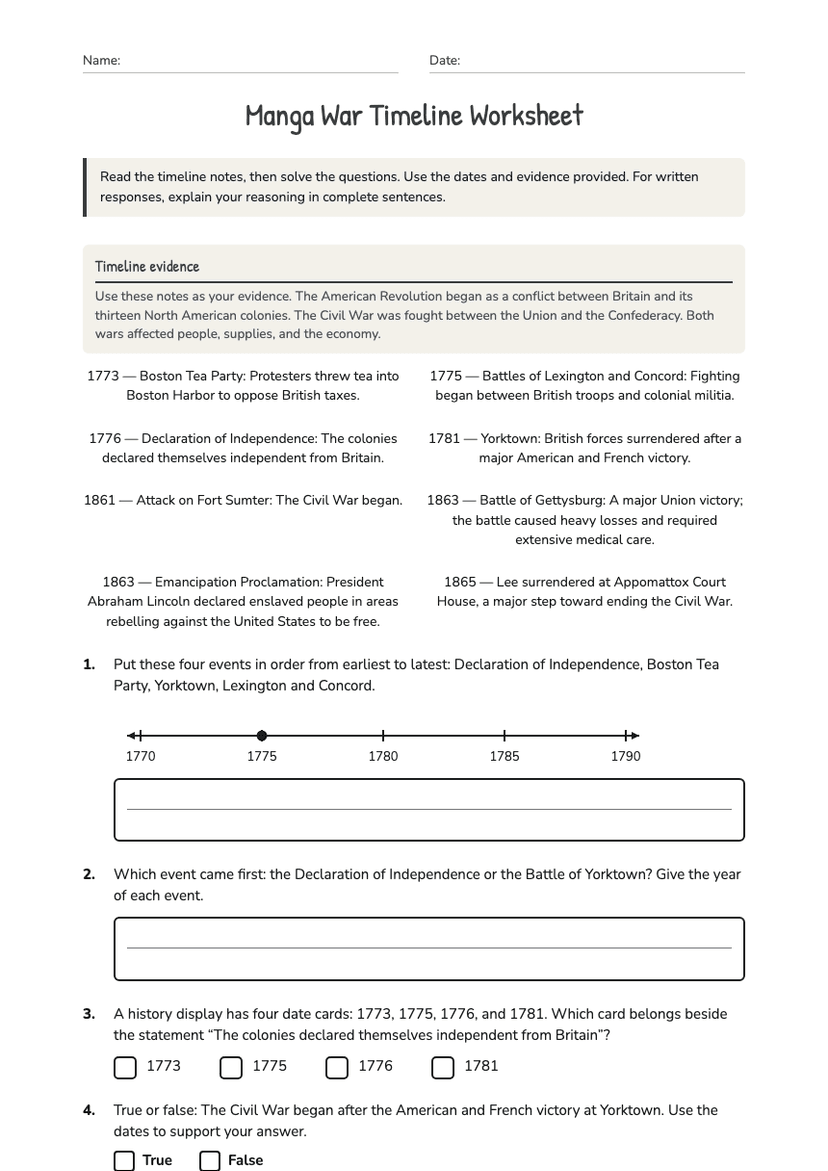
Manga War Timeline Worksheet
Free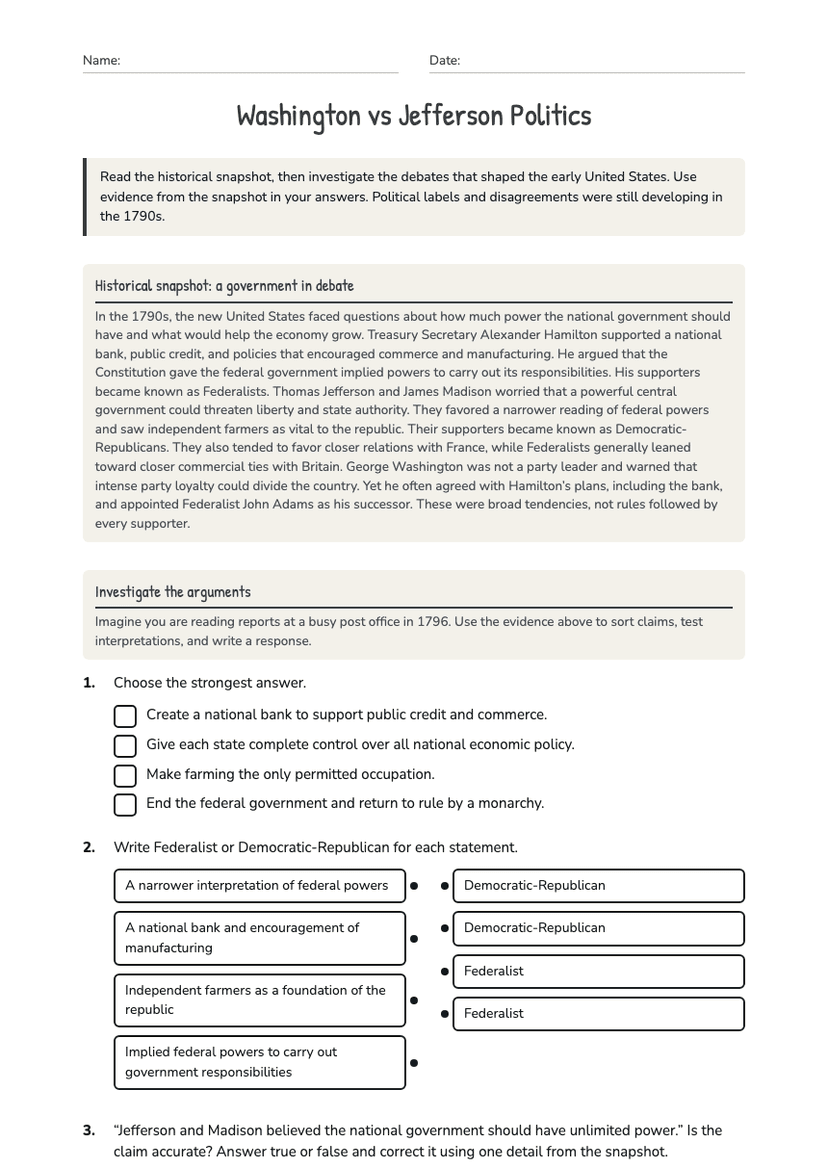
Washington vs Jefferson Politics
Free