Childhood 2.0 Discussion
A free english (ela) worksheet ready for your classroom. Open in Kuraplan to grab the print-ready PDF, customize it for your students, or generate a fresh version in seconds.
Childhood 2.0 Discussion
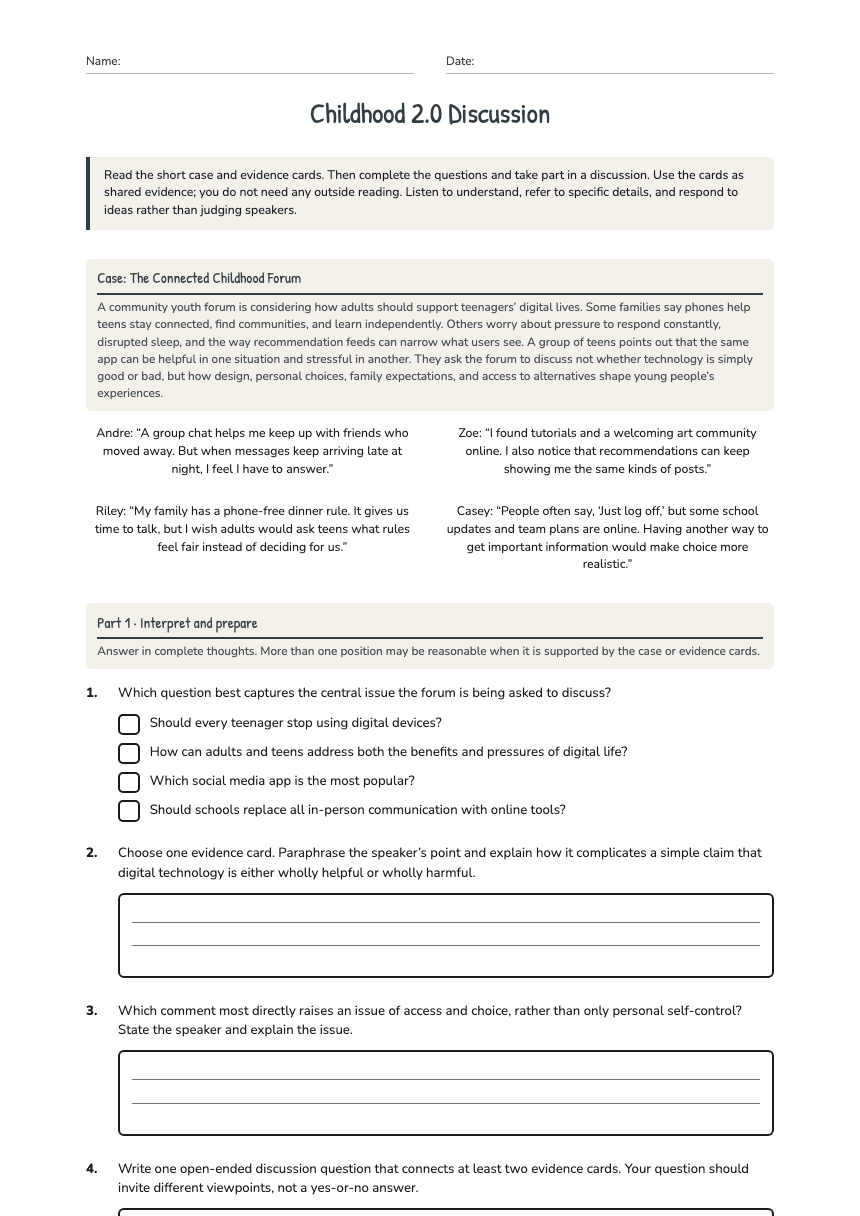
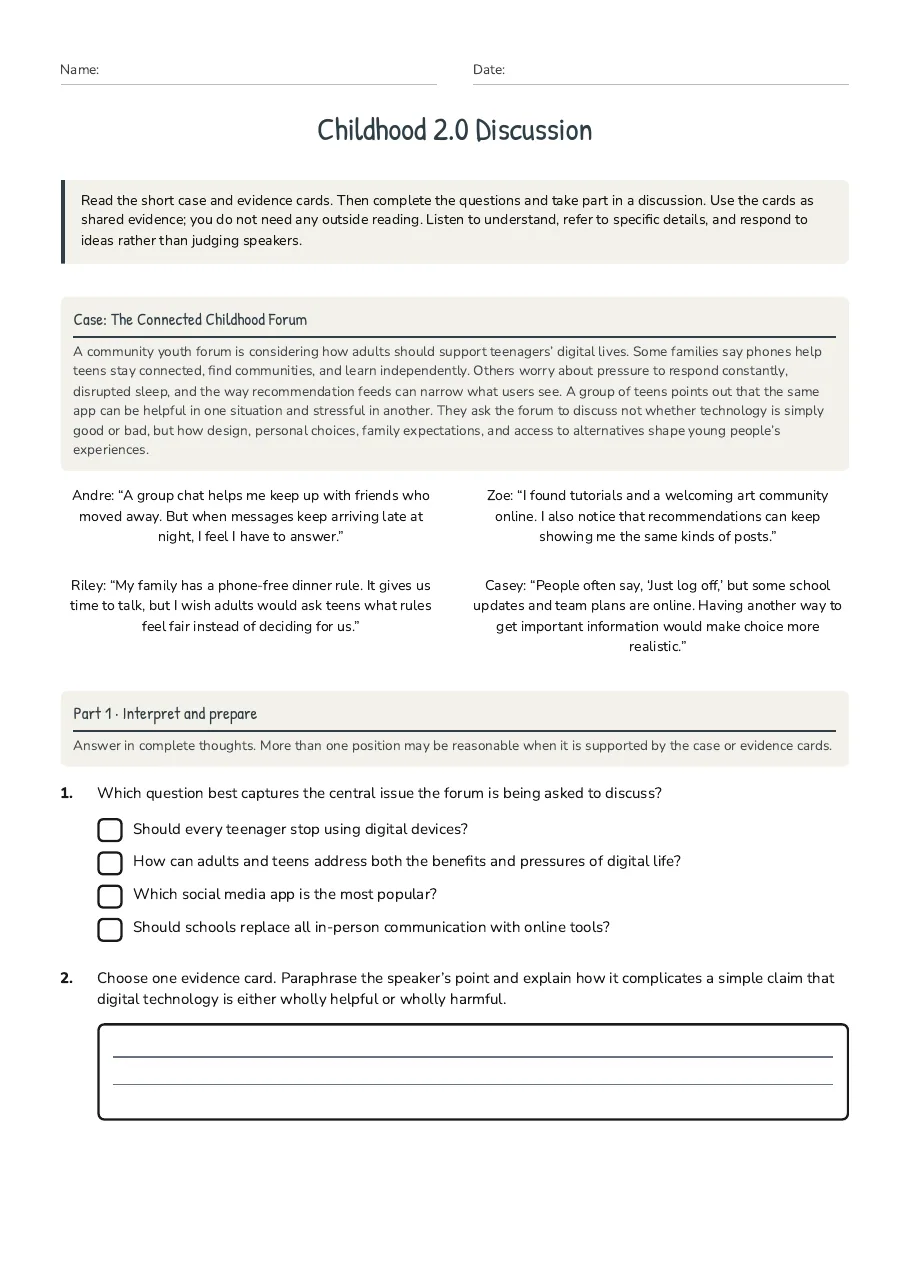
Case: The Connected Childhood Forum
A community youth forum is considering how adults should support teenagers’ digital lives. Some families say phones help teens stay connected, find communities, and learn independently. Others worry about pressure to respond constantly, disrupted sleep, and the way recommendation feeds can narrow what users see. A group of teens points out that the same app can be helpful in one situation and stressful in another. They ask the forum to discuss not whether technology is simply good or bad, but how design, personal choices, family expectations, and access to alternatives shape young people’s experiences.
Andre: “A group chat helps me keep up with friends who moved away. But when messages keep arriving late at night, I feel I have to answer.”
Zoe: “I found tutorials and a welcoming art community online. I also notice that recommendations can keep showing me the same kinds of posts.”
Riley: “My family has a phone-free dinner rule. It gives us time to talk, but I wish adults would ask teens what rules feel fair instead of deciding for us.”
Casey: “People often say, ‘Just log off,’ but some school updates and team plans are online. Having another way to get important information would make choice more realistic.”
Part 1 · Interpret and prepare
Answer in complete thoughts. More than one position may be reasonable when it is supported by the case or evidence cards.
- Should every teenager stop using digital devices?
- How can adults and teens address both the benefits and pressures of digital life?
- Which social media app is the most popular?
- Should schools replace all in-person communication with online tools?
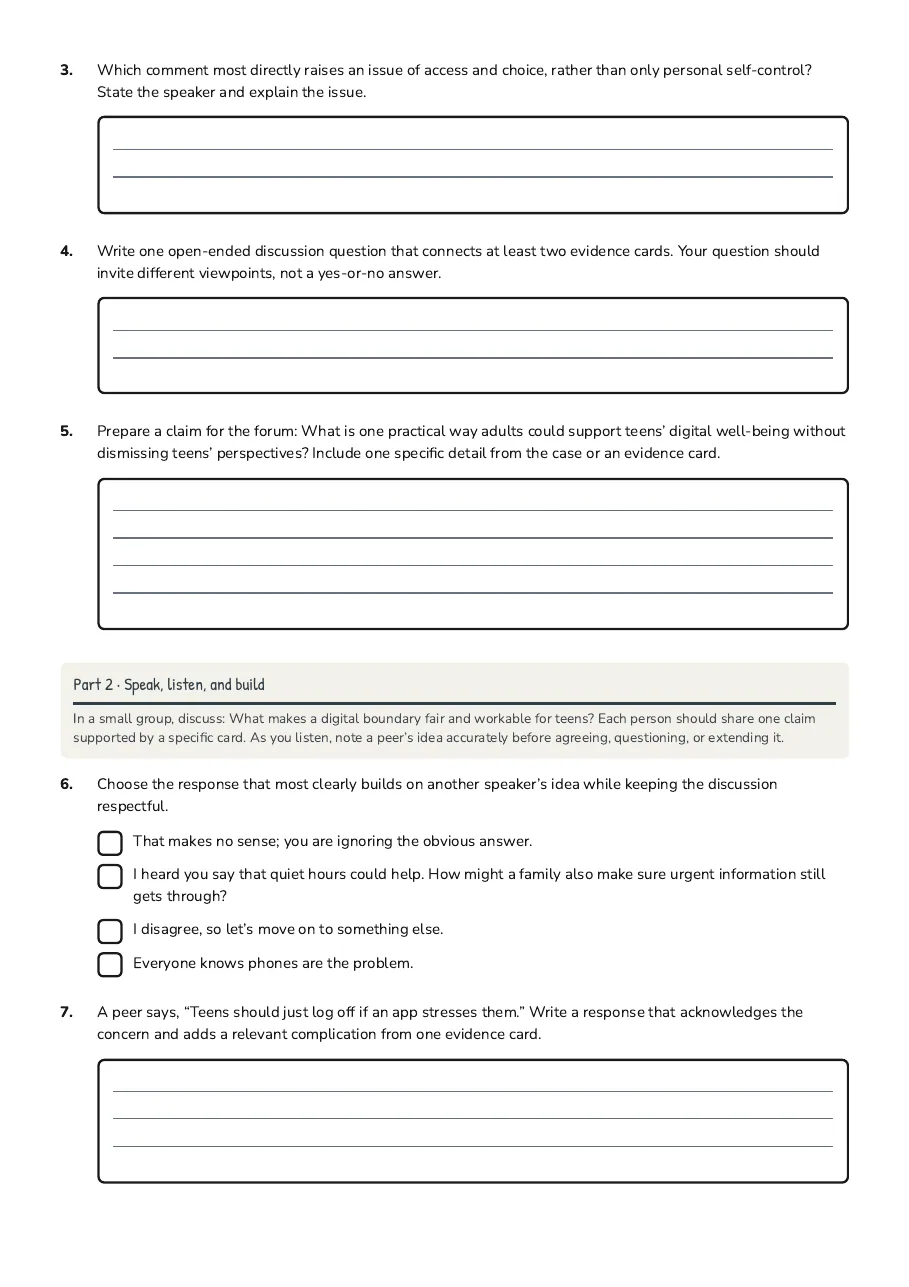
Part 2 · Speak, listen, and build
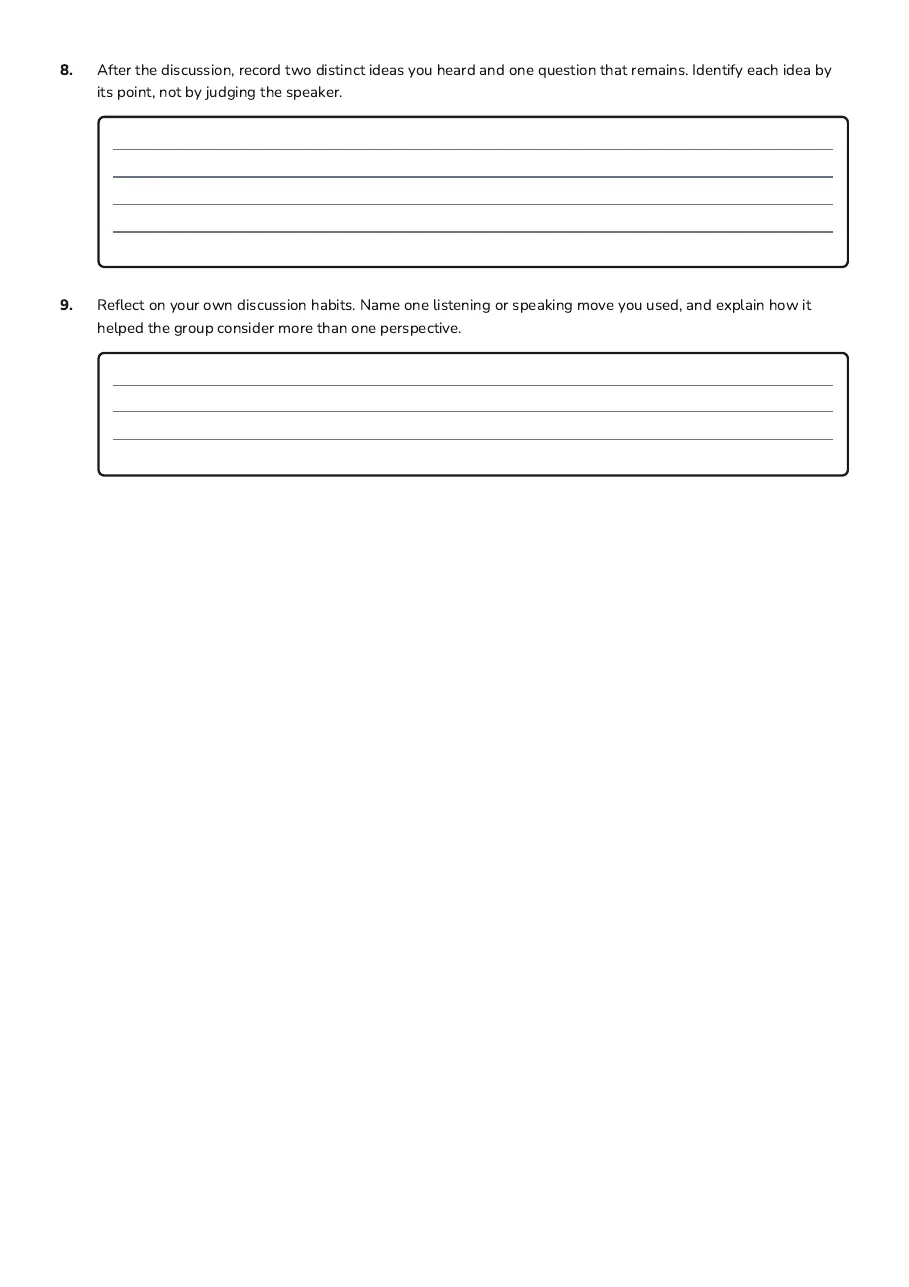
In a small group, discuss: What makes a digital boundary fair and workable for teens? Each person should share one claim supported by a specific card. As you listen, note a peer’s idea accurately before agreeing, questioning, or extending it.
- That makes no sense; you are ignoring the obvious answer.
- I heard you say that quiet hours could help. How might a family also make sure urgent information still gets through?
- I disagree, so let’s move on to something else.
- Everyone knows phones are the problem.
3 printable pages
Page 1
Page 2
Page 3
About This Worksheet
Free in Kuraplan
Sign up free, grab the PDF, and customize it for your class.
Print-Ready
Formatted for standard paper. Clean layout, easy to read.
AI-Generated
Created with Kuraplan's AI, designed for real classroom use.
For Teachers & Parents
Use in classrooms, for homework, tutoring, or homeschool.
Need a custom version of this worksheet?
Kuraplan's AI generates custom worksheets in seconds — differentiated for every learner, aligned to your curriculum.
Generate Custom Worksheets — FreeMore English (ELA) Worksheets
Expressive Language Skills Worksheet
Free
My Favorite Things Worksheet
Free
Expected vs Unexpected Conversations
Free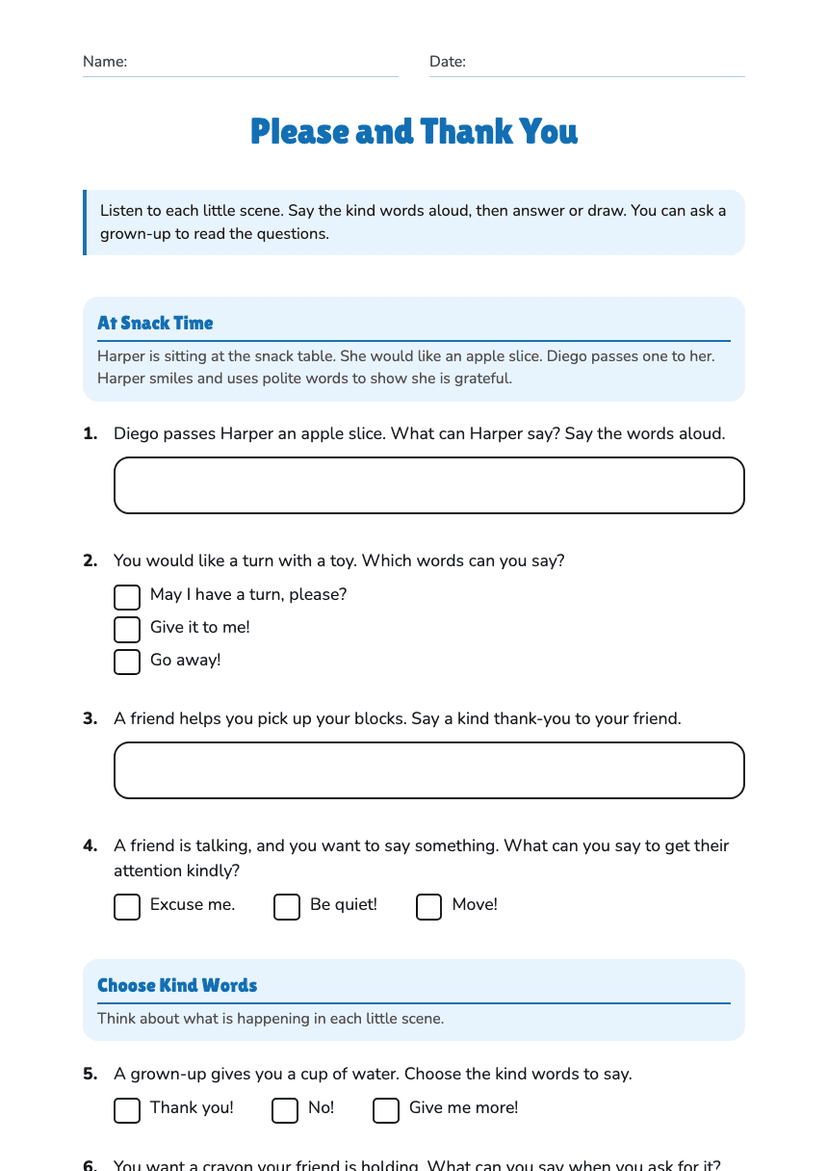
Please and Thank You
Free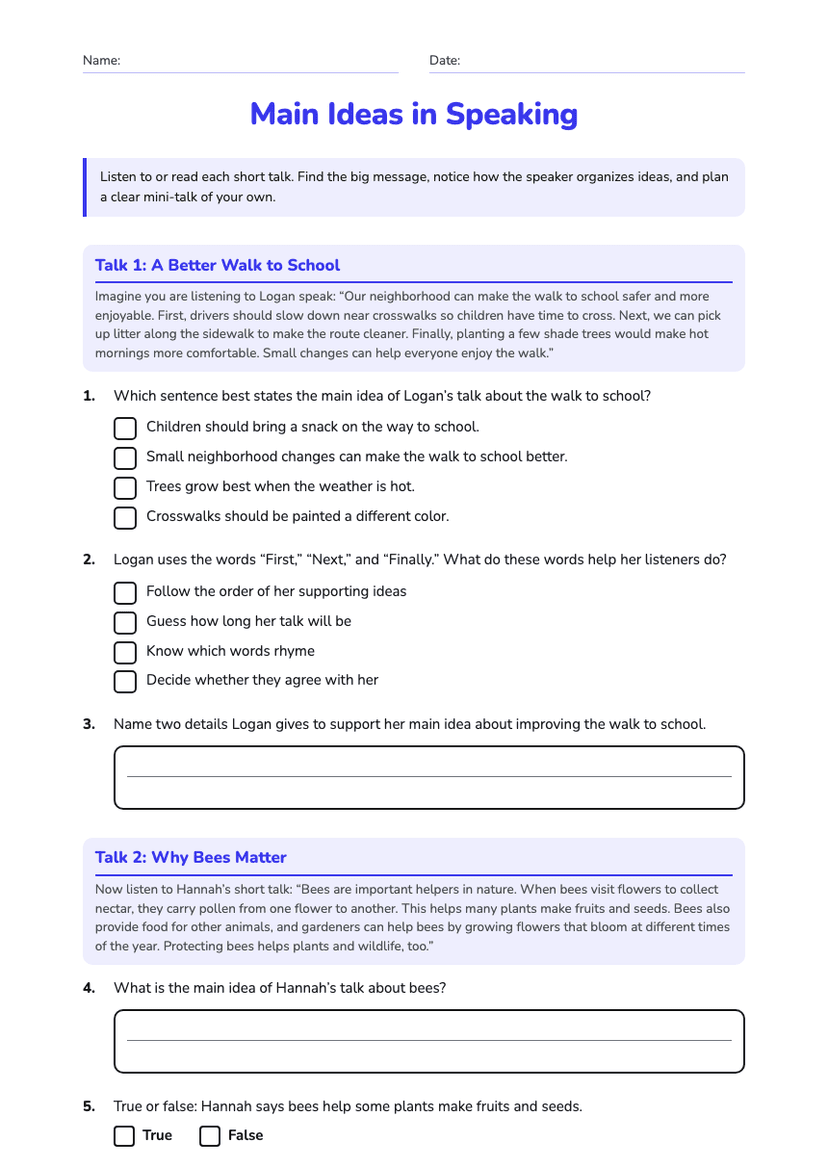
Main Ideas in Speaking
Free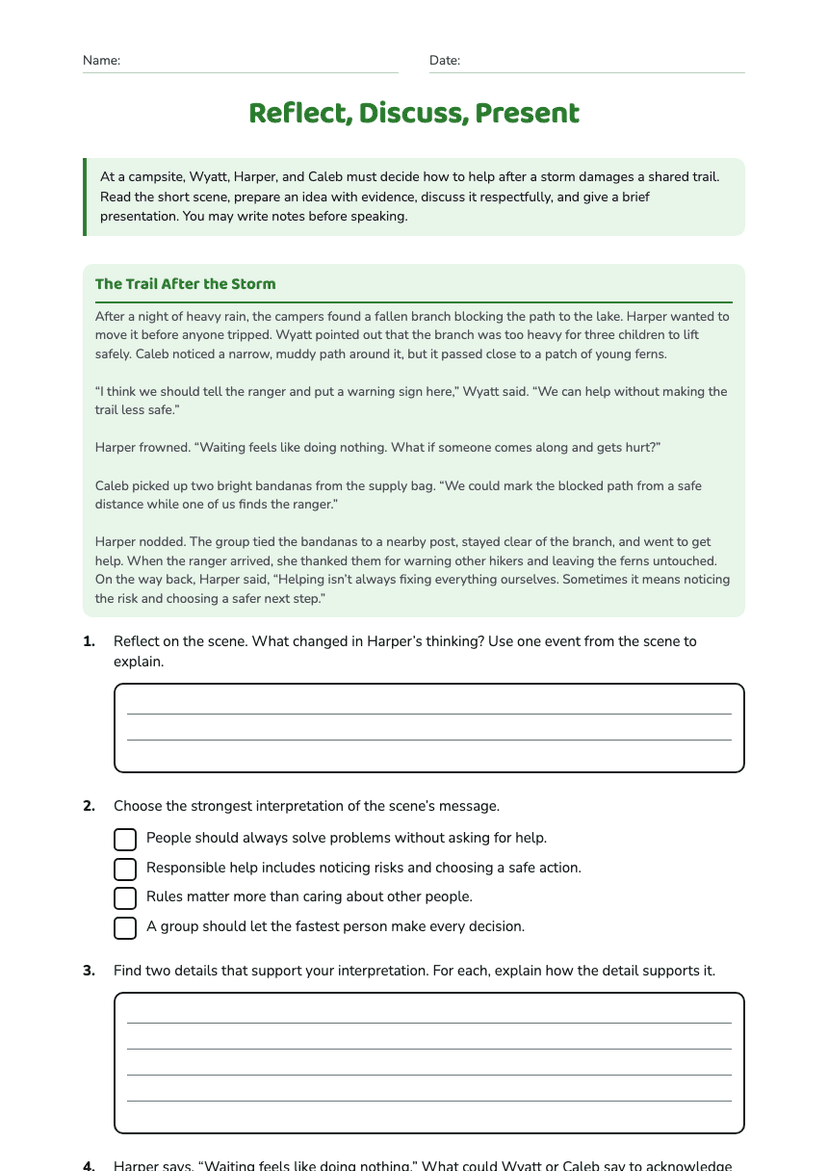
Reflect, Discuss, Present
Free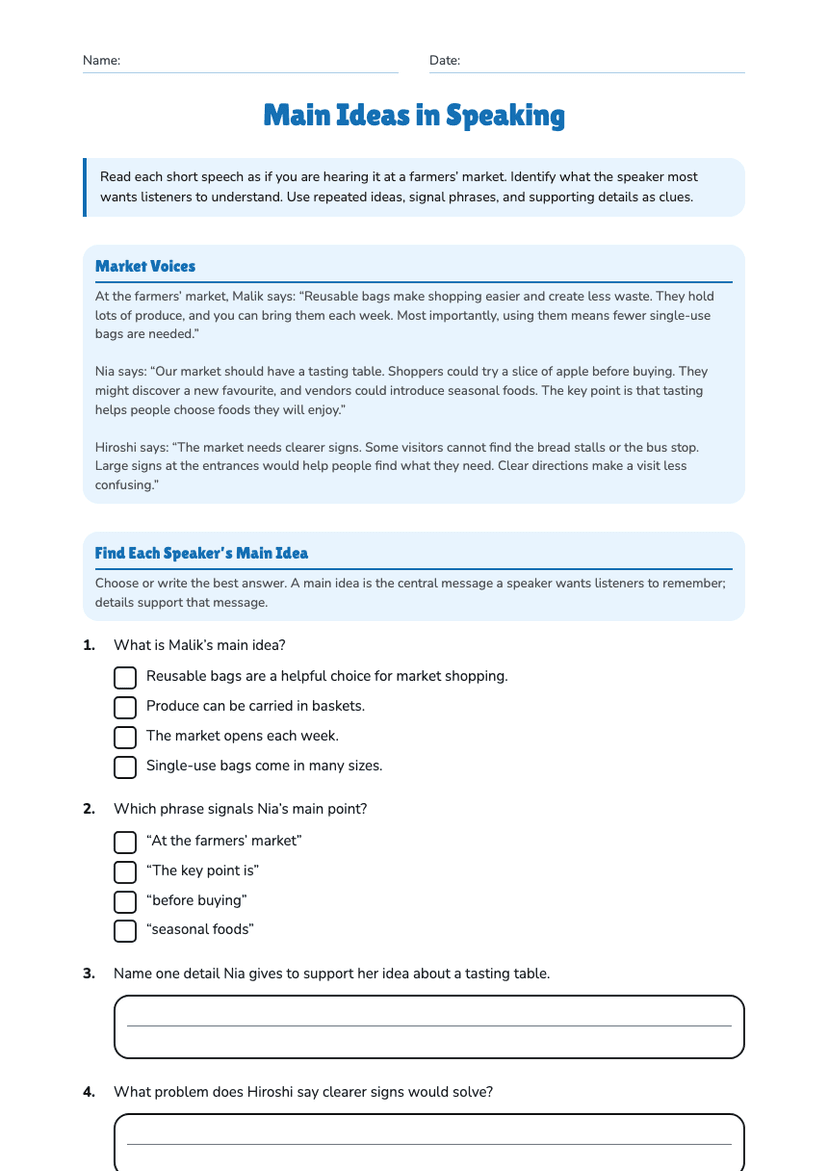
Main Ideas in Speaking
Free