Chromatography Model Exploration Worksheet
A free science worksheet ready for your classroom. Open in Kuraplan to grab the print-ready PDF, customize it for your students, or generate a fresh version in seconds.

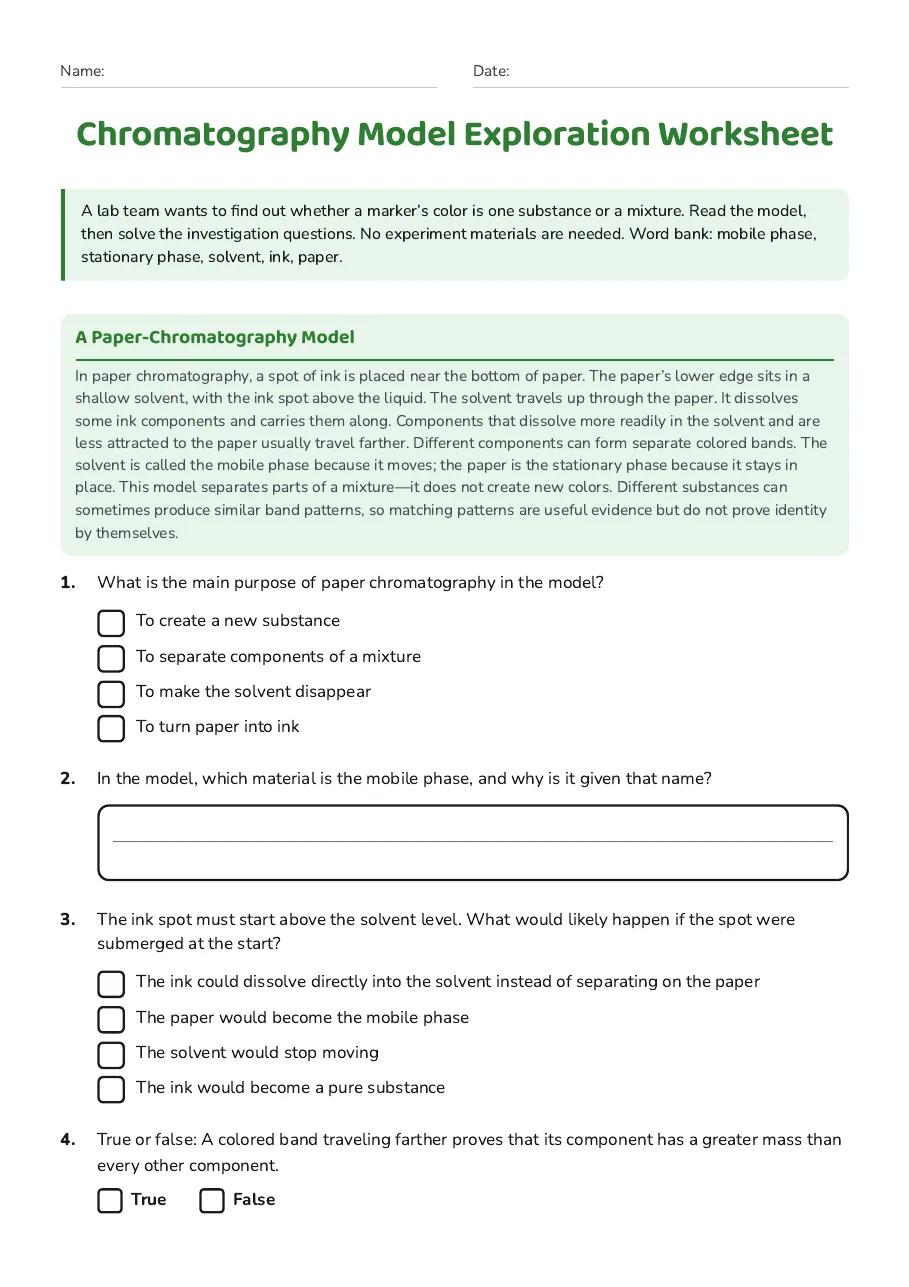
Chromatography Model Exploration Worksheet
A Paper-Chromatography Model
In paper chromatography, a spot of ink is placed near the bottom of paper. The paper’s lower edge sits in a shallow solvent, with the ink spot above the liquid. The solvent travels up through the paper. It dissolves some ink components and carries them along. Components that dissolve more readily in the solvent and are less attracted to the paper usually travel farther. Different components can form separate colored bands. The solvent is called the mobile phase because it moves; the paper is the stationary phase because it stays in place. This model separates parts of a mixture—it does not create new colors. Different substances can sometimes produce similar band patterns, so matching patterns are useful evidence but do not prove identity by themselves.
- To create a new substance
- To separate components of a mixture
- To make the solvent disappear
- To turn paper into ink
- The ink could dissolve directly into the solvent instead of separating on the paper
- The paper would become the mobile phase
- The solvent would stop moving
- The ink would become a pure substance
2 printable pages
Page 1
Page 2
About This Worksheet
Free in Kuraplan
Sign up free, grab the PDF, and customize it for your class.
Print-Ready
Formatted for standard paper. Clean layout, easy to read.
AI-Generated
Created with Kuraplan's AI, designed for real classroom use.
For Teachers & Parents
Use in classrooms, for homework, tutoring, or homeschool.
Need a custom version of this worksheet?
Kuraplan's AI generates custom worksheets in seconds — differentiated for every learner, aligned to your curriculum.
Generate Custom Worksheets — FreeMore Science Worksheets
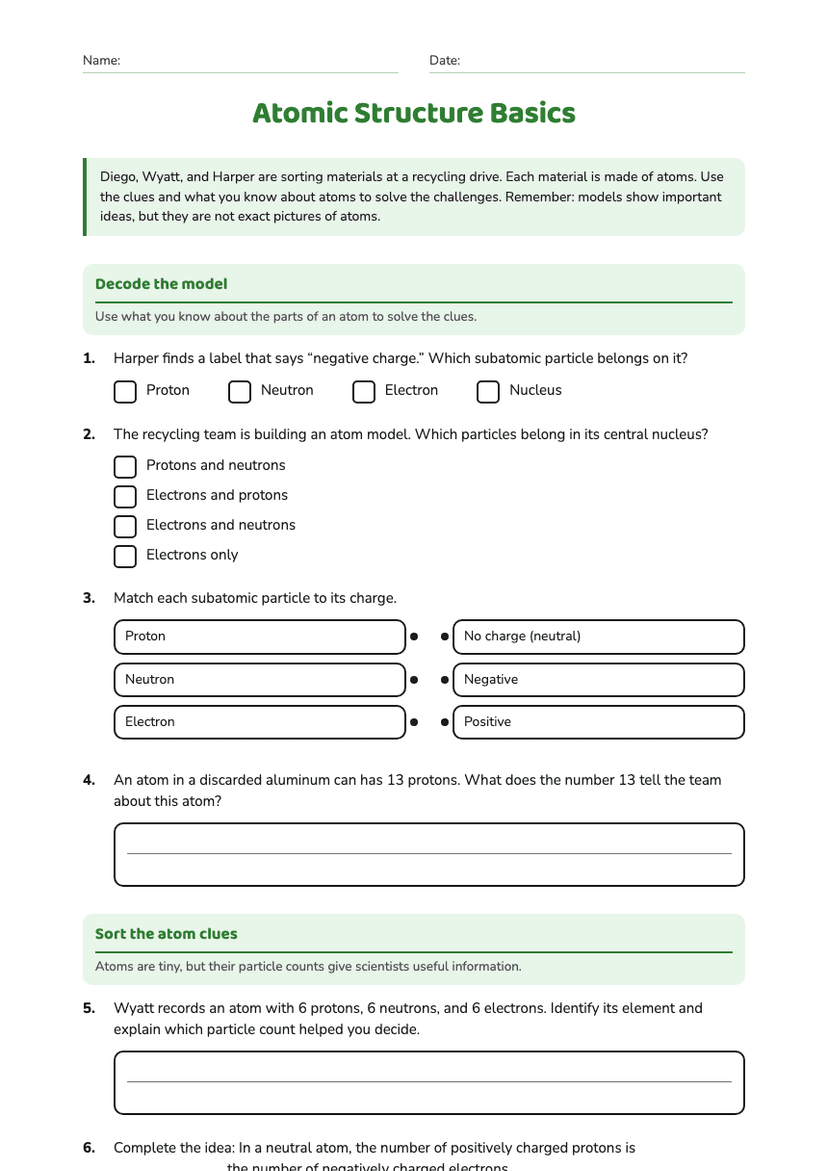
Atomic Structure Basics
Free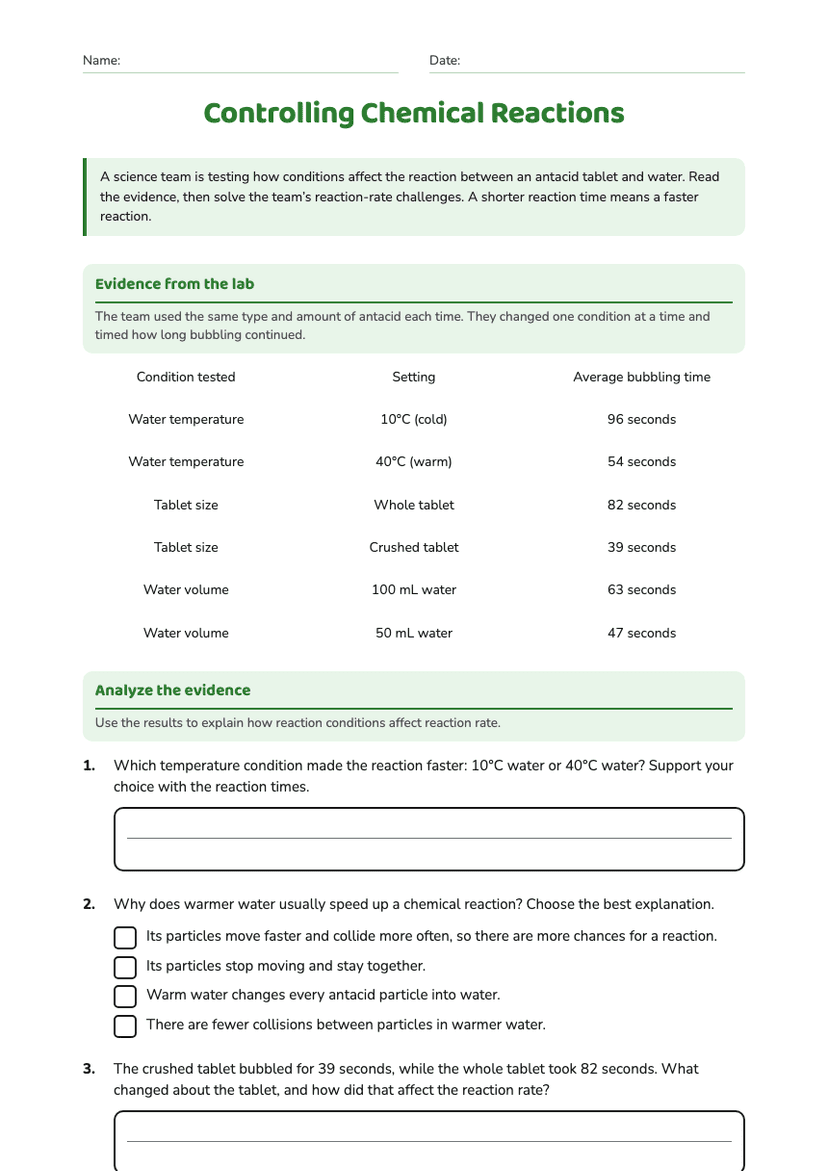
Controlling Chemical Reactions
Free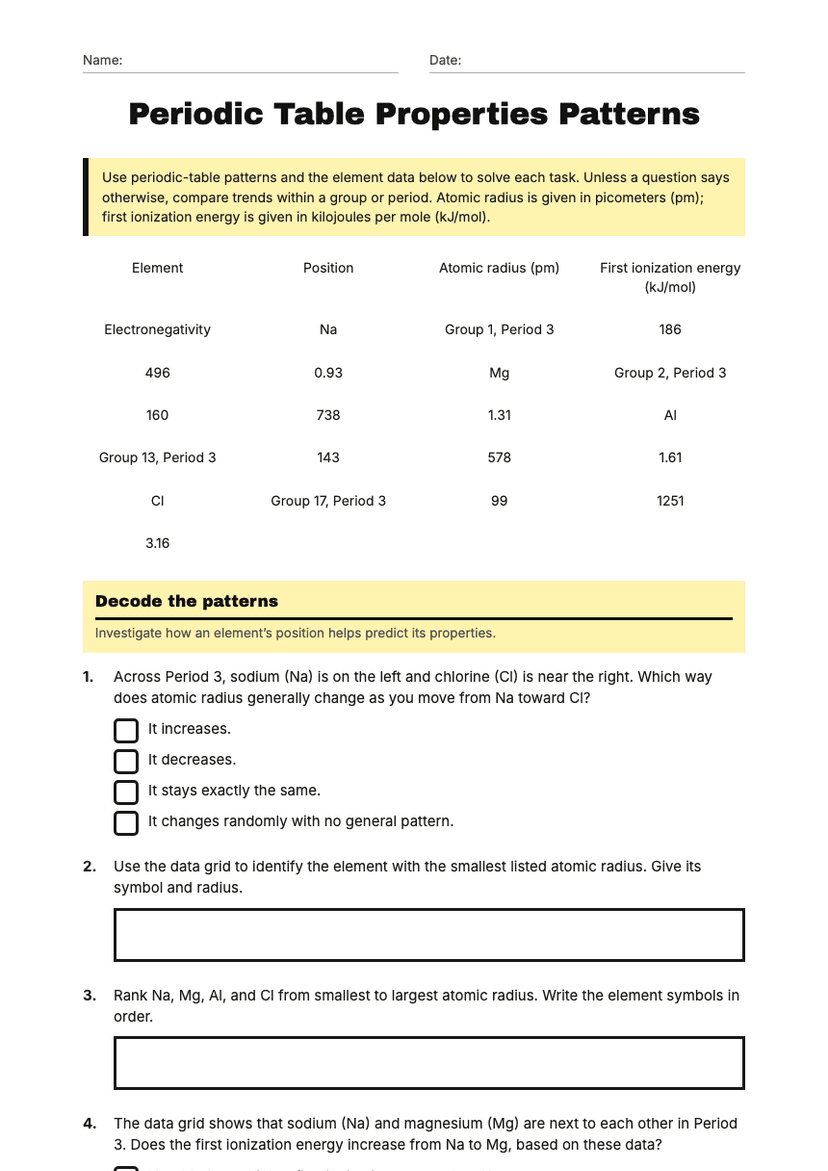
Periodic Table Properties Patterns
Free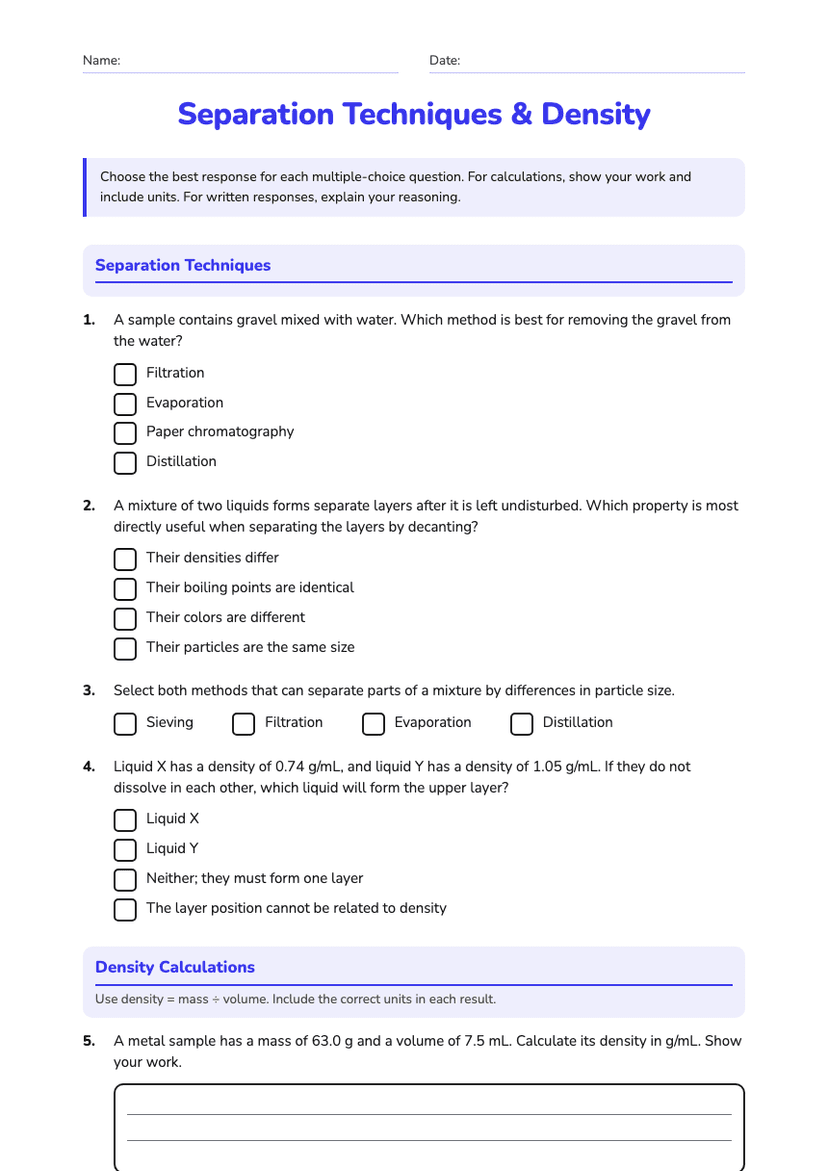
Separation Techniques & Density
Free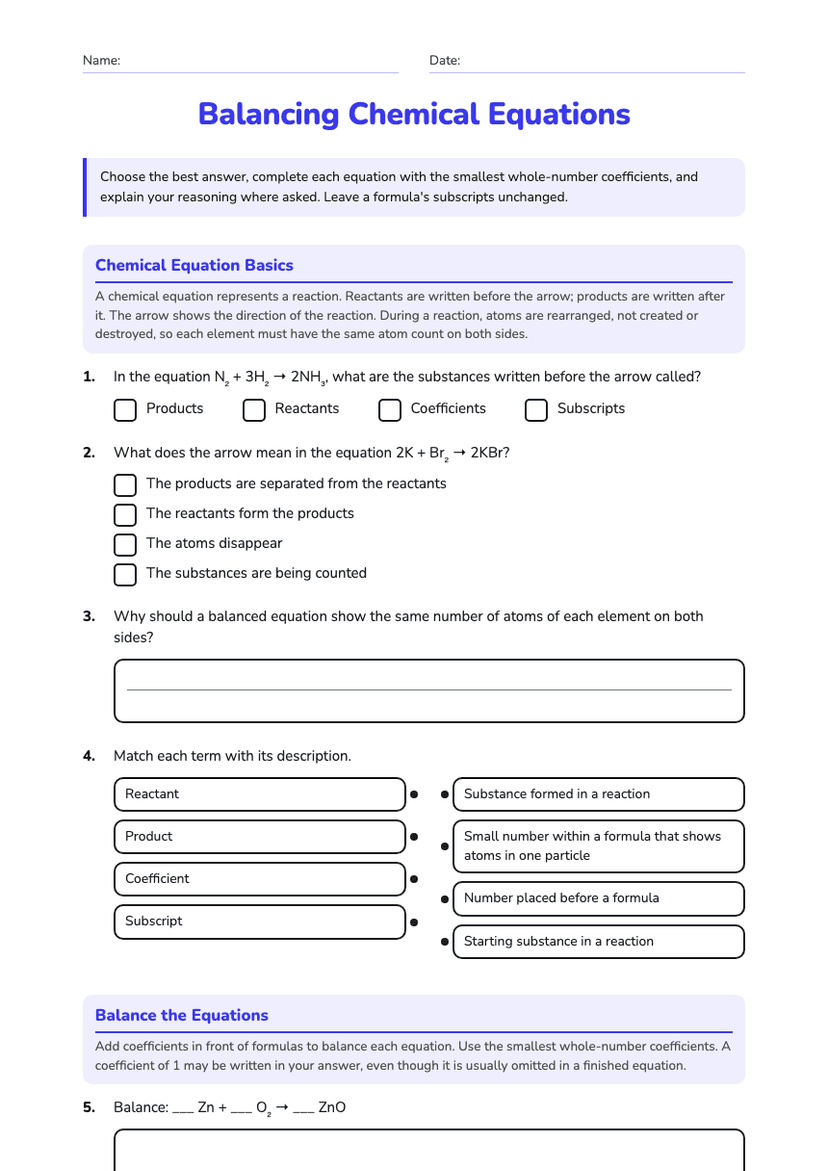
Balancing Chemical Equations
Free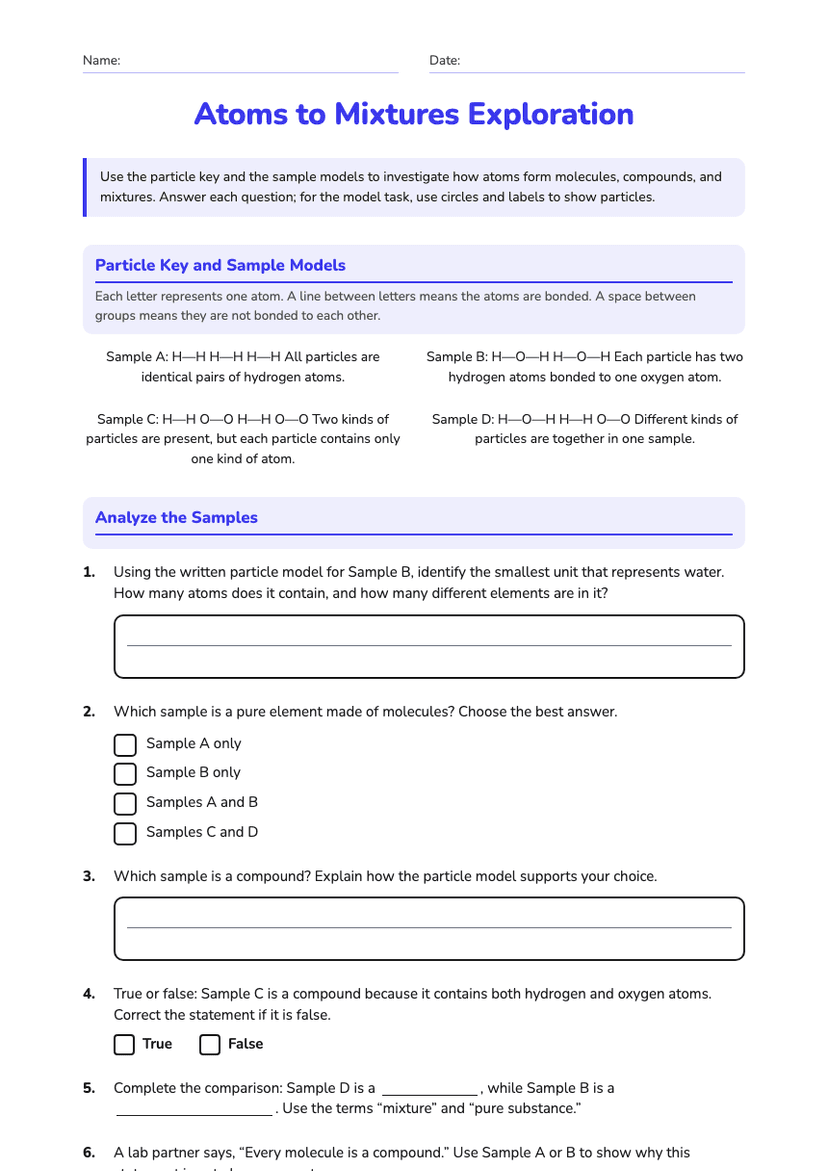
Atoms to Mixtures Exploration
Free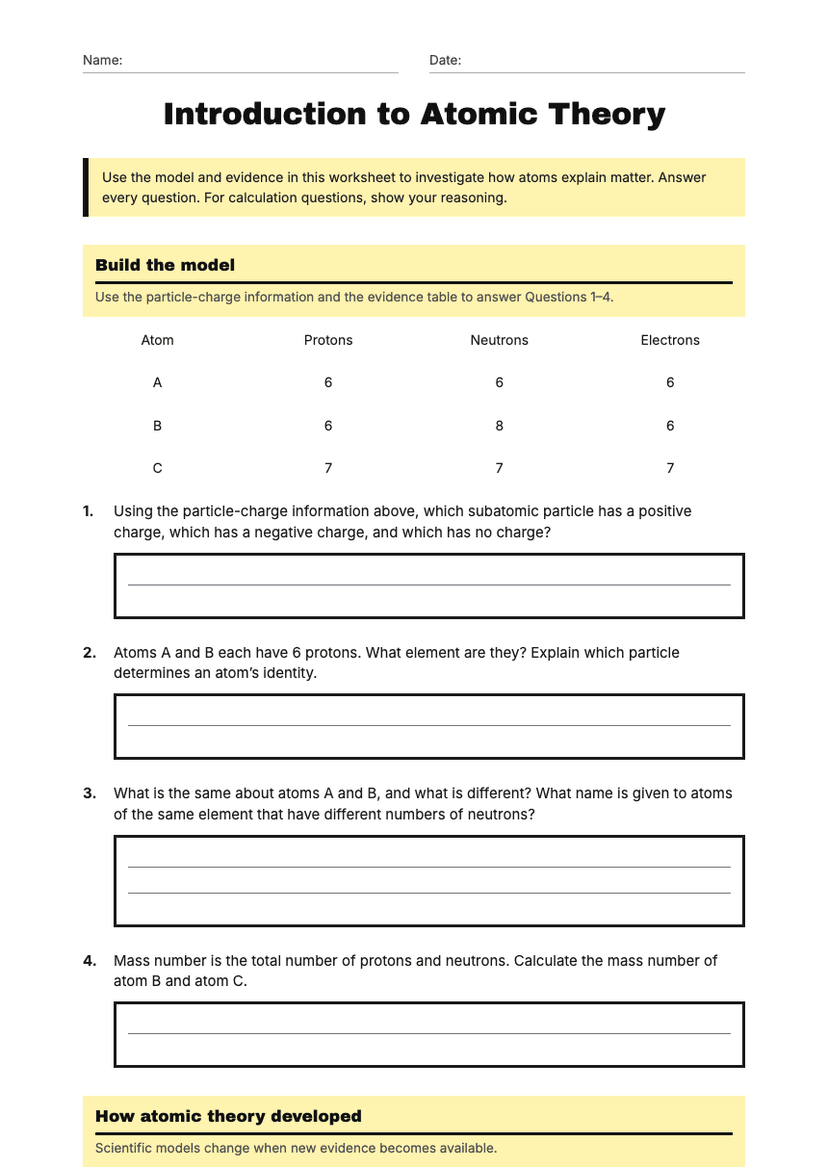
Introduction to Atomic Theory
Free