Drama Expresses Emotions
A free health worksheet ready for your classroom. Open in Kuraplan to grab the print-ready PDF, customize it for your students, or generate a fresh version in seconds.
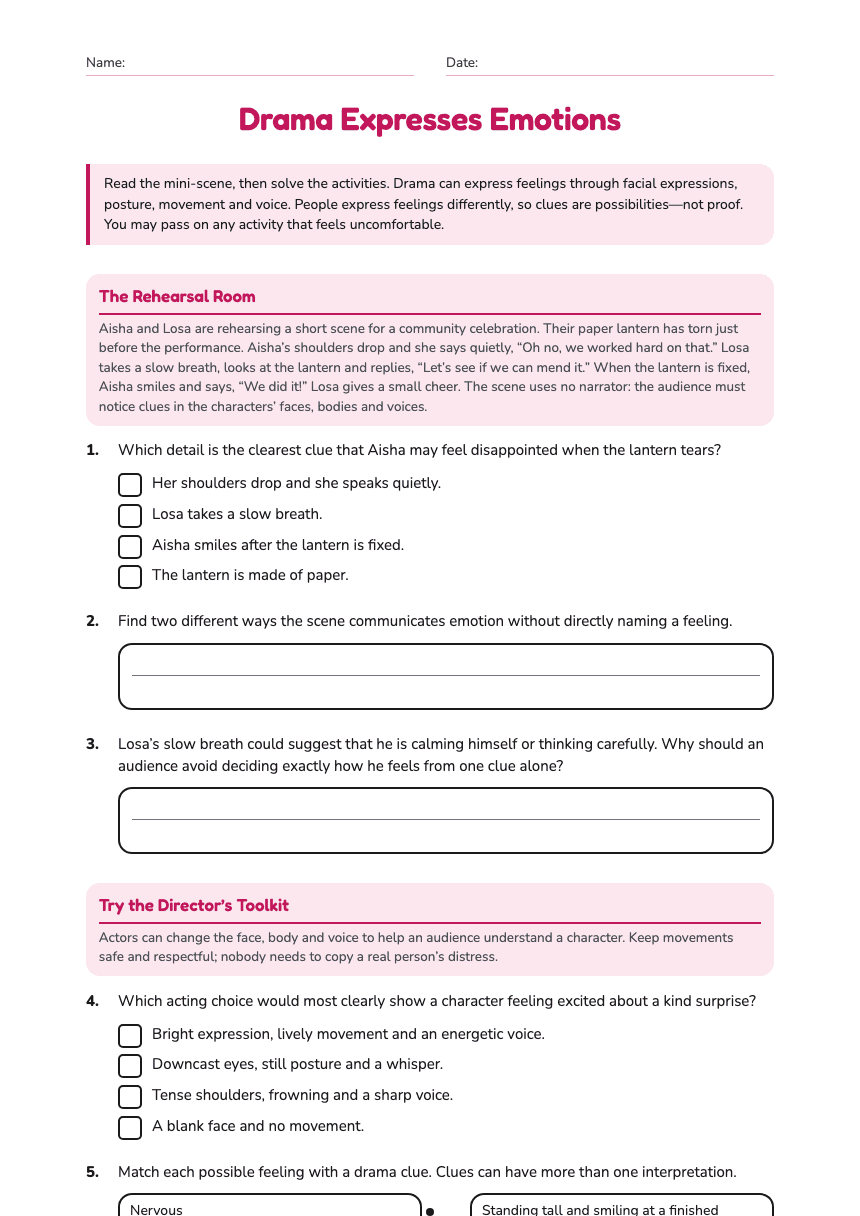
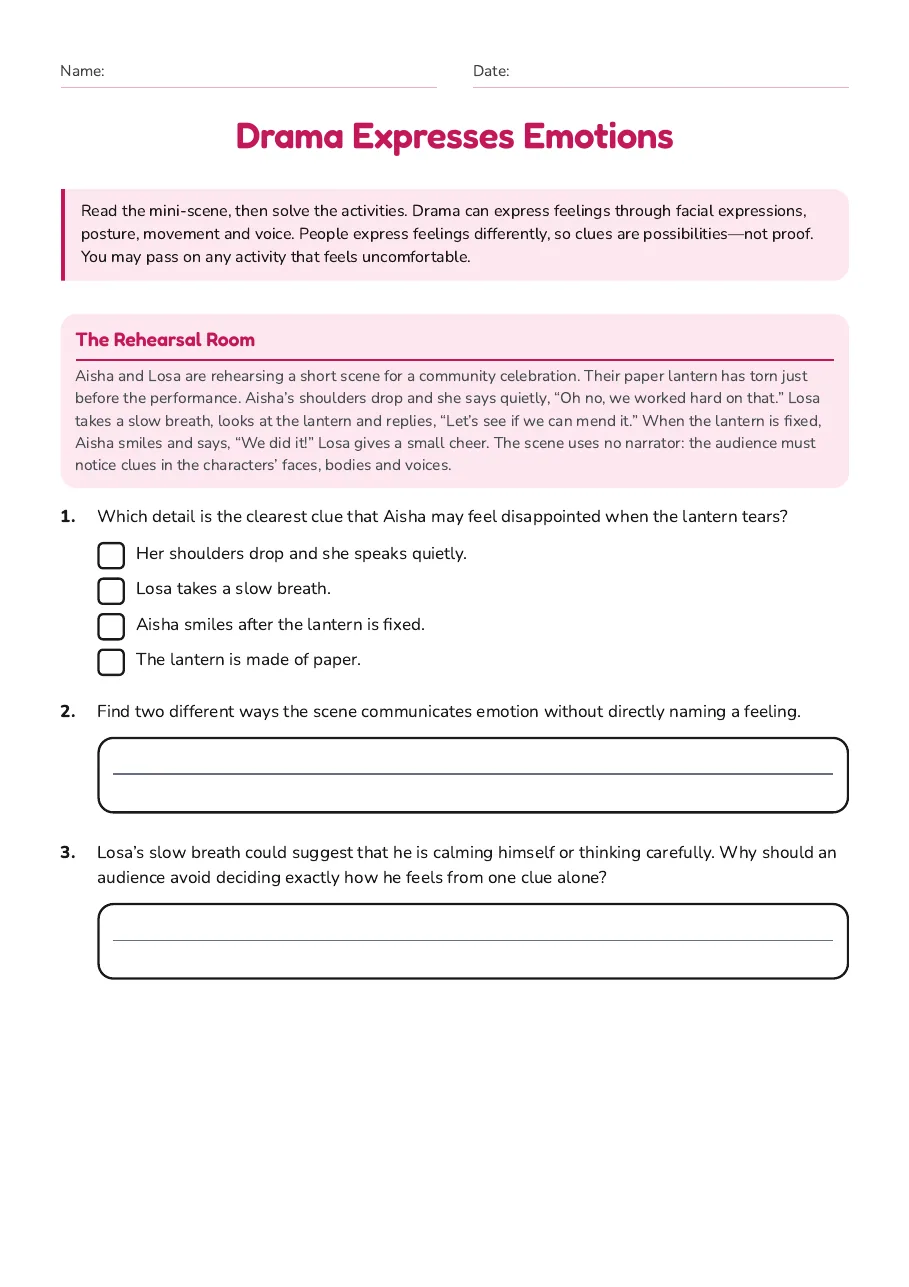
Drama Expresses Emotions
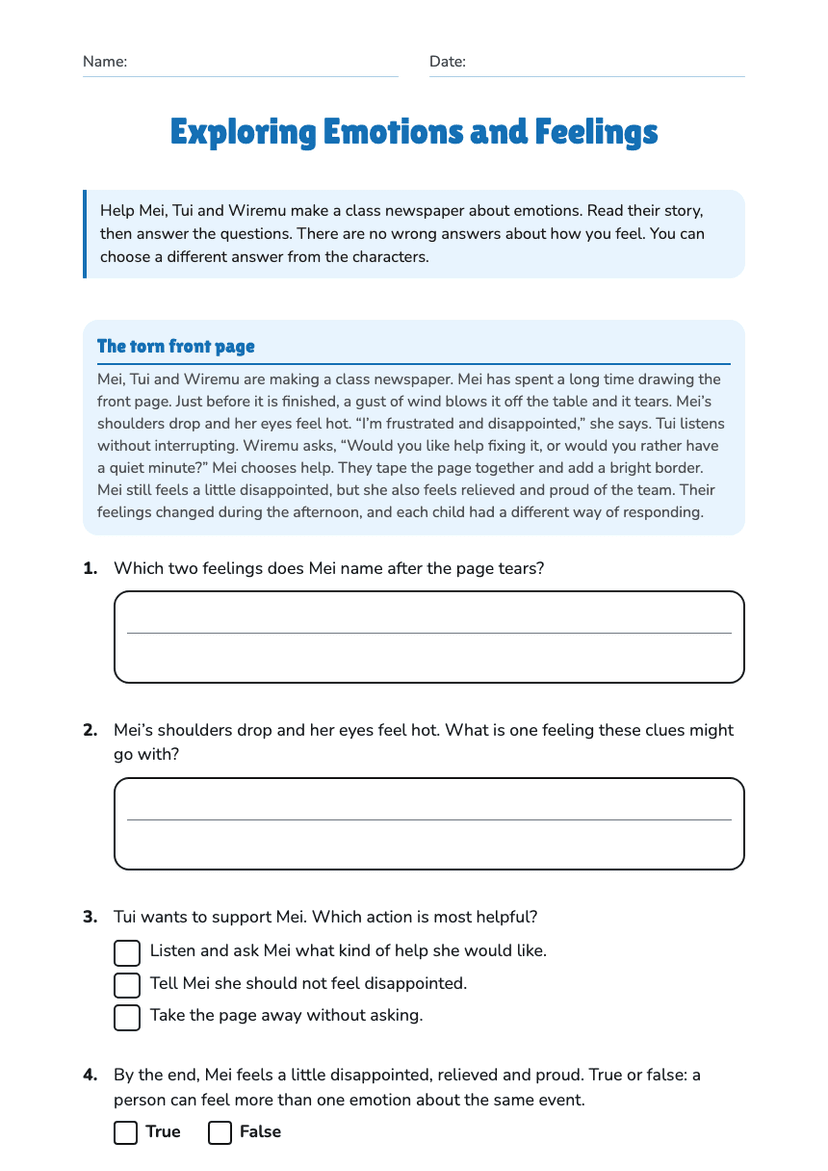
The Rehearsal Room
Aisha and Losa are rehearsing a short scene for a community celebration. Their paper lantern has torn just before the performance. Aisha’s shoulders drop and she says quietly, “Oh no, we worked hard on that.” Losa takes a slow breath, looks at the lantern and replies, “Let’s see if we can mend it.” When the lantern is fixed, Aisha smiles and says, “We did it!” Losa gives a small cheer. The scene uses no narrator: the audience must notice clues in the characters’ faces, bodies and voices.
- Her shoulders drop and she speaks quietly.
- Losa takes a slow breath.
- Aisha smiles after the lantern is fixed.
- The lantern is made of paper.
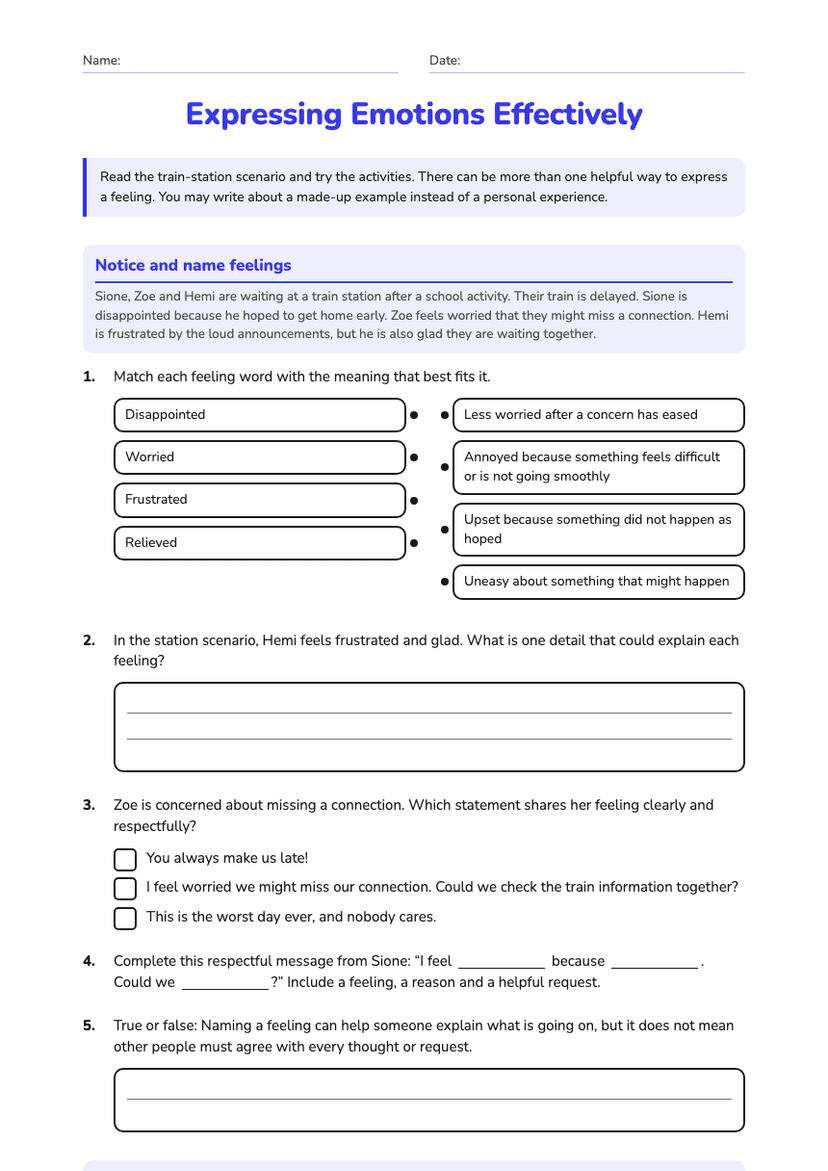
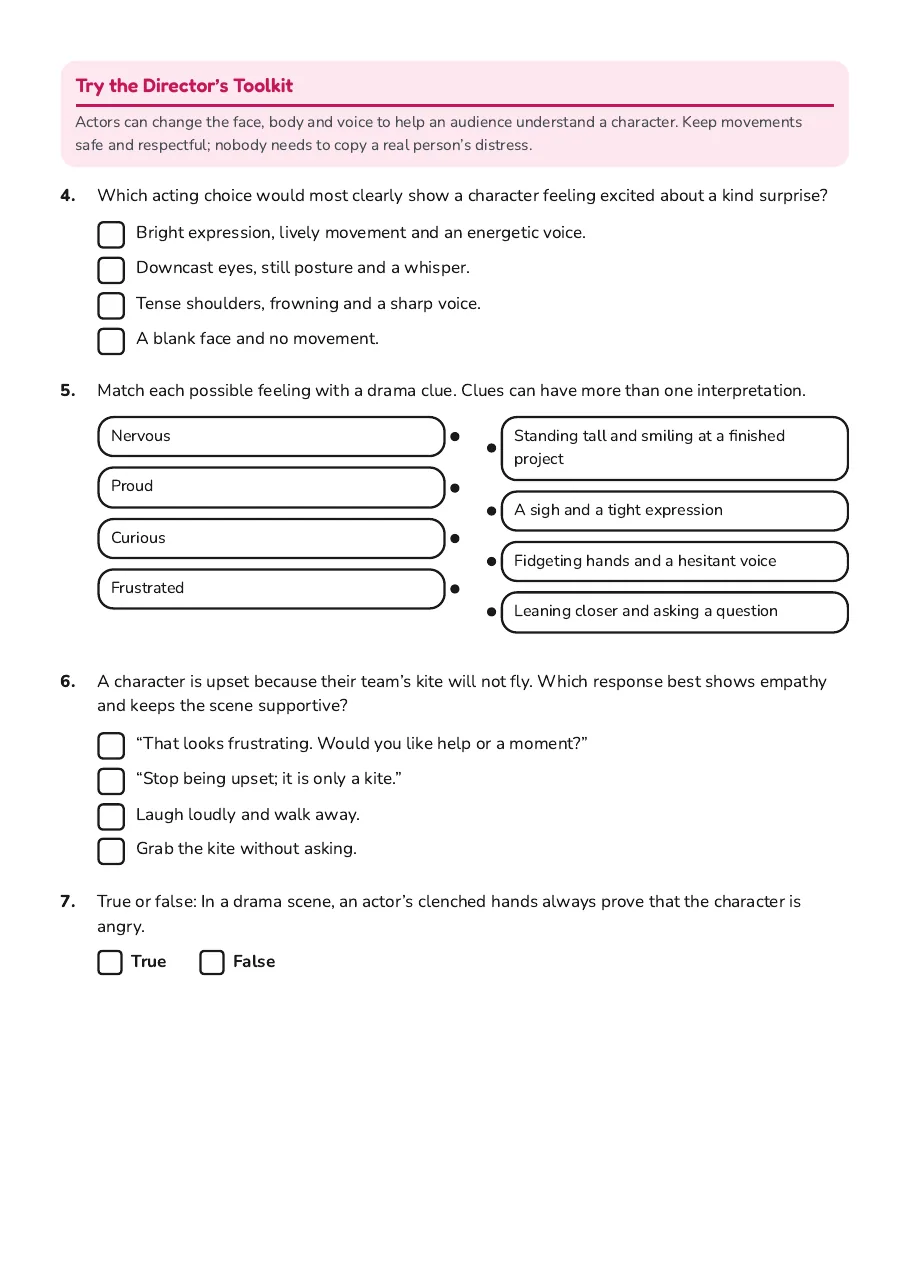
Try the Director’s Toolkit
Actors can change the face, body and voice to help an audience understand a character. Keep movements safe and respectful; nobody needs to copy a real person’s distress.
- Bright expression, lively movement and an energetic voice.
- Downcast eyes, still posture and a whisper.
- Tense shoulders, frowning and a sharp voice.
- A blank face and no movement.
- Nervous
- Proud
- Curious
- Frustrated
- Standing tall and smiling at a finished project
- A sigh and a tight expression
- Fidgeting hands and a hesitant voice
- Leaning closer and asking a question
- “That looks frustrating. Would you like help or a moment?”
- “Stop being upset; it is only a kite.”
- Laugh loudly and walk away.
- Grab the kite without asking.
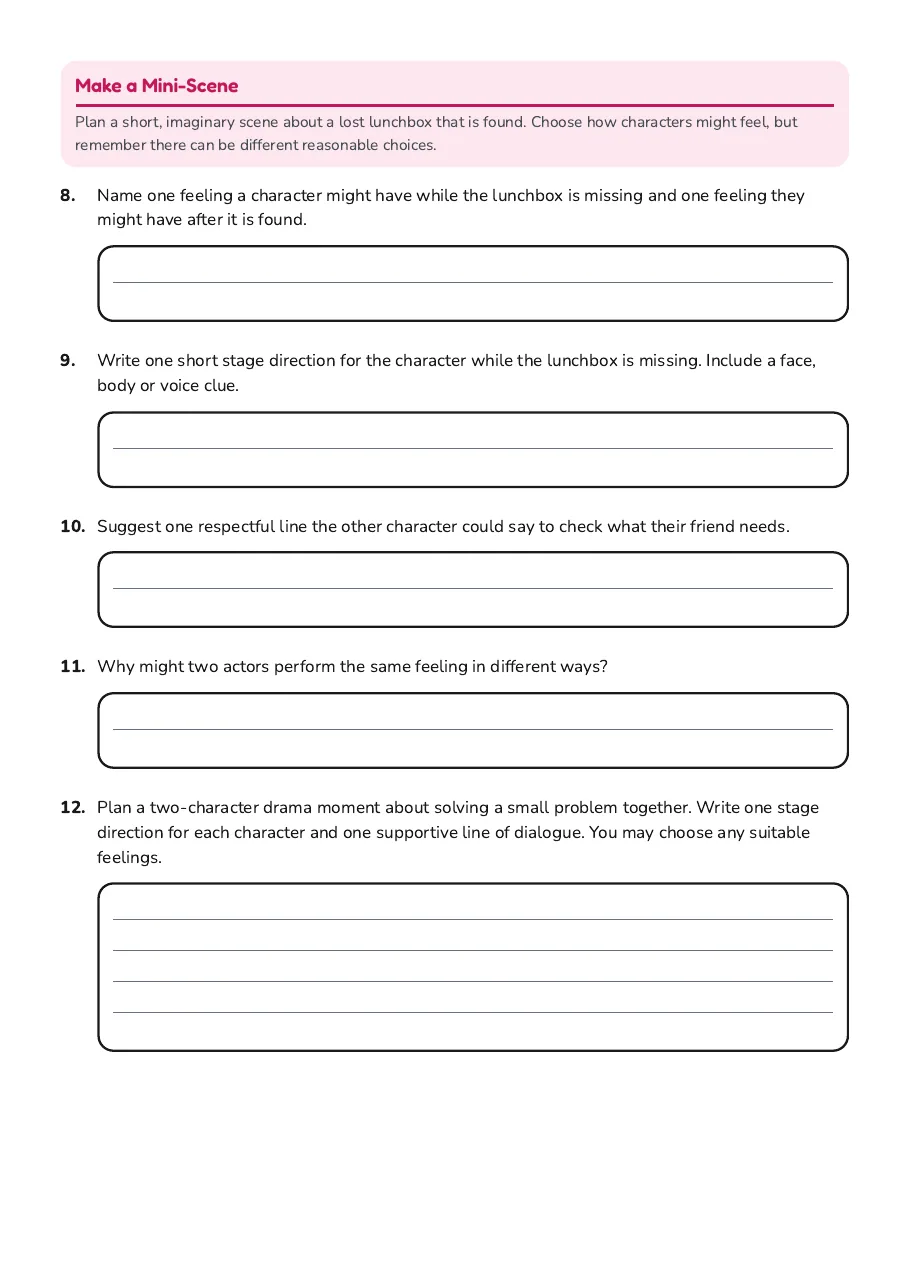
Make a Mini-Scene
Plan a short, imaginary scene about a lost lunchbox that is found. Choose how characters might feel, but remember there can be different reasonable choices.
4 printable pages
Page 1
Page 2
Page 3

Page 4
About This Worksheet
Free in Kuraplan
Sign up free, grab the PDF, and customize it for your class.
Print-Ready
Formatted for standard paper. Clean layout, easy to read.
AI-Generated
Created with Kuraplan's AI, designed for real classroom use.
For Teachers & Parents
Use in classrooms, for homework, tutoring, or homeschool.
Need a custom version of this worksheet?
Kuraplan's AI generates custom worksheets in seconds — differentiated for every learner, aligned to your curriculum.
Generate Custom Worksheets — Free