Ecology and Biomes Guide
A free science worksheet ready for your classroom. Open in Kuraplan to grab the print-ready PDF, customize it for your students, or generate a fresh version in seconds.
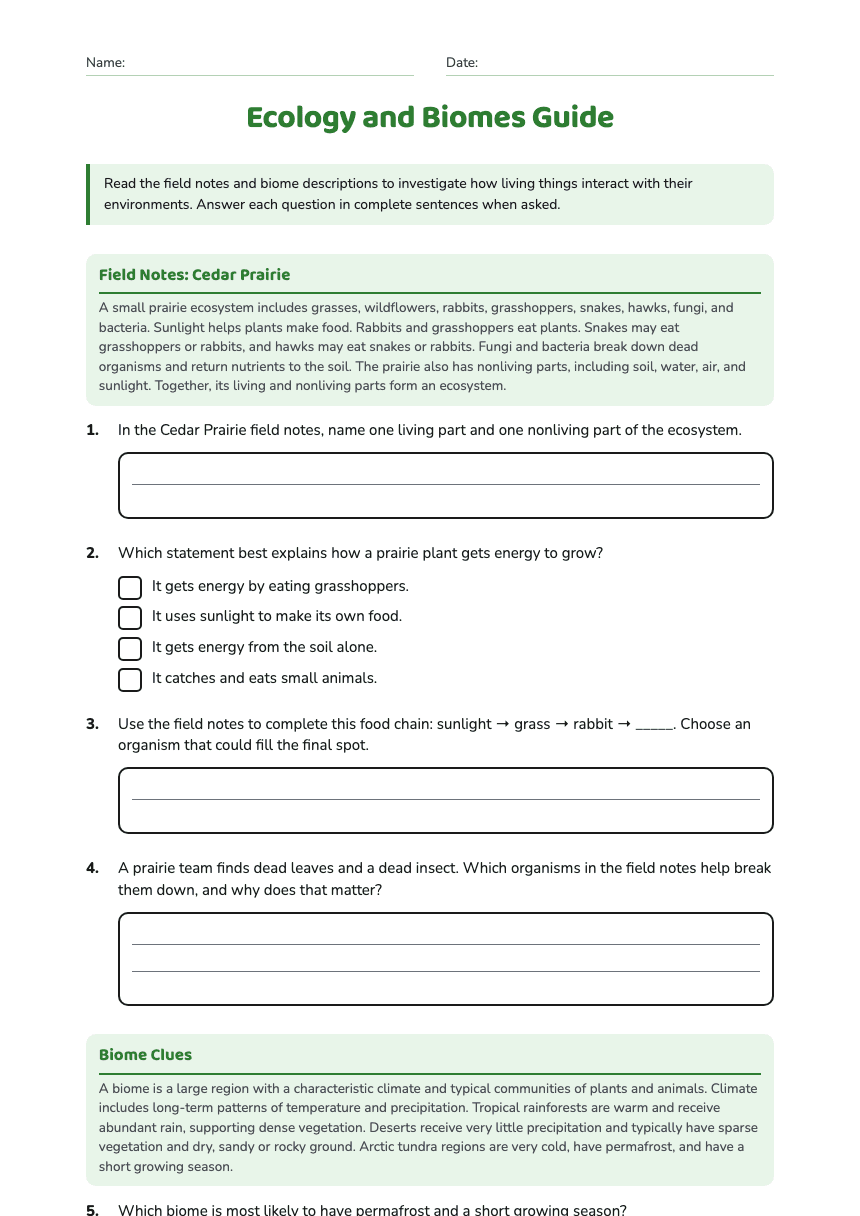
Ecology and Biomes Guide
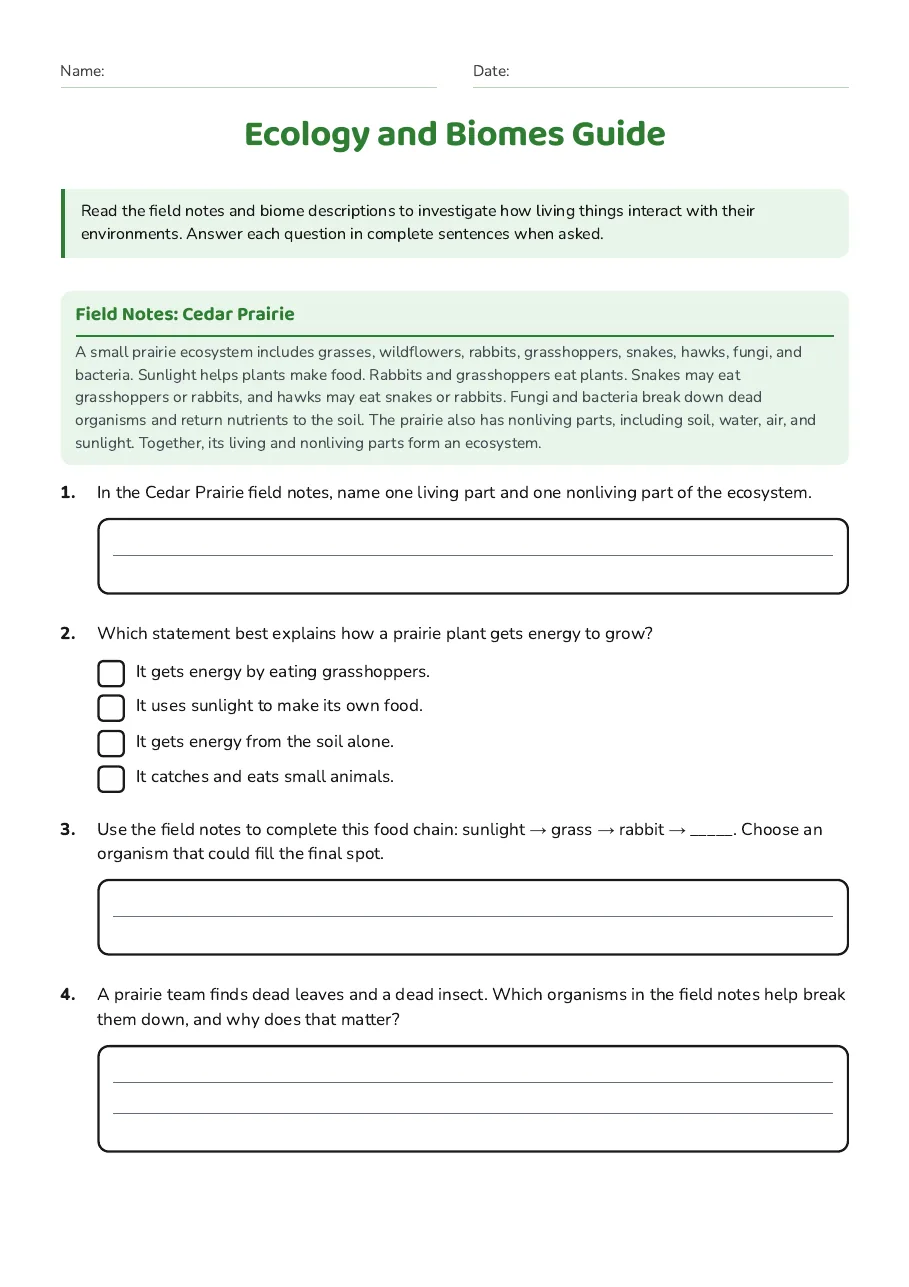
Field Notes: Cedar Prairie
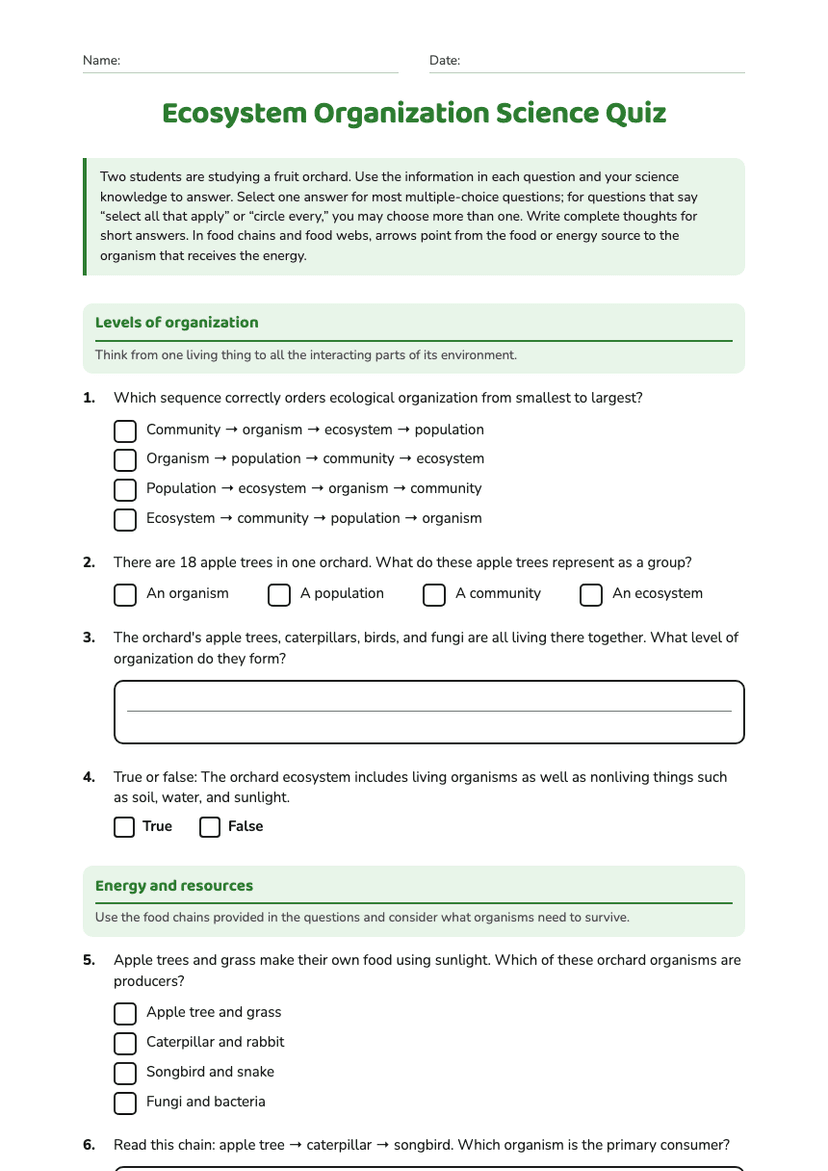
A small prairie ecosystem includes grasses, wildflowers, rabbits, grasshoppers, snakes, hawks, fungi, and bacteria. Sunlight helps plants make food. Rabbits and grasshoppers eat plants. Snakes may eat grasshoppers or rabbits, and hawks may eat snakes or rabbits. Fungi and bacteria break down dead organisms and return nutrients to the soil. The prairie also has nonliving parts, including soil, water, air, and sunlight. Together, its living and nonliving parts form an ecosystem.
- It gets energy by eating grasshoppers.
- It uses sunlight to make its own food.
- It gets energy from the soil alone.
- It catches and eats small animals.
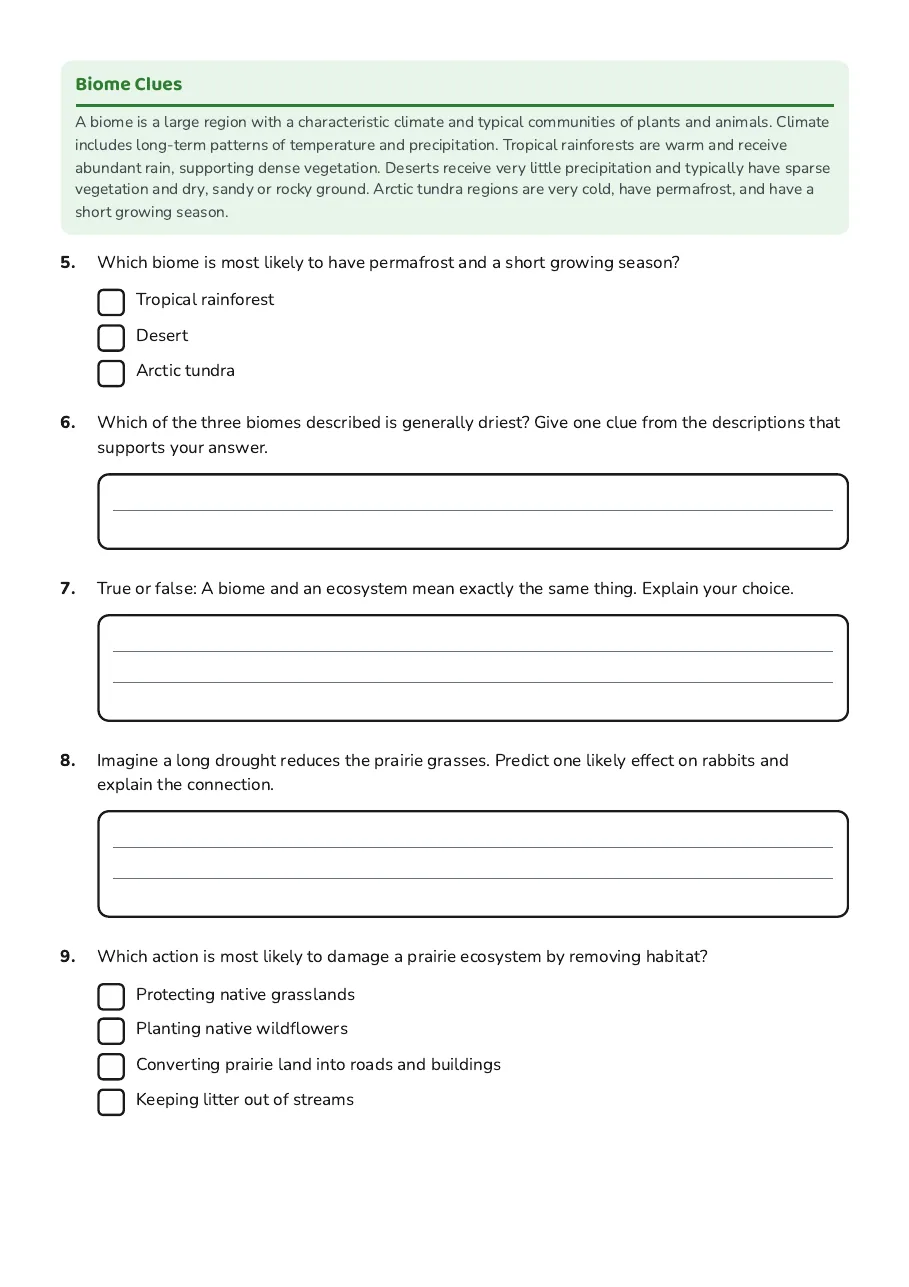
Biome Clues
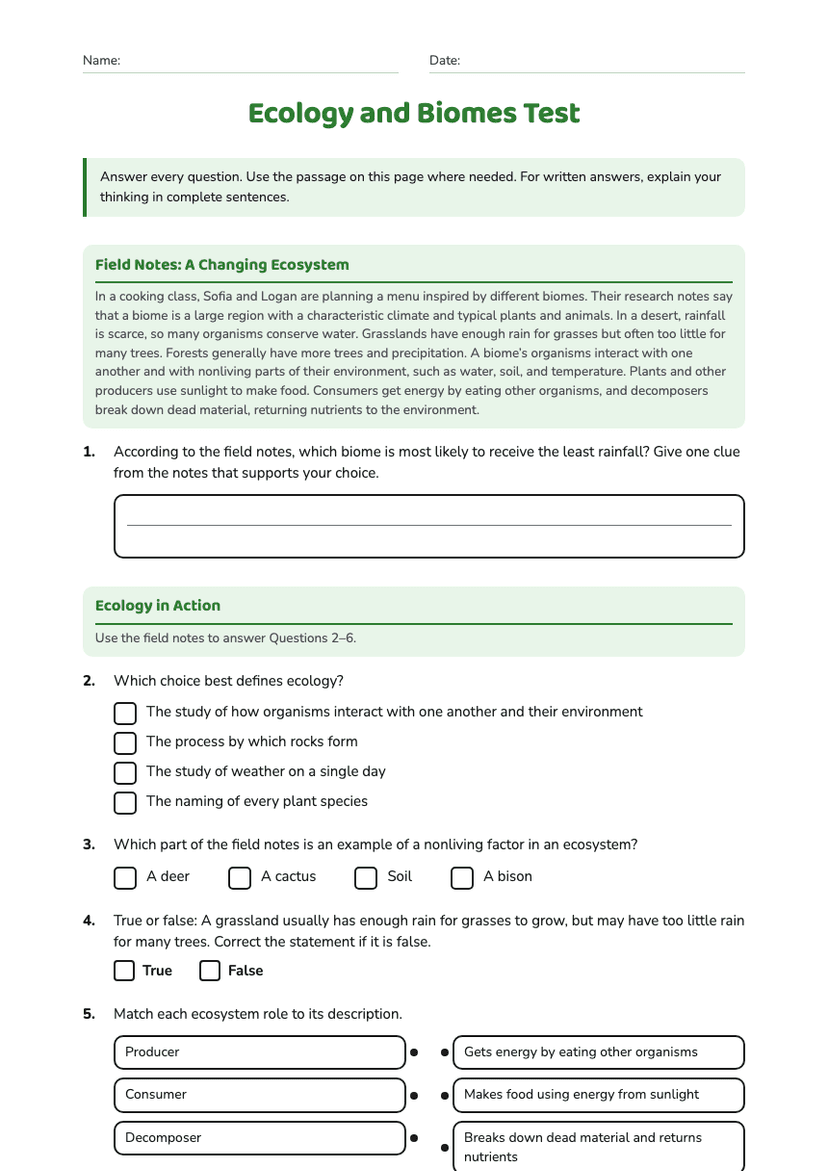
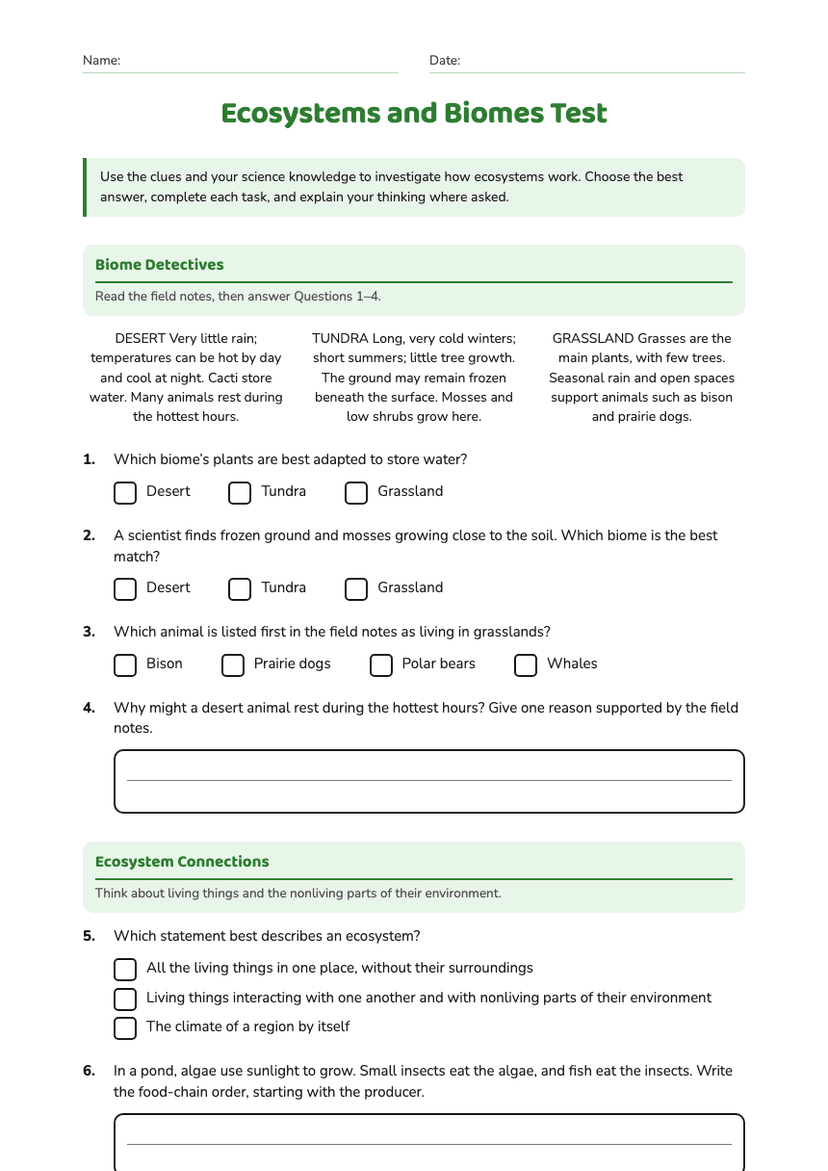
A biome is a large region with a characteristic climate and typical communities of plants and animals. Climate includes long-term patterns of temperature and precipitation. Tropical rainforests are warm and receive abundant rain, supporting dense vegetation. Deserts receive very little precipitation and typically have sparse vegetation and dry, sandy or rocky ground. Arctic tundra regions are very cold, have permafrost, and have a short growing season.
- Tropical rainforest
- Desert
- Arctic tundra
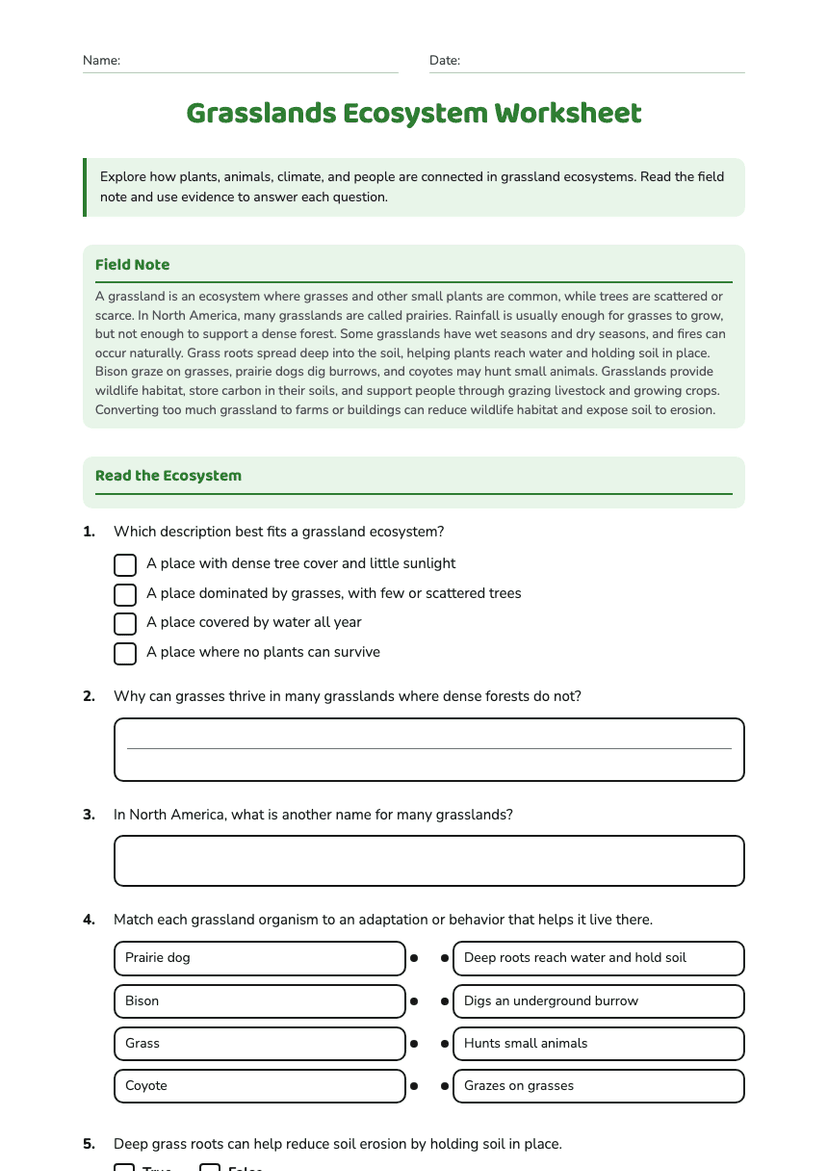
- Protecting native grasslands
- Planting native wildflowers
- Converting prairie land into roads and buildings
- Keeping litter out of streams
3 printable pages
Page 1
Page 2

Page 3
About This Worksheet
Free in Kuraplan
Sign up free, grab the PDF, and customize it for your class.
Print-Ready
Formatted for standard paper. Clean layout, easy to read.
AI-Generated
Created with Kuraplan's AI, designed for real classroom use.
For Teachers & Parents
Use in classrooms, for homework, tutoring, or homeschool.
Need a custom version of this worksheet?
Kuraplan's AI generates custom worksheets in seconds — differentiated for every learner, aligned to your curriculum.
Generate Custom Worksheets — Free