Ecology and Biomes Test
A free science worksheet ready for your classroom. Open in Kuraplan to grab the print-ready PDF, customize it for your students, or generate a fresh version in seconds.
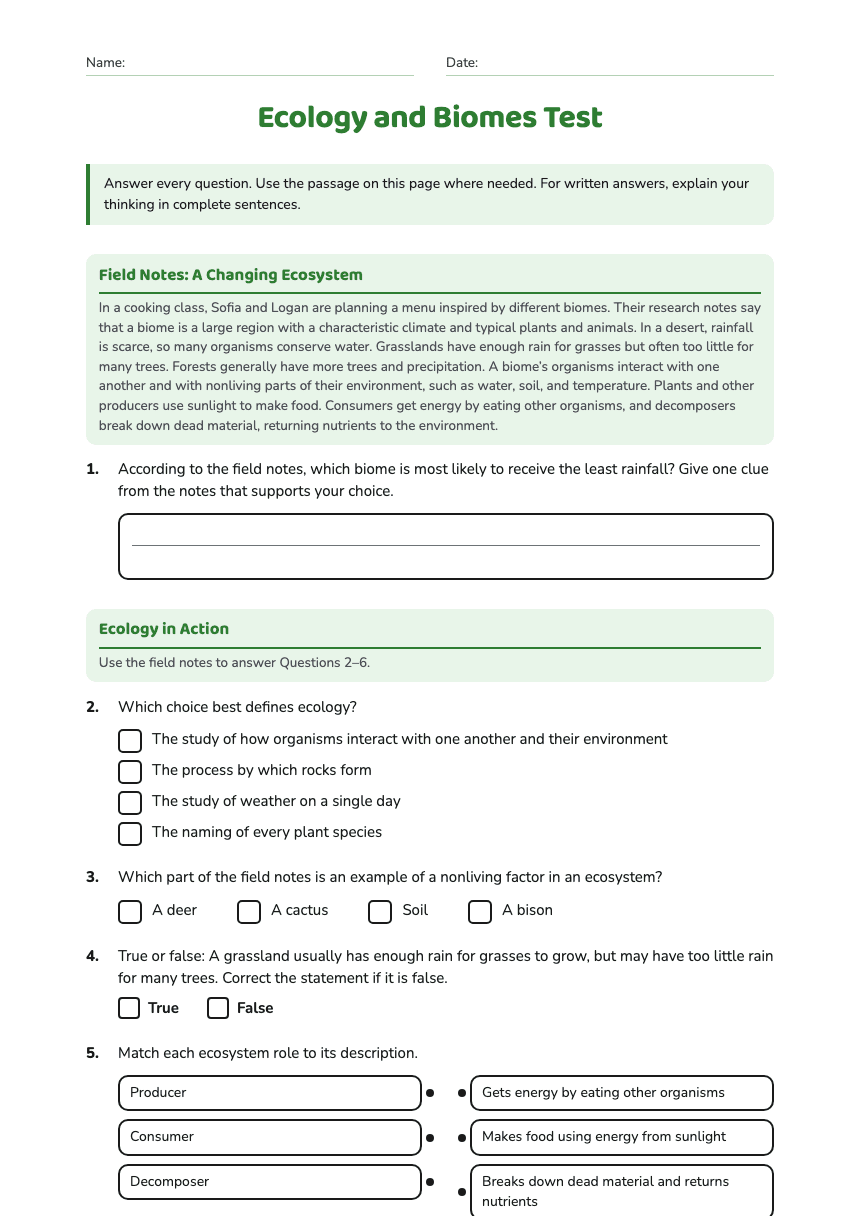
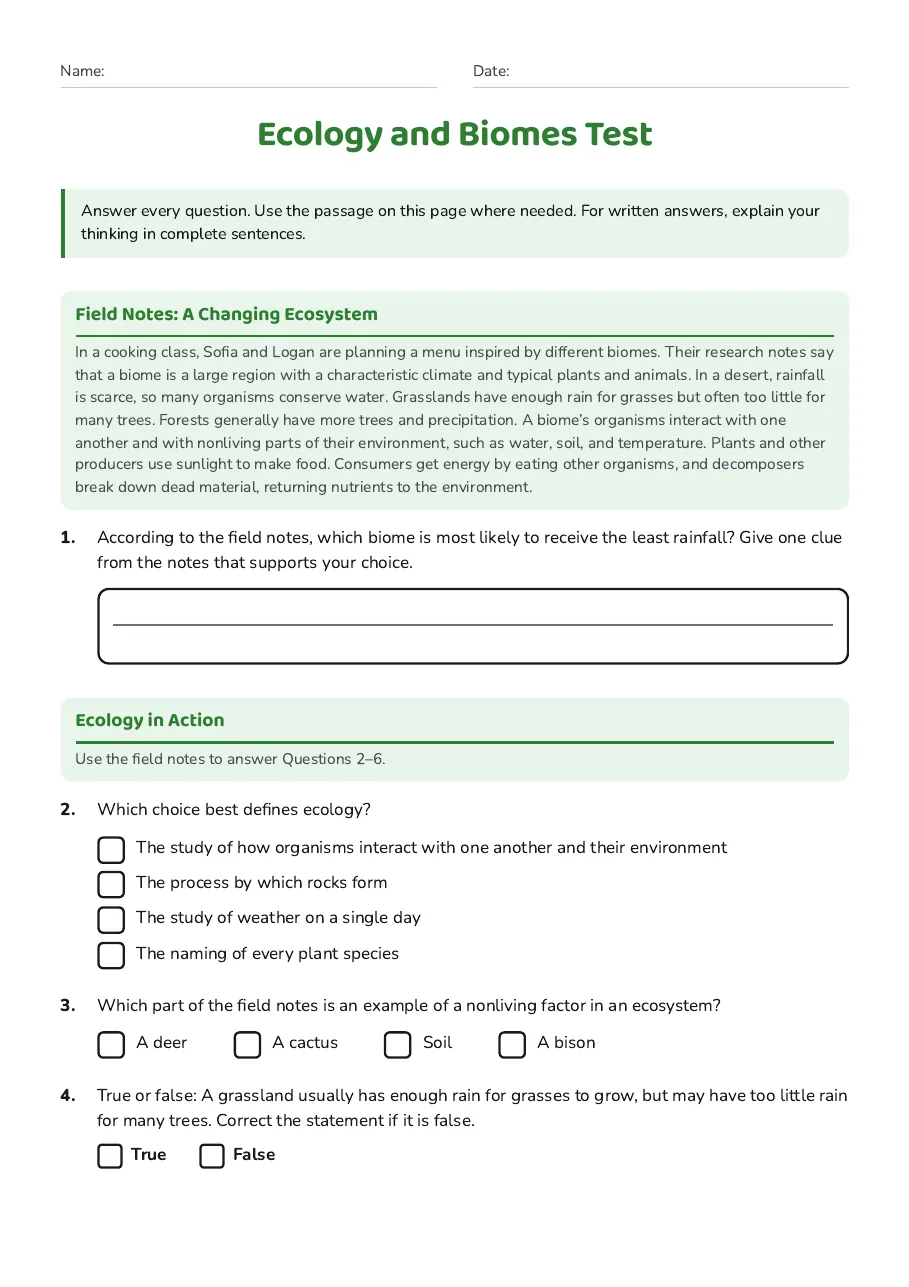
Ecology and Biomes Test
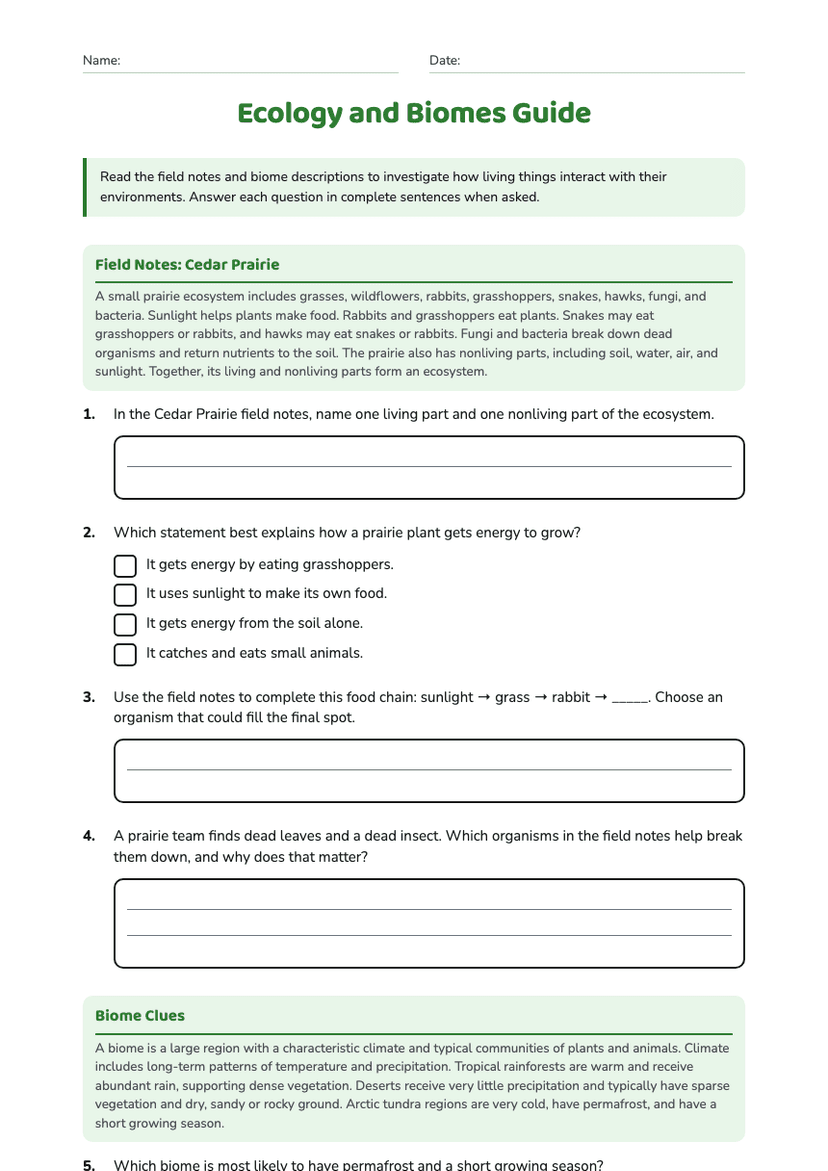
Field Notes: A Changing Ecosystem
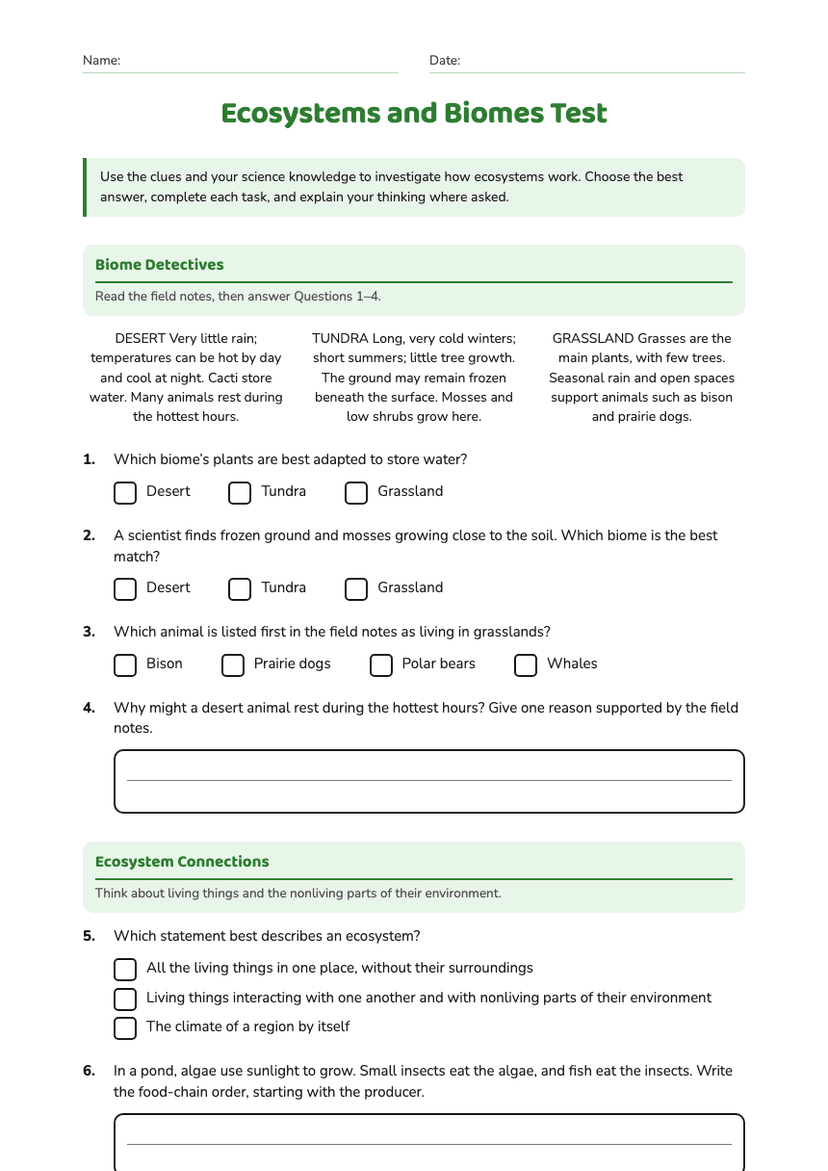
In a cooking class, Sofia and Logan are planning a menu inspired by different biomes. Their research notes say that a biome is a large region with a characteristic climate and typical plants and animals. In a desert, rainfall is scarce, so many organisms conserve water. Grasslands have enough rain for grasses but often too little for many trees. Forests generally have more trees and precipitation. A biome’s organisms interact with one another and with nonliving parts of their environment, such as water, soil, and temperature. Plants and other producers use sunlight to make food. Consumers get energy by eating other organisms, and decomposers break down dead material, returning nutrients to the environment.
Ecology in Action
Use the field notes to answer Questions 2–6.
- The study of how organisms interact with one another and their environment
- The process by which rocks form
- The study of weather on a single day
- The naming of every plant species
- A deer
- A cactus
- Soil
- A bison
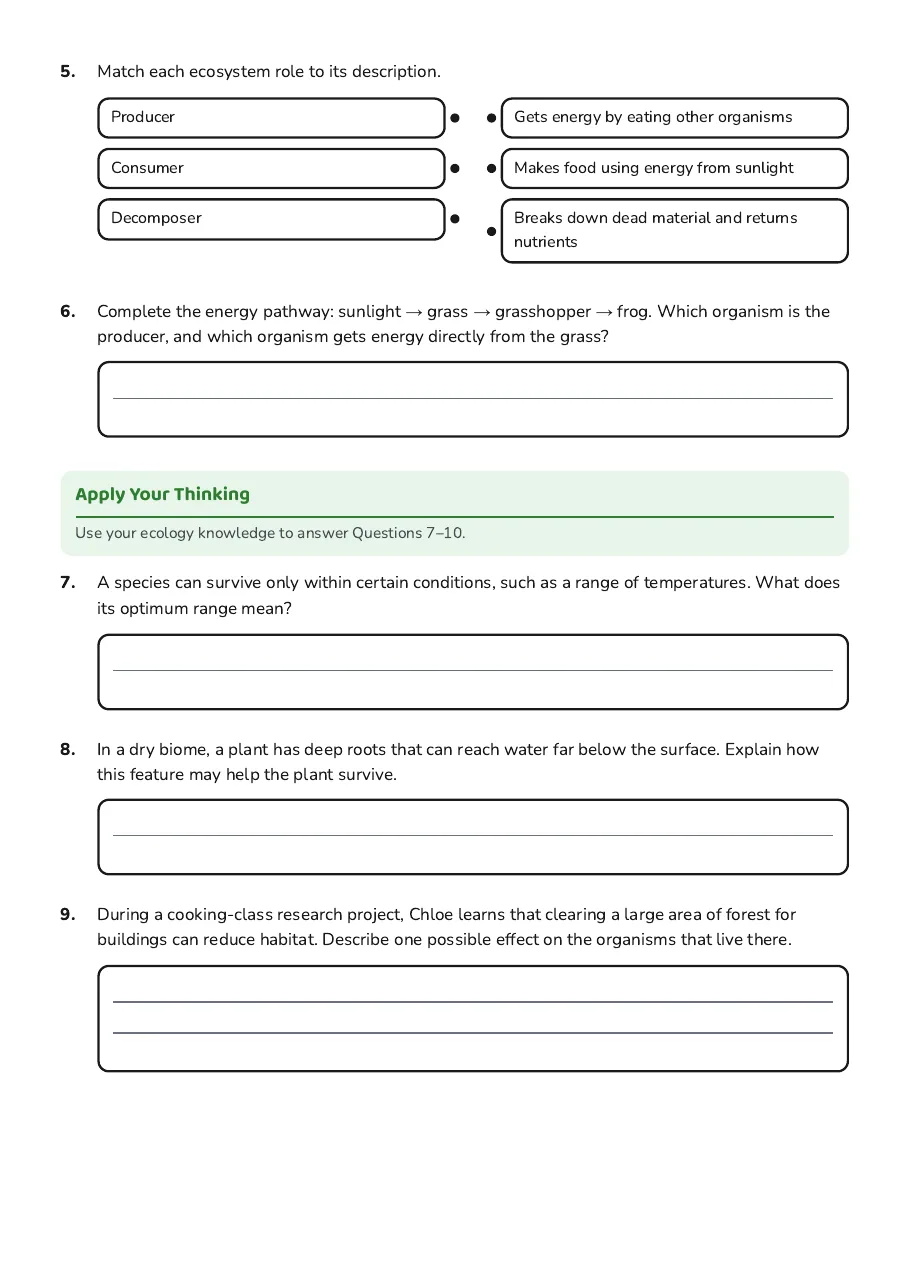
- Producer
- Consumer
- Decomposer
- Gets energy by eating other organisms
- Makes food using energy from sunlight
- Breaks down dead material and returns nutrients
Apply Your Thinking
Use your ecology knowledge to answer Questions 7–10.
3 printable pages
Page 1
Page 2

Page 3
About This Worksheet
Free in Kuraplan
Sign up free, grab the PDF, and customize it for your class.
Print-Ready
Formatted for standard paper. Clean layout, easy to read.
AI-Generated
Created with Kuraplan's AI, designed for real classroom use.
For Teachers & Parents
Use in classrooms, for homework, tutoring, or homeschool.
Need a custom version of this worksheet?
Kuraplan's AI generates custom worksheets in seconds — differentiated for every learner, aligned to your curriculum.
Generate Custom Worksheets — Free