Controlling Chemical Reactions
A free science worksheet ready for your classroom. Open in Kuraplan to grab the print-ready PDF, customize it for your students, or generate a fresh version in seconds.
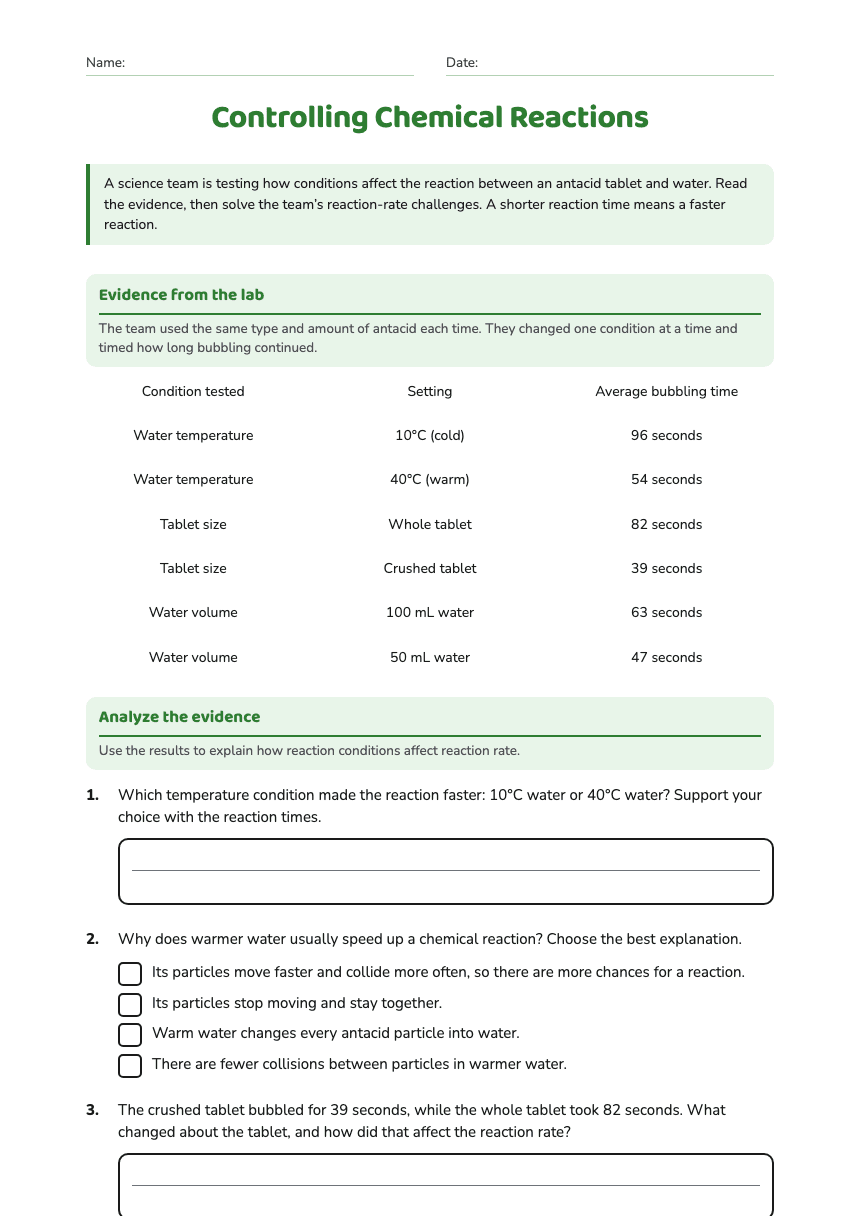
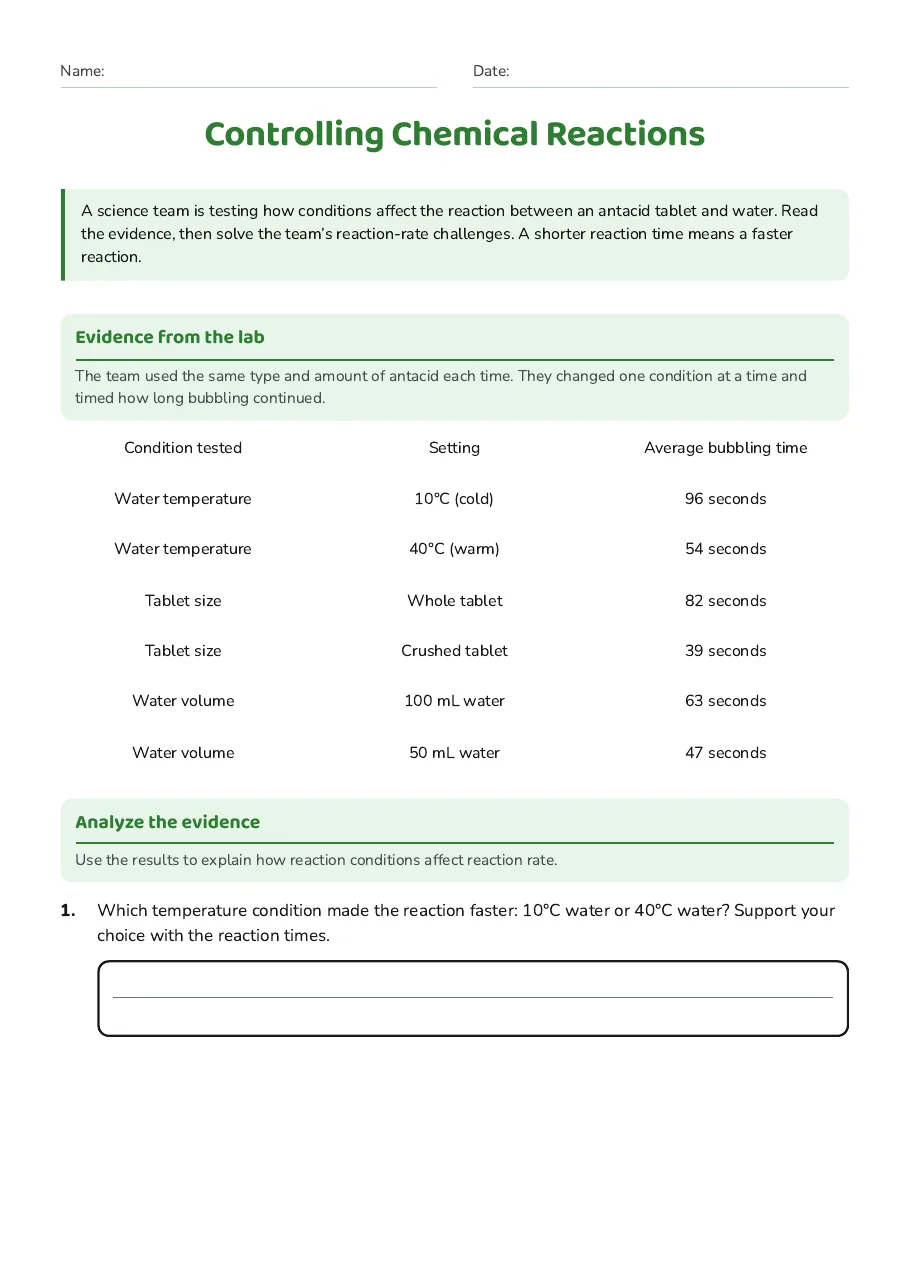
Controlling Chemical Reactions
Evidence from the lab
The team used the same type and amount of antacid each time. They changed one condition at a time and timed how long bubbling continued.
Condition tested
Setting
Average bubbling time
Water temperature
10°C (cold)
96 seconds
Water temperature
40°C (warm)
54 seconds
Tablet size
Whole tablet
82 seconds
Tablet size
Crushed tablet
39 seconds
Water volume
100 mL water
63 seconds
Water volume
50 mL water
47 seconds
Analyze the evidence
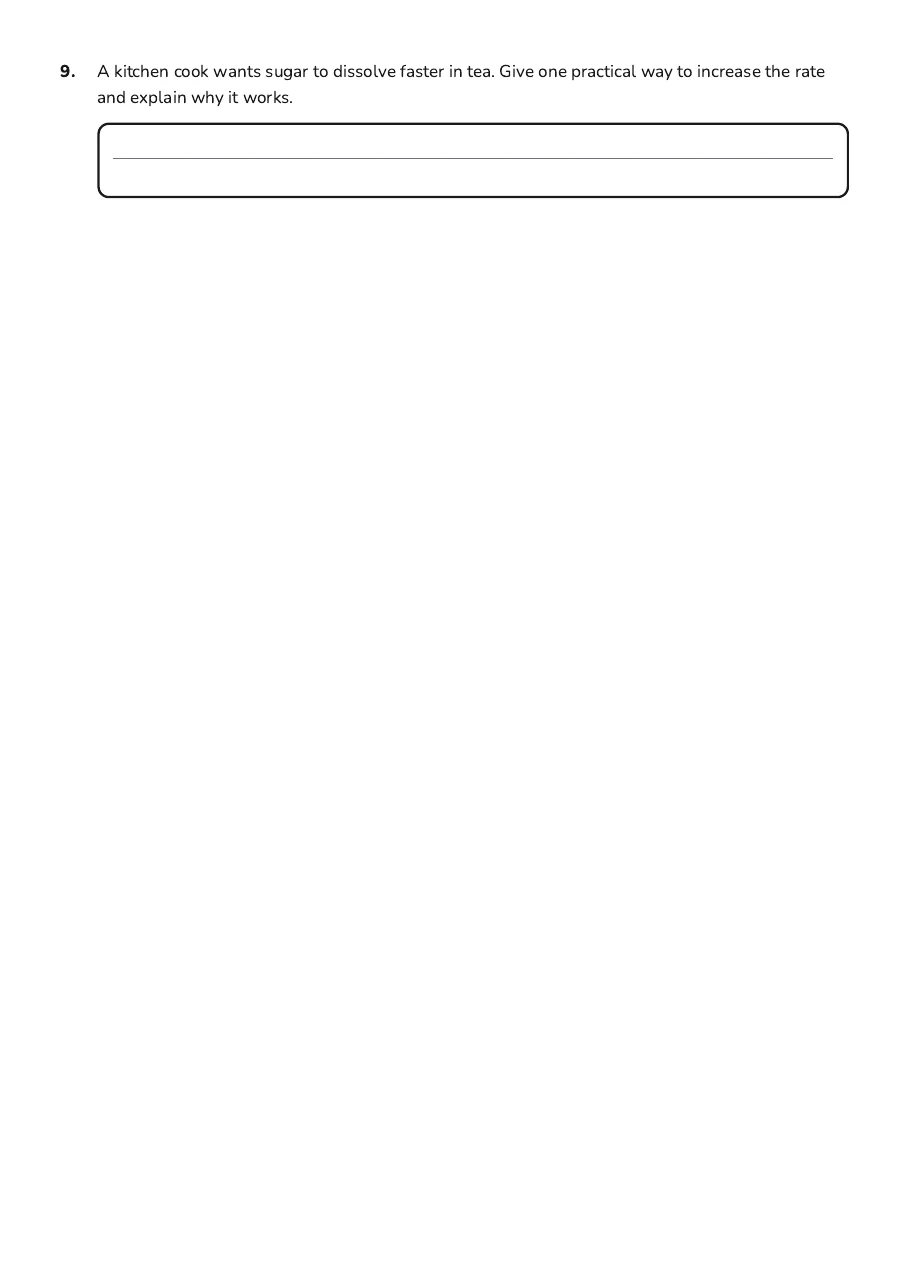
Use the results to explain how reaction conditions affect reaction rate.
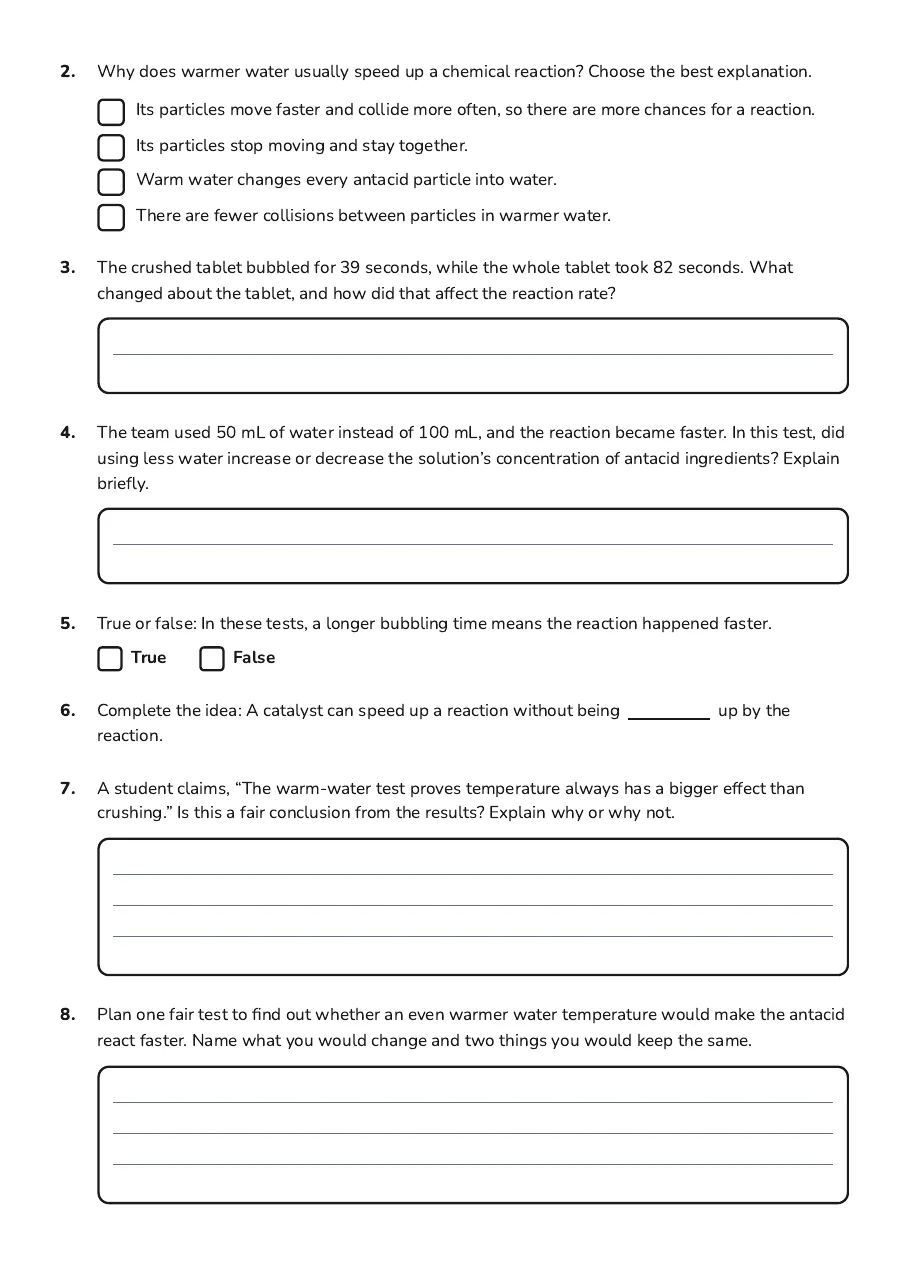
- Its particles move faster and collide more often, so there are more chances for a reaction.
- Its particles stop moving and stay together.
- Warm water changes every antacid particle into water.
- There are fewer collisions between particles in warmer water.
3 printable pages
Page 1
Page 2
Page 3
About This Worksheet
Free in Kuraplan
Sign up free, grab the PDF, and customize it for your class.
Print-Ready
Formatted for standard paper. Clean layout, easy to read.
AI-Generated
Created with Kuraplan's AI, designed for real classroom use.
For Teachers & Parents
Use in classrooms, for homework, tutoring, or homeschool.
Need a custom version of this worksheet?
Kuraplan's AI generates custom worksheets in seconds — differentiated for every learner, aligned to your curriculum.
Generate Custom Worksheets — FreeMore Science Worksheets
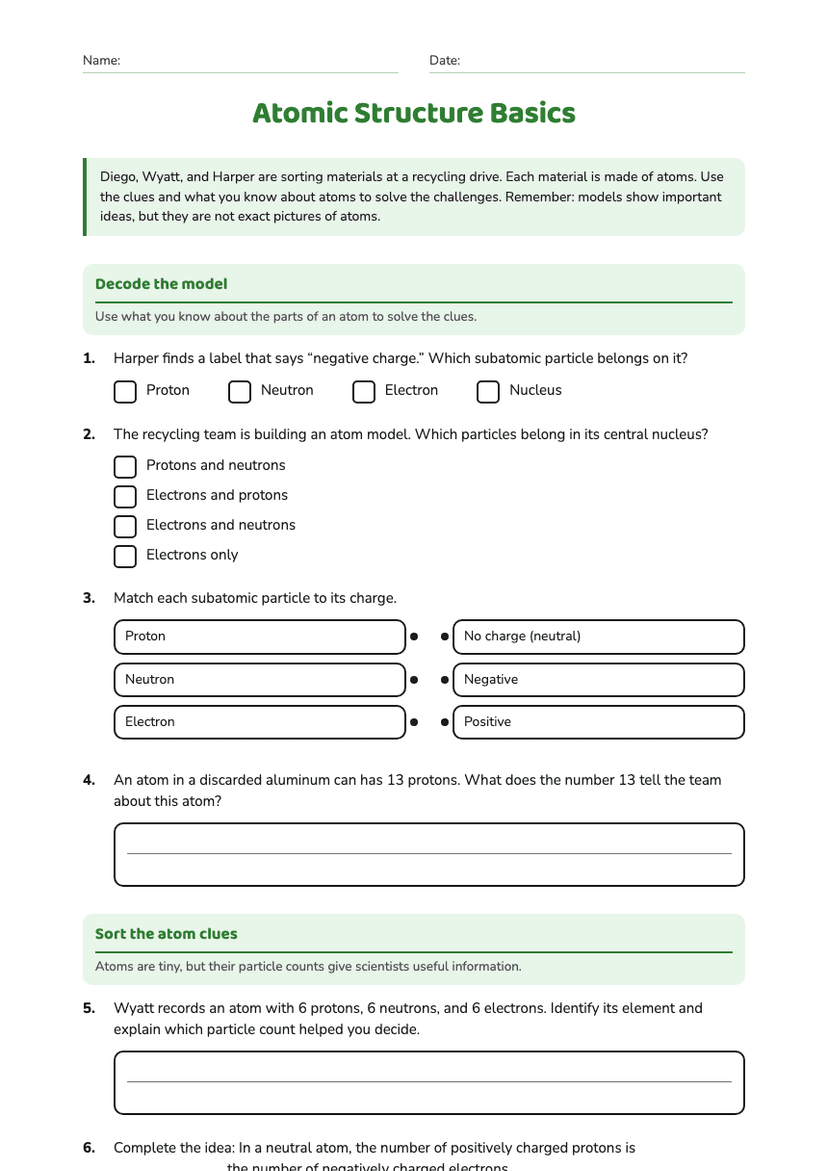
Atomic Structure Basics
Free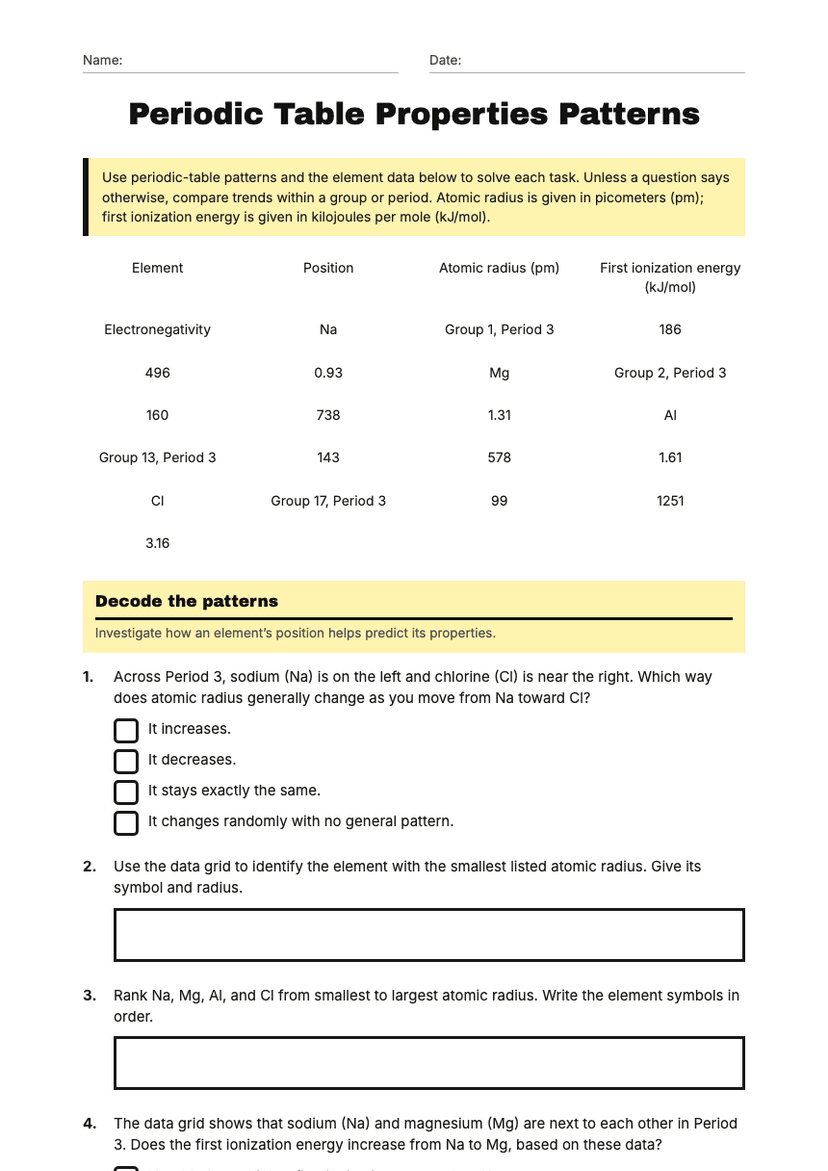
Periodic Table Properties Patterns
Free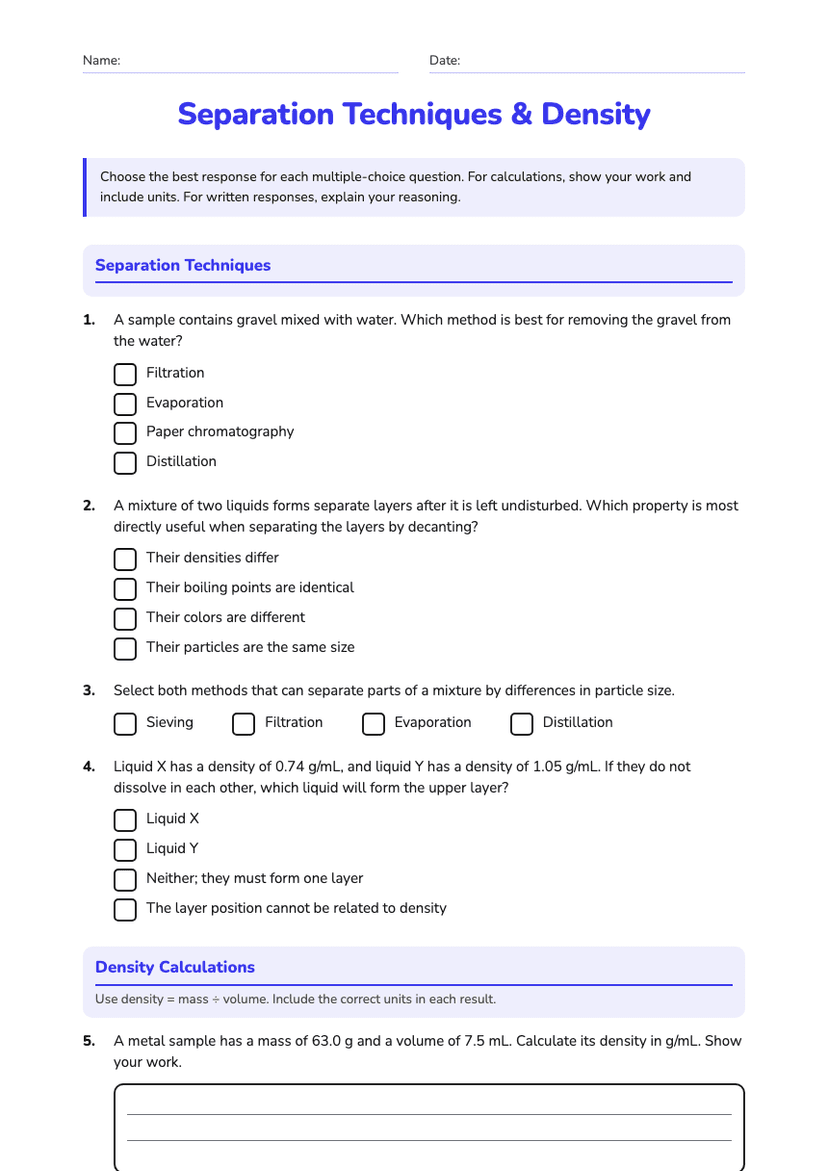
Separation Techniques & Density
Free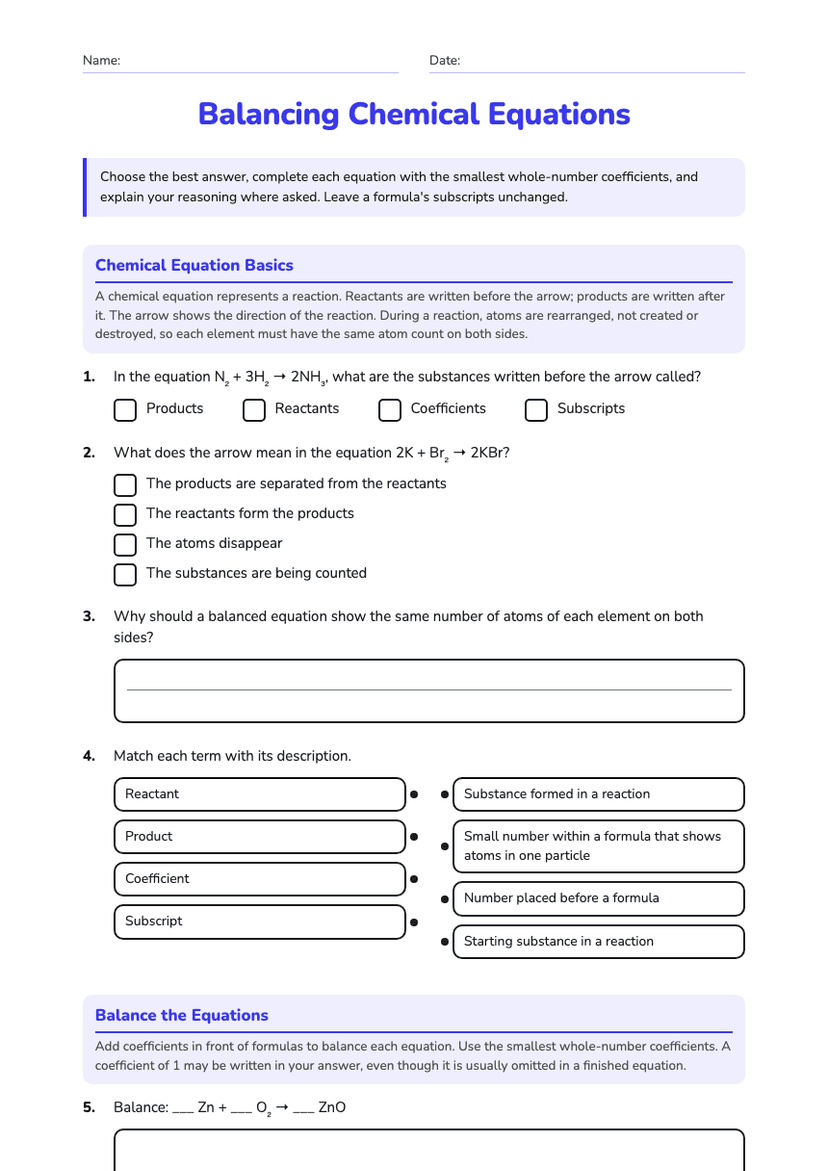
Balancing Chemical Equations
Free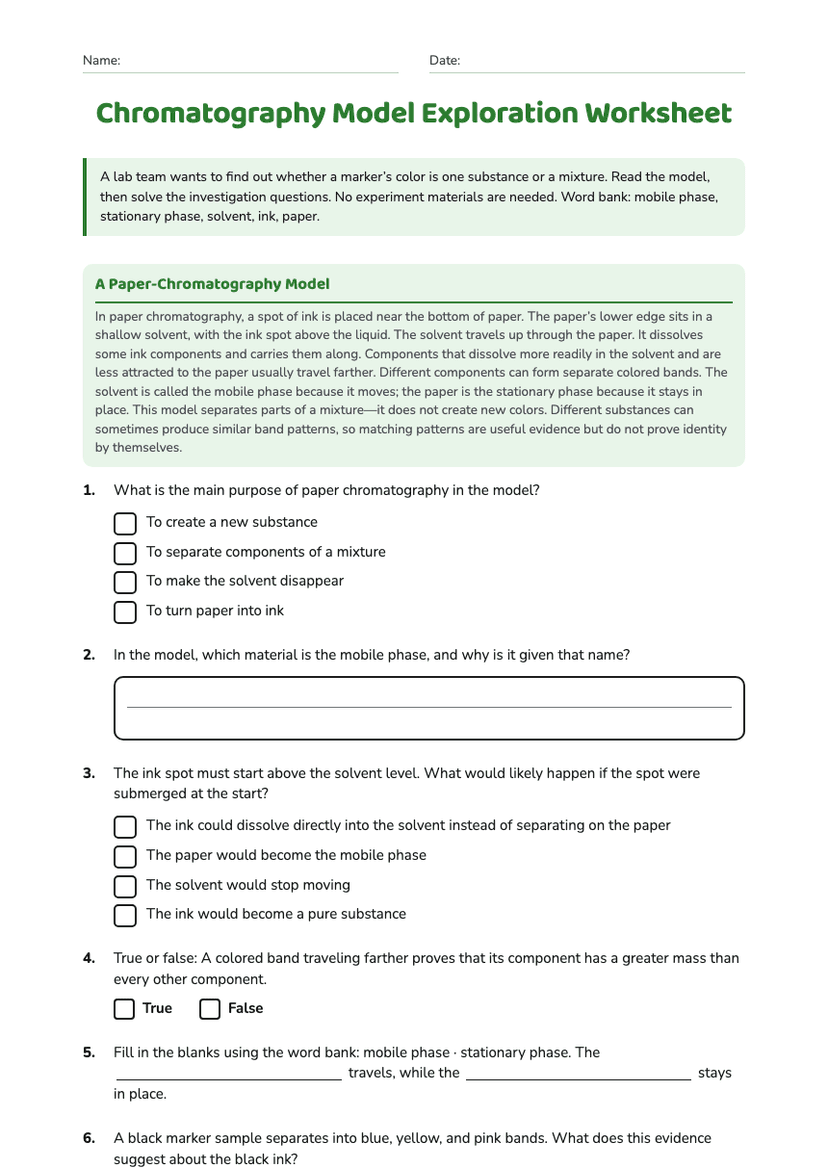
Chromatography Model Exploration Worksheet
Free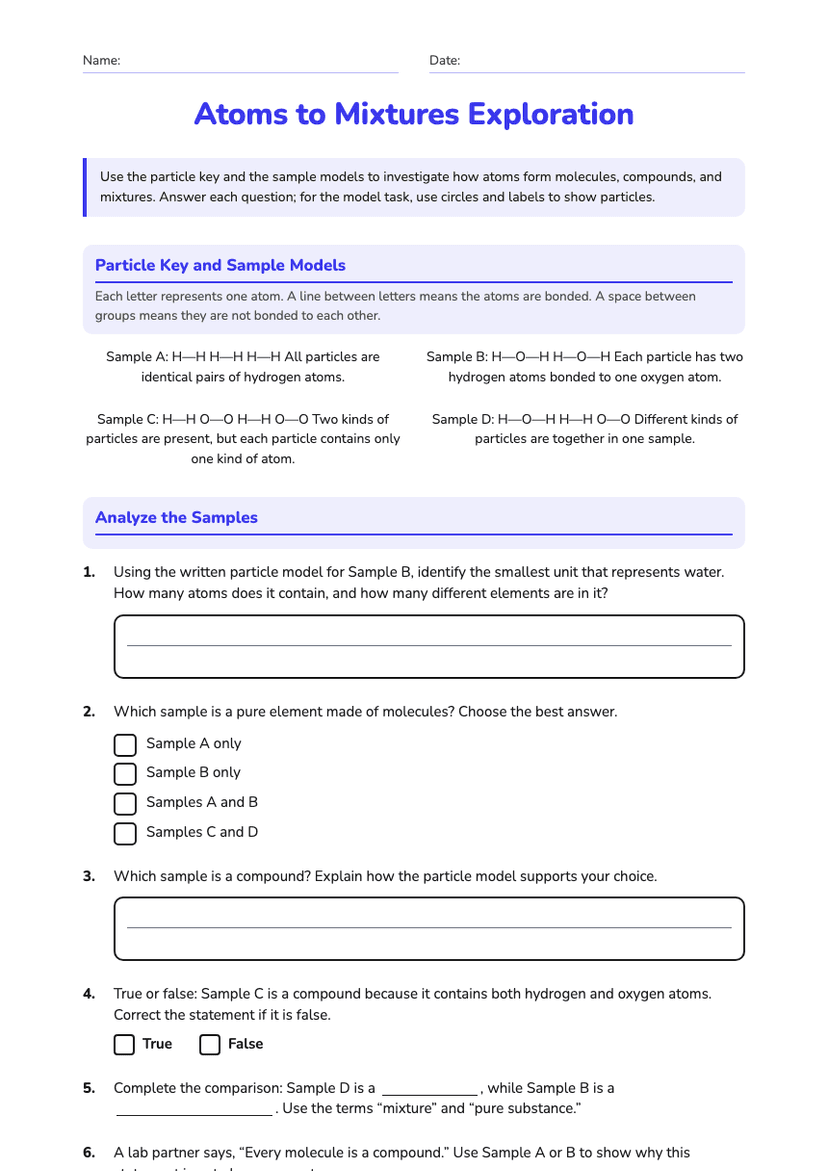
Atoms to Mixtures Exploration
Free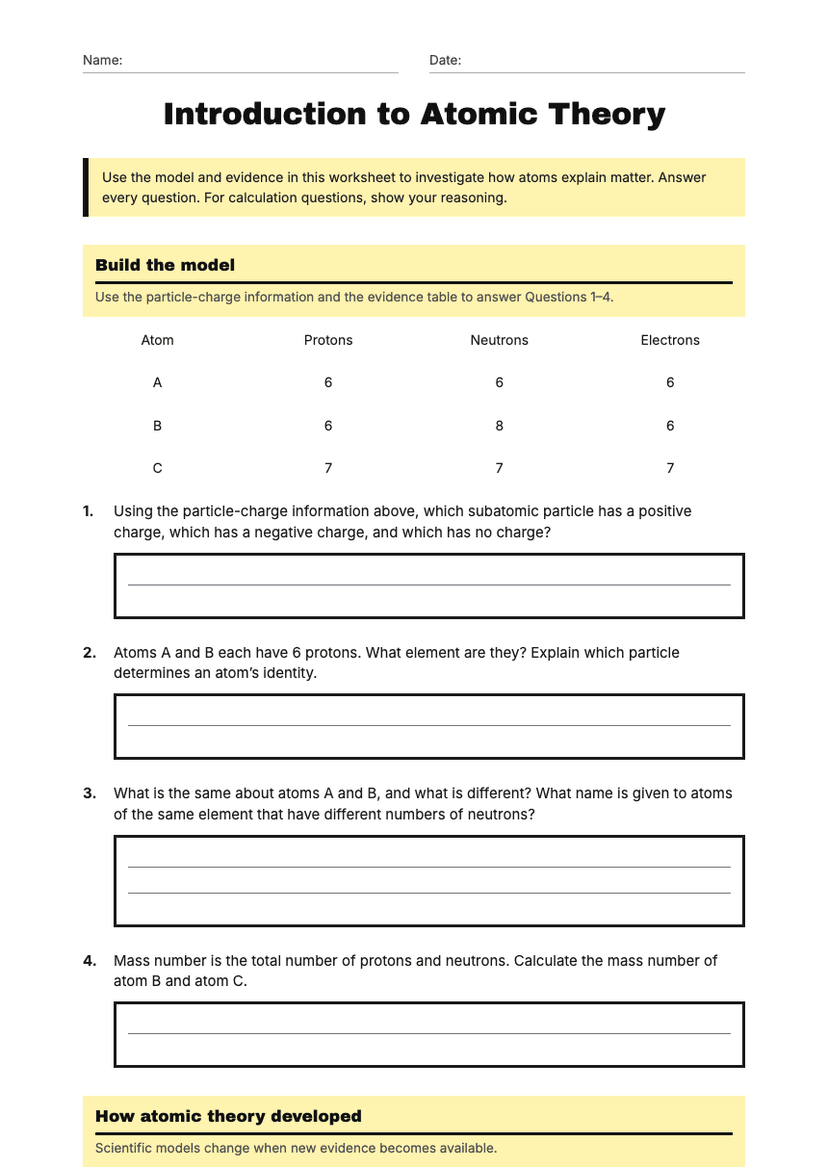
Introduction to Atomic Theory
Free