
1. Check the law where you live (one evening)
Homeschooling is legal in every US state and in the UK, Australia, Canada, New Zealand and Ireland. What differs is the paperwork: from nothing at all (Texas, Illinois, Michigan, Ontario) to a notice of intent (most US states), registration with a learning plan (Australian states, Quebec, New Zealand's exemption), or an annual portfolio and evaluation (Pennsylvania, Florida, New York). Find your place in the state guides or the country guides, note the one or two things you must do and their dates, and put them on a calendar. That is the legal step. It is smaller than people fear.
2. Withdraw from school properly (one letter)
If your child is enrolled, write to the school. In most places a short letter stating that you are withdrawing your child to home educate them from a given date is all that is needed; keep a copy and ask for confirmation. Some places require more: a notice to the district first (New York, Virginia), the council's consent (Scotland, for a child at a council school), or an approved registration before withdrawal (New South Wales, Victoria). Do not simply stop sending your child; a child on a school roll who does not attend is truant until the paperwork catches up.
3. Deschool, if your child has been at school (two to six weeks)
Children leaving school, especially after a hard time, need a gap before home learning starts: no lessons, lots of sleep, books, outdoors, cooking, museums, boredom. The rule of thumb is a week per year of school. Parents need it too; it is when you stop trying to run a classroom in your kitchen. If your child has never been to school, skip this.
4. Pick an approach, loosely (one weekend of reading)
You do not need a philosophy, but knowing the main ones saves you from buying the wrong curriculum. Read the short guides to Charlotte Mason (books, nature, short lessons), classical (structure, memory, the great books), unschooling (interest-led), unit studies (one topic, every subject) and eclectic (a bit of each, which is where most families end up). Decide roughly where you lean, and whether you want a secular or faith-based frame. Then stop reading and start.
5. Buy two things (and use the library for the rest)
For a child under about nine, buy a systematic phonics program (All About Reading if budget allows, The Ordinary Parent's Guide to Teaching Reading for $30) and a math program placed by its placement test (Math Mammoth, Singapore, Math-U-See). For an older child, buy a math program and a writing program. That is the whole first purchase. History, science, art and literature come from the library, nature and conversation for the first month, and you will know far better what to buy in October than you do now. Our programs guide and math guide cover the choices.
6. Set a short daily rhythm (one page)
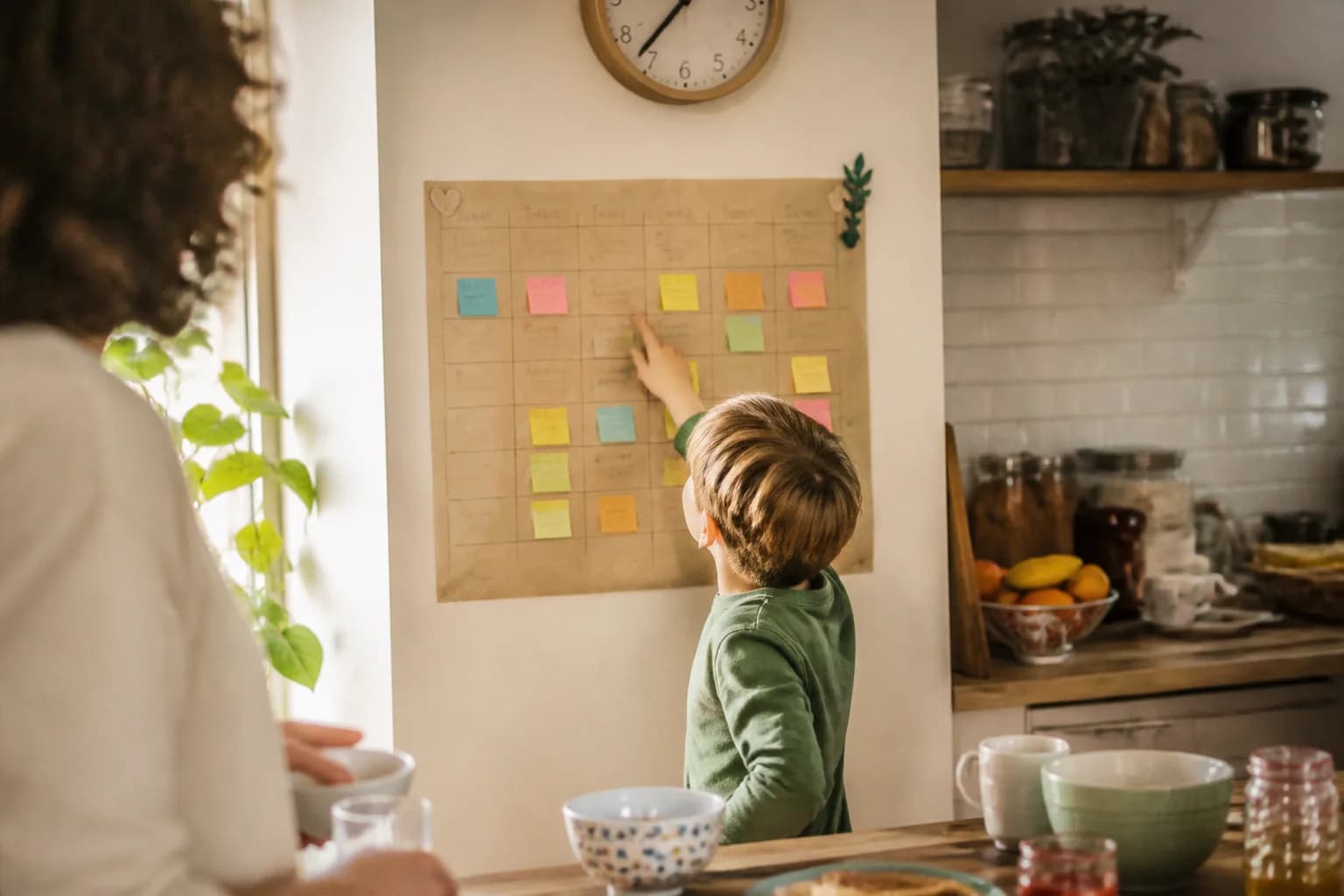
The most common beginner error is a six-hour school day. A homeschool day is roughly an hour per grade level, capped around four: kindergarten is ninety minutes, third grade is three hours, high school is five or six largely self-directed. Front-load the subjects that need you (math, reading, writing) in the morning in short blocks with breaks, put read-alouds at a fixed time, and leave afternoons for play, projects, sport and life. Write it on one page. Our schedule examples and free daily schedule template give you the shape.
7. Set up a corner, not a room
A shelf, a box of supplies, a whiteboard and the kitchen table. Children learn at the table where the parent is; a dedicated room mostly gathers dust. The supply checklist covers what you need, which is less than the school list, and the room ideas guide is for later, if you want one.
8. Start records on day one (five minutes a day)
Print an attendance sheet if your state counts days, a weekly planner for everyone, and a reading log per child. Tick, fill, file. Records are trivial if they start on day one and miserable if they start in May. If your state wants a portfolio, the checklist tells you what to keep.
9. Find your people (one search, one message)
Search for your town or county plus “homeschool group” on Facebook, and check your library's events page and your state homeschool association. Go to one park day in the first month. Homeschooling is hard alone and easy with three families; the social question for children resolves itself once you have a group, and the parent gets the advice that no guide can give.
10. Run it for a month before changing anything
Week one will be rough. Week two will be worse. Week three something clicks. Do not change curriculum, approach or schedule until you have done four weeks; almost every problem in month one is adjustment, not the wrong program. At the end of the month, change one thing. That is the whole method.
Month-one mistakes almost everyone makes
- Recreating school. Bells, desks, six subjects a day, a Friday test. Your child left school; do not bring it home.
- Buying a boxed curriculum in week one. You do not yet know what your child needs or how you teach. Buy the two things; wait on the rest.
- Too long a day. See step six. Short and done beats long and fought over.
- Comparing to the school timetable. A school day has 90 minutes of instruction in six hours. Your three hours is more.
- Doing it alone. Find the group. Post the question. Nobody figured this out solo.
- Panicking about gaps. Every education has gaps. Yours will be different gaps from the school's, and you will fill the ones that matter.