HealthFreePrintable

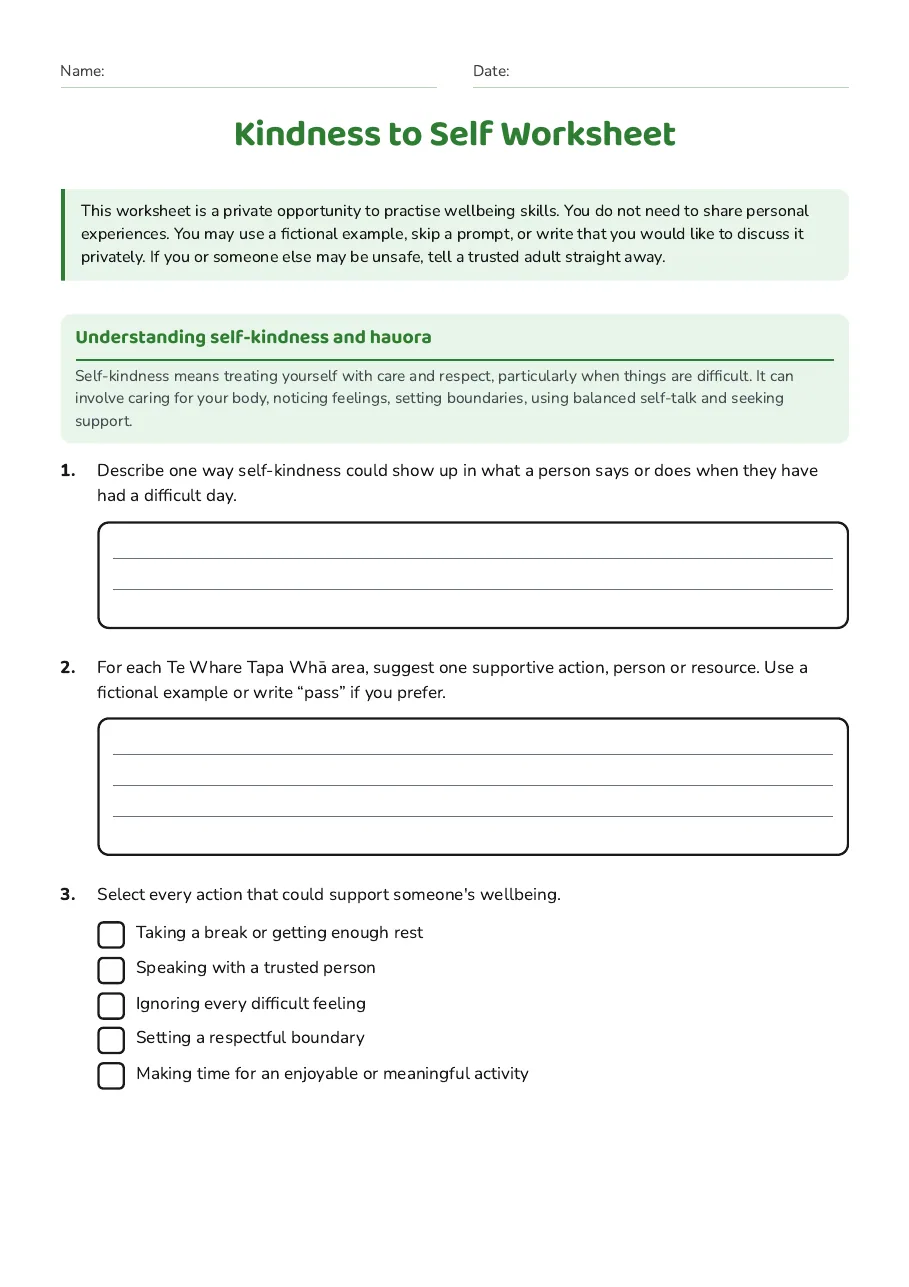
Kindness to Self Worksheet

A free health worksheet ready for your classroom. Open in Kuraplan to grab the print-ready PDF, customize it for your students, or generate a fresh version in seconds.
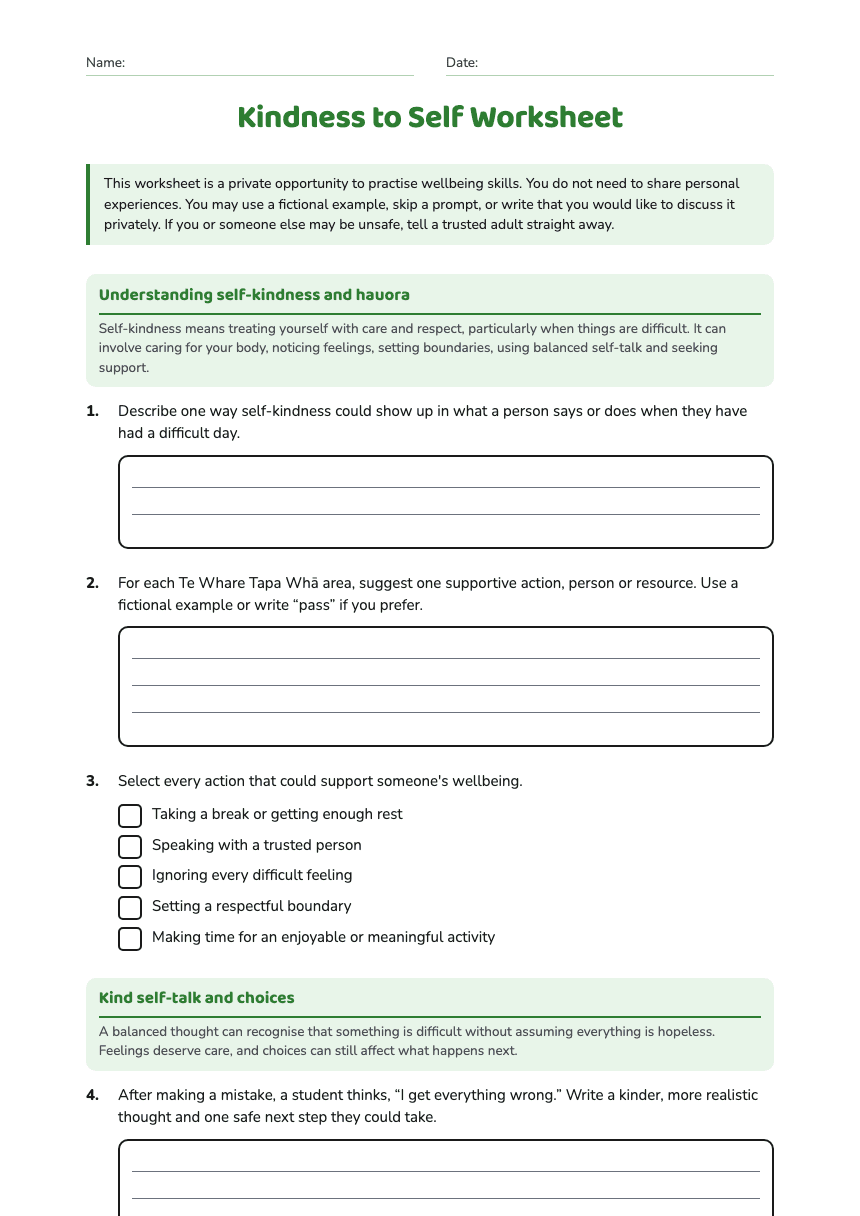
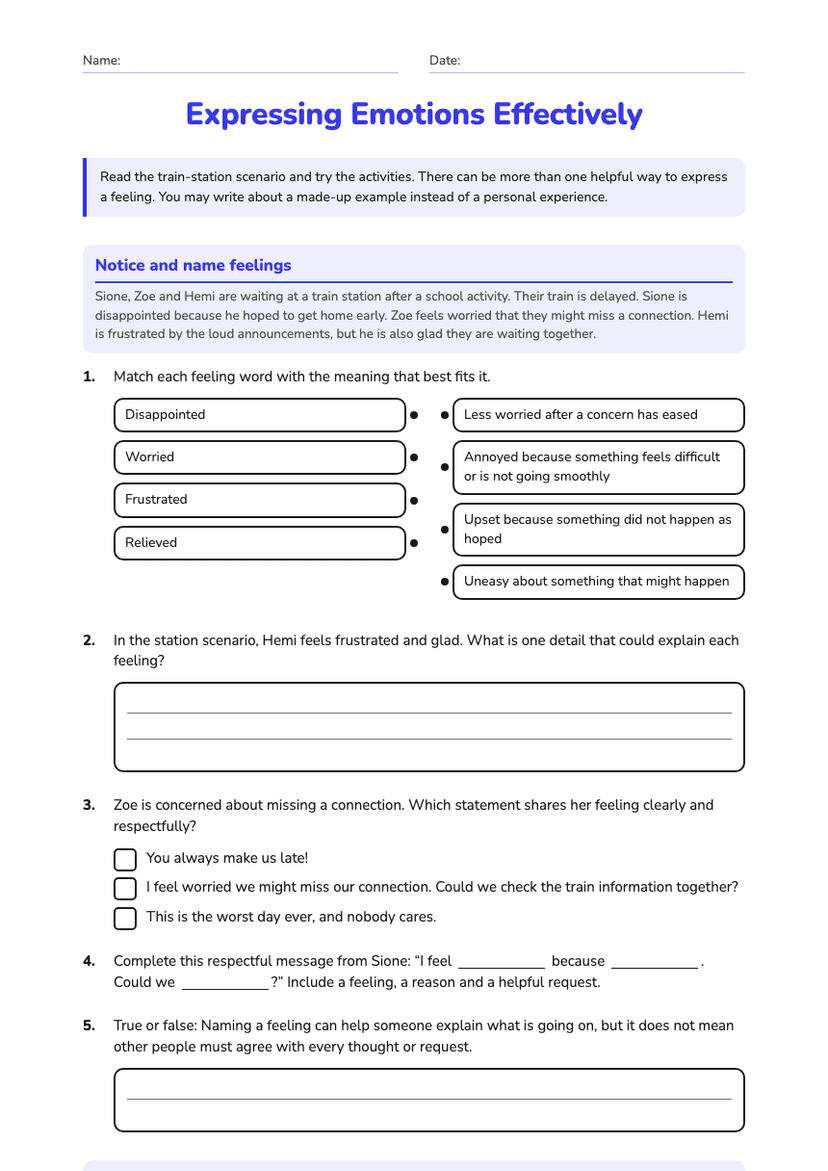
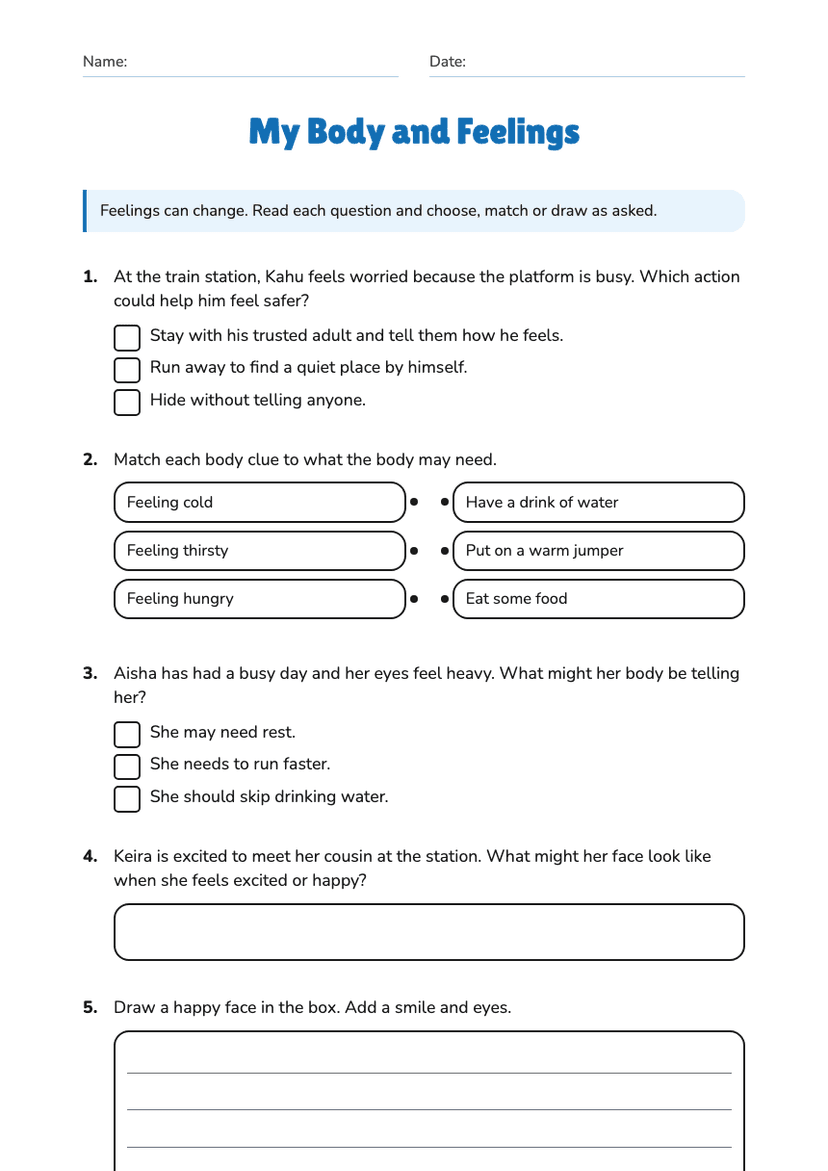
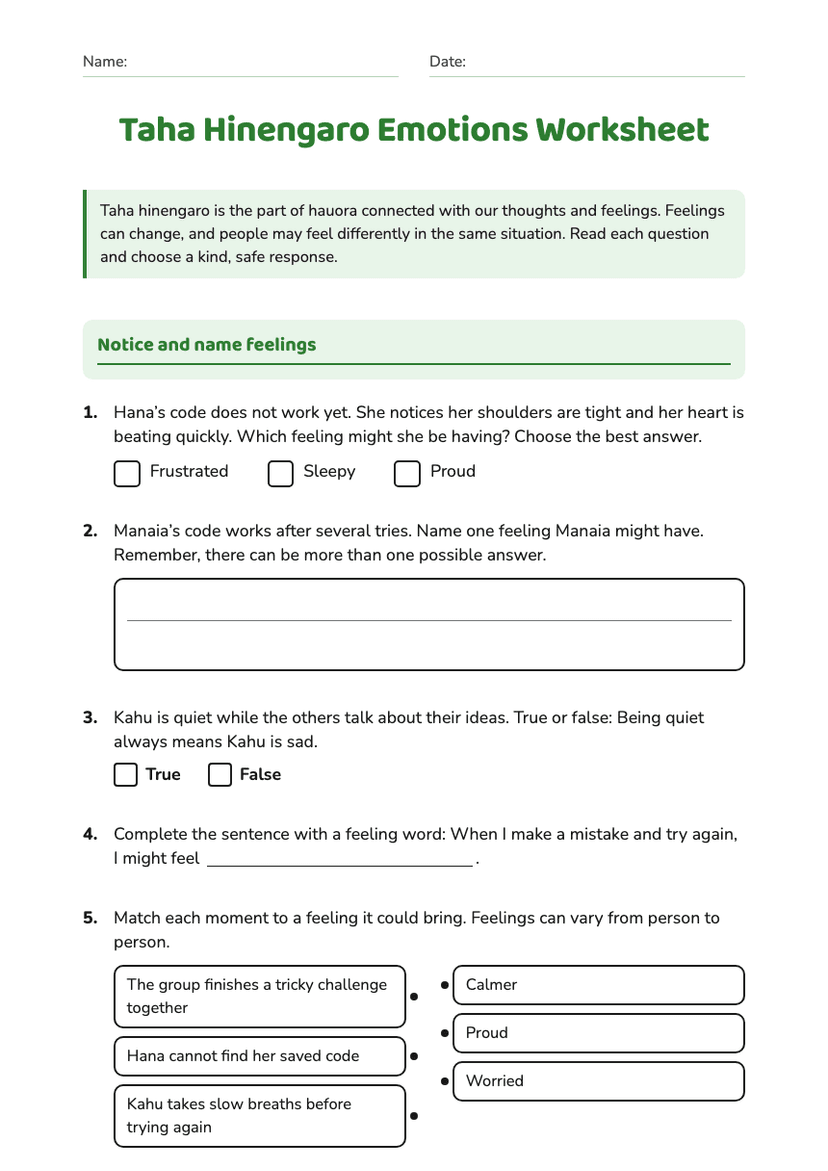
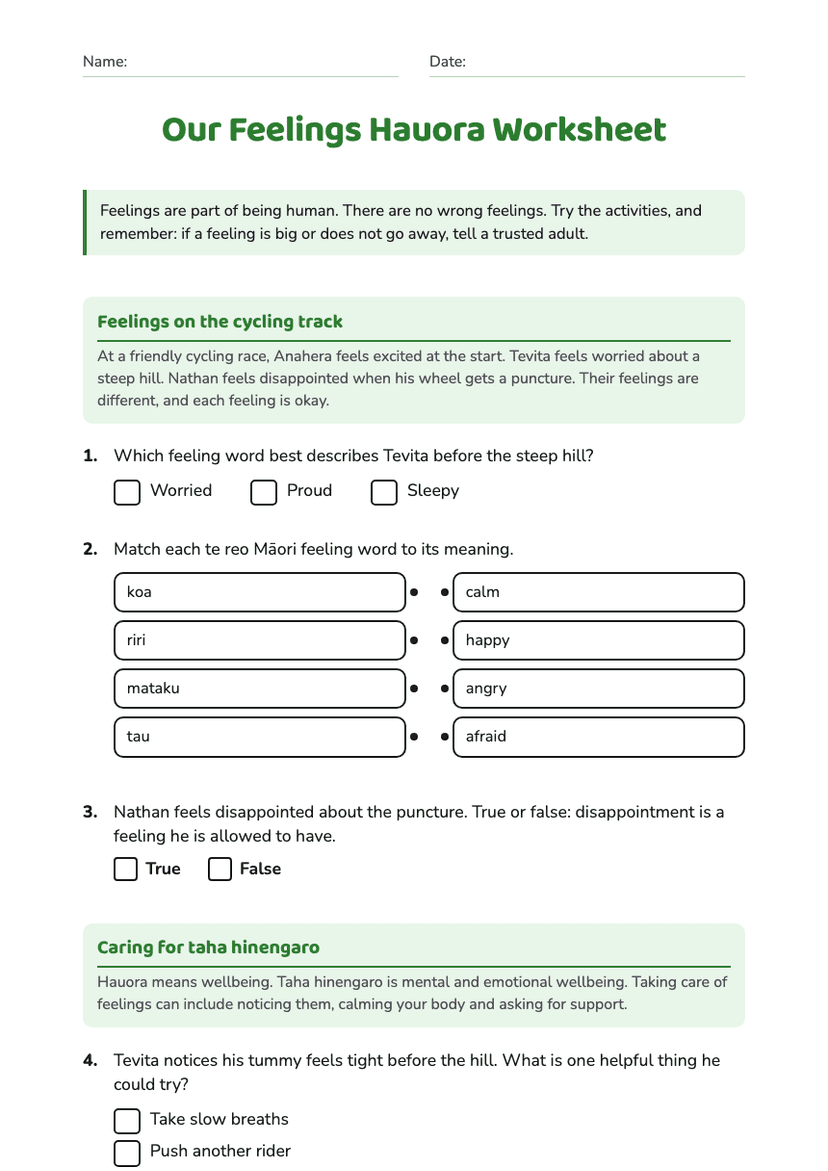
Kindness to Self Worksheet worksheet preview

Kindness to Self Worksheet

Part 1: Understanding Self-Kindness and Hauora

Self-kindness means treating yourself with care, dignity and compassion, especially when things are difficult. It can include looking after your body, noticing your feelings, setting boundaries, asking for help and using balanced self-talk.

It is okay not to be okay. You do not need to share personal experiences. You may pass, write about a fictional person, or use an alternative response.

1. In your own words, what could self-kindness look or sound like?
2. Complete this private Te Whare Tapa Whā check-in. Write one supportive action, resource or person for each area. You may write “pass” or use a fictional example.

Taha tinana — physical wellbeing: ________________________________________________

Taha hinengaro — thoughts and feelings: _________________________________________

Taha whānau — relationships and support: _______________________________________

Taha whenua — connection with places and environment: ____________________________

3. Which actions can support wellbeing? Tick all that could help someone.

Getting enough rest or taking a break

Asking a trusted person for support

Pretending difficult feelings do not exist

Setting a respectful boundary

Doing an enjoyable or meaningful activity

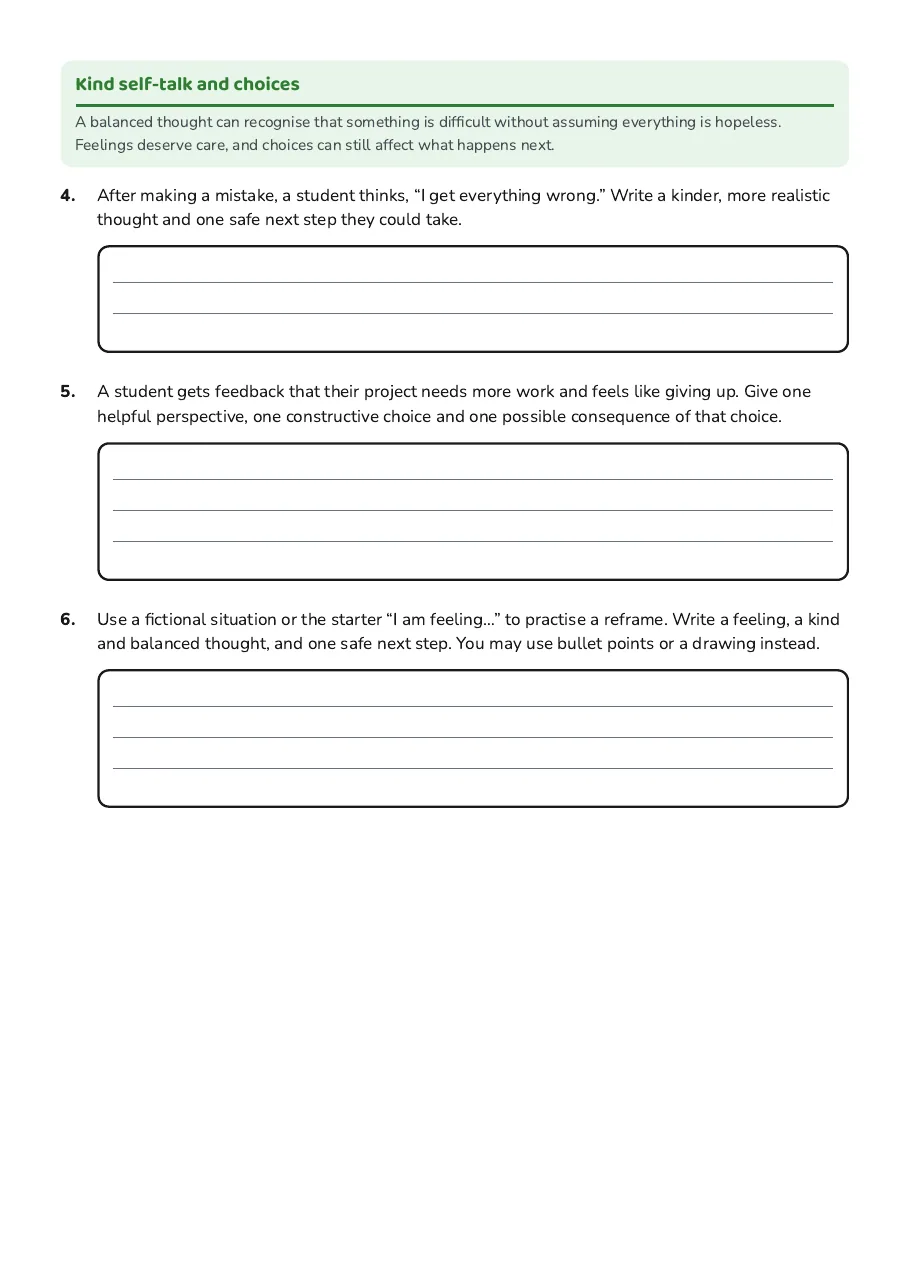
Part 2: Kind Self-Talk and Choices

Feelings and perspectives are valid, but choices can still have consequences. A balanced thought does not pretend everything is fine; it helps identify a safe next step.

4. A student thinks, “I always mess things up.” Rewrite this thought in a kinder and more balanced way.

A kinder thought is: _________________________________________________________________

One safe next step could be: _________________________________________________________

5. A student receives disappointing feedback and wants to give up. Identify one possible perspective, one helpful choice and one likely consequence.

Possible perspective: __________________________________________________________

Helpful choice: _________________________________________________________________

Possible consequence: _________________________________________________________

6. Practise a private reframe. Choose a fictional thought or use this starter: “I am feeling…”

I am feeling: ____________________________________________________________________

A kinder and more balanced thought is: __________________________________________

One safe next step could be: _____________________________________________________

Alternative response: draw or use bullet points instead.

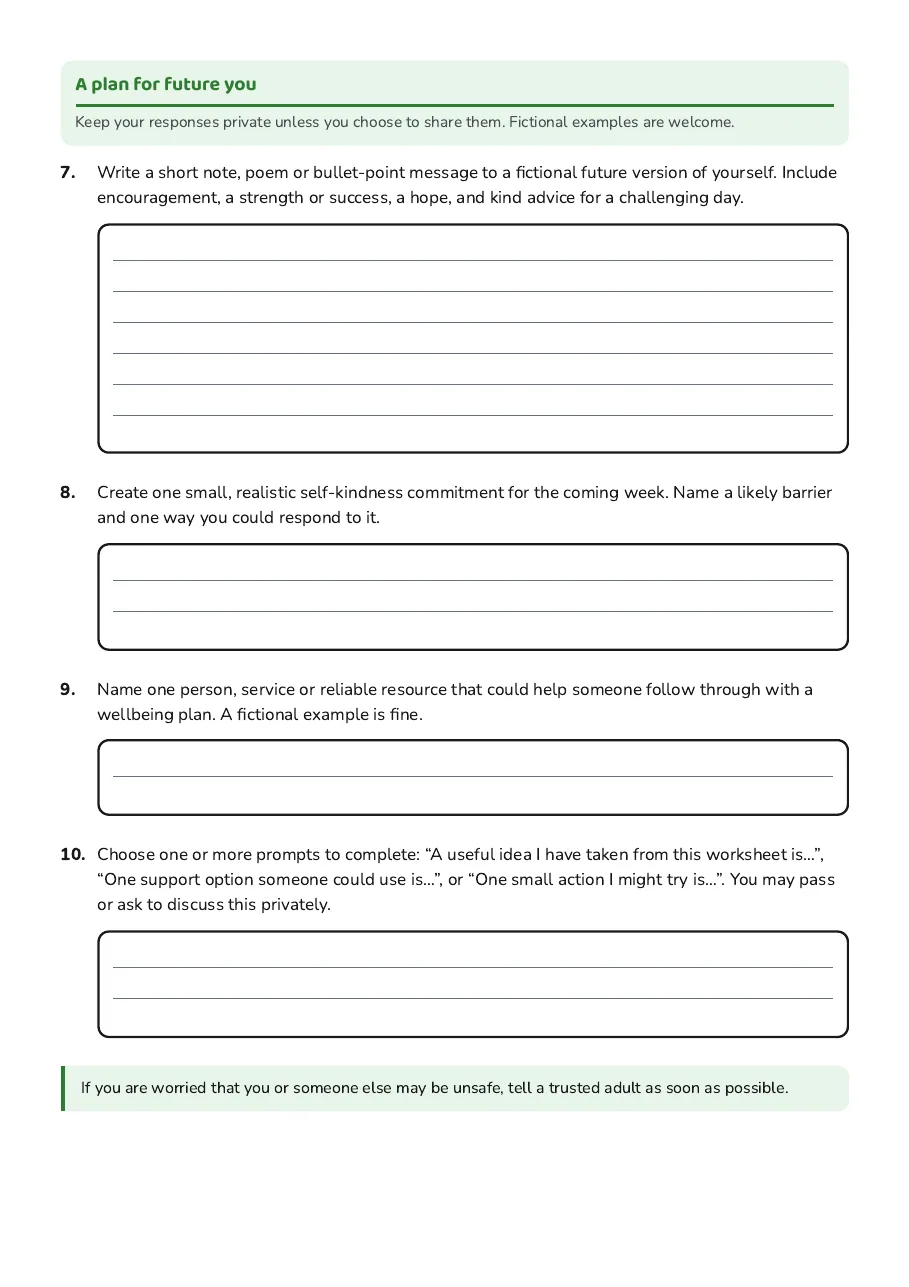
Part 3: My Future-Self Plan and Exit Reflection

7. Write a short private letter, poem or bullet-point message to your future self. Include encouragement, one strength or success, a hope, and kind advice for a difficult day. You may write about a fictional future self.
8. Make one realistic self-kindness commitment.

For the next week, I will: _______________________________________________________

A likely barrier is: __________________________________________________________________

If this happens, I can: __________________________________________________________

9. Who or what could support this plan? This could be a trusted adult, friend, whānau member, school counsellor, health professional or reliable resource.
10. Exit reflection: Complete one or more sentences.

One idea I learned is: ___________________________________________________________

One support option I could use is: _______________________________________________

One action I will try is: _________________________________________________________

Review date: ____/____/________

You may pass or write “I would like to discuss this privately”. If you or someone else may be unsafe, tell a trusted adult straight away.

Teacher Guidance

Accept varied, culturally responsive answers. Look for understanding that self-kindness involves care, dignity, balanced self-talk, boundaries and seeking support—not pretending everything is fine.

For the Te Whare Tapa Whā check-in, suitable examples may include sleep or movement for taha tinana; breathing, journalling or talking for taha hinengaro; trusted people for taha whānau; and time in a safe, meaningful place for taha whenua.

For reframing, encourage compassionate and realistic language, such as: “This did not go as planned. I can learn what to try next or ask for support.” Commitments should be small, specific and achievable.

Do not require students to share personal information. Follow school safeguarding procedures and arrange a private check-in where a student indicates a safety concern or requests support.

About This Worksheet

Free in Kuraplan

Sign up free, grab the PDF, and customize it for your class.

Print-Ready

Formatted for standard paper. Clean layout, easy to read.

AI-Generated

Created with Kuraplan's AI, designed for real classroom use.

For Teachers & Parents

Use in classrooms, for homework, tutoring, or homeschool.

Need a custom version of this worksheet?

Kuraplan's AI generates custom worksheets in seconds — differentiated for every learner, aligned to your curriculum.

Generate Custom Worksheets — Free
No credit card Curriculum-aligned Under 60 seconds