
Reading Comprehension Worksheets — Free Printables by Grade
Free printable reading comprehension worksheets featuring grade-level passages with questions covering main idea, details, inference, and vocabulary.
Reading Comprehension Worksheets
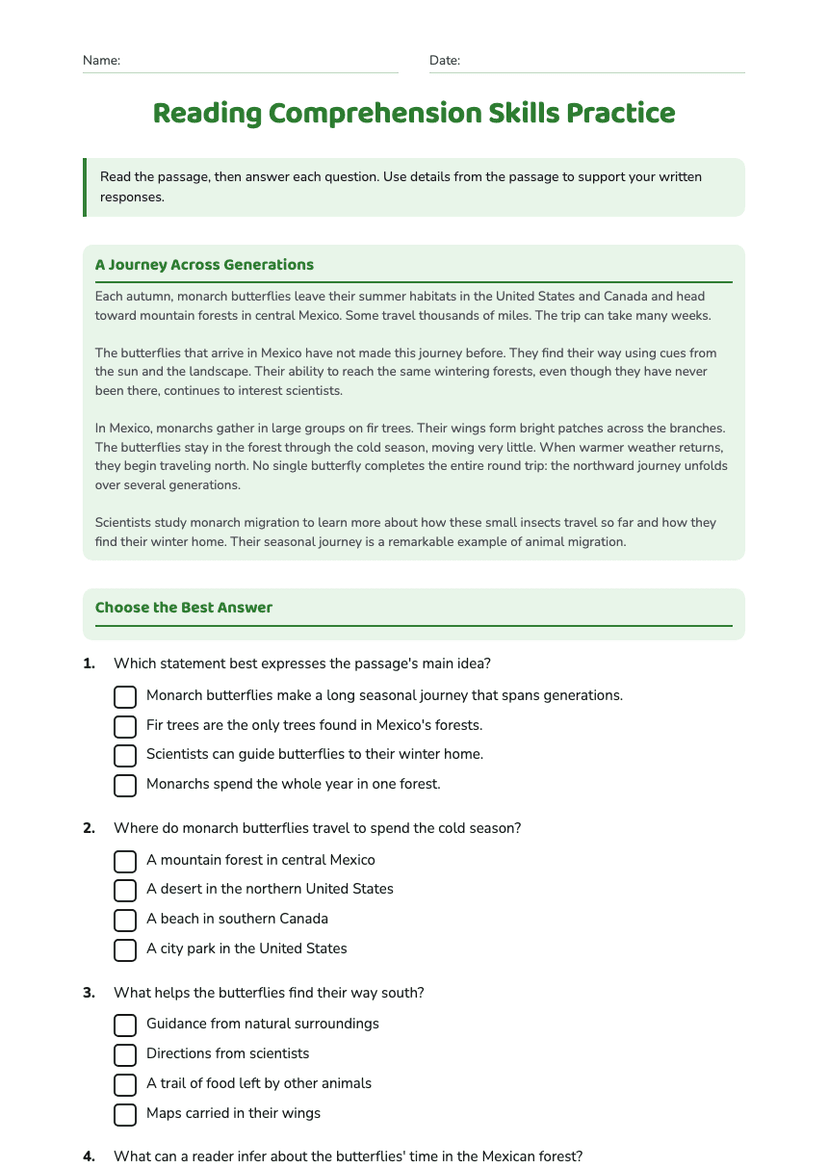
Reading Comprehension Skills Practice
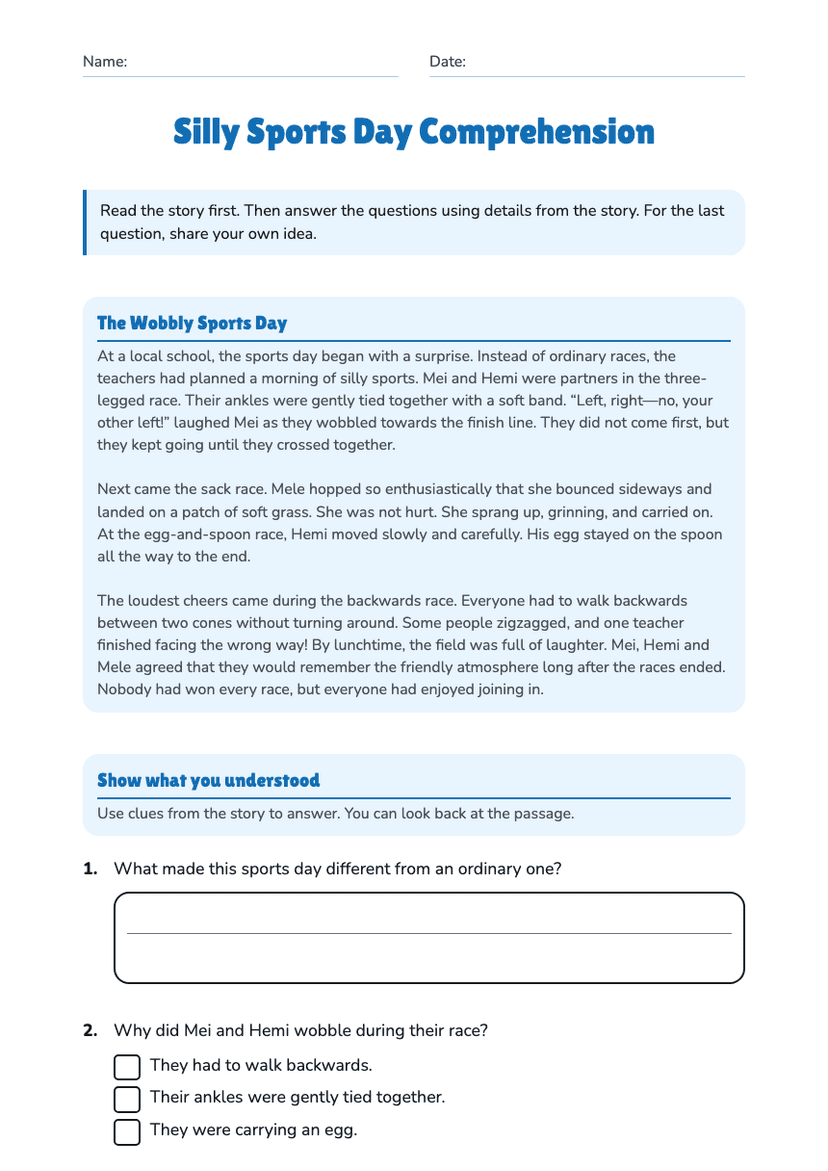
Silly Sports Day Comprehension
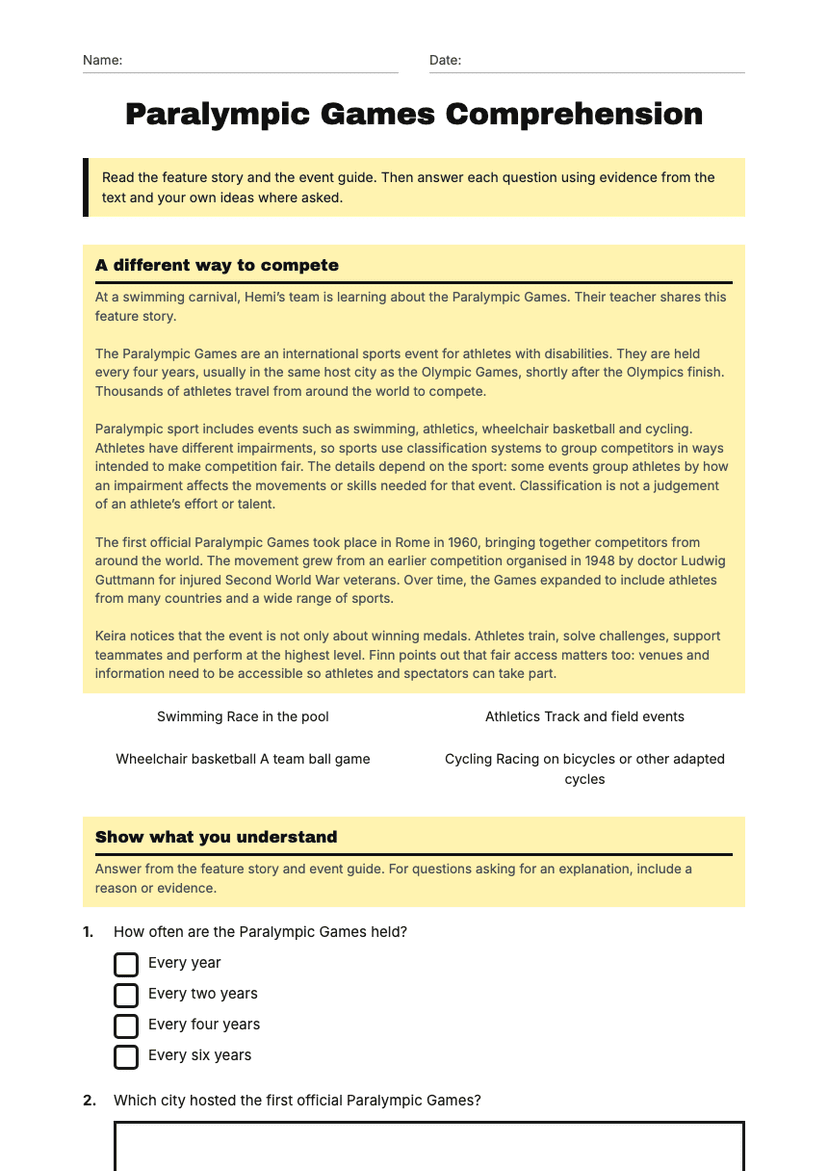
Paralympic Games Comprehension
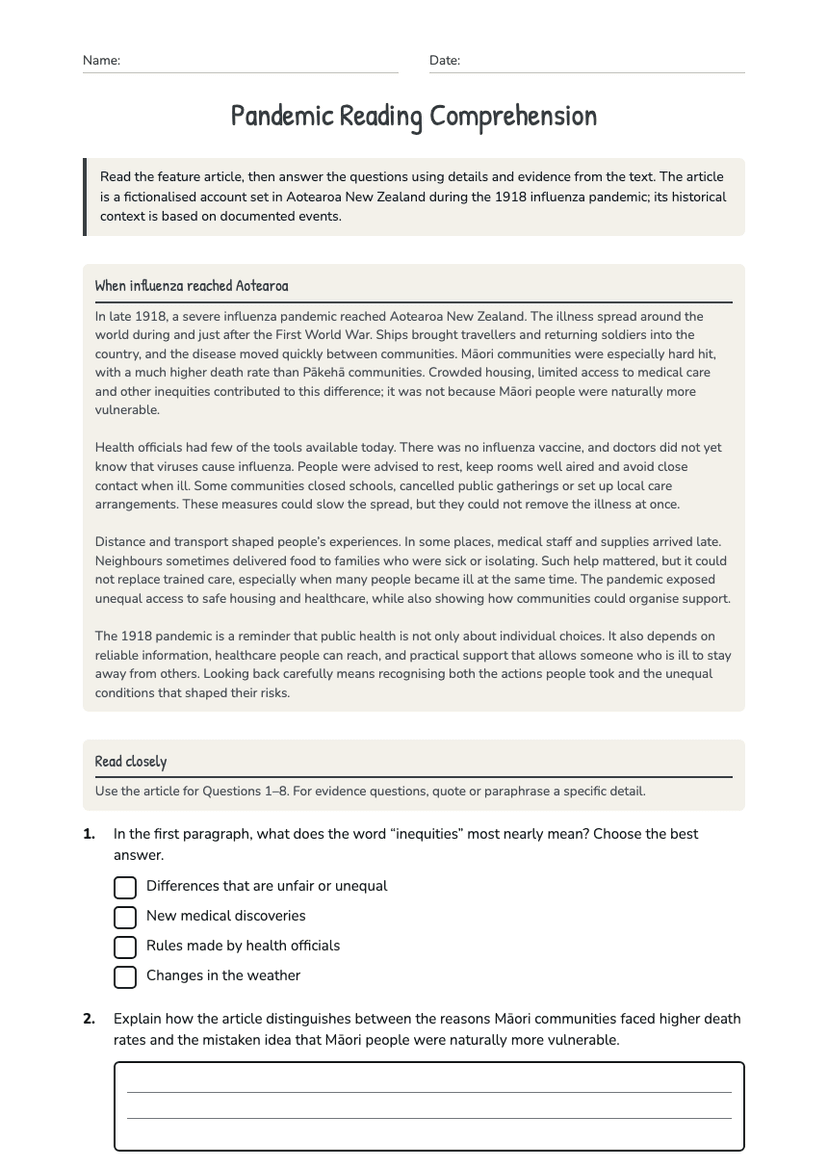
Pandemic Reading Comprehension
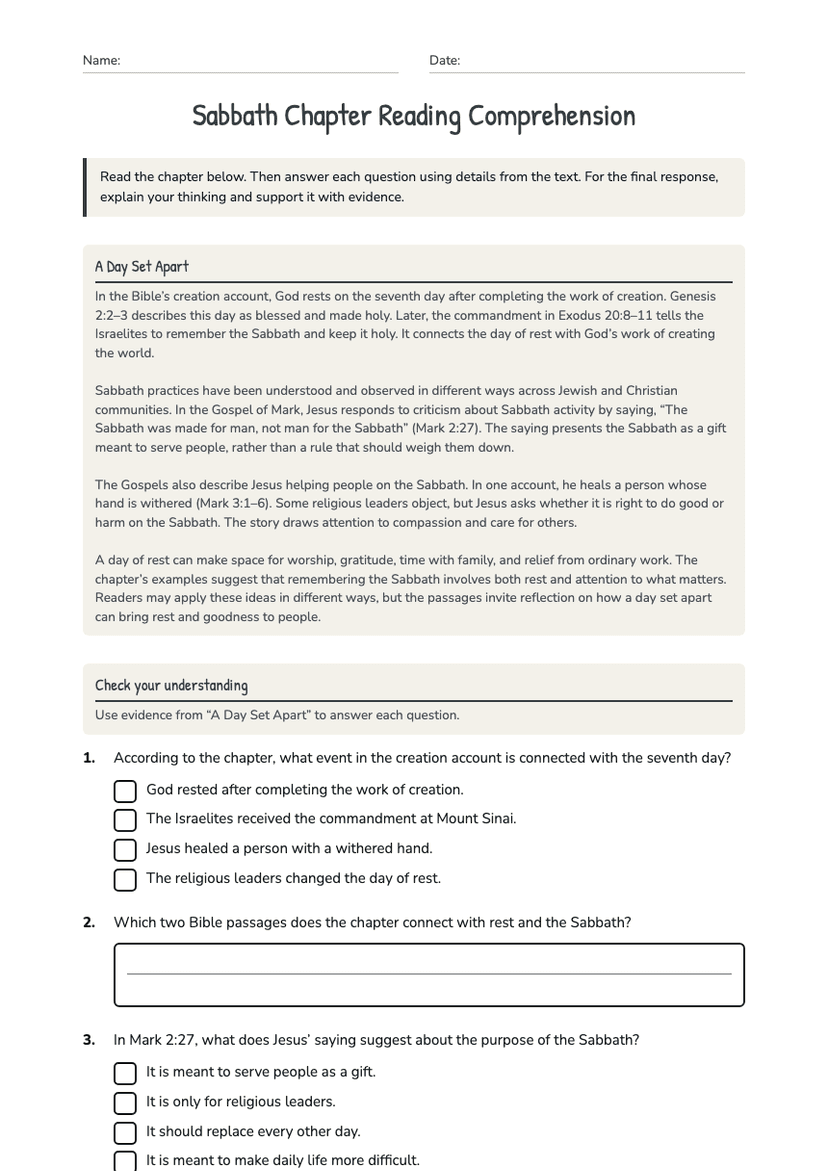
Sabbath Chapter Reading Comprehension
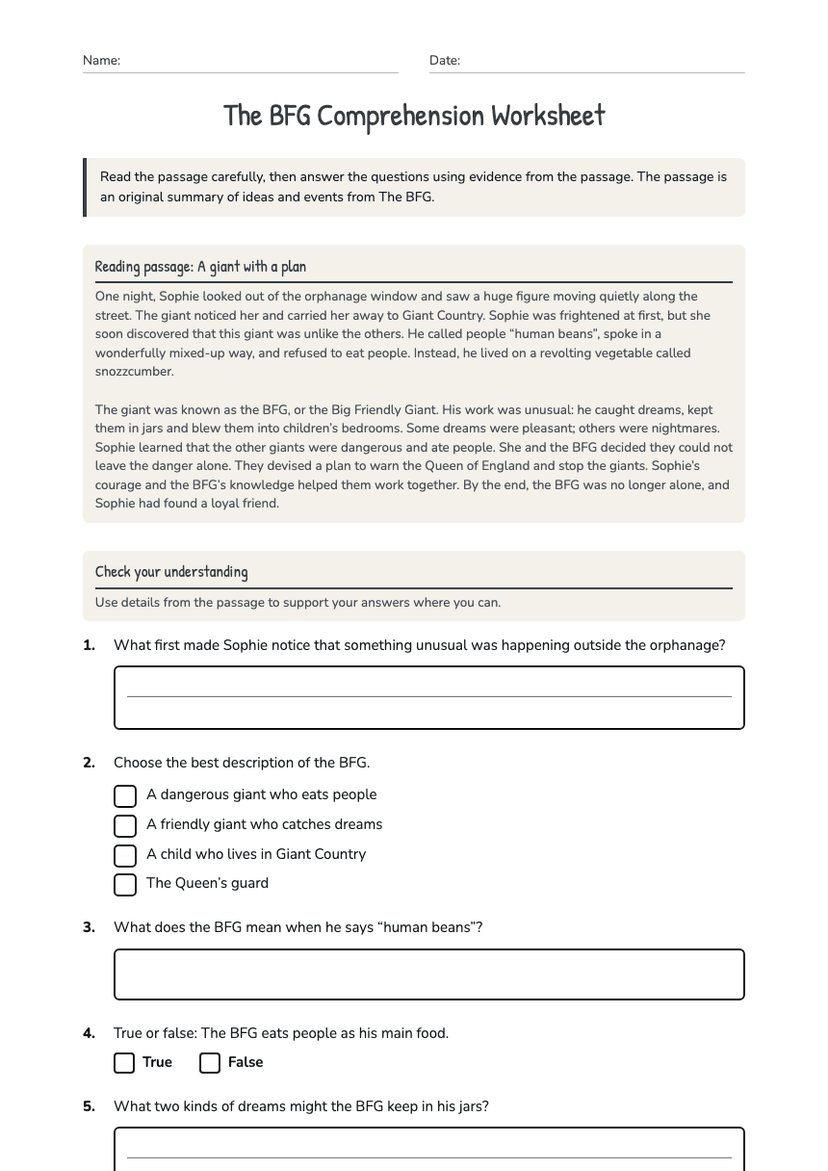
The BFG Comprehension Worksheet
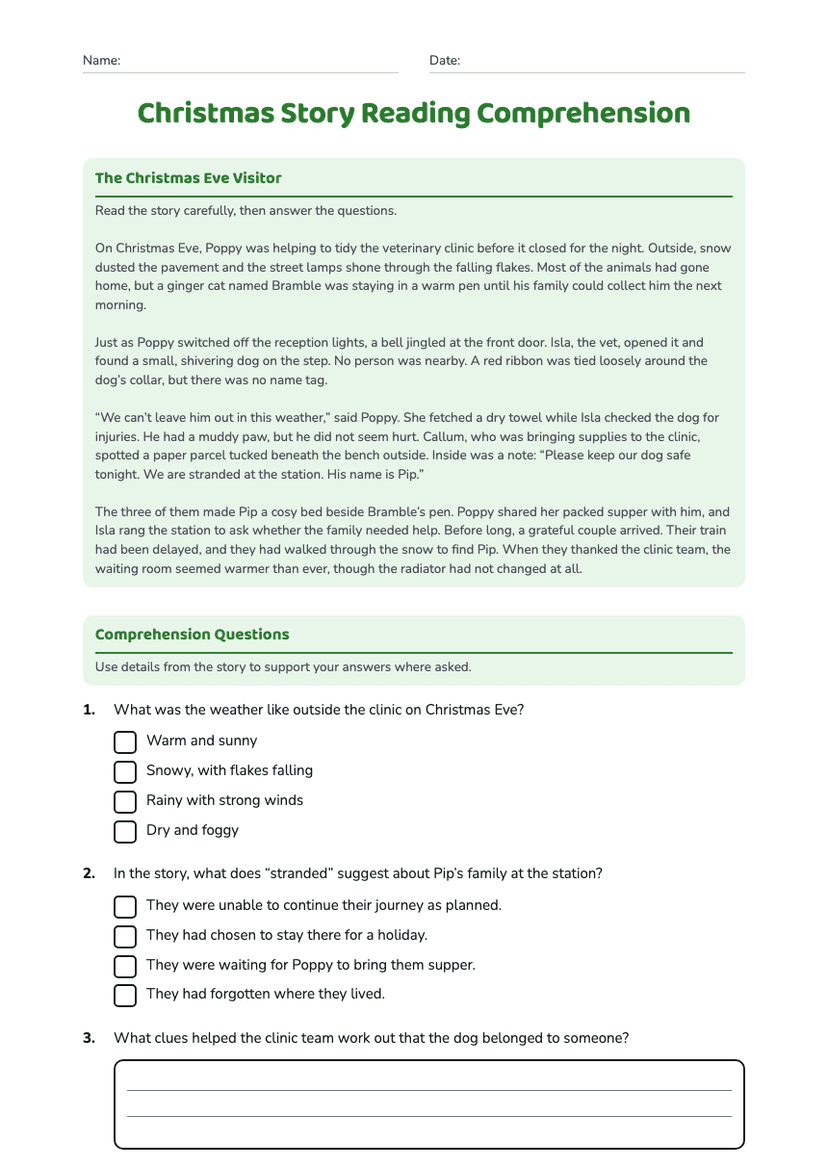
Christmas Story Reading Comprehension
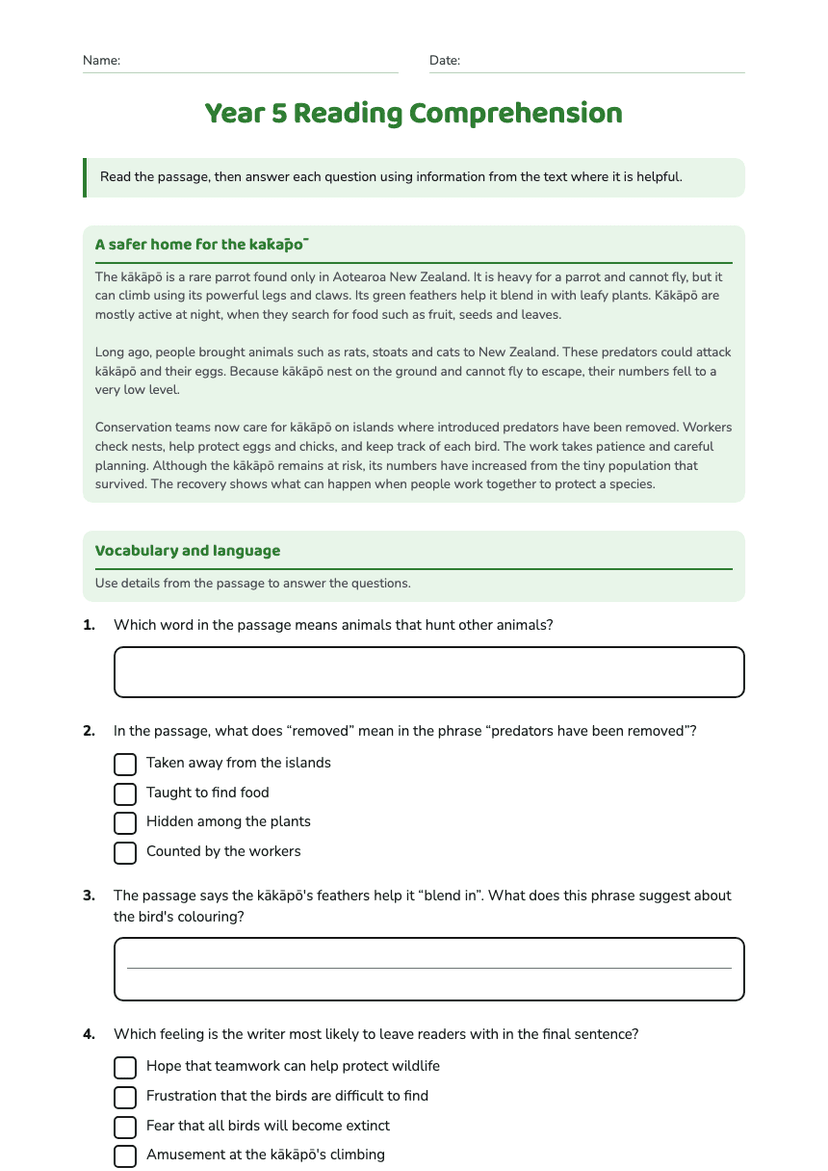
Year 5 Reading Comprehension
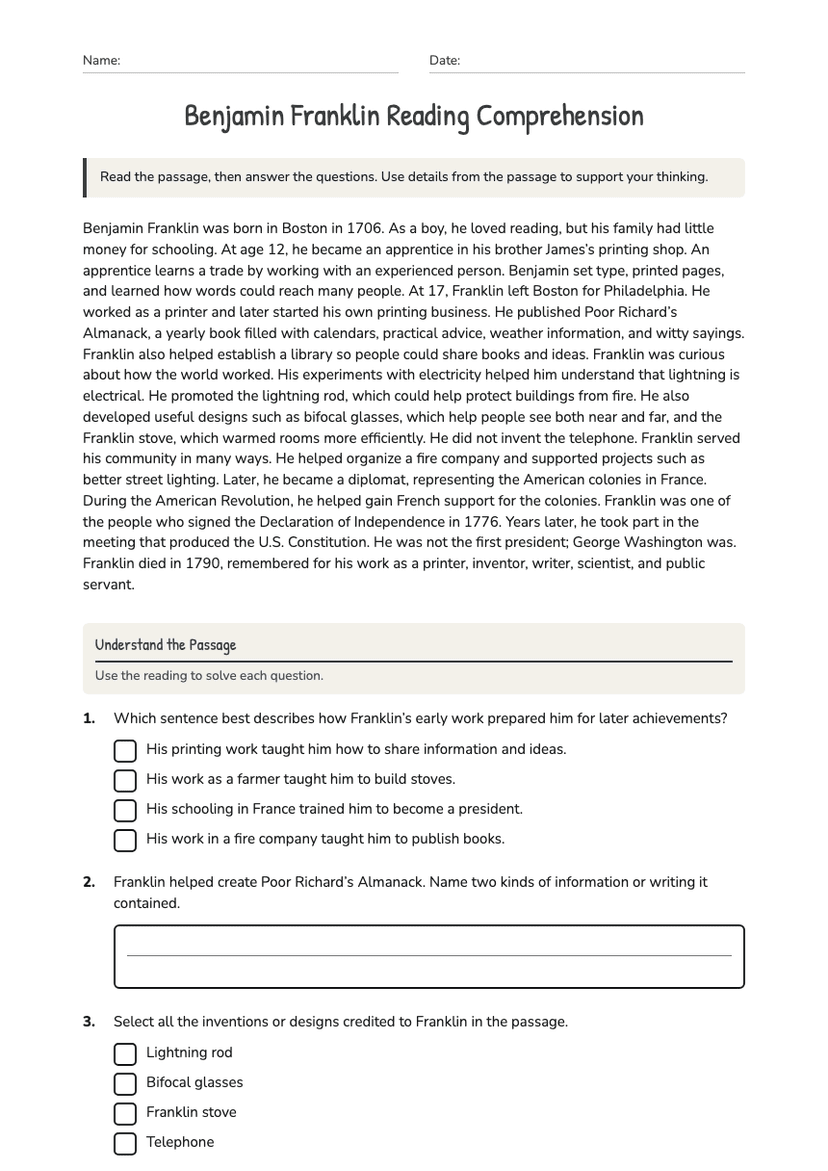
Benjamin Franklin Reading Comprehension
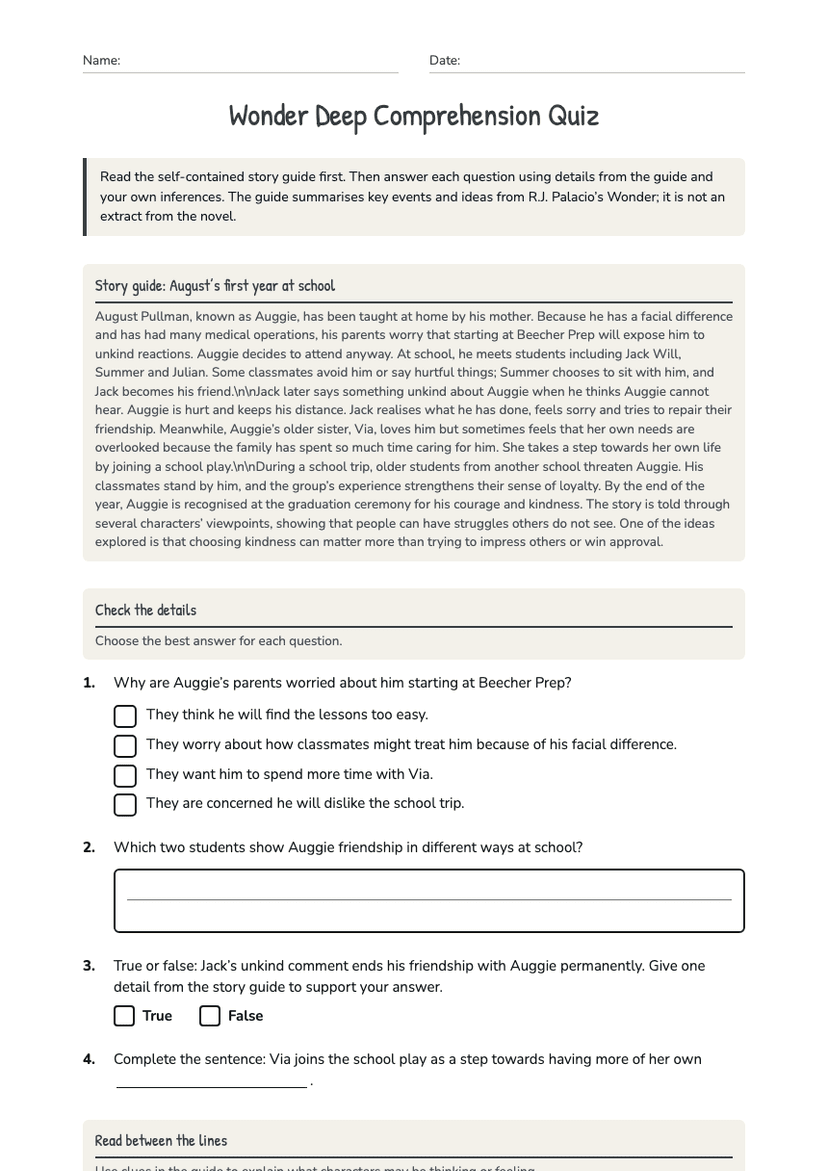
Wonder Deep Comprehension Quiz
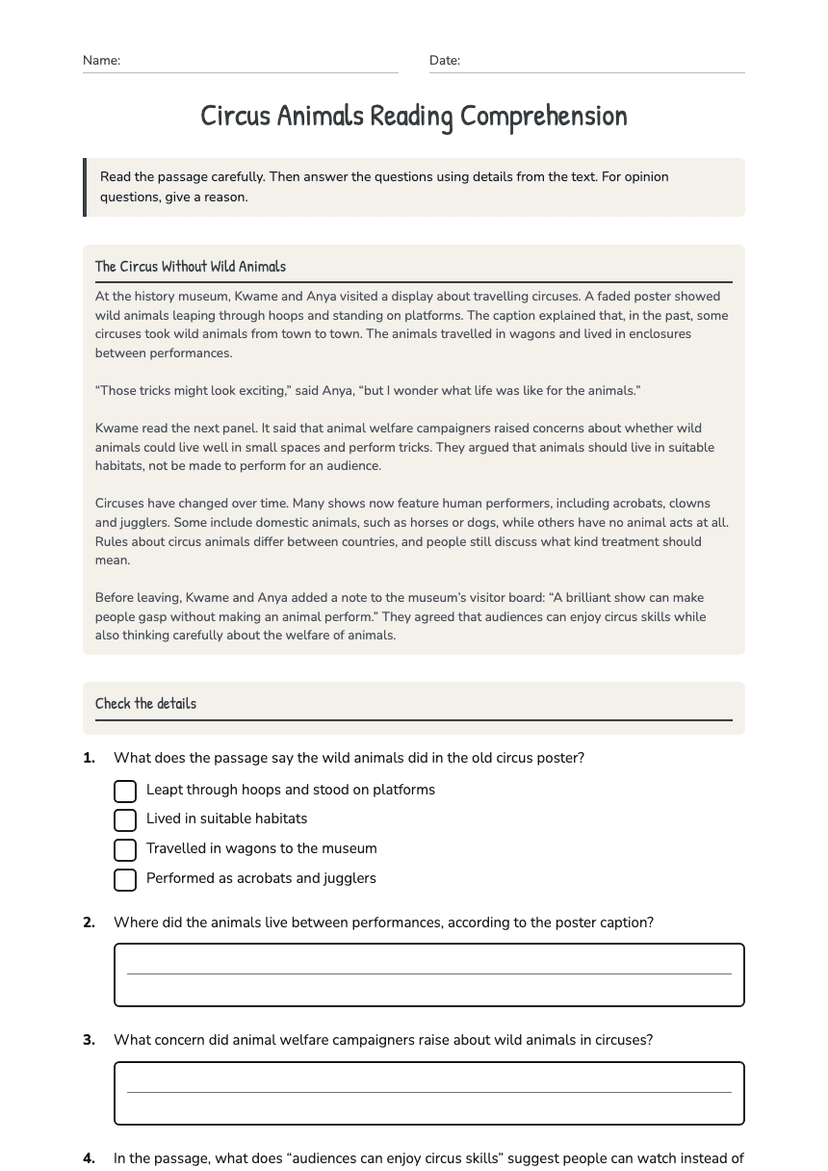
Circus Animals Reading Comprehension
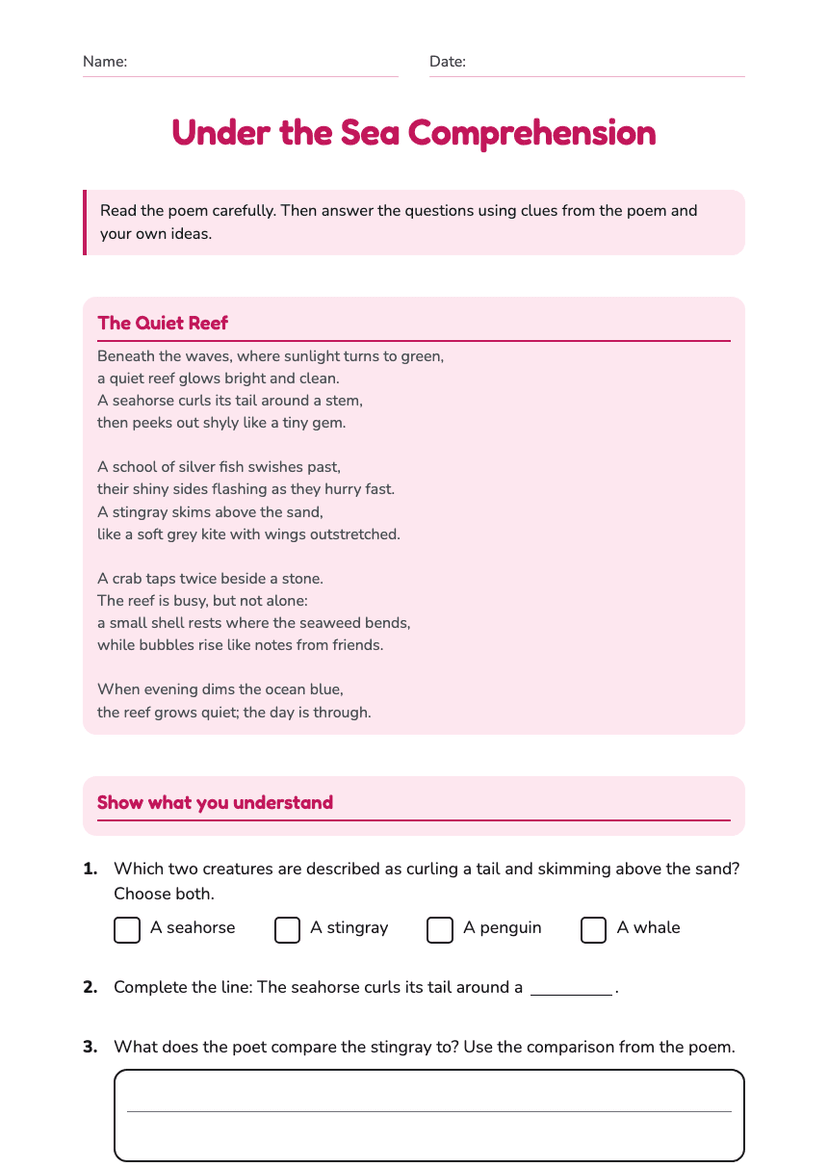
Under the Sea Comprehension
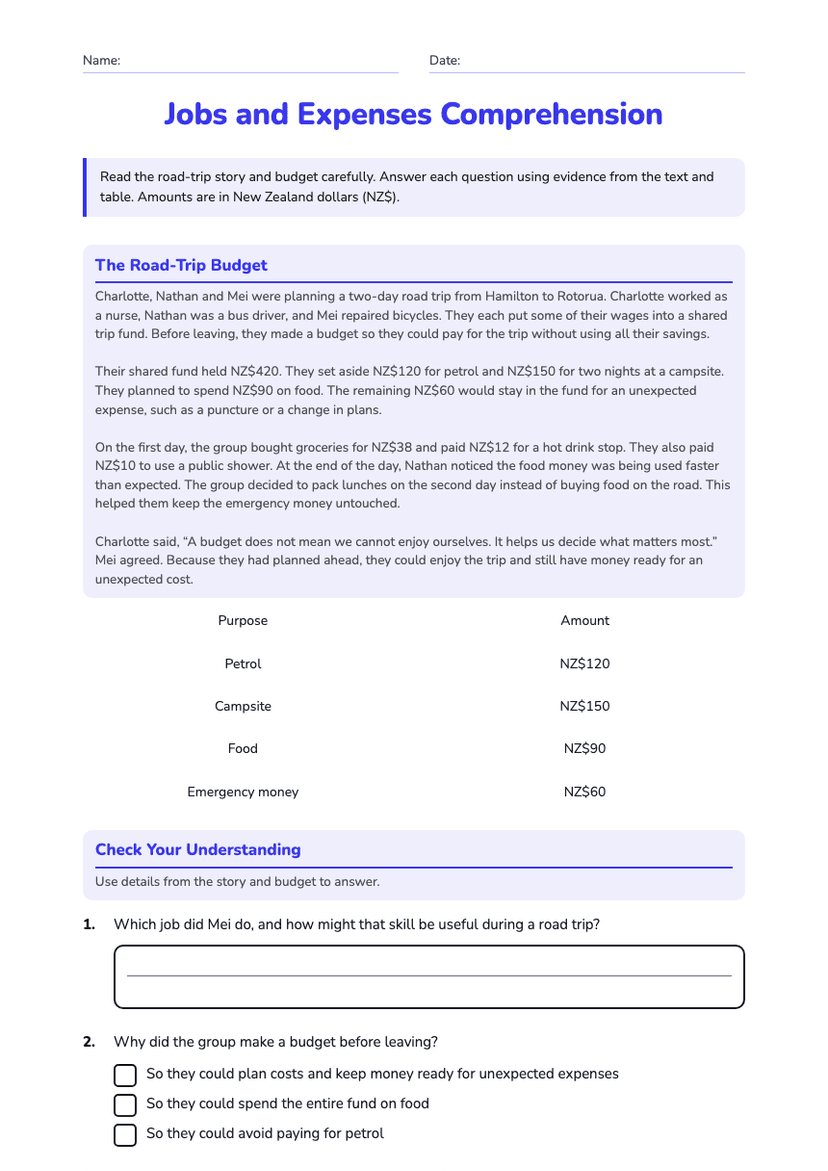
Jobs and Expenses Comprehension
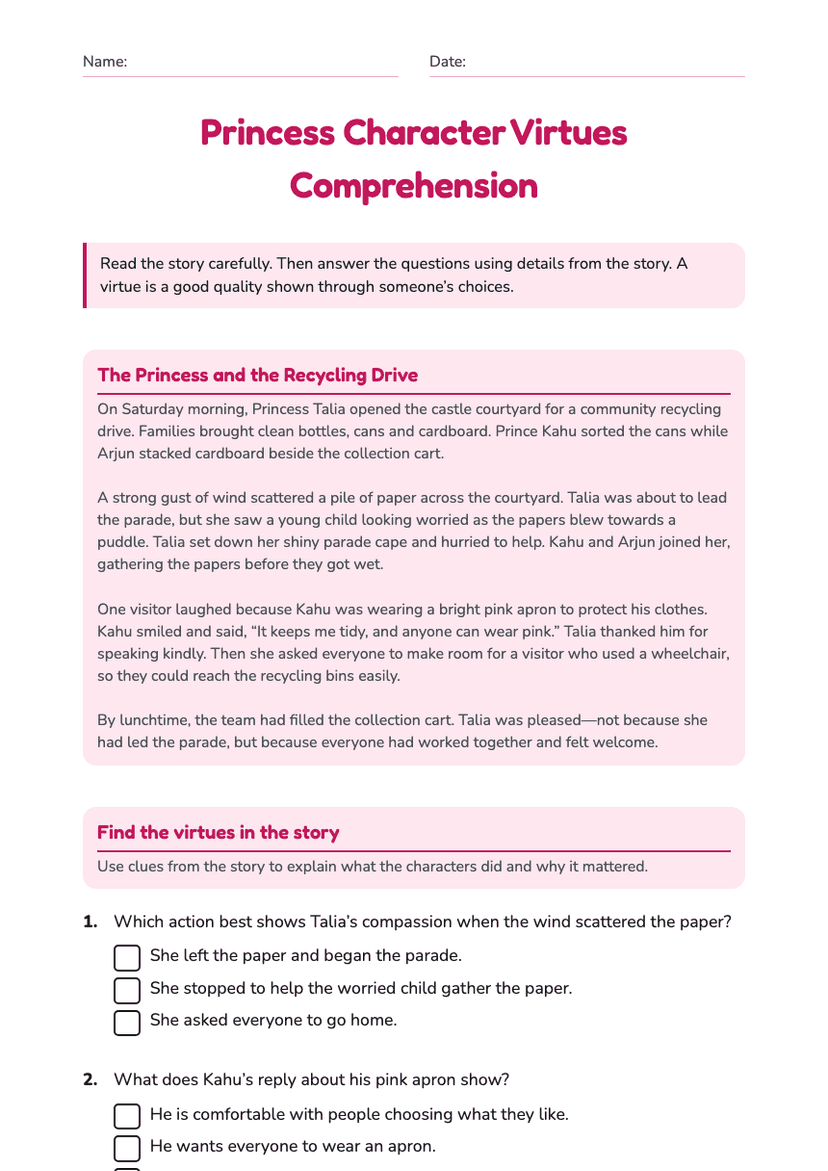
Princess Character Virtues Comprehension
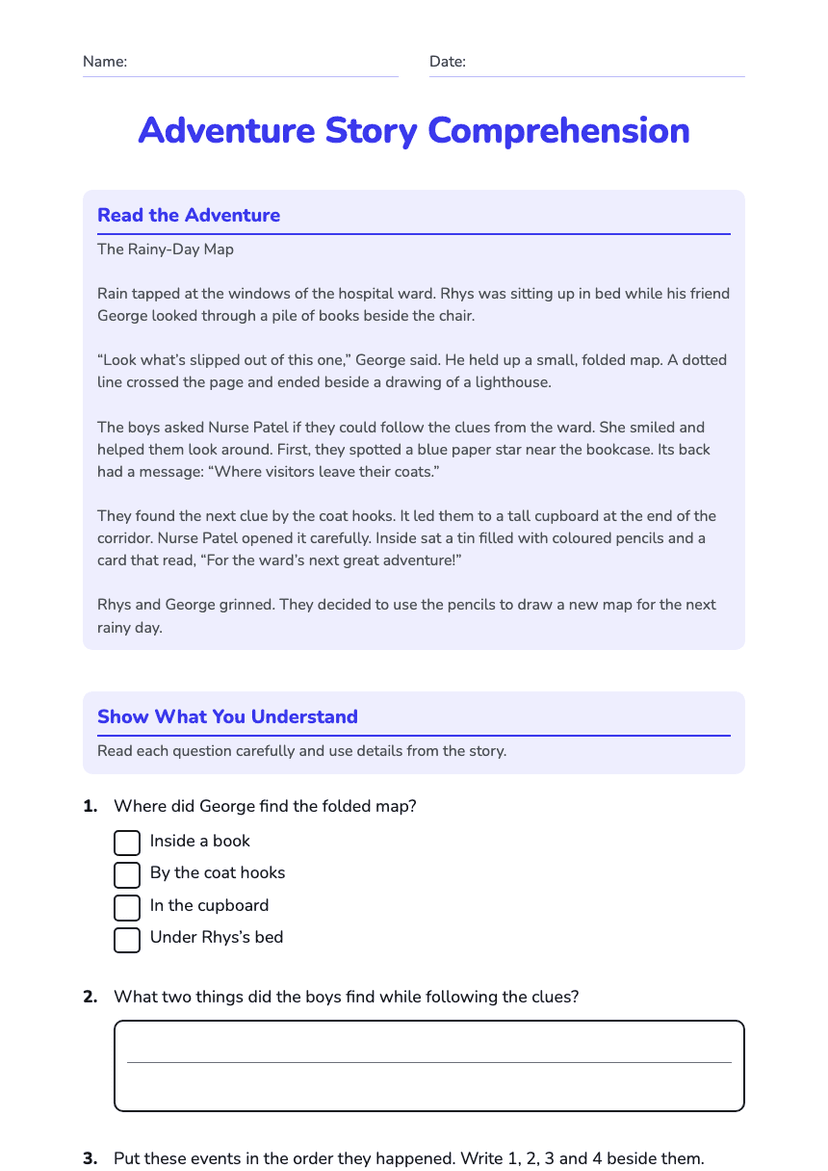
Adventure Story Comprehension
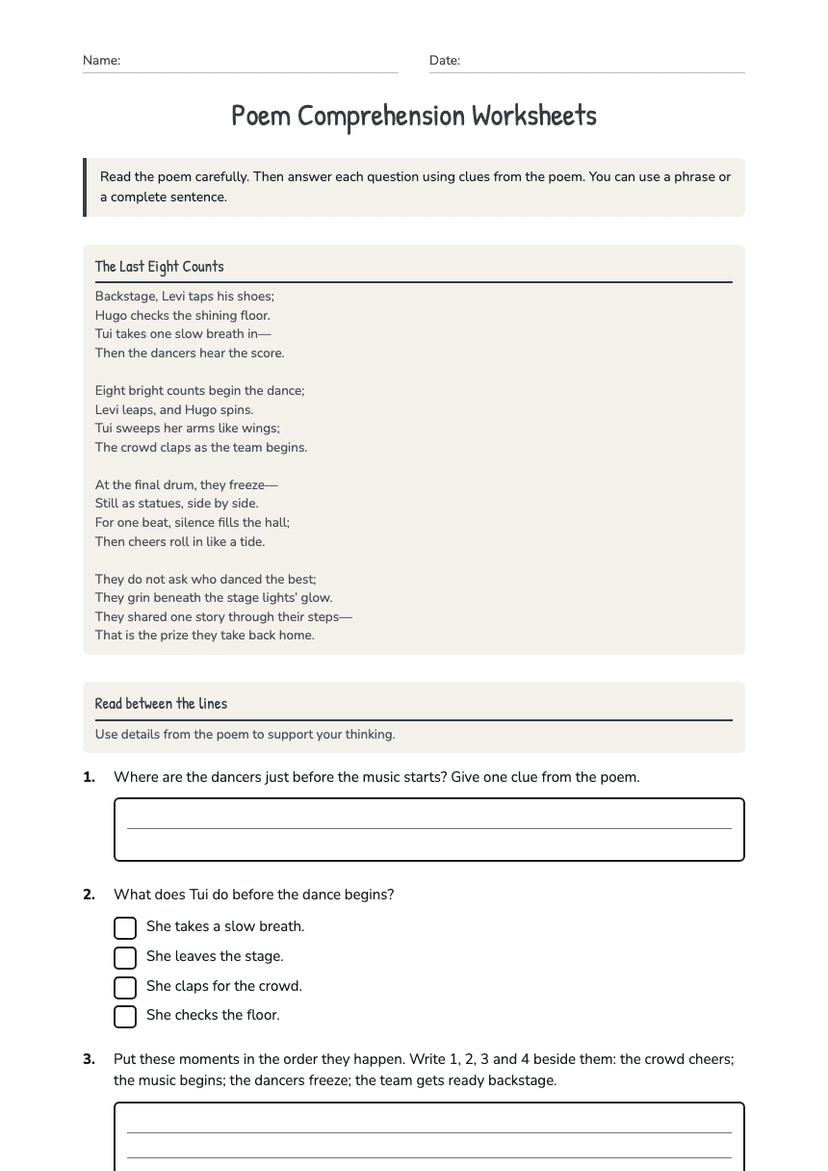
Poem Comprehension Worksheets
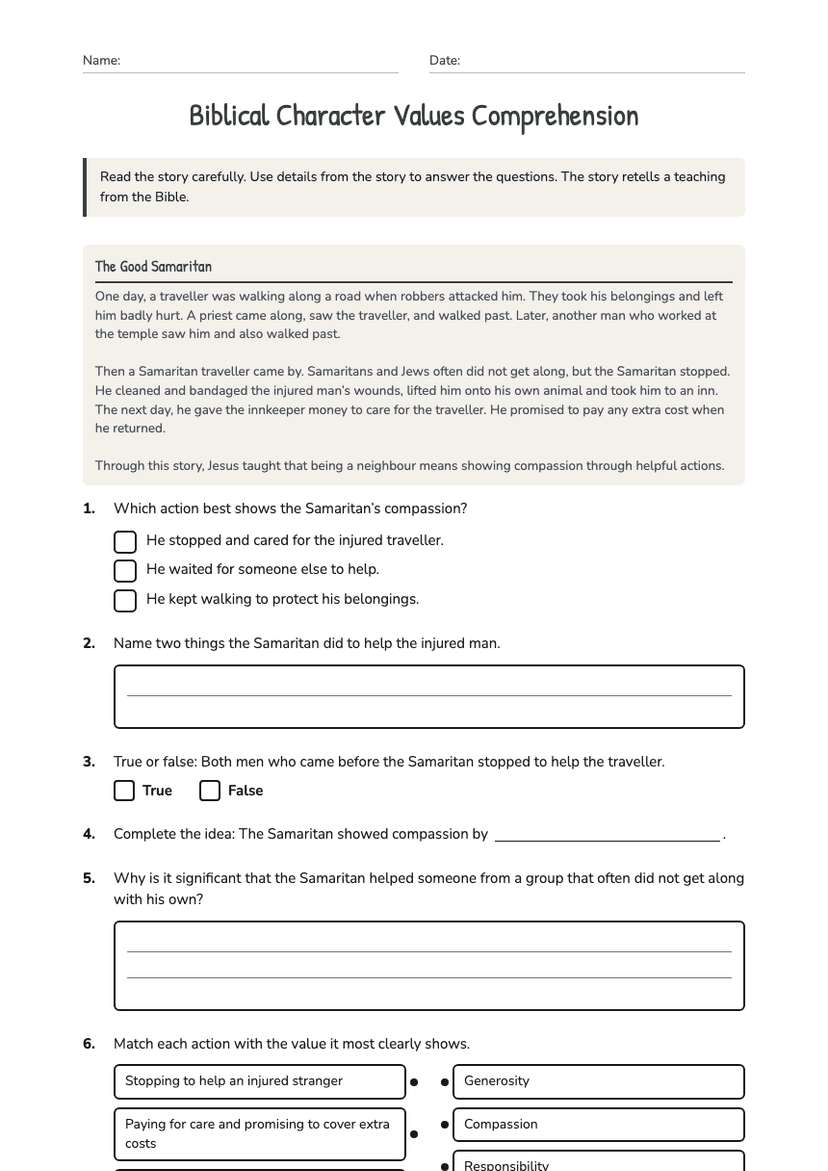
Biblical Character Values Comprehension
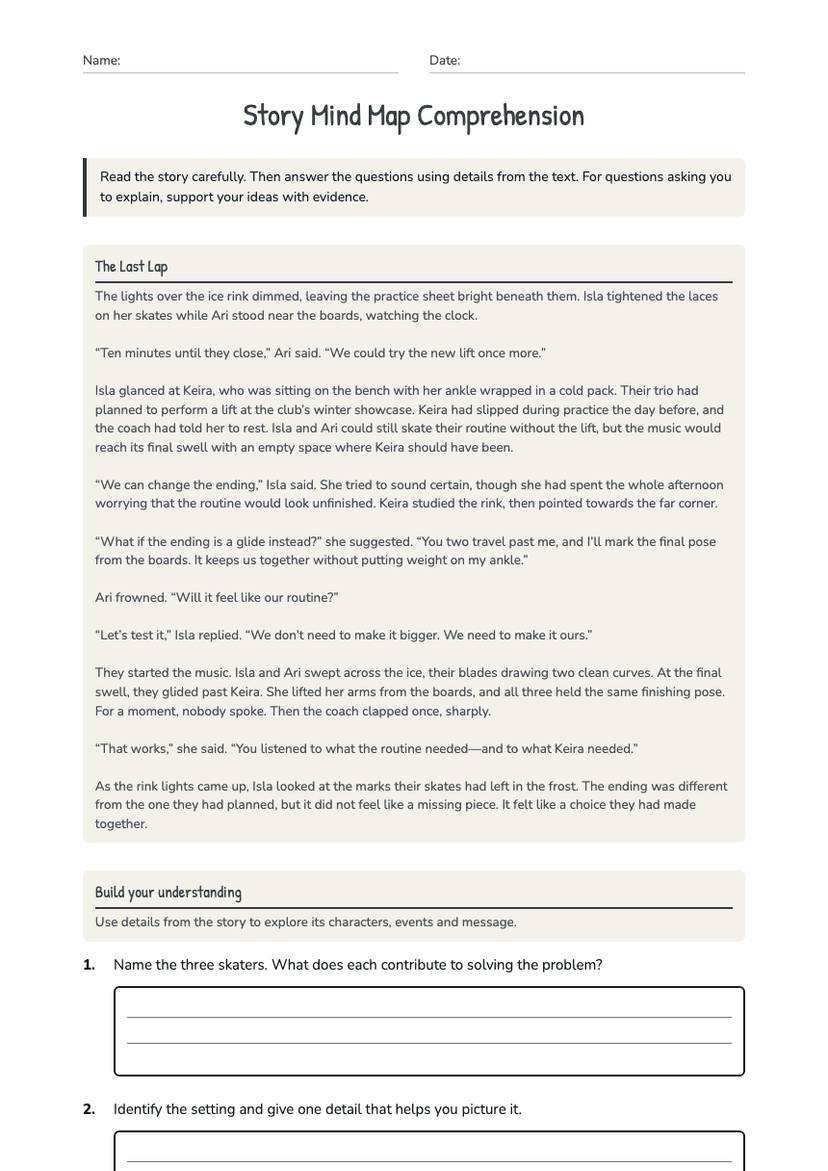
Story Mind Map Comprehension
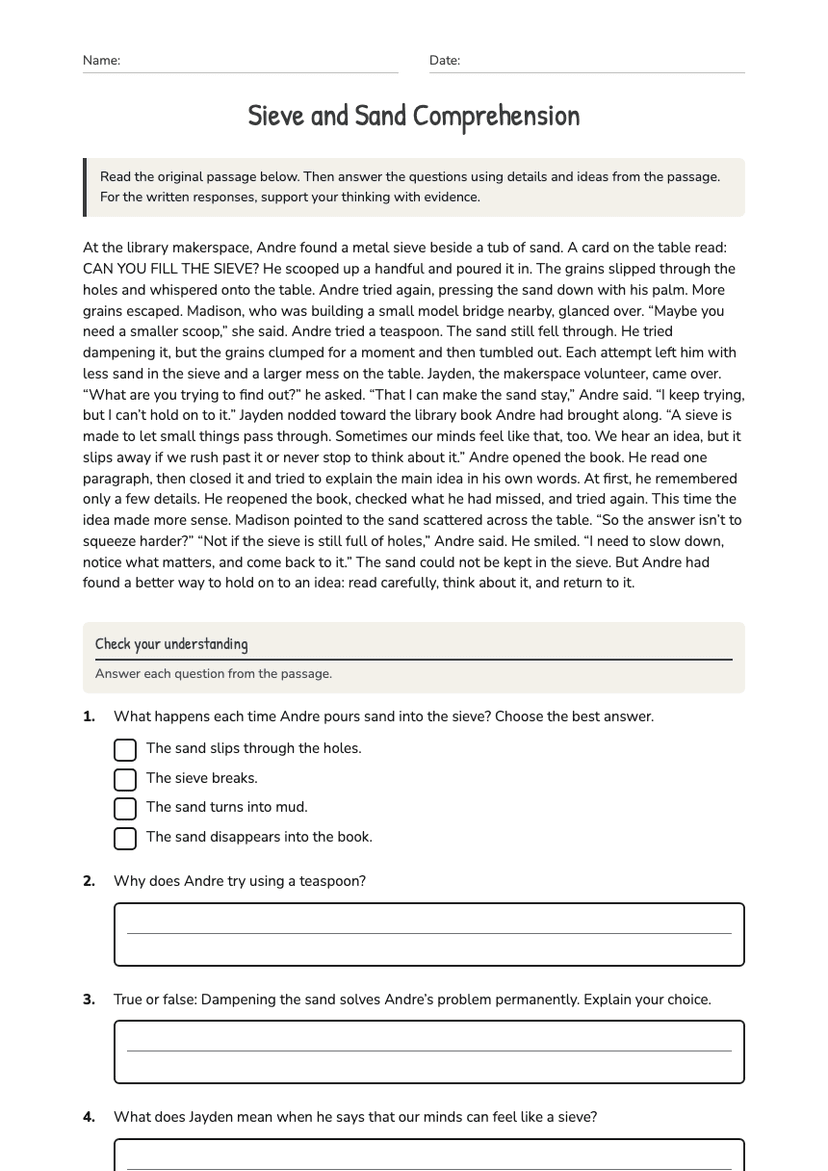
Sieve and Sand Comprehension
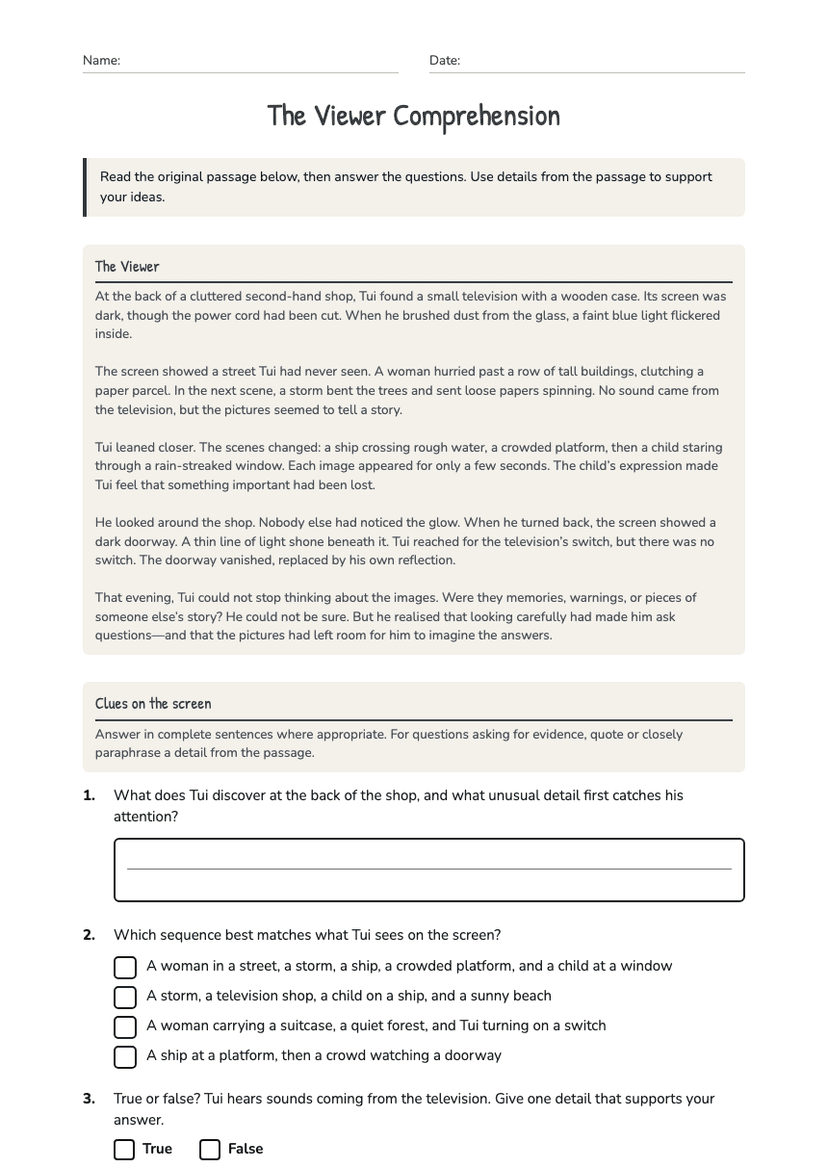
The Viewer Comprehension
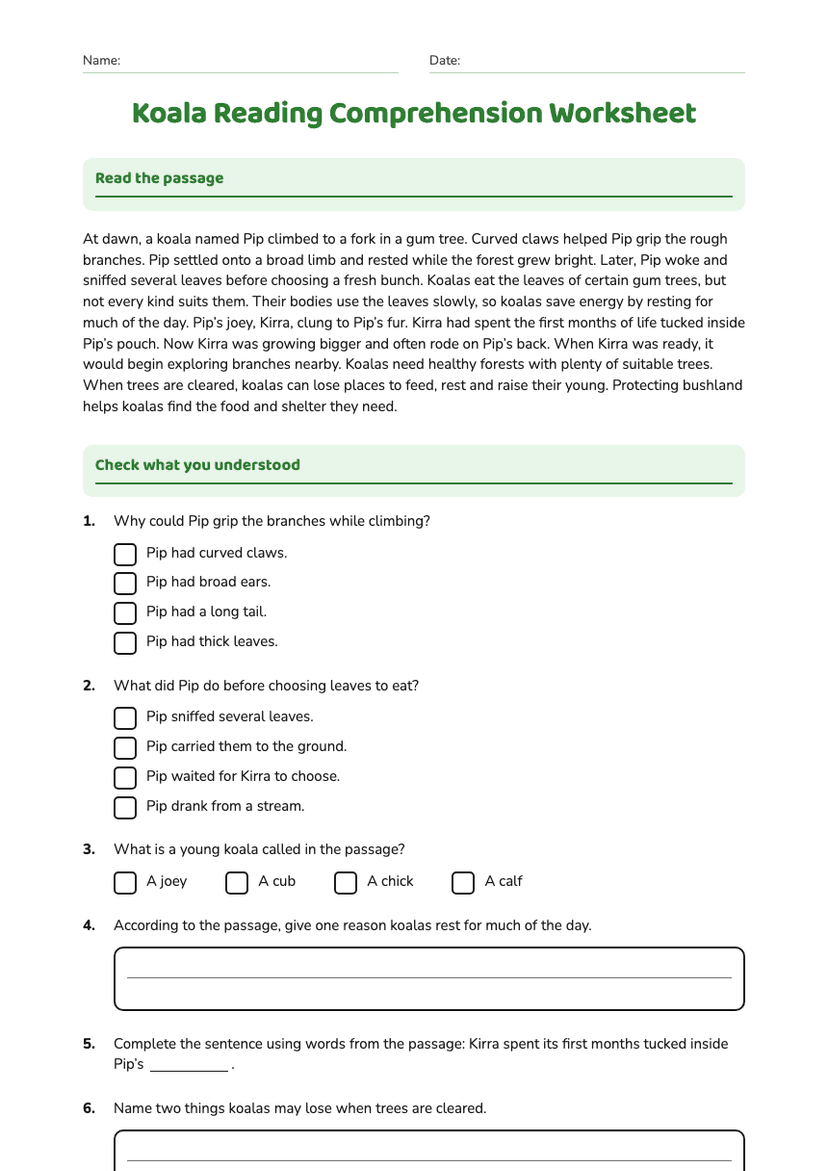
Koala Reading Comprehension Worksheet
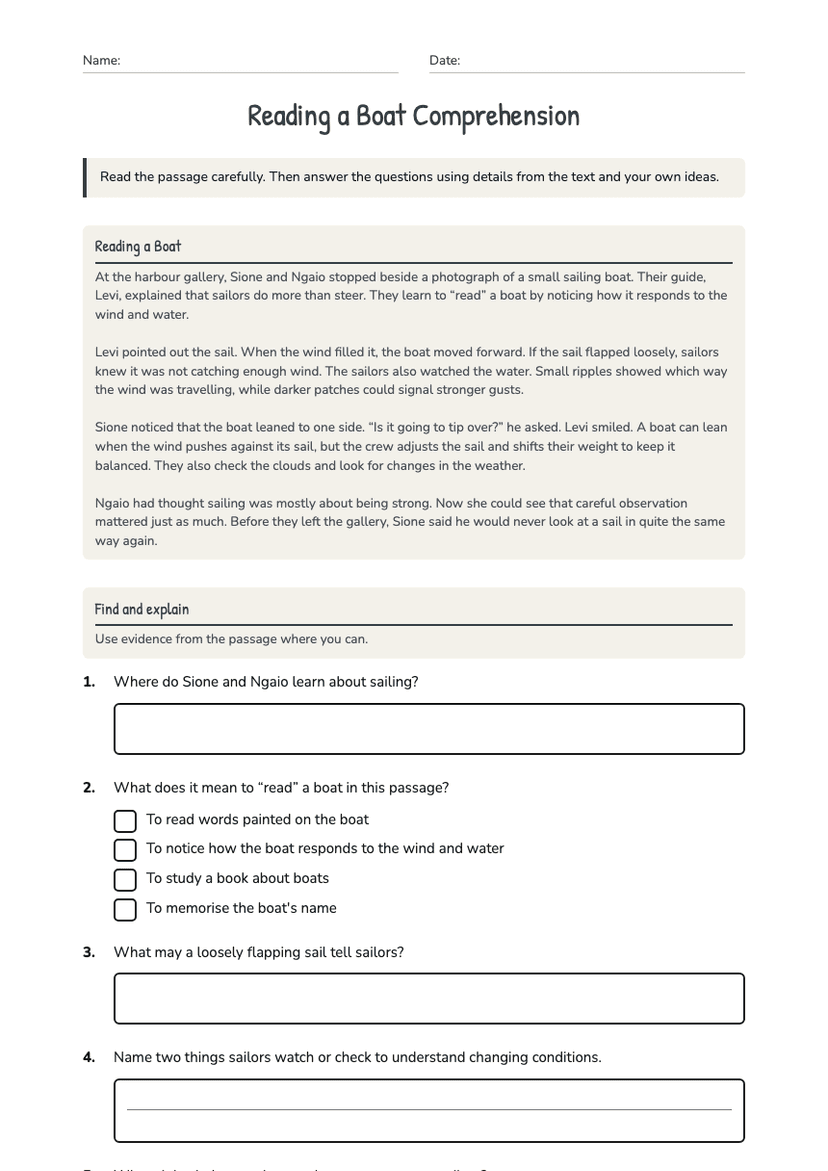
Reading a Boat Comprehension
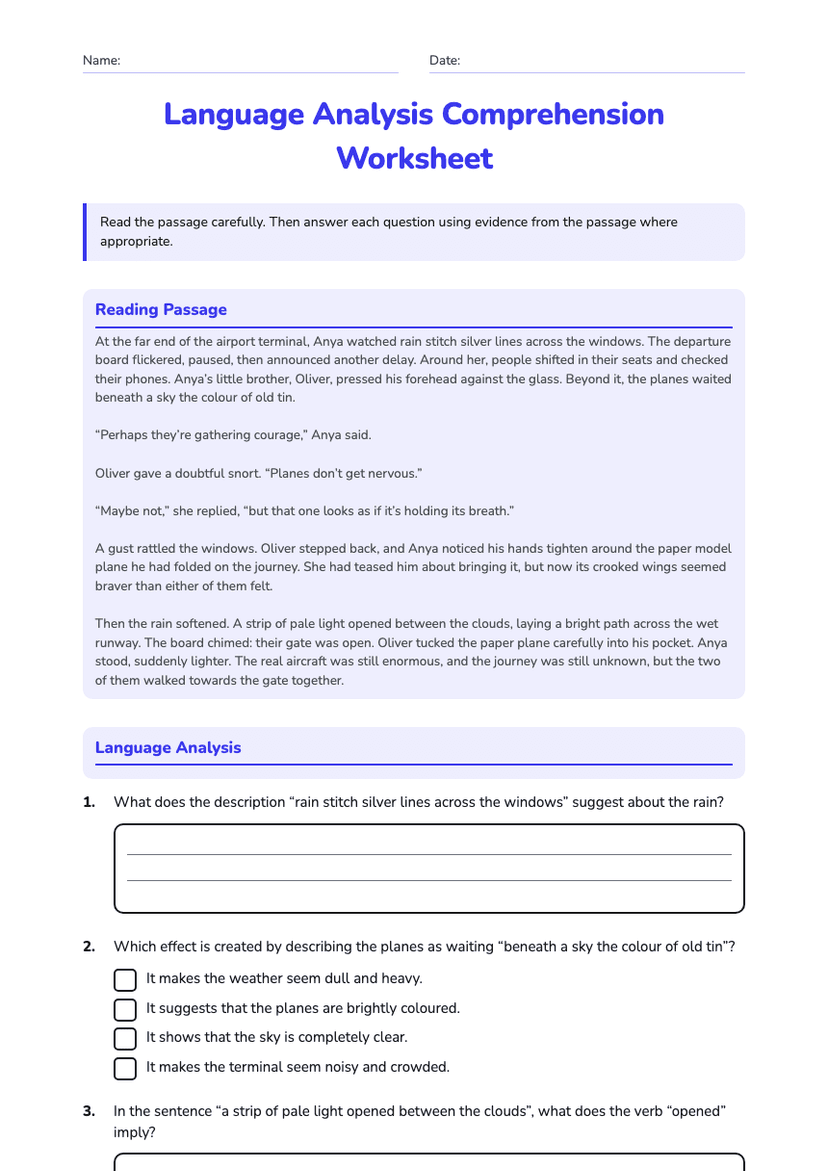
Language Analysis Comprehension Worksheet
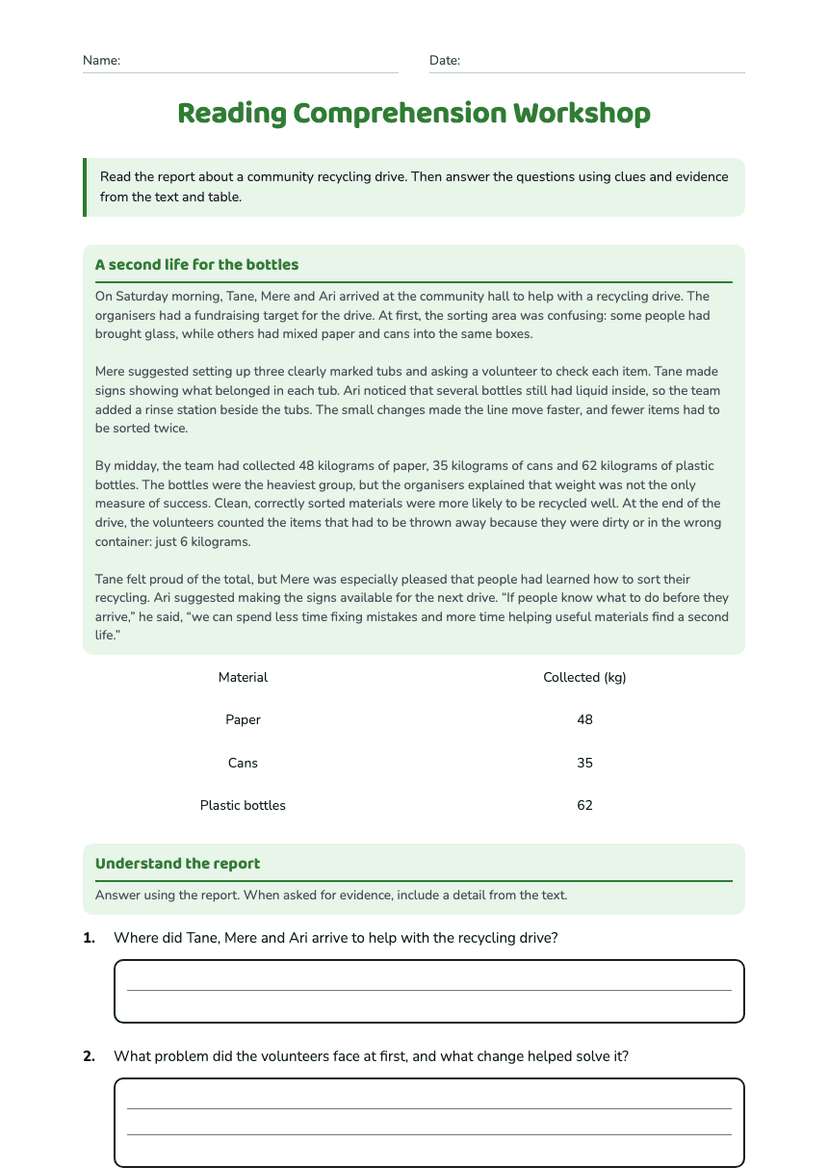
Reading Comprehension Workshop
Reading Comprehension Worksheets by Grade
About Reading Comprehension Worksheets
Reading comprehension worksheets pair grade-level passages with targeted questions that build the thinking skills students need to understand what they read. These worksheets include fiction, nonfiction, and poetry passages with questions covering main idea, details, inference, vocabulary, and text structure.
Why Reading Comprehension Practice Matters
Reading comprehension is the ultimate goal of reading instruction — decoding words means nothing if students can't understand the meaning. Regular comprehension practice builds the active reading strategies that students need across every subject area, from science textbooks to math word problems.
Skills These Worksheets Build
- Identifying the main idea and supporting details
- Making inferences and drawing conclusions
- Understanding vocabulary in context
- Sequencing events in order
- Identifying cause and effect
- Comparing and contrasting information
Teaching Tips
- 1Have students read the questions before the passage so they know what to look for
- 2Teach students to underline or highlight key information as they read
- 3Use think-alouds to model comprehension strategies before independent practice
- 4Mix fiction and nonfiction — students need practice with both
- 5Discuss wrong answers too — understanding why an answer is incorrect builds reasoning skills
What makes a good reading comprehension worksheet?
A good reading comprehension worksheet pairs a passage students can actually read with questions that make them go back into the text. The passage does the teaching; the questions do the checking. If students can answer everything without rereading a single line, the worksheet is testing memory, not comprehension.
Before you print, check for five things:
- A passage at the right reading level — hard enough to carry real ideas, not so hard that decoding swallows all the working memory
- Questions that send students back into the text, not ones answerable from the title alone
- A mix of question types: literal, inferential, evaluative, and vocabulary in context
- A balance of fiction and nonfiction across the week — students need practice with both
- An answer key, so checking work doesn't eat your evening
Which comprehension skills to target at each grade
Comprehension instruction has a natural progression: literal understanding first, inference once decoding is fluent, and analysis when students can hold a whole text in mind. Match the worksheet to where your readers are, not just to their grade label.
Literal recall & sequencing
Early readers are still spending most of their effort on decoding, so keep passages short (50–150 words) and questions literal: who, what, where, and what happened first. Retelling and picture-sequencing tasks check understanding without demanding much writing.
- Answering who / what / where questions from the text
- Sequencing 3–4 story events in order
- Retelling a story's beginning, middle, and end
Inference & main idea
Once decoding is fluent, the work shifts to reading between the lines: finding the main idea of a paragraph, inferring how a character feels from what they do, and tracing cause and effect. Passages grow to 200–400 words with a mix of fiction and nonfiction.
- Identifying the main idea and its supporting details
- Making inferences the text supports but never states
- Explaining cause and effect and summarizing a passage
Analysis & author's purpose
Middle-grade readers move from understanding a text to interrogating it: why did the author write this, what technique are they using, and does the argument actually hold up? Longer passages (400–700 words) support comparing texts and evaluating evidence.
- Identifying author's purpose, tone, and point of view
- Analyzing how text structure shapes meaning
- Evaluating whether evidence supports a claim
The four question types every worksheet should mix
A worksheet built entirely from one question type teaches one narrow skill. Mixing all four — on the same passage — is what builds readers who can recall, infer, judge, and decode new words on their own.
Literal
The answer is right there in the text — students find and restate it. These confirm basic understanding and give every reader an entry point.
Example: “Where did Maya hide the key?”
Inferential
The text supports the answer but never states it. Students combine clues with what they already know — the heart of real comprehension.
Example: “How do you think Maya felt when the door wouldn't open? What in the text tells you?”
Evaluative
Students judge the text: the author's choices, the strength of an argument, or a character's decision — and defend their position with evidence.
Example: “Was hiding the key a good decision? Use two details from the story to support your answer.”
Vocabulary in context
Students work out what an unfamiliar word means from the sentences around it — a skill that transfers to every text they'll ever read.
Example: “In paragraph 2, what does ‘reluctant’ mean? Which words nearby helped you figure it out?”
Instant Download
All worksheets are free to download as printable PDFs. No sign-up, no email required.
Print-Ready
Clean, well-formatted worksheets designed for easy printing on standard letter-size paper.
Answer Keys Included
Every worksheet comes with a separate answer key for quick and easy grading.
Create your own reading comprehension worksheet in seconds
Kuraplan's AI builds curriculum-aligned lessons, worksheets and slides - free to try.
Frequently Asked Questions
What reading skills do these worksheets develop?
They develop main idea identification, supporting details, inference, vocabulary in context, sequencing, cause and effect, and author's purpose.
Do the passages include both fiction and nonfiction?
Yes! Each grade level includes a mix of fiction stories, nonfiction articles, and poetry to build well-rounded comprehension skills.
What grade levels do these worksheets cover?
The library covers 1st through 6th grade, with a dedicated page for each grade so passages match students' reading level. For emerging readers, pair kindergarten-level passages with our phonics and sight words worksheets.
Do the worksheets come with answer keys?
Some do — worksheets with an answer key say so on their page. For the rest, questions are passage-based, so checking is quick: skim the passage once and the expected answers are clear. You can also generate a custom worksheet with an answer key using the AI generator.
How long should a reading passage be for each grade?
As a rule of thumb: 50-150 words for 1st and 2nd grade, 200-400 words for 3rd through 5th, and 400-700 words for 6th grade and up. The passage should take 5-10 minutes to read carefully — long enough to carry real ideas, short enough that the questions get most of the working time.
How can I use these worksheets with struggling readers?
Drop down a grade level for the passage, not the thinking — a below-level text with inference questions beats a grade-level text a student can't decode. Read the passage aloud first, pre-teach 2-3 key vocabulary words, and have students underline the sentence that supports each answer.
More Free Worksheets
View all toolsSpelling Worksheets
Printable spelling worksheets featuring grade-level word lists, spelling pattern practice, word sorts, and proofreading activities.
Stories Worksheets
Printable story worksheets featuring short fiction passages with comprehension questions, story element organizers, sequencing, and retelling activities.
Vocabulary Worksheets
Printable vocabulary worksheets featuring word matching, context clues, synonyms and antonyms, and grade-level word lists.
Phonics Worksheets
Printable phonics worksheets covering letter sounds, consonant blends, digraphs, long and short vowels, and word families.
Writing Worksheets
Worksheets to practice writing at every stage — handwriting practice, sentence building, paragraph organization, and creative writing prompts.
Sight Words Worksheets
Printable sight words worksheets featuring Dolch and Fry word lists with tracing, matching, fill-in-the-blank, and sentence-building activities.
Grammar Worksheets
Printable grammar worksheets covering parts of speech, punctuation, capitalization, sentence structure, and subject-verb agreement.
Division Worksheets
Printable division worksheets from basic facts through long division with remainders, multi-digit divisors, and real-world word problems.